Feeds:
Posts
Comments

Here’s my in depth analysis of the latest iteration of the Trump tax plan as it was defined in the US House of Representatives version this past week. (listen to my Alternative Visions radio show tomorrow, friday, Nov. 10, at 2pm eastern time, for my initial take on the emerging US Senate version and changes, at http://prn.fm/?s=Alternative+Visions)

The Trump-US House of Representatives $4.6 Trillion Tax Cut–Who Pays?
by Dr. Jack Rasmus, copyright 2017

“Last month Trump and released his initial proposals for cutting taxes on the rich. The proposals were developed behind closed doors by his key economic policy makers, Steve Mnuchin, Treasury Secretary, and Gary Cohn, director of the Trump Economic Council—both former senior managers of the Goldman Sachs investment bank. (see my prior article this blog, ‘The Trump-Goldman Sachs Tax Cut for the Rich’).

The initial Trump-Goldman Sachs proposal defined only the broad outlines of the Trump tax plan, but still clearly benefiting the wealthy and their businesses. But the proposal said little how the multi-trillion dollar handout would be paid for. This past week the tax plan was further revised and clarified by the Republican run US House of Representatives.

The Trump-Goldman Sachs-Paul Ryan Tax Plan

The Trump-Goldman Sachs proposals have been melded with tax cuts proposed by US House speaker, Paul Ryan, who has led the effort for years to use the tax system to transfer wealth to the rich and their corporations. This past week’s Trump-Ryan proposals now clarify further ‘who pays’—i.e. mostly the middle class and especially working class households earning less than $50,000 annual income.

How exactly are they paying, in this latest iteration of the tax cuts and income transfer for the rich that’s been going on since Reagan in the 1980s, accelerating under both George W. Bush and Barack Obama?

The Trump-Republican latest iteration of the tax handouts will cost about $1.5 trillion, according to the Trump administration. That’s what they say it will cost the federal government budget deficit and thus will add to the federal debt. But the total tax cuts are actually around $4.5 trillion. The $1.5 trillion number is only the estimated final impact of the cuts on federal budget deficits. By Congressional rules, if the Trump-Ryan version can keep the budget impact to $1.5 trillion, it needs only 50% votes (plus one) in Congress to pass; but if the hit to the deficit is more than $1.5 trillion, it takes 60%.

The $2.6 Trillion Corporate-Business Tax Cuts

It’s estimated the corporate tax cut measure in the Trump-Ryan bill alone—cutting the nominal tax rate from current 35% to 20% and the corporate Alternate Minimum Tax–will together reduce tax revenue and raise deficits by $1.5 trillion, according to the Congress Joint Committee on Taxation. But that’s only the beginning of the total tax cuts to businesses. That’s just for corporate businesses, and just one of the several big corporate tax cut windfalls in the plan.

There are tax reductions for non-corporate businesses as well. By reducing the nominal tax rate for non-corporate businesses from 39.6% to 25% (affecting what’s called ‘pass through business income’) the result, according to the Joint Committee on Taxation, is an additional $448 billion tax reduction for businesses that are proprietorships, partnerships, S corporations, and other non-traditional corporations. And this cut goes to the wealthiest, high end of non-corporate companies. Small businesses (mom and pop businesses) whose owners earn less than $260,000 a year would see nothing of this proposed ‘pass through’ reduction. Half of all ‘pass through’ business income is earned by the wealthiest 1% non-corporate businesses.

Back to the corporate tax cutting, then there’s the daddy of all big corporate tax cuts for US multinational corporations. Trump, Ryan and other business interests claim that US multinationals—i.e. Apple, Google, big Pharma companies, global banks, oil companies and their ilk—pay the highest corporate taxes in the world and therefore cannot compete with their offshore counterparts in Europe, Asia and elsewhere. But that’s a lie. Studies have shown that US MNCs pay an effective tax rate (i.e. actual and not just ‘on paper’ nominal rate) of only 12.5%. Add to that 12.5% a mere 2-4% additional tax they pay in offshore countries, and another 2% or so they pay to US States with corporate income tax laws, and the true, total global tax rate is around 17%–not 35%.

US MNC’s currently hoard at least $2.4 trillion in their offshore subsidiaries (what they publicly admit to) that they have been refusing pay taxes on for years. Apple Corp., one of the worst tax avoiders, currently has $268 billion in cash; 95% of that $268 billion is stashed away in its offshore subsidiaries in order to avoid paying US corporate taxes. That’s just the legally admitted number. No one knows how much Apple, other MNCs, and wealthy individual investors sock away in offshore tax havens and shelters in order to avoid even reporting, let alone paying, taxes on.

The Trump-Ryan plan for this $2.4 trillion tax avoided money hoard is to cut the tax rate for cash held offshore from 35% to 12%. But that 12% is really 5%, since the 12% applies only to cash offshore; other forms of corporate ‘liquid’ assets are taxed at only 5%. That means it will be easy for corporations like Apple to ‘game’ the system by temporarily converting cash to liquid assets and then back again after the lower 5% rate is paid. They’ll pay 5%, not the 10%. Another measure calls for a 10% tax on future profits earned, but only on ‘excess offshore profits’ held by subsidiaries. If it’s not ‘excess profits’, then the tax rate is 0%. Just the latter measure, referred to as the ‘territorial tax’, is estimated to reduce MNC’s taxes by $207 billion.

A variation of this very same tax shell game was played previously, in 2005. Under George W. Bush, US multinational corporations were hoarding about $700 billion offshore by 2005. They were given a special ‘one time’ deal of a 5.25% tax rate if they brought the money back to the US and reinvested it in jobs. They brought about half of the $700 billion back—but didn’t reinvest in production. Instead they used it to buy back stock and pay more dividends that didn’t produce any jobs, and finance mergers and acquisitions of their competitors which actually reduced jobs. US MNCs got away with a 35% to 5.25% tax cut in 2005, so they began repeating the practice of shifting US profits to their offshore subsidiaries immediately after once again in order to avoid paying taxes. Now Congress is cutting them a similar deal—i.e. for a second time while calling it once again, as in 2005, a ‘one time’ deal. This so-called ‘repatriation tax’ measure results in is an incentive to shift even more production and operations to offshore subsidiaries, which reduces jobs in the US even further.

All this amounts to a total tax cut windfall for US multinational corporations of at least $500 billion, and likely even hundreds of billions of dollars more over the coming decade.

And there’s still more, however, for corporations in the Trump-Ryan plan. The tax plan’s ‘depreciation’ provision, which is another name for tax cuts for investment, are also liberalized to the tune of $41 billion new tax cuts. Companies can deduct from their tax bill the cost of all the new equipment they buy in the same year. And they can do that for the next five years. As that paragon advocate of economic justice, Larry Summers, former champion of bank deregulation, recently admitted recently in the business daily, Financial Times: “Effective tax rates on new investment is reduced to zero or less, before even considering the corporate rate reduction.” And there’s another roughly $50 billion in miscellaneous business tax cuts involving limits on business expensing and other provisions.

How Trump Personally Benefits

The commercial real estate industry—i.e. where Trump made his billions and continues to do so—gets a particularly sweet deal. It is exempt from any cap the Trump plan places on its deduction of business expenses. Commercial real estate companies are also allowed to continue deferring taxes when they exchange properties. And the industry’s numerous tax loopholes remain unchanged in the Trump-Ryan bill. Yet Trump himself says he will not benefit personally from the tax proposals—even though the tax returns he released for one year back before 2005 show his company realized billions in tax relief from the special loopholes enjoyed by the commercial real estate industry. And Trump himself paid $35 million in the corporate AMT, which is now projected to go away as well.

In summary, there’s at least $2.6 trillion in total corporate-business tax cuts in the Trump-Ryan plan. That’s well above the $1.5 trillion limit mandated by Congressional rules, however. And the $2.6 trillion does not include personal income tax reduction for wealthy households and investors. The corporate-business tax cuts alone amount to almost twice the $1.5 trillion allowed by Congressional rules. But the personal income tax cuts for the wealthy will cost another minimum $2 trillion, just for changes in top personal income tax rates and for limiting, then ending, the Alternative Minimum Tax and the Inheritance Tax. That’s $4.6 trillion and three times the $1.5 trillion!

The Personal Income Tax Cuts for the Wealthy

While personal income taxes will rise for the middle and working classes to cover the tax cuts for business, the hikes will also have to cover simultaneous tax cuts for wealthy individuals, 1% households, and investors. There are three big ways wealthy individuals and investors get tax cuts in their personal income tax in the Trump-Ryan bill: (1) reducing of personal tax brackets and lowering of rates; (2) reducing and then eliminating altogether the Alternative Minimum Tax (AMT); and (3) exempting and then ending the Inheritance (Estate) tax.

The top personal tax rate is currently 39.6%. The cutoff occurs for those earning $466,000 a year or more. They pay the 39.6%. But many more now will not under the bill. The Trump-Ryan bill raises the threshold at which they pay the 39.6% to $1 million. Those now earning between $466,000 and $1 million will now pay a lower rate of 33%. Those previously paying 33% are now reduced to 25%. Those at 25%–i.e. the middle class—stay at 25% and thus get no cut. So the personal tax rate on the middle class rate is not reduced, but the higher income levels are significantly reduced. The total tax cut from lower tax brackets for the wealthy has been estimated at $1.1 trillion, according to the Congress’s Joint Committee on Taxation.

The Inheritance, or Estate, tax is paid by only 0.2% of households. Nonetheless, the exemption will double from the first $5.5 million value of the estate to $11 million per person. And it will be completely repealed by 2024. The gift tax, through which the wealthy pass on much of their estates before dying, will also enjoy a $10 million exemption. That all amounts to a $172 billion tax cut for the 1% wealthiest households.

The other ‘biggie’ tax cut for the rich is the reduction and subsequent elimination of the Alternative Minimum Tax, AMT. This was designed to get the rich to pay something in taxes, after they exploited all their available tax loopholes and/or stashed their money offshore in tax shelters and havens, both legally and illegally. (Note: the just released so-called ‘Paradise Papers’, show how much and where they hide their wealth offshore to avoid taxes—from Queen Elizabeth of Britain to entertainment celebrities like Madonna, Bono, and a long list). 60% of the AMT is paid by individuals earning more than $500,000 a year, and another 20% by those earning adjusted income of more than $200,000. The AMT measures in the Trump-Ryan bill will amount to a $696 billion tax cut for the wealthy, according to estimates by the Joint Committee of Congress last week. And that’s not even counting the changes to the AMT paid by businesses as well.

Just the ‘big 3’ personal income tax cuts amount to nearly $2 trillion in total reductions. Add to that the estimated additional $2.5 trillion in corporate-business tax cuts and the total is $4.5 trillion—not the $1.5 or even $1.75 trillion currently referred to in the business and mainstream media.

How the Middle and Working Classes Pay for it All

Personal Exemptions and Standard Deductions

The personal exemption for a family of four current reduces taxable income by $16,600 a year. This is ended under Trump-Ryan and replaced with an increase in the Standard Deduction, from current $13,000 a year to $24,400. So the Standard Deduction rises by $11,400 but is less than $16,600. So the net result is an increase in $5,200 in taxable income for a family of four.

The increase is even greater for a family of four that itemizes its deductions. For total itemization of $15,000, they will find their taxable income increasing by $7,200 a year. These gaps will also rise over the 10 year period and result in even higher taxes over time.

Repeal and changes to the Personal exemption and Standard deductions amount to a $1.6 trillion tax hike.

Elimination of Itemized Deductions

Nearly half of all tax filers with annual income between $50,000 and $75,000—i.e. the core of the middle and working classes—currently itemize deductions to reduce their total taxable income and taxes paid. So it’s not true that only the rich itemize. And here is where the Trump-Ryan tax proposals take their biggest whack at the middle class.

-All State and Local income tax deductions are ended under the Trump plan. That’s a roughly $186 billion tax hike—a measure that will mostly hit ‘blue’ Democratic states where state income taxes exist. Contrary to Trump-Ryan propaganda, only 27% of state-local tax deduction is claimed by the wealthiest 1% households. The majority of the deduction is by the middle class.

-Limits on the property tax deduction will result in a further tens of $billions of tax hikes. Limits on this deduction will also reduce property values and thus have a negative wealth effect on middle class homeowners—especially in the ‘blue’ coastal states where home prices are highest.

-Deductible interest on first mortgages are reduced by half. This will reduce new home construction, and result in an indirect effect of escalating apartment rental costs, reducing middle and working class real incomes.

-Ending the extraordinary medical expenses deduction will hike taxes by $182 billion. These expenses are incurred by families with extraordinary medical expenses, as health insurance coverage pays less and less of such coverage. Previously they could deduct up to 10% of their income. This is now ended.
Expenses formerly deducted for personal casualty losses, un-reimbursed employment expenses for teachers, alimony, moving to a new job expenses, equity home loans interest, are all totally eliminated under the Trump-Ryan plan.

Limits and elimination of deductions are estimated at a tax hike of another $1.3 trillion, according to the Joint Committee on Taxation.

That’s $2.9 trillion to offset the $4.6 trillion in tax cuts for corporations, businesses, and the wealthiest households!

In addition are further miscellaneous tax hikes on the Middle Class in the following ways:

• Alternative Energy Credits

Current credits for installing solar and other alternative energy end, raising taxes by $12.3 billion.

• Adoption Credits

Credits for families adopting children end, raising taxes of $3.8 billion

• Flexible Health Savings Accounts and Elderly Dependents Expenses

Currently, workers may reduce taxes from gross wages by setting aside some income in a flexible health savings account. Business also enjoy a tax deduction for payments they make into health insurance plans and pensions. The total amounts to $540 billion a year. Businesses can continue their tax deduction for health payments, but workers will not. Nor may they deduct expenses for elderly dependents’ care. Their costs also tens of billions of dollars.

• Education Credits

Students and colleges take a big hit under the Trump-Ryan plan. Several education credit programs are ended, leaving one education credit. The result is a cut and tax hike of $17 billion. Student loan interest deductions are also ended, costing $13 billion. Companies that assisted higher education programs for employees with $5,250 tax free tuition aid for employee and company are ended; now they are taxable. May companies will now reduce their tuition assistance programs. Education tuition costs deductions for low income households are ended. So are tax free interest higher education savings bonds and savings accounts. It’s a total tax hike of $65 to $95 billion over the decade.

• New Price Index and Reduced EITC

The Trump-Ryan bill brags that it reduces taxes for the near and working poor who now pay an income tax rate of 15% and 10%, by consolidating the two brackets to a combined 12% rate. The former 10% group will of course get a 2% tax hike. But the increase in the income limit at which taxes are paid, from current $12,000 to $24,000, will offset this hike, according to Trump-Ryan. But the plan’s shift to a new, lower consumer price index will reduce the amount increasingly over time the working poor may claim tax reimbursement under the Earned Income Tax Credit, EITC. And it’s highly likely in any final bill that the $24,000 will be significantly reduced.

The foregoing is just a short list of the many ways the middle and working classes will pay for the Trump-Ryan tax bill. We’re talking about approximately $3.5 trillion in tax hikes in the Trump-Ryan bill negatively affecting mostly middle and working class households.

Closing 3 Big Capital Income Tax Loopholes

If Trump-Ryan really wanted to raise taxes, instead of targeting the middle class, they could have easily raised $2 trillion by ending just two other programs: Eliminating the preferential tax rate for long term capital gains taxation, which would bring in $1.34 trillion by 2024; and ending the practice of foregoing all taxation on stocks transferred at death, for which recipients of the stock pay no taxes whatsoever. That would generate another $644 billion. That’s $2 trillion.

Another at least $2.5 trillion could be raised by ending corporate tax deductions for payments into company pension and health insurance plans. Workers don’t get to deduct their contributions to these plans. Why should employers?

In other words, just three measures alone targeting corporate and capital incomes would raise $4.5 trillion in tax income over the coming decade. The three could pay for all the corporate-business-wealthiest 1% tax cuts in the Trump-Ryan bill, without raising any taxes on the middle and working classes! But that’s targeting capital incomes of the rich and their corporations, and politicians elected and paid for by the same won’t ‘bite the hand that feeds them’, as they say.

Concluding Comments

My prediction is that the Senate version, and final joint House-Senate version, of the bill that will now follow in coming weeks will have to pare down the tax cuts for wealthy individuals and raise some more the tax hikes on the middle class. Cutting the corporate tax rate is the priority for the Trump administration. After that ensuring US Multinational corporations get to shield even more of their profits from taxation. Congress will take it out of the personal income tax provisions which will be scaled back from the current Trump-Ryan proposals. Tax breaks for wealthy individuals will be softened, and new ways to quietly raise taxes on the middle class households may be found.

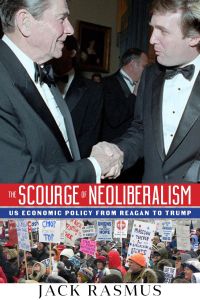
But the main solution will be to offset the more than $1.5 trillion net tax breaks with more spending cuts on social programs. In 2011 Congress and Obama cut spending by $1 trillion on education, health, transport, etc. Another $500 billion was cut in 2013. They will therefore try to repeat the ‘fiscal austerity’ solution to enable tax cutting for corporations. But that’s not new. The process of spending cuts to finance corporate-wealthy tax cuts has been going on since Ronald Reagan. It’s one of the main causes of the growing income inequality in the US that is the hallmark of Neoliberal policy since the 1980s.

The Trump-Ryan proposals are just the latest iteration of Neoliberal fiscal policy that has been making the rich richer, while destroying the economic and social base of the USA. Neoliberal policies associated with tax and spending programs, free money for bankers and investors provided by the central bank (the Federal Reserve), industrial policy deregulating everything and destroying unions, and trade policy enabling offshoring of production and jobs and free re-entry of US goods produced overseas back to the US (aka free trade) have been together ripping a gaping and ever-growing hole in the social fabric of the country. That has in turn been giving rise to ever more desperate radical right wing politics and solutions—i.e. the political consequences of the Neoliberal economic policies.”

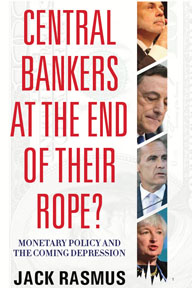
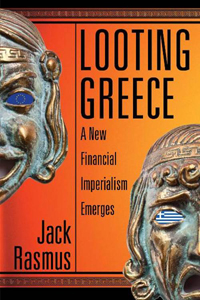
Dr. Jack Rasmus is author of ‘Central Bankers at the End of Their Ropes: Monetary Policy and the Coming Depression’, Clarity Press, August 2017, and ‘Systemic Fragility in the Global Economy’ and ‘Looting Greece’, also by Clarity Press, 2016. He blogs at jackrasmus.com and his website is http://www.kyklosproductions.com and twitter handle, @drjackrasmus.

To listen to my detailed analysis of the US House of Representatives’ just announced tax bill this past week,

GO TO:

http://prn.fm/alternative-visions-trump-tax-cuts-2-0-facts-ideology-consequences-11-03-17/

Or Go To:

http://alternativevisions.podbean.com

SHOW ANNOUNCEMENT

Dr. Rasmus dissects the just announced US House of Representatives’ version of the Trump Tax Cuts. The ‘tax cut shell game’ is explained. The main elements of the business tax cuts under the House proposal are described, including corporate rate, virtual ending of US multinational offshore taxation, retention of carried interest, inversions, and other business deduction tax loopholes. Personal income tax cuts targeting high end brackets, the AMT, Estate Tax, personal exemptions, carried interest and standard deductions provisions are reviewed. How middle class households will pay for the corporate and high income household cuts are explained, including deductions elimination, elimination of credits, and coming cuts in healthcare (medicare-medicaid), food stamps, education, etc. to pay for it. House claims of $1.5 trillion hit to the budget is really at least twice that amount. Discussion concludes with a critique of the ideological themes used by Trump/House (and ever since Reagan) to justify the cuts and sell them to the country: including the supply side economic nonsense that tax cuts create jobs, that they will be passed on to workers to raise wages, and will lead to greater economic growth and tax revenues, that US business pays the highest taxes in the world and can’t compete, and that the measures proposed amount to a ‘tax code reform’, not another tax cut for the rich and their businesses. (Next week: how Trump’s appointment of Powell means no change of the Fed’s policy of providing virtually free money to bankers and investors, and a continued subsidization of the banking system by the State).

The past year the US and global ‘real’ economies have enjoyed a moderate recovery. Much of that has been due to China stimulating its economy to ensure real growth in anticipation of the Communist Party’s convention, which has just ended. China’s president Xi and central bank (Peoples Bank of China) chair, Zhou, have announced, post-convention, that China’s real growth will slow and have warned a global ‘Minsky Moment’ (i.e. financial crisis) may be brewing. China will now try, once again, to tame its shadow bankers and speculators who have been feeding China’s debt and bubbles, and prepare for the global financial instability that is brewing.

The global financial bubbles–in stocks, bonds, currencies (crypto and real), derivatives, real estate, etc.– have been fueled since 2008 by capitalist central banks–led by the US Federal Reserve and followed even more aggressively by the European Central Bank and Bank of Japan. Central bank ‘free’ money has boosted stock and other financial asset prices into bubble territory and produced historic capital gains profits for corporations, professional investors, and the wealthiest 1% households in the US and worldwide. The world’s approximately 1500 billionaires’ wealth now totals more than $6 trillion–and that is only the officially admitted figure. More is not accounted for in the dozens of tax havens worldwide in which they park their money away from public and tax collectors’ view. US and other governments meanwhile are feverishly trying to pass even more tax cuts for billionaires and multi-millionaires, so they can keep even more $ trillions for themselves. Financial speculation has become the primary means by which the super-rich enrich themselves even more–with the help of central bankers and their paid-for Congressional government tax cutters.

Central banks have enabled their wealth acceleration by providing virtually free money for them to invest in financial markets through borrowing (debt) and leverage. Government tax cutters also let them keep more and more of the free money, profits, and their financial capital gains. Financial bubbles are the consequence. More and more financial writers have begun lately to write articles in the mainstream business press forewarning of the growing bubbles that are the engines of the the super-rich wealth acceleration.

The central banks and their policy of free money have created their own contradictions however. They have enriched the rich as never before, but in so doing have enabled and fueled the bubbles that threaten it all. After 8 years of pumping free money into private banks, corporations, and investors, the US central bank has this past year begun a desperate effort to raise interest rates and try to slow the flow of liquidity from the ‘free money firehose’ since 2008 that have produced a tripling of corporate profits, a quadrupling of US stock prices, bitcoin and crypto-currency bubbles, and $6 trillion of corporate bond debt issuance, much of which has been passed on to shareholders in dividend and stock buyback payouts. But the massive money and capital income growth has also produced financial asset bubbles that are now growing alarmingly as well. So the Fed over the past year has tried to raise interest rates a little to slow down the bubbles. It will be too little, however, as I have argued elsewhere that the Fed cannot raise rates much higher without precipitating a financial credit crunch that will generate the next recession. So the Fed talks tough on rates but does very little. The central banks of Europe and Japan do even less. Global banks and investors are addicted to the free money from the central banks and that policy will change little apart from token adjustments and talk.

The Fed’s (and all central banks’) dilemma is that raising rates and selling off its balance sheet (that will also raise rates) will cause the dollar to rise in global markets, cause in turn currency collapse in emerging markets that will sharply reduce US multinational corporations’ profits offshore. The Fed will not jeopardize US multinational corporations’ offshore profits therefore by raising rates too much. Higher rates will also shut down the US construction sector, already weak (new residential housing is declining), and reduce US consumption spending that is also barely growing, as it is based on debt and savings reductions instead of real wage growth. So the Fed is engaged in a charade of raising rates. And whomever Trump reappoints to the Fed chair after Janet Yellen won’t matter. The same free money policies will continue. For the system is addicted to free money and low rates for years to come–and that will continue feeding financial bubbles.

The Fed, like all central banks today, has become an institution whose main task is to continue subsidizing capital and capital incomes. As the Fed raises rates tokenly, other State institutions (Congress, Presidency) are also embarking on massive tax cuts for corporations and investors to offset the moderate hikes in interest rates coming from the Fed. More than $10 trillion in corporate-investor tax cuts occurred under Bush-Obama. Trillions $ more is coming under Trump.

In the 21st century, advanced capitalist economies are increasingly being subsidized by their states–monetarily by their central banks with free money and fiscally by their governments with more and more tax cuts for corporations and investors. Via both central banks and legislatures, the State is increasingly engaged in reducing capital costs and thus subsidizing capital incomes. This is the primary emphasis of ‘neoliberal’ policy in the 21st century capitalist economy.

The weaker capitalist sectors–Europe and Japan–are engaged in even more aggressive central bank free money provisioning. Europe’s central bank has just announced a ‘sleight of hand’, fake change in monetary policy: reducing its monthly free money injection (which has been benefiting mostly going to Germany and France bankers and corporations), while extending the period over which it will continue its program. It will provide less per month but for longer. Just moving the money around, as they say. Not really reducing anything.

The Bank of Japan has been even more generous to its bankers, investors and businesses. The Bank of Japan has refused to engage in a free money/higher rates charade (US) or language manipulation to fake a reduction in the free money flow (Europe). Japan’s central bank has announced it will continue buying and subsidizing corporate bonds, private stocks, and other financial assets, at an historic pace, thus contributing to propping up financial markets with no end in sight. Not suprisingly, Japan stock and financial markets are also on a tear, rising to levels not seen in 20 years. Similarly, financial asset markets have begun to escalate as well in Europe.

As I have indicated in my just released book, ‘Central Bankers at the End of Their Rope'(see book icon on this blog, jackrasmus.com, and the several book reviews), capitalist central banks are the original primary culprits of the free money policies adopted by all advanced capitalist economies–a policy that has been fueling debt and leverage, and stoking financial asset markets now entering bubble territory once again–i.e. creating the ‘Minsky Moment’ of financial instability about which China’s PBOC central bank chair, Zhou, has just forewarned.

Two big decisions will occur in the US in the first week of November: Trump will announce his new nominee for the chair of the US Federal Reserve Bank and the right wing-dominated US House of Representatives will define the Trump corporate-investor tax cuts further.

But whoever leads the Fed, there will be no real change in policy set in motion decades ago by Greenspan, continued by his protege, Ben Bernanke, and extended by Janet Yellen. Free money will continue to flow from the Fed (and even more freely from the central banks of Europe and Japan). Whether Powell, Taylor, Cohn or whoever are appointed, the policy of free money will continue. Rates will not be allowed to rise much. The private bankers and investors want it that way. And their ‘bought and paid for’ politicians will ensure it continues. Meanwhile, the Trump tax cuts will additionally subsidize corporations and investors at an even greater rate with Trump’s multi-trillion tax cuts. The Trump tax cuts (which follow more than $10 trillion under Obama and Bush) will enable US Corporations to continue paying record dividends and stock buybacks to enrich their shareholders. The $6 trillion in dividends and stock buybacks since 2010 will be exceeded by even trillions more. Income inequality trends in the US will therefore continue to accelerate unabated.

It is true the global economy has ‘enjoyed’ a brief and mild growth spurt in 2017, as noted previously. That growth has been driven by China’s stimulus and by US business inventory investing in anticipations of Trump tax and other deregulation (also cost reduction) policy driven changes. But the growth of the summer of 2017 will soon slow significantly. Now China will purposely slow, as policy shifts to rein in its own financial bubbles and in part prepare for a global ‘Minsky Moment’ crisis that is coming.

Meanwhile, the Trump bump in US economic growth will also fade in 2018, driven up until now largely by inventory investing by business that won’t be realized in sales and revenue in 2018. Working-middle class household consumption has been based on debt and savings reduction instead of real wage income recovery this past year. That is not a basis for longer term growth. Household consumption cannot be sustained. US autos and housing are already fading. Simultaneously, escalating costs of healthcare insurance premiums will cut deeply into consumer spending in 2018 as well. And government spending, now stagnant, will also slow, as Congress cuts social programs in order to offset deficits created by the massive tax cuts for corporations and investors.

In Europe, political instability forces will keep a lid on economic recovery there (a ‘hard’ Brexit looking increasingly likely, Catalonia independence uncertainty, new breakaway regions in Italy soon also voting for independence, the rise of right wing governments in eastern europe, etc.). In Japan, business interests will continue to ignore prime minister Abe pleas to raise wages, as they have for years, while Japan gives the green light to become the global financial center for crypto-currency speculative investing.

Consequently, odds are rising there will be a recession in the US, and globally, by late 2018 or early 2019. That will likely be accompanied soon, before or after, by a new ‘Minsky Moment’ of financial instability that will exacerbate the real economic downturn.

In recent weeks, as host of my Alternative Visions radio show on the Progressive Radio Network, I have been focusing discussion on the growing financial bubbles and instability in the US and global economy that has been growing beneath the surface. I’ve also been dissecting the fundamental weaknesses in the US real economy that have gone unnoticed (or noted) by the mainstream press and economics establishment. The US real economy is thus no where as healthy as the 3% official GDP growth rates maintain. It can slow rapidly even in terms of official GDP numbers once it becomes clear that Trump tax cuts won’t create jobs or wage growth, and that tax cut driven deficits will mean no meaningful infrastructure fiscal spending by Congress.

The following, most recent of my Alternative Visions radio show, of October 27, 2017, thus addresses further these various preceding themes (as did my prior radio shows did in October). To listen to the show(s)

GO TO:

http://prn.fm/alternative-visions-china-shifts-course-global-minsky-moment-grows-10-27-17/

Or Go To:

http://alternativevisions.podbean.com

SHOW ANNOUNCEMENT

Alternative Visions -China Shifts Course As Global ‘Minsky Moment’ Grows -10.27.17

Oct 27th, 2017 by progressiveradionetwork

Statements by President Xi and China central bank chair, Zhou, indicate China is about to shift economic focus again to attack financial speculators and shadow bankers and allow its real economy growth to slow as it does so. What does this mean for global real economic growth? Dr. Rasmus reviews today’s 3rd Quarter US GDP announcement, and why it reflects conditions in business investment, household consumption, and government spending that are weak. Why US GDP stats overestimate summer quarters and underestimate winter quarter growth. China’s PBOC Zhou warns of a growing ‘Minsky Moment’. What it means for China, and US stock-crypto-junk bond bubbles that continue to grow. Rasmus reviews last week’s decisions by the European Central Bank for a token reduction in QE and free money. Bank of Japan keeps its QE going. Why 21sts century capital is increasingly being subsidized by the State—with free money by central banks and more tax cuts for corporations and investors. (Next week: The US Congress further defines the Trump Tax Cuts).

Recent posts on this blog addressed the anniversary of the Greek Debt crisis of 2015. Since the posting, the Syriza government’s president, Alexis Tsipras, has been making a tour, hat in hand, to the IMF, heads of the big Eurozone states, and just last week, Donald Trump. Tsipras is no doubt seeking new private bank loans, with which to pay the interest on the Troika government loans Greece accumulated since 2009. Instead of getting debt relief and lifting of the severe austerity imposed on Greece, as Tsipras and Syriza promised when coming to office in January 2015, now they seek to become further indebted to private bankers once again to make payments to the Troika (which then distributed 95% of the money to the private bankers. It’s further debt (and austerity) for Greece, this time only without the ‘middleman’ Troika.

Readers of this blog have found my earlier posting on Greek debt of interest–an excerpt from the concluding chapter of the book–that argued this arrangement between the State and bankers imposing austerity on smaller economies like Greece represents a new form of ‘financial imperialism’, since imperialist wealth extraction now in the 21st century increasingly takes a form mediated by debt managed by the State apparatuses.

What follows is a review of the book, ‘Looting Greece’, now on Amazon by one of Amazon’s ‘Top 500’ reviewers, Graham Seibert. (Who by the way recently also reviewed my ‘Central Bankers at the End of the Rope’ book as well).

The themes of the two books–‘Central Bankers at the End of Their Ropes’ and ‘Looting Greece’ are of course related: The central banks create the credit for the private banks to lend to smaller economies in order to get them ‘hooked’ and indebted in the first place. The central bank (i.e. the European Central Bank in the case of Greece), along with other supra-government agencies (e.g. European Commission and IMF), then impose austerity on the smaller country in order to extract wealth to pay the interest on the debt, which is ultimately redistributed to the private banks of the larger economies (e.g. Germany and northern Europe).

Here’s Seibert’s Review of ‘Looting Greece’. He also appends to the review some of the more succinct quotes from my book that explain how financial imperialism in the 21st century is an essential element of ‘Neoliberalism’.

Review of ‘Looting Greece:
A New Financial Imperialism Emerges’,
by Dr. Jack Rasmus, Clarity Press, October 2016

By Graham H. Seibert,

An AMAZON TOP 500 REVIEWER,
October 20, 2017

“Opinion has long been divided on the organs of the so-called New World Order. The Panglossians maintain that all is for the best in the best of all possible worlds. The International Monetary Fund, the World Bank, the WTO and the other organizations put in place by the developed countries of the world are overall a good thing. They believe the best about the governments that founded them. The United States is a City on a Hill whose Constitution and institutions provide an example for the world. They further believe that the European Union was conceived by selfless geniuses like Jean Monnet and Robert Schuman in order to prevent conflicts on the European continent in perpetuity.

Others take a darker view. They believe that the world is run by moneyed interests, interests that are best represented by the world’s central banking community. Jack Rasmus’most recent book, Central Bankers at the End of their Rope provides an evenhanded account of the situation in which the central bankers find themselves today and a history of how they got there.

Rasmus’ thesis in this book echoes that of former Greek finance member Yannis Varoufakis in his book Adults in the Room, that social democracy in Europe is a dead letter. It has been replaced by neoliberalism and policies that enable economic exploitation of the weaker by the stronger. This book is a good companion to Varoufakis’. Rasmus sees and identifies Varoufakis flaws and naïveté as of finance Minister, but has to agree with his bigger thesis that Greece is the victim of financial manipulation by the more powerful countries of Europe, chief among them Germany.

Rasmus’ book is thorough, covering the events from beginning to end, and as such it becomes a bit tedious to read. It seems to be a litany of the same players repeating the same deceits, bluffs, con games, and mistakes again and again over the period from the time that Greece’s problems were first recognized, about 2008, up to the present.

The short story is this. Greece had no business entering the Euro in the first place. It did not meet the criteria for membership when it began back in 1999. It has always been genially corrupt and undisciplined. It is the kind of country the bankers should be leery of.

However, once it entered the Euro, the bankers were happy to accommodate the Greeks appetite for borrowing. They were fairly sure that Greece’s membership in the European community was sufficient to back them up when they went to collect. Greek businesses made extensive borrowing for capital investment and Greek consumers borrowed to buy German consumer goodies like Mercedes. The Greek government, already running a national debt about 100% of GDP, did not actually borrow all that much more.

The problem came with the crisis of 2008. Greece’s private borrowers could not service their debt. The northern European creditors lumbered the Greek government into taking responsibility for the private debt that had been run up through Greek banks. Once they did this, Greece had no escape. The northern creditors forced new loans on Greece in order to pay back the old loans. They would not allow Greece to default – though there was one haircut along the line. The result was that Greece is always had more debt than it could service, the growth projections used to justify the new loans have never materialized, and Greece keeps getting deeper and deeper into debt.

To put it succinctly, the northern Europeans are like Mafia loan sharks or payday lenders, unwilling to let their victim off the hook. If they were to show any mercy for Greece, they would have to turn around and do the same for the other broke Southern tier countries such as Portugal, Spain, Cyprus, Italy, and even France. The European troika (IMF, European Commission [of finance ministers], and European Central Bank) cannot afford to let them off the hook. They also cannot afford to be honest about that fact. Rasmus’ most serious indictments is that Prime Minister Alex Tsirpas and finance minister Yannis Varoufakis were incredibly naïve about the northern Europeans’ supposed commitment to social democracy and even their freedom to negotiate.

Greece’s situation is unique mainly in that it cannot easily extricate itself from the Euro. It does not belong, but getting out will be incredibly difficult. Aside from that, the Greek situation has quite a bit in common with other serial deadbeat nations such as Argentina, the Andean nations, and most of Africa. These countries all get in trouble through excess debt. Many authors contend that they are conned into assuming debt that they cannot service. See Hoodwinked: An Economic Hit Man Reveals Why the World Financial Markets Imploded. What I have seen of the World Bank and the IMF in Argentina, Central America and now Ukraine leads me to believe the substance of these claims.

My counsel to my Ukrainian friends, especially upon reading Rasmus’ two books, is not to take money from smiling briefcase-toting European bankers. It will end badly. There is money enough in Ukraine if and when the country reforms itself enough to oblige the oligarchs to pay taxes or convince the oligarchs to buy bonds for infrastructure in the country. If they cannot reform themselves to make this happen, they have no business borrowing abroad and committing future generations to pay back money that will only be stolen by the current generation of oligarchs.

As you will note in the quotes below, the book has something of a Marxist flavor. Rasmus quotes Marxist economists rather extensively and uses something of a Marxist vocabulary. However, he comes across as clear thinking and non-dogmatic. He has an endorsement from Paul Craig Roberts, a Reagan guy.

That’s the end of the review. A five-star effort. Here follow some very useful, informative quotes, and Rasmus’ own, highly detailed, table of contents.

Quotes:

“Placed in context, the debt crisis at a deeper historical level reveals the limits and instability of the Euro form of Neoliberalism—i.e. what might be called a ‘weak form’ of Neoliberalism. Secondly, the Greek debt crisis shows that Euro Neoliberalism is fundamentally incompatible with classical European Social Democracy and economic policies and programs associated with social democracy. Proposing an incremental return to social democratic policies and programs as an immediate and coexisting solution to Neoliberal policies and programs is a contradiction in terms. The two cannot coexist. They represent a zero sum game. Third, the policies and processes evolved to address Greek debt, its deepening accumulation and its ostensible recuperation reflect the development of a new form of imperialism and colonialism that is taking root in Greece, which is a portent of things likely to come elsewhere wherever smaller states and economies choose to integrate themselves deeply in terms of trade and money capital flows with larger capitalist economies. ”

“Greek Debt Crises and ‘Weak Form’ Euro-Neoliberalism

“The Greek debt crisis is a reflection of the ‘weak form’ that Neoliberalism has assumed in the Eurozone. Before explaining how Euro-Neoliberalism represents a peculiar ‘weak form’, and how that differs from the stronger forms of Neoliberalism introduced by both the USA and UK, it’s necessary to describe the major characteristics of Neoliberalism in general. From there, an explanation of how Euro Neoliberalism differs—i.e. is weaker—may be offered. And thereafter an explanation may follow describing how that weak form has resulted in the especially excessive debt accumulation and the repeated debt crises in the case of Greece.

“Neoliberalism represents a fundamental restructuring of capitalist economic relations, implemented by leading capitalist economies in response to the general crisis of capital that emerged globally in the 1970s. At that time real investment and trade had begun to stagnate. The international monetary system based on the 1944 Bretton Woods agreement had collapsed. Productivity was stagnant and the growth period from 1946 to 1973 had passed. Both inflation and unemployment were rising. The working classes, their unions and parties were challenging capitalist ruling elites on various economic and political fronts. Non-capitalist states were making inroads on key resource markets and creating alliances in Asia, Africa, and Latin America. Nationalist movements in the ‘Third World’, as it was then called, were demanding and getting a greater relative share of returns from the global oil and commodities pie. Even the ideology of the system on various levels—including economic theory—was undergoing significant challenge and change. Neoliberalism emerged as a set of policies and programs designed to stabilize the global capitalist system and return it to growth. It succeeded in doing so in the 1980s and 1990s, although on a more fragile basis than in the 1948-73 boom period. In 2007 that fragile basis cracked and the Neoliberal model appeared to have run out of economic steam. Ever since 2009, global capitalist elites have been attempting to reconstruct and salvage it, with some apparent difficulty. Humpty-Dumpty hasn’t quite yet been put back together again. Another major capitalist restructuring is now required—as had been achieved in the 1980s, before that in the immediate post 1944 period, and before that immediately before and after World War I.

“Generic Neoliberalism

“To briefly state the specific elements of generic Neoliberalism, it can be said to include:
• An industrial policy that focuses on containing wage incomes to help control corporate costs. The destruction of unions, limits on collective bargaining, and further restrictions on workers’ right to strike and politically mobilize are the more obvious measures for nominal wage containment. Other measures include reducing and even reclaiming ‘deferred’ wages in the form of private pensions, and reducing ‘social wages’ in the form of national retirement benefits by means of legislation. Allowing minimum wages to atrophy in real terms is another. A more recent expression is the growing movement for what is called ‘labor market restructuring’, where wages are reduced by contingent and contract labor arrangements, the ‘gig’ or sharing economy, as well as other measures that reduce compensated hours of work per employee while expanding uncompensated hours and work.
• Neoliberal industrial policy also includes the privatization and sale of government public works, public services, and where still existent, government direct production. It means as well deregulation of industry.
• Neoliberalism includes a fiscal policy reducing government expenditures, typically for low-profit social programs, but also for government funded infrastructure projects. The tax side of fiscal policy favors tax reductions for corporations and investors, but tax hikes for sales and VAT, other forms of regressive taxation, and little or no tax reduction for middle income or below households. Neoliberal taxation policy also includes tax credits and incentives to move capital investment offshore, and thus reduce employment and wages in industries that relocate ‘offshore’.
• Neoliberalism also places more relative emphasis on monetary and central bank solutions. Monetary policy is primary, and central bank injection of liquidity into the financial system is envisioned as the means by which to generate both economic growth and ensure stability.”

Table of Contents:

Chapter One
THE MEANING OF THE GREEK DEBT CRISIS / 11
Syriza’s Poorly Bet Hand / 13
The Troika’s Stacked Deck / 17
Greek Debt Crises and ‘Weak Form’ Euro-Neoliberalism / 21
Generic Neoliberalism / 23
Eurozone Neoliberalism / 28
The Greek Debt Crisis and Euro Social Democracy / 34
The Emerging New Debt-based Imperialism / 36
Chapter Two
THE GERMAN ORIGINS OF GREEK DEBT / 45
The Lisbon Strategy and ‘Internal Devaluation’ / 47
Germany’s Lisbon Strategy Implementation / 49
Germany’s Bundesbank Dominates the ECB / 51
Greek Debt as Private Bank-Investor Debt / 55
The Myth of Greek Wages as Cause of Debt / 56
From Private to Government Debt / 57
The German Origins of the Greek Debt / 61
Chapter Three
PASOK AND THE DEBT CRISIS OF 2010 / 66
2009: PASOK’s Strategic Error / 66
PASOK’s Voluntary Austerity Program / 68
Bond Vigilantes Escalate the Debt / 72
The 2010 Debt Agreement / 74
Who Was Really Bailed Out? / 75
Chapter Four
THE SECOND GREEK DEBT CRISIS OF 2012 / 79
A Brief Recapitulation / 79
Some Defining Characteristics of the 2012 Debt Crisis / 82
2011: Interim Preceding the Second Debt Crisis / 84
The 2012 Debt Crisis and the Three-Way Negotiating
Farce / 87
The ‘German Hypothesis’ / 90
The Second Debt Restructuring Deal of 2012 / 92
Chapter Five
COLLAPSE OF NEW DEMOCRACY & RISE OF SYRIZA / 103
New Democracy Pleads to Renegotiate / 104
The Bond Buyback Boondoggle of December 2012 / 107
Who Benefits? / 109
Muddling Through: 2013-2014 / 112
Syriza Comes of Age / 113
The Eurozone Stagnates Once Again / 114
Chapter Six
SYRIZA TAKES THE OFFENSIVE / 120
The Troika’s $2.8 Trillion Grexit Firewall / 121
Troika Strategy to Defeat Syriza at the Polls / 123
Syriza’s Electoral Offensive / 126
Chapter Seven
THE TROIKA COUNTER-ATTACK / 136
The Debt-Swap Proposal and Euro Tour / 139
The February 20 Interim Agreement / 146
The Lessons of Bargaining: February-March 2015 / 154
Chapter Eight
FROM CONFRONTATION TO CAPITULATION / 158
Troika Economics: 1932 Déjà vu / 161
Varoufakis Marginalized / 163
Brexit Before Grexit? / 165
The Troika’s ‘Final and Best’ Offer—June 2015 / 167
Greece’s Interim ‘Final’ Offer / 172
The Road to Referendum / 176
Referendum and Fallout / 182
Chapter Nine
SYRIZA TAMED / 188
Greece as an Emerging ‘Economic Protectorate’/ 190
Party Restructuring as a Precondition for Economic
Restructuring / 191
The Third Debt Deal of August 2015 / 193
The Parliamentary Election of September 20, 2015 / 197
General Strikes and Grexit / 198
Feints, Rear-Guard Actions, & Longer-Term
Agreement / 200
The IMF’s Secret Concerns in Negotiations / 202
The IMF-EC/Germany Split / 204
Debt Restructuring by Another Name? / 207
Observations on the Third Debt Agreement
of 2015-18 / 209
Chapter Ten
WHY THE TROIKA PREVAILED:
INTERPRETATIONS AND ANALYSES / 216
An Overview of Greek Economy 2015-2016 / 216
The Greek Debt Crisis as a Banking Crisis / 217
The Big Picture / 220
Eurozone Structure and the Greek Crisis / 223
Syriza’s Fundamental Error / 228
Syriza’s Objectives / 231
Could a Grexit Have Succeeded / 233
Syriza Strategies / 235
Troika Strategies / 241
Tactics—Troika vs. Syriza / 247
The Individual Factor in Syriza’s Defeat / 251
Organization and Public Consciousness Factors / 253
Is a Fourth Greek Debt Crisis Inevitable? / 257
Conclusion
A NEW FINANCIAL IMPERIALISM EMERGES / 264
The Many Meanings of Imperialism / 264
Colonies, Protectorates, and Dependencies / 266
Gerece as an Economic Protectorate / 269
Wealth Extraction as an Imperialist Objective / 271
‘Reflective’ Theories of Imperialism / 273
Alternatives to Hilferding-Lenin / 278
Greece as a Case Example of Financial Imperialism / 284
Private Sector Interest Transfer / 287
State to State Debt and Interest Aggregation
and Transfer / 289
Financial Imperialism from Privatization of
Public Assets / 297
Foreign Investor Speculation on Greek
Financial Asset Price Volatility / 299

The following is the most recent review of my just published book, ‘Central Bankers at the End of Their Ropes: Monetary Policy and the Coming Depression, by Graham Seibert, who is a top 500 reviewer on Amazon. The review is approximately 1k words, but at its conclusion Seibert has appended his chapter by chapter, detailed commentaries as well. A reader interested in the extended commentaries by Seibert on the book’s key chapters, ‘Yellen’s Bank’, ‘Why Central Banks Fail’, and the book’s concluding chapter that advocates measures to democratize the Federal Reserve in the interests of the public, will find Siebert’s detailed summaries of the main themes and arguments of these chapters. Readers who wish to read Siebert’s extended commentaries on all the book’s chapters–including China, Japan, Europe, and the UK, may do so by going to the ‘articles’ page and tab on my own website, at http://www.kyklosproductions.com/articles.html. (Dr. Rasmus)

Review of ‘Central Bankers at the End of Their Ropes’,
by Dr. Jack Rasmus, Clarity Press, August 2017

By Graham H. Seibert,

An AMAZON TOP 500 REVIEWER,
October 10, 2017

This book does a better job of explaining how central banks work in any of the others I have read. Two mainstream books, Mohamed El-Erian’s The Only Game in Town and Banking on the Future: The Fall and Rise of Central Banking appear to be limited by the obligate blindness that bankers must have to the fact that there is no correct way to do it. The central bank’s goals are too elusive, the tools are too blunt and ineffective, the process is inherently political, and there are demographic and economic variables at play which are beyond the central bankers’ ability to control. Losing Control: The Emerging Threats to Western Prosperity is another book that covers more or less the same ground, though I think Rasmus does it better and with less bias.

Other books such as The Creature from Jekyll Island: A Second Look at the Federal Reserve and The Secrets of the Federal Reserve are conspiratorial. The Jekyll Island does a great job of describing how the Federal Reserve was established, but it ascribes to conspiracy that which can be better explained by mere self-interest. The bankers look out for themselves. The second book edges close to describing a Jewish conspiracy. As Kevin McDonald writes in The Culture of Critique: An Evolutionary Analysis of Jewish Involvement in Twentieth-Century Intellectual and Political Movements, the Jews have evolved to look out for one another, but that does not rise to the level of conspiracy. Murray Rothbard’s 1962 What Has Government Done to Our Money? was a prescient vision of things to come.

The Tyranny of the Federal Reserve, not widely read, is valuable in that it puts the operation of the central bank into a much broader perspective. It addresses an entire range of tyrannies: those of debt, usury, fractional reserve banking, gold, central banks, war, free trade, mass immigration, the media and public education. This Time Is Different: Eight Centuries of Financial Folly is a survey of fiat money regimes going back eight centuries. They all fail, and all for the same reason: politicians cannot control themselves when it comes to printing money. James Rickards makes the same point well in The Death of Money: The Coming Collapse of the International Monetary System.

Rasmus’ book is the most valuable of the group, effectively enumerating and describing the tools, policy objectives and targets of the central banks, and evaluating their effectiveness in light of their own targets and their ability to manage their respective economies.

Rasmus recommends a constitutional amendment to address the problem. The effect of the amendment would be to redress the abuse that he sees in the present system, whereby central banks worldwide are generating a great amount of liquidity most of which flows into financial instruments instead of the real economy, benefiting the rich and starving pensioners and savers.

He recommends democratizing the governance of the Federal Reserve, taking it out of the self-serving hands of the bankers.

This would be a good start. The book does not address larger issues, such as the coming demographic crisis as world populations age.

This is as good a book as one will find describing the problems as they exist and how they came to be. One cannot fault the book for failing to recommend a complete solution. Nobody in the world has found one. For this reason prognosticators are increasingly forecasting a global collapse, a reset that will require something new to rise from the ashes. Only between the lines does Rasmus suggest that that’s where things are headed.

A five-star effort. The best single book I have read on the Federal Reserve and central banks. I am including my (somewhat unedited) reading notes as comments. See my reviews of the books cited in this review for similarly detailed analyses.

EXTENDED COMMENTARY OF THE BOOK, CHAPTER BY CHAPTER,
By Graham Seibert

Chapter 10:
Yellen’s Bank:
From Taper Tantrums to Trump Trade / 257

Yellen has pretty much followed Bernanke’s policies. Although quantitative easing may have ended at some point, the Fed continues to use other tools to inject liquidity into the economy.

Rasmus says very directly that this is a conscious gift to the wealthy financial interests at the cost of everybody else, especially savers and pensioners. The money flows to corporations which pay generous dividends and conduct stock buybacks that favor the financial classes. Interest rates are so low that pension funds cannot make a decent return by buying bonds and by keeping money in banks. They too must reach for yield by buying overpriced stocks. It is unsustainable. The inequalities in wealth have grown insupportable.

Rasmus concludes with Yellen’s five challenges:
“1) how to raise interest rates, should the economy expand in 2017-18, without provoking undue opposition by investors and corporations now addicted to low rates; 2) how to begin selling off its $4.5 trillion balance sheet without spiking rates, slowing the US economy, and sending EMEs into a tailspin; 3) how to conduct bank supervision as Congress dismantles the 2010 Dodd-Frank Banking Regulation Act; 4) how to ensure a ‘monetary policy first’ regime continues despite a re-emergence of fiscal policy in the form of infrastructure spending; and 5) how to develop new tools for lender of last resort purposes in anticipation of the next financial crisis.”

There are not, obviously, clear answers to any of these. The Fed has painted itself into a corner with no apparent exit.

Chapter 11:
Why Central Banks Fail / 287

“But the new function of ensuring financial stability is something of a misnomer. The fundamental means by which central banks today attempt to stabilize the banking system is by permanently subsidizing it.”

Rasmus has earlier said that the quantity theory of money, the idea that increasing the money supply will lead to inflation, has been repeatedly disproven. Others such as Kenneth Rogoff and Carmen Reinhart would say that it is only being held in abeyance and will come back with a vengeance when excessive injection of liquidity finally topples the institutions.

Rasmus writes that” Therefore, if discussions on central banking in the 21st century are to address new functions, this one should be more accurately termed the subsidization of the banking system by virtually free money enabled by central banks’ chronic and massive liquidity provisioning.” Rasmus says that this subsidization function started in the 1970s.

The most important development, per Rasmus, is the capture first by Citibank and then by Goldman Sachs of all of the key appointed positions in the Bush, Obama, and Trump administrations. How else, Rasmus asked, can one explain the fact that the Federal Reserve has continued massive liquidity injections for seven years after this last crisis was wound up in 2010? Only for the benefit of the banks.

Rasmus provides two lists of reasons central banks fail: excuses, and real reasons.

The excuses include
• too much discretion; no monetary rule.
• Fiscal policy and the gates monetary policy. I, the reviewer, add the there is no discussion of the immense government deficits anywhere in this work. That would be a function of fiscal policy.
• Banks become bottlenecks to lending. The monetarist theory is that if you increase the money supply you will get lending. Wrong. The banks may simply sit on the money.
• Wrong targets: 2% growth in what?
• dual mandate: which is it? Prices, inflation, or employment?
• Global savings glut – those damned foreigners
• the need for new tools
• government influence with central-bank independence

Rasmus list of real reasons central banks fail is as follows. Enlisting them, Rasmus is offering the conclusion that the central banks have failed. As he has so elaborately described, they have failed in their assigned missions. But they, and the countries they represent, are still in place. As institutions they have survived. This is therefore our list of reasons why they haven’t been effective in their assigned role.

• Mismanaging money supply and serving as a reactionary lender of last resort
• fragmented and feeling banking supervision
• the inability to achieve 2% price stability. The problem is persistent deflation.
• The failure to address financial asset price inflation
• declining influence of interest rates on real investment
• central-bank policies and the redirection of investment to financial assets
• monetary tools: declining effects and rising contradictions
• victims of their own ideology: Taylor rules, Phillips curves, and NIRP’s. It doesn’t work like the book says. Rasmus: “central bankers may be victims of their own false ideological notions, just as politicians and government bureaucrats may be. The Taylor rule maintains that central banks should not pursue policies that attempt to adapt or respond to economic business cycles.”

Rasmus concludes that central banking has been failing to perform even its own presumed functions, targets and tools. They have not adapted or changed keep up with global developments. Monetary policy is a path to yet more financial and economic stability.

Conclusion:
Revolutionizing Central Banking in the Public Interest:
Embedding Change Via Constitutional Amendment / 323

This final chapter is in the form of a constitutional amendment to democratize the function of the federal reserve. It would give the general public the power to select the leadership. It would require that the Federal Reserve, and its lender of last resort function, ensure that liquidity flowed to the real economy rather than financial assets. It provides for consistent banking supervision by parties not connected to the banks themselves.

The amendment does not address related problems. It makes no mention of fiscal policy, chronic government debts. The federal reserve has the power both to redistribute money within the economy, which Rasmus rightly says that it does, favoring the financial interests. It also has the power to create money that the government needs to offset budget deficits, currently running between $500 million and $1 billion.

The national debt, standing at $20 trillion, requires $400 billion per year just to service. The government debt is about equal to GDP in the United States; unsupportable, but better than Europe, England, China or Japan. None of these would be able to withstand a significant increase in interest rates.

The book does not address the question of demographics. The demographics in the United States are terrible, with the rising generations barely keeping up in numbers with those who are retiring. This is not to even to mention its composition. There is a question of whether the current rising generation, 50% made up of disadvantaged minorities, will have the same productivity as the retirees it replaces.

The demographics in China, Japan, England and Europe are worse. They all have inverted population pyramids. Supporting the promised pension and healthcare benefits will require more tax income from fewer taxpayers. Printing money will not do the trick; at some time the printed money has to be recognized as being increasingly less valuable. Inflation has to kick in and the real economy, just as Rasmus documents that it has in the financial economy.
Leave a reply
________________________________________

Listen to my assessment of warnings re. today’s growing global financial bubbles and instability by the IMF, BIS, Deutschebank, and others in recent weeks.

Go To:

http://prn.fm/alternative-visions-global-financial-instability-warnings-rise-10-13-17/

Or Go To:

http://alternativevisions.podbean.com/

SHOW ANNOUNCEMENT

Dr. Rasmus dedicates today’s show to examining the condition of financial bubble and growing instability in global financial markets. Recent reports and studies warning of bubbles, debt, and financial instability are reviewed, including the IMF, Bank of International Settlements, the just released report by Deutschebank economists, ‘The Next Financial Crisis’, and key financial players like Bill Gross, Wolfgang Schaubel, and others. Rasmus explains how it is not debt levels alone but the causal relationships between debt, income and liquid assets to ‘finance’ the paying of principal and interest on the debt, and changing terms and conditions of debt repayment together explain financial fragility that lead to financial instability crises. (see the 2016 book, ‘Systemic Fragility in the Global Economy’ by Rasmus). The fundamental forces that have created $134 trillion in excess non-financial corporate debt alone in the G 20 economies, and emerging financial instability, are described–as well as the ‘triggers’ or ‘precipitating events’ that may set off the next financial crisis. Rasmus identifies the financial markets most prone at present to bubbles and financial price contractions, including global stock markets, crypto-currencies, leveraged loans, junk bond markets funding zombie companies, ETFs and passive investing which will exacerbate stock and bond crashes, the big banks in Italy and Japan, and the US strategic ‘Repo’ bond market with its problem of insufficient liquidity.

Listen to my friday, October 6, 2017 Alternative Visions radio show on the Progressive Radio Network, during which I dissect the latest US jobs numbers and, in the second half of the show, identify emerging financial bubbles in the global economy. (Listen to the coming friday, October 13, show, when I continue the discussion of global financial instability, and specifically discuss the recent Deutschebank and BIS reports warning of global financial bubbles and debt about to get worse.

TO LISTEN, Go to:

http://prn.fm/alternative-visions-us-job-numbers-global-financial-bubbles-10-06-17/

Or Go to:

http://alternativevisions.podbean.com

SHOW ANNOUNCEMENT:

Dr. Rasmus in the first half of the show discusses today’s Labor Dept. job numbers, explaining how the total jobless today is not 6.8 million but closer to 15 million, and not counting the 8 million equivalent decline due to falling labor force participation. Rasmus debunks academic explanations like ‘It’s the opioid crisis’ (Princeton) or that it is due to workers staying home playing video games (Univ. of Chicago), or even due to the ageing population and early retirements. Other real causes are offered. In the second half of the show, Dr. Rasmus addresses growing financial asset bubbles in the US and worldwide—including US stock markets, US and Europe junk bonds, Leveraged Loans, Exchange Trade Funds, Europe Non Performing Loans, Bitcoin and crypto-currencies, China entrusted loans junk debt, NPLs, Emerging markets dollarized debt and hidden forex exchange derivatives recently warned by the Bank of International Settlements in Geneva. (Next Week: the Deutsche Bank Study just released on growing financial fragility in the global economy).

A reader of my just posted ‘The Trump-Goldman Sachs Tax Cuts for the Rich’, recently asked me some questions about Trump that I’m sure are on the minds of many. Certainly US Secretary of State Tillerson, a quote from which was ‘leaked’ today by the mainstream press which apparently Tillerson is not refuting.

Since Trump assumed office I have been arguing he is not a president in the normal sense. He is something of a figurehead that is allowed to perform certain acts, sign bills, welcome his wealthy friends to tours of the White House, go before cameras to promote himself, and spend weekends at his resort in Florida in the interim. (see my piece of ‘Taming Trump’ last November on this blog).

US economic policy is being run by the bankers in his administration, and the foreign policy by the generals and the CIA-NSA guys. (who are buddy-buddy with Exxon CEO Tillerson in the State Dept.

The reader of this blog noted above, had this to say to my recent posted Trump Tax article and what it signifies politically. My reply to him then follows, for what it’s worth, expressing my current opinion of the Trump experience, written from a class analysis perspective. I thought our exchange would be worth a read.

READER:

“Great article.
So the trump tax cuts might keep the bubble inflated a few more years with M&A and stock buybacks.

Do you think the deficit hawks will shut up and allow this to happen?
Or do you think it will get blocked like the repeal of obamacare?
I expect a coalition of some Dems, anti-wall street tea party, and deficit hawks will stop this.
Trump is becoming so toxic, I don’t see him lasting another year.
At some point he will be told to quit – or else.
And the tax cut effort will morph into attempts to save the economy as the debt bubble pops.”

MY REPLY:

“It’s already having the effect on stock markets in the US.

Yes, the deficit hawks have shut up. (But they’ll complain about bailing out Puerto Rico, while opening the spigot for Republican Texas and Florida). Trump will get a partial wall for Mexican border, in exchange for a watered down DACA deal with Shumer-Pelosi.

The big corporate tax cuts will definitely go through; maybe a reduced ‘income passthrough’ for the non-corporate business folks; and the personal income tax cuts will be reduced. To pay for it, the state and local government tax deduction for the middle class will likely go (affects more the west coast and east coast Democrat states), in order to fund some reduction in tax rates for the rich. Maybe five brackets instead of three and with some rate cuts for the $91K and above crowd of a couple percent.

The repatriation tax boondoggle for multinational corporations will pass and the ‘territorial’ tax ended. Also likely the inheritance tax. Some weak AMT will remain possibly.

Will Trump be forced out? Not until the tax cuts for the rich are passed, NAFTA tinkering concluded so its only token, and they take another shot at cutting ACA taxes on the rich and business next year. Or, if he really screws up with North Korea negotiations (which he will eventually do if he continues sticking his foot in his mouth).

In the meantime, the bankers are running domestic economic policy and the generals the foreign policy. Tillerson calling Trump a ‘moron’ and letting that leak, was a warning to Trump from the elite to stay out of negotiations with Korea. The fact that Mattis and McMaster backed up Tillerson in front of Congress, not Trump, was significant. This guy Trump is not really president, but a figurehead the elite are tolerating (so far). They let him tweet off to his content, clean up his mess periodically, and chastise him to ‘behave’, like the spoiled little child he is.

On the other hand, he’s circling the wagons with his grass roots radical conservative base, turns Bannon lose to go organize and if necessary mobilize them, and he keeps agitating that base as a warning of his own to the Republican and Dem. Elites.

As I see it, there’s a struggle in progress between factions of the capitalist class as to whose going to run the government and political institutions. It’s still a kind of coexistence and joint rule, but it’s getting uneasy. They’re united on certain issues, like taxes, but at odds on others like foreign policy and even some domestic policy that might ‘stir populism’ if taken too far too fast.

Anyway, that’s my analysis of the situation at present.

Jack Rasmus”

The following will shortly appear in various blogs and print publications. My detailed analysis of the Trump tax plan announced this past week.
Dr. Jack Rasmus
Copyright 2017

“This past week Trump introduced his long awaited Tax Cut, estimated between $2.0 to $2.4 trillion. Like so many other distortions of the truth, Trump claimed his plan would benefit the middle class, not the rich—the latest in a long litany of lies by this president.

Contradicting Trump, the independent Tax Policy Center has estimated in just the first year half of the $2 trillion plus Trump cuts will go to the wealthiest 1% households that annually earn more than $730,000. That’s an immediate income windfall to the wealthiest 1% households of 8.5%, according to the Tax Policy Center. But that’s only in the first of ten years the cuts will be in effect. It gets worse over time.

According to the Tax Policy Center, “Taxpayers in the top one percent (incomes above $730,000), would receive about 50 percent of the total tax benefit [in 2018]”. However, “By 2027, the top one percent would get 80 percent of the plan’s tax cuts while the share for middle-income households would drop to about five percent.” By the last year of the cuts, 2027, on average the wealthiest 1% household would realize $207,000, and the even wealthier 0.1% would realize an income gain of $1,022,000.

When confronted with these facts on national TV this past Sunday, Trump’s Treasury Secretary, Steve Mnuchin, quickly backtracked and admitted he could not guarantee every middle class family would see a tax cut. Right. That’s because 15-17 million (12%) of US taxpaying households in the US will face a tax hike in the first year of the cuts. In the tenth and last year, “one in four middle class families would end up with higher taxes”.

The US Economic ‘Troika’

The Trump Plan is actually the product of the former Goldman-Sachs investment bankers who have been in charge of Trump’s economic policy since he came into office. Steve Mnuchin, the Treasury Secretary, and Gary Cohn, director of Trump’s economic council, are the two authors of the Trump tax cuts. They put it together. They are also both former top executives of the global shadow bank called Goldman Sachs. Together with the other key office determining US economic policy, the US central bank, held by yet another ex-Goldman Sachs senior exec, Bill Dudley, president of the New York Federal Reserve bank, the Goldman-Sachs trio of Mnuchin-Cohn-Dudley constitute what might be called the ‘US Troika’ for domestic economic policy.
The Trump tax proposal is therefore really a big bankers tax plan—authored by bankers, in the interest of bankers and financial investors (like Trump himself), and overwhelmingly favoring the wealthiest 1%.

Given that economic policy under Trump is being driven by bankers, it’s not surprising that the CEO of the biggest US banks, Morgan Stanley, admitted just a few months ago that a reduction of the corporate nominal income tax rate from the current 35% nominal rate to a new nominal rate of 20% will provide the bank an immediate windfall gain of 15%-20% in earnings. And that’s just the nominal corporate rate cut proposed by Trump. With loopholes, it’s no doubt more.

The Trump-Troika’s Triple Tax-Cut Trifecta for the 1%

The Trump Troika has indicated it hopes to package up and deliver the trillions of $ to their 1% friends by Christmas 2017. Their gift will consist of three major tax cuts for the rich and their businesses. A Trump-Troika Tax Cut ‘Trifecta’ of $ trillions.

1.The Corporate Tax Cuts

The first of the three main elements is a big cut in the corporate income tax nominal rate, from current 35% to 20%. In addition, there’s the elimination of what is called the ‘territorial tax’ system, which is just a fancy phrase for ending the fiction of the foreign profits tax. Currently, US multinational corporations hoard a minimum of $2.6 trillion of profits offshore and refuse to pay US taxes on those profits. In other words, Congress and presidents for decades have refused to enforce the foreign profits tax. Now that fiction will be ended by officially eliminating taxes on their profits. They’ll only pay taxes on US profits, which will create an even greater incentive for them to shift operations and profits to their offshore subsidiaries. But there’s more for the big corporations.

The Trump plan also simultaneously proposes what it calls a ‘repatriation tax cut’. If the big tech, pharma, banks, and energy companies bring back some of their reported $2.6 trillion (an official number which is actually more than that), Congress will require they pay only a 10% tax rate—not the current 35% rate or even Trump’s proposed 20%–on that repatriated profits. No doubt the repatriation will be tied to some kind of agreement to invest the money in the US economy. That’s how they’ll sell it to the American public. But that shell game was played before, in 2004-05, under George W. Bush. The same ‘repatriation’ deal was then legislated, to return the $700 billion then stuffed away in corporate offshore subsidiaries. About half the $700 billion was brought back, but US corporations did not invest it in jobs in the US as they were supposed to. They used the repatriated profits to buy up their competitors (mergers and acquisitions), to pay out dividends to stockholders, and to buy back their stock to drive equity prices and the stock market to new heights in 2005-07. The current Trump ‘territorial tax repeal/repatriation’ boondoggle will turn out just the same as it did in 2005.

2. Non-Incorporate Business Tax Cuts

The second big business class tax windfall in the Trump-Goldman Sachs tax giveaway for the rich is the proposal to reduce the top nominal tax rate for non-corporate businesses, like proprietorships and partnerships, whose business income (aka profits) is treated like personal income. This is called the ‘pass through business income’ provision.
That’s a Trump tax cut for unincorporated businesses—like doctors, law firms, real estate investment partnerships, etc. 40% of non-corporate income is currently taxed at 39.6% (the top personal income tax rate). Trump proposes to reduce that nominal rate to 25%. So non-incorporate businesses too will get an immediately 14.6% cut, nearly matching the 15% rate cut for corporate businesses.

In the case of both corporate and non-corporate companies we’re talking about ‘nominal’ tax rate cuts of 14.6% and 15%. The ‘effective’ tax rate is what they actually pay in taxes—i.e. after loopholes, after their high paid tax lawyers take a whack at their tax bill, after they cleverly divert their income to their offshore subsidiaries and refuse to pay the foreign profits tax, and after they stuff away whatever they can in offshore tax havens in the Cayman Islands, Switzerland, and a dozen other island nations worldwide.

For example, Apple Corporation alone is hoarding $260 billion in cash at present—95% of which it keeps offshore to avoid paying Uncle Sam taxes. Big multinational companies like Apple, i.e. virtually all the big tech companies, big Pharma corporations, banks and oil companies, pay no more than 12-13% effective tax rates today—not the 35% nominal rate.

Tech, big Pharma, banks and oil companies are the big violators of offshore cash hoarding/tax avoidance schemes. Microsoft’s effective global tax rate last year was only 12%. IBM’s even less, at 10%. The giant drug company, Pfizer paid 18% and the oil company, Chevron 14%. One of the largest US companies in the world, General Electric, paid only 1%. When their nominal rate is reduced to 20% under the Trump plan, they’ll pay even less, likely in the single digits, if that.

Corporations and non-corporate businesses are the institutional conduit for passing income to their capitalist owners and managers. The Trump corporate and business taxes means companies immediately get to keep at least 15% more of their income for themselves—and more in ‘effective’ rate terms. That means they get to distribute to their executives and big stockholders and partners even more than they have in recent years. And in recent years that has been no small sum. For example, just corporate dividend payouts and stock buybacks have totaled more than $1 trillion on average for six years since 2010! A total of more than $6 trillion.

But all that’s only the business tax cut side of the Trump plan. There’s a third major tax cut component of the Trump plan—i.e. major cuts in the Personal Income Tax that accrue overwhelmingly to the richest 1% households.

3. Personal Income Tax Cuts for the 1%

There are multiple measures in the Trump-Troika proposal that benefits the 1% in the form of personal income tax reductions. Corporations and businesses get to keep more income from the business tax cuts, to pass on to their shareholders, investors, and senior managers. The latter then get to keep more of what’s passed through and distributed to them as a result of the personal income tax cuts.

The first personal tax cut boondoggle for the 1% wealthiest households is the Trump proposal to reduce the ‘tax income brackets’ from seven to three. The new brackets would be 35%, 25%, and 12%.

Whenever brackets are reduced, the wealthiest always benefit. The current top bracket, affecting households with a minimum of $418,000 annual income, would be reduced from the current 39.6% to 35%. In the next bracket, those with incomes of 191,000 to 418,000 would see their tax rate (nominal again) cut from 28% to 25%. However, the 25% third bracket would apply to annual incomes as low as $38,000. That’s the middle and working class. So households with $38,000 annual incomes would pay the same rate as those with more than $400,000. Tax cuts for the middle class, did Trump say? Only tax rate reductions beginning with those with $191,000 incomes and the real cuts for those over $418,000!

But the cuts in the nominal tax rate for the top 1% to 5% households are only part of the personal income tax windfall for the rich under the Trump plan. The really big tax cuts for the 1% come in the form of the repeal of the Inheritance Tax and the Alternative Minimum Tax, as well as Trump’s allowing the ‘carried interest’ tax loophole for financial speculators like hedge fund managers and private equity CEOs to continue.

The current Inheritance Tax applies only to those with estates of $11 million or more, about 0.2 of all the taxpaying households. So its repeal is clearly a windfall for the super rich. The Alternative Minimum Tax is designed to ensure the super rich pay something, after they manipulate the tax loopholes, shelter their income offshore in tax havens, or simply engage in tax fraud by various other means. Now that’s gone as well under the Trump plan. ‘Carried interest’, a loophole, allows big finance speculators, like hedge fund managers, to avoid paying the corporate tax rate altogether, and pay a maximum of 20% on their hundreds of millions and sometimes billions of dollars of income every year.

Who Pays?

As previously noted, folks with $91,000 a year annual income get no tax rate cuts. They still will pay the 25%. And since that is what’s called ‘earned’ (wage and salary) income, they don’t get the loopholes to manipulate, like those with ‘capital incomes’ (dividends, capital gains, rents, interest, etc.). What they get is called deductions. But under the Trump plan, the deductions for state and local taxes, for state sales taxes, and apparently for excess medical costs will all disappear. The cost of that to middle and working class households is estimated at $1 trillion over the decade.

Trump claims the standard deduction will be doubled, and that will benefit the middle class. But estimates reveal that a middle class family with two kids will see their standard deduction reduced from $28,900 to $24,000. But I guess that’s just ‘Trump math’.

The general US taxpayer will also pay for the trillions of dollars that will be redistributed to the 1% and their companies. It’s estimated the federal government deficit will increase by $2.4 trillion over the decade as a result of the Trump plan. Republicans in Congress have railed over the deficits and federal debt, now at $20 trillion, for years. But they are conspicuously quiet now about adding $2.4 trillion more—so long as it the result of tax giveaways to themselves, their 1% friends, and their rich corporate election campaign contributors.

And both wings of the Corporate Party of America—aka Republicans and Democrats—never mention the economic fact that since 2001, 60% of US federal government deficits, and therefore the US debt of $20 trillion, are attributable to tax cuts by George W. Bush and Barack Obama: more than $3.5 trillion under Bush and more than $7 trillion under Obama. (The remaining $10 trillion of the US debt due to war and defense spending, price gouging by the medical industry and big pharma driving up government costs for Medicare, Medicaid, and other government insurance, bailouts of the big banks in 2008-09, and interest payments on the debt).

The 35-Year Neoliberal Tax Offensive

Tax cutting for business classes and the 1% has always been a fundamental element of Neoliberal economic policy ever since the Reagan years (and actually late Jimmy Carter period). Major tax cut legislation occurred in 1981, 1986, and 1997-98 under Clinton. George W. Bush then cut taxes by $3.4 trillion in 2001-04, 80% of which went to the wealthiest households and businesses. He cut taxes another $180 billion in 2008. Obama cut another $300 billion in his 2009 so-called recovery program. When that faltered, it was another $800 billion at year end 2010. He then extended the Bush tax cuts that were scheduled to expire in 2011 two more years. That costs $450 billion each year. And in 2013, cutting a deal with Republicans called the ‘fiscal cliff’ settlement, he extended the Bush tax cuts of the prior decade for another ten years. That cost a further $5 trillion. Now Trump wants even more. He promised $5 trillion in tax cuts during his election campaign. So the current proposal is only half of what he has in mind perhaps.

Neoliberal tax cutting in the US has also been characterized by the ‘tax cut shell game’. The shell game is played several ways.

In the course of major tax cut legislation, the elites and their lobbyists alternate their focus on cutting rates and on correcting tax loopholes. They raise rates but expand loopholes. When the public becomes aware of the outrageous loopholes, they then eliminate some loopholes but simultaneously reduce the tax rates on the rich. When the public complains of too low tax rates for the rich, they raise the rates but quietly expand the loopholes. They play this shell game so the outcome is always a net gain for corporations and the rich.

Since Reagan and the advent of neoliberal tax policy, the corporate income tax share of total US government revenues has fallen from more than 20% to single digits well below 10%. Conversely, the payroll tax has doubled from 22% to more than 40%. A similar shift within the personal income tax, steadily around 40% of government revenues, has also occurred. The wealthy pay less a share of the total and the middle class pays more. Along the way, token concessions to the very low end of working poor are introduced, to give the appearance of fairness. But the middle class, the $38 to $91,000 nearly 100 million taxpaying households foot the bill for both the 1% and the bottom. This pattern was set in motion under Reagan. His proposed $752 billion in tax cuts in 1981-82 were adjusted in 1986, but the net outcome was more for the rich and their corporations. That pattern has continued under Clinton, Bush, Obama and now proposed under Trump.

To cover the shell game, an overlay of ideology covers up what’s going on. There’s the false argument that ‘tax cuts create jobs’, for which there’s no empirical evidence. There’s the claim US multinational corporations pay a double tax compared to their competitors, when in fact they effectively pay less. There’s the lie that if corporate taxes are cut they will automatically invest the savings, when in fact what they do is invest offshore, divert the savings to stock and bond and other financial markets, boost their dividend and stock buybacks, or stuff the savings in their offshore subsidiaries to avoid paying taxes.

All these neoliberal false claims, arguments, and outright lies continue today to justify the Trump-Goldman Sachs tax plan—which is just the latest iteration of neoliberal tax policy and tax offensive in the US. The consequences of the Trump plan, if it is passed, will be the same as the previous tax giveaways to the 1% and their companies: it will redistribute income massively from the middle and working classes to the rich. Income inequality will continue to worsen dramatically. US multinational corporations will begin again to divert profits, and investment, offshore; profits brought back untaxed will result in mergers and acquisitions, dividend payouts, and financial markets investment. No real jobs will be created in the US. The wealthy will continue to pump their savings into financial asset markets, causing further bubbles in stocks, exchange traded funds, bonds, derivatives and the like. The US economy will continue to slow and become more unstable financially. And there will be another financial crash and great recession—or worse. Only this time, the vast majority of US households—i.e. the middle and working classes—will be even worse off and more unable to weather the next economic storm.

Nothing will change so long as the Corporate Party of America is allowed to continue its neoliberal tax giveaways, its tax cutting ‘shell games’, and is allowed to continue to foment its ideological cover up.”

Dr. Jack Rasmus, October 2, 2017

Dr. Rasmus is author of the just published book, ‘Central Bankers at the End of Their Ropes?: Monetary Policy and the Coming Depression’, Clarity Press, August 2017, and the previously published ‘Looting Greece: A New Financial Imperialism Emerges’, October 2016, and ‘Systemic Fragility in the Global Economy’, January 2016, also by Clarity press. More information is available at Claritypress.com/RasmusIII. For more analyses on the Trump and neoliberal taxation, listen to Dr. Rasmus’s, September 29, 2017 radio show, Alternative Visions, on the Progressive Radio Network at http://alternativevisions.podbean.com. He blogs at jackrasmus.com and his website is http://kyklosproductions.com.

My analysis of Trump’s recently announced proposed tax cuts, as latest iteration of Neoliberal tax cut policy since 1981. How it will continue to redistribute income from wage earner households ($38,000-$91,000), to corporations, non-corporate businesses, investors, and 1% wealthiest households. How the neoliberal ‘tax cut shell game’ is played from Reagan to Trump.

To Listen to the radio show podcast GO TO:

http://prn.fm/?s=Alternative+Visions

Or GO TO:

http://alternativevisions.podbean.com/

SHOW ANNOUNCEMENT

Dr. Rasmus dissects the Trump tax proposal of this past week, crafted by Goldman Sachs investment bankers, Steve Mnuchin (Treasury Secretary) and Gary Cohn (head of economic council). Rasmus explains how it is the latest in a long line of neoliberal tax proposals since 1981, which are designed to shift income to businesses, investors and wealthy households at the expense of wage earners. Once again wealthy investors, households, corporations and non-corporate businesses all gain at the expense of wage earners with annual incomes of $38 to $91,000. Rasmus explains how tax cuts are a foundation of neoliberal policy–along with defense-war spending hikes, social program cuts, and the ‘twin deficits’ solution to financing government debt. Tax cutting from Reagan to Obama to Trump are summarized. The major elements of corporate and non-corporate business income that will benefit from the Trump plan are summarized, including benefits that will accrue to the wealthiest households and businesses as a result of the elimination of estate and AMT taxes, retention of carried interest and preferential capital gains, new cuts in top end corporate and personal nominal tax rates, Trump’s proposal to end the territorial taxation, to allow multinational corps to repatriation $2.6 trillion at special rates, big cuts in business income pass through, etc . (Next week: Financial Asset Bubbles Again Growing—What Could Happen).