Feeds:
Posts
Comments

The past three days US and China negotiators have met in Beijing to try one last time before a true trade war erupts between them in March 2019. Higher level trade negotiators will follow up in Washington in coming weeks. This writer was asked to write a comprehensive article on the Trump trade ‘war’ in general, and specifically in relation to China. That article is appearing in the latest edition of the World Review of Political Economy, published and edited in Beijing. It’s entitled ‘Trump’s Deja Vu China Trade War’. What follows is the first part of that article, which addresses events from the initiation of Trump’s trade offensives in March 2018. Part 2 will be posted as well subsequently. Both parts trace US trade policy evolution under Trump in 2018, compared with similar US trade offensives under Nixon in the 1970s targeting Europe and Reagan in the 1980s targeting Japan. The historical parallels are interesting, and situate US trade policy as an important element in the evolution of US Neoliberalism.

The two part article is perhaps somewhat lengthy for posting on a blog, but is offered here nonetheless for interested readers, given the timeliness of current trade negotiations underway between US and China, now coming to a head.

PART 1: TRUMP’s DEJA VU CHINA TRADE WAR

“Trade War! Trade War! When Trump pre-announced on March 2 his plan to impose tariffs on steel and aluminum imports, the mainstream press immediately began hyping the line that trade war was looming on the horizon. Panicking, investors ran like lemmings over the stock market cliff after the steel tariff announcement; US allies huffed and puffed, promising tit-for-tat tariff responses on US agricultural goods or commercial aircraft; Trump’s traditional elite advisors, like Gary Cohn, former CEO of Goldman Sachs investment bank and head of Trump’s economic council, resigned later that week—no doubt in part due to frustration and disagreement over Trump’s unilaterally announced tariff.

The ‘Stalking Horse’: Steel-Aluminum Tariffs

At week’s end, on March 8, 2018, Trump proposed to implement steel and aluminum tariffs universally, across the board, affecting all importers to the US.: 25% tariffs on steel imports and 10% on Aluminum. The big 5 US steel importers are Canada, Mexico, South Korea, Brazil, and Germany—collectively responsible for $15 billion a year in steel imports. Canada, Russia and the United Arab Emirates are the major aluminum importers. (Worth noting, for 2017 steel imports China is well down the pack, tenth or eleventh on the list, contributing only 2.2% of US steel, importing in the millions of dollars annually—not billion—and mostly semi-finished steel goods used by US manufacturers for fabricating final goods produced in the US.) When announced on March 8, Trump argued there would be no countries exempted from the 25% tariffs on steel and 10% on aluminum.. That quickly changed.

By mid-March, Canada and Mexico were temporarily exempted from the tariffs, even though they were among the top four largest steel importers to the US, with Canada largest and Mexico fourth largest. Thereafter, Brazil (second largest steel importer), Germany, and others steel importers were exempted. And Canada, by far the largest aluminum importer to the US, accounting for 43% of US aluminum imports, was exempted as well.

South Korea, the third largest steel importer last year, was exempted from steel tariffs permanently, as it quickly renegotiated its 2012 free trade deal with the US. Moreover, no other significant tariffs were imposed on South Korea as part of the bilateral treaty revisions. What the US got in the quickly renegotiated US-South Korea free trade deal, was more access for US auto makers into Korea’s auto markets. And quotas on Korean truck imports into the US. Korean auto companies, Kia and Hyundai, had already made significant inroads to the US auto market. US auto makers have become dependent on US truck sales to stay afloat; they didn’t want Korean to challenge them in the truck market as well. Except for these auto agreements, there were no major tariffs or other obstructions to South Korea imports to the US. Not surprising, the South Koreans were ecstatic they got off so easily in the negotiations. Clearly, the US-South Korea deal had nothing to do with Steel or Aluminum. If anything, it was a token adjustment of US-Korea auto trade and little more.

So if the Korean deal was a ‘big nothing’ trade renegotiation, and if virtually all the US major steel and aluminum importers have been exempted worldwide, what’s Trump’s new trade policy aggression all about? US steel and aluminum imports combined make up only $47 billion—a fraction of total US imports of $2.36 trillion in 2017.
Was the steel-aluminum tariffs announcement just another example of Trump bombast, launched via tweets from the second story of the White House at 3am, to be followed by a quick retreat? Was the South Korean agreement a template and a big ‘softball’ for later negotiations with US trade allies—Mexico, Canada, Europe? Was it Trump shooting off his mouth and then retreating following pressure from his advisors and US business interests? Was the tariff announcement a ‘stalking horse’ for something bigger? Perhaps the tariffs were a cover for domestic political objectives—aimed either at agitating and mobilizing Trump’s political base in ‘red state’ America in preparation for midterm US elections in November 2018 or even a Trump decision to fire special investigator counsel Mueller in coming weeks? Playing the ‘economic nationalist’ card and mobilizing his base, by initiating new tariffs and talking of a ‘trade war’, would serve both Trump domestic political objectives.

For polls show Trump’s steel-aluminum tariffs announcement played well in the Midwest, the great plains states and the South; and especially in those steel and mining towns of Michigan, Ohio, West Virginia, Pennsylvania, Minnesota—i.e. those key swing states that gave him the narrow margin of victory in the 2016 elections! Even if he quickly shelved the tariffs, the media hype sent the message Trump wanted to his base: he was doing something about the decades-long loss of steel and mining jobs in those regions since the 1980s. In short, how much of the steel-aluminum tariffs were for domestic political consumption and how much not?

That question applies as well to the subsequent trade actions by the Trump administration. By the end of March, given all the exemptions, it became clear the real target of Trump’s trade offensive was China and not the rest of US allies.

A closer look at Trump administration statements since March 2018 reveals that Trump’s anti-China trade offensive has had less to do with China general imports to the US and more about US next generation technology transfer by US corporations to China. Next gen technologies like Artificial Intelligence (AI), G5 wireless networks, and similar cyber-security and militarily strategic tech now in development.

As Trump’s new chair of his Economic Council, Larry Kudlow, put it in March, “There’s no trade war. All we’re trying to do is protect US technology”. Kudlow added a month later, in early April, “Sometimes you have to use tariffs to bring countries to their senses”. Tariffs are the tactic, not the strategic policy objective. And if trade deficits are not the primiary issue, and tariffs are only the tactic, then what is the strategic objective? It’s technology transfer and domestic politics. Perhaps the US defense sector, in particular the NSA and Trump’s military generals-heavy administration, are playing a greater role in the US-China trade war in the background than is thus far noted by the media. And not enough attention is being given to the role of domestic political events as well.

Put another way, at the level of appearance, the US trade deficit and China imports to the US may be the target for purposes of public opinion. But behind the appearance, it’s more likely that US domestic politics plus US long term military planning are the two more important drivers behind Trump’s emerging trade war. All of Trump’s tariffs and subsequent trade measures are being invoked based on an obscure ‘national security’ clause in US trade legislation. And China is increasingly the target, as tariffs and other measures are suspended and reduced for US trading partners—with the exception of China—as the US pursues a soft trade ‘offensive’ against all its other trading partners. As Trump himself tweeted when the initial steel and aluminum tariffs were announced on March 8, “I have a feeling we’re going to make a deal on Nafta. If we do, there won’t be any tariffs on Canada and there won’t be any on Mexico”.

Even with China, it’s not so much China imports that the US is most concerned about. It’s China’s challenge to US technology development and leadership and the implications of that challenge for US security, defense armament, and US continued dominance in war making capabilities that’s behind even the US-China trade dispute. That technology objective, plus the convenient use of trade in general, and China trade in particular for Trump’s domestic political purposes, are together the real objectives of US trade policy.

The US Plan to Target China

The US focus on China and technology transfer issues as the primary objective was revealed months ago. The US anti-China trade offensive was initiated in 2017 and has been in development for at least a year. The opening of a trade war with China did not begin with some impulsive Trump tweets in March 2018. It has been in the works since at least last August 2017.

In August 2017 Trump formally gave the US Office of Trade (OUST) the task of identifying how China was transferring US technology, “undermining US companies’ control over their technology in China”, as well as seeking to do so by acquiring US companies in the US. On August 18, 2017, the OUST laid out in writing four charges in a formal investigation it was undertaking, accusing China of actions designed to “obtain cutting edge in IP (intellectual property) and generate technology transfer”. All four charges were intensely technology transfer related.

That August 2017 scope of investigation document was then reproduced verbatim on March 22, 2018, with the expected findings and recommendations, in the 58 page 2nd OUST report of March 22, 2018 that publicly launched Trump’s trade offensive against China. China was found ‘guilty’ of aggressively seeking technology transfer at the expense of US corporations, both in China and the US. All four charges of August 2017 were found to have been violated by China.

Based on the OUST report of March 22, 2018, and the report’s recommendations (and its list of 1300 target products),Trump announced plans to impose $50 billion in tariffs on 1300 China general imports, ranging from chemicals to jet parts, industrial equipment, machinery, communication satellites, aircraft parts, medical equipment, trucks, and even helicopters, nuclear equipment, rifles, guns and artillery.. Trump may have appeared in March 2018 to have shifted gears in his trade policy—from a general steel-aluminum tariffs focus to a focus targeting China trade— but China has been the planned primary target.

In other words, China and the specific 1300 tariffs were the target at least from August 2017, and likely in internal planning when Trump first took office in January 2017. Trump just set it all in motion on March 23, 2018. The China trade war was set in motion a year earlier. The prime objective for the US has always been stopping China technology transfer. The OUST list of 1300 tariffs was, and remains, a ‘bargaining chip’ to exchange for what Trump and the US really wants from China: reducing US technology transfer.

A somewhat curious event in the preparation for targeting China occurred only days before the March 23, 2018 OUST report release, when Trump himself tweeted he’d like to see 1$ billion in tariffs on China. How then did the official policy become $50 billion after March 23, 2018? Was Trump initially out of the loop of US elite China trade policy in development? Did the China-US trade war really originate with Trump? Was it being planned by others, with Trump brought on board after seeing the domestic political possibilities for himself? One can only speculate. Nevertheless, on March 23, 2018 the targeting of China-US trade became official Trump policy.

The Phony US Trade War

The Trump administration has been pursuing a ‘dual track’ trade offensive. The soft track targets US allies in Europe, Americas, and select Asian economies; the China hard track is rooted in US military-defense planning. Both serve Trump’s domestic political objectives. The China trade war is real; the trade war with US allies is phony, by which is meant it is only seeks token adjustments to trade relations which Trump intends to hype for domestic political consumption.

That China and technology are the primary objective in Trump’s true trade war does not mean that Trump will not continue to try to renegotiate bilaterally with other US allies to reduce the US’s growing trade deficits worldwide. China-USA total trade in 2017 amounted to $656 billion. But USA-Canada and USA-Mexico total trade was $568 billion and $588 billion, respectively; or $1.16 trillion. That means total NAFTA trade is nearly double total trade of US with China.

Nonetheless, NAFTA trade negotiations, as well as trade renegotiations with South Korea, Europe and Japan have, and will, result in minor adjustments and little reduction in the US overall trade deficit. The South Korea-US deal of 2018 is the template. As in the recent South Korean deal, Trump achieved only token concessions from NAFTA partners—mostly minor changes in auto quotas and agriculture. He then exaggerated and hyped the results to his domestic political base, describing it as some significant big achievement. Like the South Korea deal, however, the NAFTA 2.0 wasn’t.

This ‘dual’ track strategy seems to be working for Trump. Since announcements of tariffs and trade measures beginning in early March, his public opinion approval ratings have risen, according to a consensus of pollsters. And polls taken in his ‘red state’ heartland base show support for his tariff actions, and even if it has meant an initial loss of jobs and business revenues.

Trump’s DejaVu Trade War in Historical Perspective

Periodically, US corporate interests and policy makers launch a major restructuring of US trade relations. This is usually when they deem it necessary to rearrange the rules of the game with trade when US interests are being challenged or when the global economy is weakening and they consider it necessary to protect the US share of a slowing global trade pie.

In 1971 such a restructuring was undertaken by then President Richard Nixon. The US economy had been experiencing a rising rate of inflation in the late 1960s as a result of US excess spending on Vietnam war, the cold war arms race with the USSR, the race to the moon, and expanding social programs associated with the so-called Great Society. Nixon introduced what he called his ‘New Economic Program’ in August 1971.

At the center of Nixon’s NEP was the US abandonment of the 1944 global ‘Bretton Woods’ international monetary system that the US itself had set up at war’s end to ensure its dominance of the new world order in currency, trade flows, and US foreign direct investment worldwide. Under that system the US dollar was pegged to gold at $35 an ounce. Other countries could sell their accumulated dollars in exchange for US gold. Because US inflation was accelerating in the 1960s it was in effect making US goods less competitive. European economies did not want to hold devaluating dollars and were exchanging them for gold. Nixon decided he did not want to sell US gold any longer, even though required under the Bretton Woods systems to do so. So he simply abandoned the 1944 system the US had established. He unilaterally and arbitrarily changed the rules of the game to suit US interests. Immediately the dollar began to devalue, making US businesses more competitive with their European rivals. European currencies rose higher, making them less competitive. To supplement the move, Nixon also imposed tariffs on European imports to the US, while introducing subsidies and tax cuts for US businesses exporting US products. By 1973 the consequences were institutionalized in the so-called Smithsonian Agreement. The US would no longer sell gold. Currency exchange rates would henceforth be stabilized (poorly) by the US and other central banks in Europe buying and selling of currencies to keep them within a range of the dollar. But the 15%-20% dollar devaluation from 1971-73 would remain in place.

The problem of declining US trade competitiveness was the result of US policies. But Nixon’s solution was not to correct US policy errors. Rather it was to make the Europeans correct the problem at their expense by reducing their relative share of global trade. The end of Bretton Woods also meant that central banks would (theoretically) regulate currency exchange rates between countries. In effect this meant that the US central bank, the Federal Reserve, would function as the dominant central bank and the others would have to respond to its initiatives on global interest rate determination. In short, the global trading system was restructured by the US.

A similar development occurred in 1985 under Ronald Reagan. The US experienced double digit inflation in the early 1980s. It then raised domestic interest rates to 18% and began in addition to run $300 billion a year federal budget deficits. This resulted in US businesses raising prices in order to cover the extraordinary rise in rates and costs of borrowing. US products lost their competitiveness to Japanese businesses, which began to import goods to the US at a growing rate. US policies did not bring down rates or inflation significantly by 1985. So the US instead forced Japan to the negotiating table to revise the terms of trade. Japan was forced to inflate its own economy to generate more inflation, to raise the price of their goods and erase their export competitiveness. Once again, a problem caused in the US by US policy was ‘resolved’ by requiring the burden of the resolution to be carried by the trade partner, Japan. The agreement between the US and Japan on trade in 1985 was called the ‘Plaza Accords’. A similar, though less intense, renegotiation with Europe, reached in Paris (Louvre agreements) followed. Once again, when it suited US interests, when challenged by a significant capitalist competitor, the US simply changed the rules of the game.

It is worth also noting that both these trade offensives—Nixon’s and Reagan’s— were launched in the wake of significant expansionary tax cutting and government war spending fiscal policies that produced growing US budget deficits for the US. The subsequent trade offensives were thus designed to expand US exports to supplement domestic US fiscal over-stimulus policies at the time. Nixon’s initiative followed the recession of 1970-71 and his obsession to over-stimulate the US economy by every means to ensure his re-election in 1972. It did, but it simultaneously wrecked the US economy for the remainder of the decade, resulting in domestic stagflation, collapse of real investment, downward pressure on corporate profits and a call from business interests for a fundamental reorientation of US economic policy that would eventually be known as ‘neoliberalism’ and would last until the crisis of 2008-09.

Reagan’s trade offensive followed the recession of 1981-82 and the failure of US policy to address the US’s ballooning budget deficits after 1981 (from tax cuts and spending hikes) and the growing trade deficits as the US dollar rose steadily in the first half of the decade.
The Nixon policy resulted in financial instability in 1973 and failure of several large banks, followed by the worse recession to date in 1973-75 and stagnation for the rest of the decade. Reagan’s policy resulted in even more financial instability in the crash of stock and junk bond markets and housing markets in the latter half of the 1980s, followed by the recession of 1990-91. Europe and Japan fared no better after 1985, with general banking crises in northern Europe and Japan in the early 1990s that were at least in part due to the Plaza and Louvre trade agreements.

A similar pattern is once again emerging under Trump’s trade offensive targeting China. Trump’s current trade offensive follows massive multi-trillion dollar US business-investor tax cutting, which amounted, at minimum, to $4 trillion to businesses, investors, and wealthiest 1% households as result of legislation signed January 2018. Trump’s $4 trillion in tax cuts was quickly followed in March 2018 by a $300 billion two year, 2018-2020, increase in net additional US government spending, mostly defense oriented. By most estimates, trillion dollar a year annual US budget deficits are now on the horizon for another decade.

To pay for the deficits the US central bank, the Federal Reserve, is now having to raise interest rates rapidly and sell record more US Treasury bonds and securities to raise funds to cover the US trillion dollar deficits ahead. However, that central bank policy has had a dampening effect on US economic growth and has led to a significant financial market contraction by year end 2018 that could destabilize growth even further in 2019. The Trump administration is hoping that the fiscal stimulus, supplemented with the benefits of more exports as result of its trade renegotiations, will be able to offset the economic slowdown generated by rising US central bank interest rates.

But this rearranging of fiscal, monetary and trade policies will almost certainly not prove successful—just as similar policy trade offs under Reagan and Nixon ultimately failed as well. The Trump massive business-investor tax cuts have thus far barely ‘trickled’ into the real economy. Most of the tax cuts will be diverted by companies to buying back their stock, paying out dividends to shareholders, used for acquiring competitors (Mergers & Acquisitions), or for paying down corporate debt—just as were US corporate profits diverted and used, from 2009 through 2016 in the US. Trump’s $100 billion a year defense spending will also have less economic stimulus effect—compared to the 1980s and 1970s—since defense spending has become high cost/low job creation in content.

Finally, the trade offensive against China will prove far more difficult for Trump to pull off than Reagan’s trade policies targeting Japan or Nixon’s targeting Europe. The same relationship of forces and relative power simply does not exist for the US today, as it once did in the 1970s and 1980s.

The basis for Trump’s China trade offensive is the 1974 US Trade act, section 301. Invoking it worked against Japan. It forced Japan to reduce its auto exports and build auto plants in the US. It also encouraged Japan to shift from real goods production to financial asset speculation, which led to its crash in 1990-91. But it will prove less effective against China. Some of China’s likely counter-measures and responses have already begun to appear. Among the possibilities are politically targeted tariffs on US exports, devaluing its currency, slowing its purchases of US Treasury bonds, delaying the opening of its financial markets to US banks and investors, launching a nationwide ‘boycott America’ goods program, holding up its approval on global agreements on corporate mergers, and so on.

However, the clearly slowing global economy that became increasingly apparent in the closing months of 2018—including growth both in China and the US—have imposed pressure on both economies to come to a deal in 2019. China’s financial markets have begun contracting as well; its main Shanghai market down nearly 30%. Similarly, the major US markets experienced their worst decline in less than two months, November-December, since 1931. Both real economies, and markets, will slow and decline in 2019, although not without periods of ‘recovery’. Concurrently, Europe’s economy is slowing rapidly, including key economies like Germany, France, and Italy—with a UK Brexit shock also on the horizon. Japan and South Korea, and various emerging market economies also have begun their slide. So economic conditions in 2019 will likely force a China-US trade deal by mid-year 2019.

For what this tentative and likely deal will look like in terms and conditions, Part II of this article follows, addressing the real US-China ‘trade war’—over next generation technology like Artificial Intelligence, 5G wireless, and Cybersecurity. These are not only the next sources of new industries that will drive economic growth for the coming decades, but also the crux of which country dominates militarily in the period ahead. The US and China have been drifting toward a real trade war, are on the brink, but not there yet. That may change in 2019. Should negotiations break down, it will be over technology and not tariffs, trade deficit, or the US demand for more US banker and multinational corporation ‘access’ (read: 51% or more ownership) to China markets. Odds are in favor, however, of a settlement and agreement. Economic conditions are driving both to that conclusion. How the parties structure and publicize any agreement on technology, if they do, will be the key. Most likely, both will agree to generalities and future actions, declare themselves the winner, and move on–with US corporations, bankers, and agribusiness getting their sales and access to China markets. And China buying time to continue its technology policy and development.

Dr. Jack Rasmus
January 9, 2019

Debt in the US and globally has been accelerating since 2010. The absolute level of debt, however, is not ipso facto the problem. Debt is not per se the problem. The problem is how debt drives financial asset investment (as well as real investment) and how that debt is ‘financed’ (principal & interest paid and under what terms) determines how debt causes financial bubbles, precipitates financial asset deflation, and then spills over to slow and then crash the real economy. The global economy is now undergoing a major real slowdown, led by declines in manufacturing and construction (i.e. real goods). At the same time, financial asset bubbles are going bust and price deflation is occurring and spreading worldwide (stocks, bonds, foreign exchange (forex), property, oil and commodity futures, crypto currencies, and of course derivatives of all kinds as well. How the rapidly slowing real economy will interact with the financial asset markets decline will determine the trajectory, velocity, and contagion between the real and financial economies–and thus the next crisis which is approaching. We are at the beginning of that process, as financial markets continue to deflate and the real economy continues to slow. Some times the financial sector implosion drives the real decline, as in 1997-98 and 2008-10; sometime the relationship is reversed, as in 1990-91 and 2000-01. Whichever force dominates, however, it means financial cycles and real economic cycles begin to mutually determine and feedback on each other, further exacerbating the downward cycle of both.

Listen to my Alternative Visions radio show of January 4, 2019 and my discussion of the relationships between debt, finance and the real economic slowdown now beginning.

To LISTEN GO TO:

http://prn.fm/alternative-visions-debt-role-recession/

Or GO TO:

http://alternativevisions.podbean.com

SHOW ANNOUNCEMENT

Dr. Rasmus explains the role of debt in generating financial asset price bubbles in 21st century capitalism, and globally since 2008-09 last crisis. How debt may play a positive role in generating real investment or how credit and debt may divert into financial asset markets instead, creating bubbles and eventual financial asset markets deflation. The latter has been increasingly the case in 21st century global capitalism, creating a growing instability in the system. Where has the debt been going since 2008-09? Households, corporations, and governments. ‘Bad’ debt (fueling financial markets) now exceeds ‘good’ debt (financing real investment in making things, creating jobs, raising incomes). Rasmus explains why there’s an emerging global manufacturing recession underway, as well as declining construction, and how it’s spilling over to tech sector and later will as well to services, creating a recession by late 2019 or early 2020 in the US and globally. How debt acceleration has been responsible for the record levels of stock markets, bonds, foreign exchange speculation, oil and commodities speculation, property prices, etc. from 2010 to 2017. Why those financial asset markets are now all deflating. What will be the causal consequences for the global manufacturing and construction recessions emerging now as well.

For my review of the major economic developments, US and global, of 2018 and my predictions for the economy in 2019, listen to my December 28, 2018 radio show.

GO TO:

http://prn.fm/alternative-visions-review-2018-predictions-2019/

SHOW ANNOUNCEMENT:

Dr. Rasmus reviews the major economic developments of the past year, 2018, and offers his predictions for 2019. Major topics of 2018 review include: Trump tax cuts, Trump trade war, Fed rate hikes. Obamacare dismantling, US $trillion dollar annual deficits emerge, Emerging Market Economies’ currency crises and recessions, global oil price deflation, UK Brexit, European central bank and Bank of Japan policy shifts, the slowing global economy, and growing financial fragility (i.e. in US junk bonds & leveraged loans, EU banks, non-performing bank loans & stock markets worldwide, China WMPs & entrusted loans, etc.). Areas of potential political ‘tail risks’ that may impact the economy negatively in 2019 are noted. Rasmus then makes 10 economic predictions for 2019: US recession late 2019; US-China trade deal by mid-year; oil prices continue to fall to $30; Fed halts rate hikes; Europe and Japan central banks continue QE policies, UK Brexit talks drag on past deadline; 1st quarter US GDP and job numbers weaken dramatically; US stock markets continue to decline by at least 10% more; emerging market economies crisis abates as Fed rate hikes halt & dollar appreciation slows; and China’s GDP slows below 6%. Rasmus’ political predictions 2019: Trump fires Mueller; budget deficits > $1t lead to new attacks on social security, medicare, and education; US Supreme Court shoots down gerrymandering reform; Democrats’ Beto O’Rourke (the white Obama) runs for president along with Warren, Biden, and other newcomers; Pelosi uses House committees to go after Trump finances & Dems in US House do not initiate Trump impeachment.

Periodically I post my tweets for recent months. These provide a brief commentary on key economic developments day to day that supplement my more in depth print and audio entries on this blog.

Topics for November-December include my takes on recent government data releases, stock market developments, global oil prices, China-US trade negotiations, NAFTA 2.0, the Fed rate hikes, US deficits & debt, bitcoin, yield curves, prospects for US recession, etc. etc. For readers interested in getting my quick views on daily developments directly, my twitter access is @drjackrasmus. Here’s some quick insights:

Dr. Jack Rasmus

DECEMBER

#USeconomy The real US economy: in addition to all housing data down, autos retreating & key Mfg. indexes slowing fast, both consumer & business confidence indices turning down. Business investment only 6.8% for 2018, going lower 2019. Watch for shocker jobs report for december.
Dec 27

#DOW & US stocks near 1000pt bear mkt bounce today. What’s behind it? Institutional investors & algo trading, who make up 85% of all trades today. Retail investors still exiting (ETFs, passive). Real US economy weakening: housing, autos down& regional Mfg. Indices slowing rapidly
Dec 25

#Fed What’s behind Trump’s attacks on Fed? Trump & advisors know the real economy is slowing rapidly in December ’18 and 1st Qtr GDP also weakest & oil & commodity prices deflating. Trump is positioning himself to take credit for a Fed decision to halt rate hikes already planned.
Dec 18

#USrecession US http://bus.press & economists now coming around to my predictions of year ago: 1) Fed won’t raise fed funds rate above 2.75% (Dec is last hike) & 2) recession US by late 2019. My further prediction: US-China trade deal in 2019; if not March then by May ’19
Dec 13

#USMCA Trump 2016 promise to return auto jobs to US a sham. In 2017, US auto production fell by 1m, as US autos in Mexico rose by 500K. In 2018 US output falling still more as US plants close. USMCA = no new tariffs on Mexico & higher import quotas to US for Canada made autos.
Dec 11

#oilprices Will global oil prices continue to deflate in 2019? Yes. Why: OPEC-Russia deal to cut 1.2 million bpd will be offset by forecast US shale rise from 10.88 to 12.06 bpd; oil demand falls as Europe, Japan, EME recessions deepen in 2019; and OPEC & Russia cheat on deal.
Dec 4

#yieldcurve Low end yield curves (2-5, 3-5) now invert. 2-10yr bonds will by January–as my previous predictions said. (See my tweets). Fed will announce pause in rate hikes next March. December rate hike may be last. March for certain. Recession late 2019, as I also predicted.
Dec 3

#Fed Powell last week said rates now ‘just below’ neutral rate (where rates neither slow nor grow economy). But ‘neutral rate’ is fiction. No way to know what it is a priori, given other causes determining GDP. Neutral will be whatever rate at which Fed stops raising. Bad logic.
Dec 3

NOVEMBER

#tradewar For my analysis of this past weekend’s agreement at the G20 on the US-China trade war, read my just published “A US-China Trade War ‘Armistice’? Trump Blinks and Retreats”. Go to my blog,
Nov 28

#Fed Powell today signals slowdown of rate hikes. Says Fed funds rate almost equal to ‘neutral rate’. Stocks jump 500 pts, dollar drops, 2-10 yr Treasuries decline. Move confirms my prediction since Jan. 2018 that Fed won’t raise rates much after Dec’18. 2 Fed hikes left at most.
Nov 27

#bitcoin Bitcoin prices have now fallen by three-fourths from 2017 highs. Watch my Dec 2017 Youtube debate with Max Keiser/RTTV, & my analysis why bitcoin is just another speculative financial asset play and will go bust in 2018 (which it now has). Go to
Nov 21

#USDebt. US $1 trillion annual deficits next 10 yrs & $900b interest on debt by 2027. Only 3 solutions: Fed funds via high rates; rescind Trump’s $4T tax cuts for investors & corps; make grandma & kids pay by cutting social security, medicare & education. Guess which they’ll do.
Nov 20

#stocks US tech and retail stocks now leading markets lower and will continue. Other financial markets in trouble to watch medium term early 2019: corporate junk bonds, junk ETFs, BBB investment grade bonds, leveraged loans. Goldman Sachs now predicting significant US slowing.
Nov 18

#oilprice For my analysis of the emerging global oil price deflation, down now nearly 30% since July at $56 bpd, and going lower in 2019 as global economy slows and recessions spread, ready my 11-18-18 blog piece, ‘Global Oil Deflation 2018 and Beyond’ at
Nov 17

#USDebt US (national) debt $21 trillion. US GDP about same. But debt growing 7% per yr & rising; US GDP growing 3% and declining. CBO projects interest on debt at $900b by 2027 at end of Trump tax cuts-higher still if more military spending for AI weapons, cybersec, & new nuclear
Nov 14

#oilprice Pundits say excess supply. But excess supply because demand falling, as global econ slows. Japan-Germany now recession again. UK next. Italy stagnant. EMEs recessions spreading to Asia. China consumer & housing. US deficit Oct>$100b. US spending cuts 2019. US recession.
Nov 14

#oilprice Oil price deflation accelerating. Oil is financial asset. Other financial asset deflation also appearing worldwide (forex, bond, property, etc.). Given massive debt accumulation recent years, financial asset deflation amid excess short term debt=credit crunch & crisis
Nov 13

#ChinaTradeWar Faction fight within US trade team intensifies before G-20. Dominant Navarro-Lighthizer faction warns (10-26) Mnuchin-led bankers group not to meet with China’s Liu. Mnuchin meeting with Liu anyway. Top issue for US? Nextgen China tech or US access to China mkts?
Nov 12

#USStocks 3rd day down, 600pts.,clear trend, going lower. Why? Techs? Goldman? No. Expectations rising rates and $. Post-Feb. ’18 dead cat bounce driven by Trump tax cuts 20% profits boost + prices up under cover of phony trade war. Now Fed offsetting that. Watch GE big troubles
Nov 8

#election2018 For my analysis of the midterm 2018 elections, check out my latest blog post today, ‘None Dare Call It Victory’, at http://jackrasmus.com (part 2 and 3 to follow).
Nov 7

#MidtermElections2018 Trump fires Sessions, praises Pelosi, circles his wagons for Mueller report. But don’t expect the Dems to seriously go after him: 2 yrs of just talk of impeach & tax records but no ‘walk’. Stocks love it, now up 500 pts. Tax cuts now safe for next 6 yrs.
Nov 5

#Wages If mainstream media & politicians are reporting rising wages, why does Federal Reserve of St. Louis data show negative median weekly real earnings growth for the last four quarters? (btw, earnings is wages times hours worked, so it should be even higher than wages only)
Nov 2

OCTOBER

#Tradewar Trump announces plan to meet with China’s Xi and draws up new trade ‘plan’. Stock markets recover on news. What’s behind it? Just manipulation of markets before election. China-US trade dispute will be protracted. No quick or easy resolution of Tech transfer issue.
Oct 29

#Fed If PCE inflation rate since March has averaged the Fed’s target of 2%, why is the Fed continuing to raise interest rates? Because the 2% target is phony and always has been. Fed is raising rates to pay for the $1T plus annual budget deficits coming annually for 2018-2028
Oct 29

#Trumptaxcuts In Jan. Trump cut business-investors-wealthy households taxes $4-$5T(offset by $2T tax hikes for middle class and phony growth assumptions to get $1.5T). He promised massive business investment. So why was equipment investment only 0.8% in 3Q GDP? And housing -4.0%?
Oct 27

#USrecession Will the next recession and financial crisis repeat the 2008 subprime-derivatives crash? Or the 2000 tech bust? Or the Asian currency and sovereign debt crises of 1997-1999? Or the junk bond driven 1986-87 stock market implosion? How about a little of ‘all the above’

As more business press commentators are now talking about the slowing US and global economies, and some even raising the ‘R’ word (recession), my prediction since early 2018 that there will be a US recession (and Europe and Japan) by late 2019 is gaining adherents in the mainstream. Listen to my Alternative Visions radio show of December 7, 2018 and my discussion about the yield curve as predictor of recession, and my prediction of a US recession by late 2019.

GO TO:

http://prn.fm/alternative-visions-yield-curves-recession-late-2019/

SHOW ANNOUNCEMENT

Dr. Rasmus explains the importance of the Yield Curve (currently flattening or inverting) and its role as a predictor of recession in 2019. What causes short term rates to rise while long term rates slow or fall. The Fed’s role in short term rate changes and the global-US economy slowing role in long term rates converging with short term. Why the Fed continues raising (short term) rates but cannot do so more than 1-2 times without provoking a crisis in emerging market economies and causing further slowing of Europe and Japan economies. How Dr. Rasmus’s predictions re. rates, yield curves, and 2019 recession in US since last January now happening. Why US banks’ business research arms now calling recession 2019 as well (Morgan Stanley). Why critics of yield curve are wrong. Forces converging to produce recession 2019. In the first half of the show, updates on china trade war, global oil price developments, and GM layoffs are discussed—and what’s behind the arrest of Huawei’s Co-CEO, Meng Wangzhou, by Canada at US request?

The first reports emerging from the G20 meeting in Buenos Aires, December 2, 2018, were that Trump and Xi have agreed to put their trade war on hold, a kind of ‘trade war armistice’, at least for the next 90 days.

Trump entered into his meeting this past weekend with China’s president, Xi, having imposed $50 billion in tariffs at 25% on China goods imports last July, to which another $200 billion was added thereafter. Tariffs on the $200 billion were set at 10%, but were scheduled to rise to 25% on January 1, 2019. Before the US November elections, Trump further threatened to add a further $267 billion if China continued to refuse to meet with the US. But China didn’t take the bait. Trump’s strategy was transparent. His plan was to lure China into negotiations before the US elections so he could act tough for his political base before the US elections.

China refused to be sucked in and refused to come to Washington to be played by Trump. Instead, it agreed to meet at the G20 gathering this weekend, at a more neutral setting and after the US elections.

In the lead up to this weekend’s G20 US-China meeting, Trump sent conflicting signals to the Chinese. On the one hand, Trump praised China’s president Xi personally, while announcing the existing 10% tariff hikes on the $200 billion would rise to 25% next January 2019 and that another $267 billion would follow if China did not meet with him. Meanwhile, China’s counter tariffs on US imports were levied at 25% for its first $50 billion tariffs and set at only 10% on the additional $60 billion on US goods.

However, to date the US-China trade dispute is more like a trade skirmish than a trade war. The initial first $50 billion in tariffs levied by both US and China this past July have been selective. Most have not yet had a significant impact on their respective economies thus far after only four months in 2018. But in 2019 that $50 billion would start to have an impact. Moreover, the $200 billion additional US tariffs, levied at only 10%, have been largely offset by a roughly equivalent 10% decline in the value of China’s currency, the Yuan.

A rise in $200 billion US tariffs, from 10% to 25%, in 2019 would have an impact, however, in 2019. The likely response by China would be to raise its second $60 billion tariffs on US imports by an equal amount, from current 10% to 25%. That could very well mark the start of a true US-China trade war.

China could also add more non-tariff barriers, or slow its purchase of US Treasury bonds, or block approval of mergers of US companies globally with operations in China, or encourage boycotts of US goods in China, or allow its currency to devalue well below the current 10% decline. These are measures that are typical of true trade wars, but which have not been employed as yet by China or the US. Sparring with tariffs are just initial moves, especially when tariff rates are relatively low, selectively applied, and not fully implemented yet.

While the US and China were clearly on the brink of a bona fide trade war, but until the G20 meeting they had not quite taken that last step. Nor is it likely now that they will. The Trump-Xi meeting at the G20 represents a kind of a trade policy ‘rubicon’ which neither has crossed as yet. If the initial reports coming out of the G20 meeting are accurate, then Trump and Xi have so far continued to decide not to cross the river of no return with regard to a war over trade.

The question is why now the apparent ‘armistice’ in the trade war? Why, after months of threats and warnings aimed at China, has Trump decided to back down? For that’s exactly what the agreements with China at the G20 represent: Trump has backed off, making concessions, while the Chinese have only reiterated proposals they publicly offered over the course of the last six months.

The reasons for the Trump retreat lay in the significant changes in economic conditions since last spring. At the time Trump launched his ‘trade war’ last March 2018 the US economy was accelerating due to multi-trillion dollar tax cuts for investors and corporations; the global economy still appeared to be growing nicely; US profits were rising 20%-25% and stock markets booming; and the Fed, the central bank, was still relatively early in its scheduled interest rate hikes. But that’s all changed as of year end 2018.

With growing indications that the global economy is slowing—with another recession in Japan and German and Europe economies contracting and weakening facing the UK Brexit and Italian bank problems—the US and global stock markets in recent months had begun to retreat noticeably. Early signs since October of US economic slowdown in 2019 have begun to emerge, especially in construction and autos. Japan is in recession. Germany’s economy is contracting, with Europe not far behind facing imminent crises as well in the UK’s Brexit next March and growing debt refinancing problems in Italian, Greek and other Euro banks. And more emerging market economies continue to slip into recession.

Faced with these looming economic realities, as well as growing political pressure at home, Trump eagerly sought the meeting with Xi at the G20 gathering despite continued and intensifying in-fighting between the factions on his US trade negotiating team.

Those factions and divisions among the US elite concerning trade center around three issues: first, access by US bankers and multinational corporations to China markets, especially getting China to allow a 51% or more ownership of US corporate operations in China; second, China increasing its purchases of US exports, especially agricultural and energy products; and third, most important, China agreeing to slow its development of nextgen technologies like cybersecurity, artificial intelligence, and 5G wireless—which has assumed the codename in the US of ‘intellectual property’.

Anti-China hardliners—Robert LIghthizer, US office of trade director, Peter Navarro, special advisor on trade, and John Bolton, long time anti-China hawk and national security adviser to Trump—all of whom are closely allied with the Pentagon, military industrial US corporations, and intelligence agencies—have all preferred a trade war with China to achieve US technology objectives. They have been engaged in an internal US faction fight since last April with the two other US factions—i.e. the bankers and multinational corporations whose priority objectives have been to get open markets and majority ownership rights for US businesses, especially banks, in China; and US heartland agricultural and manufacturing exporters, who represent Trump’s red state political base, who want a return and an expansion of China purchases of US exports.

Since this past summer, the Lighthizer-Navarro-Bolton faction have clearly had Trump’s ear and have prevailed ensuring technology transfer is at the top of the list of US trade negotiations priorities. However, with the recent weakening of the US stock markets, indications of economic slowdown coming, and growing US business concerns of a bona fide US-China trade war deepening in 2019, Trump has shifted his position toward a softer line in trade negotiations with China, apparently retreating closer to positions of the other two factions in US-China trade negotiations. That softer line is evident in the G20 meeting tentative agreements announced by Trump and Xi.

Put another way, facing the shift to a bona fide trade war in 2019—in the midst of a slowing global and US economy and a likely steeper correction in US stocks and financial markets—Trump met Xi at the G20 and ‘blinked’, as they say.

That Trump clearly retreated is undeniable in the content of the G20 announcement following his meeting with Xi. Of course a Trump retreat is not the likely ‘spin’ it will be given in the US corporate media this coming week. The agreements will be characterized as a mutual ‘pause’ of some sort in what appeared as an inevitable trade war commencing January 2019.

But a consideration of the substance of the verbal agreement between Trump and Xi released this past weekend shows that Trump clearly backed off while Xi simply reiterated what the China team has already offered Trump and had already put on the table the last several months.

Here’s what was agreed in broad principle, at least according to early reports:

• Trump agreed not to allow the scheduled January 1, 2019 increase in US tariffs on $200 billion of imports from China to rise, from the current 10% tariff rate to the 25%.

• Trump agreed not to move forward with his threat of another $267 billion tariffs on.
These represent two clear concessions by Trump and amount to reversals of prior US positions. What about China’s response? Unlike Trump, there was no clear retreat from previous positions, i.e. concessions.

• China agreed to increase US purchases of agriculture goods (actually a restoration of prior levels) “immediately”, in order to ease the US trade deficit with China and boost US farmers and agribusiness. But China had already publicly offered to buy a further $100 billion in previous months. The joint communique coming out of the meeting only indicates to increase US purchases ‘in accordance with the needs of its domestic market’. The $100 billion is thus more a restoration of previous levels of China purchases of US agricultural and manufacturing exports.

• China agreed to open its markets to US banks and businesses further. But it had already also announced earlier this year it would allow 51% foreign ownership, and suggested it could even go to 100% in coming years. So this too was an ‘offer’ it had already made to the US this past summer.

What about the key tech transfer issue that has split the US elite and the US trade team? That primary demand of the US hard liners, which seemed paramount in preceding months, has been tabled for future discussion. Both US and China have only agreed to discussions for the next 90 days “with respect to forced technology transfers” and related issues. (Reuters report by Roberta Rampton and Michael Martina, 12/2/18, 1:23pm ET). So no agreement on technology. Just a mutual face-saver to meet again and agree “to further exchanges at appropriate times”.

Meanwhile, Trump retreats from raising tariff rates from 10% to 25% and agrees to drop threatening another $267 billion, while Xi simply restates prior offers about more purchases agricultural goods and more US banker access to China markets.

If China’s objective of the Buenos Aires meeting was to get Trump to halt imposing higher and more tariffs—while conceding nothing except further talks on the technology issue—in that objective China has clearly succeeded. Trump will no doubt spin the additional agricultural purchases and more market access as China ‘concessions’. But these were already conceded before the parties met in Buenos Aires.

In contrast, if Trump’s primary objective, driven by his anti-China hard line US faction, was to get China to slow nextgen technology development and tech transfer, and concede on intellectual property issues, then Trump has clearly retreated at the G20.

Nor is it likely, at the end of the 90 day hiatus early next March 2019, that Trump and the hard-liners faction bargaining position will be any stronger. The 90 day ‘armistice’ in the emerging US-China trade war might even result in Trump back-peddling further should economic and political conditions worsen appreciably in the interim.

If the global and US economies continue to weaken and slow, which is highly likely, pressure by the other two US trade factions—the one demanding an agreement with China based on more access to China markets and the other demanding settlement so long as China agrees to more purchase of US goods—will only be stronger.

Political developments related to Trump’s business relations in the US and with Russian Oligarchs eventually forthcoming by the Mueller investigation will also likely weaken Trump’s position with regard to resuming a hard line on further tariffs on China. Japan’s recession may also have deepened further by then. Germany’s current economic contraction may have spread to the rest of Europe, which is also facing a confluence of additional problems involving the UK Brexit and the Italian bank problems next spring 2019.

Since 2008 US economic GDP growth has typically slowed dramatically in the winter quarter, and the first quarter 2019 US GDP is likely to again slow significantly from 2018 GDP growth rates. That will be especially the case if the US central bank, the Fed, continues its interest rate hikes into 2019, which appears likely to do at least through next spring. Trump may also have to focus more on saving his recent US-Mexico-Canada trade deal in Congress. All the above will almost certainly provoke a further decline in US stock and other financial markets as investors grow even more uneasy with Trump policies and increase pressure on Trump to postpone further tariffs on China trade.

More US banker-multinational corporate access to China and more China purchase of US farm goods could supersede US hardline anti-China faction demands for China concessions on tech transfer and nextgen military technology development.

More market access and more China purchases would be easy to ‘spin’ as huge gains by the Trump administration. They’ll just keep talking about technology, while cutting off China companies’ access to mergers, acquisitions and joint ventures in the US and in other US allies’ economies.

Should that occur, the US-China so-called ‘trade war’ will prove as phony as have prior Trump threats to tear up NAFTA, or to fundamentally remake the South Korean-US free trade treaty, or to impose 25% tariffs on German autos and European imports, or Trump’s steel tariffs which are riddled with more than 3000 tariff exemptions. While Trump talked tough, all have turned out to be ‘softball’ trade deals granted by the US.

In the days immediately following the G20 Trump and his lieutenants have been trying their best to cover up the reality that Trump retreated and got nothing from the Xi meeting: Larry Kudlow proclaimed the gains were significant but offered no details. Treasury Secretary Mnuchin told the press the verbal agreements by China amount to $1.2 trillion. And Trump himself claimed China agreed to reduce tariffs on US auto imports to China to zero—when in fact they only agreed at some point to reduce them from 40% to the original 15% in effect before Trump imposed his $200 billion further tariffs and China followed suit.

Having ‘blinked’ after meeting with Xi at the G20 strongly suggests Trump’s potential trade war with China has peaked and will now deflate over time. And should the more serious economic and political developments noted above also materialize in 2019, the deflation and slow retreat may look more like an implosion and a rout.

Trump’s incessant bragging about his great skills and acumen in negotiating ‘deals’ will be revealed as so much egoistic bombast and exaggeration. And forthcoming economic developments and political events in 2019 may unravel more than just Trump’s phony trade offensive launched last spring.

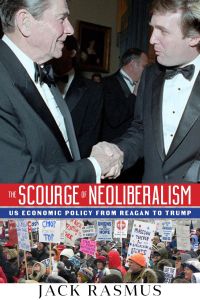
Dr. Jack Rasmus is author of the forthcoming book, ‘The Scourge of Neoliberalism: US Policy from Reagan to Trump’, by Clarity Press, 2019, and ‘Central Bankers at the End of Their Ropes: Monetary Policy and the Coming Depression, Clarity Press, August 2017. He hosts the Alternative Visions radio show on the Progressive Radio Network and blogs at jackrasmus.com. His twitter handle is @drjackrasmus

.

Trump and China president, Xi, meet tomorrow at G20 to seek compromise on ‘trade war’. If Trump’s past behavior re. phony trade war with Europe, So.Korea, and Mexico-Canada are a pattern, Trump will back off his escalating tariffs and tough talk on China trade. No final deal likely, but likely token retreat by both sides from existing tariffs, or agreement to hold more meetings between now and January 1, when real tariff war set to begin,or both. China likely to restate concessions on US banks and multinational corporations greater access to China markets (including 51% ownership) and China shift to buy more US agricultural goods. Trump likely to delay January 1 $200 billion tariff hikes. 60-40 chance both sides back off from drift to trade war. Words and vague promises by US and China on China tech transfer and nextgen military technology development by China as cover. Another token USMCA-like Nafta 2.0 likely to emerge. Why? Trump under pressure from stock markets keying on trade war (and Fed rate hikes), growing opposition in Congress to Trump trade policy, serious events emerging with Cohen-Mueller investigation of Trump-Russian Oligarch connections.

Listen to my Nov. 30 Alternative Visions radio show discussing scenarios and likely outcomes of latest version of Trump phony trade war. Also, what’s really behind GM’s announced 14,000 layoffs, and how Fed chair, Powell, is backing down from more 2019 rate hikes as the US markets weaken and global and US economies show signs of slowing in 2019.

TO LISTEN: GO TO

https://prn.fm/alternative-visions-china-trade-gm-layoffs-trump-v-fed-11-30-18/

OR GO TO:

http://alternativevisions.podbean.com

SHOW ANNOUNCEMENT

Dr. Rasmus speculates on possible outcomes of the Trump-Xi meeting at G20 in Buenos Aires this coming weekend and provides a background history of US-China ‘trade war’ since May 2018; the latest moves of factions within US trade negotiations delegation; and Trump’s failure to get China to the negotiating table. Also, China’s past concession signals and US responses. And the Pence speech at the recent Asia-Pacific conference & US trade representative, Robert Lighthizer’s latest anti-China report released before the G20. Possible tactical outcomes and responses by China & US after the G20 meeting, and ‘wildcards’ that may impact post G20 events (including recent Cohen-Mueller developments). Rasmus next discusses GM’s announcement of 14,000 layoffs and what’s really behind it as GM pressures Trump for more car tariffs and tax credits. The show concludes with discussion of Federal Reserve chair, Powell’s, ‘about face’ this past week on slower further Fed rate hikes, only weeks after signaling in October many more hikes were coming. The Fed’s fiction of ‘neutral’ interest rate and myths about central bank (Fed) independence. (Check out the Rasmus blog, jackrasmus.com, for an excerpt from Rasmus’s forthcoming book, ‘Alexander Hamilton and the Origins of the Fed’, debunking the myth of central bank independence). Next week: Report back on the G20 Meeting and its fallout.

Listen to my interview with the Critical Hour radio show for my critique of the Democratic Party’s 2018 ‘suburban’ strategy that will fail as a general strategy for the 2020 elections. Listen to the first 18:54 minutes of the show.

Go to: https://sputniknews.com/radio_the_critical_hour/201811161069855171-as-democrats-rule-the-house/

The US and China now approach the cliff of a real trade war. Tariffs in the hundreds of billions of dollars have been announced, but not yet implemented except for $50 billion on carefully selected mutual imports designed to have minimal impact on the economies. That is about to change come January 1, 2019. As the date approaches the China-US pending trade war is taking on elements and appearances of a potential new cold war as well; Technology issues–in particular those impacting new generation military technologies–have come to the fore in the US-China trade negotiations (under the cover phrase of ‘intellectual property’). US hardliners in the negotiations (Lighthizer, Navarro, Bolton) are closely allied with the Pentagon, military contractors, and US companies being challenged by China’s rising competence in AI, cybersecurity, and 5G wireless–i.e. the key military technologies of the future.

The upcoming G20 summit in Buenos Aires will include a meeting one on one between Trump and China’s president, Xi. Will they come to an agreement in principal and turn from the pending trade war and another cold war? Or will the meeting result in a general ‘look good’ announcement for the media as they fail to agree, and as the anti-China neocon-Pentagon-military industrial complex in the US prevail and drive the US in 2019 toward a bona fide trade war and Cold War 2.0 between the US and China.

Listen to my last week’s Alternative Visions radio show of November 26, 2018 during which I dedicate the show to discussing the issues. And listen to my upcoming next show where the Buenos Aires G 20 meeting will be the subject.

TO LISTEN GO TO;

http://prn.fm/alternative-visions-us-v-china-eve-g20-buenos-aires-meeting/

OR GO TO:

http://alternativevisions.podbean.com

SHOW ANNOUNCEMENT:

The NY Times just published the first of a series of articles on China’s economic rise, timed for Trump’s G20 meeting with China president, Xi, next week. Rasmus comments on the Times article and its focus on an ‘Epochal Contest’ emerging between US and China. While the Times article analysis is mostly anecdotal, Rasmus provides a deeper, historical explanation behind China’s rise since 1983 to a virtual co-equal challenger to the US’s dominant role in the global economy. The US-China current trade ‘war’ is just the ‘tip of the spear’ of the US pushback. Rasmus explains how China’s economic growth has been driven by an infusion of money capital since the 1980s mostly from the US, its integration into the global trading system permitted by the US), and the US willingness to run a massive trade deficit with China to create the US ‘twin deficits’ system using to finance budget deficits (and in turn permit massive US tax cutting and war spending in the 21st century). How China’s rapid growth strategy has been managed, in contrast to the US, with significant government participation (public banks, local government construction projects, domestic and now international infrastructure, a 40% of GDP government investment policy, massive public education and internal immigration, tech transfer from multinational corporations, state owned enterprises, and a focus on fiscal policy as government spending instead of US focus primarily on monetary policy. How China spent 16% of GDP on fiscal spending to recover from 2008, while the US spent 5% (mostly tax cuts and handouts to state governments). China’s latest initiatives in AIIB, One Belt One Road, Yuan approval by IMF, etc. (Next week: The G20 Trump-Xi Meeting and the Real Trade War)

One of the key characteristics of the 2008-09 crash and its aftermath (i.e. chronic slow recovery in US and double and triple dip recessions in Europe and Japan) was a significant deflation in prices of global oil. After attaining well over $100 a barrel in 2007-08, crude oil prices plummeted, hitting a low of only $27 a barrel in January 2016. They slowly but steadily rose again in 2016-17 and peaked at about $80 a barrel this past summer 2018. Now the retreat has started once again, falling to a low of $55 in October and remain around $56 today, likely to fall further in 2019 now that Japan and Europe appear entering yet another recession and US growth almost certainly slowing significantly in 2019. With the potential for a US recession rising in late 2019 oil price deflation may continue into the near future. What will this mean for the global and US economies?

The critical question is what is the relationship between global oil price deflation, financial instability and crises, and recession–something mainstream economists don’t understand very well? Is the current rapid retreat of oil prices since August 2018 an indicator of more fundamental forces underway in the global and US economy? Will oil price deflation exacerbate, or even accelerate, the drift toward recession globally now underway? What about financial asset markets stability in general? What can be learned from the 2008 through 2015 experience?

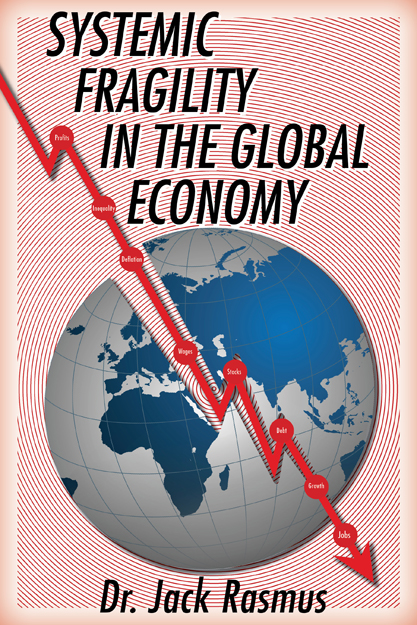
In my 2016 book, ‘Systemic Fragility in the Global Economy’ and its chapter on deflation’s role in crises, I explained that oil is not just a commodity but, since the 1990s, has functioned as an important financial asset whose price affects other forms of financial assets (stocks, bonds, derivatives, currencies, etc.). Financial asset price volatility in general (bubbles and deflation) have a greater impact on the real economy than mainstream economists, who generally don’t understand financial markets and cycles, think. Hence they don’t understand how financial cycles interact with real business cycles. This applies as well to their understanding of oil prices as financial asset prices, not just commodity prices.

For my comments on global oil deflation in 2014-15, go to my website for the excerpt from the chapter from the ‘Systemic Fragility’ book that explain the role of global crude oil prices as financial asset prices. This article is reproduced, with the excerpts from 2016, from the book. Go to: http://kyklosproductions.com/articles.html)

Oil Price Deflation Revisited 2018

Oil is a commodity whose price is determined by the interaction of supply and demand; but it is also a financial asset the price of which is determined by global finance capitalists’ speculation in oil futures markets and the competition between various forms of financial assets globally. For the new global finance capital elite (also addressed in the book) look at the returns on investment (e.g. profits) from financial asset investing globally—choosing between oil futures, stocks, bonds, derivatives, currencies, real estate on a worldwide basis.

The price of crude oil futures drives the price of crude oil in the short and medium term, as a commodity as speculators bet on oil supply and demand; and the relative price of other types of financial assets in part also determine the demand of oil speculators for oil futures.

What this means is that simply applying supply and demand analysis to determine the direction of crude oil prices globally is not sufficient. Neither supply nor demand has changed since August 2018 by 30% to explain the 30% drop in crude oil to its current mid-$50s range; nor will it explain where oil prices will go in 2019. Nevertheless, that’s what we hear from economists today trying to explain the recent drop or predict the trajectory of global oil price deflation in 2019.

What Mainstream Economists Don’t Understand

Mainstream economists are indoctrinated in the idea that only supply and demand determine prices. It harkens back to the influence of classical economics of the 18th century and Adam Smith. Supply and demand are the appearance of price determination. What matters are the forces behind, beneath and below that cause the changes in supply and demand. Those forces are the real determinants. But mainstream economists typically deal at the surface of appearances, which is why their forecasts of economic directions in the medium and longer term are so poor.

Looking at recent explanations and analyses by mainstream economists, and their echo in the business media, we get the following view:

First, it is clear that there are three major sources of oil supply globally today: US production driven by technology and the shale fracking revolution. Second, Russian production. Third, OPEC, within which Saudi Arabia and its allies, UAE, Kuwait, etc. Each produce about 10-11 million barrels per day, or bpd.

Since this summer, US fracking has resulted in roughly an additional 670,000 barrels a day by October compared to last July 2018. Both Saudi and Russian production has added roughly 700,000 more, each respectively. Offsetting the supply increase, in part, has been a reduction in output by Venezuela and Iran—both driven by US sanctions and, in the case of Venezuela, US longer term efforts to prevent the upgrading and maintenance of Venezuelan production.

The more than 2 million bpd increase in global crude oil supply by the global oil troika of US- Russia-Saudi has, on the surface, appeared as a collapse in global oil prices from $80 to $55, or about 30% in just a few months. Projections are supply increases will drive global oil prices still lower in 2019: US forecasts for 2019 are for an average of 12.06 million bpd; for Russia an average of 11.4 million bpd; and for Saudi an average of 10.6 million bpd. (Sources: EIA and OPEC secretariat).

Demand & Supply as Mere Appearance

So the appearance is that supply will drive global oil prices still lower in 2019. But what about demand? Will the forces behind it drive oil price deflation even further? And what about other financial asset markets’ price deflation? Will declines in stock, bond, derivatives, and currencies prices result in financial capitalist investors increasing their demand for oil futures as they shift investing from the collapse of values in those financial markets to oil? Or will it reduce their investing in oil futures as other financial asset markets prices deflate, as a psychological contagion effect spreads across financial asset markets in general, oil futures included?

While mainstreamers focus on and argue that pure supply considerations will predict the price of oil, my analysis insists that a deeper consideration of forces are necessary. What’s driving, and will continue to drive, oil prices are Politics, other financial markets’ price deflation, and Demand that will be driven by renewed recessions in the major advanced economies (Europe, Japan, then US, and continued GDP slowdown in China).

As global economic growth slows, now clearly underway, more than half of the world’s oil producers will increase oil production. Russia, Venezuela, Iraq, smaller African and Asia producers, are dependent on oil sales to finance much of their government budgets. As real growth slows, and recessions appear or worsen, deficits will rise further requiring more government revenues from oil sales. What these countries can’t generate in revenues from prices they will attempt to generate from more sales volume. Even Saudi Arabia has entered this group, as it seeks to generate more revenue to finance the development of its non-energy based economy plans.

So Russia and much of OPEC for political reasons will increase supply because of slowing economies—i.e. because of Demand originally and Supply only secondarily. As the global economy continues to slow Demand forces trump those of Supply. But the two are clearly mutually determined. It’s just that Demand has now become more determining and will remain so into 2019.

Debt as a Driver of Global Oil Deflation

But what’s ultimately behind the Demand forces at work? In the US it’s technology, the fracking revolution, driving down the cost of oil production and thus its price. It’s also corporate debt, often of the junk quality, that has financed the investment behind the oil production output rise. Drillers are loaded with junk bond debt, often short term, that they must pay for, or soon roll over now at a higher interest rate in 2019 and beyond. They must produce and sell more oil to pay for the new technology driven investment of recent years. And as the price falls they must produce and sell still more to generate the revenue to pay the interest and principal on that debt.

So is it really Supply, or is it more fundamentally the debt and technology that’s driving US shale output, that in turn is adding to downward global price pressures? Is it Supply or is it the way that Supply has been financed by capitalist markets?

Similarly, in the case of Russia and much of OPEC, is it Supply or is it the need of those countries to finance their government growing debt loads (and budgets in general) by generating more sales revenue from more oil output, even as the price of oil falls and thereby threatens that oil revenue stream?

Whether at the corporate or government level, the acceleration of debt in recent years is behind the forces driving excess oil production and Supply that appears the cause of the emerging oil price deflation.

Politics as a Driver of Global Oil Deflation

Domestic and global politics is another related force in some cases. Clearly, Russia is engaged in an increase in its military research and other military-related government expenditures. Its governing elite is convinced the US is preparing to challenge its political independence: NATO penetration of the Baltics and Poland, the US-encouraged coup in the Ukraine, past US ventures in Georgia, etc. has led to Russian acceleration of its military expenditures. To continue its investment as the US attempts to impose further sanctions (designed to cut Russia connections with Europe in particular), and as Russia’s economy slows as it raises its domestic interest rates in order to protect its currency, Russia must produce and sell more oil globally. It thus generates more demand for its oil competitively by lowering its price. Demand for Russian oil increases—but not due to natural economic causes as the world economy slows. It increases because it shifts oil demand from other producers to itself.

Saudi politics are also in part behind its planned production increase. It has stepped up its military expenditures as well, both for its war in Yemen and its plans for a future conflict with Iran. The Saudi government investment in domestic infrastructure also requires it to generate more oil revenue in the short term.

The recent Russian-Saudi(OPEC) agreement to reduce or hold oil production steady has been a phony agreement, as actual and planned oil production numbers clearly reveal.

Not least, there’s the question of global financial asset markets’ in decline with falling asset prices and how that impacts the oil commodity futures financial asset market. Once again, changes in oil supply and demand simply do not fluctuate by 30% in just a couple months. The driver of oil prices since July 2018 must be financial speculation in oil futures.

Here it may be argued that investors are factoring in the slowing global economy, especially in Europe and Japan, in coming months. They may be shifting investment out of oil futures as a speculative price play, and into US currency and even stocks and bonds. Or into financial asset markets in China. Or speculating on returns in select emerging market currencies and stocks that have stabilized in the short term and may rise in value, producing a nice speculative gain in the short run. The new global finance capital elite looks at competitive returns globally, in all financial asset markets. It moves its money around quickly, from one asset play to another, enabled by technology, past removal of controls on global money capital flows, easy borrowing, and ability to move quickly in and out of what is a complex network of highly liquid financial asset markets worldwide. As it sees global demand and politics playing important short term roles in global oil price declines, it shifts investment out of oil futures and into other forms of financial assets elsewhere in the global economy. Less supply of money capital for investing in oil futures reduces the demand for oil futures, which in turn reduces demand for oil and crude oil prices in general.

Conclusion

What this foregoing discussion and analysis suggests is the following:

• Looking at oil supply solely or even primarily is to look at appearances only
• But Supply & Demand analyses of oil prices are also superficial analyses of appearances. They are intermediate causal factors at best.
• What matters are real forces that more fundamentally determine supply and demand
• Politics, technology, and debt financing are more fundamental forces driving supply and demand in the intermediate and longer run.
• Oil is not just a commodity, since the 1990s especially; it has become a financial asset whose price is determined in the short run increasingly by speculative investing shifts by global finance capital elites.
• As financial assets, oil prices are determined in the short run globally by the relative price of other competing financial assets and their prices
• The structure of the global economy in the 21st century is such that a new global finance capital elite has arisen, betting on a wide choice of financial assets available in highly liquid financial asset markets, across which the elite moves investments quickly and easily due to new enabling technologies and past deregulation of cross-country money capital flows

To summarize, as it appears increasingly that politics (domestic budgets and revenue needs, US sanctions, rising military expenditures, trade wars, etc.) and a slowing global economy are causing downward pressure on oil demand and thus oil prices; this price pressure is exacerbated by a corresponding increase in production and supply as a result of rising corporate and government debt and debt-servicing needs. However, in the very short run of weekly and monthly price change, it is global oil speculators betting on further oil price deflation and shifting asset investment returns elsewhere that is the primary driver of global oil deflation.

Global oil prices are in determined by other financial asset market price deflation underway in the short term, and in turn determine in part price deflation in other financial asset markets. Global oil prices cannot be understood apart from understanding what’s happening with other financial asset markets and prices.
Understanding and predicting oil prices is thus not simply an exercise in superficial supply and demand analysis, and even less so an exercise primarily in forecasting announcements of production output plans by the big three troika of US-Russia-Saudi.

Jack Rasmus is author of the forthcoming 2019 book, ‘The Scourge of Neoliberalism: US Policy from Reagan to Trump’, Clarity Press, and the recently published ‘Central Bankers at the End of Their Ropes: Monetary Policy and the Coming Depression’, Clarity 2017. He hosts the Alternative Visions radio show on the Progressive Radio Network. His twitter handle is @drjackrasmus and his website, http://kyklosproductions.com