Feeds:
Posts
Comments

The two most disliked candidates in modern U.S. election history did not disappoint U.S. voters’ low expectations of their performance in the second presidential debate held October 9 in St. Louis.

Both candidates spent most of their time attacking each other as either ‘morally unfit’ to be president, chronically prone to ‘bad judgement’, and habitual liars. Issues of real importance to voters were again, as in the first debate, altogether absent or, at best, were briefly and superficially addressed.

The continued mudslinging was fueled by the release of videos this past week, taken a decade or more ago, showing Trump bragging about his ability to sexually dominate women and making other generally extreme misogynist comments.

The videos set off a firestorm among the Republican elite over the week. Some began calling for Trump to drop from the race. Others talked of ‘pulling the plug’ on Republican Party financial assistance to Trump’s campaign. How Trump performed in this second debate would no doubt determine whether such talk translated into action, as the Republican camp showed signs of splitting down the middle even further and the party’s elite abandoning their candidate.

This potential ‘hard split’ among Republicans in the United States, the party elite vs. a majority of its members, is not unlike similar party developments in Europe, where the British Labour party elites have been attacking their public leader, Jeremy Corbin, for abandoning their neoliberal policy regime; or in Spain where the Socialist Party leader was recently dumped; or in France where presidential Holland will soon be. The economic recovery since 2009 that has benefited only the economic elites—in the United States 95 percent of all the net income gains since 2009 have accrued to the wealthiest 1 percent households—has been translating into a grass roots disaffection from political parties. As one of the press commentators put it after the second U.S. debate, “This election is about the American people vs. the Political Class.” But it’s not just an American phenomenon. The trend is becoming generalized across many of the advanced economies.

Trump fielded the damning video evidence of his misogynist bragging by saying it was only ‘locker room’ talk. Only words. He then went on the offensive against Hillary Clinton, saying that while his were only ‘words’, Hillary’s husband, past president Bill Clinton, engaged in actual sexual abuse and was impeached for it. The Trump camp had brought three women to the debate who were involved in Bill Clinton’s impeachment charges or were subjects of Clinton’s sexual misconduct. Trump further accused Hillary of laughing when, as a prosecuting attorney, she got her client saved from jail time in a rape case involving a 12 year old. Both candidates thus showed they would go to whatever lengths to dredge up decades old evidence to prove their opponent as ‘morally unfit’.

An interesting, related detail to the ‘morality telenovela in real time’ that has become the U.S. presidential election, is that the videos of Trump were released more or less simultaneous with the Wikileaks’ release last week showing Clinton’s plans to run her campaign with one set of proposals and promises communicated to private big banker-corporate donors, while planning to say the opposite to voters. When challenged by Trump to explain the leak and her implied ‘two-faced’ approach to U.S. voters, Hillary hid behind the example of Abraham Lincoln, saying he did the same and the practice was therefore legitimate.

This ascerbic exchange was preceded by Hillary’s reference to Russia and its president, Vladimir Putin, accusing them of hacking the Democratic Party and the U.S. election in order to aid Trump. The U.S. media in recent weeks has picked up this idea, for which there is no evidence to date, and has been promoting it widely. It is yet another dimension of the growing shift in U.S. elite toward confronting Russia. Hillary’s implicit suggestion in the debate was the Wikileaks release reflects Putin-Russian interference in the US election to aid Trump. The timing of the release of the Trump videos and the Wikileaks material raises the question whether in coming weeks voters can expect more of the same—i.e. more damaging Trump videos being released, perhaps not coincidentally, as more promised Wikileaks releases appear damning Clinton.

The second debate revealed yet another, even more ominous anti-Russia theme worth noting. In a reply to a question about what would the candidates do about Syria and Aleppo, Hillary declared the Russian air force in Syria is determined to destroy Aleppo. Russia has ‘gone all in’ in terms of ambition and aggressiveness in Syria, she added. Russia’s war crimes should therefore be investigated. Furthermore, a ‘no fly zone’ should be imposed in Syria. What she didn’t explain is if Russian planes ignored the U.S. ‘no fly zone’, would the United States try to shoot them down? And what if U.S. planes were shot down, as Russians retaliated? Clinton’s exchange revealed the U.S. ‘war hawk’ faction’s increasingly desperation concerning the Syria conflict, in which the United States has been increasingly sidelined and Russia has become more influential.

The debate moderator, Martha Radditz, then asked Trump what he would do in Syria, since Trump’s vice-presidential running mate, Pence, had just days before declared, agreeing with Clinton, “the U.S. should be prepared to strike military targets of the Assad regime”, presumably including airfields with Russian planes. Trump replied “I disagree”, and that the focus should be on dealing with ISIS. Trump’s disassociating from his VP, Hillary, and the war hawk faction created some stir and commentary in the post-debate discussion by pundits and talking heads.

Another notable exchange during the debate occurred when Trump attacked Clinton for deleting her emails after receiving a subpoena, when Secretary of State. He then dropped yet another debate bombshell by saying when he’s president he would appoint a special prosecutor to investigate Hillary’s action. When she rejected the notion as an example of Trump’s ‘imperial presidency’ view, Trump retorted it didn’t matter “because you’ll be in jail”.

Hillary clearly scored points in the debate, however, when the discussion turned, on occasion briefly, to actual policy. Trump noted costs of Obamacare had risen 68 percent, and that voters were drowning under rising costs of premiums, deductibles and copays. He advocated repeal and a total restart. Clinton, however, argued to fix it, and keep the good elements, whereas Trump would return health care to insurance and pharmaceutical companies’ price gouging and coverage denial, as in the past.

Clinton scored points in the exchange on taxes as well, noting that Trump’s plan to reduce taxes from 35 percent to 15 percent would benefit the rich twice as much as had George W. Bush’s tax cuts. She proposed no tax hikes on anyone earning less than US$250,000 a year, with taxation raised only on the wealthy.
The second presidential debate changed little in terms of voter preference, according to post debate polls.

The unfavorability ratings for both candidates were virtually unchanged: Clinton with 45 percent unfavorable rating before the debate and 44 percent after; Trump with 64 percent unfavorable both before and after. In national polls Clinton enjoyed a wide margin of support among women before the debate, which has grown further after events of the past week. This margin may prove significant in the election outcome, providing it carries over to the 8 or 9 swing states where the election will be determined by voter turnout–perhaps even before November since 30 percent vote by mail before and that voting has already begun.

In the second debate, Trump’s strategy was clearly to shore up his conservative base by returning to the extreme anti-Hillary rhetoric that got him the nomination. Themes of Clinton as ‘liar’, ‘devil’, and ‘put her in jail’, were resurrected. He may have restored his base after the events of the past week, and by performing relatively better in the second debate (a very low bar), but that may not prove sufficient to win in November. Clinton has used the events of the past week and the debate to deepen her support among women voters. However, an expected ‘knock out’ debate, where Trump was decisively defeated, did not happen.

But debates and national polls are almost irrelevant at this stage. The outcome will be determined in the eight to nine swing states. With 87 percent of voters decided and neither candidate able to ‘move the needle’ in debates, it’s about whether Trump turns out more of his base in the swings states and whether Hillary can change the minds of millennials, Latinos, and others to turn out to support her after they have felt betrayed by Obama’s second term and its failure to deliver on promises made in 2012.

In the meantime, audiences can just ‘enjoy’ (and weep) the morality telenovela that is the current U.S. presidential election.

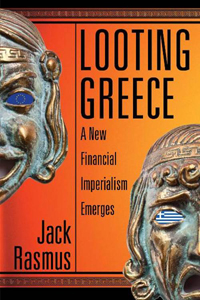
Jack Rasmus is the author of the just-released book, “Looting Greece: A New Financial Imperialism Emerges,” and the previous, “Systemic Fragility in the Global Economy.”, both published by Clarity Press, 2016. He blogs at jackrasmus.com.

Listen to my recent 39 min. interview with Dialogos Radio worldwide, on the German-Eurozone origins of the Greek debt crisis and the deeper crisis in the Euro system itself.

Go to:

http://www.kyklosproductions.com/audiocds.html

Or go to:

SUMMARY OF INTERVIEW TOPICS:

In his interview with Greek ‘Dialogos Radio’, Dr. Rasmus explains the current state of the on-going Greek debt crisis and depression, and explains how Greece’s continuing economic and political crisis is but part of the larger crisis of the Eurozone system (as described in more detail further in his just published book, Looting Greece: A New Financial Imperialism Emerges by Clarity Press, September 2016). In the interview, Rasmus explains in detail why Greece must create a parallel currency to the Euro, reassert independent control over its central bank, and nationalize its banking system if it ever expects to recover from its on-going economic depression. Rasmus, further explains why Greece is a case example of a new emerging financial exploitation in the 21st century global economy. The interview concludes with Rasmus providing his outlook for an increasingly fragile Eurozone banking system (German-Italian in particular)

TO listen to my Alternative Visions Radio Show of October 10, 2016, on this topic,

Go to:

http://prn.fm/category/archives/alternative-visions/

Or go to:

http://www.alternativevisions.podbean.com

SHOW ANNOUNCEMENT

Dr. Rasmus explains why a Federal Reserve interest rate hike is coming very soon. Why central bank monetary policies in US, Europe and Japan have failed miserably to generate real economic growth since 2010, but were always focused on boosting stock, bond and other financial markets. Now, however, they no longer even stimulate financial assets but are increasingly causing financial instability in pension funds, insurance annuities, bank margins, retirees’ consumption, and will therefore soon be shelved. Anticipating the shift, central banks in Europe and Japan are adjusting their monetary policies in turn. The likely negative consequences of the US Fed rate shift globally are discussed. A new shift to fiscal infrastructure spending, business tax cuts, and abandonment of austerity fiscal policies are now on the agenda following the US election and in 2017 in Europe and beyond. The show concludes with analysis of the 1st presidential debate and why Trump, despite a disastrous debate performance may still win critical ‘swing states’ in November.

A week ago, on Monday, September 26, the 1st Presidential debate was held. 84 million watched the two most disliked candidates in perhaps more than a century square off and debate.

The one, Donald Trump, a self-proclaimed billionaire wheeler-dealer real estate developer backed by billionaire economic advisers and campaign contributors like sleazy Casino magnate Sheldon Adelson, hedge fund vultures Robert Mercer and John Paulson, private equity king Stephen Feinberg and at least a dozen other billionaires that constitute Trump’s current ‘economic team’; the other, Hillary Clinton, a mere multimillionaire worth a paltry $200 million (not counting her foundations valued at around $400 million), who has accumulated her wealth in just the past decade by means of her (and her husband Bill’s) close connections to investment bankers like Goldman Sachs CEO, Lloyd Blankfein, billionaire hedge fund managers like George Soros and James Simons, multinational tech company CEOs, and billionaire corporate media families like the Sabans, Katzenbergs, and Coxes.

The major economic issues raised in the debates included jobs, trade, taxes and the $20 trillion US government debt. On domestic policy, the focus was racism and gun violence. On foreign policy—Isis, Iraq, NATO, China, first use of nuclear weapons, and Russia.

Taxes and Jobs

Trump proclaimed his plan would cut taxes by $12.5 trillion. He proposed to pay for the cuts by repatriating $5 trillion of cash US corporations continue to hoard offshore. The incentive to repatriate the $5 trillion would be to reduce the corporate tax rate to 5% to 7%, instead of the current 35. But Trump conveniently ignored pointing out this repatriation trick was already played in 2005-06 under George W. Bush. US corporations had accumulated $2 trillion offshore, were given by Congress a ‘pass’ and a lower rate of 5.25% to repatriate so long as they created US investment and jobs with remainder of the repatriated funds. They brought it back, all right, but did not create jobs and instead used the excess profits they realized to buy up companies and pay out dividends to shareholders.

But Clinton carefully did not pick up this issue and use it against Trump in the debate. Why? Because Democrats in Congress are currently proposing the same tax repatriation scam as Trump and Clinton admitted she too supported ‘repatriation’ business tax cuts.

While talking in generalities about ‘taxing the wealthy’, Clinton carefully avoided mentioning that tax cuts for business under Obama have been even more generous than they were under George W. Bush. Bush tax cuts from 2001-2008 amounted to approximately $3.7 trillion—of which it is estimated 80% accrued to businesses and wealthiest households. Obama extended the Bush tax cuts for two years from 2008 to 2010, at a cost of another $450 million, then provided another $300 million in his 2009 bailout package, and then struck a deal with Congress to cut taxes another $4 trillion in January 2013 by again extending Bush’s tax cuts another decade through 2022.

And conspicuously missing in the debate was that neither candidate commented on whether they supported the further major tax cuts for corporations being planned to passage right after the November elections. That’s because both no doubt will support it when it comes up for voting in Congress soon following the election.

Both candidates avoided responding directly to the moderator’s question: ‘Would you support raising taxes or reducing taxes on the wealthy”. Instead of substance, the debate on taxes focused on whether Trump personally paid taxes and why he refuses to release his tax returns. Clinton kept pressing the subject, scoring points repeatedly as Trump fumbled the issue of his personal taxes. He finally responded to why he hasn’t paid taxes or released his tax records with “I guess that makes me smart”—a remark that will no doubt cost him significant votes.

In the debate, both candidates supported the myth that tax cuts create jobs. The only difference between them is which cuts. Trump meant corporate tax cuts. Clinton meant a mix of business and non-business. But the historical record shows clearly there is no relation between tax cuts in general, and business tax cuts, and job creation in the 21st century. US manufacturing employed 18 million workers in 2000. After nearly $10 trillion in tax cuts, it now employs 12 million. Construction employment has similarly declined. While service jobs have increased since 2000, so too have the ranks of the part time, temporary, and those employed in the underground economy. Together with these ranks of partially employed, more than 6 million more have left the labor force in the US—a net poor return in jobs for the nearly $10 trillion in tax cuts.

NAFTA, TPP and Trade

Trump’s business constituency of real estate and financial interests is less concerned with trade deals than Clinton’s. Trump is also targeting small businesses, which typically don’t export but are harmed by imports, as well as white working class in the Midwest whose incomes have been devastated by free trade deals like NAFTA. However, unlike before the debate, he didn’t declare he would discontinue the existing trade deals. He promised first to stop the further offshoring of US jobs —without explaining how he would do this—and also left unexplained how he proposed to get the millions of jobs previously offshore back to the US. Clinton too provided no details how to get the jobs back or what she would do to stop future bloodletting of US jobs offshore.

While declaring NAFTA as ‘defective’, Trump simply added “we need to renegotiate trade”—a position little different from Clinton’s that we “need to take a new look at trade”. The debate thus talked in generalities that leave the door open after the election for either to support the TPP and undertake token reforms at best regarding NAFTA. More revealing of Clinton’s true intentions perhaps was her off the cuff comment that she’d vote again for CAFTA (Central American Free Trade Agreement) if given the opportunity.

Debt and Defense Spending

Trump several times during the debates referred to the nearly $20 trillion in US national debt. But what he failed to mention is that studies show about 60% of that debt is due to tax cuts and declining US tax revenues. Another $3 trillion at least is due to US war spending since 2003. Yet in the debate Trump called for accelerated war spending, while Clinton said nothing about whether she would increase war spending or reduce it. Her silence spoke volumes on that topic, however, as did her repeated references to the need to confront Russia and China. While Trump directly indicated he would not use nuclear weapons first, Hillary avoided answering the moderator’s question, implying perhaps she would, which has been the US official position to date.

The Silly Subjects

Much of the time of the debate was also consumed by extensive discussion of such silly issues as whether Obama was born in the US, whether Hillary had the ‘stamina’ to be President or Trump the ‘temperament’, Trump’s personal bankruptcies, and whether each would accept the outcome of the vote.

The Missing Debate

More important perhaps than what was said was what was ignored and not discussed by the candidates during the debate—like the stagnating and declining incomes of tens of millions of working and middle class Americans since 2000, the simultaneous approximate 10 trillions of dollars in capital gains, dividends and interest income obtained by the wealthy 1% over the same period, the collapsing pension and retirement systems today in the US, the increasingly unaffordable rents and healthcare insurance costs, US drug companies’ price gouging and unraveling of Obamacare, the US central bank’s policy of low interest rates destabilizing the economy, the consistent violation of regulations by bankers, the new US military adventures now being prepared for Russia’s east Europe border and China’s coast, the militarization of US police forces, what to do about racism and gun violence besides meaningless calls to ‘improve community-police relations’. Nothing was said about global climate crisis by either candidate; nor about the opaque manipulations, by both candidates, of their personal foundations for political use.

The Aftermath

In the days immediately following the debate, the general consensus was that Trump’s rambling and unfocused responses to Clinton meant he had clearly performed poorly and had lost the debate. Clinton recovered in the polls, pulling even or just a few points ahead in national polling and assuming a slight lead in several of the ‘swing states’. But with 87% of voters having already decided, national poll results are largely irrelevant, and the margin of error in the polling in the swing states still remains so narrow, post-debate, that it is insignificant in most of the swing states.

How is it that Trump could have performed so poorly in the TV debate and the race still remain so close? What the past week does show is that despite Trump doing all he can to put his foot in his mouth, and help Clinton with outrageous sexist and racist statements, there still remains a large, widespread and hardened discontent with Clinton. The first debate should have clearly ‘put Trump away’, and locked in an eventual November victory for Clinton, but it hasn’t. Which candidate turns out its traditional base to vote in November in the swing states still remains the key element for who wins the election.

Given that strategic reality, it’s not surprising that Clinton in the past week has intensified efforts toward trying to convince millennials to turn out to vote for her. A Democrat Party ‘full court press’ has been launched targeting the under-35 voters, many of whom had defected to Sanders in the primaries as well as to the Libertarian candidate, Johnson, and Green Party candidate, Jill Stein.

In synch with this effort, this past week the anti-Trump mainstream corporate media has stepped up its critique and efforts to marginalize both Johnson and Stein, pressing the old theme that ‘a vote for a third party is a vote for Trump’. The past week Clinton campaign thus began mobilizing Sanders and liberal darling, Elizabeth Warren, having them tour college campuses pitching the theme to millennials to ‘get out and vote’. Simultaneously, Clinton herself has begun to prioritize themes of college tuition and child care more in her speaking engagements and in her media advertising. In the remaining weeks before the election, watch for the Clinton camp to launch new initiatives as well to shore up her weak base among white working class voters in the Midwest swing states, and among Latinos there and in Florida, Virginia-Carolinas, Colorado-New Mexico-Nevada.

The Clinton campaign has clearly not yet turned out the defections of the youth, under-30 vote, lost during the primaries. Nor has it been able to excite Hispanics and Latinos as did Obama in 2008 and 2012 with false promises of Dream Acts and Immigration justice. And the white, non-college educated working class in key Midwest states remains all but lost to Trump for good.

The continuing hard core discontent with Clinton has its roots not only in her own political record on war, trade, and her intimate ties to the banking and corporate elite, but in the poor economic legacy left by Obama policies and programs over the past eight years. Clinton presses her point the US economy has not been as bad as Trump claims, but for many constituencies—especially youth, minorities, and non-college educated white workers—it is not believable. In fact, for many it has been a disaster. But you won’t hear that truth from the mainstream corporate media or the Clinton camp.

Behind Clinton’s troubles in this election is the ‘gray eminence’ of failed Obama economic and social policies that Democrats refuse to own up to—i.e. creation of only low pay, part-time, temp and ‘gig’ service jobs with no benefits, crushing levels of student debt, escalating rents and health insurance costs under Obamacare, declining savings for tens of millions of retirees after eight years of near zero interest rates by the Federal Reserve under Obama, continuing free trade destruction and offshoring of US manufacturing, millions of homeowners still ‘under water’ on their mortgages, chronically rising household debt, perpetual wars in the middle east, intensifying racism and police violence throughout the US, record levels of immigrant deportations, etc.—in other words, the ‘legacy of Barack Obama’, which hangs like a thick political fog over the Clinton campaign threatening key constituency voter turnout while holding up support for Trump despite his best efforts to scuttle his own campaign with his mouth.

Jack Rasmus is the author of “Looting Greece” and “Systemic Fragility in the Global Economy”, by Clarity Press, 2016. He blogs at jackrasmus.com

Is another global banking crisis taking form in Europe? Listen to my analysis of the recent events surrounding Deutsche Bank in Germany this past week on my radio show, Alternative Visions.

To listen go to:

http://prn.fm/category/archives/alternative-visions/

Or go to:

http://www.alternativevisions.podbean.com

SHOW ANNOUNCEMENT

Dr. Jack Rasmus reviews recent developments in the growing instability in Germany’s largest bank, Deutsche Bank, and explains how it is a reflection of a deeper, ongoing crisis in the Euro banking system itself. Parallels of Deutsche Bank—the ‘Goldman-Sachs’ of Germany—with the 2008 crash of US Lehman Brothers investment bank are discussed, with Rasmus predicting the German central bank, Bundesbank, will eventually bail out Deutsche—unlike the US decision in 2008 to let Lehman go under. Also addressed: how Rasmus’ theoretical work published earlier this year, ‘Systemic Fragility in the Global Economy’, predicted the growing crisis in the Euro banking system, which is now expanding beyond Italy’s banks to Germany and beyond. How the Deutsche crisis is exacerbating in-fighting between the Bundesbank and the European Central Bank, the ECB, and attacks on ECB chair, Mario Draghi. The Deutsche-Euro bank crisis is a reflection of the growing awareness of the failure of the ECB and other central banks’ QE and negative rates policies—including the US Federal Reserve—to stimulate the real economy and only boost stock and other financial markets. Jack explains how the Deutsche affair is also a reflection of the failed structure of the Eurozone currency union itself. The show concludes with brief comments on Saudi Arabia/OPEC’s recent decision to cut oil supplies to raise global prices, how Japan is considering redefining its GDP in order to raise growth on paper, and on the phony debate on taxes during the recent 1st presidential debates this past week between Clinton and Trump. (For more on Jack’s analysis of the 1stpresidential debate, read his article at his blog, jackrasmus.com, or go to the PRN website articles archive after October 1).

(Read my latest published article appearing on Telesur and other blogs)

On the eve of the first presidential debate, concern is growing among Democratic candidate Hillary Clinton supporters that her previous lead in the polls is narrowing and Republican rival Donald Trump is nearly “neck and neck” in voter support in key “swing states.”

In what are two of the three ‘bellweather’ states—Ohio and Florida (the other is Pennsylvania)—Trump appears ahead going into the first televised debate on Sept. 26. As of last week’s mid-September polling, he leads in Florida by 43.7 percent to 42.8 percent for Clinton. Other polls show him with a similar modest lead in Ohio. Should Trump win Florida and Ohio, it is highly likely he’d get the 270 electoral college votes necessary to win; and should he take Pennsylvania as well, it’s virtually assured he would.

U.S. presidential elections are not determined by the popular vote. They never have been. In the archaic and basically undemocratic U.S. electoral system—dominated by the highly conservative institution called the electoral college—all that matters this year is who wins the electoral college votes in the 8 or 9 “swing states.”

The remaining states are safely in either the Clinton or the Trump camp. The swing states, sometimes called the “battleground” states, are: Ohio, Florida, Pennsylvania, Michigan, Iowa, Wisconsin, Virginia, Colorado, and maybe North Carolina this year. The largest in terms of potential electoral college votes are Florida and Ohio. Pennsylvania is also significant. Whoever wins Florida, Ohio and Pennsylvania—the bellwether states—will almost assuredly carry the other five as well; and whoever wins most of the swing states, wins the election.

Clinton may have problems mobilizing the very voter constituencies that made the big difference in giving Obama one more chance in 2012.

Trump’s key constituencies are middle-aged and older whites in general, high school or less-educated white workers, religious conservatives, wealthy business types and investors, and the Tea party, radical and religious right. The Democrats’ constituencies are African Americans, Hispanics, immigrants, the college-educated, urban women, trade unions in public employment and what’s left of the industrial working class, students and millennial youth under 30. This is the “Obama Coalition” created in 2008, that was barely held together in 2012, and is now in the process of fragmenting in 2016. The consequences of that break up may be determine the coming election.

The Ghost of Free Trade

The first ghost haunting Clinton is her historic, long-term advocacy of free trade deals from NAFTA to the current Trans-Pacific Partnership. Clinton has said she does not agree with the TPP, but only in its present form. She promises to “take a look” at it if elected. But that’s waffling that won’t fool union and white working class voters in the Ohio-Pennsylvania-Michigan-Wisconsin swing states that have seen their good jobs offshored and sent to other countries as a direct result of free trade deals from Bill Clinton’s NAFTA to Barack Obama’s TPP.

Nor will this former Democrat constituency forget how Obama in 2008 pledged, similar to Hillary, to take a look at changing NAFTA, but then went on to become the biggest advocate of free trade ever—cutting deals with Panama, Colombia, bilaterally with other countries and is now pushing hard for TPP and a similar deal with Europe.

Union workers in the Great Lakes area of Ohio-Pennsylvania-Michigan played a major role in carrying those swing states for Obama in 2012. The majority have likely already gone over to Trump, who’s position on free trade deals is more directly opposed than Hillary’s carefully worded ambivalence. If they turn out to vote, it will be for Trump.

The War Hawk Ghost

Another ghost haunting Clinton is her repeated and consistent war-hawk positions assumed while in the senate and then as secretary of state. Hillary voted for the wars in Iraq and Afghanistan, was at the center of initiating war in Libya, and favored more direct U.S. military action in Syria.

As secretary of state, she also allowed—unchecked—her neocon-ridden state department, led by Undersecretary Virginia Nuland, to actively help provoke a coup in the Ukraine in 2014. No matter how hard she tries at the eleventh hour, Clinton cannot shed the war-hawk image she nurtured for more than a decade. This will cost her votes with millennials, who already deserted her for Sanders for her pro-war history.

The Ghost of Abandoned Millennials

College educated millennial youth are also abandoning Clinton as a result of the Obama administration’s failure to do something about their more than $1.2 trillion college debt and the long-term underemployed in part-time and temporary jobs with no benefits and little prospects for the future. The Obama administration may brag of the jobs it has created since the last recession, but most millennials languish in low pay, no benefit service employment, with more than a third living at home with parents and unable to start families or independent lives.

They may not like Trump but their resentment will likely translate into not voting for Clinton. Attempts to lure millennials back with promises of free college tuition are too late for those already indebted; and a few weeks of paid maternity leave for new parents appears as a token alternative for more generous childcare tax cuts proposed by Trump.

The Ghost of the Hispanic Vote

The constituencies of union labor, youth, and people of color were the voters that gave Obama his second chance in 2012 and returned him to the White House. He rewarded trade unions with the TPP and millennials with debt and underemployment.

Obama carried key swing states like Florida, Virginia, Colorado, Iowa and others largely as a result of the Hispanic vote as well. He promised them, in exchange for their vote in 2012, immigration reform, the Dream Act, and direct executive action. What they got was the largest mass deportations in modern U.S. history and broken families. Trump may insult Mexican-American voters with stupid off-the-cuff remarks and silly promises to build walls. But the deportations have had a far more devastating effect on Latino families and voters in key states in the Midwest, southwest and Florida.

Florida is a must-win swing state. Whoever loses Florida would have to win virtually all the remaining swing states. Obama carried more than two-thirds of the Latino vote in Florida in 2012. Clinton has barely 50 percent support of that constituency today. In addition, a majority of the Florida youth vote now favor Trump, not her. The ghost of past mistreated Latinos under Obama thus hangs heavy over Clinton in the present in that state—just as free trade and job loss do in the other key swing states of Ohio and Pennsylvania. Losing the three means virtual defeat.

These ghosts hang heavy over the Clinton campaign in the swing states. Trump will have trouble with establishment Republicans and some Tea party types will certainly go to the Libertarian candidate, Gary Johnson. But Clinton may have even bigger problems with mobilizing white union workers, youth, and Hispanics—the very voter constituencies that made the big difference in giving Obama one more chance in 2012.

How the two candidates perform in the upcoming presidential debates will also weigh heavily on the election outcome. Can Clinton offset her voter turnout disadvantage by clearly prevailing in the upcoming debates? The election may be scheduled for November, but it may be all but over by October if she clearly doesn’t.

Jack Rasmus is the author of the just-released book, “Looting Greece: A New Financial Imperialism Emerges,” and the previous, “Systemic Fragility in the Global Economy.” He blogs at jackrasmus.com.

This past week the Federal Reserve and the Bank of Japan announced new policies that signal their continuing desperation with their failing central bank policies. Their answer to failing central bank policies continues to be ‘more of the same’, i.e. still more free money injections. The BoJ now promises ‘QE for ever’ pegged to the 10 year bond rate fixed at zero interest, while the Fed creates a fictitious ‘neutral federal funds rate’ as the benchmark justifying keeping free money flowing to bankers, shadow banks, and big investors. Listen to my analysis of the recent decisions by the BoJ and the Fed on my radio show this past friday, 9-23.

Go to:

http://prn.fm/alternative-visions-central-bankers-out-of-control-09-23-16/

or go to:

http://alternativevisions.podbean.com/e/alternative-visions-central-bankers-out-of-control-092316/

SHOW ANNOUNCEMENT

Today’s show examines and discusses the past week’s major decisions by the Federal Reserve and the Bank of Japan, and how they represent growing failure and desperation of central bank monetary policy globally. Bank of Japan promises to keep bond rates at zero for another ten years and to continue to inject money until inflation exceeds 2%. The Federal Reserve forecasts US growth rates through 2019 at a mere 1.9% GDP, but predicts unemployment rates will fall to 4.5% even as it raises interest rates (staring December) from 0.5% to 2.6%. Jack discusses how this contradiction makes no sense and why a US recession is on the agenda in 2017-18 that will blow all those Fed projections. Meanwhile, the Fed creates another fictitious ‘target’—by aligning nominal interest rates with an unknown ‘neutral rate’. Monetary policy is broken and central banks are desperately searching for cover.

(Watch for my coming commentary and analyses of the US elections in the run up to November voting. This coming friday, September 30, the Alternative Visions show is dedicated to analyzing the first presidential debate. Read on this blog in coming weeks my series of articles on the election from Telesur and other print publications–including ‘Hillary’s Ghosts’, ‘Taming Trump’, and assessments of the three presidential debates.)

Through this blog and my website, Kyklosproductions.com, discounts of 25%-33% are available on my two published 2016 books–‘LOOTING GREECE: A NEW FINANCIAL IMPERIALISM EMERGES, Clarity Press, Sept. 2016 and ‘SYSTEMIC FRAGILITY IN THE GLOBAL ECONOMY, Clarity Press, January 2016. A discount of 25% on ‘Looting Greece’ and 33% on ‘Systemic Fragility in the Global Economy’ are now available.

Click on the book icon on the sidebar, to go to Paypal and order. ‘Looting Greece’ is $20 and $4.95 off list and Amazon price. ‘Systemic Fragility’ is $20 and $9.95 off. Table of Contents for both books follows:

1. LOOTING GREECE Table of Contents

Chapter One
THE MEANING OF THE GREEK DEBT CRISIS / 11

Syriza’s Poorly Bet Hand / 14
The Troika’s Stacked Deck / 17
Greek Debt Crises and ‘Weak Form’ Euro-Neoliberalism / 21
Generic Neoliberalism / 23
Eurozone Neoliberalism / 28
The Greek Debt Crisis and Euro Social Democracy / 34
The Emerging New Debt-based Imperialism / 36

Chapter Two
THE GERMAN ORIGINS OF GREEK DEBT / 45

The Lisbon Strategy and ‘Internal Devaluation’ / 47
Germany’s Lisbon Strategy Implementation / 49
Germany’s Bundesbank Dominates the ECB / 51
Greek Debt as Private Bank-Investor Debt / 55
The Myth of Greek Wages as Cause of Debt / 56
From Private to Government Debt / 57
The German Origins of the Greek Debt / 61

Chapter Three
PASOK AND THE DEBT CRISIS OF 2010 / 66

2009: PASOK’s Strategic Error / 66
PASOK’s Voluntary Austeriy Program / 68
Bond Vigilantes Escalate the Debt / 72
The 2010 Debt Agreement / 74
Who Was Really Bailed Out? / 75

Chapter Four
THE SECOND GREEK DEBT CRISIS OF 2012 / 79

A Brief Recapitulation / 79
Some Defining Characteristics of the 2012 Debt Crisis / 82
2011: Interim Preceding the Second Debt Crisis / 84
The 2012 Debt Crisis and the Three-Way Negotiating
Farce / 87
The ‘German Hypothesis’ / 90
The Second Debt Restructuring Deal of 2012 / 92

Chapter Five
COLLAPSE OF NEW DEMOCRACY & RISE OF SYRIZA / 103

New Democracy Pleads to Renegotiate / 104
The Bond Buyback Boondoggle of December 2012 / 107
Who Benefits? / 109
Muddling Through: 2013-2014 / 112
Syriza Comes of Age / 113
The Eurozone Stagnates Once Again / 114

Chapter Six
SYRIZA TAKES THE OFFENSIVE / 120

The Troika’s $2.8 Trillion Grexit Firewall / 121
Troika Strategy to Defeat Syriza at the Polls / 123
Syriza’s Electoral Offensive / 126

Chapter Seven
THE TROIKA COUNTER-ATTACK / 136

The Debt-Swap Proposal and Euro Tour / 139
The February 20 Interim Agreement / 146
The Lessons of Bargaining: February-March 2015 / 154

Chapter Eight
FROM CONFRONTATION TO CAPITULATION / 158

Troika Economics: 1932 Déjà vu / 161
Varoufakis Marginalized / 163
Brexit Before Grexit? / 165
The Troika’s ‘Final and Best’ Offer—June 2015 / 167
Greece’s Interim ‘Final’ Offer / 172
The Road to Referendum / 176
Referendum and Fallout / 182

Chapter Nine
SYRIZA TAMED / 188

Greece as an Emerging ‘Economic Protectorate’/ 190
Party Restructuring as a Precondition for Economic Restructuring / 191
The Third Debt Deal of August 2015 / 193
The Parliamentary Election of September 20, 2015 / 197
General Strikes and Grexit / 198
Feints, Rear-Guard Actions, & Longer-Term Agreement / 200
The IMF’s Secret Concerns in Negotiations / 202
The IMF-EC/Germany Split / 204
Debt Restructuring by Another Name? / 207
Observations on the Third Debt Agreement of 2015-18 / 209

Chapter Ten
WHY THE TROIKA PREVAILED: INTERPRETATIONS AND ANALYSES / 216

An Overview of Greek Economy 2015-2016 / 216
The Greek Debt Crisis as a Banking Crisis / 217
The Big Picture / 220
Eurozone Structure and the Greek Crisis / 223
Syriza’s Fundamental Error / 228
Syriza’s Objectives / 231
Could a Grexit Have Succeeded / 233
Syriza Strategies / 235
Troika Strategies / 241
Tactics—Troika vs. Syriza / 247
The Individual Factor in Syriza’s Defeat / 251
Organization and Public Consciousness Factors / 253
Is a Fourth Greek Debt Crisis Inevitable? / 257

Conclusion
A NEW FINANCIAL IMPERIALISM EMERGES / 264

The Many Meanings of Imperialism / 264
Colonies, Protectorates, and Dependencies / 266
Greece as an Economic Protectorate / 269
Wealth Extraction as an Imperialist Objective / 271
‘Reflective’ Theories of Imperialism / 273
Alternatives to Hilferding-Lenin / 278
Greece as a Case Example of Financial Imperialism / 284
Private Sector Interest Transfer / 287
State to State Debt and Interest Aggregation and Transfer / 289
Financial Imperialism from Privatization of Public Assets / 297
Foreign Investor Speculation on Greek Financial Asset Price Volatility / 299

2. SYSTEMIC FRAGILITY IN THE GLOBAL ECONOMY Table of Contents

INTRODUCTION
Fundamental Trends & Determinants
Key Variables and Forms of Fragility
Instability in the Real Economy
Financial Instability in the Global Economy
Outline of the Book

PART I: STAGNATION AND INSTABILITY IN THE GLOBAL ECONOMY

Chapter 1: FORECASTING REAL & FINANCIAL INSTABILITY

The Chronic Problem of Over-Optimistic Official Forecasts
2014: Transition Year for the Global Economy
Europe
Japan
China
Global Oil Deflation
EMEs
USA
The Prediction Dilemma Posed by SWANS—Gray and Black
IMF’s Global Economic Forecasts
World Bank Forecasts
OECD Forecasts
Global Central Bank Forecasts
The Inability to Forecast Financial Instability

Chapter 2: THE ‘DEAD-CAT BOUNCE’ RECOVERY

Dead Cats and Epic Recessions
Five Realities of the Post-Crash ‘Bounce’
Secular Stagnation—A New Normal?
Industrial Production and Trade Recessions Are Already Here
Redefining GDP to Overestimate Global Growth
One More Bounce?

Chapter 3: THE EMERGING MARKETS’ PERFECT STORM

What’s an EME?
External Forces Destabilizing EMEs
The China Factor
The AE Interest Rate Factor
Global Currency Wars
Global Oil Deflation
Who ‘Broke’ the EME Growth Model?
Internal Forces Causing EME Instability
EME Capital Flight
EME Currency Collapse
Domestic Inflation
Brazil: Canary in the EME Coalmine?
EME Financial Fragility & Instability

Chapter 4: JAPAN’S PERPETUAL RECESSION

Japan’s ‘Made in the USA’ Bubble and Crash
Japan’s Rolling Banking Crisis
Lessons of 1990-2005 Ignored
Japan’s Five Recessions
Japan’s Response to Recession, 2008-2012
Shirakawa’s Warning
‘Abenomics’ 1.0: Back to the Future
Abenomics 2.0: Doubling Down on Policy That Doesn’t Work
Growing Fragility in the Japanese Economy

Chapter 5: CHINA: BUBBLES, BUBBLES, DEBT AND TROUBLES

China’s Successful Fiscal Recovery Strategy: 2009-2012
AE’s Failed Monetary Recovery Strategy: 2009-2015
China’s Liquidity Explosion
The Inevitable Debt Crisis
China’s Shadow Banks
China’s Triple Bubble Machine
China’s Real Economic Slowdown: 2013-2015
China Global Contagion Effects
China & Global Systemic Fragility

Chapter 6: EUROPE’S CHRONIC STAGNATION

The Limits of Exports-Driven Recovery
German Origins of Eurozone Instability
Eurozone’s Double Dip Recession: 2011-2013
ECB Opens the Money Spigot … Just a Little
Germany’s Export Pivot to Asia
Eurozone’s 2nd Short, Shallow Recovery: 2013-2014
Eurozone’s QE Money Firehose: 2015
‘Triple Dip’ Recession on the Horizon?
Lessons the Eurozone Has Yet to Learn.

PART II: THE DEAD CAT’S 9 LIVES: KEY TRENDS OF SYSTEMIC FRAGILITY

Chapter 7: SLOWING REAL INVESTMENT
Chapter 8: DRIFT TOWARD DEFLATION
Chapter 9: RISING GLOBAL DEBT
Chapter 10: MONEY, CREDIT & EXPLODING LIQUIDITY
Chapter 11: THE SHIFT TO FINANCIAL ASSET INVESTMENT
Chapter 12: STRUCTURAL CHANGE IN FINANCIAL MARKETS
Chapter 13: STRUCTURAL CHANGE IN LABOR MARKETS
Chapter 14: MONETARY POLICY & GOVERNMENT FRAGILITY
Chapter 15: FISCAL POLICY & GOVERNMENT FRAGILITY

PART III: THE FAILED CONCEPTUAL FRAMEWORK OF CONTEMPORARY ECONOMIC ANALYSIS

CHAPTER 16: HYBRID KEYNESIANS & RETRO-CLASSICALISTS

Conceptual Limits of Classical Economics
Postscript on Marx’s Economics
The Neoclassical Detour: 1870s to 1920s
Keynes’ Original Contributions
The Limitations of Keynes
Austrian Credit Cycles
The Hybrid-Keynesians
The Retro-Classicalists

CHAPTER 17: MECHANICAL MARXIS

Critiquing the Propositions of Mechanical Marxism and Falling Rate of Profit

-Falling Rate of Profit Explains Short Run Business Cycles
-Negative Productivity, Supply Side, and Collapsing Long Run into Short Run
-Only Productive Labor in Goods Production Creates Surplus and Profits
-Only Primary Exploitation of Productive Labor Determines Changes in Profits
-Redefining Profits to Fit the Theory
-Profits Determine Real Asset Investment
-Real Investment Drives Financial Investment
-Financial Assets are ‘Fictitious’ Capital Independent of Real Investment & Cycles
-Financial Asset Prices Are Not Responsible for Economic Instability
-Banks Are Intermediaries Redistributing Profits as Credit
-Money, Credit and Debt

Summary
A Note on Marx on Finance in Vol. 3 of Capital

CHAPTER 18: THE CONTRIBUTIONS & LIMITS OF MINSKY’S ‘FINANCIAL INSTABILITY HYPOTHESIS’

Marx and Keynes Were Before Their Time
Minsky on Financial Instability
Minsky’s Contributions
The Limits of Minskyan Analysis
The Missing Dichotomy of Investment
The Burden of Kalecki’s Theory of Profits
Two- vs. Three-Price Theory
Flow vs. Income Analysis
Fragility’s Undeveloped 3rd Key Variable
Government as Solution vs. Source of Fragility
Dynamic & Systemic v. Financial Fragility
Transmission Mechanisms
Institutional Framework
Origins of Debt
Money v. Inside Credit
Business Cycles & Phases of Profits-Debt

PART IV: A THEORY OF SYSTEMIC FRAGILITY

CHAPTER 19: A THEORY OF SYSTEMIC FRAGILITY

The Historical Context
Some Queries from History
Excess Liquidity at the Root of Debt Accumulation
Money Liquidity
Inside Credit Liquidity
From Excess Liquidity to Excess Debt
Debt and the Shift to Financial Asset Investing
Financial Asset v. Real Asset
Financial Asset Investing Shift
The New ‘Spread’: Financial v. Real Investment
From Stagflation to ‘Definflation’
The Irrelevant ‘Money Causes Inflation’ Debate
Liquidity As Brake on Real Growth
Restructuring Financial and Labor Markets
Financial Market Structural Change
Labor Market Structural Change
Structural Change and Fragility
Fiscal-Monetary Policy: From Stabilizing to Destabilizing
What Can Be Done
A Brief Recapitulation of Key Trends & Systemic Fragility
Measuring the Three Forms of Systemic Fragility
Fragility Feedback Effects
Transmission Mechanisms of Systemic Fragility
Price Systems as TXM
Government Policy as TXM

APPENDIX
Preliminary Equations for a Theory of Systemic Fragility

TO listen to my Alternative Visions radio show of Sept. 9 on this topic,

Go To:

http://prn.fm/category/archives/alternative-visions/

or Go To:

http://alternativevisions.podbean.com/

SHOW ANNOUNCEMENT:

Media, press, pundits and politicians in the US today keep hyping the US economy as doing well. We hear the US economy is growing nicely, better than other economies at least. Wages are finally rising, and full employment is here. Jack bunks these and other myths about the US economy on the eve of the US election, and explains why a recession in 2017-18 is increasingly likely. Explained are why the US GDP growth rate for the first half of 2016 was really only 0.65%, thus nearly stagnant, and real income growth was even lower at 0.1%, or on net stagnant (with wage and income growth for top 10% but declining at median and below 70 million). Jack reviews household consumption growth, the only indicator, keeping the economy from recession, and predicts it is about to falter. The recent PMI data for manufacturing and services, investment, and auto sales are reviewed. The show concludes with an explanation why wage growth figures are misrepresenting and biased toward upper end and full time employment, benefitting 20 million, but wage stagnation and decline is the fact for 70 million at the median and below. US part time, temp, independent contract, unincorporated self employed, gig economy, and the underground economy now comprise close to half of the US labor force today (60-70 million), up from 33% a decade ago.

Listen to my Alternative Visions radio show of Sept. 2, where I discuss the new emerging financial imperialism as it has functioned in the case example of Greece and Greek debt crises in my just released new book, ‘Looting Greece: A New Financial Imperialism Emerges’, Clarity Press, September 2016.

Go to:

http://prn.fm/category/archives/alternative-visions/

or go to:

http://www.alternativevisions.podbean.com

SHOW SUMMARY

Sep 6th, 2016 by progressiveradionetwork

Dr. Jack Rasmus summarizes his just published book this month, ‘Looting Greece: A New Financial Imperialism Emerges’, Clarity Press, Sept. 2016, explaining how debt and credit are becoming new and even more efficient and generalized means by which the more powerful capitalist countries are beginning to extract and transfer wealth from the smaller and more vulnerable. Jack describes the various techniques and means by which financial measures are used to extract surplus. Greece is a case example of the new imperialism taking shape increasingly globally. ‘Looting Greece’ is a sequel to Dr. Rasmus’s January 2016 publication, ‘Systemic Fragility in the Global Economy’, which described how the shift to financial investing is slowing down the global economy, and how a new global finance capital elite is increasingly dominating national economies and slowing growth. In the last half of the show, Rasmus reviews the major economic events of the past week, including today’s US job numbers, recent US manufacturing data, the US central bank meeting—and why the Fed will raise interest rates for certain before year end and the impact that will have on a shift to fiscal spending in 2017 andthe US economy’s coming recession in 2017-18 as well as on emerging markets, China and US corporate profits. The show concludes with a commentary on recent IMF and BIS reports on the global economy.

FOR INFORMATION AND ORDERING OF ‘LOOTING GREECE’, the book, go to:
http://www.claritypress.com/RasmusII.html