Feeds:
Posts
Comments

Today France elected Emmanuel Macron, the former banker, as its next president. The voting result was 65% for Macron, a newcomer in the election cycle who didn’t even have a political party, but who did have the massive business backing and traditional political elites united behind him, providing unlimited media and financial assistance to his campaign.

Approximately 25% of all voters in France, the most in nearly fifty years (since 1969), abstained from voting, however. It is also estimated that 25% of Macron’s 65% vote margin were voters who voted ‘against Le Pen’ and the far right national front party, and did not vote ‘for’ Macron. How solid is Macron’s support, and whether the French people support what will be his continuation of European neoliberalism, remains to be seen.

Macron’s victory as an ‘independent’, with no party, just a ‘movement’ called En Marche, was made possible by several unique developments during the recent election cycle.

First was the convenient scandals that early on knocked out of the election cycle his other business-backed challengers, Juppe and Fillon. It appears the political elite may have encouraged the publicizing of the scandals in order to unite business, bureaucracy, traditional elites, and professional classes behind one candidate, the newcomer Macron. Business interests were thus united, while the left and right alternative parties were divided.

Another convenient development enabling Macron’s election victory was the failure of the French left to unite early behind a challenger. The Socialist party’s candidate, Benoit, was burdened with the massive failure of the Socialist Party that ruled France under Francois Holland, the outgoing president, who leaves office with barely 5% popularity. Benoit’s candidacy in part split the left alternative. The strongest ‘left challenge’ was led by a new face, Melenchon, who started late in the campaign and could not shift the election media-driven message from ‘vote for Macron to stop Le Pen and the far right’. Other left parties failed to unite behind Melenchon as well.

A tactical failure in the campaign appears to have been the ‘leaks’ posted on the internet about Macron’s campaign and backers. Whoever was behind them is unknown, but the leaks appeared just a hour before the ‘black out’ on the election last friday, not enough time for voters to digest the results. As in the US, the media and Macron are now claiming Russian hackers were behind the leaks.

Other similarities with the US 2016 election are also interesting. US voters last November rejected the US Democrat party’s neoliberal policies advocated and defended by Hillary Clinton, thinking they would get something else in Trump. Trump won by creating the appearance he was against these policies. However, in just 100 days it is now clear Trump represents a continuation of the same US neoliberalism–with a nasty social twist of anti-immigrant, anti-environment, anti-social program overlaid on traditional pro-business tax cuts, deregulation, and bilateral free trade proposals.

Macron further represents a strategy to save European neoliberalism similar to that which Britain and the US economic elites put forward in the 1990s when they put Tony Blair and Bill Clinton in office.–i.e. so-called ‘new democrats’ at the time. Emmanuel Macron is France’s ‘new democrat’, and a reflection of elites in France putting a ‘shiny new young face’ on its prime politician just as UK elites did with Tony Blair and US with Bill Clinton. Macron is thus the ‘Tony Clinton’ (or ‘Bill Blair’ if you prefer) of France. However sustaining a ‘Tony Blair’ or ‘Bill Clinton’ strategy and solution in France may not be possible at this juncture, nor in the case of France in general. Time will tell if the ‘shiny young new face’ solution works in France, given its current discrediting in UK and US.

Macron is also a former banker, and therefore also represents the trend of a deepening influence and control of bankers and finance capitalists in the governments of the advanced economies like the US, UK, Japan and Europe in general.

In the US, big bankers like Goldman Sachs now run nearly all the key cabinet positions and agencies in the US administration under Trump. Under Obama in 2008, all the recommendations for cabinet-agency positions put forward by the megabank, Citigroup, were eventually adopted by Obama. France 2016 appears a continuation of this trend, as banker-finance capitalists maneuver in new ways to retain their dominance of the political system in the advanced economies in an age of growing economic disruptions.

Macron has promised to pick up the baton of ‘labor reform’ in France introduced by Socialist Party Holland. That means laws that will weaken unions, collective bargaining, allow firing of workers, eliminate strikes, cut social benefits, privatize the healthcare and education systems in France. So now the conflict in France moves from the electoral arena to the workplace. During the recent election cycle shopfloor resistance in France continued to grow rapidly. Many unreported short strikes were called to protest the plans to implement the new anti-worker labor laws. It is not unlike what began to occur in 1967 as DeGaulle and the capitalist parties laid out plans to strip workers of rights and benefits. That plan resulted in nationwide strikes and a shutdown of the economy and widespread protests called ‘May 1968’, which in turn led to the resignation of then president, DeGaulle. Will Macron’s presidency be a repeat? Is France now embarking on the same trajectory with Macron, who like deGaulle, has vowed to aggressively implement the anti labor reform laws? The largest union in France, the CGT, has already called for more intense opposition at the company level and preparation for a general strike. Whether Macron, a champion of the anti-labor laws is willing to stake his presidency on the direct conflict with labor at the economic level will be interesting to watch.

As US workers today cross their fingers and hope that Trump isn’t lying about bringing jobs back to the US (which he is), France’s workers may be preparing for a confrontation in coming months of a more united and militant kind. It will be interesting to see how far the Macron-Business-Banker elites in France are willing to go to face off the growing militancy ‘from below’ in the coming months.

In any event, with the election they have bought themselves some additional time. Watch the stock markets boom in Europe on Monday, as investors intensify their financial bets on the rise in stock markets in France, Europe and elsewhere and cash in on yet more capital gains and financial profits.

These are strange times in American politics. And stranger still is the emerging character of the Trump presidency. Events are appearing with growing frequency, raising the question who is really running the White House and the US government? Is Trump really the President?

Trump sits there on the second floor, spending late evenings into early mornings tweeting to the world. In itself, that’s politically weird. But even more strange is what he’s tweeting and the next day fallout.

We hear about the aircraft carrier task force in Asia that was reportedly steaming at full speed to the North Korean coast a few weeks ago, only to learn soon after it was actually headed in the opposite direction to Australia. Did Donald imagine that? Was the US Navy informed or requested by its titular commander in chief to turn around and go north…and then didn’t? Was Trump’s command to go north perhaps countermanded by some head of Naval operations, or maybe someone else in the White House or government? Or did he just imagine it all and never even informed the Navy to head to Korea? All the possibilities are strange. Very strange.

And then there was the tweet by Trump that his big budget was going to be announced in a few days. It wasn’t even prepared. Government bureaucrats had to quickly slap something together in a couple of pages to provide to the press.

Trump did it again, tweeted announcing his big tax cuts. Again the bureaucrats were caught off guard and had to throw some general outline together and issue it to the press. All this happened after it was generally known that the tax cut proposals were not going to be developed until late summer, and that the Obamacare Repeal bill had to go forward first. The Obamacare repeal was a necessary prerequisite for the general tax cut. Its $592 billion in tax cuts for business and investors had to come first. Until it was resolved, it made no sense to publicize elements of the yet bigger tax cuts of trillions of dollars more scheduled to follow. But Trump tweeted it anyway, and the bureaucracy jumped, putting something down on paper. Who’s communicating what to whom? Is Donald just lobbing electronic policy missiles out of the second floor of the White House, hoping some bureaucrat will catch them before morning?

Or perhaps Trump is being allowed to sit up there on the second floor of the White House and do his tweet thing, while others actually run the government. By others, perhaps it is vice-president Pence in charge, working with some inside committee of key cabinet officers and the intelligence spooks in the NSA-CIA-FBI?

Is Trump being allowed to ‘play at President’ for public consumption, while the generals, spooks, and Goldman Sachs financial pirates run the show?

It’s hard to believe that the members of his administration and the government State bureaucracy knew in advance of Trump’s recent tweets welcoming Philippines President, Duterte, to the White House. Or that Trump would tweet recently that he’s willing to meet with North Korea’s president, for whom he, Trump, had great respect. You can imagine the political constipation that comment caused the spooks and the generals in charge of State, Defense, and National Security.

Last November 30, 2016 this writer wrote a piece predicting that Trump the right wing populist would be successfully ‘tamed’ by the political elites of this country that really run the show. I laid out some ideas how that would be accomplished. (see my blog, jackrasmus.com). But I didn’t think it would happen so fast and so easily.

The past month has witnessed Trump doing a total ‘about face’ on virtually all his right wing populist proposals during the election. He’s backtracking so fast it’s a wonder he hasn’t tripped over himself. (Check that, he has). What explains his 180 degree turnabout?

Was his talk of right wing populism during the campaign all political election hype? Tell the people whatever they want to hear to get elected, and then go do whatever the moneybags really running the show want from you—which is big tax cuts, massive across-the-board deregulation, end the taxation on Obamacare and we don’t care what happens to the rest of it, give us some infrastructure spending deals that resurrect wheeling-dealing commercial property investments with big tax loopholes, and just tweak and rearrange existing free trade treaties.

So what we actually got so far from Trump during his first 100 days is government by ‘executive orders’—i.e. repealing environmental protections, gutting immigrants’ rights, going after sanctuary cities, opening up national monuments and parks to mining and cattle exploitation, subsidizing killer coal companies, attacking consumer protection, smoke and mirror changes to H1-B skilled worker import quotas that haven’t changed, gutting K-12 education and shifting funds to private schools from public, opening up offshore drilling, and so on. But elsewhere it’s been a wholesale retreat from his election positions, proposals and promises. Here’s a short list:

Trump does a reversal on China, from declaring it a currency manipulator to offering it major concessions at the Mar-a-Lago meeting, in exchange for help with North Korea. One wonders if China’s offshore islands expansion is also part of the deal.

From NATO is a waste of money and unnecessary, Trump shifts to NATO is the great bulwark against Russia. From Putin the great leader to Putin is responsible for Syria using poison gas–of which still no proof thereof by the way. (Is it true, or is it all in that great American tradition of ‘yellow cake’ (2003), ‘babies thrown from incubators’ (1990), ‘tonkin gulf’(1965), ‘the war on drugs’ (Panama invasion), ‘Soviets are in Grenada’, and ‘remember the Maine’ (Spanish-American War) incidents that always precede and justify US going to war).

From Mexico is going to pay for the wall, to there’ll be no wall (latest per Homeland Security Secretary). From dumping NAFTA, to ‘I’m not going to terminate NAFTA’ (Trump quote).

And then there’s Trump’s staged press conferences with companies like Carrier Corp., indicating they’re not going to export some jobs to Mexico for now (as they continue to plan to export still others at the same time). And the list of companies announcing jobs they intend to hire in the US without saying when, or that they already had planned to hire them anyway prior to the press conference.

From cancelling the TTP free trade deal (already killed in Congress), to declaring a reopening of the TTIP free trade deal with Europe. And what about the silent deal Trump struck with Japan’s prime minister, Shinzo Abe, when he was here? It’s been leaked that Japan will pick up the lead on the TPP renegotiations and the US will join it later. Or Mexico’s recent offer to the US to just apply the TPP terms to a new ‘reform’ of NAFTA by Mexico and the US? Watch both these back door free trade resurrections, they’re coming too.

And what about Trump’s organizational about face, with right wing ideologue Steve Bannon banished from the National Security Council and pro-Russia general Flynn banished from the government?

What I also find interesting is the intense media attack on Trump— focusing on his Russia connection, his tax returns, nepotism in the White House, his companies’ benefiting (a violation of the emoluments clause of the US constitution) and calls for impeachment in Congress—all of sudden all the above have disappeared from view in the media front page. They’ve been put on the back burner in Congress and the press. And there’s no more damaging leaks coming weekly from the intelligence spooks either. Instead, what we hear is talk about ‘now he’s coming around’, beginning to appear presidential! Is all that just coincidental? Hmmm.

Is this a presidency where the Donald gets to sit on the second floor of the White House and do his late night tweets, and the bureaucrats scurry the next day to clean up? Where Donald is brought downstairs to the oval office for Executive Order signings or occasional reporter interviews and then trotted back upstairs? Is it a presidency where he makes his late night calls to his moneybag friends, like the billionaire Mercers and others, to find out ‘how am I doing guys’? While the rest of the representatives of the economic and political elite run the show?

Is this a Trump presidency, or a government by Generals-Goldman Sachs-Pence, with son in law Kushner functioning as intermediary between them and the Donald? A government of second floor tweets and first floor executive order signing events?

The quality of the American presidency has been in steady decline for decades. From the crook Nixon to the inept peanut farmer, Carter; from the movie-actor, camera friendly Reagan to the morally sleezy opportunist Bill Clinton; from know-nothing George Bush to the super-cautious false progressive Obama; and now to the fake right populist, blowhard, tweety-bird called Donald Trump.

We’re going to need a lot of luck to get through the next three and a half years folks!

What does last week’s elections in France portend–for that country’s growing social and political polarization, for Europe, and parallels to the US? Listen to my Alternative Visions radio show of April 28 as guest and eyewitness to the election, Alan Benjamin, and I discuss this important event.

TO listen to the show go to:

http://alternativevisions.podbean.com

or to:

http://prn.fm/?s=Alternative+Visions

SHOW ANNOUNCEMENT:

The show welcomes back guest, Alan Benjamin, an eyewitness to the recent elections in France last week, to discuss what’s going on in France. Will the right wing, Le Pen party, win in the runoff election coming up in a couple of weeks, or will the candidate backed by the French business and political elite, Macron, win? What are progressives and the left doing in response? Who is the progressive candidate, Melenchon, and how he almost made it to the runoff election. Behind the elections are the deteriorating economic conditions in France, as throughout Europe, and a growing attacks on jobs, wages, healthcare services, pensions and other benefits by French business elites. Benjamin explains the anti-worker law and privatizations of healthcare and education behind the election, driving resistance now taking place ‘from below’ that will aggressively reassert itself after the election. Is France headed for another ‘May 1968’ general strike? What are the parallels to conditions and developments in the US today? Jack Rasmus briefly introduces the show with comments on today’s just released US first quarter 2017 GDP figures, showing only a 0.7% growth rate in the US—a forecast predicted by Jack in the January 2, 2017 Alternative Visions show. (Next week show: Trump’s 100 Days record and what it means plus a deep analysis of Trump’s budget and tax cut proposals)

Today, April 26, 2017, Trump announced the outlines of his proposal for the latest trillion dollar business tax cuts that have been a hallmark of US neoliberal policies since 1978. Trump’s tax cuts are the policy centerpiece of his regime. They are what he and the entire US capitalist class have agreed on, unlike some of Trump’s ‘right wing populism’ proposals on which he ran during the 2016 elections. Those right wing populist proposals are now being swept off the table by Trump himself, as he retreats quickly during his first 100 days from those popular appeals. (Another article and analysis coming on that shortly).

The real essence of Trump policy is massive tax cuts, across the board deregulation, and renegotiating of free trade deals so US business gets a bigger cut from its global capitalist competitors as the global trade pie continues to grow more slowly and shrink in the period ahead. All the rest populist appeals–the wall, create jobs in the US, NATO, Russia, Syria, China, immigration, Obamacare repeal, etc. are secondary and will be removed as policy obstacles to enable the tax cuts, deregulation, and free trade deal renegotiations.

In terms of tax cutting, the Trump proposals are the initial down payment of his proposed $6 trillion more in tax reduction, almost all of which accrue to business, corporations and investors.

These proposals represent Trump as part of the Neoliberal tradition in the US going back to 1978-80.

Reagan proposed a $792 billion tax cut in 1982. More tax cuts followed in 1986. Clinton cut taxes in 1997-98. George W. Bush cut taxes by $3.4 trillion in his first term, 80% of which accrued to businesses and the wealthiest households. He added another $350 billion in tax cuts for multinational corporations and another $100 billion for energy companies in 2005-06, and another $180 billion in 2008.

Obama was an even bigger tax cutter than Bush. His 2009 fiscal stimulus bill provided $300 billion in tax cuts, which he increased by $800 billion in late 2010 as recovery faltered. He then extended Bush’s tax cuts by two more years, worth another $450 billion. Obama cut a deal with Republicans in late 2012 called the ‘fiscal cliff’ compromise, which extended the Bush tax cuts another 10 years at a cost of $5 trillion.

So Bush’s tax cuts amounted to more than $4 trillion and Obama’s more than $6 trillion. More than $10 trillion in tax cuts, in other words, under Bush and Obama alone, before Trump begins his latest round of tax giveaways to business, investors and corporations.

A good deal of the income inequality in America is due to the massive tax shifting for more than three decades. So is the rise of the US government debt from $4 trillion in 2000 to more than $19 trillion today. Studies show that collapsing tax revenue is responsible for 60% of the deficits and debt in the US. (For another detailed look at that, see my piece ‘The Eight Real Causes of Deficits and the Debt’, on this blog).

The Trump tax proposals are a repeat and acceleration of the Bush tax cuts, which Obama extended, but even more aggressive in handouts to the rich and their corporations than provided by Bush-Obama.

For my analysis of the Tax Shift before 2000 and Bush-Obama-Trump, see my website, where I’ve uploaded chapter 2 from my 2005 book,’The War at Home: The Corporate Offensive from Reagan to Bush’. It is available on the website at:

http://www.kyklosproductions.com/articles.html

The ‘War At Home’ book documents the various policies, including tax policies, by which $1 trillion a year, every year, up to 2005, was being shifted from working and middle class incomes to capital incomes–a centerpiece of Neoliberal policies since 1978. The book is available from this blog or the website for discount at $10, or on Amazon.

Evidence abounds as to what’s wrong with the US economy and society. The question of the day is what can or should be done to change it? Listen to my April 21 Alternative Visions Radio show, as I interview guest, Steve Early, a long time union-community activist, and discuss his new book about how unionists, activists, environmentalists, socialists, and Latino-African American community activists took back control of the town once ‘owned’ by the giant oil company, Chevron Corp.

To listen to the show go to:

http://www.alternativevisions.podbean.com

or to:

http://prn.fm/?s=Alternative+Visions

SHOW ANNOUNCEMENT:

“With a ‘false right populism’ of Trump replacing the previous ‘false left populism’ of Obama, Jack Rasmus raises the question ‘What Can Be Done’? Arguing against ‘inside-outside’ strategies to reform the two dominant political parties, against spontaneous rebellions from below that dissipate with little gained, and the dead-end of fragmenting identity politics—all of which go nowhere in terms of change—Jack interviews long time union and community activist, Steve Early, whose just published book, “Refinery Town: Big Oil, Big Money, and the Remaking of an American City”, documents the past 12 year history of Richmond, California where a progressive alliance of ethnic, environmental, union and socialist activists took over city government and achieved meaningful gains in rent control, policy accountability, labor standards, housing, environmental safety and other progressive goals. How the activists formed a new, democratic and accountable grass roots organization and membership based ‘party’, the Richmond Progressive Alliance (RPA), and beat back the oil giant Chevron Corp. Author Steve Early explains ‘how it was done’ in the new book and how the RPA continues the struggle, not just focusing on elections but on continuous social, economic and class issue oriented politics. How to build a progressive organization, with dues membership and matching funds to defeat big corporations, as a ‘template’ for organizing progressively from the ‘ground up’, without relying on corporate money or becoming integrated with corporate political parties. Everyone interested in real change should definitely read Early’s book for its lessons and recommendations.

Listen to my April 14, 2017 Alternative Visions Radio Show on reports showing the US and global economy still stagnating at best, despite all the hype about Trump policies. Also, a revisit to the ‘about-face’ of Trump on several fronts from his ‘false right wing populism’ promises of his 2017 campaign. My predictions of ‘tamed Trump’ are being realized.

To Listen to the show go to:

http://www.alternativevisions.podbean.com

Or go to:

http://prn.fm/?s=Alternative+Visions

SHOW ANNOUNCEMENT

As the euphoria of the false promise of Trump policies stimulating US economic growth continue to fade, host Dr. Jack Rasmus reviews several economic reports indicating not much has changed for the US and global economies since Trump’s election. Jack reviews the IMF’s report on productivity that continues to slow (US productivity now less than 0.5% annual growth compared to 2% average before 2008). The World Bank report of global trade slowest since 2009 and now at 1.9% less than global GDP for first time. Credit Suisse Bank’s global wealth report, showing top 1% net assets at $4.5 million average, but almost twice that in the US. OECD report of real disposable income declining. Princeton University Survey showing high school educated, 25-55 year old white working class in US death rates soaring, worse than blacks, rooted in job despair. US low interest rates since 2008 have shifted more than $1 trillion from retirees to bankers. Labor’s share of total income now 8% less than before and the various reasons for it. And H1-B visa proposals by Trump are ‘cosmetic’ according to Tech companies. Jack reviews his predictions of last November 30 that the economic and political elites will ‘tame’ Trump. Growing evidence this has been occurring and will continue, from the recent boot to radical, Steve Bannon, to Trump policies in Syria, NATO, China, trade deals, Russia, Export-Import Bank, etc.

Listen to my friday, March 24, radio show and my analysis of what comes next for the stock market bubble and Trump-Republican policies now that the Obamacare repeal has collapsed. The Trump Trade (stock bubble) since November depended on Trump delivering policies, in particular corporate tax cuts, deregulation, infrastructure-defense spending, and renegotiation of free trade deals more favorable to US multinational corporations. Stocks accelerated in anticipation of delivery. Is that now in jeopardy? Will the stock market reassess and correct next week?

To Listen to the Show Go to:

http://alternativevisions.podbean.com

Or to:

http://prn.fm/?s=Alternative+Visions

SHOW ANNOUNCEMENT:

The US stock markets are recognized by a growing number of analysts as approaching, or already in, bubble territory. Yet stocks have ratcheted up another 15%-20% since Trump won the election. The run-up is sometimes called the ‘Trump Trade’. Investors have been ploughing in even more anticipating another stage of corporate profits subsidization by Trump and Republican fiscal policies—Trump proposed $6.2 trillion in tax cuts, deregulation (Obamacare, Dodd-Frank, EPA, Mergers & Acquisitions encouragement, etc.), shifting hundreds of billions $ from social programs to defense spending, and $1 trillion in Trump proposed infrastructure spending. Jack explains how expectations of the policy shift to fiscal from central bank, monetary policies from 2008-2016, is now the new strategy for subsidizing corporate profits and investor further wealth gains. Central bank monetary policy had run its course and began to develop contradictions. Fiscal policy—tax cuts, deregulation, infrastructure and defense spending—is the new strategy. US stocks surged in anticipation of the new profit opportunities. But signs Trump may not deliver have stopped investors in their tracks this past week. Failure to deliver policy may result in a major stock pullback in 2017. Jack cites various sources that the current stock market bubble has peaked.

To listen to my March 17 radio show dedicated to analyzing the Fed’s latest rate hike, go to:

http://prn.fm/?s=Alternative+Visions

SHOW ANNOUNCEMENT:

The Fed raised interest rates again this past week. Jack explains it has little to do with it having reached its inflation or employment targets, but represents the major policy shift underway by US economic elites. From Fed low interest policy for eight years subsidizing stock, bond and financial assets—and thereby corporate and investor profits and incomes of the wealthiest 1%–the shift now underway is to subsidize profits and incomes of the 1% by cutting taxes, deregulation, and moderate infrastructure spending. Sustained low Fed rates were beginning to cause more instability in financial markets after 8 years. They played their part in boosting profits and incomes; now another policy ‘mix’ is emerging. Jack shows how Fed 2% inflation and job targets are phony justifications for Fed low rate policy continuation; how and why long term rates which the Fed doesn’t control will continue to rise, and what the global responses and effects in Europe, Japan and China will be to the new Fed direction. Will the Fed be used by the US economic elite to check Trump? Possibly.

By Jack Rasmus
copyright 2017

While Republicans on the Right and the Far Right wrangle over whether to repeal the Obamacare Affordable Care Act, or just revise it, the Ryan proposal does both. How can that be? Revise and yet repeal?

The repeal is every dollar and cent that the Obamacare Act taxed the rich and their corporations. The rest, the non-funding features is what’s being revised. Only in the past 24 hours is the corporate press even discussing the tax increases under the ACA now being totally repealed by the Ryan-Trump bill. That’s because they can no longer ignore it, since it was reported today by the Congressional Budget Office (CBO). But they knew the details weeks ago. So did the Democrats in Congress. Yet they said nothing. How much in taxes were being cut for the wealthiest individuals and their corporations are we talking about? Over $590 billion over the decade.

About a fourth of the total cost of the ACA, was paid by tax cuts on wealthy households that was repealed. That included a repeal of the 3.8% tax on earned income of the wealthy. Another repeal of the tax on net investment income by the same. Both are gone by the end of this year. Add to that the following business tax cuts also now totally repealed: the tax on prescription drug makers that provided $25 billion in annual revenue. The $145 billion repeal of the annual fee on Insurance companies. And the $20 billion on medical device makers. That’s another $190 billion tax cuts for businesses. But there’s still more tax repeal. The employer mandate is also repealed. If companies didn’t provide their own employer health insurance, they too had to pay into the system. The CBO report estimates the mandates—employer and individual (also repealed) amounted to $156 million in 2017 alone. That’s inflation adjusted. So the market price is at least 5% higher, for a total of around $165 million. The mix in the employer-individual contribution from the mandates, let’s assume, is 50-50. So the corporate tax cut is at least $82.5 million from the repeal of the employer mandate.

Added all up, the total reductions for businesses and the wealthy, according to the CBO’s own estimate, is $592 billion, “mostly by reducing tax revenues”.

What we have in exchange for the $592 billion tax cuts on the rich is a de facto tax hike on the 10 million plus consumers who bought plans on the exchanges, in the form of the elimination of the subsidies that had been provided to help them purchase plans. Subsidy repeal is just a tax hike by another name. How much ‘savings’ per the CBO from the repeal of all premium subsidies and assistance under the ACA? CBO estimates $673 billion.

So the Ryan-Trump Taxman taketh $673 billion from the 10 million consumers who bought plans and he giveth $592 billion to the wealthy and their corporations who, heavens knows, need it more than the rest of us. After all, their corporate profits only tripled since 2010 and the wealthy captured only 95% of all the national income gains since 2010, according to studies by the University of California, Berkeley economists (based on IRS data). And the rest of us have done so much better! (By the way, here’s another business-health care trivia item: companies that provide employer health insurance get to write off their contribution costs. Their workers don’t get to write off their share deducted from their wages, but the companies do. Their tax cut savings amounts to $260 billion a year). Employers already providing health plans were supposed to pay an excise tax on their plans, but even the Obama administration put that one off, so the Ryan-Trumpcare delay of that excise tax hike until 2026 is not really a new tax cut or part of the $592 billion.

As the slick marketers on the online sales channels say, ‘But wait, there’s more. There’s a two for one offer!’ The double whammy offer in the Ryan-Trumpcare plan is an additional whopping $880 billion cut in Medicaid spending by the government. Another 10 million of those citizens most in need of health care services—composed mostly of the elderly, the disabled, and single mothers heads of households—will be now thrown under the Trumpcare bus as virtually the entire change in Medicaid will be, yes, repealed.

The ‘Multiplier Effect’ Is Bad News for Ryan-Trumpcare

So how does the $673 billion in subsidy assistance spending cuts and $880 billion in Medicaid spending cuts, plus $592 billion in wealthy-corporate tax cuts, and the new spending of $303 billion, impact the US economy in net terms? It will be a big negative hit on economic growth as measured in Gross Domestic Product terms. Here’s why.

There’s this thing called the ‘multiplier effect’ in calculating GDP. It’s not a theory. It’s an empirical observation. A fact. A dollar in spending gets spent several times over and the total at the end of the year adds up to more than a dollar added to GDP. Spending on lower and middle income groups results in a bigger ‘multiplier’. Spending on the wealthier a smaller. They save more than the net change in income they receive than do lower income households. Furthermore, empirical observation shows that tax cuts of any kind (business, investor, or consumer) have less a ‘multiplier’ effect than do spending, and tax cuts for the wealthy and for corporations even less an effect than consumer tax cuts. Ok. That’s all ‘economics 101’ but it’s true.

The Ryan-Trumpcare plan gives the wealthy and their corporations $582 billion in tax cuts. Will they spend all that? No. Their ‘multiplier’ is about 0.4 according to best estimates. Give the rich a tax cut, in other words, and they’ll spend 40% of it. That 40% means they will spend in the US economy about $230 billion over the course of the decade, or $23 billion a year on average due to their tax cuts. (They may spend more offshore, of course, especially the corporations, but offshore spending adds nothing to US economy and GDP growth).

Unlike the wealthy and corporations, the average consumer has a multiplier of at least 2.0, and the poor on Medicaid higher than that. But let’s conservatively estimate the government spending multiplier for consumers on the $673 billion spending for insurance subsidies and the $880 billion in Medicaid spending is only 2.0. That means a contribution to GDP of $1.55 trillion ($673 billion plus $880 billion) is times two, or $3 trillion total over the decade. That’s $300 billion a year contribution to GDP. But that subsidies and Medicaid spending is now repealed so it’s a reduction of $3 trillion, or $300 billion a year.

In net terms, we therefore get $23 billion a year in wealthy-corporate added contribution to GDP due to their tax cuts and $300 billion a year reduction in GDP due to the repeal of the subsidies and Medicaid. That’s a net reduction of about $275 billion a year from GDP, which occurs in 2018 and every year thereafter (on average) until 2026.

Based on the US current $20 trillion annual GDP, $275 billion annual net reduction is a little over 1% of the total GDP growth, which according to official government estimates is about 2% annually. The annual reduction in GDP from the Trumpcare proposal is likely around .2%, including ‘knock on’ effects, reducing annual GDP to around 1.8%.

And what are the further ‘knock on’ effects to consider as well?

Premium and Price Inflation

The Ryan-Trumpcare proposal will almost certainly result in higher premiums and higher out of pocket costs for healthcare services. The higher inflation will reduce consumer household disposable income. That will leave households less income to spend on other items. Since the inflation in health care spending adds nothing to ‘real’ GDP, there’s no gain in GDP from that. But the reductions in household other items, in order to afford paying for the higher cost health insurance, will reduce ‘real’ GDP. So the net inflationary effect is significantly negative, depending on how much health insurance premiums (and deductibles, co-pays, etc.) actually rise.

Ryan and Republicans claim that premiums are already rising rapidly under Obamacare, which is true, especially the past year. But that is likely to continue. The Health Insurance companies have been ‘gaming’ the system and the Obama administration did little to stop them. They will continue to do so in the transition to Ryan-Trumpcare and under it going forward as well.

The Ryan-Trumpcare proposal allows insurance companies to hike premiums for older customers up to five times more than premiums charged to younger customers. That’s up from three times under Obama. Trumpcare also now allows insurers to offer ‘barebones’ plans, with lower premiums but with hardly any coverage whatsoever. This trend was a growing problem under Obamacare, as consumers were signing up for super-high deductible plans ($3 to $5,000 per year) just to be able to afford the lower premiums. They were essentially ‘disaster-only’, called “leaners”, super-stripped down health care plans. The new ‘barebones’ policies will cover even less. This less and less coverage for the same (and sometimes higher) premium is in effect a price hike. Less for the same price is a de facto price hike in premiums. The Trumpcare plan also now permits insurers to charge a 30% surcharge for consumers who drop and then re-enroll. It assumes that premiums will decline, according to the CBO, after 2020. Sure, after 30 years of constant health insurance premium hikes, sometimes double digit, now the insurance companies four years from now will start reducing premiums! If anyone believes that, there’s a bridge on sale in Brooklyn they might look into.

What About the US Budget and Deficits?

The Ryan-Trumpcare proposal takes $673 billion and $880 billion out of spending by government and households (not counting ‘knock on’ negative effects on household consumption) and another $592 billion out in tax cuts for the wealthy and their corporations. That’s a $2.145 trillion hit to the US budget over the next decade. The Trumpcare advocates claim the wealthy-investor-corporate tax cuts will stimulate the economy and therefore tax revenues. But the 0.4 multiplier effect suggests only a fraction of that will positively affect the economy and tax revenue growth.

The Trumpcare advocates also claim their plan proposes to give tax credits costing $361 billion to consumers to buy insurance. But that starts only in 2020, so it’s really only $180 billion averaged over the decade. They further point out that another $80 billion in spending will occur in a grant for New Patient State Stability Fund to the States to spend, plus another $43 billion in government spending to hospitals to cover Medicare costs. So that’s about a total of $303 billion new spending to offset the $1.553 trillion spending cuts.

So there’s hundreds of billions in net loss from the tax cuts and the net spending. That means massive increases in the US Budget deficit, and consequent rise in US debt, now more than $20 trillion. The CBO summarizes the net deficit growth of only $336 billion. That is ridiculously low.

It should be noted that this net deficit, driven by tax cuts for the wealthy and their corporations, will be quickly followed by another, more massive general corporate tax cut now working its way through Congress as well. That one is estimated to cost more than $6 trillion over the coming decade. It and the Trumpcare tax cuts are in addition.

And both Trumpcare and the daddy of all tax cuts coming follows on more than $10 trillion in business-investor-wealthy tax cuts that have already occurred under George W. Bush and Barack Obama.

No wonder the wealthiest 1% households captured 95% of all income gains since 2009? And if Ryan-Trump have their way, they’ll get to keep at least that much for another decade. America is addicted to tax cuts for the rich, perpetual wars around the world, and the destruction of decent employment and what’s left of any social safety net for the rest. The current political circus in Washington is just the latest iteration of the policy shift to the wealthy and their corporations at the expense of the rest. There’s more yet to come. And it will be even worse.

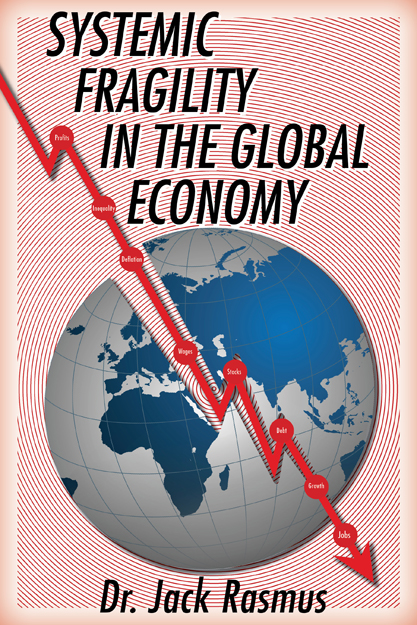
Dr. Jack Rasmus is author of the forthcoming book, ‘Central Bankers on the Ropes’, by Clarity Press, June 2017, and the recent 2016 publications, also by Clarity, ‘Looting Greece: A New Financial Imperialism Emerges’, and ‘Systemic Fragility in the Global Economy’. He blogs at jackrasmus.com, where reviews are available.

To listen to my March 10 Alternative Visions radio show analysis of the just announced details of Congress proposals to repeal and gut the Affordable Care Act (and the $500 billion in tax cuts for corporations and the wealthy that it includes), go to:

http://alternativevisions.podbean.com

or to:

http://prn.fm/?s=Alternative+Visions

SHOW ANNOUNCEMENT:

Jack Rasmus dissects the Republican/Ryan proposal of this past week to repeal and replace the Obamacare Act. The proposal is first and foremost a $500 billion a year tax cut for corporations and the wealthiest 1%, as they no longer have to contribute anything to the Ryan-Republican repeal plan. Other provisions of the proposals are described, including the freeze and dismantling of the Medicaid elements, the end of all mandates, ending the sliding scale of in come for credits, etc. This is a tax cut bill, as well as a further privatization of healthcare bill, and should be viewed as the first of a sequence of medical related bills that will make everyone ‘pay more for less’. Next Trump-Republican target: Medicare. Rasmus reviews the pluses and minuses of the Obama ACA, and why it was doomed from the start due to inability to control health cost increases rising since Bill Clinton’s concessions to health insurers. The show concludes with an analysis of the origins of escalating health costs since the 1990s, which have their roots in health insurance companies’ and drug companies’ mergers and acquisitions drive to buy out competitors, and Wall St.’s requiring more profitability in exchange for loans to buy up their competitors. The result for a quarter century has been increasing privatization and rationing of health care costs and services. And it’s about to become worse. (Next week: The Federal Reserve’s next interest rate hike next week and its impact)