Feeds:
Posts
Comments

Listen to my analysis on ‘Loud & Clear’ Radio, Washington DC, on Trump’s latest announcement to impose tariffs on Europe auto imports. Why Trump rhetoric and threats amount to only actually 2.3% US tariffs on $3.06 trillion of imports to the US. Why Trump’s trade offensive is about playing to his domestic US political base. My predictions re. Trump trade war: a deal will be reached with NAFTA within 6 months; with China (maybe) in 2019; and with Europe only after the UK ‘Brexit’ is resolved. But lots of Trump bombast, threats, and insults in the interim.

TO LISTEN TO MY INTERVIEW, GO TO:

https://www.spreaker.com/user/radiosputnik/auto-tariffs-latest-front-in-trump-admin

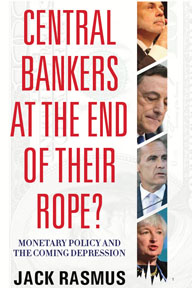
The European Central Bank, ECB, is at the heart of the failure to stabilize Europe’s economy since the 2008 global crisis. It is a central element as well in the institutional arrangement since the creation of the Euro that has allowed northern Europe economies and banks, especially Germany, to skew economic growth for itself at the expense of the rest of most of the European periphery, especially its southern tier. In 2018 the ECB has announced it will discontinue its 30 trillion euro monthly subsidization of the financial system by QE bond buying, followed by an attempt to recover the more than 2.5 trillion excess liquidity injections (’free money’) it has prodced as a consequence of its QE program since March 2015. But with interest rates rising in the US, and the Euro economy growth slowing once again, it is unlikely the ECB will discontinue its QE for very long, if at all, and certainly will fail to recover the 2.5 trillion free money it has injected since 2015. Europe’s financial system will thus remain on ‘free money’ life support for the foreseeable future. What follows is a major 9K word excerpt from my 2017 book, ‘Central Bankers at the End of Their Rope’, chapter 11 entitled ‘European Central Bank Under German Hegemony’. The ECB’s current chair, Mario Draghi–a member of the notorious ‘Group of 30’ biggest Europe capitalists, bankers and their politicians that determine Europe policy behind closed doors–is scheduled to leave in 2018. What will his successor do as Europe stagnates once again and the global economy slows and heads for another recession or worse?

To read the complimentary chapter on the European Central Bank from my book, ‘Central Bankers at the End of Their Ropes: Monetary Policy and the Coming Depression’, Clarity Press, August 2017, go to my website from the link below

GO TO:

http://www.kyklosproductions.com/posts/index.php?p=362

For the latest developments and data re. these three key global trends today–and how they are inter-related–listen to my July 13, 2018 Alternative Visions Radio show.

TO LISTEN GO TO:

http://prn.fm/alternative-visions-3-strategic-trends-trump-china-trade-war-escalates-global-debt-accelerates-trump-tax-cuts-dissipate-07-13-8/

Or GO TO:

http://www.alternativevisions.podbean.com

SHOW ANNOUNCEMENT

Dr Rasmus explains the relationship between trade wars, past and present, and neoliberal tax cutting and war spending policies: Trump 2018, Reagan 1985, Nixon 1971-73. What’s next after $34 billion in US tariffs on China this past week? Relative strengths and weaknesses of US and China in the pending trade war and potential tactics. Rasmus reaffirms his prediction Trump is following a ‘two track’ trade war—one with US allies and another with China, and only China is potentially real. The role of domestic US politics in current trade disputes. A second topic of the show, i.e. accelerating global debt, is now $250 trillion and 3X global GDP, rising at$25-$32 trillion more a year. How global debt and US dollar exchange rates and central bank interest rates are related. The show concludes with review of recent data by the Institute of International Finance, confirming predictions by Rasmus that Trump January $5 trillion tax cuts for business and investors would result in lower US tax receipts, a diversion of tax savings to more stock buybacks, dividend payouts, and mergers & acquisitions—not investment, jobs, and wages. Projections of rapid slowing of US business investment and hoarding of Trump tax cuts.

What’s happening in Mexico? New President, Lopez Obrador has been elected. Why did he win? What is his program for change? What’s the role of big business, and leftovers from the prior ruling parties, PRI and PAN, in his government? What does it men for NAFTA and immigration? And what’s happening ‘on the ground’ with grass roots mobilizing, unions, progressives, etc. To Listen to my discussion with guest, Alan Benjamin, who lived in Mexico for years and visits frequently, on the latest developments. TO LISTEN to the hour long podcast,

GO TO:

http://prn.fm/alternative-visions-way-mexico-lopez-obrador-election-07-06-18/

OR GO TO:

http://www.alternativevisions.podbean.com

SHOW ANNOUNCEMENT

Dr. Rasmus interviews Alan Benjamin, long time participant in Mexican and US labor politics, on the recent election of Andres Manuel Lopez-Obrador (aka AMLO) this past week. Benjamin provides an analysis of the election, and why AMLO won the election this time after having past elections he likely won in 2012 and 2006 stolen. Benjamin explains AMLO’s program evolution over 2018, the role of AMLO’s key business advisors, Urzua and Romo, selected to head, Mexico’s key cabinet positions of Secretary of Treasury and State, and AMLO’s latest views re. NAFTA and Trump. While the US media focuses on corruption and violence, various real sources of the economic and political crises in Mexico behind the election are discussed—i.e. popular demands by Mexicans for jobs, for an end to privatizations of energy and water, for restoration of Mexico’s declining healthcare services, and for repeal of past neoliberal ‘reforms’ of education and energy. Benjamin then describes the current grass roots organizing and popular committees now being formed by workers, communities, and youth to keep the AMLO election from being co-opted by US and Mexican business interests. How the AMLO election represents an important progressive ‘opening’, but also reflects a potential way of control by capitalist interests, as the old PRI and PAN business parties in Mexico have virtually collapsed. (For more information of original English translation of popular programs and events in Mexico, go to: http://www.socialistorganizer.com

by Dr. Jack Rasmus
June 30, 2018

KEYWORDS: Trump, Justice Kennedy, Tyranny, Deutsche Bank

Some very interesting news has just appeared in recent days in the mainstream press–i.e. NY Times and Wall St. Journal–raising questions about Justice Kennedy’s recent resignation at the last minute before the Supreme Court’s session ended. As is obvious, Kennedy announcing his retirement will enable Trump to appoint a more radical right winger to the Supreme Court before the November 2018 elections. Should Trump lose control of the Senate in November, he might not be able to get another radical right winger through a Senate confirmation process, to give him a 6-3 super majority on the Court. Kennedy’s resignation all but ensures now he will get his second right winger (after Gorsuch last year) and get it approved by the Senate before the November 2018 elections.

But what’s behind Kennedy’s early retirement now, before the November elections, that enables all this to happen?

Justice Kennedy privately went to the White House before his announcement. Why was that necessary? What did he and Trump perhaps discuss? Here’s a possible scenario:

The Mueller Report on Trump will soon be released. My bet is that it will show very close financial connections between Trump and various Russian Oligarchs. The oligarchs loaned Trump large sums of money when US banks would not. It kept Trump’s real estate empire from collapsing. And who knows what else the Oligarchs have on him during Trump’s trips to Moscow before the 2016 elections.
So what does that Trump-Oligarch connection have to do with the Trump-Justice Kennedy connection and Kennedy’s recent surprise resignation?

Deutsche Bank Connection

It happens that the shady global investment bank, Deutsche Bank, known to broker deals under the table and launder money worldwide for elites like Trump, served as the money launderer for Trump and the Russian Oligarchs. And guess who, as senior manager at Deutsche bank, was in charge of the Oligarch-Trump deals? None other than the son of Justice Kennedy. (source: OZY Daily Presidential Brief, ‘Deutsche Bank Fails Federal Reserve Stress Tests’, June 29, 2018).

This raises some interesting questions. Was Kennedy ‘encouraged’ by Trump to resign now so he, Trump, could push through his latest radical candidate for the Supreme Court, to ensure his 6-3 majority? Trump knows Mueller’s report will show his Russian Oligarch connections. Trump will definitely fire Mueller. That’s a done deal already. And he’ll probably fire Rosenstein and others at the Justice Dept. to clean house of his adversaries there (including possibly even Jeff Sessions). It will create a firestorm response. And if he, Trump, loses control of the Senate or the House in November, it will almost certainly result in impeachment proceedings being raised or debated.

But Trump has already publicly declared he has the right to pardon himself under the Constitution. A 6-3 majority Supreme Court will then support his interpretation and likely rule that the president can pardon himself under the US Constitution.

A Trump self-pardon will dispel the fiction that in America no one is ‘above the law’. Trump believes he is, has said so publicly in recent weeks, and he is now setting up a scenario where he will be able to pardon himself. Kennedy’s resignation is one element on the road to that end.

Trump: Neither Fascist Nor Dictator but Tyrant

Progressives and even liberals increasingly today are warning of a kind of ‘creeping fascism’ in the US today, driven by Trump. Or they say that Trump is a dictator. But fascism is a movement resorted to by ruling elites to destroy opposition to them in a crisis by unions, opposition parties, and the press. Trump doesn’t need to resort to physical destruction of his opponents. The Unions are on the run, or all but destroyed already. The Democratic Party has moved so far to the right since Bill Clinton that it has lost its mass base and has become merely a legislative party. It has retreated to enclaves in a few big cities or on the coasts. Its leadership since Clinton has been in the pocket of big moneybags, who are doing all they can to prevent an internal resurrection by Sanders and other grass roots elements. So there are no alternative progressive or liberal forces on the left that are organized to stop Trump that Trump needs to take on ‘in the streets’ to destroy. Trump doesn’t need a fascist movement. He (and the ultra right wing capitalists behind him–i.e. the Mercers, Olins, Adelsons, Kochs, etc.) don’t need it, at least not yet. Trump is winning without it. The traditional capitalist elite who thought they could populate his cabinet and ‘tame’ him, have all been driven out of his administration (Priebus, McMaster, Cohn, Tillerson, and soon to leave Kelly as well). Trump is mobilizing and agitating his domestic political base with his anti-foreigner ‘America First’ ideology–both immigrants and other capitalist globalists in Europe, Canada, Mexico, etc. (America First echoes other ‘foreigners are the problem’ appeals when ‘jews, communists, and gypsies’ were identified as the enemy). The ideology in development may be there with Trump, but the organized fascist movement is not yet.

Nor, contrary to liberal and progressive claims, is Trump yet a ‘dictator’, although he is well on his way to taming the Republican party and reconstructing it as his own. Trump doesn’t need to directly ‘dictate’ laws in lieu of a representative legislature determining the law. His Freedom Caucus friends in the House now do his bidding, his buddy Mitch McConnell in the Senate is in his pocket, and now Trump’s packing of Federal Courts (with the help of McConnell) means Trump is able indirectly to dictate and thereby negate the laws established democratically before him. But he’s not yet a ‘dictator’ in the direct sense. That too is not yet necessary. The form of democracy still remains, even as its content is being significantly destroyed. No, he’s not a fascist nor a dictator yet. He doesn’t have to be to get what he wants
.
But what Trump is much nearer to becoming is a Tyrant. He already believes he is ‘above the law’. He even says it publicly. And a politician ‘above the law’ is the classical definition of Tyranny!! Of a Tyrant. Trump is a tyrant in the making. Tyranny is being installed before our very eyes. So what has this to do with the Trump-Justice Kennedy connection?

Trump’s Next Step: Firing Mueller & Self-Pardon

The resignation of Kennedy will enable Trump to take one step closer (now very close) to his avowed desire to be ‘above the law’, a Tyrant. Trump will pardon himself after November if the Mueller report leads to an impeachment–which itself is a long shot. But Trump is taking no chances. Packing the Supreme Court with a solid 6-3 majority in his favor is his way to protect himself against Mueller and a possible impeachment down the road. If charged, Trump will pardon himself. And the Supreme Court 6-3 will rule the US Constitution allows him to self-pardon–that is, to declare himself ‘above the law’, to permit a Trump Tyrannus.

It will be interesting to see if the forthcoming Mueller report says anything about the Kennedy-Deutsche Bank-Russian Oligarchs Trump connections. It should. But don’t count on it. Congress, the Presidency, the media are all held in the lowest esteem by the American people. One of the few democratic fictions left in America is that the US Supreme Court is impartial and not political. That it is not part of the destruction of democracy in the USA that has been developing now for two decades since the Supreme Court in 2000 manipulated the national election to give George W. Bush the presidency that year. Americans forget the role of the Supreme Court in that subversion of Democracy that gave George W. Bush the presidency (and the rest of us the Iraq war, the banking crash of 2008, and the Great Recession that followed).

If anyone thinks that Justice Kennedy’s recent surprise announcement of resignation from the Court is just an individual act and has nothing to do with broader political developments in the US, they are naively deluding themselves. And all the liberal media spin recently that Justice Kennedy was a sometime liberal ‘swing vote’ on the Supreme Court is such bull. He’s the guy that gave us Citizens United and enabled billionaires like Trump and his buddies to buy American democracy and elections, with his 5-4 ‘swing vote’. And his replacement by Trump will be even worse! More brazenly anti-democracy, anti-worker, anti-immigrant, and pro-Trump.

One can only wonder what Justice Kennedy and his son at Deutsche Bank will get out of a deal with Trump? We know what Trump gets.

Dr. Jack Rasmus
copyright 2018

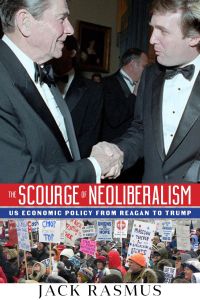
Dr. Jack Rasmus is author of ‘Central Bankers at the End of Their Ropes: Monetary Policy and the Coming Depression’, Clarity Press, August 2017, and the forthcoming ‘The Scourge of Neoliberalism’, Clarity Press, 2018.

Listen to my explanation of the Yield Curve and why it’s flashing red for the next recession in 2019. Also my explanation why Trump is a wannabe Tyrant. What’s behind the retirement of Supreme Court Justice Kennedy now ( and see the latest NY times and Wall St. Journal discoveries announced today that Justice Kennedy’s son headed up Deutsche Bank’s laundering of Russian Oligarch money to Trump before the US 2016 election). Meuller will soon release his findings and Trump will fire him (and maybe others in the Justice Dept.) Why Trump is not a fascist, not yet a dictator, but is about to become a ‘Tyrant’. My take on the election of Ms. Ocasio-Cortez and the Democratic party.

To listen to the Show of June 29 GO TO:

http://prn.fm/alternative-visions-yield-curve-recession-2019-trump-tyrannus-06-29-18/

Or to:

http://alternativevisions.podbean.com

SHOW ANNOUNCEMENT

Dr. Rasmus explains the yield curve as a predictor of the last 17 recessions (and the next in 2019). Why short term Fed rates are rising to finance trillion dollar annual deficits and debt and why investors and businesses aren’t convinced the Trump tax cuts will result in a growing US economy after 2018. Why the Yield Curve predicts recessions. Rasmus then discusses Wisconsin’s $4 billion tax and incentive package to lure Foxconn (the giant Taiwan corporation) to its state. Why Foxconn is not, per Trump’s quote, ‘the eighth wonder of the world’. The meaning of this week’s primary victory by Ms. Ocasio-Cortez in New York, and the Democratic Party leadership’s response. Interpreting the Kennedy Supreme Court retirement announcement. Why Trump is not a fascist, nor yet a dictator. But considers himself ‘above the law’—i.e. the definition of a Tyrant. Rasmus concludes with analysis of what the Supreme Court’s Janus decision this past week means for the intensifying attack on public employee unions now coming. (For more on Janus, listen to our March 2, 2018 Alternative Visions show and interview with SEIU union representatives).

With the ink barely dried on Trump’s $5 trillion tax cut for investors, businesses, and the wealthiest 1% households this past January, he and his stacked-deck Republican Congress are now preparing another big investor tax cut before the November 2018 midterm elections. In the last tax cut, signed into law in January 2018, the total tax cuts for business was $5 trillion. Two trillion $ was raised on middle class tax deductions. Another $1.5 trillion was ‘disappeared’ with absurd assumptions about US economic growth averaging more than 3.5% for every year for the next decade (and of course no recession). That left the ‘official line’ of a tax cut of only $1.5 trillion, which the mainstream media promoted as well as Trump’s mouthpieces at Fox and elsewhere. In the January tax cut, capital gains taxes were left at levels where George W. Bush left them–at 15% and 20%. Now they are coming back for a second ‘bite at the apple’, to cut capital gains taxes still further, at a cost of another $1.5 to $2.0 trillion. During the election in 2016 Trump had promised to cut taxes if elected by $10 trillion more over Bush. (See my early 2016 post,’$10 Trillion Tax Cuts; Another 410 Trillion Coming’). Another tax cut and he’ll be more than half way there.

Listen to my Alternative Vision radio show of June 22 during which the coming further tax cuts under Trump is discussed. Also discussed are the US Federal Reserve’s bank stress tests, with an explanation why they are ‘phony’. Other updates on past shows are also discussed.

(Tune in to my show on the Progressive Radio Network on June 29, 11am pacific time, for my explanation of what’s called the ‘YIELD CURVE’ and why it is now predicting US recession in 2019–as it has 17 times before accurately in the past.

To Listen to Trump Tax. Cuts 2.0, GO TO:

https://alternativevisions.podbean.com

SHOW ANNOUNCEMENT

Rasmus reveals plans by Trump-Congress to cut taxes still further on investors and businesses before the November elections. Also ongoing incremental tax cutting involving corporate pension fund contributions and dismantling of funding for Obamacare. The Fed’s latest bank stress tests, how they’re phony and why some US banks are still financial fragile. Rasmus also discusses the pending Teamster-UPS contract and how workers’ wage hikes will be eaten up by reductions of overtime pay and inflation. A new five year agreement will mean real pay cuts. The show concludes with latest updates on Europe, Italy’s debt, Greek debt, 3rd party critiques of the US Labor Dept.’s Alternative Work survey, and Trump’s phony trade war with Europe (and real one with China).

Are world crude oil prices rising now due to lack of supply? Excess demand? Or is it something to do with professional financial speculators? Oil is not just a commodity; it’s a financial security. Its price tends to follow the rise of another financial asset–the US dollar. (Which rises in response to US interest rates and central bank policy). And the last time global oil prices began to escalate was 2008–on the eve of the last banking crash. Is history about to repeat itself–in whole or part? Listen to my short interview with Loud and Clear radio on global oil price movements and the broader significance of the shift to financial asset investing as a key characteristic of 21st century global capitalism

GO TO: https://www.spreaker.com/user/radiosputnik/opec-to-hold-summit-as-debate-over-globa

Listen to my analysis of what’s behind the Trump vs. Congress spat over China’s ZTE corp. allowed to do business in the US. Trump’s concession to China in trade negotiations vs. US intelligence-pentagon interest group’s attempt to reassert its role in US-China trade negotiations through its friends in US Senate.

To listen to the brief interview with ‘Loud and Clear’ radio on June 14, go to:

https://sputniknews.com/analysis/201806141065386969-trump-administration-ZTE-deal/

Emerging market economies are heading for an economic implosion. From South America to South Asia conditions are deteriorating rapidly and heading for an even more severe economic crisis in which many are already mired. At the head of this list is Brazil and Argentina. Others increasingly fragile, however, include Turkey, Indonesia, Malaysia, and even India, which has covered up its weak economic condition, and massive non-performing bank loan problem, by manipulating its GDP to falsely exaggerate its growth rate.

Business pundits, and even some commentators on the ‘left’, argue that emerging market economies, of which all the above are key members, now account for more than half of the world’s GDP. This suggests their vulnerability to US and G7 economies is less than it has been in the past. The so-called advanced economies–i.e. the USA, Japan, Canada, UK, France, Germany, Italy (the ‘G7–are increasingly irrelevant. But global GDP numbers are manipulated everywhere to show a stronger growth than actually has been occurring. Overnight, economies like India double their GDP numbers by redefining categories that compose their Gross Domestic Product, GDP, by manipulating price estimations that boost real GDP and by introducing statistical assumptions in their estimation of growth that are gross misrepresentations. GDP is thus not a good indicator of the condition of their economies. Even so, global GDP itself is now slowing this past year, as global trade also slows (even before USA precipitated ‘trade wars’ take effect). But this idea of declining vulnerability of economies like Brazil and Argentina is incorrect.

GDP numbers obscure the still significant vulnerability of emerging market economies (EMEs) to the advanced economies and their policy actions, especially the USA. This is true for even the largest EME’s like Brazil, Argentina, Turkey, Indonesia, India and others. More symptomatic economic indicators of the growing crisis in EMEs are their currency declines, money capital outflows, rising domestic interest rates, and rising import cost inflation.

USA Levers of Economic Power: Currency, Credit Access & Central Bank Rates

While the EME’s share of global GDP has risen in recent decades, the world economy is nevertheless still largely manipulated by the USA and other G7 economies. That manipulation is exercised by the USA in particular by several means: through its dominant currency, the US dollar; by control of the flow of much of global credit (and debt) by US banks and US shadow banks through capital markets; and by the influence of the US central bank, the Federal Reserve, over US interest rates and, in turn, rates by other central banks and banks elsewhere.

Recessions and crises in the EMEs are largely the consequence of USA policy shifts involving US interest rates, US dollar appreciation or depreciation, global crude oil price speculation that follow the dollar, or lending by US banks and US shadow banks (i.e. investment banks, hedge funds, private equity firms, etc.,) in what are called ‘capital (corporate debt) markets’ that function as alternative sources of credit from traditional bank loans.

In 2017 all these US policy levers began to shift to the disadvantage of emerging markets. That shift is accelerating in 2018. The result has been ‘made in the USA’ deepening recessions in the EMEs, collapse of their currencies, capital outflow from EMEs back to the USA and G7, accelerating EME domestic inflation, and increasing political unrest and instability.

Therefore, not GDP, but a more telling initial indicator of the growing fragility in emerging economies is the recent freefall of their currencies in relation to the US dollar, Euros, and Japanese Yen, as well as the capital flight from these countries that occurs in tandem with the collapse of their currencies. These in turn become the key drivers of EME domestic recession, mass unemployment, inflation, goods shortages, and growing political instability.

And at the head of the list of economies with currency instability today in South America are Brazil, Argentina, and Venezuela. But the same process is emerging rapidly elsewhere in the EMEs, in Turkey, Indonesia. Malaysia, and perhaps next even India. But no region of the global economy more strongly reflects the crisis today than Brazil and Argentina.

Destabilizing Argentina and Brazil

Argentina’s currency, the Peso, has fallen around 25% since the beginning of 2018. Turkey, Brazil and others are also falling at double digit rates in recent months. With the collapse of their currency, the value of investments held by capitalists in these countries–foreign and domestic alike–also fall in value. To protect the value of investors’ assets from collapsing with their currency (i.e. stocks, bonds, real estate, foreign currency holdings, derivatives, etc.) their governments (legislatures and central banks) respond by raising interest rates in their own economies, in the desperate attempt to stem the capital outflow set off by currency collapse. Investors’ investment values are propped up by raising domestic interest rates. But the the contradiction is that higher interest rates depress the real economy, throwing it into recession; or if recession already exists, into yet deeper recession and even depression. But investors don’t care about recession; they care foremost about protecting the value of their investments. Thus the pro-business, pro-investor EME governments opt for higher rates and accept mass unemployment as a cost.

EME currency collapse has another economic consequence. Since most of these countries import much of their basic goods (food, medical supplies, oil, raw materials for manufacturing, consumer goods, etc.), the collapsing currencies also raise inflation on these goods due to rising import costs. Thus stagnating and then declining real economy and mass unemployment is accompanied by rising prices. More workers are laid off because of the slowing economy, while the prices they must pay for basic goods and services simultaneously rise as well.

Argentina and Brazil are especially exposed to this scenario of US rising interest rates and dollar that precipitates collapse of their currencies, capital flight, rate hikes, mass unemployment and inflation.
Since the 2008 global crash they have borrowed heavily–especially in US dollars. The massive trillions of dollars of debt they accumulated since 2008 must be repaid in dollars. To get dollars they must export and sell more goods. But the slowing of global trade and other developments in China, Europe and China has reduced their ability to export more. They can’t raise sufficient dollars with which to pay their US dollar denominated debt (to US banks and shadow banks). In order to continue to pay their foreign debt principal and interest coming due (to US and G7 bankers) they are forced to borrow dollars from the International Monetary Fund, IMF–another key economic institution controlled by the US and G7.

Argentina recently borrowed another $50 billion from the IMF–to pay its debt to USA and G7 bankers. However, this doesn’t solve its problem. It only shifts debt payments from private bankers to the the IMF. The IMF never ‘bails out’ countries; it always bails out bankers that have loaned to these countries when the latter cannot make payments to their bankers (and bond investors, etc.).

While Argentina has turned to the IMF to temporarily buy time as its crisis deepens, Brazil has gone another route to deal with its ‘made in the USA’ crisis that has been ripening since 2015. It has borrowed even more from US bankers. And it has chosen to raise its interest rates to astronomical levels, in the vain hope of propping up the value of its currency will stem its capital outflow (and encourage continuing capital inflow to Brazil from USA and G7 investors as well).

Brazil’s central bank interest rate is currently around 40%–up from around 14% just a few years ago. That means businesses or consumers have to pay 40% on any loan or debt their incur to stay in business or maintain consumption levels. Interest rates that high virtually shut down wide areas of an economy. And that’s what’s been happening in Brazil. Mass unemployment has followed. As has accelerating inflation and cost of living as Brazil’s currency, the Real, has collapsed in relation to the dollar. Understandably, political unrest follows as jobless grows and prices for basic goods accelerate. That too is now underway.

Brazil’s crisis began in 2015. At that time its central bank interest rates were, as noted, around 14%. Since 2015 they have risen to the 40%. More than half of that acceleration has occurred in just the past year, and especially in 2018. But those 40% rates, and the unemployment and inflation, are the result currency collapse and capital flight–which in turn is a process that has its origins in the USA and rising US interest rates and dollar appreciation.

The error of the Brazilian Workers Party while still in government, led by Lula and then Rouseff, was to allow Brazil’s central bank to steadily raise interest rates since 2015 to current levels. Central banks are always controlled by the private bankers. And private bankers in EMEs like Brazil are dominated by US bankers and investors. And EME central bankers are in turn controlled by their domestic banking interests.
Furthermore, capitalists everywhere have cleverly engineered their central bank institutions to ensure the central banks are shielded from popular national legislatures, just in case popular democratic movements (like the Workers Party) democratically assume power over national governments. Political power remains shielded from economic power. Capitalists have many ways to sabotage democratically elected governments. Central bank interest rates are but one tool.

The Political Strategy Element

The Workers Party in Brazil should therefore have democratized (nationalized in the public interest and fundamentally restructured) the Brazilian central bank back in 2015-16, by opening its decision making process to include democratic forces and representatives. (For my view of how central banks can, and must, be democratized see the concluding chapter to my book, ‘Central Bankers at the End of Their Ropes’, Clarity Press, 2017).

In Argentina, the Kirchner government for years refused to repay the US hedge funds their billions of dollars in claims from the earlier debt crisis engineered by them. What it should have done was to pay the hedge funds in special issued and printed Argentine pesos, instead of dollars, and told them to get lost, they’ve been paid. Instead it fought them in global courts dominated by the US and G7.

As the Brazilian economy began to weaken after 2016, and conditions worsen, the USA, allied with domestic Brazil capitalists and pro-Business politicians in Brazil, developed a political strategy to accompany the US interest rate-dollar policies designed to undermine Brazil’s currency and destabilize its economy. This was the so-called ‘political corruption’ offensive, engineered in the USA and implemented in coordination with Brazilian business interests and pro-business political parties. By painting Workers Party leaders–Rouseff and then Lula himself–as corrupt, they drove them from office (or in the case of Lula jailed him to prevent him from running). An unapologetic pro-Business/pro-USA Temer government was put in place. A similar ‘political’ strategy was implemented against the Kirchner government in Argentina, to drive it from office and replace it with the current pro-business Macri government. Temer in Brazil and Macri in Argentina are mirror images of the USA-G7 economic-political strategy to remove populist governments in South America and replace them with pro-USA, pro investor governments.

The Special Case of Venezuela: When All Else Fails…Military Action

Destroy the currency is always at the forefront of USA imperialist strategy to drive out populist, democratic governments and re-install pro-Business, pro-US investor governments. USA policy toward Venezuela today is not dissimilar, and represents an extreme version of what has been rolled out in Brazil and Argentina. The USA embarked several years ago to destroy Venezuela’s currency, shut off access to US dollars with which to purchase needed food, medical and other imports, while launching another version of ‘government leaders are corrupt’ political-public opinion offensive. It has supported and financed domestic political opposition forces and parties to the Maduro government. Now it is talking about the final extreme alternative of military intervention. It is lining up other right wing governments in Latin America to take the lead in intervention if necessary. But the USA will plan, direct and finance the costs of military intervention using its proxies, if it comes to that. Recent elections in Venezuela that returned the Maduro government to office have signaled to Washington that the Brazil-Argentina strategy might not work in Venezuela. Thus the consideration of more direct military intervention is now on Washington’s agenda. Trump has as much as said so publicly.

But the USA’s strategies of economic destabilization by, initially, raising interest rates to generate capital flight and currency collapse, to have central banks escalate domestic interest rates in the countries to precipitate mass unemployment and recession, to cause accelerating import goods inflation of critical items–and to engage in ‘leaders are corrupt’ political offensives to depose democratically elected popular governments–may not prove successful in the longer term.

Resistance is Not Futile

Already democratic movements, unions, strike actions, mass demonstrations are emerging in Brazil and Argentina. And Venezuela holds out despite the desperate destruction of its economy by USA-business interests. Elections are set soon in Brazil. The results will be critical. What the USA-Temer government’s next moves might be are critical. How Brazil goes, so too will go Argentina, giving rise to further popular demonstrations and strikes should elections in Brazil throw out the Temer government. And should both countries restore democratic governments, USA policy toward direct intervention in Venezuela will stall temporarily.

But whatever the political outcomes, the more fundamental economic forces will still prevail: South American popular governments must find a way to prevent their central banks from acting ‘independently’ on behalf of pro-business, pro-US investors, interests; they must find a way to stabilize their currencies not based on the US dollar; and they must not fall into the debt trap offered by the IMF. Until these levers of US-G7 economic power and hegemony are eliminated, emerging market economics like Brazil, Argentina and Venezuela will always be susceptible and at the mercy of USA economic hegemony.

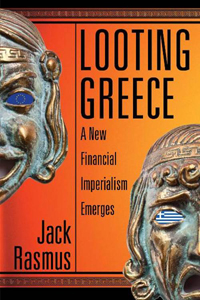
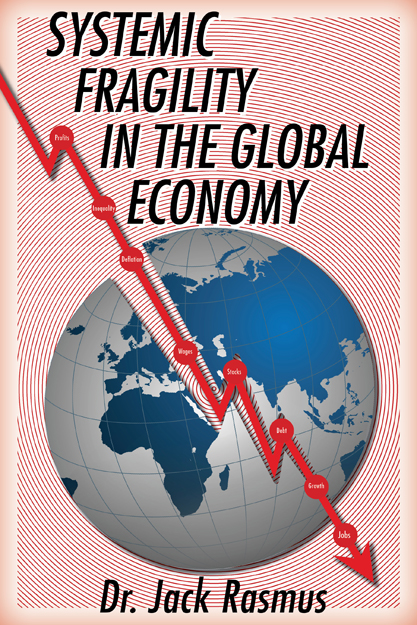
Jack Rasmus is author of the recently published ‘Central Bankers at the End of Their Ropes: Monetary Policy and the Coming Depression’, Clarity Press, August 2017; ‘Looting Greece: A New Financial Imperialism Emerges’, Clarity Press, October 2016; and ‘Systemic Fragility in the Global Economy’, Clarity Press, January 2016. His website is: http://www.kyklosproductions.com and twitter handle, @drjackrasmus.

SPECIAL NOTE TO READERS: For my analysis of Emerging Markets instability in 2015-16, including Brazil at the time, see my chapter 3, ‘Emerging Markets Perfect Storm’, in my ‘Systemic Fragility in the Global Economy’ book, Clarity Press, January 2016. For reviews click on ‘reviews’ tab on my website, http://www.kyklosproductions.com.

.