The following are my observations on the evolution of the Covid 19 Pandemic, the US Response, the Impacts on the US & Global Economy, the Fed, and Congress’s Stimulus plans, from my twitter posts. (Check out the daily running commentaries as the health and economic crisis deepens through April, at @drjackrasmus)
#USrecession What’s different then (2008) & now (2020)? (Mar 30)
In 2007: real economy booming; financial crash then brings down real economy. In 2020: real econ slowing fast 4Q19(USA), stagnant (EU), recession (Japan); real econ collapses (1Q/2Q20) causing financial shock (& crash next?)
#Banks (Mar 30)
may not be ‘root’ of the problem in this ‘Great Recession 2.0’, but may be the ‘trunk’-espec. shadow banks Capital mkts & Institutional investor. Problems in comm paper, corp bond, repo mkts=shadow banks pulling back & commercial banks not stepping in to provide liquidity.
.
#Coronavirus (Mar 30)
Both S. Korea and US recorded their first cases on Jan. 20. Korea started national mass testing (15k/day) of everyone by Jan. 30. US still has shortage of tests and no such policy. >100,000 US dead will be the legacy of that. So blame Trump, but also Bush & Clinton.
#Coronavirus (Mar 30)
Why is there such shortage of PPE in US? Ask GW Bush whose tax cuts 2001-04 subsidized US manufacturers to move to China after (i.e. after Clinton in 2000 gave China special trading rights–i.e. free trade lite). From Reagan to Trump, US econ policies changed little
#Coronavirus (Mar 30)
Why is there such shortage of US hospital beds? Ask Bill Clinton, whose healthcare legislation provided tax & other incentives to hospitals to reduce hospital beds & who allowed private for-profit-hospitals to buy up public hospitals & avoid anti-trust laws doing it
#Fed (Mar 29)
has committed $3T of its promised $4.5T already. But nada to most unstable sectors: $2.2T junk corp bonds, $1.2T junk leveraged loans, and low rated local government bodies. When defaults here start watch for psychological contagion effects to spread to general credit mkts
#Fed (Mar 29)
QE & excess liquidity 2008-16 fueled asset bubbles >2008. Hiatus 2017-18. Renewed 2019. More Fed liquidity 2020-21 will now fuel even bigger bubbles 2021-30. “The Problem (excess liquidity) becomes the Solution to the Problem” & creates next crisis. Financialization new norm
#Coronavirus (Mar 28)
Ever wonder where Google and Apple got the hundreds of thousands of masks they said they are now donating in the US? Not from their cellars in Cupertino, CA where they are located. Could it be they’re buying them in China? And that guy who owns Virgin Atlantic.
#Coronavirus (Mar 28)
China’s mega entrepreneur, Jack Ma, has offered to donate 1m masks and 500,000 test kits to the US. But no mention of China’s offer to sell masks or Ma’s offer to donate in Trump press conferences.
#Coronavirus (Mar 28)
US health officials say we need 3.5B masks. China now produces 116M A DAY! 12 times more than before the virus. China giving them away to Italy. So why isn’t Trump buying them? What happened to the US-China trade deal?
#healthcare (Mar 26)
What’s going to happen to millions being laid off who had employer provided health insurance?Why not create new Medicare Part E temp plan to sign up when filing for unemployment benefits? Add a surtax to Medicare’s 1.45% & reimburse Employers & workers in tax credits
#jobs (Mar 26)
How does this week’s 3.28 million new unemployment benefit claims compare to last week’s? It was 282,000. And was averaging less than 300,000 per week for past several months. Economists had forecast the increase would be 1m but it’s 3.2m.
#Jobs (Mar 26)
Data today show 3.28 million more workers applying for unemployment benefits this week. That’s just the tip of the iceberg of what’s coming. Federal Reserve governors had forecast 2m more. Meanwhile, Repub. Senators want to cut $600 benefit in Senate bill already agreed on.
#Fiscalstimulus. (Mar 26)
Just started reading the 880p actual Senate bill. $1,027B going to business is not the whole story. Looks like hundreds of billions more in the form of corporate tax cuts as well. Will be reporting on all that here once I finish reading the monster handout doc
#bailout (Mar 25)
In Senate bill Airlines get $58B–half as loans & half as grants, the latter to pay their workers. Reports coming out airlines taking the grants but not the loans. Could they be not that starved of cash? Taxpayers/Govt paying the workers. Call that ‘Airline Socialism’?
#Fiscalstimulus (Mar 25)
What’s holding up the Senate signing off $2T fiscal stimulus bill agreed last night? Repub Senator (Sasse-Neb.) says the $600 unemployment too generous, keeps workers taking new job. In reply, Bernie Sanders says he’ll hold up bill if Sasse won’t approve the $600
#fiscalstimulus (Mar 25)
Trump admin., media, & some economists now downplaying the Senate bill as a ‘stimulus’ bill. Only helps put a floor under current collapse of US econ. Another fiscal stimulus needed after short term effects of Senate $2T. Senate bill only good for 6-8 wks support
#USrecession (Mar 25)
What will be the GDP impact on the US economy? Goldman & Morgan Stanley banks forecast -24% to -30% 2Q20 drop in GDP. IF A V-SHAPE recovery (not likely) a full yr. GDP contraction of -5% to-8%. If not V-shape, worse. Major drag effect to occur. Recovery more U-shape
#USSenate (Mar 25)
Check out my summary of the final agreement on the economic Stimulus passed last night by the Senate. My analysis why it won’t be enough. Go to my blog,
#Fiscalstimulus (Mar 25)
Check out my summary and analysis of the Senate’s final agreement on an economic stimulus bill earlier this morning. Summary is based on latest reports by WashPost and CNN on the Senate document. To read go to m blog,
#Fiscalstimulus (Mar 25)
Check out my preliminary preview of the Senate bill and deal (subject to change when final details released) on my latest blog post at
#fiscalstimulus (Mar 24)
Here’s some details of Senate bill: unemployment insurance increased $600 over base, but for only 4 mos. (Good news: part time/temps/contractlabor covered). $1,200 check to families + $500/child (max # kids and income eligibility cutoff both ?) Stay tuned for more
·
#fiscalstimulus. (Mar 24)
This confirmed in pending Senate bill: After threatening Congress they will fire all their workers if Congress doesn’t agree, Airlines will get $32B CASH GRANT, + another $29B in loans.
#Fed (Mar 23)
what’s its new ‘backstop’ to Main St. just announced? Fed will ‘support’ student, auto, credit card & small business loans–not ‘make’ loans. Means Fed to allow card, student, auto securitized loans made by banks & investors to dump that debt on the Fed, which will buy it.
#stockmarkets (Mar 23)
Global stock mkts rose from $35T in 2009 to $85T in 2019. In Trump’s 3 yrs, from around $70T to $85T, artificially fueled by massive investor tax cuts & cheap rates. That artificial ‘last leg’ now imploding back to $70T. So why is Fed & Congress subsidizing it again
#fiscalstimulus (Mar 23)
Once again on the Dems refusing to vote fpr McConnell’s $500B big corp handout bill: why won’t Dems even vote on today’s procedural vote? Because it takes 60 votes to pass. If they agree now, McConnell then needs only 50 to pass the $500B handout for corp buddies.
#Fed (Mar 23)
announced today it will start buying corp bonds, not just govt Treasuries from investors. Just like Europe & Japan have been doing for years. What’s next? Buy stock ETFs, like Japan? Negative rates like both? Who says the Fed’s mandate isn’t fin. mkts. What a fiction.
#Trump (Mar 23)
reportedly ‘toying’ with a return to work despite virus mounting cost in lives. About to decide “let them go back to work”. Hey Donald, don’t forget Marie Antoinette’s “let them eat cake” famous line. (To be fair to DJT, other Dem politicians, like Cuomo, considering same)
#Fiscalstimulus (Mar 23)
What’s the ruckus about Dems holding up the $500b bill in Senate? It’s p. 391 of bill where it says the government can keep secret for 6 months which corporations get the non-bank bailout $500k free money? (Banks will be bailed out by Fed’s $6.2T printed money)
#USrecession (Mar 23)
Watch for Trump & politicians to move to getting folks to return to work, despite rising infection & death rates. Don’t want to pay the cost ($4T+) stimulus to cover unemployed & shutdowns. (But will get Fed to spend $6T to pre-bail banks, investors & Wall St.)
#Fed (Mar 23)
latest move today to support investors behind credit cards, student, small business loans. Why not support the borrowers (students, households, small businesses) not the lenders? Reduce card rates to 7%; student loans to 1% (10yr Tbond), suspend interest on small bus. loans
#USrecesssion (Mar 23)
As the econ contraction deepens politicians will begin talking about, and finding ways, to get people back to work despite the rising virus caseload and deaths. The econ crisis will take precedence over the health crisis. (NY gov. Cuomo already raising the point)
#financialcrisis (Mar 22)
Corp bond mkts far more important to stability than stocks. Corp bond mkt now shut down. No issues occurring, despite Fed’s $2.2T injections last week. So watch for big Fed bailout of corp bonds this week, esp. junk & BBB investment grade (half of which is junk)
#fiscalstimulus (Mar 22)
Why does McConnell insist on $350B in loans to big corps, when Fed to provide $4T in loans through banks to big corps? Is it because the $350B will be ‘forgiven’ at a later date & in effect become grants? Btw, no deal with Dems tonite. Watch big stock fall Monday
#USrecession (Mar 22)
We are at am economic ‘rubicon’–not for a recession, or even for a great recession. But for a possible cross over from great recession 2.0, now occurring, to a bona fide econ depression. (My prediction in my 2010 book, ‘Epic Recession: Prelude to Global Depression’)
#USGDP (Mar 22)
If you thought Goldman Sachs’ prediction of 2Q20 GDP contracting -14% was shocking, then consider Morgan Stanley tonight predicting -30%. Meanwhile, McConnell blames Pelosi for not agreeing to a bigger bailout of big corps instead of her insistence on unemployment benefits
#Financialcrisis (Mar 22)
Stock futures trading for monday already halted after fallen the max. Fin. mkts in trouble are: repos, muni bonds, commercial paper, mortgage bonds, oil-commodity futures, residential mortgage bonds, forex, corp junk bonds/BBBs. Panicked investor ‘dash for cash’
#Bailout (Mar 22)
Big corps complain Congress’ bailout for them is not cash grants but loans. After they gave their investors, CEOs/Mgrs more than $3T in stock buybacks & dividend under Trump, 2017-19, now they’re broke? Small bus. need cash grants & workers 3/4 pay unemployment benefits.
#fiscalstimulus (Mar 22)
bill in Congress. No deal as of late Sunday. Democrats want more unemployment insurance, more small business support, and states. McConnell & republicans want more for big corps and no unemployment insurance increases.
#Bailouts (Mar 21)
Correct that: Airlines spent $48B on buybacks over 10 prior years; Boeing spent $43B from 2013-1Q2019. Airlines want $58B grant ($50B passengers, $8B cargo). Boeing wants $60B govt loan. (Boeing’s debt already >$40B. Loan would raise to >$100B)
#Bailouts (Mar 21)
Here’s another stat re. piggie airlines: 96% of their total cash flow for 10 years was used for stock buybacks! (i.e. their $43B buyback binge). And now that execs & shareholders spent it on themselves, they want $58B from Congress & us. Watch Trump give it to them!
#Bailouts (Mar 21)
Boeing wants $60B too. Spent $43B on stock buybacks from 2013-2019. Only suspended buybacks when 737max flopped in early 2019
#Bailouts (Mar 21)
Airlines are ‘pigs at the trough’. After giving their execs and shareholders $45B in stock buybacks in recent years, they’re now demanding $58B in ‘cash grants’ + more tax credits from Congress. If don’t get it, threaten mass layoffs by August. Boeing wants another $60B
#Fiscalstimulus (Mar 21)
Oops. Forget my earlier tweet of $2T package from Congress. Latest news: only $1.3T. (The rest due to assumed ‘multiplier’ effect). But ‘multiplier’ will be minimal as consumers stay home & use check to pay debt. (btw, only ‘some’ will get the $1k check from govt)
#Coronavirus (Mar 21)
Big shortage PPE for drs-nurses-hospitals. 2 reasons: 1. US corps offshored production to China (now with surplus, giving to Italy). 2. Trump’s 2018-19 trade war with China reduced inventory. What happens when Drs-Nurses get sick? Can’t replace them like masks, etc.
#Fiscalstimulus (Mar 21)
Rumor that Congress will vote on $2T bailout bill on Monday. That’s half what’s needed to bail out unemployed, small businesses, & local govts. Fed is already pre-bailing out banks with planned $4.5T liquidity to repos, munis, MMFs, Comm.Paper, etc. + QE for bonds
#Trump (Mar 21)
keeps saying he prefers corps stop stock buybacks. What about dividend payouts? (Together both=$1.2T in each of last 2 yrs). Will corps now getting $500B US bailout still be allowed to do buybacks? Trump doesn’t follow up his ‘wish’ with any enforcement proposals
#Trump (Mar 21)
keeps saying he ‘authorizes’ moratorium on foreclosures & evictions. But HUD today says it has no authority to enforce that until Congress passes a law. Trump’s ‘authorization’ just says he supports a law
#USrecession (Mar 20)
For my latest update on the crashing US economy, my critique of Congress forthcoming recovery proposals, and my alternative fiscal recovery program (phases 1 & 2), listen to my Alternative Visions radio show podcast today at
Alternative Visions
#USrecession (Mar 20)
JP Chase forecasts 2Q20 US GDP contraction of -14%. That’s more severe than worst quarter 1932 during the Great Depression when the contraction peaked at -13% GDP. US will have to raise govt spending from 21% to 40% of GDP as 1942 = $4t more on top of present $4.4T
#USrecession (Mar 20)
Goldman Sachs predicts 2 million to be laid off in March. That’s twice as fast as the monthly lay offs during worst months of 2008-09 crisis, and faster than in the aftermath of the 1929 stock crash and 1930-31 banking crashes.
#Trump (Mar 20)
In press conf. today Trump says he’d like to stop corp buybacks if they’re to get $billions US aid. Well, do it Donald! And stop dividend payouts too. How much buybacks+dividends under Trump? $1.2 trillion/year last 2 yrs. Obama also ave. $800B/yr for 6 yrs (Airlines $45B)
#USrecession (Mar 19)
Want to know how the current crisis of 2020 compares with the last, 2008, & both with the 1930s great depression? Read my Sept. 2018 article, “Comparing 1929 with 2008 and the Next” predicting the current crash, which is reproduced on my blog
#Oil (Mar 18)
crude oil now at $25/barrel. That means > $1T in energy junk bonds on way to default. If so, credit crunch contagion to spread across mkts. Fed announces full backstop for money mkt funds. This IS great recession 2.0 (or potentially even worse).
#USrecession (Mar 18)
Trump raises stimulus to $1.3T. Need more than 2X that. (see my ‘Cornavirus Economic War Mobilization’ plan http://jackrasmus.com) Meantime, Fed keeps pumping more liquidity into corps & mkts. No effect. Credit crisis here. Buyers say 45% chance junk bond default
#financialcrisis (Mar 17)
Treasury Secretary Mnuchin today warns that current financial crisis is ‘worse than 2008’. Jobless rate could rise to 20%. Believes Trump’s fiscal package will prevent both. He’s right about first two points, wrong about the third.
#Fed (Mar 17)
opens another money spigot to financial institutions today. To ‘shadow banks'(fin. institutions like mutual funds & brokers that aren’t regulated by Fed). $1 trillion a day now available to Repo mkts (added to $2.2T last wk. Includes ‘commercial paper’ mkt for mutual funds
#USrecession (Mar 17)
Read my call for a ‘Coronavirus Economic War Mobilization Plan’ along the lines of US war mobilization of 1942. Why we are now in an ‘Economic Pearl Harbor 2020’. (This post follows up my two preceding on need for a $2.2T immediate spending program & how to fund it)
#USrecession (Mar 17)
What US needs now is a ‘Coronavirus War Mobilization Budget’! In 1940 Govt spending was 16% of US GDP. By 1942 it was 40%. Since 1947 govt spending has been 20% of GDP. We need 40% now. See my $2.2T proposal “Addendum to Recovery Program’
#Fiscalstimulus (Mar 16)
As Congress debates how much to spend to save Main St.–and the Fed spends $2.2T immediately to pre-emptively bail out banks & investors–the economy crashes. Read my own ‘Economic Recovery Program’ proposal (+addendum on financing it)
#Fiscalstimulus (Mar 16)
Dems Senate propose $750 billion in emergency stimulus. Too little. $2 trillion will be needed (which is what the Fed just gave banks in free money today). Senate’s McConnell is delay and prevent the $750B, let alone more. WHy? US deficit already at $1.4T this yr
#USstocks (Mar 16)
Markets down -30% so far as of today from prior Feb. highs. My prediction: will decline -50% before current crisis is over. Other financial mkts? Global oil prices will fall within 30 days to $25/bb. Junk bond defaults in US oil patch are inevitable, and already begin
#China (Mar 16)
independent business research sources say China’s 1q20 GDP will contract 10%-15%, though it won’t report it as such.
#USrecession (Mar 16)
What’s the difference between a ‘normal’ recession (R) & ‘Great’ recession (GR)? Ans: Financial markets crash that deepens & prolongs R. Between R, GR & Depression(D)? D occurs after series of banking crashes, as in 1930, 1931, 1932, 1933 in USA
#USrecession (Mar 16)
Here’s an especially scary stat about unserviced debt that leads to default, bankruptcies & mass layoffs: the average days of available liquidity for millions of US small businesses is only 27 days! After that, if no sales revenue, default. Mass layoffs coming in May
#Fed (Mar 16)
rate cuts & QE not about stimulating investment; nor about stopping stock collapse. About preventing bus. defaults contagion to banks that then crash in turn. US not just in recession, but on cusp of another great recession with financial crash overlaid on real recession
#DemocratDebate (Mar 15)
Tonight in debate with Sanders, Biden announces his VP will be a woman. In recent days his team negotiating with Warren. Biden adopts Warren’s bankruptcy & college tuition proposals. Warren selling self to highest bidder. Any bets she’ll be his VP choice anyone?
#USrecesssion (Mar 15)
I’m going to venture here a risky prediction: that despite the massive Fed liquidity injection the financial markets won’t respond all that positively. They may read it as ‘the situation is worse than it appears’. Of course, I could be wrong (hopefully). We’ll see.
#Fed (Mar 15)
back to the future! Fed adds another $500B + $200B in QE purchases as well as 0% rate. After last week’s $1.5T repo purchase. Add all that $2.2T to Fed’s already $4T debt balance sheet. Is that October 2008 deja vu? Free money has no effect in across-the-board “Dash to Cash”
#FED (Mar 15)
just announced rate cut to 0%. Watch for more massive QE & QE lite & term auctions. Fed back to 2008 crisis mode. Question: will this placate or worry markets even more tomorrow? Other news: Calif issues order everyone >64 must self quarantine now. Entire state locking down?
#USrecession (Mar 15)
Minimalist measures being proposed by Trump & Dems to check deep threat of virus to US economy. No major fiscal stimulus program beside Fed & more tax cuts, which won’t work. Read my ‘An Economic Recovery Program: Theirs vs. Mine’ at my blog,
#Fed (mar 14)
watch Fed before mtg to announce a ‘term auction facility’ for shadow bank system, esp. mutual funds and commercial paper. Looks like parts of the banking system are already near freezing up but no one is saying it publicly. Fed action adds to its $1.5T for Repo mkt already
#Fed (Mar 14)
Trump raises again today his right to fire Fed chair, Powell. Wants negative rates like EU & Japan (now in recession; so much for negative rates). Powell capitulated to Trump a year ago & lowered rates; now will move to 0 & QE fast. Won’t matter. Trump looking for scapegoats
#USrecession (Mar 14)
Consumers (66% econ) all that held up US econ 4Q19. Now collapsing. How bad: not just empty store shelves. Now online delivery system being overwhelmed. What will families with babes & young children do? Trump-Pelosi only agree on testing. No econ stimulus yet.
#USrecession (Mar 14)
Replying to ‘economic denialists’ on this blog: $1.5T repo injection ‘not a stimulus’; so bank loans don’t boost economy? Must be ‘paid back fast’; so 1 & 3 mos. repo terms won’t be rolled over? ‘No hoarding’ going on; so corp credit line drawdowns for stock buying?
#Fed (Mar 14)
Next moves this week (after $60B/mo. & $1.5T repo injections already): talk of 1% rate cut (back to 2008 levels of 0.25%) + ‘term auctions’ (a la 2008) QE4. Will Fed go ‘all out’? Or wait to April? Former, if mkts tank again (and they will). It’s a (great?) recession stupid!
#Junkbonds (Mar 13)
Energy junk bond analyst (interviewed on Bloomberg) predicts 30%-40% of junk-laden US oil fracking corps could default this year, should oil prices remain at $30/bb or less for 3-4 more months. (Watch junk heavy retail & travel corps follow as well before year end)
#Coronavirus (Mar 13)
Why first test kits were worthless: they tested for antibodies, not virus itself. New kits test for virus direct. Expect big run up in cases. Viruses are RNA proteins, that take over DNA in our cells. They’re insidious little bastards. And they change (mutate) often
#TreasuryBonds (Mar 13)
liquidity problems in the Repos. Why. Hedge funds took over much of role of banks as intermediaries in repos. Are hedgies now requiring more cash to cover positions elsewhere? Or banks needing more liquidity to service clients’ drawing down credit lines? Or other?
#TreasuryBonds Mar 12)
Why did T-bond rates rise this week, despite stocks collapse? What’s up? Hedge funds in the Repo mkt speculating with Treasuries leveraging bets on interest futures trades, the latter now unwinding due to their losses. Is Fed’s $1.5T repo injection to cover losses?
#stockmarket (Mar 12)
How much did the record 11 yr. stock market bubble create for investors (from Mar 6, 2009 to Feb. 19, 2020)? more than 500%.
#China (Mar 12)
& emerging markets. What’s going on there? Devaluing currencies and dollarized local bonds imploding. Think Argentina & Brazil in trouble now? Just wait. Collapsing currencies & trade means no import purchases. And then there’s China ….
#Creditcrisis (Mar 12)
Accompanying the panic rush to liquidity (i.e. sell off all other assets & hold cash), aka liquidity preference (Keynes) is the related ‘liquidity trap’–i.e. providing more liquidity results in just hoarding it, rather than investing or spending (households) it
#Creditcrisis (Mar 12)
Business media reports (Bloomberg) that the Fed has injected now $5 trillion of liquidity into markets to try to prevent liquidity crisis. The ghost of Keynes (liquidity preference over all other assets) now stalks the corridors of Corporate America everywhere!
#Gold (Mar 12)
Gold prices fall instead of rise. Reason? Same as for ‘safe havens’ like US Treasuries. Investors’ panic flight to hold cash. As Keynes would say: liquidity preference is trumping (no pun intended) demand to hold all other forms of non-cash assets, including the ‘safest’.
#USTreasuryBonds (Mar 12)
The $16T market for US Treasuries acting strange. US stocks fall 2,200 pts & Treasury rates rise (and prices fall). Not vice-versa. Reason: Flight to hold cash everywhere means investors cashing in T’s after big gains=excess supply & price decline & T rates rise.
#Coronavirus (Mar 12)
Head of Harvard Health School today on PBS estimates 40,000 US infected within 2 weeks. 10,000 right now. US worse response of advanced economies. Big problem with testing.
#Repos (Mar 12)
Trump said last night “it’s not a financial crisis”. Why then has Fed announced today a $500B injection into 1 mo. repos + another $500B 3 mo. repos? Reason for $1T ‘QE by another name’: corps drawing down bank credit lines at record levels to hoard cash as revenues crash
#Junkbonds (Mar 12)
The high yield (junk) corporate credit default swaps (CDS) index escalates to 10 year high now in just few days to insure against junk bond defaults (energy, retail, other). Watch for contagion to spread to BBB corporate bonds. But Trump said “not a financial crisis”
#Junkbonds (Mar 12)
For all you finance guys/gals out there: will oil patch high yield(junk) corporate bonds+Junk ETFs(2020 crash)become new subprime mortgage+CDS(2008 crash)? Or will it be oil futures? Repos? India banks? Italy’s? Japan’s central bank ETF losses? Black swans are flocking
#Trump (Mar 11)
bragged about the millions of test kits on the way. Calif. Governor Gavin Newsom said today the test kits California got came without the ‘reagent’. So can’t be used. It’s like sending a printer without the ink and saying write me a report Gavin about how well it’s going
#Repos (Mar 11)
Fed worried re. liquidity, increases one day Repo injection to $175B. (Meanwhile, Trump walks back some of his speech errors in a tweet, saying the freeze on travel from Europe to the US does not include cargo & freight. (It doesn’t have to go through London to get to US)
#Trump (Mar 11)
what do US markets think of Trump’s speech and travel ban? Dow futures down 1124 pts so far. Another -8% one day drop coming maybe?
#Trump (Mar 11)
says on Tv that “testing is expanding rapidly”. But Grand Princess incubator boat in Calif. testing only those with symptoms. Most of 2500 without symptoms told to go home. Not enough tests. (Compare: China tested 200K per day; S. Korea 15K/day. US so far 5k in past 4wks)
#Creditcrisis (Mar 10)
For my analysis of how deflating US-global financial asset mkts may lead to a US corp junk bond’/BBB/leveraged loan credit crisis, read my article, ‘Global Deflating Financial Asset Prices: Prelude to Next ‘Great Recession’ at my blog, http://jackrasmus.com.
#Banking (Mar 10)
watch out for global banking crises brewing: India shadow banks defaults. $10T non-performing bank loans global. Bank of Japan’s stock-buying QE program ($279B in stock ETFs) in big trouble, as it loses 14% of its assets. Medium size US banks in US oil-junk bond patch
#Fiscalstimulus (Mar 10)
Trump waffles on how to stimulate US economy now entering recession. Here’s what conservative Enterprise Institute says: “A little loan here and a payroll (tax) cut there – they are thinking far too small. They should be thinking this is a global financial crisis”
#USshale (Mar 9)
In response to Saudi price cut (their real target is US shale not Russia), US shale producers say they can still remain profitable at $31/bb. Texas crude now at $34. Saudis will keep driving lower prices until Shale with junk bond default & clear out some US players
#Repomarket (Mar 9)
To ward off a possible credit crunch the Fed boosted overnight Repos from $50B to $150B and 14 day Repos from $20 to $45B. In other words, QE lite by another name! Since last September Repo crisis Fed has pumped more than $500B into the market
#Coronavirus (mar 9)
Italy. Infected now 10,000 and deaths rise 25% in one day. Italy now more infections than So. Korea or Iran. Politicians announce ‘lockdown’ on entire country. No one is supposed to go anywhere. Sure. Let’s try herding cats. (not to say Italians are feline, of course
#financialcrisis (Mar 9)
US Dow down 1650 pts(-6%)mid-day. Asia mkts -6%. Oil futures<$30/bb. Spillover to credit mkts coming: $5T US junk/BBBs (energy, retail, then other). US now in recession. (Ditto EU, Japan, S.Korea, ANZ, Latin America, etc.) Bank crash India. Watch Fed more Repo+QE
#Corporatelending (Mar 9)
Global financial asset crash underway, soon to impact credit mkts starting with US junk in energy (oil fracking) and retail (big box), spilling over to rest of junk, then BBBs (most really also junk) and even I-grades. Dow down 1500. T’s all < 1%. Big QE coming
#Oil crashing. (Mar 8)
Saudi-OPEC declared ‘war’ on Russia. Lowered price 20%+ overnight. Saudi to pump 12mb/day, up from 9.7m Feb. Talk of oil prices falling to $20/bb. If so, many US shale producers go bankrupt. Energy junk bonds default. Retail junk bonds & leveraged loans next.
#CoronavirusEurope (Mar 8)
Reports now coming out that Germany last three weeks has had 40,000 ‘flu’ cases with 200 flu deaths. 3X normal. Could these have been coronavirus? Italians in north in exodus to south to flee virus in Lombardy-Milan region. How many will now spread it south?
#FinancialCrash (Mar 8)
now underway?? Oil falls to $30/bb today. US Stock futures down $1200 pts. 30-yr Treasury bonds fall to less than $1. Unprecedented financial asset crashes now in progress.
#CoronavirusUSA (Mar 8)
As US tested cases rise in hundreds, actual much higher. Why? Workers fear to get tested & told to stay home, with no paid sick leave, missed paychecks, no savings, unaffordable hospital deductibles (Drs. refusing office visits of infected), insured high ded/copay
#Oil (Mar 8)
Latest failed Russia-OPEC deal to cut output causes -9.4% collapse oil prices. High price Brent crude now $45/bb. Spilling over to stock & other financial asset prices: mideast stocks fall 8%-10% one day! Watch for falling oil to impact US energy junk bond mkt then BBB bonds
#Coronavirus (Mar 7)
Infections in Italy & Germany rising fast. Italy 6000 cases now, with 1200 in one day yesterday. Lombardy-Milan region ‘locked down’. Germany cases rise from 66 to 1000 in one week. So. Korea more than 7000. US East coast cases rising. Goldman Sachs says 2Q US GDP 0%
#USDeficits (Mar 6)
& social security cuts by Trump after Nov. In Scranton, PA today Trump said, “We will be cutting. It was not immediately clear whether he was referring to the mandatory spending programs, discretionary federal spending or both.” Source: Associated Press, March 6,
#globaleconomy (Mar 5)
China was center of virus crisis. Is India becoming center of next global financial crisis? Shadow banks failing, rupee declining, stock markets falling. No end in sight. What’s the financial contagion effect worldwide? Potentially bigger economic story than virus
#Fed (Mar 5)
quickly cuts rates 50 basis pts. Trump calls for more & says follow EU/Japan rates lower. Takeaways: Trump wants neg.rates; Fed now tail-ending financial mkts; Mkts ho-hum response so far to cut; except for res. housing, rate no effect on real econ; rate policy dead in water
#Fed (Mar 2)
Can Fed rate cut stop severed supply chains, falling foreign demand for US exports, US consumer hoarding, coming layoffs, crashing commodity prices? Absolutely nothing. Why rate cut then? Stop collapsing US stock & financial asset values. But that’s not its mandate, right?
#Fed (Mar 2)
Confirmed rumors that the Fed will cut rates wed. by 50 basis pts has turned stock prices around today. But the ‘buy the dip’ is weak. And money keeps flowing into safe haven Treasuries. This is ‘dead cat bounce’ week for stocks. As US econ weakens, decline will resume.
#Fed (Mar 1)
rumors growing of a Fed rate cut this week of 50 basis pts or .5% (lowering rage to 1%-1.25%), and coordinated with offshore central banks cuts as well. All designed to stop the freefall in equity prices. But wait! The Fed doesn’t target asset prices, right? Yeah, sure.
#stockmarkets (Mar 1)
More 500-1000 pt falls next week. Why so fast? Artificial run-up in stocks from Trump tax cuts boosting profits 25%, diverted mostly to fin. mkts as $1.2 trillion buybacks+dividends in both 2018 & 2019. Tax cut driven profits now disappearing. 2020 earnings now neg.
#Contagion (Mar 1)
Economic contagion deepening. Financial asset prices plunging everywhere. If continues, watch defaults in junk bonds & leveraged loans–starting with US energy & retail sectors. New financial crisis growing possible. As in 2008, followed by major real econ spillover
#coronavirus (Mar 1)
Confirmed cases in Italy surge more than 500 in one day! From 1128 to 1694. A week ago: 0. US-Trump still not stopping flights. Watch for ban on flight from Europe within weeks. Report of 60,000 ship containers locked up in wrong ports or on freighters offshore
#Chinaeconomy (Mar 1)
Predictions growing from legitimate sources that China’s economy will contract 1Q20 by -2% to -14%. Deep contractions Europe & Japan also. Global recession is here. Only question: how soon will it spill over to US.
#coronavirus (Mar 1)
Italy infected with 1128 cases, with 29 deaths, up from 0 week ago. More than 250 cases per/d reported, rising fast to=Wuhan’s 470 cases per/d. US deaths in Washington state, as new pocket in nursing home. Calif. shoppers clearing out grocery stores of cleaning goods
#coronavirus (Mar 1)
Unless it’s an N95 mask it’s totally worthless. Even with N95 masks, most contagion spread by virus on surfaces of objects and then touched with hands or other body parts.
#coronavirus (Mar 1)
Confirmed transmission from Italy to Canary islands and Mexico, due to visitors from Italy. Trump-US policy announced to ‘screen’ travelers from Italy means only those with symptoms. Not tests. Trump says US has 43m test kits. Calif. says it’s been given only 200.
Dr. Jack Rasmus
@drjackrasmus
Posted in Uncategorized | Leave a Comment »
Trump likes to call himself a ‘war president’. But his claiming this term turns the definition into a bad joke.
Here’s a few brief thoughts on that theme:
Today Trump announced he was ‘invoking’ the war production act to get GM to produce ventilators at its abandoned Lordstown, OH, auto plant.
But wait. Didn’t Trump already ‘authorize’ the War Production Act a couple weeks ago? Was ‘authorization’ just a PR stunt? Appears so. And authorize who to do what? Well, that was never defined either. Nothing happened after authorization. It was just a media soundbite. It was all a sales pitch and marketing spin to the nation. Kind of like someone bankrupt saying ‘the check is in the mail’. Or ‘call me on friday when I get paid’. You can’t believe a word he says.
If Trump were a true war president, instead of the fake and caricature that he is, he’d have seized the Lordstown GM plant weeks ago, ordered the requisitioning nation wide of all required materials to produce ventilators, moved all necessary technical personnel for production to the plant, used the Army Corp of Engineers to build new housing onsite at the plant for the new workforce; requisitioned local construction equipment necessary for such; then run the plant 24-7 and deliver ventilators via the USAF C-135 fleet to cities most in need.
If he were war president, he wouldn’t have ‘invoked’ the war production act just for ventilators, but for all needed medical-hospital equipment. And told everyone involved if they didn’t deliver on time they’d be fired.
In the interim, he would have ordered FEMA to immediately purchase all medical equipment worldwide asap, regardless the price (no negotiations), to be delivered again via USAF to needed cities directly, without diversion to warehousing by the Federal government.
No. Trump isn’t even close to a war president. He couldn’t stand in Franklin Roosevelt’s shadow. Or Harry Truman’s. Or Woodrow Wilson’s even.
No, Trump is a ‘true believer’ that the market solves everything and immediately. Just wave the magic market wand and it will appear! Like the Wizard of Oz behind the curtain, just pull a couple levers, make some loud noise, and it will all happen by itself. Just ask private enterprise and they’ll do it!
In 1941-42 Franklin Roosevelt activated US War Production. A special War Production Board was formed within days of December 7, 1941. It was empowered to requisition anything and everything considered necessary for the war effort. And it did. Roosevelt’s first executive order was to mass produce penicillin, which was thought impossible at the time. The US did it within a few months. Millions would be saved from infections during the war as a result. So where’s Trump’s Executive Order to produce a vaccine for the virus? He calls in a few CEOs from big Pharma and then conducts a media event. Why haven’t all the best medical research minds been mobilized, put in a room in Atlanta at the CDC or even the Pentagon, and told don’t come out until you have it?
During world war II the US didn’t wait for private enterprise to convert factories to war production. The government itself built factories and plants, then leased them over to the private sector to manage. It built entire sections of cities to house workers coming to the new facilities from around the country. You couldn’t obtain building materials to build a house during war time. Ford motor company made a total of 169 cars during the war. But was able to produce tens of thousands of trucks and tanks. So where’s our factories to produce ventilators, N95 masks, face shields, medical gowns, and all the rest of PPE needed. (I’ll tell you where, they were offshored decades ago by US capitalists seeking cheaper wages and greater profits…mostly to Asia and to China which, by the way, now has a surplus that it’s giving to Italy). But when US state governors tried to buy from offshore, the ventilators and PPE are seized by FEMA and the Federal Government. Trump’s administration not only can’t deliver, it’s become an obstacle to governors’ trying to do so. It’s like a general telling his troops to launch an attack but leave half your guns and ammunition here at headquarters company!
If Trump is a war president, he should be sacked, demoted, and sent to a base on the north shore of Alaska to count the caribou.
Trump is a Herbert Hoover wrapped in a Neville Chamberlain; an incompetent general who dribbles out ammunition to his colonels (governors) and tells them to steal from each other if they don’t have enough. He’s an armchair general whose chair has no arms! He’s all ‘talk the talk &’ and no ‘walk the walk’, as we used to say!
He’s a commercial real estate pitch man, a barker for a carnival sideshow government, and pathological liar who insults us by running his daily ‘dog & pony’ sales pitch he dares to call a press conference.
Give him a pension and send him away to count the Caribou. Better yet, to the US base in Antarctica to count penguins!
Dr. Jack Rasmus
March 27, 2020
Posted in Uncategorized | 1 Comment »
Listen to my various radio interviews in recent days on the condition of the US economy’s ‘Great Recession 2.0’ underway; my summary & analysis of Congress’s just passed ‘CARES’ act stimulus bill; and my own Recovery Program proposals
-
TO LISTEN GO TO:
1. By Any Means Necessary Radio Show (March 26)
https://www.spreaker.com/user/radiosputnik/massive-bill-set-to-pass-coronavirus-sti
2. Loud & Clear Radio Show (March 20)
https://www.spreaker.com/episode/24110690
3. Clearing the Fog Radio (March 16: 2nd half hour of show)
Dr. Jack Rasmus
Posted in Uncategorized | Leave a Comment »
Just after midnight March 25, 2020 eastern time the US Senate passed a compromise bill of fiscal spending to address the accelerating economic decline. Both Democrat and Republican Senate leaders agreed on the terms. US House of Representatives Speaker, Nancy Pelosi, indicated she would rush approval of the package seeking a unanimous voice vote of the House.
Here’s what the terms of the stimulus package looks like, according to initial summaries by the Washington Post and CNN released within minutes of the bill passage:
Middle class and worker households would get $500 billion in the form of direct checks ($250B) and increased unemployment insurance benefits for the next four months ($250B)
Corporations and businesses would thus get $867B–$367B of which would go to small businesses, and another $500B to large corporations like airlines, defense companies, cruise lines, hotels and other companies.
Additional funding of $130B would go to hospitals to purchase needed medical supplies. State and Local governments get $150B. Other funds would be provided by the government’s Small Business Administration ($10B) to help pay their debt. Reference is made in the package as well for another $20 in farm bailout, raising that total from the $30B spent to date during the US-China trade war to $50B. While it appears the $130B for hospitals and $150B for local governments is in addition to the $867B to business and $500B to households, it’s not clear if the $20B farm bailout and $10B additional SBA are included in the $867B or not.
Here’s a further detail in breakdown of these amounts:
1. $500B to Business
The Airlines get their $58B they’ve been lobbying for. And if past breakdowns still apply, it means roughly half the $58B will take the form of outright grants, not loans, to the airlines and the remainder as loans. It is also unclear if the loans will be ‘forgiven’ after six months, as had been proposed before in past versions of the Senate bill.
Another $17B of the $500B is earmarked for defense companies considered important to national security. No details are released who these are and why such companies, not affected by consumer demand, should receive such an increase. (Possibly to back fill money that has been transferred from them by Trump to help pay for his wall).
Trump has also indicated he intends to have some of the $500B go to cruise lines and hotels which, along with airlines, are critical to his own company’s business.
The remainder of the $500 is designated for spending to support other industries. Whether in the form of loans, grants, or other forms of assistance is still unclear.
2. $367B to Small Business
The Senate bill always included $350B in loans for small business, and the provision that the loans would change to outright grants if used to pay wages and payroll costs. It won’t take clever accounting to use the $350 to cover wages and compensation (and payroll taxes, etc.), as companies move the money that would have been used for such purposes to other areas of their income statements. So consider the $350B as money without repayment—i.e. not a loan.
In addition to the $350B, another $17B is added now for small business to cover interest on their existing loans for six months. Finally, there’s the $10B from the Small Business Administration to help pay debts, which may or may not be part of the other totals.
Add in the $20B for farm support, the $10B from SBA, and the $130B to hospitals, it means Business Large & Small thus get $1,027B in direct assistance by the government in the new agreed on Senate-House stimulus package.
Another item that the Democrats demanded and received in part was to have an Oversight Board to review how corporations and businesses actually spent the government money. In the previous emergency economic recovery legislation in 2009, much of the direct assistance was ‘gamed’ by businesses that received it. Some even used it to buyback their stock and award bonuses to managers. The Oversight Board is supposed to prevent that. It remains to be seen, however. Who will be chosen to manage the Board will make all the difference. It can be assumed the Republican Senate or Trump will choose compliant board members. As Trump has said publicly when asked who will ‘oversee’ the distribution of the funds to business, he replied “I’ll be the oversight”.
Middle class families and workers get a total of $500B under the agreement, which is what it was before. It appears that the money was just ‘moved around’.
3. Direct Household Cash Assistance
Talk of $3,000 per household is now changed to a check of $1,200 for a single household member, or $2,400 for married couple, plus $500 per child. (It’s unclear if that’s for all children in a family or just up to two).
To qualify for the full $1,200/$2,400 an individual must make no more than $75,000 income annually. Income above $75,000 phases out until $99,000 after which no payment is made. For couples, the phase out is at $199,000 per household.
4. Increased Unemployment Insurance Benefits
The package includes an increase of $600 to the state’s defined level of unemployment benefits paid (that vary by state quite a bit). But it’s unclear if the $600 applies to the highest paid state benefit payment or to all levels of state benefit payments. For example, in California the top payment is $450/week. The new payment would be $1,050/week. But will those below the top payment level also get $600?
A plus to the unemployment insurance provision is that it will also apply to contingent work: that is, to part time, temp, contract labor not just to full time employed who are laid off due to the effect of the virus on company shutdowns.
On the negative side, all the improvements in unemployment insurance will take effect for only 4 months, then will expire.
It is clear, therefore, that middle class families will receive only the $500 billion that had been allocated before—in the form of cash assistance one time worth $250 billion and improved unemployment benefits for four months costing another $250 billion. It appears some of the cash assistance was redirected toward improvement in unemployment insurance benefits, but no net increase in the total $500B on the negotiating table before.
In other words, in the final stimulus bill businesses get more than twice as much as do households and the working class!
5.State & Local Governments
An additional $150 billion is allocated in the bill to assistance to state & local governments.
THE TOTALS:
The totals in spending thus appear to be approximately $1,650 billion! It is being reported as a $2T stimulus effect and increase in US GDP overall. AS Trump’s advisor, Larry Kudlow, has said on a previous occasion, the $2T represents the spending plus the ‘multiplier effect’. $2T is not therefore the actual spending. That is less, around the $1,650T estimated here. The difference is a multiplier effect of about $400B.
But that’s a generous estimate of the multiplier. It’s based on normal economic conditions. And the current collapse of the real and financial US economy is anything but normal. The multiplier will be much less. That is because much of the spending by the government, to business and households alike, will be used to pay down debt, hoard the money due to expectations of future profits and employment insecurity, or to cover price gouging by businesses selling necessities.
The US economy spends monthly the equivalent of $1.7 trillion. The Senate’s stimulus package is thus a one month stop-gap at best! As this writer has been arguing in recent days, the stimulus needed to get through the summer will have to be $4 trillion, not $1.65 trillion.
The $2 trillion (spending + multiplier) is estimated at around 9% of US Gross Domestic Product, GDP, at present. A 20% increase of GDP is necessary, raising total government spending in GDP terms from the roughly current 21% of GDP to 40%.
40% of GDP is what the US government raised spending to in 1942, when we went to war at that time. It was an increase from around 15% pre-war. If the fight against the new enemy, the virus, is a kind of ‘economic war’, then the US will have to mobilize its economy again on a war footing. Trump’s activation of the War Production Act, and then doing nothing about it further, is not a war mobilization. Trump is not a ‘war president’, as he claims. Indeed, he allowed the enemy to actually penetrate our shores and spread among us with his delayed action to stop airline travel and cruise travel. It’s not an accident that the largest concentrations of the virus infections are in our coastal ports and airports—Washington state, California, New York, and now increasingly New Orleans, Philadelphia, Chicago and Miami.
Trump as ‘War President’ & Other Fictions
Unlike our prior war presidents, Roosevelt and Truman, Trump is not mobilizing production and distribution of key resources and supplies to fight the enemy. He simply asks the private sector to do it and then gives his daily ‘sales pitches’ to the nation press conferences to say what he’s doing when he’s not actually doing it. War supplies (masks, ventilators, PPE) are promised and promised but are slow to appear, if they ever do.
The question follows then whether the current Senate-House stimulus bill represents a sufficient stimulus to protect the US economy. The answer is no. It’s not even half way there for Main St.
In contrast, however, the Federal Reserve US central bank has quickly allocated no less than $6.2 Trillion so far to bail out the banks and investors, even before they fail this time. And promises to do more if needed and for as long as necessary. It is writing a blank check for the bankers and investors.
Meanwhile Congress provides one-fourth that, and only one third of that one fourth, for the Main St., workers, and middle class families.
Finally, it is clear from Trump’s statements in recent days that he knows this stimulus is only a one month hit to the economy. That’s why he—and the capitalist investors who have been lobbying him hard the past week—are turning up the message we should all start going back to work by mid-April.
As Trump put it, the timing is ‘beautiful’, at Easter. But it won’t be so beautiful when a surge in infections and death occur on top of the current surge underway occur by early summer.
But profits and money are more important to this wheeler-dealer, commercial property speculator capitalist in the White House. With the US budget deficit this fiscal year almost certainly to exceed $3 trillion, and his election looming on the horizon, Trump and friends see Wall St. and US business interests as more important than the rising death rate that is inevitable should we return to work prematurely by mid-April. Such action will all but ensure the eventual overwhelming of the US hospital system three months from now, an even higher death rate, and an even greater collapse of the US economy and financial system in the aftermath.
Trump may think he’s at war with the coronavirus, but it is the virus that is winning! And his poor generalship is aiding and abetting that enemy. Unfortunately, the American public—and especially the old and infirm—are becoming the ‘cannon fodder’ in Trump’s phony war.
Dr. Jack Rasmus
Copyright, March 25, 2020
Dr. Rasmus is author of the just published book, ‘The Scourge of Neoliberalism: US Economic Policy from Reagan to Trump’, January 2020; ‘Central Bankers at the End of Their Ropes’ (2017), and ‘Systemic Fragility in the Global Economy’, 2016. He blogs at jackrasmus.com and tweets at @drjackrasmus. His website is http://kyklosproductions.com.
Posted in Uncategorized | 1 Comment »
Here’s some details of what’s in the Senate fiscal bill agreed on today, but not yet released (as far as I know) as of 8pm est. My detailed analysis to follow tomorrow.
It’s a $2 trillion package. But as Larry Kudlow, Trump’s advisor admitted, that total includes an assumed multiplier effect and the total stimulus to US GDP, not the actual spending total. At $2T and an assumed multiplier impact of $700B (1.5), the actual spending total is $1.3 trillion, not $2 Trillion.
On the business side it includes $350 billion in small business loans. What’s ‘small’ is unclear. So too is whether some of that falls under the Federal Reserve’s announced $4T pre-emptive bailout of bankers, credit card companies, mortgage lenders, private student loan lenders, and auto finance lenders (What the Fed calls its ‘Main St. Package). The Fed claimed that package included loans to small business too. If that overlaps with Congress’ bill remains to be clarified. Clarified too will be how much of $350 is in loans vs. in outright grants to small business.
It’s also known that Airlines will get $61 billion–$32 billion in grants and another $29 billion in loans. Seems their management threat to layoff all airline workers if they didn’t get the $61 billion handout had their desired lobbying effect.
Democrats pushed to get oversight on the remaining loans/grants to big corporations. Unclear as yet what that means
What Pelosi-Shumer couldn’t get from McConnell, they got by going around him and negotiating with Mnuchin.
Some details favoring workers & middle class households include a $1,200 cash payment per family, plus $500 more per child. Limits on # children eligible for $500 also unknown as yet. Same for income level for eligibility. Also if only unemployed get the $1,200 cash or all families. Some estimates are this amounts to $300B total. Others, $500B.
Other provisions verified include $130 billion for hospitals and $150 billion for state and local governments Democrats were demanding.
Looks to me like they ‘moved the money around’, as they say in union negotiations. Instead of the previously $3,000 cash per family and more unemployment insurance for rest of year, the Dem leadership agreed to only 4 months for the latter, moving some of the $3k to unemployment and some to hospitals & local governments.
A full analysis to be posted here when available, as well as my assessment why it will not work and why $4T for households workers is need, not just $1.3T. Plus why the bankers and investors will be getting $4T from the Fed, plus another $.5T in the Senate bill, but workers only $.5T?
Looks like the Obama recovery package of 2009 in terms of total fiscal stimulus. That was $787 billion and failed to stimulate a normal recovery from recession in 2009-10. This economic contraction is more severe, with economy falling faster and deeper, with unemployment rising at 2 million a month instead of 1 million, and GDP forecasts for coming 2nd quarter at -24% to -30%. Unemployment rate could rise to 30%, according to St. Louis Fed governor, Bullard.
Giving money to business in loans and tax cuts will have absolutely no effect on the real economy recovery. It didn’t in 2008-09 and won’t now. If Trump’s 2018 $4.5 trillion tax cut plus 2019 additional $427B investor loopholes tax cut resulted in real investment declining all last year, 2019, more tax cuts and more loans now won’t have much effect either again.
$500 billion for the working class and middle class falls far short of the $4T that is needed. If the Federal Reserve can give bankers and investors $6.2 trillion ($2.2 trillion last week and another $4T to come) why are workers being ‘short changed’? Even if there were a recovery starting today, the longer term recovery will be slow and tortured for working families. Slower than even after 2009.
But this current economic crisis is still unfolding and has a long way to go. As this writer forewarned back in September 2018, this ‘great recession 2.0’ now unfolding promises to be significantly worse than the 2008-09 event.
Dr. Jack Rasmus
March 24, 2020
It’s a $2 trillion package. But as Larry Kudlow, Trump’s advisor admitted, that total includes an assumed multiplier effect and the total stimulus to US GDP, not the actual spending total. At $2T and an assumed multiplier impact of $700B (1.5), the actual spending total is $1.3 trillion, not $2 Trillion.
On the business side it includes $350 billion in small business loans. What’s ‘small’ is unclear. So too is whether some of that falls under the Federal Reserve’s announced $4T pre-emptive bailout of bankers, credit card companies, mortgage lenders, private student loan lenders, and auto finance lenders (What the Fed calls its ‘Main St. Package). The Fed claimed that package included loans to small business too. If that overlaps with Congress’ bill remains to be clarified. Clarified too will be how much of $350 is in loans vs. in outright grants to small business.
It’s also known that Airlines will get $61 billion–$32 billion in grants and another $29 billion in loans. Seems their management threat to layoff all airline workers if they didn’t get the $61 billion handout had their desired lobbying effect.
Democrats pushed to get oversight on the remaining loans/grants to big corporations. Unclear as yet what that means
What Pelosi-Shumer couldn’t get from McConnell, they got by going around him and negotiating with Mnuchin.
Some details favoring workers & middle class households include a $1,200 cash payment per family, plus $500 more per child. Limits on # children eligible for $500 also unknown as yet. Same for income level for eligibility. Also if only unemployed get the $1,200 cash or all families. Some estimates are this amounts to $300B total. Others, $500B.
Other provisions verified include $130 billion for hospitals and $150 billion for state and local governments Democrats were demanding.
Looks to me like they ‘moved the money around’, as they say in union negotiations. Instead of the previously $3,000 cash per family and more unemployment insurance for rest of year, the Dem leadership agreed to only 4 months for the latter, moving some of the $3k to unemployment and some to hospitals & local governments.
A full analysis to be posted here when available, as well as my assessment why it will not work and why $4T for households workers is need, not just $1.3T. Plus why the bankers and investors will be getting $4T from the Fed, plus another $.5T in the Senate bill, but workers only $.5T?
Looks like the Obama recovery package of 2009 in terms of total fiscal stimulus. That was $787 billion and failed to stimulate a normal recovery from recession in 2009-10. This economic contraction is more severe, with economy falling faster and deeper, with unemployment rising at 2 million a month instead of 1 million, and GDP forecasts for coming 2nd quarter at -24% to -30%. Unemployment rate could rise to 30%, according to St. Louis Fed governor, Bullard.
Giving money to business in loans and tax cuts will have absolutely no effect on the real economy recovery. It didn’t in 2008-09 and won’t now. If Trump’s 2018 $4.5 trillion tax cut plus 2019 additional $427B investor loopholes tax cut resulted in real investment declining all last year, 2019, more tax cuts and more loans now won’t have much effect either again.
$500 billion for the working class and middle class falls far short of the $4T that is needed. If the Federal Reserve can give bankers and investors $6.2 trillion ($2.2 trillion last week and another $4T to come) why are workers being ‘short changed’? Even if there were a recovery starting today, the longer term recovery will be slow and tortured for working families. Slower than even after 2009.
But this current economic crisis is still unfolding and has a long way to go. As this writer forewarned back in September 2018, this ‘great recession 2.0’ now unfolding promises to be significantly worse than the 2008-09 event.
Dr. Jack Rasmus
March 24, 2020
Posted in Uncategorized | Leave a Comment »
Today the Federal Reserve crossed its latest liquidity free money Rubicon. It announced it will provide unlimited credit–and assume the bad debts, not just of banks, shadow banks, and wealthy investors but for what it called ‘Main St.’
But by ‘Main St.’ it doesn’t mean consumers or households. It means that virtually any capitalist financial enterprise that has bad debt it can now dump it on the Fed. In today’s announcement of its latest ‘lending facility’, as it is called, the Fed declared it would ‘support’ small business loans, student loans, auto securitized loans, and credit card debt. But that does not mean the Fed will ‘support’ consumers and assume their loans. Oh no! It means it will support the financial lenders making such loans for students, auto purchases, credit cards and small businesses.
It means these lenders can now dump their bad, defaulted,or otherwise non-performing debt from credit cards, auto loans, student or small business loans on the Fed. The Fed will eat it for them, and add it to the Fed’s own $4 trillion plus indebted balance sheet–soon to rise to $8 trillion or more.
I propose therefore we erect a new Statue of Money Capital on the steps in front of the Federal Reserve building in Washington D.C. A companion to the Statue of Liberty in the New York harbor. And on it we should inscribe the following motto:
“Give me your busted financial speculators, your bankrupt businesses, your huddled hedge funds yearning for guaranteed high yield. The wretched of your banking system. Send me your former millionaires with now empty accounts and I will make them whole again. I lift my greenback lamp beside my free money door. Come in and get what you want!”
Posted in Uncategorized | Leave a Comment »
by Dr. Jack Rasmus
March 23, 2020
The US will lose 2 million jobs just in March (Bloomberg News). US GDP will fall by -24% to -30% in second quarter (Goldman-Sachs & Morgan-Stanley Banks). Jobless rate could rise to 30% (Fed St. Louis Governor, Bullard). Federal Reserve promises $4T more to pre-bailout banks (Marketwatch). Financial markets imploding and credit system on verge of freeze up. Trump and US politicians considering sending people back to work despite higher cost in infections and deaths from the virus!
A month ago, in late February 2020, I was convinced the recession I have been predicting since January 2019 had arrived. Two weeks ago I began writing this would be another ‘Great Recession 2.0’, as in 2008-09. Now I’m not so convinced of even that. It may be worse, much worse. A bona fide Depression on the scale of the 1930s may be approaching.
US Real Economy Falling Faster Than 2008 or 1932
Just last week Goldman Sachs investment bank was predicting a -14% contraction of the US real economy in the second quarter, April-June 2020. Morgan Stanley followed with its prediction of a -30% drop in US GDP. Goldman has since modified its initial forecast to -24%.
This compares with the worst quarterly decline in 1932, in the depths of the Great Depression of the 1930s, of -13%. The current contraction, in other words, is coming faster and deeper than any on record previously—whether compared to the 2008-09 Great Recession or the 1930s Depression.
As of the close of March 2020, about a third of the US economy is now shutdown. More is about to follow. The US regions most directly and heavily impacted by the coronavirus—Washington State, California and New York—are where business activity has virtually shut down except for emergency services. Other areas, like Illinois, Texas, and Florida are catching up fast.
Given the spreading shutdowns, focused in states of high concentration of economic production, according to current Federal Reserve central bank governor, Bullard, the unemployment rate will rise as high as 30%, and quickly. At least 2 million will be unemployed in March alone, just the first month of the crisis. That monthly unemployment rise also exceeds the worst months of the 2008-09 prior Great Recession.
In short, the real economy in the US has fallen into an economic ‘coma’, as some have accurately called it.
But that economy was already weak and fragile when the virus effect pushed it off a cliff. Already in late 2019, business investment had been contracting for nine months, the manufacturing sector was in a recession, trade was negatively affected by Trump’s 2018-19 trade wars, and household consumption was showing serious signs of weakening. For example, with regard to household consumption, the default rate on credit cards for median families had risen to nearly 9% by late 2019, more than 7 million auto loans had defaulted, and student loan defaults were rising as well (although covered up by clever government re-categorizing of loan defaults). The consumer was not in good shape, in other words, keeping spending afloat largely by credit based spending by the middle classes and by the high end income households’ spending based on inflating stock and financial gains (the wealth effect) and Trump’s massive tax cuts of 2018-19 flowing to their bottom lines.
Then the virus hit the economy like a baseball bat to the back of the head!
Financial Markets Price Implosion
Financial asset markets began to plummet. Artificially boosted for three years under Trump, US financial markets were fueled by Trump’s multi-trillion dollar tax cuts and low interest rates in prior years. That tax and cheap money windfall to business, senior managers and shareholders in turn was redistributed to managers and shareholders in the form of a flood of stock buybacks and dividend payouts. More than $3.4 trillion, in fact, in just the last three years!
The buybacks & dividends were then diverted once again in large part back into stocks and other financial markets once more. The artificial financial asset bubbles grew. But it was all artificial, driven by cheap money and massive tax cut income redistribution to investors, corporations, and the wealthiest 1%.
Under Trump, from 2017 through 2019, stock buybacks totaled more than $2 trillion. It went mostly to professional investors and CEOs and senior managers of companies (In tech companies, the amount of the buybacks going to CEOs and senior managers was as high as 70%, as for example occurred in Apple).
Another $1.4 trillion was distributed to shareholders in the form of dividend payouts. That’s a total of more than $3.5 trillion in tax cut and low interest driven income redistributed to the wealthiest households. Most of this massive income windfall was reinvested in financial markets. US stock markets alone under Trump rose by 25%-35% in just three years. And that’s just about the amount the same markets have now crashed in just one month under the virus’s economic impact!
Crashing stock prices are one key indicator of the onset of a Great Recession, nor a normal one. The same applies to the spread of financial asset collapse to other financial markets.
Already US stocks have contracted by 35%-40%. Oil and commodity futures prices by 40% or more, as the price per barrel of crude has fallen from $70 to the mid-$20s per barrel range. Other industrial commodity prices by 20%-30%. Currencies (aka foreign exchange) worldwide devaluing everywhere, with greatest pressure in India, Asia, and Latin America. Bond markets—corporate and government—have now begun to feel the pressure as well and are beginning to fracture. And bond markets are far more important to the stability of the capitalist economy than are even the stock markets.
As financial asset prices deflate rapidly holders of those assets try to dump them to contain losses. Everyone wants to sell; no one wants to buy. Prices deflate further. Often purchased on margin, by borrowing money to buy more assets during the boom period, ‘margin calls’ require even more selling—and even more financial asset price collapse. Investors become desperate to raise cash to cover their losses. A ‘dash for cash’ overwhelms investor, business, and consumer psychology. As losses exceed the ability to raise cash, financial markets begin to implode. And they are now falling line ‘ten pins’, one after the other.
Pre-Emptive Bank & Investor Bailouts
First stock markets, but in the past month, repo markets where banks loan to each other; then commercial paper markets and money market funds; then municipal bond markets; and residential mortgages; and leverage loans (junk loans); and, behind the scenes and intensifying, high yield (junk) corporate bonds and so-called BBB investment grade corporate bonds.
The latter junk corporate bond + BBB market in the US alone is valued at $6 trillion. Leveraged loans another $1.2 trillion. Muni bonds $4 trillion. Residential mortgages $11 trillion. All in trouble now. Plus Repos, Commercial Paper-money funds, and so on as well.
And let’s not forget oil-commodity futures global price deflation, collapsing emerging market economy currencies, and even growing troubles in national government bonds like US Treasuries, Gilts (UK), Bunds (Germany) and others, many of which were already trading in negative rate territory.
In short, the generalized financial markets collapse was a defining characteristic of the 2008-09 financial crisis. And it’s returned now with vengeance.
Also returning is the desperate effort by the Federal Reserve (and other central banks worldwide) to stuff the growing black holes in banks, shadow banks, and corporate balance sheets with new liquidity (money injections) in order to try to prevent defaults and bankruptcies. A bank-corporate bailout has already begun—even before the banks fail. It is pre-emptive in 2020, unlike ‘after the fact’ as in 2008. Banks have not yet crashed and are being bailed out!
The Federal Reserve in one week in mid-March injected $2.2 trillion in the form of $1.5T for the repo market and another $700 billion in Fed direct purchases of mortgage bonds and investor held Treasuries. It followed with unlimited further money to stave off collapse of the commercial paper-money market funds, the muni bonds, mortgage bonds, and reportedly to back up credit card and auto finance companies from their anticipated losses. The Fed also announced it would ‘swap’ US dollars for foreign currencies of other central banks in order to help their economies. The Fed has committed to $4T more in money injections to banks. And that’s in addition to the $2.2T already committed.
In other words, bankers will be bailed out $6.2T, and that’s probably just a start. That amount compares, by the way, to approximately $4.5T used to bailout the banks in 2008-09.
What about non-bank companies? They received a ten year Trump tax cut in January 2018 of no less than $4.5 trillion! They were then awarded with more tax loopholes in 2019 equal to $427 billion more. Now the Republican Senate in the US Congress is proposing another $500 billion with virtually no strings attached. Yet Another Windfall for Non-Bank Corporate America In contrast, the fiscal spending stimulus for Main St. and middle-working class families totals about $500B in the pending 2020 crisis recovery bill. It includes a one time cash rebate to households of $3,000 but no increase in unemployment benefits thereafter. It’s clearly a 30 day emergency package, even though the impact on the US economy from the virus will be for months to come. The US economy generates $1.7 trillion in spending every month. The $1 trillion fiscal stimulus package coming from Congress will thus replace barely half of the lost spending by the US economy. Big corporate interests and politicians in Washington DC know the depth of the current economic crisis—financial and real. They’re providing for the bankers and investors to the tune of $6.2 trillion, with an open ended checkbook for more if necessary. But they’re only providing for a one month bailout of Main St. Already Trump is tweeting this package will be reviewed in 15 days. He’s thinking short term. So too are other politicians. Their media is pushing the theme that ‘maybe the economic costs are too high for the cost of the death rate from the virus’ that will occur. Politicians like New York governor, Cuomo, are raising the question, signaling the debate now rising within the economic and political elite; they are preparing the public. They are getting ready to trade off human lives for their economy. They are preparing to send people back to work after a month, regardless the health consequences. They fear economic collapse and their loss of incomes more than the virus and its destruction of American lives. Trump may soon decide to announce “let them go back to work”. An echo perhaps of Marie Antoinette’s infamous line as her citizens were dying too: “let them eat cake”. In short, we are now about to see that people’s lives are expendable, for their profits, income and wealth that are not. Dr. Jack Rasmus March 23, 2020 Check out Dr. Rasmus’s predictions since Sept. 2018 on recession and current events on this blog. And concluding chapters from his books, ‘Systemic Fragility in the Global Economy’ 2016; ‘Central Bankers at the End of Their Ropes: Monetary Policy and the Coming Depression’ 2017; ‘Epic Recession: Prelude to Global Depression’ 2010; and the most recent ‘The Scourge of Neoliberalism’ 2020.. For day by day and hourly commentary, join Dr. Rasmus on twitter at @drjackrasmus, and listen to his weekly radio show commentaries in depth as the crisis unfolds, at http://alternativevisions.podbean.com.
What about non-bank companies? They received a ten year Trump tax cut in January 2018 of no less than $4.5 trillion! They were then awarded with more tax loopholes in 2019 equal to $427 billion more. Now the Republican Senate in the US Congress is proposing another $500 billion with virtually no strings attached. Yet Another Windfall for Non-Bank Corporate America In contrast, the fiscal spending stimulus for Main St. and middle-working class families totals about $500B in the pending 2020 crisis recovery bill. It includes a one time cash rebate to households of $3,000 but no increase in unemployment benefits thereafter. It’s clearly a 30 day emergency package, even though the impact on the US economy from the virus will be for months to come. The US economy generates $1.7 trillion in spending every month. The $1 trillion fiscal stimulus package coming from Congress will thus replace barely half of the lost spending by the US economy. Big corporate interests and politicians in Washington DC know the depth of the current economic crisis—financial and real. They’re providing for the bankers and investors to the tune of $6.2 trillion, with an open ended checkbook for more if necessary. But they’re only providing for a one month bailout of Main St. Already Trump is tweeting this package will be reviewed in 15 days. He’s thinking short term. So too are other politicians. Their media is pushing the theme that ‘maybe the economic costs are too high for the cost of the death rate from the virus’ that will occur. Politicians like New York governor, Cuomo, are raising the question, signaling the debate now rising within the economic and political elite; they are preparing the public. They are getting ready to trade off human lives for their economy. They are preparing to send people back to work after a month, regardless the health consequences. They fear economic collapse and their loss of incomes more than the virus and its destruction of American lives. Trump may soon decide to announce “let them go back to work”. An echo perhaps of Marie Antoinette’s infamous line as her citizens were dying too: “let them eat cake”. In short, we are now about to see that people’s lives are expendable, for their profits, income and wealth that are not. Dr. Jack Rasmus March 23, 2020 Check out Dr. Rasmus’s predictions since Sept. 2018 on recession and current events on this blog. And concluding chapters from his books, ‘Systemic Fragility in the Global Economy’ 2016; ‘Central Bankers at the End of Their Ropes: Monetary Policy and the Coming Depression’ 2017; ‘Epic Recession: Prelude to Global Depression’ 2010; and the most recent ‘The Scourge of Neoliberalism’ 2020.. For day by day and hourly commentary, join Dr. Rasmus on twitter at @drjackrasmus, and listen to his weekly radio show commentaries in depth as the crisis unfolds, at http://alternativevisions.podbean.com.
Posted in Uncategorized | 11 Comments »
Listen to my Alternative Visions radio show of Friday, March 20, as I present an update of the magnitude and scope of the economic crisis now unfolding, critique proposals coming out of Congress & Trump, and describe my own proposals published on this blog earlier this week (Phase 1 program with Phases 2,3 that must follow). Check out this blog below for postings of several of my recently published articles in print on the crisis as well.
TO LISTEN GO TO:
http://alternativevisions.podbean.com
-
SHOW ANNOUNCEMENT:
Dr. Rasmus explains the dimensions and magnitude of the current contraction underway, including unemployment spiking at a faster and higher rate than in 2008 or 1929. GDP forecast contractions in 2Q20 will be more severe than the worse month in 1932. Rasmus proposes an ‘economic war mobilization’ that requires US government spending to rise from 21% of GDP today to 40%, as in 1942. That means a $4T increase in government spending, from current $4.4 trillion to $8.5T. His phase 1 proposed spending program, published earlier this week on the blog, jackrasmus.com, is reviewed and explained measure by measure. Current proposals in Congress are compared and critiqued as grossly deficient. Why $4T more spending will be needed to protect working class and middle class families and the millions of small businesses. How large corporations abused the economy by giving themselves >$1T/yr in stock buybacks and dividend payouts for 10 years, and should not be given government handouts but reorganized and restructured. A further Phase 2 program is described.
Posted in Uncategorized | Leave a Comment »
In September 2018 I wrote an article predicting the next economic crisis would occur in 2-3 years. I was wrong. It’s taken only 18 months. What follows are excerpts from that article, then entitled ‘Comparing 1929 with 2008 and the Next’. It is important to understand how the now three great economic crises of the last century are in many ways similar, marked by a joint collapse of financial markets and the real economy, the one determining the other, and vice versa, in a downward general spiral. In other words, how financial cycles and crises precipitate and enable real ‘great’ contractions (not normal recessions) and how, in turn, real economic collapse exacerbates financial collapse as well. It’s not that one causes the other; both cause each other.
What follows is the verbatim reproduction of that article (minus some comments on the then upcoming 2018 midterm elections. For the full article, go to my website, http://kyklosproductions.com/articles.html)
“PART 1:
The business and mainstream press this month, September 2018, has been publishing numerous accounts of the 2008 financial crash on its tenth anniversary. This month attention has been focused on the Lehman Brothers investment bank crash that accelerated the general financial system implosion in the US, and worldwide, ten years ago. Next month, October, we’ll no doubt hear more about the crash as it spread to the giant insurance company, AIG, and beyond that to other brokerages (Merrill Lynch), mid-sized banks (Washington Mutual), to the finance arms of the auto companies (GMAC) and big conglomerates (GE Credit), to the ‘too big to fail’ banks like Bank of America and Citigroup and beyond. These ‘reports’ are typically narrative in nature, however, and provide little in the way of deeper historical and theoretical analysis.
Parallels & Comparisons 1929 & 2008
It is often said that the initial months of the 2008-09 crash set the US economy on a trajectory of collapse eerily similar to that of 1929-30. Job losses were occurring at a rate of 1 million a month on average from October 2008 through March 2009. One might therefore think that mainstream economists would look closely at the two time periods—i.e. 1929-30 and 2008-09—to determine with patterns or similar causes were occurring. Or to a deep analysis of the periods immediately preceding 1929 and 2008 to see what similarities prevailed. But they haven’t.
What we got post-2009 from the economic establishment was a declaration simply that the 2008-09 crash was a ‘great recession’, and not a ‘normal’ recession as had been occurring from 1947 to 2007 in the US. But they provide no clarification quantitatively or qualitatively as to what distinguished a ‘great’ from ‘normal’ recession was provided. Paul Krugman coined the term, ‘great’, but then failed to explain how great was different than normal. It was somehow just worse than a normal recession and not as bad as a bona-fide depression. But that’s just economic analysis by adverbs.
It would be important to provide a better, more detailed explanation of 1929 vs. 2008, since the 1929-30 crash eventually led to a bona fide great depression as the US economy continued to descend further and deeper from October 1929 through the summer of 1933, driven by a series of four banking crashes from late 1930 through spring 1933 after the initial stock market crash of October 1929. In contrast, the 2008-09 financial crash leveled off after mid-2009.
Another similarity between 1929 and 2008 was the US economy stagnated 1933-34—neither robustly recovering nor collapsing further—and the US economy stagnated as well 2009-12. Upon assuming office in March 1933 President Roosevelt introduced a pro-business recovery program, 1933-34, focused on raising business prices, plus initiated a massive bank bailout. That bailout stopped further financial collapse but didn’t generate much real economic recovery. Similarly, Obama bailed out the banks (actually the Federal Reserve did) in 2009 but his recovery program of 2009-10, much like Roosevelt’s 1933-34, didn’t generate real economic recovery much as well.
After the failed business-focused recoveries, the differences between Roosevelt and Obama begin to show. Roosevelt during the 1934 midterm elections shifted policies to promising, then introducing, the New Deal programs. The economy thereafter sharply recovered 1935-37. In contrast, Obama stayed the course and doubled down on his business focused recovery program in 2010. He provided $800 billion more business tax cuts, paid for by $1 trillion in austerity programs for the rest of us in August 2011.
Not surprising, unlike Roosevelt’s ‘New Deal’, which boosted the economy significantly starting in 1935 after the midterms, Obama’s ‘Phony Deal’ recovery of 2009-11 resulted in the US real economy continuing to stagnate after 2009.
The historical comparisons suggest that both the great depression of 1929-33 (a phase of continuous collapse) and the so-called ‘great’ recession of 2008-09 share interesting similarities. Both the initial period of the 1930s depression—October 1929 through fall of 1930—and the roughly nine month period of October September 2008 through May 2009 appear very similar: A financial crash led in both cases to a dramatic follow on collapse of the real economy and employment.
But the 1929 event continues on, deepening for another four years, while the latter post 2009 event levels off in terms of economic decline. Thereafter, similar pro-business subsidy policies (1933-34) and (2009-11) lead to a similar period of stagnation. Obama continues the pro-business policies and stagnation, while Roosevelt breaks from the business policies and focuses on the New Deal to restore jobs, wages, and family incomes and recovery accelerates. Unlike Roosevelt who stimulates fiscal spending targeting household incomes, Obama focuses on further business tax cutting—i.e. another $1.7 trillion ($800 billion December 2010 plus another $900 billion in extending George W. Bush’s tax cuts for another two years—thereafter cutting social programs by $1 trillion in August 2011 to pay for the business tax cuts of 2010-11.
The policy comparisons associated with the recovery and non-recovery are clearly determinative of the comparative outcomes of 1935-37 and 2010-11, as are the comparisons of the business-focused strategies 1933-34 and 2009-10 that resulted in stagnant recoveries. But the political outcomes of the policy differences are especially divergent and interesting.
No less interesting are the political consequences for the Democratic Party. Roosevelt’s 1934 campaigning on the promise of a New Deal resulted in the Democrats sweeping Congress further than they did even in 1932. They gained seats in 1934 so that by 1935 they could push through the New Deal that Roosevelt proposed despite Republican opposition. In contrast, Obama retained, and even deepened, his pro-business programs before the 2010 midterms which resulted in the Democrats experiencing a massive loss in Congress in the 2010 midterm elections. Thereafter, the Democrats were stymied by a Republican House and Senate that blocked everything. Obama nonetheless kept reaching out and asking for a compromise with Republicans, but the Republican dog bit his hand with every overture.
Obama pleaded with American voters for one more chance in 2012 and they gave it to him. The outcome was more of the same of naïve requests for compromise, rejection, and a continued stagnation of the US economy. Republicans meanwhile also deepened their control of state and local level governorships, legislatures, and local judiciary throughout the Obama period.
The final consequence of all this was Trump in 2016 as the Obama Democrats promised more of the same in the 2016 presidential election. We know what happened after that.
PART 3:
The Next Crisis
The next financial crisis—and subsequent severe contraction of the real economy once again—is inevitable. And it is closer than many think, mesmerized by all the talk of a robust US economy that is benefiting the top 10% and not the rest. Why so soon?
The answer to that question will not be provided by mainstream economics. They are too busy heralding the current US economic expansion—which is being grossly over-estimated by GDP and other data and which fails to capture the fundamental forces underlying the US and global economy today, a global economy that is growing more fragile and thus prone to another major financial instability event.
The forces which led to the 2008 banking crash were associated with property bubbles (US and global) and the derivatives markets which allowed the bubbles to expand to unsustainable levels, derivatives which then propagated and accelerated the contagion across financial markets in general once the property bubbles began to collapse.
The 2008 crash was thus not simply a subprime housing crisis, as most economists declare. It was just as much, perhaps more so, a derivatives financial asset (MBS, CMBs, CDOs, CDSs, etc.) crisis.
More fundamentally than the appearance of a collapse in prices of subprime mortgages, and even derivatives thereafter, 2008 was a crisis of excess credit and debt that enabled the boom in subprimes and derivatives to escalate to bubble proportions.
But subprimes and derivatives were still the appearance, the symptoms of the crisis. Even more fundamentally causative, the 2008 crash had its most basic origins in the massive liquidity injections by the central banks, led by the US Fed, that has occurred from the mid-1980s to the present. The massive liquidity provided the cheap credit that fueled the excess debt that flowed into subprimes and derivatives by 2008. (And before than into tech stocks in 1998-2000, and before that into Asian currencies (1996-97), and into Japanese banks and financial markets and US junk bonds and savings & loans in the 1980s, and so forth).
Excessive debt accumulation is not the sole cause of financial crises, however. It is an enabling precondition. Enabling the debt in the first place is the excess liquidity and credit. That liquidity-credit-debt buildup is what occurred in the 1920s decade leading up to the October 1929 stock crash. It’s what occurred in the decades preceding 2008, especially accelerating after the escalation of financial derivatives in the 1990s.
Excessive debt creates the preconditions for the crisis, but the collapse of financial asset prices is what precipitates the crisis, as the excessive debt built up cannot be repaid (i.e. principal and interest payments ‘serviced). So if liquidity provides the debt fuel for the crisis, what sets off the conflagration is the collapse of prices that lights the flame.
The collapse of stock prices in October 1929 precipitated the subsequent four banking crashes of 1930-33. The collapse of property prices (residential subprime and also commercial) in 2006-07 precipitated the collapse of investment banks in 2008, thereafter quickly spilling over to other financial institutions (brokerages, insurance companies, mutual funds, auto finance companies, etc.) after the collapse of Lehman Brothers investment bank in September 2008.
Today in 2018 we have had a continued debt acceleration since 2008. As estimated by the Bank of International Settlements (BIS) in Geneva, Switzerland, total US debt has risen from roughly $50 trillion in 2008 to $70 trillion at end of 2017. The majority of this is business debt, and especially non-financial business debt. That’s different from 2008 when it was centered on mortgage debt. It is also potentially more dangerous.
The US government since 2008 has also increased its federal debt by trillions, as it continued to borrow from investors worldwide in order to ‘finance’ and cut business-investor taxes and continue escalation of war spending since 2008. US household debt also rose further after 2008, as the lack of real wage and income growth over the post-2008 decade has resulted in $1.5 trillion student debt, $1 trillion plus in auto and in credit card debt, and $7-$8 trillion more in mortgage debt. Globally, according to the BIS, non-financial business debt has also been the major element responsible for accelerating global debt levels—especially borrowing in dollars from US banks and investors (i.e. dollarized debt) by emerging market economies, as well as business debt in China issued to maintain state owned enterprises and to finance local building construction.
So the debt driver has continued unabated as a problem since 2008, and has even accelerated. Financial asset bubbles have appeared worldwide as a result—not least of which is the current bubble in US stocks. This time it’s not real estate mortgages. It’s non-financial business and corporate debt that is the likely locus of the next crisis, whether in the US or globally or both.
Since 2008 US and global debt bubbles have been fueled once again—as in the 1920s and after 1985 by the excess liquidity provided by the US central bank, and other advanced economy central banks. The central bank, the Fed, alone has subsidized US banks and investors to the tune of $6 trillion from 2009 to 2016, as a consequence of its QE and near zero interest rate policies.
Since 2008, excessive and sustained low interest rates for investors and business have resulted in at least $1 trillion a year in corporate debt buildup, as corporate bond issues have accelerated due to ultra cheap Fed money. The easy money has allowed countless ‘junk’ grade US companies to survive the past decade, as they piled debt on debt to service old debt. Cheap money has also fueled corporate stock buybacks and dividend payouts to investors, which have been re-funneled back into stock prices and bubbles. So has the doubling and tripling of corporate profits from 2008 to 2017 enabled record buybacks and dividend distributions to shareholders.
Most recently, in 2017-18 the subsidization locus has shifted to Trump tax cuts that have artificially boosted US profits by a further 20% and more. As data has begun showing in 2018, most of that is now being re-plowed back into stock buybacks and dividend payouts—this year totaling more than $1.4 trillion, after six years of already $1 trillion a year in buybacks and payouts. That’s more than $7 trillion in distribution by corporate America in buybacks and dividends to its wealthy shareholders.
Where’s the mountain of money provided investors all gone? Certainly not in raising wages for workers. Certainly not in paying more taxes to government. It’s been diverted into financial markets in the US and globally—stocks, bonds, derivatives, currency, property, etc.—into mergers & acquisitions in the US, or just hoarded on balance sheets in anticipation of the next crisis approaching. Or sent into emerging markets (financial markets, mergers & acquisitions, joint ventures, expanding production, etc.) when they were booming 2010-2016.
So where will the financial asset prices start collapsing in the many bubbles that have been created globally and in the US so far—and thus precipitating once again the next financial crisis? The BIS has been warning to watch US corporate junk bonds and leveraged loan markets. Watch out for the new derivatives replacing the old ‘subprimes’ and CDSs—i.e. the Exchange Traded Funds, ETFs, passive index funds, dark pools, etc. Watch also the US stock markets responding to US political events, to a real trade war with China perhaps in 2019, a continuing collapse of emerging market economies and currencies, to a crisis in repayment of non-performing bank loans in Italy, India and elsewhere, or a tanking of the British economy in the wake of a ‘hard’ Brexit next spring, or Asian economies contracting in response to China slowing or its currency devaluing, or to any yet unseen development. Collapsing prices in any of the above may be the origin of the next financial asset contraction that will spread by contagion of derivatives across global markets. And the even larger debt magnitudes built up since 2008 may make the eventual price deflation even more rapid and deeper. And the new derivatives may accelerate the contagion across markets even faster.
The financial kindling is there. All it now takes is a spark to set it off. The next financial crisis is coming. The last decade, 2008-18, is eerily similar to the periods 1921-1929 and 1996-2007.
Only now it will come with the US challenging foreign competitors and former allies alike as it tries to retain its share of slowing global trade; with a US economy having devastated households economically for a decade; with a massive US federal debt now $21 trillion and going to $33 trillion due to Trump tax cuts; with a US crisis in retirement income, healthcare access and costs, and a crumbling education system; with an economy having created only low pay and mostly contingent service jobs; with a virtually destroyed union movement; with a big Pharma initiated opioid crisis killing more Americans per year than lost during the entire 9 year Vietnam war; with a culture allowing 40,000 of its citizens a year killed by guns and doing nothing; with an internal transformation and retreat of the two established political parties; and with a Trump and right wing radical movement ascendant and poised to move to the streets to defend itself.
Dr. Jack Rasmus
September 24, 2018
Dr. Rasmus is author of the forthcoming book ‘The Scourge of Neoliberalism: US Policy from Reagan to Trump’, Clarity Press, 2020. He blogs at jackrasmus.com and his twitter handle is @drjackrasmus. (For a more detailed analysis of the similarities and differences between 1929 and 2008, and how Roosevelt and Obama treated the crisis differently, read the except from Dr. Rasmus’s 2010 book, ‘Epic Recession: Prelude to Global Depression’, Plutobooks, now posted on his website, http://kyklosproductions.com).
Posted in Uncategorized | Leave a Comment »
Two interviews earlier this week on the channels by which the virus is impacting the US economy: supply chains, demand, financial-banking, and currency valuations. The US is in an ‘economic coma’ and why Fed rate cuts and business tax cuts won’t have an economic recovery. The ‘dash for cash’ by business. Will fiscal government spending emerge by week end? My proposals for a first phase government program.
Listen to my interviews with ‘By Any Means Necessary‘ and ‘Critical Hour’ radio shows.
GO TO:
https://www.spreaker.com/user/radiosputnik/with-the-global-economy-poised-to-collap
AND GO TO:
https://drive.google.com/file/d/1SyA1QpdmDYBXbiK5DgyZpp7eXLiW73j5/view
Posted in Uncategorized | Leave a Comment »
Dr. Rasmus on Twitter
Jack’s Weekly Radio Show, ALTERNATIVE VISIONS
NEW BOOK
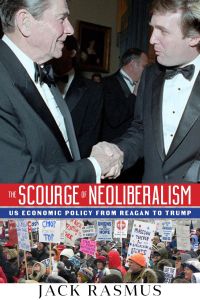
While the capitalist system has undergone numerous restructurings throughout its history, capitalist elites purpose in restructuring has remained the same: to restore and/or extend their hegemony. The current restructuring, operative since 1978, is called Neoliberalism. The book examines Neoliberalism as both an Idea and an historical practice composed of a particular mix of fiscal-monetary-trade-industrial policies that began with the latest US capitalist restructuring in the late 1970s, continuing to evolve to this day. The book further explains the deeper material forces giving rise to - as well as now undermining - the Neoliberal policy regime, with special focus given to the crisis of Neoliberalism in the wake of the 2008-09 global crash, Obama's failure to resurrect it, and Trump's current doomed effort to restore it in a new, more aggressive form. Evidence why Neoliberalism is destroying US Democracy concludes the book's analysis.
NEW BOOK
Describes how US federal governments, often in cooperation with the largest US private banks, introduced and expanded central banking functions from 1781 through the creation of the Federal Reserve Act of 1913. Based on an analysis of the evolution of the US banking system - from pre-1781, through the 1787 US Constitutional Convention, Congressional debates on Hamilton's reports to Congress, the rise and fall of the 1st and 2nd Banks of the United States, and through the long period of the National Banking System form 1862-1913, the book shows how central banking in the US evolved out of the private banking system, and how following the financial crash of 1907 big New York banks pushed through Congress the Federal Reserve Act of 1913, creating a central bank which they then managed for their interests.
BOOK
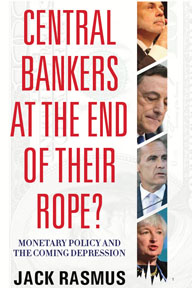
(Click on image) CENTRAL BANKERS is a comprehensive critique of central banks’ policies in the 21st century, explaining why the massive injections of free money to the banking system since the 1970s enabled the creation of excess corporate debt that has led to financial bubbles and repeated crises. The book addresses the growing contradictions of central banking, why they are failing in their functions, targets and tools, and proposes a radical democratization and restructuring to transform them to serve the public interest and not the private banks.
Book:
(Click on image) LOOTING GREECE, A New Financial Imperialism Emerges. This book - Reveals clearly who calls the shots in the Eurozone—the hardliners, not the remnants and political residue of what was once European social democracy, - Follows the negotiations in their excruciating detail as the Troika tightens the screws from 2009 to the present, - Shows how Europe’s financial elite enriches itself on Greek debt, privatizations and financial manipulations, turning Greece into an Economic Protectorate.
Book:
(Click on image): This book offers a new approach to explaining why mainstream economic analyses have repeatedly failed and why fiscal and monetary policies have been incapable of producing a sustained recovery. It explains why the global economy is slowing long term and becoming more unstable, why policies to date have largely failed the trend, and why the next crisis may therefore prove even worse than that of 2008-09.
Book plus DVD and Powerpoint slideshow
(Click on image) Obama's Economy: Recovery for the Few, explains how the weakest and most lopsided economic recovery since 1947 has been the direct outcome of failed economic policies of the Obama administration and US Federal Reserve bank since February 2009. Includes a detailed 'alternative program' in the final chapter. Includes the book, a video DVD presentation, and 66-slide PPT slideshow.
Book

(Click on image) Obama's Economy: Recovery for the Few, explains how the weakest and most lopsided economic recovery since 1947 has been the direct outcome of failed economic policies of the Obama administration and US Federal Reserve bank since February 2009. Includes a detailed 'alternative program' in the final chapter.
Book

(Click on image) A theoretical analysis, with historical case examples, of origins, causes and future evolution of the recent--and continuing--economic crisis in the U.S. and global economy. Includes predictions in 2009 of the inevitable failure of Obama policies and more serious crisis to come, 2013-15.
Book

(Click on image) Seven specific reasons why economic recovery under Obama since 2009 has failed for all but the wealthiest few and largest corporations. The book spells out eight specific areas as an Alternative Economic Recovery Program.
Book

(Click on image) The War At Home: The Corporate Offensive From Ronald Reagan to George W. Bush, is a 534 page, extensively researched, nonfiction book that describes the evolution of corporate-government policies from 1980 to 2005 that have shifted more than a $1 trillion dollars a year, every year, from 90 million American middle and working class households to the wealthiest 10% and corporations.
Search
-
Join 450 other subscribers
Jack Rasmus Site: KYKLOS PRODUCTIONS
 Dr. Jack Rasmus @drjackrasmus
