Last week’s Alternative Visions show discussed the latest change to financial asset bubbles (cryptos, gold, silver, S&P stocks and AI). Why AI isn’t making any money except for big & tech corps and won’t any time soon. Latest stats on real economy consumer spending mostly just price increases since not adjusted for inflation. Manufacturing continues to contract. New housing flat. Recent govt shutdown distorting econ stats. Show addresses latest European scheme to seize Russian assets in its banks and use to fund Ukraine war. Why Euroclear in Brussels, Belgium govt, and now European central bank all against the seizure being pushed by European Commission and German chancellor Merz. (Next week: USA’s new Strategic Direction plan document and the rearming of German War Machine article in The Atlantic Mag. What does it all mean?)
Financial Bubbles, US Real Economy & Europe’s latest scheme to grab Russian Assets
December 8, 2025 by jackrasmus
3 Responses
Leave a reply to alamedaexile Cancel reply
Dr. Rasmus on Twitter
Jack’s Weekly Radio Show, ALTERNATIVE VISIONS
NEW BOOK

While the capitalist system has undergone numerous restructurings throughout its history, capitalist elites purpose in restructuring has remained the same: to restore and/or extend their hegemony. The current restructuring, operative since 1978, is called Neoliberalism. The book examines Neoliberalism as both an Idea and an historical practice composed of a particular mix of fiscal-monetary-trade-industrial policies that began with the latest US capitalist restructuring in the late 1970s, continuing to evolve to this day. The book further explains the deeper material forces giving rise to - as well as now undermining - the Neoliberal policy regime, with special focus given to the crisis of Neoliberalism in the wake of the 2008-09 global crash, Obama's failure to resurrect it, and Trump's current doomed effort to restore it in a new, more aggressive form. Evidence why Neoliberalism is destroying US Democracy concludes the book's analysis.
NEW BOOK
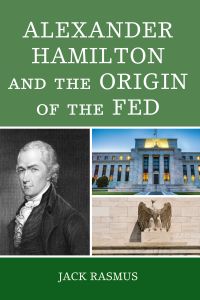
Describes how US federal governments, often in cooperation with the largest US private banks, introduced and expanded central banking functions from 1781 through the creation of the Federal Reserve Act of 1913. Based on an analysis of the evolution of the US banking system - from pre-1781, through the 1787 US Constitutional Convention, Congressional debates on Hamilton's reports to Congress, the rise and fall of the 1st and 2nd Banks of the United States, and through the long period of the National Banking System form 1862-1913, the book shows how central banking in the US evolved out of the private banking system, and how following the financial crash of 1907 big New York banks pushed through Congress the Federal Reserve Act of 1913, creating a central bank which they then managed for their interests.
BOOK
(Click on image) CENTRAL BANKERS is a comprehensive critique of central banks’ policies in the 21st century, explaining why the massive injections of free money to the banking system since the 1970s enabled the creation of excess corporate debt that has led to financial bubbles and repeated crises. The book addresses the growing contradictions of central banking, why they are failing in their functions, targets and tools, and proposes a radical democratization and restructuring to transform them to serve the public interest and not the private banks.
Book:
(Click on image) LOOTING GREECE, A New Financial Imperialism Emerges. This book - Reveals clearly who calls the shots in the Eurozone—the hardliners, not the remnants and political residue of what was once European social democracy, - Follows the negotiations in their excruciating detail as the Troika tightens the screws from 2009 to the present, - Shows how Europe’s financial elite enriches itself on Greek debt, privatizations and financial manipulations, turning Greece into an Economic Protectorate.
Book:
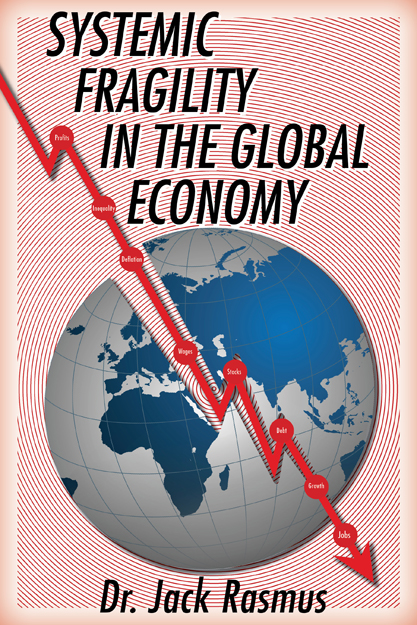
(Click on image): This book offers a new approach to explaining why mainstream economic analyses have repeatedly failed and why fiscal and monetary policies have been incapable of producing a sustained recovery. It explains why the global economy is slowing long term and becoming more unstable, why policies to date have largely failed the trend, and why the next crisis may therefore prove even worse than that of 2008-09.
Book plus DVD and Powerpoint slideshow
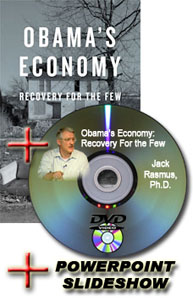
(Click on image) Obama's Economy: Recovery for the Few, explains how the weakest and most lopsided economic recovery since 1947 has been the direct outcome of failed economic policies of the Obama administration and US Federal Reserve bank since February 2009. Includes a detailed 'alternative program' in the final chapter. Includes the book, a video DVD presentation, and 66-slide PPT slideshow.
Book

(Click on image) Obama's Economy: Recovery for the Few, explains how the weakest and most lopsided economic recovery since 1947 has been the direct outcome of failed economic policies of the Obama administration and US Federal Reserve bank since February 2009. Includes a detailed 'alternative program' in the final chapter.
Book

(Click on image) A theoretical analysis, with historical case examples, of origins, causes and future evolution of the recent--and continuing--economic crisis in the U.S. and global economy. Includes predictions in 2009 of the inevitable failure of Obama policies and more serious crisis to come, 2013-15.
Book

(Click on image) Seven specific reasons why economic recovery under Obama since 2009 has failed for all but the wealthiest few and largest corporations. The book spells out eight specific areas as an Alternative Economic Recovery Program.
Book

(Click on image) The War At Home: The Corporate Offensive From Ronald Reagan to George W. Bush, is a 534 page, extensively researched, nonfiction book that describes the evolution of corporate-government policies from 1980 to 2005 that have shifted more than a $1 trillion dollars a year, every year, from 90 million American middle and working class households to the wealthiest 10% and corporations.
Search
-
Join 455 other subscribers
Jack Rasmus Site: KYKLOS PRODUCTIONS
 Dr. Jack Rasmus @drjackrasmus
 Jack Rasmus
I am not understanding the discussion of why AI is so close to speculative collapse. My understanding that the original push for AI was based upon the idea that big to medium size businesses could get rid of some 20% of their work force assuming that that was the percentage of workers that are involved with simple decision making. But the most recent discussion re the speculative crash of AI is not in replacing workers but in creating a focused browsing capacity and thus the historical advertising revenue from browsing sales will be captured by big AI browser providers such as Google.
Likewise, from what little I know of AI, it seems that the speculative collapse related to a 20% work forced reduction seems quite attenuated. Okay so let’s assume to ramp up the IT infrastructure to implement AI and simple decision making may be quite expensive: say perhaps ten years of salary for those poorly paid workers who are currently making simple decisions. So it could be a very bad bet if a medium or large business “bet the farm” that an AI driven reduction in a work force would reap immediate benefits and instead incur large loans that cannot be paid off with current revenues.
So is the anticipated speculative AI bust related to browsing ad revenues or the high cost of implementing AI or both?
THe AI bubble is the financial side. AI stocks, big 7, data centers, etc. Debt is financing the data center expansion, as well as shady deals between the big techs and the data center companies where each is investing in the others stocks. Should general business not follow through with AI investments (generative AI browsers are not sufficient to justify the otherwise major data infrastructure costs they’d have to incur), then we get over investment in data center and data center companies default on their debt, it spills over to one or more of the big 7, and fears about the AI boom not yielding immediate results spills over to the stocks of AI companies. The S&P500 and or Nasdaq take a deep dive thereafter. There are other potential transmission mechanisms for the AI investment boom to slow dramatically or contract, leading to the puncturing of the stock bubble. The bubble is financial asset values, but underlying it is over-investment in data centers, chips, etc. that then pull back sharply, causing stock bubble to collapse. Hope that helps
I finally get it. And this explains why Warren Buffet dumped billions of Apple stock and warned about the billions of dollars of debt leveraging AI. Thanks.