Feeds:
Posts
Comments

Posts Tagged ‘US GDP’

February 18, 2026

Dr. Jack Rasmus, copyright 2026

During the past fourteen months since Trump took office, financial asset market bubbles accelerated to record levels in 2025—i.e. S&P 500 and Nasdaq stock markets, bitcoin cryptocurrency market, and gold and silver markets. In early February 2026 these markets abruptly contracted, briefly recovered some, but then resumed decline once again.

The key question debated today in corner offices, board rooms and hallways of finance capitalist institutions is whether the financial bubbles can continue growing much longer.  If not, what’s next? 

After the abrupt and steep corrections will financial asset prices recover or are the February 2026 contractions a harbinger of more, and perhaps even larger, financial asset price declines to come?

In other words, is another financial crash on the horizon in 2026? Or perhaps early 2027 at the latest?

An important, related question is: how is the current multiple bubbles scenario different from those that preceded it—i.e. the residential housing + derivatives crash of 2007-09? The dotcom bust of 2000? The Asian currency crisis of 1998? The Savings & Loan collapse of 1990? The junk bond and stock market crash of 1987? Not to mention the more recent Repo Treasury market crisis of 2019 that required $1 trillion bailout by the Federal Reserve. Or the US regional banking crisis of 2023 that cost another $1 trillion!

In answer to that query, one key difference between the current situation and its historical predecessors is prior financial busts involved single financial market implosions. Today the three financial asset market bubbles—stock markets, crypto markets, and metals markets—are becoming volatile and unstable at the same time. That’s never happened before. The consequences of a triple bubble bust today are therefore potentially greater than ever before.

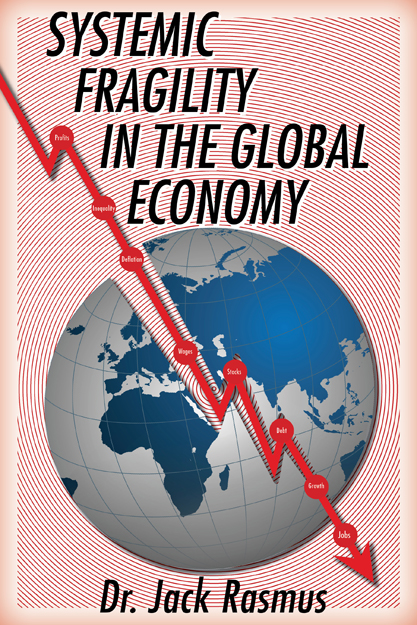
Price bubbles typically take two to three years to peak. As the data table below indicates, the US is now in the third year for all three and the February 2026 recent contractions should be a red flag. Asset price fragility is peaking—i.e.  where ‘fragility’ is an indicator of the tendency for a major financial crash—a concept this writer defined quantitatively and measured in a previous publication, System Fragility in the Global Economy, Clarity Press, 2015.  

All three financial markets are now increasingly fragile, as indicated by their growing volatility and ‘churn’ as they reached peak expansion in late 2025—with the sole exception of gold which will likely drive still higher due to separate geopolitical forces.

Asset price bubbles typically bust and deflate much faster than they accelerate. Often in just weeks and sometimes just days once they turn down. Asset markets are also what economists call ‘substitutable’—i.e. the same investors invest across all three. And when they deflate, the same investors end up dumping them in tandem—either for psychological reasons, the need to cover prior margin buying, or demands by their lenders. That’s called contagion, signs of which are also now also beginning to appear in the stock and crypto markets.

Moreover, should such a general asset deflation occur across all three financial markets in 2026, or early 2027, the price deflation across the three bubbles will be exacerbated by a fourth asset price deflation already well underway—i.e. the price of the US dollar which has already devalued (‘deflated) nearly 10% in 2025. Should the other bubbles bust continue to deflate, the dollar will almost certainly devalue even further in turn—raising the further question how might a further 10% devaluation of the US dollar in 2026 feed back upon the other asset markets? Or, for that matter, on the US real economy?  

No one knows the consequences for the US and global economies should such a historically unique multiple financial asset price contraction occur in the midst of a 20% decline of the value of the US dollar by year end 2026! It’s never happened before.

Nor does anyone know the consequences in turn for US Treasuries sales now facing growing headwinds—and thus the US ability to continue funding its chronic $1.8 trillion annual budget deficits.

The history of past finance asset bubble deflations show the crash of even one financial market—whether housing & derivatives in 2007-08, global currencies (1998), junk bonds & stocks (1987), savings & loans (1990), etc.— is often enough to precipitate recessions in the real economy of varying degrees and duration.

What happens to the US real (non-financial markets) economy, now already barely growing at around 1.5% in real GDP terms when properly estimated and more accurately adjusted for actual inflation? A financial crash involving multiple finance markets, may make the 2007-09 so-called ‘great recession’ appear a relatively mild event.

What’s also different today is that the US real economy is far weaker than it was during previous financial instability events: Back in 2007-09 the US economy was not experiencing a US dollar devaluation of 10% or more; the US federal national debt was $10 trillion not approaching $39 trillion today; interest payments on the US national debt were $379 billion in 2008 not $1.2 trillion in 2025; foreign holders of US debt held $2.9 trillion of US Treasuries not $9.1 trillion; the annual US budget deficit in 2008 was $455 billion instead of $1.78 trillion today; total US defense and war spending (not just Pentagon) was roughly half that of 2025’s $2.1 trillion a year—the latter poised to rise by another $400 billion next fiscal year, according to Trump.

US household debt was $12.6 trillion in 2008; today it’s at record levels of $18.8 trillion with delinquencies and defaults now rising sharply for credit cards, auto and student loans, while Corporate debt is also now at a record $10.5 trillion. Real wages for US households in 2025 remain stagnant or declining now after four decades for the bottom 80% of the US work force, while net new job growth in 2025 averaged a record low of only 15,000 a month (181,000 for all of 2025). Nominal weekly earnings for the more than 100 million US production and non-supervisory workers have risen only 9.1% since 2020, while inflation per the US CPI index has risen more than 24%. Official government data shows 67% of US households now live paycheck to paycheck.

If the financial market bubbles and the chronic devaluing dollar represent the kindling beneath the US real economy, then US households’ precarious economic condition today represents the dry tinder waiting to set off an economic conflagration the next 18 months should the financial bubbles implode driving the US economy into recession once again.

Financial Asset Market Fragility 2023-25

Here’s how much the three concurrent financial bubbles have accelerated in recent years:

% Change/Yr

2023       2024      2025
S&P500   26.3%         25.0%       17.8%
Nasdaq   43.4%         29.5%       20.3%
Dow   16.8%         12.8%       13.0%
Bitcoin    155%          121%         5.0%
Gold    13.1%         27.3%       64.7%
Silver     -1.2%         22.3%        170%
$US Dollar     -2.7%           6.8%         -9.2%  

What’s Happening February 2026

In early 2025 the asset bubbles hit a wall. Some recovered relatively quickly, like gold prices.  But US Stock markets and prices have struggled to regain their lost momentum. Bitcoin and crypto currency prices have fared even worse.

2025Feb. 15, 2026  Loss/Gain 2026 (6 wks)  
S&P500  $6,845       $6,881       +$36
Nasdaq$23,241     $20,367   -$2,874
Dow$48,063     $49,500  +$1,437
Bitcoin (per coin)$88,430     $68,867 -$19,563
Gold (per ounce)  $4,322       $5,044     +$712
Silver (per ounce)  $77.92       $78.91    +$0.99
  $US Dollar (index)     -9.2%               -1.2%        -10.4%

What the data show thus far for 2026 is that, except for gold, after accelerating for three years asset markets hit a wall in 2026 starting the last week in January and into the first weeks of February 2026. Tech stocks in particular underwent a significant contraction reflected in both the S&P 500 and Nasdaq stock markets. Bitcoin fared worse: On one day alone it crashed 14% after having declined from a high of $126,000 per coin in October 2025 to $68,867 in mid-February 2026, almost by 50%. After a torrid 170% surge in 2025, silver prices have now flattened out. Gold prices took a major dip at the end of January along with the rest, falling 15% on January 30 alone, the largest one day loss in its history but clawed back some of that loss by mid-February.  

During the first week of February the contagion mostly occurred across and between financial asset markets. The sell offs abated some by the end of the first week as ‘dip buying’ set in. Big finance investors were not yet moving to the sidelines for an extended period. Some are still buying on the dip. However, that may not last. The dip buying is proving tepid—especially in the case of the S&P500, Nasdaq, and Bitcoin markets. Therefore the multi-market price deflation is so far a harbinger of things to come and not yet the ‘big event’.

Some investors have not stepped back in to re-buy Tech stocks—which is itself significant and telling—but moved over to invest in the non-Tech Dow Industrials which has experienced a temporary surge in the wake of the tech stock-crypto collapse. Other investors have rotated their profits into the gold market where fundamentals due to geopolitical and geo-economic causes promise to continue an escalation of metals prices.

So why have gold prices recovered, while other stock markets thus far have not? The simple explanation is the gold bubble is being driven by global causes as well while the US stock markets’ bubbles are driven by the hype and price speculation in the artificial intelligence AI investment boom; and Bitcoin and cryptos by regulatory changes, crypto ETFs, and by support from Trump and the Trump family crypto grift.

Gold prices continue to rise due to escalation in buying by foreign country central banks, private banks, and offshore investors. China, India, the BRICS and other global south economies have led the way. Their gold buying represents a shift from using the US dollar as their primary reserve currency, and from using dollars for transactions in oil and other commodities. Deeper still, the shift from dollars is driven by US policies employing sanctions, tariffs, and embargoes as tools of US imperial policy. The decline in the demand for dollars is occurring as well for separate set of reasons by the other historically big purchasers of dollars, Japan and Europe. They too are shifting to gold and away from dollars to purchase US Treasury securities. 

As former global buyers of dollars shift to gold, the decline in the demand for dollars has resulted in the devaluing the US dollar. That in turn pushes up the demand for gold and thus its price. Thus, multiple international forces, economic and political, are driving the price of gold—unlike the price bubbles in US stock markets that are being driven largely by AI investment hype and speculation and political factors driving bitcoin and cryptos. 

How much and how fast the multiple financial market bubbles contract in coming months will determine whether a ‘financial crash’ takes place the next 12-18 months. But February 2026 market events suggest that is the new trajectory in 2026, a basic departure from the sustained bubble trajectory of 2023-25.  Geopolitical events will continue to drive gold prices. Domestic political events crypto prices. And investor herd psychology and hype associated with the investment boom in Artificial Intelligence in the US will largely determine what further happens in the S&P 500 and Nasdaq stock markets. However, recent developments in AI do not portend well for the US stocks markets’ recovery. Here’s why:

Artificial Intelligence Investment: Boom or Bust?

One must understand what’s going on in the Artificial Intelligence investment boom to understand whether S&P 500 and Nasdaq stock markets will continue to weaken and deflate. Some of the AI investment boom is real, but much of it is hype that will never be realized for most businesses beyond the Big 7 tech companies driving it.

As is often the case, financial bubbles are built upon developments in the real economy. When those real developments do not pan out, market asset prices bubbles based upon them implode in turn. Almost all the accelerating rise in SP500 and Nasdaq stock markets price appreciation in 2025 has been driven by the stocks of the big & Tech corporations and their stock price appreciation has been driven by their hype, announcements and plans with regard to AI.

As others have also pointed out, AI investment is also propping up the US real economy not just the financial markets. In the first half of 2025 AI investment accounted for 85% of all the gain in the US real GDP! Should the AI investment boom not deliver on the hype it has promised for the real economy, the AI driven tech stocks underpinning the stock markets will deflate further and faster.

Almost all of the US GDP growth in 2025 has been due to 1) the AI investment boom up to now focused in chips, data centers and software apps investment by the big 7 Tech corps, along with 2) technical changes in the reduction of US imports as result of Trump tariff policies. Take away these two factors and, as the saying goes, “there’s no there there” in US GDP growth last year. The US real economy would be close to stagnant in 2025. And US GDP would be contracting—i.e. in recession—if it were properly adjusted for inflation, which it isn’t by using the PCE index that low balls inflation and thus puffs up real GDP.  

In short, take away the AI boom, the tariffs driven decline in US imports, and properly adjust prices, and US GDP would be negative.

We’re told by the big Tech corporations and politicians alike that the investment boom in Artificial Intelligence will ensure the stock markets continue to rise and the real US economy will experience a new era of solid real economic growth. Big Tech and US business in general are ‘rolling the economic dice’ on massive investments in AI as the magic solution that will soon turn everything around before the next financial crash. The big 7 Tech companies—Google, Amazon, Meta, Microsoft, Nvidia, Apple and Broadcom (8 if one counts Tesla)—this past winter 2025-26 together announced $700 billion new spending in AI for 2026 alone, after having invested $450 billion in 2025.

But is AI the solution to the growing financial fragility—or a major cause of it? Will AI generate real economic benefits for all—or just produce more concentration of wealth for the Big Tech capitalists and billionaires?

Here’s the problem why AI will mostly produce profits for Big Tech and not for general business, will not generate sustained economic growth in general, and will result in more fragility and stock market price instability:

Surveys show that 70% of non-big 7 tech companies don’t see how they can make money from introducing AI. The costs of implementing AI in their companies are significant. It’s not just about using a Chat-GPT app. That’s AI peanuts. To introduce AI in order to significantly reduce costs, boost productivity, and realize significant profit gains, non-tech companies will have to re-engineer their companies’ basic data architecture. That’s expensive. They’ll have to employ professional consulting services to do so. And guess who’ll offer those businesses services? The big 7 tech corps. The non-tech businesses will also have to integrate their IT with cloud computing services. Guess who offers that? Again, the big Techs, especially Alphabet-Google, Amazon, Microsoft and soon even Meta. The big chip companies like Nvidia, Broadcom and others will feed them all the expensive chips they want. In other words, the AI investment boom will largely benefit the big 7 financially. They’ll make the profits. The rest of general business caught up in the AI hype will pay for it all and realize few if any profit gains. When that becomes apparent, general business demand for AI products will decline—and with it the price of the offerings by the Big 7 tech giants. And then the AI stock bubble will begin unwinding in turn. It’s all not unlike what happened with artificially stimulated US residential housing markets in 2003-2007. When the real investment in housing collapsed in 2007, the stock values followed. And the companies that borrowed to play couldn’t pay off their lenders, who in turn recorded losses, and we know the rest of the trajectory.

The current AI boom is therefore something like the dotcom internet bubble’s over-investment 1998-2000, overlaid with elements of the residential housing boom and bubble that followed 2003-07.

AI hype is already beginning to impact other sectors and companies, now showing up in their stock valuations as well.  The AI investment boom risks not only millions of US job losses and wage compression for millions more workers, but also risks destroying thousands of other companies’ business models and bottom lines. AI will prove a destructive economic force like no other to date.

The US business media is beginning to acknowledge the AI investment boom is destroying the valuations and future returns for other industries and companies: the traditional software companies are especially vulnerable. Other industries like finance, insurance, legal services and even trucking are now recognized as existentially threatened by AI. Their stock prices are already taking a hit.

As a recent Wall St. Journal article (February 14, 2026, p. B10) entitled ‘AI Jitters Fuel Worst Week for Stocks Since November’, forewarned of “the long term disruptive potential of AI” on a wide array of business sectors and “that entire industries are going to be worth much less money than they are today”.

After a brief recovery earlier in last week, all the stock markets retreated even further on Thursday and Friday, February 12-13. The Nasdaq declined for a fifth consecutive week, it’s worst slide since May 2022. The S&P 500 experienced its worst weekly loss last week since November 2025 while the Dow Industrial average rose only 49 points or 0.01%. In other words, there’s no sign of a major stock market bounce back yet.  

AI contagion fears may now be spreading in the S&P 500 and Nasdaq stock markets, i.e. from the Big 7 tech companies stocks to other sectors. The decline in the financial asset bubbles may therefore have only just begun.  Even given some recovery, more churn and contractions in 2026 are almost certain to occur.

The era of unrelenting asset price surges and bubbles that defined 2023-25 is likely over. A period of financial asset volatility and decline has likely now begun.

Will one or more of the recent asset bubbles break in 2026? Drag down the other bubbles in turn? Cause a further decline in the value of the US dollar?  Will the weakness in the US real economy now become more increasingly apparent as well? Government shutdowns allowed politicians since October to plug in arbitrary data for the weeks of missed government surveys on inflation, jobs and GDP. They call this ‘imputed’ data. It’s actually just ‘made up’ data. A real view of the US economy will not be available until end of March 2026.

In the meantime, pending political events in the form of more Trump wars abroad, and Trump threats and actions to undermine US elections in November, will negatively impact investor-consumer confidence in 2026 and feedback on the already increasingly fragile stocks-crypto-US dollar and metals financial markets.

Should any one of the referenced financial asset markets break out of the pack and deflate rapidly, then contagion and a more general asset price collapse becomes imminent—with consequences for the real economy even greater than that which occurred in 2007-09.


Read Full Post »

A first look at US third quarter 2013 GDP and October Jobs Reports gives the impression that the US economy is mending and might soon begin to recover. But a closer inspection shows that the reports indicate an economy still mired in a ‘stop-go’ trajectory at best and a jobs market able to produce low pay, often contingent service jobs. Moreover, trends within the reports suggest even the already tepid results in the reports will likely wane, once again, in the coming quarter and months. Here’s why.

US 3rd Quarter GDP Report

The official, preliminary GDP numbers for July-September indicate a 2.8% US growth rate. The truth is always in the details, however. And a closer look at the composition and trends within GDP are nowhere near so rosy.

First and most important, no less than 0.71 of that 2.8% is due to what is called inventory accumulation by nonfarm businesses, which rose more than twice as fast as the 0.30 in the second quarter 2013 following a mere 0.06% in the first quarter. In other words, businesses have been accelerating their stocking up of goods in anticipation of a subsequent rise in consumer household spending in the U.S. However, as indicated below, that spending is decelerating rapidly—not rising—and along several fronts.

It would not be the first time in the past few years that businesses falsely anticipated the take off of consumer spending and ramped up prematurely, only to have to contract just as dramatically when spending did not materialize.

In early 2012 a similar scenario occurred. Business inventory accumulation surged, adding significantly to GDP, then collapsed. After gains in inventory spending contributing 0.91 to GDP in the 3rd quarter 2012, last year, the same inventory spending collapsed in the final quarter of 2012, subtracting a full -2.09 from GDP. Fourth quarter 2012 US GDP in turn collapsed to a mere 0.1% growth rate. Thereafter, businesses began once again this past spring in building inventories in anticipation, yet again, a surge in consumer spending to occur this current 4th quarter 2013—once again a ‘surge’ that does not appear will take place.

Another problem with the recent 2.8% GDP 3rd quarter 2013 number is that it reflects a major redefinition of what constitutes GDP that was introduced this past July 2013 by the Bureau of Economic Analysis, the US agency responsible for GDP reporting. In that change and redefinition, the BEA added for the first time business Research & Development costs to the business investment contribution to GDP. In other words, ‘costs’ not ‘output’, as previously has always been the case, now contribute to GDP. This was clearly one way to artificially raise what has been a declining trend in US business investment in the US for the past decade. Applying the redefinition retroactively, this GDP redefinition added no less than $550 billion to 2012 GDP last year. And for the most recent quarter, it added further to US GDP’s 2.8% rate. R&D contribution to US GDP is currently running at more than $280 billion for the year. That ‘redefinition and cost’ compares to an estimate of $292 billion for all software contribution to US GDP this year; and more than the investment contribution for all transport equipment or all industrial equipment to US GDP this year. It is not an insignificant sum, in other words. But it is ‘adding’ artificially to the 2.8% US GDP recent numbers.

Eliminate the excessive .71 contribution of inventories that will almost certainly contract this fourth quarter, and the artificial addition to GDP from R&D ‘costs’, the actual longer term trend in GDP in the 3rd quarter is about 1.8%–not 2.8%. That’s about the longer term average of US GDP growth annually for the past two years. In other words, the economy is growing no faster than it has in the past, a rate that is about half what it should be at this point nearly five years after the end of the recession in 2009.

But the 3rd Quarter GDP numbers are notable as well for other weak trends within the general number. First, it appears that spending on services has nearly come to a halt. After contributing 0.69 and 0.53 to GDP rates in the first and second quarters of 2013, respectively, services spending collapsed to only 0.05% in the 3rd quarter. Other warning signs of questionable consumer spending going forward are also now beginning to appear as well. Consumer confidence has plunged. The largest segment of consumer spending, retail sales, fell 0.1% in September, following one of the worst ‘back to school’ shopping seasons that “ended on a sour note, raising concerns about the holidays”, according to the Wall St. Journal. Imminent cuts of billions of dollars in food stamps recently approved by Congress will take a further toll on consumer spending essentials in the near future, as will the 6-day shorter holiday shopping season for this year. Both wholesale and consumer prices continue to decelerate to 1% or less, also an indicator of soft sales and demand by consumers. In short, it is not likely consumer spending will rebound significantly this fourth quarter, prompting in turn the sharp reduction in business inventory spending noted above.

Added to this will be a continued decline in government spending at the federal level, as the sequestered spending cuts take an even deeper ‘bite’ out of the US economy. Both Defense and Non-defense spending has been reducing GDP every quarter since the beginning of 2013. This will not only continue, but will now accelerate in the 2013-14 fiscal budget year.

Finally, on the manufacturing and construction side of the economy, which represents about 20% of total GDP, recent growth in new residential housing construction will likely decline. The recent US ‘housing recovery’ is now over, with rising interest rates and prices. US homebuilders are beginning to recognize this and are now reducing their output, and thus future contribution to GDP from this sector.

The contribution of manufacturing and exports to US GDP growth longer term is also fading. In the 3rd quarter, net exports added to GDP despite slowing exports because imports declined faster than exports. What was a US brief export sales advantage for a while in 2013 is in decline, as the Eurozone economy takes action to lower its exchange rate and thus boost their exports and as China quickly moves back to an ‘export-driven’ GDP in recent months after having tested the waters, and retreated, from a shift to more internal consumption driven growth. The imminent shift by the US federal reserve bank toward a ‘taper’ monetary policy in coming months will also result in higher US interest rates (further slowing housing and auto sales) and a related rising dollar (further slowing export sales).

The recent 2.8% US GDP for the third quarter is therefore a ‘false positive’ in terms of where the US economy, and economic growth, may be headed this coming 4th quarter and longer term.

US October Jobs Report

Last month’s Jobs report is a reflection of US third quarter GDP. The reported increase of 204,000 jobs in October at first glance appears a positive development. At least that number is needed to start reducing the unemployment rate. However, that rate actually rose last month. The reason is a whopping 700,000 more workers left the labor force. That huge number leaving the labor force is a strong indicator of severe weakness in the US labor markets, not strength. It means hundreds of thousands more in just one month have given up finding work because they can’t.

The composition of the hiring is also disturbing. 44,000 new hires in the retail sector. 53,000 in leisure & hospitality. And 52,000 in business services. The first two are typically overwhelmingly part time employment, as is a good part of the third as well. No doubt concerned with the weak August-September retail sales results, retail has begun hiring part timers even earlier than in previous years. Leisure and hospitality (restaurants, hotels, etc.) have also continued to hire, again typically part time. The hiring of part time, or ‘contingent’, labor is a major trend of this past year—when in the first half of 2013 more than 600,000 of the 900,000 newly hired were in fact ‘contingent’ (part time and temp jobs). That means low paid and service jobs, without benefits as a rule. That also means slow to stagnant income growth from job creation—the most important source of disposable income growth necessary for sustained consumer spending.

While wage increases for the past year are reported as 1.8%, it is important to note that this rate is for full time workers only. It does not reflect the lower pay received by part time workers, which have been the bulk of jobs created over the past year. When adjusted, wages are stagnant at best or falling for production and supervisory workers as a whole, full and part time and temp. It is not surprising, therefore, that median family (aka working class) disposable incomes continue to fall this year, as they have in four preceding consecutive years. That is not a foundation for future consumption increases. To date, consumption spending has risen even tepidly due to the growing use of consumer credit—cards, student loans, and auto and mortgage refinancing loans. Recently, credit card usage has slowed, however. Consumer spending has also been boosted by the wealthiest 10% households, who spend largely on performance of stock and bond markets that have been surging to record levels. Stocks and credit cards are not a basis for true household spending recovery; jobs and real income growth are the key but neither appear will contribute much in coming months.

Finally, contingent job growth—and especially in retail and hospitality both highly dependent on holiday spending—can ‘disappear’ quickly from the economy, and may in fact do so by December should consumer spending come in well below expectations. Meanwhile, the federal government continues to reduce spending and shed jobs, and may even do so at a faster rate early next year should the ‘sequester’ spending cuts not be reversed and Congress take an even deeper bite out of social security and medicare spending in 2014.

To summarize, the 2.8% GDP for the 3rd quarter, and the October 2013 jobs report, are nothing to get excited about. They represent temporary adjustments to an otherwise stagnant at best US economy performance and a jobs creation record barely absorbing new entrants into the labor force and doing so at a sub-standard pay rate.

Jack Rasmus
November 11,2 013

Jack is the author of the 2012 book, ‘Obama’s Economy: Recovery for the Few’, Pluto Press, and host of the weekly radio show, ‘Alternative Visions’ on the Progressive Radio Network. His website is http://www.kyklosproductions.com, his blog jackrasmus.com, and his twitter handle, @drjackrasmus.

Read Full Post »

On Wednesday, July 31, the Bureau of Economic Analysis, undertook a major revision of GDP statistics. The result was a major upward revision of GDP numbers for the 2nd quarter and for 2012. While the BEA revises numbers and its methods every five years, this time the revisions were extraordinary and particularly significant.

GDP for 2012, as I pointed out in my prior article, ‘Economic Recovery by Statistical Manipulation’, was raised by almost 33% as a result of the BEA revisions–from the 2.1% annual growth to 2.8%. Moreover, the consensus forecasts by economists for the recent 2nd quarter 2013, which averaged 0.9% according to the Reuters survey, came in at nearly twice that, at 1.7%, due to the revisions. This is not a normal upward revision, most of which made in previous years by the BEA had very little effect on GDP numbers.

Changes made by the BEA to the contribution of investment to GDP were especially important. As I noted in my previous article, nearly all other areas of economic sectors that make up GDP were flat or declining in the 2nd quarter. In other words, the massive upward revision to GDP in the 2nd quarter, as reported by the BEA, appears largely attributable to its revisions to how investment is defined. If how we define investment can have that big an impact on GDP, the changes should not be accepted without challenge.

My article has raised some hackles in some quarters, including among some segments of the ‘liberal left’ that continues to be apologetic for the Obama administration despite its abysmal record economically, in terms of civil rights, wars, concessions to corporations, and so forth for the past five years.

Some among them claim I am arguing there is a ‘conspiracy’ to falsely boost GDP by the Obama administration. But I nowhere raise the charge of conspiracy in my article. Notwithstanding that, those who charge me with such are rather naïve if they think that the BEA bureaucrats, before they reported such numbers, didn’t check it out first with the Obama administration and get its ok. And that it is quite likely there was even more to it than mere reporting of things to come. Who knows for sure. But with what’s going on with data these days in Washington, it’s not realistic to assume the BEA changes had nothing to do with politics. Perhaps not overtly, but tacitly and maybe even covertly.

Much of the increase in investment by the BEA’s redefinition is associated with research and development expenditures by business. The BEA previously considered R&D an ‘expense’. Now it’s an investment. Where does the slippery slope of redefining expenses as investment stop? Obama has proposed in his 2014 budget to significantly increase tax credits to businesses for R&D expenses. That will significantly boost R&D investment. That spending in turn will boost GDP still further in months to come. Does anyone naively think the two developments are completely unrelated? It’s not paranoid to raise the point. Nor is it conspiratorial. It’s just politics, in this day and age when Washington is intent on providing benefit after policy benefit to its corporate friends.

Nevertheless, my critics—some New York left liberal types in particular—insist on defending the BEA and the administration. My insistence that the 33%-50% boost to GDP numbers is not a ‘normal’ revision is dismissed as ‘paranoid’ and ‘conspiracy’ theory. They argue that the changes to investment by the BEA, producing the 33%-50% GDP increase, are reasonable. But are they?

These critics think that adding more than $500 billion to 2012 GDP is normal. They point out that the BEA revisions had little effect on long run GDP since the 1960s. That’s true. But the changes have had a big impact on GDP since the so-called end of the Great Recession in 2009, and especially in the latest 18 months. They are ‘frontloaded’, in other words, having their greatest effect on GDP during the ‘recovery’ period since 2009, during which time it has become clear neither fiscal or monetary policies have done much to generate a sustained economic recovery. So that the 33%-50% boost to GDP in the last 18 months does result in making the failure at recovery appear significantly less so. To point that out is to engage in ‘agitprop’, I’m told.

Critics also pooh pooh my point that gross domestic income, GDI, is rising faster than GDP, even though the likes of Bernanke, chair of the Federal Reserve, does not think the trend is unimportant—as I quoted him in my original article. Something of import is going on here, between gross domestic income (GDI) and gross domestic product (GDP). The historical ratios between the two are changing in the last decade. But why so, we should ask? In reply to my critics, of course incomes from capital gains, dividends, etc. are not directly included in GDP calculations. But the BEA revisions, by increasing investment, do raise corporate profits (as Dean Baker has correctly pointed out, by more than $250 billion in 2012 alone). Corporate profits then get distributed to shareholders in the form of dividends and other capital gains. Raising investment by redefinition raises profits, which raises the distribution of those profits in the form of dividends, capital gains, etc. Ok, that direction of causation is clear.

But should we raise the possibility that the direction may be reversed as well? To explore that point: it is a fact that multinational corporations, for example, now earn on average 25% of their total profits from what is called ‘portfolio investment’—i.e. from financial speculation. Some like General Electric even more. Could it be that corporations are counting more of such profits in the totals reported to the BEA, that then gets reported in GDP-GDI calculations? Doing so might permit them to claim tax reductions on those portfolio profits, just as they do on production profits. So there could be a motive for counting profits from financial speculation as part of GDI, which might explain why BEA corporate profits (and GDI) are running ahead of GDP in recent years. It’s a legitimate question to raise, and doing so is not to suggest ‘conspiracy’ or reflect ‘paranoia’.

There are serious problems with GDP reporting if GDI is somehow rising faster than the value of those goods and services themselves. But critics of my view believe that to raise such questions is to ‘insult their friends at the BEA who are all skilled and honest servants’, as one of my ‘left liberal’ critics puts it in a recent reply to my article.

There are many things wrong with GDP as a measure of how the US economy is doing. But when GDP is revised upward by a stroke of the pen by such a significant amount, we should not be overly defensive of those responsible, or of the politicians who either collude in the process or let it happen.

To say now, as the BEA is saying with its recent GDP revisions, that ‘expenses’ constitute investment is a major shift of definition of GDP. It has resulted in a record upward revision of the numbers, and a slippery slope to further false upward revisions that will follow no doubt. Perhaps the ‘expenses’ incurred in derivatives investing by multinational corporations will soon be considered ‘investment’ in the next round of BEA revisions.

Government data should not be accepted on its face value. We should be challenging it, especially when changes to it are so significant as the case of the recent GDP revisions. Doing so should not critiqued on a personal level, calling those who raise challenges ‘paranoid’ and ‘conspiracy theorists’. That’s just juvenile. We should debating these issues, not polemicizing over them.

Jack Rasmus, August 2, 2013

Jack is the author of the 2012 book, ‘Obama’s Economy: Recovery for the Few’, Pluto Press, and host of the weekly radio show, ‘Alternative Visions’, on the Progressive Radio Network. His website is http://www.kyklosproductions.com, and blog, jackrasmus.com. His twitter handle is #drjackrasmus.

Read Full Post »

The following is a follow up, postscript, to the US GDP numbers reported today by the US government. The postscript confirms the analysis of the preceding blog post, ‘Economic Recovery by Statistical Manipulation’.

‘Postscript’ to ‘Economic Recovery by Statistical Manipulation’

My recent article, ‘Economic Recovery by Statistical Manipulation’, written July 29, 2013, forewarned that revisions to US GDP data due on July 31 for the April-June quarter would likely show a larger GDP and growth for the US for the quarter, as well as for earlier years. GDP data published today, July 31, 2013 by the US government’s Bureau of Economic Analysis (BEA) have confirmed that prediction.

A poll of dozens of economists by the Reuters international news agency prior to the 2nd quarter GDP data release showed professional economists were collectively forecasting no more than 1% GDP growth for the 2nd quarter. As noted in our previous article, some were forecasting GDP as low as 0.5% for the quarter. The BEA’s GDP first estimate for the 2nd quarter indicates a 1.7% GDP growth. What happened to explain such a great divergence from forecasts and the BEA data?

As Reuters notes, in a follow up to the BEA release, “comprehensive revisions to the data cast the economy in a better light than previously.” Not only has the most recent quarter of GDP been boosted, from 1.1% in the first quarter of 2013 to 1.7% now in the second (compared to forecasts of 1%), but GDP for all of calendar 2012 has been revised upward as well, from the prior official 2.1% to 2.8%. That’s a 33% upward revision.

Today’s GDP revisions—which will continue henceforth to boost future GDP numbers—focus largely on boosting the contribution of business investment to GDP. The revisions have resulted in significant increases in the estimates for business investment and will continue to do so in the future. It is not necessary to bother readers with the arcane details; suffice to say that the boosts to investment totals have to do with changes in how depreciation is calculated, pension accounting, and other items. The changes in depreciation in particular have resulted in GDP upward revision.

GDP is part of what’s called the ‘National Income Accounts’. Like all accounting, there are two sides to the ledger. GDP measures the value of goods and services produced in the economy; the other side of the accounting ledger is GDI, or gross domestic income, which measures the corresponding income generated from that production. That means that the upward revision based on depreciation-driven business investment translates into an upward revision of business income in GDI.

As economist, Dean Baker, has noted in his commentary on the revisions today, “The new measure added $250 billion to depreciation in the corporate sector for 2012” and that “the profit share of net corporate output (as percent of GDP) rose to 25.5 percent in 2012, the fourth highest share in the post-war era.”

A closer inspection of the 1.7% US 2nd quarter GDP number shows almost all of the major gains in the economy came from business investment. There are four major ‘areas’ of GDP: government spending, exports in excess of imports, consumer spending, and business investment.

The Reuters commentary on today’s GDP release indicated that consumer spending (70% of the US GDP) slowed in the second quarter significantly from the first. So it doesn’t explain the 1.7% unexpected GDP rise. Similarly, government spending (typically 24% of the economy) contracted for the third straight quarter. So nothing there to justify the 1.7%. Exports rose, but imports rose faster, which translates to a negative contribution to GDP. It was mostly “a turnaround in investment in nonresidential structures and gains in outlays on equipment and intellectual products”, according to Reuters, which explains the 1.7%.

Not surprisingly, that’s the precise area in which the GDP upward revisions have been focused.

Change the way depreciation is defined, adding to corporate profits in addition to the already record growth for profits, throw in new categories of what constitutes business investment—and now you have a 30% or more higher GDP.

If you can’t generate a sustained real economic recovery for five years with past and current economic policies—then just redefine the definition of recovery itself.

Jack Rasmus
Copyright July 31, 2013

Read Full Post »

Tomorrow, Wednesday July 31, 2013, the US government will release its data for US GDP for second quarter, April-June. As part of the release, it will redefine GDP and upward revise GDP results going back to 1929. It will make GDP appear larger than it really is. Read the following analysis for how and why the changes are being made, and the consequences for fiscal and monetary policies in upcoming months.

“Facing the prospect of a 2nd quarter GDP report showing economic growth less than 1% (some professional forecasting services predict as low as 0.5%), and a year to year growth of the US economy likely to come in at barely 1%–compared to a 2011-12 already tepid 1.7%–the Obama administration on Wednesday, July 31, will announce a major revision of how it calculates GDP which will bump up GDP numbers by as much as 3% according to some estimates. That’s one way to make it appear the US economy is finally recovering again, when all other fiscal-monetary policies since 2009 have actually failed to produce a sustained recovery.

Wednesday’s GDP definition revisions is not the first time that politicians, failing in their policies, have simply rewritten the numbers to make the failure ‘go away’. But this time, the GDP revisions will be made going all the way back to 1929. So watch for the slowing US economy GDP numbers from last October 2012 onward to be significantly revised upward.

Instead of an actual, paltry 0.4% GDP growth rate in the fourth quarter of 2012, a weak 1.6% in the first quarter 2013, and the projected 0.5%-1% for the 2nd quarter 2013—all the numbers will be revised higher in the coming GDP estimate for the 2nd quarter 2013. The true GDP growth rate of the most recent April-June 2013 period, projected as low as 0.5% by some professional macroeconmic forecasters, might not thus get reported.

President Bill Clinton played fast and loose with economic statistics as well at the end of his term, redefining who was uninsured in terms of health care coverage. The total of 50 million uninsured at the end of the 1990s, was reduced to 40 million—after having risen by ten million during his eight years in office. Today, they still claim there are only 50 million without health insurance coverage, despite the ten million more becoming unemployed since the Great Recession began in 2007, tens of millions of population increase in the US, and millions more having left the labor force.

Similarly, under President Reagan in the 1980s a raft of government statistics were ‘revised’. Unemployment in particular was revised downward by various means to make it appear fewer were jobless in the wake of the 1981-82 recession. Changes were made to inflation data as well to make it appear lower than it was, and to how manufacturing was defined to make it appear that the mass exodus of manufacturing ‘offshoring’ of jobs was not as great as it was in fact.

This writer has been forewarning of this radical shift in GDP definition since earlier this year, in a series of analyses on US GDP numbers over the past year, July 2012-June 2013, in which the warning was raised the US economy was slowing significantly—from its already weak historical 2011-2012 annual growth rates of less than 2% to around half at 1% (see my blog entries at jackrasmus.com). The point was raised the Obama administration appears may use the 5 year scheduled GDP revisions to boost the appearance of the slowing US economy.

The government agency, the Bureau of Economic Analysis, responsible for the GDP numbers will explain the GDP methodology changes this week, and this writer will provide a follow up analysis of the revisions. Some initial indications have appeared in the business press as to how and why the changes are being made in GDP.

One explanation is that Gross Domestic Income (GDI) has been running well ahead of GDP (Gross Domestic Product). GDP is supposed to measure the value of goods and services produced in the US, while GDI is a measure of the income generated in the US. They are supposed to be about equal, with some adjustments for capital consumption and foreign net income flows. The idea is whatever is produced in terms of goods and services generates a roughly equivalent income. However, it appears income (GDI) is rising faster than GDP output. The BEA revisions therefore appear aimed at raising GDP to the higher GDI levels.

But income is rising faster because investors, wealthy households (2%), and their corporations are increasing their income at an accelerating pace from financial securities investments—that don’t show up in GDP calculations which consider only production of real goods and services and exclude financial securities income like stocks, bonds, and derivatives. So instead of adjusting GDI downward, the BEA will raise GDP. It appears from early press indications it will do this by reducing deductions from GDP due to research and development and by now counting some kinds of financial investments as GDP.

When GDP was developed back in the 1930s, economists purposely left out financial assets’ price appreciation in the determination of GDP. Such assets did not reflect real production of goods and services, it was determined. But today in the 21st century, massive gains in capital incomes increasingly come from financial asset appreciation. Even many non-financial corporations now accumulate up to 25% of their total profits from what are called ‘portfolio investments’—i.e. financial asset speculation. Like profits from real production, that gets distributed to shareholders in the form of capital gains, dividends, stock buybacks, etc. That corporate profits and other forms of non-corporate business income also ends up in reported ‘Gross Domestic Income’, or GDI. As GDI rises in relation to GDP, the government’s answer is to conveniently revise GDP upward to better track GDI. But that doesn’t represent real economic growth and does represent a false recovery when measured in terms of new GDP revisions.

If GDP is revised upward, a host of other government data will have to revise up as well. That will likely include employment numbers as well. How reliable will be future jobs numbers, not just GDP numbers, is therefore a reasonable question.

Apart from making it appear the US economy is doing better than it in fact is, what are the motivations for the forthcoming redefinition of GDP, one should ask?

For one thing, it will make it appear that US federal spending as a share of GDP is less than it is and that US federal debt as a share of GDP is less than it is. That adds ammunition to the Obama administration as it heads into a major confrontation with the US House of Representatives, controlled by radical Republicans, over the coming 2014 budget and debt ceiling negotiations again in a couple of months. It also will assist the joint Obama-US House effort to cut corporate taxes by hundreds of billions of dollars more, as legislation for the same now moves rapidly through Congress in time for the budget-debt ceiling negotiations.

Revising GDP also enables the Federal Reserve to justify its plans to slow its $85 billion a month liquidity injections (quantitative easing, QE) into the banks and private investors. This ‘tapering’ was raised as a possibility last June, and set off a firestorm of financial asset price declines in a matter of days, forcing the Fed to quickly retreat. But the Fed and global bankers know QE is starting to destabilize the global economy in serious ways and both, along with the Obama administration, are looking for ways to slow and ‘taper’ its magnitude—i.e. slow the $85 billion. Redefining GDP upward, along with upward revisions to jobs in coming months, will allow the Fed to revisit ‘tapering’ after September, when the budget-debt ceiling-corporate tax cut deals are concluded between Obama and the US House Republicans. (see my lengthy article, ‘Austerity American Style’ , on this).

The Fed has stated it will begin to reduce its QE when the economy shows more growth and unemployment numbers come down to 6.5%, from the current roughly 7.5% low-ball estimate. (Other government data show unemployment at more than 14%, but politicians and the press ignore that number). Revising GDP upward will thus provide the Fed with an argument to start ‘tapering’. Fed Chairman, Ben Bernanke, is quite aware of the usefulness of the projected revisions, moreover. In his recent testimony to Congress he specifically noted that the economy was growing better than (old) GDP numbers indicate if the higher Gross Domestic Income (GDI) is considered.
It is ironic somewhat that what we are about to witness with the GDP revisions is a recognition that the economic recovery since 2009 has been a recovery for corporate profits and capital incomes, stock and bond markets, derivatives and other forms of income from financial speculation—all now at record levels—while weekly earnings for the rest continue to decline for the past four years. What the GDP revisions reflect is an attempt to adjust upward GDP to reflect in various ways the gains on financial side of the economy, the gains in income for the few and their corporations.

When you can’t get the economy going otherwise, just change the definitions and how you calculate it all. Manipulate the statistics—just as Clinton did before and Reagan even before that.

Dr. Jack Rasmus
July 29, 2013

Jack is Professor of Political Economy at St. Marys College and the author of the 2012 book, ‘Obama’s Economy: Recovery for the Few’, Pluto books, and host of the weekly radio show, ‘Alternative Visions’, on the Progressive Radio Network. His blog is jackrasmus.com, website: http://www.kyklosproductions.com, and twitter handle, #drjackrasmus.

Read Full Post »

For my update on the most recent US GDP and April Jobs reports, and what the real numbers behind the reports, and trends, indicate, listen to my Wednesday, May 8, Alternative Visions radio show on the progressive radio network online, at PRN.FM. Why the real GDP growth numbers are closer to 1% per quarter and the long term average for jobs in the US is no more than 150,000 and paying lower and lower wages.

Read Full Post »

The following is the Introduction to the full length article, US GDP and the GLOBAL ECONOMIC SLOWDOWN, that can be accessed and read in full on my website, http://www.kyklosproductions.com, accessible from the toolbar on the right side of this blog site.

INTRODUCTION:

Economic data reported in recent weeks show the global economy is slowing rapidly across all segments. Nearly the entire European Union, including its core economies of Germany, France, and the United Kingdom are all now clearly mired in recession. The Euro southern periphery is in a bona fide depression. Japan has entered its third recession since 2008. China, India, and Brazilian growth rates have fallen by half. And the US in the fourth quarter 2012 has come to a virtual economic standstill, the second time in two years in which a quarterly GDP recorded virtually no growth.

One consequence of the now clearly emerging new crisis is the global economy finds itself on a ‘tipping point’ and on the verge of a renewed ‘currency war’ that was temporary averted in 2010-11. Competitive currency devaluations are a sure sign of a qualitatively deteriorated economic state of affairs. During the global depression of the 1930s ‘devaluation by fiat’ played a key role in deepening and ensuring the duration of the depression. In 2010-11 the then incipient drift toward currency war took the form of driving down wages to gain a cost advantage for export sales. Today the driver is global quantitative easing, QE, policies that have been implemented and are intensifying by central banks around the world, from the US Federal Reserve, the Bank of England, the European Central Bank, Bank of China, and most recently, the Bank of Japan.

Capitalist policy makers globally have bought into the false idea that monetary policy—i.e. injecting massive amounts of liquidity into their respective banking systems—will stimulate recovery. Historically this has never worked, and it has not been working as well since 2008. Injecting money into banks, shadow banks, and speculators have resulted only in creating incipient bubbles in the stock markets, junk bond markets, and other financial securities. The real economies have benefited little if any from this form of stimulus.

Believing QE is the answer to recovery, the same policy makers have opted for a severe contractionary fiscal policy in the form of ‘austerity’ programs—massive cuts in public spending, mass layoffs and privatization in the public sector, and tax hikes on the middle class to offset the anticipated inflationary effects of the QE and money stimulus—inflation which has not appeared as deflationary forces continue to grow as the real economies of their countries continue to slow and stagnate. The dual strategy of capitalists politicians across the globe—of QE and money injections into the banks and financial system combined with austerity for the rest—has clearly failed and will continue to fail even more visibly.

Meantime, the global economy continues inexorably to slow, drifting toward the ‘double dip’ recession this writer has predicted on various occasions in the recent past, in my 2010 and 2012 published books (Epic Recession: Prelude to Global Depression, 2010, and Obama’s Economy: Recovery for the Few, 2012) and numerous articles in ‘Z’ magazine and elsewhere.

The locus of the debate on the near-term economic future in the US economy is now concentrated on whether the recent 4th quarter US GDP , which fell to -0.1%, is just an aberration and will be reversed in the first half of 2013 or whether it is a harbinger of a further slowdown. This writer’s view is that it is the latter, as has been predicted in a series of analyses of US GDP over the past five quarters, from the last quarter of 2011 through the last quarter of 2012’s recent GDP data.

Data now coming in for the US show that consumer spending on the holidays was noticeably weak except for auto sales driven by discounts. It is now weaker in 2013, as payroll taxes have risen, health insurance companies are gouging households with premium increases of 10-20%, gasoline prices are rising rapidly once more, and real disposable household income for 80% of families continues to decline. On the business spending side, business inventory accumulation is slowing rapidly, small business confidence is falling, forecasts of business operating revenue show a major slowing, productivity is collapsing, and export sales will decline as the currency war drives up the value of the US dollar in global markets. The remaining ‘engine’ of GDP, government spending, is also in reverse as the debates on ‘fiscal cliff: Parts 2 and 3’ and federal spending cuts continue and the states and cities continue to reduce spending and raise taxes. Nevertheless, polyannish mainstream economists continue to predict a rapid recovery from the 4th quarter GDP collapse into 2013—as they have erroneously for four years now.

What follows is this writer’s analyses of the details of GDP results for the past 15 months, that were published on his blog, jackrasmus.com, and other public blogs. The reports are in reverse chronological order, with the latest 4th Quarter 2012 US GDP first, followed by consecutive past quarters, concluding with the analysis of the 4th quarter 2011 GDP.

(go to the website, http://www.kyklosproductions.com, and click on the ‘articles’ tab on the top toolbar of the website.)

Read Full Post »

Tune in to my weekly radio show, Alternative Visions, today (wed. 2pm est and archived) for my discussion of US GDP numbers for 4th quarter 2012 showing a negative -0.1% drop, and my analysis of prospects for GDP in the 1st and 2nd Quarter 2013 in the US. Is a double dip recession in the works? The show is available on the progressive radio network, PRN.FM, called Alternative Visions, at this url: http://prn.fm/shows/political-shows/alternative-visions/#axzz2K5w5xy34

Read Full Post »

US GDP data released on January 30, 2013 for the fourth quarter 2012 showed a decline in GDP of -0.1% for the last three months of 2012, thus raising the specter of the US economy, facing still further deficit spending cuts in 2013 amidst declining consumer confidence, may be on track for a possible double dip recession in 2013 or 2014 along with other economies in Europe, the UK, and Japan.

In the fourth quarter GDP numbers, government and business inventory spending led the decline. To the extent consumer spending played a positive role at all in the 4th quarter, it was largely driven by auto sales—stimulated by auto dealers offering buyers deep price discounts, virtually free credit with near 0% auto loan interest rates, as well new auto purchases in the northeast as a result of Hurricane Sandy’s destruction of existing auto stock. 2012 Holiday season retail sales data, in contrast, were otherwise not particularly notable and would have been much worse without the auto sales exception. How much longer auto companies can continue the deep price discounts and free credit remains a question going forward. Net export sales continued to sag in the last quarter, as the slowdown in world manufacturing and trade continued. And, as others have noted, an important source of past consumer spending and GDP growth—i.e. health care services—began to slow ominously at the end of 2012 as well, promising to continue that trend into 2013.

This weak scenario in the fourth quarter 2012, and the virtual absolute stop to US economic growth, was predicted on this writer’s and other public blogs in a piece entitled “US 3rd Quarter GDP: Short Term Myopia vs. Long Term Realities” last October 2012 (see jackrasmus.com, as well as in this writer’s April 2012 book, ‘Obama’s Economy: Recovery for the Few’).

Last October 2012, it was noted that the 3% growth rate in the preceding 3rd quarter, July-September 2012, period was artificially produced by record levels of one-quarter federal defense spending accounting for more than one third of total GDP growth in the quarter. That government spending surge was preceded by more than two years of federal government spending reductions, and thus the third quarter defense-government spending acceleration represented previously held back government spending, to be released right before the November 2012 elections. It was predicted in the above blog commentary on GDP 3rd quarter results that government spending therefore would decline sharply in the following fourth quarter—which it did. It was further noted business inventory spending was on a track to decline as well in the fourth quarter, and that US net exports, having turned negative in the third quarter, would continue to decline in the fourth quarter—all of which also occurred in the latest GDP report. The true US GDP growth trend for July-September was therefore not the 3% reported, but only around 1-1.5% for the third quarter when the appropriate adjustments are made. And that 1.5% or so been the average GDP rate for more than two years. Then the bottomed dropped out in the fourth quarter, as GDP collapsed to -0.1%.

So what’s going on? Is the fourth quarter GDP an aberration? A temporary one time event? Or a harbinger of a still further slowing US economy, moving more in line with global economic trends indicating a slow but steady further slowdown?

In the first quarter 2013, a number of negative developments in the fourth quarter will likely continue, along with new negative developments, together suggesting the first quarter 2013 GDP will at best look much like the fourth quarter—and could even prove worse.

First, more than $100 billion has been taken out of the economy with the end of the payroll tax cut last January 1. Second, consumer sentiment and spending is showing a definite sharp decline in the early months of 2013. Deficit cutting will intensify with a deal on the ‘sequestered’ $1.2 trillion agreement that will occur in March in Congress. Defense spending cuts projected will be reduced, but non-defense spending will occur and perhaps even rise. Consumer spending on autos, which has been a plus in 2012, cannot continue at the prior pace. Health care spending will likely continue to slow, as health insurance premiums of 10-20% continue to be imposed in the new year by price gouging health insurance companies looking to maximize their returns in 2013 in anticipation of Obamacare taking effect in 2014. Business spending that occurred in the fourth quarter to take advantage of tax laws will almost certainly slow in the first quarter. Industrial production and manufacturing will add little, if anything, to the economy and housing will contribute to growth through apartment construction. In short, the scenario is one of continued very slow growth.
It is not the deficit that faces a ‘cliff’; it is the US economy. As this writer has repeatedly written since last November, the ‘fiscal cliff’ was mostly an economic farce. Real forces were further slowing the real US economy. Those real forces are once again reasserting themselves. However, should Congress proceed with continued deep spending cuts in 2013, should the Euro economies, UK, and Japan continue to weaken, and should China-India-Brazil not succeed in reversing their economic slowdowns significantly—then the odds of a double dip in the US will rise still further in 2013-14, as this writer has repeatedly predicted.

The strategic question is ‘Why is the US economy so fragile and weak? Why has it been unable to generate a sustained economic recovery from ‘Epic’ recession since 2009? Why now, after five years since the onset of recession in late 2007, has the US economy stagnating and collapsed to virtually zero growth, once again? ‘
The answers to this are not all that difficult to understand. First, despite $13 trillion in free, no interest money given to banks, investors, and speculators by the US federal reserve for five years now, the banks still continue to dribble out lending to small-medium US businesses. No loans mean no investment mean no hiring mean no income growth for consumption, which is 70% of the economy. Similarly, large non-bank corporations continue to sit on more than $2 trillion in cash. Like the banks, they too refuse largely to invest in the US to create jobs, preferring hold the cash, or use it to buyback stock and pay shareholders more dividends, to invest it offshore, or to invest it in speculating with financial instruments like derivatives, foreign exchange, commodities futures, and the like.

At the same time, the bottom 80% of households, more than 110 million, are confronted with 5 years now of continuing real disposable income stagnation or decline. This income stagnation and decline translates into insufficient income to stimulate consumption spending, which makes up 71% of the US economy. What spending exists is fundamentally credit driven, not income driven. Thus car loans, student loans, credit cards, and installment loans rise and with it household ‘debt’.

The problem with the US economy therefore is fundamentally twofold: not only insufficient income but growing household debt. Together they result in consumption becoming increasingly ‘fragile’ (an income to debt ratio term), and therefore unable to play its historic role of generating a sustained economic recovery. Together, fiscal-monetary policies are rendered increasingly ‘inelastic’ in generating recovery as ‘multipliers’ collapse—to use economic jargon. The outcome of all this is ‘stop go’ recoveries, bumping along the bottom, or what this writer has called an ‘epic’ recession.

by Dr. Jack Rasmus, copyright 2013

Read Full Post »

The third quarter (July-Sept.) U.S. GDP figures released last Friday, October 26, estimated the US economy grew by 2%. That compares to an average growth for the first nine months of 2012 of an historic low of 1.7%. The 2% reflects, at best, a continued stagnation of the economy and, in all likelihood, an actual continuing decline for the economy over a longer run.
Here’s why: to begin with, the 2% is an initial ‘advance’ estimate. Advanced estimates recently have tended to be reduced significantly in the 2nd and 3rd revisions. To recall, the previous 2nd quarter GDP also initially came in at 1.5% but was then reduced to 1.3%. It is quite likely therefore the third quarter’s 2% will be revised downward 0.1-0.2%, which will put it almost exactly at the past year’s 1.7% average.
Secondly, every four years just before national elections politicians typically turn on the spending spigots in the third quarter to get a brief boost just before the national election. And so it was this past third quarter. The Federal government in particular accelerated Defense spending. It appears this was done by deliberately holding back defense allocations in the previous quarters in order to have an especially large impact just before the national elections in the third quarter. Federal defense spending fell by-7.1% and -0.4% in the first and second quarters of this year. In other words, it appears defense spending was slowed in the first half of the year in order to get the bigger third quarter boost just before the elections. In fact, the third quarter’s big bulge in spending –attributable virtually all to defense—was the first time in two and a half years that government spending did not decline in every consecutive quarter! The two and half years of decline in federal spending, combined with the big declines in the same the first two quarters of 2012, suggests the third quarter’s inordinate surge in defense spending was consciously planned. Federal spending in the third quarter thus amounted to a a huge third, 0.7%, of the 2.0% reported GDP growth last quarter. It is highly unlikely any such additional surge in defense, or government spending in general, will follow this fourth quarter or subsequently in 2013. So this 0.7% is a one time event and the 2% (or revised lower) third quarter GDP number is actually less than 1.5% when the one time surge is backed out of the trend. That would mean the US economy continued to slow last quarter when considered in the context of a longer term trend.
The second big contributor to the third quarter’s 2% initial growth was consumer spending. It reportedly contributed 1.4% of the 2% total for the third quarter GDP. But one needs to look at the composition of such spending in order to determine if it too will be sustained, or whether temporary forces are at work here as well.
Consumer spending is being driven not by fundamentals of real household disposable income growth, but by temporary factors as well. This past year much of consumer spending has been driven by the top 10% wealthiest households, whose spending in turn is driven largely by stock market returns. And stocks have done extremely well in 2012, boosted in particular by the Federal Reserve’s early 2012 ‘operation twist’ quantitative easing program, and over this summer by investors’ anticipation that ‘quantitative easing 3.0’ would follow, which did. Federal Reserve QE is directly correlated with surges in stock prices, as banks and investors take advantage of the free Fed money and lend it to professional investors who in turn drive up stock prices by speculating. That brings more money into the stock markets, driving up stock prices and returns to wealthier households. Returns on corporate bonds have also boosted wealthy household earnings. It is not surprising then that the top 10% households, doing very well, are in turn driving much of consumer spending, or at least inordinately so. The remaining 90% households appear to be spending in the third quart—but not based on real income gains. Their spending is being driven by a surge in credit card issuance by banks, and usage, on the one hand, and by spending down savings on the other. Savings rates have fallen over this past summer. High on the spending list for the bottom 90% appears to continue to be auto sales, as auto companies, with bloated over production and inventories and still not fully recovered from the recent recession, compete more intensely with each other. Much of auto sales are due to deep discounting and purchase deals amounting to no interest loans stretched out over 60 months and more. But this kind of discounted sales, combined with credit and dissaving based spending cannot continue. Nor may even the stock market driven consumption of the top 10% households. In short, a scenario of declining consumer spending is likely, and this writer predicts it will begin in the present fourth quarter 2012 period once the national elections are over and the unnatural optimism of the US consumer hits a wall of reality immediately after the elections.
A third, much less important, contributor to the 2% GDP initial number is housing. Much is made of a nascent housing recovery. But there is little evidence of such. Housing will continue to ‘bump along the bottom’ for months to come, and likely for years. What indications of housing growth that has appeared last quarter is mostly ‘multifamily’ units, i.e. apartment building, as the 12 million homeowners foreclosed over the crisis are forced to rent.
Offsetting these ‘one time’ and weak factors behind the 2% GDP number are several serious negative areas in the economy that show every sign of getting worse.
After growing at a nearly 20% annual rate in the fourth quarter of 2011, business investment has declined precipitously every quarter. Spending on equipment and software in the third quarter collapsed to zero, and business spending on buildings turned a negative -4.4% last quarter. These figures represent a clear 12 month rapid decelerating trend. Fourth quarter will be no doubt negative again. Some pundits argue this is the business community registered its uncertainty and concern over the ‘fiscal cliff’ coming January 1, 2013. This writer disagrees. It is due to two factors: first, the rapid slowdown of the global economy now underway which is beginning to impact the US economy with a lag. That slowdown, moreover, shows all the signs of continuing. Second, it is due to an emerging ‘capital strike’ sending a message to Congress that business and investor tax cuts must be continued ‘or else’. Continuing, and deepening business tax cuts, of course will make the ‘fiscal cliff’ worse. So it is not a question of concern about the deficits; it is a question of business insistence upon more and more tax cuts.
Another negative area for the economy to come is reductions underway in business inventory spending. Still another is the sharp drop off in US exports (and thus manufacturing activity) as the aforementioned global economic slowdown continues to deepen. In the third quarter, US exports turned negative for the first time in more than three years—for the first time since the spring of 2009 in the midst of the last recession quarter. Something very serious therefore is now beginning to take place in global trade, US exports and therefore US manufacturing activity not seen for more than three years.
To summarize, the ‘positives’ in the third quarter GDP numbers are extremely tenuous and temporary, while the negatives in terms of business real investment, exports, trade, and global economic slowdown all appear to have long term ‘traction’ and staying power. It will be interesting to see if those politicians elected in November 2012 are able to accurately access the long term trends of importance to the US economy, or whether they are myopically intent on ensuring a collapse of consumer and government spending in 2013 while guaranteeing the wealthy continue to get their historically generous tax cuts for another decade.
Dr. Jack Rasmus, October 29, 2012
Jack is the author of the 2012 book, “Obama’s Economy: Recovery for the Few”, and hosts the radio show, ‘Alternative Visions’, on PRN.FM. He blogs at jackrasmus.com and can be followed on twitter at #drjackrasmus.

Read Full Post »

Older Posts »