Feeds:
Posts
Comments

Listen to the follow up Alternative Visions radio show by Dr. Jack Rasmus on 8-8-15 on the topic of the state of the global financial economy, from China to Europe and beyond, at:

http://www.alternativevisions.podbean.com

or at:

http://prn.fm/category/archives/alternative-visions/

SHOW ANNOUNCEMENT:

Jack Rasmus follows up the previous show on the global economy with an assessment of financial instability that appears to be growing globally as well. Jack briefly discusses how excess debt and income decline and stagnation basically cause financial instability, and explains how the new 200,000 or so global finance capital elite continue to create financial asset bubbles worldwide and how those bubbles appear to be converging. Financial bubbles that appear most unstable include China’s stock markets (Shanghai and Schenzhen), but also global oil and commodity futures, emerging market equity and bond markets, US and global bond ETFs sold by mutual funds, the US and Euro corporate junk bond markets, tech stocks, Eurozone banks, and currency exchange markets that are becoming much more volatile. Also noted are potential serious secondary effects of a lack of liquidity in bond markets in general and effects on US repo markets in turn. The show concludes with a in-depth look at causes behind the current China stock market collapse which, Jack argues, has yet to run its full course and could destabilize financial markets worldwide in the near future. The role of China government policies in causing a runup of 120% in China stocks in just one year is explained, as well as government measures introduced since June 12 of this year to stop the stock slide.

The following podcast, ‘Is the Global Economy Recovery or Slowing?, is my Alternative Visions radio show presentation of July 25. It may be downloaded from the Progressive Radio Network at the following urls:

http://www.alternativevisions.podbean.com

or

http://prn.fm/category/archives/alternative-visions/

ANNOUNCEMENT FOR THE SHOW:

To read the public and business press, it appears the US economy is about to accelerate, the Federal Reserve will soon raise interest rates, unemployment is at pre-recession lows, wages are about to rise, housing is recovering. Meanwhile, Europe is growing again now that the Greek crisis is resolved; China has stabilized its stock marke;, and the rest of the world is on a recovery path. But this public spin to the current US and global economic scene does not conform to reality. Jack Rasmus takes listeners on an ‘economic tour’ of the realities in the US and global real economy, where the US continues on a sub-par ‘stop go’ recovery, where China is really growing at 4-5% GDP, not the announced 7%, where China’s stock market collapse, begun in June, has only paused before another turn lower, where Europe QE is failing to generate a sustainable recovery and the ‘Greek Crisis’ is far from over, where Japan’s real economy has stalled (again for the fifth time since 2008), and where emerging markets from Indonesia to Brazil to Turkey are slowing and slipping into recessions. The global oil deflation is entering another decline, global commodities prices and sales are falling further, currency instability is rising, and money capital is flowing back to the US from everywhere, raising rates in the US and slowing economies elsewhere as the US dollar rises. (Next week: ‘Is the Global Economy Heading for Another Financial Crisis?

With Greece having agreed late last week to virtually all the Euro finance ministers’ prior demands for concessions, Euro ministers meeting in Brussels over the weekend, July 11-12, were expected to focus on discussing the terms for Greece’s debt restructuring in exchange for the latest Greek concessions. That is what Greek negotiators apparently expected—i.e. before the ministers’ hardline German-led faction raised further demands on Greece and ‘moved the negotiating goalposts’ yet again, to use a sports analogy, by proposing even more onerous requirements for a deal at Saturday’s July 11 finance ministers meeting.

On July 11 with Euro finance ministers arguing ‘violently’ with each other, according to the business press, the ministers meeting broke up. A tentative plan for Euro Union government heads to meet on Sunday to endorse a deal was cancelled. But that was followed by another last minute intervention by the French late Sunday, July 12, and French president, Holland, German Chancellor, Angela Merkel, and Greek prime minister, Alexis Tsipras, worked out another compromise to the hardline German plan in the early hours of July 13. That compromise adopted much of the German hardliners proposals, except for the demand that Greece exit the Eurozone for a temporary five year period.

As the negotiating dust cleared Monday morning, July 13, here’s what appears to have happened over the weekend, leading to the tentative agreement between the Troika and Greece’s negotiators. The deal must now be approved by Greece’s parliament by Wednesday, followed by the other Eurozone parliaments by the weekend.

Greece’s Concessions

Just prior to last weekend’s negotiations, Greece conceded on July 9 to virtually all the Troika’s prior demands to continue austerity, in the apparent expectation of achieving some kind of debt relief and restructuring from the Troika in return. Greece moved off nearly all its prior major positions with regard to concessions and agreed to Troika demands for increases in the sales (VAT) tax. It accepted all the Troika’s demands concerning the VAT, including no discounts or breaks for services or the tourist dependent Greek Islands. Greece also dropped its proposal to implement a 12% business tax on medium and large businesses, again in agreement with the Troika position. It agreed to pension cuts demanded by the Troika, the implementation of labor market reforms, and a broader and faster privatization and sales of Greek economic assets to private buyers—again demanded by the Troika. Greece’s position on concessions and austerity is now essentially the Troika’s. It had hoped by agreeing to such concessions, it would open the way to negotiations on restructuring its debt and some kind of debt relief. No such luck.

The Tsipras concessions of last week, which were offered to the finance ministers before they met this past weekend, were apparently worked out behind the scenes between Greek prime minister and the French government. This unofficial joint Greek-French offer to the ministers was supposed to pave the way to a quick agreement at the ministers’ Saturday meeting this past weekend, by agreeing to continue Greek austerity in exchange for some token debt restructuring while allowing Greece to stay in the Eurozone. But it didn’t.

The hardliners’ faction among the ministers at the Saturday ministers meeting then moved to scuttle that French-Greek deal, in what was reportedly an acrimonious nine hour long debate in Brussels. Led by Germany’s Wolfgang Schaubel—with his Baltic, Finnish, and east European allies whose economies are dependent on Germany financial assistance themselves closely in tow—the hardliners intensified their demands over the weekend. Schaubel and friends shifted the debate from ‘concessions for substantial debt restructuring‘ to ‘more concessions plus debt pre-payment or else Grexit’. In other words, the German-led faction raised new even more onerous demands on the Greeks. Demands so insulting the Greeks would have no alternative but to Grexit perhaps—that is, a final solution that Schaubel and the hardliners have always wanted as far back as 2012.

Schaubel’s ‘New Demands’

What were the hardliners new terms? First, they demanded there be no new loans for Greece. And no debt forgiveness as part of any restructuring deal. Greece’s request for some debt forgiveness and new loans in exchange for all the concessions was rejected outright—a position even to the ‘right’ of the IMF’s of a week ago where it was acknowledged some kind of adjustment of debt levels was needed. What the hardliners only ‘suggested’ (i.e. did not even officially propose) in Schaubel’s ‘internal document’ released only to the finance ministers was maybe, only maybe, the term of the current debt might be extended, from 20 and 30 years to 40 years.

Second, the Schaubel document demanded new provisions to ensure Greek debt payments in the future will be on time. In what is one of the most ironic statements to come out of the last four months negotiations, the hardliners insisted that ‘Greece could not be trusted’ to make its payments even if a deal were signed. Therefore, the German led faction demanded that a special Trust Fund be set up for Greece. Greece would ‘deposit’ $55 billion worth of Greek assets in the fund. (Read: virtually all its public goods, utilities, airports, ports, parks, enterprises, etc.). Debt payments would be made from the sale of those assets. (Read: the fund’s managers would sell the assets at whatever below market price to whatever Euro investors they decided. The Eurocrats would approve the checks). Greeks would no longer determine what would be ‘privatized’ or sold off to whom, when, or at what price; the Eurocrats would do that. Public assets would be sold no doubt at ‘firesale’ prices to big banker and investor friends elsewhere in the Eurozone. What that all amounts to is ‘privatization on steroids’.

In other words, in a move more akin to 17th century conquistadores confiscating Incan and Aztec gold, the economic raping of Greece would shift to an even higher level than it has since 2010 and 2012. And the Greek parliament’s independence on economic matters and policy would thus be severely limited. Not only would Greek economic assets be seized, ‘stripped’ and sold off as they decided, but so would Greek sovereignty and democracy be shredded. It all looks somewhat like the Euro-IMF solution for Ukraine, where in exchange for more debt the Euro and US bankers have been put in direct control of day to day management of the economy there. Is some kind of new form of Neoliberal colonialism thus emerging, one wonders?

Third, and still more onerous, was the Schaubel document’s proposal that Greece ‘temporarily’ exit the Eurozone for a period of five years, after which time it could petition for its re-entry. In other words, the latest deal offered the Greeks is: agree to all our demands, implement all the concessions now, turn over all your assets to us to sell, then we’ll talk about debt terms. And if you don’t like it, you are suspended by our ‘Euro School’; you can leave for five years and think about it.

‘Temporary’ here is just a tactical ploy by the Schaubel faction. There’s no such thing as a temporary exit. Should Greece leave the Euro and then its economy does better, why would it ever consider going back to the Euro? And if it left, and it did worse, why would the Euro ministers, Germans in particular, want to accept back after five years a country and economy even worse than it is today? Schaubel and friends know this full well. ‘Temporary’ is just a sop to public opinion and a way around Eurozone’s own rules to make it look like the Eurozone is not throwing Greece out.

Merkel Chooses German Politics

The apparent strategy of the Greek-French crafted deal last week was to enlist the ‘soft’ liners among the Euro finance ministers to join France and Greece. As a group together they would then appeal to German leader, Angela Merkel, to join them in preventing the breakup of the Eurozone. Merkel was thus maneuvered by Schaubel and company into a lose-lose situation, caught between the Schaubel faction and German public opinion, on the one hand, and the French compromise proposal and Euro unity on the other. Which way she might ‘fall’ in terms of throwing her support was last week’s strategic question. But no longer.

Following the Saturday, July 11, ministers meeting, Merkel came down on the side of Schaubel and German public opinion, which has been whipped up in recent weeks and months by the hardliners and their media friends in a move designed to make it impossible in terms of German domestic politics to oppose any change in the Greek debt structure. Merkel reportedly agreed, therefore, that the Greeks must legislate and implement all the hardliner ministers concessions within 72 hours. Only then might the Troika agree to start negotiations on debt restructuring.

By supporting the Schauble demands, Merkel bought into the idea that Greeks should give up any little leverage in negotiations they might still have left, and then the Troika will talk about debt. It’s like saying in labor contract negotiations: ‘end your strike, agree to our concessions, come back to work, sign the agreement on our terms, and maybe then we’ll visit the topic of a wage increase.’ Merkel now has clearly come down on the side of German politics at the cost of Euro unity.

By Sunday, July 12, Schaubel and company appeared to have prevailed within the finance ministers group, as well as within German domestic politics. The new Troika proposals appeared so onerous that Greece could not agree to anything but Grexit; that is, what Schaubel and friends have always wanted. The more interesting question is why?

Why Hardliners Prefer Grexit

It is a known fact that Schaubel and the ‘right wing’ of Euro bankers and ministers have wanted to eject Greece from the Euro since 2012. In that prior debt restructuring deal, private bankers and investors were ‘paid off’ and exited the Greek debt by means of loans made by the Troika, which were then imposed on Greece to pay. 2012 was a banker-investor bailout, not a Greece bailout. What was left was debt mostly owed by Greece to the Troika, more than $300 billion. Greece’s small economy of barely $180 billion GDP annually can never pay off that debt. Even if Greece grew at 4% GDP a year, an impossibility given that Europe and even Germany have been growing at barely 1% in recent years, and even if Greece dedicated all its surplus GDP to paying the debt, it would take close to a half century for Greece to pay off all its current debt.

Schaubel and the northern Europe bankers know this. In 2012, in the midst of a second Eurozone recession and financial instability, it was far more risky to the Euro banker system to cut Greece loose. Today they believe, however, that the Eurozone is stronger economically and more stable financially. They believe, given the European Central Bank’s $1.2 trillion QE slush fund, that contagion effects from a Greek exit can be limited. Supporters of this view argue that Greece’s economy is only 1.2% of the larger Eurozone’s.

What they don’t understand, apparently, is that size of GDP is irrelevant to contagion. They forget that the Lehman Brothers bank in 2008 in the US represented a miniscule percent of US GDP, and we know what happened. Quantitative references are meaningless when the crux of financial instability always has to do with unpredictable psychological preferences of investors, who have a strong proclivity to take their money and run after they have made a pile of it—which has been the case since 2009. Investors globally will likely run for cover like lemmings if they believe as a group that the global financial system has turned south financially—given the problems growing in China, with oil prices now falling again, with commodity prices in decline once more, with Japan’s QE a complete failure, and with the US economy clearly slowing and the US central bank moves closer to raising interest rates. Greece may contribute to that psychological ‘tipping point’ as events converge.

But there’s another, perhaps even more profitable reason for hardliners and Euro bankers wanting to push Greece out. And that’s the now apparent failure of Eurozone QE (quantitative easing) policies of the European Central Bank to generate Eurozone stock and asset price appreciation investors have been demanding.

Unlike in the US and UK 2009-2014 QE policies that more than doubled stock prices and investors’ capital gains, the ECB’s QE has not led to a stock boom. Like Japan recently, the Eurozone’s stock boom has quickly dissipated. The perception is that stock stimulus from the Eurozone’s QE, introduced six months ago, is perhaps being held back by the Greek negotiations. Euro bankers and investors increasingly believe that by cutting Greece loose (and limiting the contagion effects with QE and more statements of ‘whatever it takes’ by central banker, Mario Draghi) that Grexit might actually lead to a real surge in Euro stock markets. Thus, throwing Greece away might lead to investors making bigger financial profits. In other words, there’s big money to be made on the private side by pushing Greece out.

The Holland-Merkel July 13 Deal

With France and ministers from Italy, Austria and a few others not wanting to face the prospect of even a potential Euro crisis, political and economic, a last-ditch effort to forge another compromise was made early into them morning of Monday, July 13. The deal basically called for the Schaubel proposals, minus the temporary Grexit suggestion. All the Troika’s original ‘Plan A’ concessions on the table for the past four months were raised again, plus additional onerous demands, including the $50 billion ‘Privatization Trust Fund’ idea of the hardliners. $25 billion of the fund would be earmarked to refloat the Greek banks. Another $23 billion to pay for past debt. And $2 billion left for Greece to spend. Reportedly the Greek banks were exposed to billions of derivatives financial products issued by Euro banks. If the Greek banks failed, so too might other Euro banks in a development similar to the Lehman Brothers-AIG collapses at the core of the US crisis in 2008. But the Greek people would now have to bail out the Greek banks, in order to prevent the crisis spreading to the Euro banks.

It is quite possible that even the $25 billion will not be sufficient. Although not publicly reported, it is still possible that the bank bailout may look like the EU imposed bailout of Cyprus banks a few years ago. In that affair, average depositors savings in those banks were ‘bailed in’, as they say. Their cash savings were converted in part to buy stock in the failing bank. That is still a possibility for Greece. But no mention will be made of that before all the Parliaments vote on the proposed latest settlement.

All other prior Troika concession demands, and hardliners’ additional concessions demanded on July 11, were included in the latest deal—i.e. pension cuts, public jobs, labor market reforms, sales tax hikes, defense spending, and so on. In addition, the Greek parliament had 72 hours to legislate it all or no deal.

Greece as Eurozone’s ‘Economic Protectorate’

That settlement, should the Greek parliament vote to approve, will result in Greece not only losing control of its currency and monetary policy, as it did by joining the Eurozone. It will mean another deep loss of economic and political sovereignty. Like the terms of a treaty, the parliament will not be able to legislate changes later. The Privatization Trust Fund will remain in control of Eurozone bureaucrats who will oversee the management of the fund, make its decisions, and sign its checks.

Greece will have become a new form of economic protectorate under the ultimate economic control of Eurozone technocrats of the Troika. It will become something similar to US protectorates in the Pacific islands. Or like Japan immediately after the second world war. Or like native American nations on reservations in the US today.

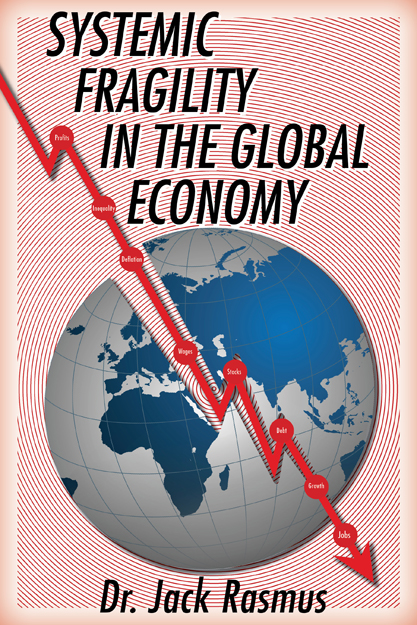
Jack Rasmus is the author of the forthcoming book, ‘Systemic Fragility in the Global Economy’, by Clarity Press, September 2015, and the subsequent book later this year, ‘Europe’s Greek Tragedy’, also by Clarity Press. His blog is jackrasmus.com and website, http://www.kyklosproductions.com.

by Dr. Jack Rasmus, copyright 2015

China’s two main stock markets, the Shanghai and the Shenzhen Exchanges, plunged more than 30% in recent weeks from their previous record highs of June 12. The Shanghai dropped 30%, and the tech-stock heavy Shenzhen by 37%. That’s the steepest stock decline in China since 1992.

The markets briefly stabilized on July 9. But the question remains, will they continue their free fall again, as they had after several previous brief stabilization efforts since June 12? And what does it mean for China if they do? Or for the global economy in turn, given that China’s economy is at least as large as the USA’s and, by some measures, now larger? If the collapse resumes, does it signal the start of another global financial crisis?
If the China stock market rout continues, it may likely spillover to China’s real economy and slow it still more than it has already. The contagion could spread to other financial markets in China—housing, local government debt, bonds and loans for industrial companies, all of which have recently continued to struggle with excess debt, speculation, and bubbles. The loss of $4 trillion in wealth so far will undoubtedly have an effect on consumer spending that China’s new economic reforms program is counting so heavily on to lead economic growth in the near term. The collapse of stock prices will discourage private sector investment as well.

What about contagion beyond to global financial markets—i.e. stock markets in Hong Kong, elsewhere in Asia, in the USA, global commodity prices, or on world oil prices which are falling once again below $60 a barrel, as well as all those unknown and unreported derivatives markets worldwide whose transactions are conveniently hidden and contributed so much to instability last time around in 2008?

The 30% to 37% recent fall in the Shanghai-Shenzhen market indexes in recent weeks may not appear that serious. But it is. A 150% bubble in just one year is not ‘normal’. Almost certainly, the 30%-37% decline has still further to go. The decline is important not only because of the magnitude of the price contraction so far. It’s important because a long list of government measures to try to stem the collapse in stocks since mid-June have mostly failed so far. And if China authorities can’t stabilize the situation, then it certainly will have an impact on China’s real economy, as well subsequently on the global financial system.

Measures to Stem the Price Collapse

To stem the recent stock freefall, measures have been introduced by China’s central bank to cut interest rates so banks can lend out more money to investors in order to buy more stocks. Buying more would, in theory, raise the demand for stocks and thus their price. The hope is that would stop the stock price declines. Reportedly the central bank of China has been printing money to fund and rollover loans for investors to buy stocks. Sounds like just QE (quantitative easing) by another name. Another recent measure has been to order state pension funds and China’s own Sovereign Wealth Fund to buy stocks. Another, to allow people to use real estate to borrow money to buy stocks. Companies have also been encouraged to buy back their stocks and State owned enterprises have been ordered to buy stocks of their subsidiaries. Not least, China’s central bank began providing special loans to stock brokerage companies to buy more stock. Fees for trading stocks have also been reduced to encourage stock buying instead of selling. That’s just a short list of the more notable recent measures.

But don’t measures designed to increase buying of more stocks create the very same problem of too much buying in the first place? Definitely, in the longer run. And maybe even sooner. In the short run, however, the measures to stimulate more stock purchases are designed to offset the deeper problem of what is called ‘margin buying’ that underlies the current price collapse. Margin buying has been rampant during the past year, in fact quintupling in just one year. Margin buying is essentially buying based on debt. Money is borrowed to buy more stock based on the collateral value of the previously bought stock. This works so long as stock prices keep rising. But once they begin to fall, and if they fall below the original purchase price, then ‘margin calls’ require buyers to put up more money. That’s real money this time, not borrowed money. But since the same investors didn’t have to use their own real money but borrowed it in the first place, the same investors must then sell stock to cover the margin. But when everyone sells, instead of buying, prices collapse. And that’s what has happened since mid-June. The big question is whether it will continue? And if it does, what happens next?

Can pumping still more money into the economy to buy stocks offset the panic and urge to sell by investors? Will still more quantity of money injected into the markets really prove sufficient to offset the ‘fear factor’ of investors, as they try to salvage what they can, to take their money and run? Maybe not if those investors are mostly what are called ‘retail’ buyers—i.e. individuals rather than institutions—who are notoriously prone to herd mentality both in buying and selling stocks. And China’s stock buyers are reportedly 85% retail. So that’s a big problem, because once they panic, as they now have, measures to offset selling by encouraging more buying may not work very well. Indeed, may not work at all. Once it replaces ‘greed’, ‘fear’ of loss is a psychological mindset among retail investors that is difficult to turn around again.

That’s why China has also undertaken parallel measures to halt the selling of shares in the markets as well induce more buying. It has suspended sales of Initial Public Offerings (IPOs) for companies selling shares for the first time. It has taken action to check speculators, domestic and foreign finance capitalists, and stop them from ‘shorting’ stock prices, i.e. betting stock prices will decline which in effect only drives prices still lower. Another ‘stop-sell’ measure was announced by the China Securities Regulatory Commission, CSRA, on July 8. It ordered that holders of more than 5% of a company’s stock were henceforth barred from selling shares for the next six months. The government has also ordered more than 1500 companies on the China stock exchanges to suspend all selling of their stocks. Estimates are that between 50% to 70% of the China stock markets are thus ‘frozen’, with the majority of the companies prevented from trading their shares. So the precipitous decline in stock prices in recent weeks reflects maybe only a third of the companies at this point.

The freezing of stock trading has its further consequences. Investors in the future are going to be reluctant to buy stocks that may be frozen again. More immediately, what happens if the one-third of unfrozen prices continue to fall, and then the other two thirds, now frozen, are then allowed to trade again? An even bigger stock price collapse happens, that’s what.

In other words, measures to encourage buying and discourage selling are temporary at best, and could fail at any time in the face of growing ‘panic’ and fear selling. Such measures may also exacerbate the problem even if they temporarily suspend it.

Contagion Effects—in China and Beyond

China’s stock bubble is much larger and more threatening than China’s previous housing bubble, local government infrastructure investment bubble, and industrial corporate debt bubbles. The risk, moreover, is that the stock bubble may feedback and reignite further financial asset price collapse in these still unstable markets. And that the general financial instability in turn will negatively impact the real economy in China—and then spread to other financial markets elsewhere globally.
By injecting still more liquidity as a solution to the stock bubble, China is in effect ‘doubling down’ on its money liquidity approach to the problem. It is engaging in de facto QE. It is attempting to apply a solution that created the problem in the first place—i.e. too much liquidity and debt. It is introducing a de facto QE solution, even when recent Eurozone and Japan QE programs reveal that QE programs are a colossal failure in stimulating the real economy. They are in fact programs designed to generate financial bubbles, not reduce them.

There are already some signs of the contagion effects growing from China’s current stock market implosion.

Prices for global commodities are plummeting once again, including oil, copper, iron and other industrial materials in general. This is in part due to the falling prices contagion effect on financial markets outside China. But it is also a reflection of concern that China’s real economy may slow still further in the wake of the current financial instability. Stock markets elsewhere in Asia have also declined in tandem with China’s, especially in Hong Kong, Taiwan, southeast Asia, and even Japan. Claims in the west that China is effectively ‘sealed off’ from US financial markets is pure nonsense. A renewed collapse of tech stock prices on China’s tech-heavy Shenzhen stock market will almost certainly result in an effect on US tech stock prices as well.

And there are real economic contagion effects as well as financial. As money capital flows from China back to the US and the west, it will drive up the US dollar. That will further limit US exports, which are already contributing negatively to US GDP. China also buys about $100 billion a year in US exports. But as China consumption contracts due to the stock collapse, fewer US exports will be purchased, thus slowing the US economy still further. The same applies to China purchases of European exports, as Europe struggles to get its faltering economic engine going.

Furthermore, as the US dollar rises, the global price of oil tends also to decline. Tens of thousands workers are already being laid off from work in the US oil-shale sector and business spending there is plummeting, further slowing US growth. Emerging market economies—Russia, Nigeria, Indonesia, Venezuela—all highly dependent on oil exports, will slow economically further as well. Emerging market economies like Brazil, Peru, South Africa will experience still slower growth and more financial instability as their exports of commodities and other goods to China slow and as their ability to finance imports declines in turn.

In short, what goes on in China reverberates financially, and economically, throughout the world. And there is no reason to believe that a 150% escalation in China stock prices will stop at a 30% correction that has occurred to date. There might be a short halt to the decline—as there has been three times since it began. But it is almost certain to resume. How serious an impact it will have on the global economy will depend a great deal on what contagion effects occur, first within China itself and then beyond to the global economy. What happens in China may also coincide with contagion effects in Europe from a potential Greek exit. And if the two developments turn out worse than anticipated, global investors everywhere may just decide to pocket their super profits from financial asset speculation to date and run. That will signal a 2008-09 financial event is imminent once again. Only this time it could prove worse. Central banks have shot all their monetary bullets to bail out their private sector bank and investor friends. The next bank bailout will mean bank depositors will be asked to pay the bank bailout bill. That means taking your bank savings and giving you worthless bank stock in return. It’s called ‘bail ins’, instead of bail-outs. If that happens, better take your money and run as well.

Jack Rasmus is the author of ‘Systemic Fragility in the Global Economy’, by Clarity Press, September 2015, and the forthcoming book, ‘Europe’s Greek Tragedy’, by Clarity Press as well.

This content was originally published by teleSUR at the following address:
http://www.telesurtv.net/english/opinion/Chinas-Stock-Market-Falls-a-New-Global-Financial-Crisis-Next-20150710-0020.html. If you intend to use it, please cite the source and provide a link to the original article. http://www.teleSURtv.net/english

On the Eve of Greek Debt Default
Equal Time Radio, WDEV,
Burlington, VT (June 29, 2015, 32 min 44 sec)

To Listen to this Interview Go To:

http://www.kyklosproductions.com/audiocds.html

or to:

http://www.equaltimeradio.com/2015/greek-debt-crisis-europes-rulers-%E2%80%9Cwar-of-fear%E2%80%9D-on-greece

INTERVIEW CONTENT:

Jack Rasmus is interviewed by WDEV host, Traven Leyshon, on the state of negotiations between the Troika of Euro bureaucrats and Greek government at the 11th hour before the official Greek default on payments to the IMF due June 30. Jack discusses the class character of the current negotiations, where the Troika wants pension cuts and sales tax hikes, and has offered a ‘take it or leave’ final best offcer. Greece’s decision to put that offer to a vote of the people of Greece means no more offers until the vote is done. Troika reps think the vote will be for their last offer, and are launching a Euro media blitz aimed at Greek voters to confuse the issue as leaving Europe, not rejecting their concessions-laden proposal. Jack explains how the real plan of the Troika hardliners has always been to force an economic and then a political crisis in Greece to get rid of the moderate left Syriza party government and then negotiate debt continuation with a more compliant group of politicians, as the Troika has since 2010.

OFFERED BY THE WORLD INSTITUTE FOR SOCIAL CHANGE (WISC)
Online Course Starts July 1
(Only $15)

Finance Capital in the 21st Century
taught by
Dr. Jack Rasmus

TO ENROLL GO TO:
https://zcomm.org/zschool/moodle/course/view.php?id=18#section-6

General Course Description:

How has finance capital and the new finance capital elite changed in the 21st century? What is the growing impact of financial instability on the global economy today? This course will look at Marx’s Vol. 3 of Capital, Keynes’ General Theory, Hyman Minsky’s contributions in the 1980s-90s, and contemporary debates today on ‘financialization’ and its contribution to recent, and now re-emerging, global economic crises. The global economy is headed for yet another deeper economic crisis. Both mainstream economists and left analyses fail to fully understand what’s different in the 21st century global economy, and in particular the new structure of finance capital and the economic and political influence of today’s global finance capital elite. This course will explore what the best minds of the past have said about finance capital and ‘financialization’ in an open-minded, non-dogmatic analysis of selections of key works on the subject of finance capital by Marx, Keynes, Minsky and others, as well as from a selective consideration of debates today on the subject of finance capitalism. The course will then look at specific historical events of financial crashes in the global and USA economy, in the 1990s, the 2008-09 event, developments in China and Europe today, and the prospects of another financial crash in the USA in the next decade. Students will hopefully complete this course with a better understanding of the coming next financial crisis.

TO ENROLL GO TO:
https://zcomm.org/zschool/moodle/course/view.php?id=18#section-6

Or Check Out the World Institute for Social Change website at:
https://zcomm.org/zschool/moodle/

Eight Session Course Content

Class 1: Marx on 19th Century Finance Capital (July 1)

How has Finance Capital changed from the 19th to the 21st century? What is the role of financial instability historically in precipitating banking crashes and economic depressions? Why are most contemporary analyses of ‘financialization’–both left progressive, Marxist, and bourgeois economist–wrong? What are the prospects of another global financial crash in the next ten years, followed by a more serious economic depression ‘next time’? These are the main themes of this course. In the first four weeks, in order to answer these questions, this course will explore the views of the best economists on the subject of finance capital. In the second four weeks, the course will look at actual financial crashes and instability events since the early 1990s, as well as brewing today again, including in Japan, China, Europe, and USA.

Week 1 begins with a review of key chapters of Marx’s unpublished vol. 3 of Capital (read chapters 24,25,27,29; 30-31 recommended) on capitalist finance and credit in the mid-19th century. Also read Rasmus’s ‘Notes on Marx On Finance Capital’ posted here from the April-May session. For those interested in more in-depth optional reading on Marx related to the topic, read the posted ‘Bifurcation of Marxist Economic Analysis’ by Rasmus. Rasmus will add further commentary on Marx and Finance on July 1, selections from his forthcoming September 2015 book, ‘Systemic Fragility in the Global Economy’. A link to a free online source of Marx’s Vol. 3 chapters is: https://www.marxists.org/archive/marx/works/1894-c3/index.htm

Class 2: Keynes & Fisher: Finance Capital 1930s (July 8)

How had Finance Capital changed by the early 20th century? What was its role in precipitating the Great Depression of the 1930s? Who were the professional speculators and how had the escalation of debt in the 1920s and financial speculation led to the stock market crash of 1929, and thereafter to four consecutive banking crashes in the early 1930s?
Keynes’ key chapter 12 of his General Theory, on the role of professional financial speculators in capitalist economies will be read and discussed. As well, will Keynes’ contemporary, Irving Fisher, and his article on the role of debt and price deflation in depressions, ‘The Debt-Deflation Theory of Depressions’. These readings are posted below, with Rasmus’ commentaries from 2010. Also, additional commentary by Rasmus will be posted July 8 from Rasmus’ forthcoming September 2015 book, ‘Systemic Fragility in the Global Economy on Keynes and Fisher’s interpretations of financial crises.

Class 3: Minsky & Rasmus: Finance Capital, 1970-2000 (July 15)

The progressive return of financial instability in the global capitalist system in the 1970s and after will be the topic, as well as the views of the chronicler of this return, economist Hyman Minsky. How the rise of finance capital from the ashes of the great depression and post-1945 period occurred, and what were the consequences in the 1970s, 1980s, and early 1990s when Minsky wrote of it. Why Minsky believed financial instability was the intrinsic nature of Capitalism. What Minsky did not see coming.
Several of Minsky’s seminal articles, inclulding ‘The Financial Instability Hypothesis’, are posted here to read and discuss. Select chapters from Jack Rasmus’s 2010 book, ‘Epic Recession: Prelude to Global Depression’ are also available, as will selections on July 15 from Rasmus’s forthcoming, ‘Systemic Fragility in the Global Economy’, September 2015 new book.

Class 4: Shadow Banks & New Finance Capital Elites (July 22)

How Finance Capitalism, and the ranks of the global Finance Capital elite have evolved and changed in the last two decades is the topic of this fourth week’s class. What are shadow banks and how are they destabilizing global capitalism? what is the role of debt, leverage, securitization, derivatives, the global liquidity explosion, technology, neoliberal capitalist central bank policies, inside credit, fiscal austerity, competitive currency devaluations, deflation, declining real investment, labor market ‘reform’, and other important developments to understanding the evolution of 21st century Finance Capital? Why is the global capitalist system becoming more financially unstable?
Several readings are posted below on ‘what is shadow banking’, the scope and magnitude of global debt, and other relevant topics. Read the two commentaries on shadow banking posted by Jack Rasmus, and if time permits the additional two pdf files (one short; one long) on shadow banks. Jack will post selections on the subject of who are the new global finance capital elite from his forthcoming book, Systemic Fragility in the Global Economy, September 2015, on July 22.

Class 5: Financial Crises in the 1990s (July 29)

In weeks 5 through 8 of the course, attention turns to focus on actual financial crashes and their aftermath. Week 5 focuses on the growing frequency, scope and severity of financial instability in the 1990s. Japan’s great crash of 1990-91 and perpetual recession that followed; the USA savings and loan bust of 1990 and recession; Mexico’s ‘Tequila Crisis’; the Asian Meltdown of 1997-99; and the USA ‘dot.com’ bust of 2000.
Read the two commentaries by Rasmus on financial instability in the 1990s, especially in Asia, Japan, and US bubbles in housing, tech stocks, and forex, plus optional third party articles on the Asian Debt-Currency crisis of 1997-98 and after.

Class 6: The Global Financial Crash of 2008-09 (August 5)

Continuing the focus on actual financial crashes and consequences, week #6 investigates the causes and consequences of the great banking crash of 2008-09. The role of financial speculation and shadow banking in the crash, the failure of banking regulation that followed, and the failure of central bank QEs and government fiscal austerity policies to generate full recovery.
Read the select chapters from Jack Rasmus’ Epic Recession: Prelude to Global Depression (2010) and ‘Obama’s Economy: Recovery for the Few’, and other published articles, posted below, and other critical analyses of the 2008-09 crash and the recessions that followed, 2010-15.

Class 7: Financial Instability: China & Europe Today (August 12)

The growing role of shadow banks, financial asset bubbles, rising government-corporate debt, failure of central banks and government policies to check the rising financial instability and slowing economies in China and Europe are the topic of this 7th class. Growing instability in the BRICS and other emerging markets. Is a new phase of global financial instability emerging, with a focus on China and Europe? Based on the theories of writers thus far reviewed, and the prior experiences of financial crashes in both the remote and recent past, what does it all mean today?
See the posted articles from Rasmus on China and Europe in 2015, posted selections from his forthcoming September 2015 book, Systemic Fragility in the Global Economy, and references from the global business press and global capitalist financial institutions (BIS, IMF, McKinsey Research, etc.) on financial instability in China and Europe today.

Class 8: Financial Instability in the US Economy: 2015-20 (August 19)

In this final class, the focus turns to the USA economy in 2015. Is the US economy really ‘exceptional’? On a path to growth and stability, real and financial, while the rest of the world grows more financially unstable and slips into more recessions everywhere? This class examines the claim of American economic exceptionalism and debunks the argument. Sources of growing influence of shadow banks and the new finance capital elite are identified and discussed. Forces of financial instability growing behind the scenes are noted. Possible scenarios, near and future, of increased financial instability are proposed. Why the USA may be on the eve of another financial crises and even deeper downturn than that following 2008-09.

The class will discuss the USA scenarios, as well as the conditions in China, Europe, the growing crises in emerging markets, the global oil price collapse, in light of both the theoretic views of Marx, Keynes, Minsky, Rasmus and others, as well as the historical examples of financial crashes of the past two decades. The general topic of how has Finance Capital changed today? Is it a dominant force in the 21st century, and a fundamentally destabilizing fact that threatens the global capitalist economy itself?

For the last three weekends, Dr. Jack Rasmus’s Radio Show, ALTERNATIVE VISIONS, on the progressive radio network, has dedicated the entire show to analysis of the intensifying Greek Debt negotiations, which appear to have broken down, heading to a Greek Debt default on June 30, 2015.

These three shows can be accessed at either of the following urls:

1. http://www.alternativevisions.podbean.com

2. http://www.kyklosproductions.com/talks.html

For companion recent companion print articles on the Greek Debt crisis theme published in June, go to Dr. Rasmus’s website to read at: http://www.kyklosproductions.com/articles.html

The following are the announcements for the Radio Show, Alternative Visions, indicating the content of discussion for that week.

SHOW ANNOUNCEMENT-June 27, 2015
by progressiveradionetwork

Jack Rasmus reports on the final positions of the Greek government and the Troika (IMF, ECB, EC) as they enter negotiations this weekend, June 27-28, before the expiration of the current debt payments on June 30 and a possible default on the debt. Jack reviews the most recent positions of the Greeks, provided last week in a comprehensive 11page document, which was rejected by the Troika on June 24 in toto, the failed negotiations at the highest levels on June 25-26, and the two sides’ demands as last minute negotiations occur June 27-28. The highly class nature of the negotiations are noted—with pensions (deferred wages), sales taxation (impacting workers more), Troika opposition to tax the rich, and Troika demand for full privatizations. The Troika’s emerging ‘Plan B’ is described (i.e. push Greece to default and maneuver a regime change) vs. the missing Greek ‘Plan B’ (establish a parallel currency to the Euro) are contrasted. The five major negotiating errors that the Greek government has committed since March are described. The most likely scenario to the final deal on June 30 is outlined—based on extending the negotiations for months more, Troika paying itself for debt with funds it has been denying Greece, in exchange for more concessions still from Greece.’ (Listeners are encouraged to listen to the Alternative Visions shows of the two preceding weeks as background to the current show.
Listen Now:

SHOW ANNOUNCEMENT–June 20, 2015
by progressiveradionetwork

Dr. Jack Rasmus provides an update on Greek debt negotiations since last week’s Alternative Visions show and discussion on the origins of the Greek debt. Updates include Troika scenarios outlined at its June 12 meeting in Bratislava, the IMF walkout after, the failed meetings that occurred in Brussels over the weekend of June 13-14, and Greece’s proposals of June 15 rejected again by the Troika. Also discussed are the sabotage of the Greek government negotiators by their own Greek Central Bank, which on June 17 publicly declared Greece should sign the Troika’s latest package; Greek prime minister, Tsipras’, warmly welcomed visit to Russia on the same day; and the failed meeting of June 18 of Euro finance ministers in Luxemburg at which it was expected Greece would concede to the Troika’s position but didn’t. Jack notes the growing statements by German and IMF representatives that a managed default and Greek exit is preferable to continuing Greece’s unresolvable debt crisis. Were Greece to agree to the Troika’s position, and generate a $2-$3 billion a year surplus (by cutting spending and raising sales taxes) that it would take Greece 150 years to pay off the Troika debt. Greece cannot pay and cannot ‘grow out of’ the crisis, Rasmus argues. Rumors continue to grow that Greece may rearrange its cabinet, replacing hardliners with more amenable cabinet members should it agree to more Troika cuts in exchange for some debt restructuring. The political and economic risks for both sides of continuing negotiations and of default are noted. Default is quite possible, Rasmus notes, but the most likely 60-40 scenario is some kind of more concessions by Greece for some kind of debt restructuring over the next 90 days, as the current extension is extended yet again.
Listen Now:

SHOW ANNOUNCEMENT–June 13, 2015
by progressiveradionetwork

Jack Rasmus discusses the latest events of the past week in the Greek debt negotiations, with the IMF ‘walking out’ of negotiations and both sides, the Troika and Greece appearing to issue ultimatums as to what is unacceptable. Three choices remain as negotiations come down to a June 30 deadline: either Greece defaults (fails to make payments due on June 30 to the IMF when the current extension of the debt agreement expires; the Troika (IMF, ECB, European Commission (finance ministers) continue to insist on a ‘take it or leave it’ position, or both parties—Greece and Troika—agree to extend both the agreement and debt payments due for another 30-60 days and continue negotiating. Jack explains how the latter is most likely, but may not happen nonetheless. Consequences of a default for Greece, the Eurozone markets, and the global economy and banking system are considered. In the second half of the show, Jack explains in detail how Greek debt rose to its current $300 billion, unsustainable levels. The explanation is to be found in the US ‘twin deficits’ (trade and budget) policies introduced successfully by US capitalists and government in the early 1980s to resurrect the US economy and solidify its global hegemony once again after the crises of the 1970s. Twin deficits were a key element of US neoliberal policies that have worked since 1980 to ensure US dominance. With the creation of the Euro in 1999, northern European bankers and governments attempted to create a similar arrangement within the Eurozone. It worked until the 2008-09 crash, the second European recession of 2012, and the chronic slow growth ever since in Europe. Greek (and Euro periphery) debt rose ever higher with each event, to its unsustainable levels today. Why the Euro ‘twin deficits’ neoliberal strategy failed.

The weekend of June 27-28 marks the likely last comprehensive negotiating session between the Troika and the Greek government before the current extension of the debt agreement between Greece and the Troika formally expires on June 30, 2015.

As final negotiations come down to the wire, the class nature of the bargaining positions of the two parties is becoming increasingly clear. The Troika clearly wants Greek workers, pensioners, and small businesses to pay for any further debt deal, while the Syriza government desperately tries to have corporations and wealthy Greeks to pay more, and the Troika to absorb more of the costs of any restructuring of the debt.

Greece wants a solution that allows their economy to ‘grow out of’ the debt, while the Troika wants a continuation of spending cuts and tax hikes on workers, retirees and others—some now even more draconian than in the past—as the solution. Put another way, the Troika wants more austerity and economic stagnation, while Greece wants to lighten the burden of austerity in order to get some growth going.

Greece’s Latest Concessions

During the past week, bargaining has intensified between the parties. Earlier last week Greece offered new proposals to the Troika—to which the Troika responded outright rejecting the Greek new proposals and signaling they were close to their ‘take it or leave it’ final position.

At the start of last week Greek representatives provided the Troika a comprehensive 11 page written proposal, which included significant further on pensions and sales taxes—i.e. issues the Greeks have said in the past were a ‘red line’ they would not cross. But they crossed, in a last minute good faith effort to entice the Troika to try to meet them half way. They didn’t.

Specifically, in its June 23 comprehensive proposal, Greece offered to raise the early and normal retirement age for pensions in stages over the next several years. It continued to refuse to retract, however, the modest increases to Greece’s poorest pensioners it implemented since January, which reversed the extreme pension cuts made by previous Greek governments since 2010. Even with the recent modest pension restoration for the poorest, more than half of Greek pensioners still remain below the income poverty level. Greece also proposed for pensioners to increase the premiums that they pay for national health coverage, which reduces some of the pension hike. At the same time, Greece proposed that contributions by business to the national retirement system (similar to ‘social security retirement’ in the US) increase modestly.

In the proposal Greece also offered to increase the sales tax, called the Value Added Tax (VAT), even though sales taxes impact workers and retirees on fixed incomes far more severely than the rich. The Syriza government accepted the 23% VAT demanded by the Troika, providing that it include lower tiered rates of 13% and 6% for basic food, restaurants, medical supplies and other essentials, and providing as well that the many small businesses in the Greek islands, who are almost totally dependent on tourists, would remain exempt from the sales tax hike. The sales tax hikes would realize approximately $1.5 billion more annual revenue in Greece.

At the same time the government proposed to have Greek corporations and the wealthy, who have been avoiding taxes for most of the past six years, now pay more. The corporate tax rate would be raised from 26% to 29%, and an excess profits tax of 12% on businesses earning more than $550m a year in profits be introduced. In addition, the proposals called for a higher tax on luxury yachts, and supplementary income tax hikes on the rich. The combined tax hikes would raise another $1.5 billion in revenue. Another $200 million in defense spending cuts were proposed.

Greece had previously also made concessions on permitting some privatizations, although not the almost unlimited privatization plan the Troika had embedded in the prior 2012 debt negotiations deal. But significant concessions on privatizations were also included.

Just these three areas—pensions, taxes, and privatizations— amount to about 2.5% of Greece’s future economic growth set aside to service its Troika debt. In other words, Greece would have to grow more than 2.5% in 2015, and potentially even more annually thereafter, in order to generate additional income to get out of depression. The first 2.5% would go to the Troika. That’s not a modest task—and represents a major concession by Greece—given that growth rates in the more advanced sectors of the Eurozone economy, including Germany, are today not even close to 2%.

The Troika’s Response

So what was the Troika’s response to this major offer from Greece?

On Wednesday, June 24, they essentially threw it back in Greece’s face, saying it was not ‘credible’ (meaning, more cuts required). They didn’t even make a counter offer. This initial arrogant response incensed Greek negotiators, and provoked an angry response within Greece. Demonstrations against the Troika immediately followed and have continued. And Greek parliamentarians rebelled—especially the left wing of Syriza—some raising the demand Greece should create its own currency as a preparation for leaving the Eurozone.

With this growing opposition at home, Tsipras met with finance ministers and Eurozone government heads in Brussels on Thursday, June 24, in a Euro Summit meeting, in what was supposed to be a final effort to conclude a deal. Nothing came of it. Troika hard liners emphasized their continued opposition and demanded Greece provide still further concessions, beyond what they offered earlier in the week.

Following the June 25 Summit meeting, IMF Director, Christine Lagard, commented “It’s still short of everything that should be expected”, and specifically rejected the idea of raising taxes on corporations and the wealthy. The European Commission called the Greek concessions only a “basis for starting negotiations”. The strongest response was from Wolfgang Schaubel, the German finance minister, the hardest of the hardliners and a public advocate for pushing Greece out of the Euro, chastised his colleagues at the EC for even suggesting the Greek proposal was a basis for negotiations and “for raising some kind of expectations” there was still room to negotiate. Schaubel added the Greek proposal indicates they had actually “gone backwards”—a statement that was clearly an outright misrepresentation.

Schaubel is the architect of what is the Troika’s ‘Plan B’ to precipitate a default as a condition to get Greece to leave the Eurozone. He has long believed the Eurozone would be stronger without Greece and that the European Central Bank’s $1.2 trillion quantitative easing (QE) money slush fund passed earlier this year would be sufficient to contain any Euro-wide fallout from a Greek default and exit.

Others in the Troika are not so sure, however, about the economic contagion effects of default or Grexit. Nor about the potential political consequences of a Greek default and exit. If Greece exited, and then recovered, it would certainly give impetus to other movements within the Eurozone, and even the European Union itself, like Britain, to consider exit. It would certainly increase the appeal of rising parties on the left and right within Europe to run for office on programs to exit.

Following the Thursday, June 25 meeting, the third in the week, late that day the Troika made its first detailed response to the Greek proposals. Here the class nature of the on-going bargaining between the Troika and Greece becomes explicitly clear.

Whereas Syriza and Greece proposed to provide relief for the poorer citizens of Greece with modest pension improvements, exceptions to the sales tax hike, and more taxes on corporations and the rich—the Troika’s proposals were just the opposite.

The excess profits tax proposed by Greece was rejected outright by the Troika, as was the increase in social security retirement contributions by Greek employers. The Troika also demanded that proposed supplementary pension payments for the poorest be removed, that limits on early retirement be implemented, and that the retirement age for pensions in general be raised. In addition, the Troika rejected proposals to exempt the Greek islands from the 23% sales tax and added harsh limits on what qualified for the reduced 13% and 6% tiers. The Troika further demanded implementation of the draconian terms of pension reform laid out in the 2010 initial debt deal, effective immediately, July 1; a shelving of minimum wage increase plans; and demanded Greece must conform to labor market reforms being proposed elsewhere in the Eurozone—meaning limits on union bargaining and striking.

Clearly, what the Troika wants has little to do with debt restructuring. It has everything to do with making workers, retirees and small businesses continue to pay for the debt. The Troika does not want taxes raised. It wants wages, benefits, and costs cut. That’s more in line with the Euro-wide strategy of ‘labor market reform’, now at the center of Euro business strategy and designed to reduce business costs, in order to make the Euro more competitive with regard to exports as the primary strategy for Euro economic recovery.

Spain has already implemented labor market reforms. Italy and France area proposing to do so. Even Germany is moving to limit the right to strike. To allow Greece to get out from under labor market reform would send the wrong signal and set the wrong precedent throughout the Eurozone. It would undermine Euro financial and government leadership plans to make workers and retirees pay for economic recovery.

The June 25-26 Positions of the Parties

Greece’s leaders have pinned much of their hopes in the debt negotiations on dividing the Euro bureaucrats. They know the finance ministers, central bankers—and IMF especially– want austerity as usual to continue. Tsipras and Syriza have hoped that by appealing to European unity, they could get European Commission leaders and heads of government—especially Germany’s Merkle and Holland of France—to get the finance ministers and bankers to act more reasonable in debt negotiations. But this appears to have been a false assumption and a questionable strategy for Greece so far.

Following the June 25 meeting, Merkel and Holland met with Tsipras for 45 minutes, according to the business press, urging him to accept the Troika’s “generous” offer, as Merkel termed it. During their private meeting with Tsipras, Merkel and Holland also suggested an offer might be forthcoming to provide Greece with funding to cover its debt payments until November 2015—provided, however, that Greece accept more concessions demanded by the Troika. That would amount to $17.2 billion, disbursed in four installments by November, and would include $1.8 billion with which to pay the IMF due on June 30. The offer might even include stretching out Greece’s bond principal payments by additional years and reducing the interest rates. That would reduce Greece’s annual total debt payments significantly. And it would not require approval by German and other parliaments, since it would add nothing more to their governments’ share of the total debt.

This then is the Merkel-Holland ‘carrot’, offered at the last minute on June 25-26, added alongside the Troika ‘stick’ of Schaubel and friends’ and their ‘Plan B’ to push Greece to default, and the Troika’s June 25 slightly amended ‘Plan A’ of concession demands.

Greece was then given until Saturday, June 27 to respond and meetings were set up for the weekend of June 27-28.

Greece’s latest concession proposals plus the Troika’s response for more pension cuts, sales tax hikes, and privatizations is where the bargaining will begin between the parties on Saturday, June 27 and over the weekend. Whether the Greeks will be willing to buy the $17 billion and another 4 months extension, in exchange for more concessions on pensions and taxes that the Troika especially wants, should be apparent by June 30.

(FOR MORE ON THE ‘DIFFERENT STRATEGIES OF THE PARTIES’ SECTION OF THIS ARTICLE, GO TO THE AUTHOR’S WEBSITE:

http://www.kyklosproductions.com/articles.html

The Author’s hour long Radio Show, ALTERNATIVE VISIONS, on the progressive radio network, for June 27, June 20, and June 13, have also been dedicated to discussion of the Greek debt negotiations. Access the shows for more detailed discussion of negotiations and strategies, at:

http://www.kyklosproductions/talks.html

Dr. Jack Rasmus reviews prospects of Greek debt default as of June 12 events, plus explains the origins of Greece’s $300b debt and role of northern Europe banks and governments in creating that unsustainable debt.

Listen to the hour long ‘Alternative Visions’ show of June 12, 2015 on the subject on the Progressive Radio Network at:

http://prn.fm/alternative-visions-06-13-15/

or at:

http://www.alternativevisions.podbean.com

SHOW ANNOUNCEMENT:

“Dr. Jack Rasmus discusses the latest events of the past week in the Greek debt negotiations, with the IMF ‘walking out’ of negotiations and both sides, the Troika and Greece appearing to issue ultimatums as to what is unacceptable. Three choices remain as negotiations come down to a June 30 deadline: either Greece defaults (fails to make payments due on June 30 to the IMF when the current extension of the debt agreement expires; the Troika (IMF, ECB, European Commission (finance ministers) continue to insist on a ‘take it or leave it’ position, or both parties—Greece and Troika—agree to extend both the agreement and debt payments due for another 30-60 days and continue negotiating. Jack explains how the latter is most likely, but may not happen nonetheless. Consequences of a default for Greece, the Eurozone markets, and the global economy and banking system are considered. In the second half of the show, Jack explains in detail how Greek debt rose to its current $300 billion, unsustainable levels. The explanation is to be found in the US ‘twin deficits’ (trade and budget) policies introduced successfully by US capitalists and government in the early 1980s to resurrect the US economy and solidify its global hegemony once again after the crises of the 1970s. Twin deficits were a key element of US neoliberal policies that have worked since 1980 to ensure US dominance. With the creation of the Euro in 1999, northern European bankers and governments attempted to create a similar arrangement within the Eurozone. It worked until the 2008-09 crash, the second European recession of 2012, and the chronic slow growth ever since in Europe. Greek (and Euro periphery) debt rose ever higher with each event, to its unsustainable levels today. Why the Euro ‘twin deficits’ neoliberal strategy failed.”

by Dr. Jack Rasmus, copyright 2015, June 16

In the past week, Greece and the coalition of the Eurozone’s Troika of Eurozone finance ministers, the IMF, and the European Central Bank (ECB) have both hardened their positions as negotiations grow increasingly acrimonious over the future of Greek debt payments.

The extension of the Greek debt negotiations, which was agreed on February 28, is due to expire June 30. If no new agreement, or further extension, is agreed to by the end of June, a default by Greece on its debt is likely. Default is simply a legal term meaning failure to make timely payments on interest and principal due on a debt.

Earlier this month, Greece postponed a payment that was due to the IMF. However, according to IMF’s own rules, Greece was able to do so since Greece offered to combine the early June payment with another payment due at the end of June. Since announcing that postponement, the positions have hardened, with ultimatum-like public declarations forthcoming by both sides. Last minute arranged meetings in Brussels and elsewhere have produced little change.

On the one side, the Troika continues to demand that Greece adhere to the terms and conditions of the old agreement, signed in 2012 in its latest version, and then extended on February 28 until June 30. The Troika insists that Greece create a budget surplus of at least 3%, from which Greece will make debt payments to the Troika—the IMF, ECB and the bail out funds of the European Commission which together hold most of Greece’s approximately $300 billion debt. With Greece’s economy mired in depression for more than six years, and now again weakening, generating a 3% surplus requires massive spending cuts and tax hikes—i.e. a continuation of ‘austerity’ that will all but ensure the Greek depression will continue for years to come.

On the other side, the Greek government, led by its majority Syriza party, has proposed an 0.8% annual budget surplus from which to make debt payments. It insists the 2.7% budget difference must be used to stimulate the economy, to boost investment, create jobs, and restore income, in order to generate taxes from which to pay down the debt. Greece proposes, in other words, a plan to grow its way out of the debt; whereas the Troika wants its money now, taken from the incomes of workers, retirees, taxpayers and local Greek businesses.

The Troika and the northern European press and media like to paint Greece as being unreasonable. But nowhere in the mainstream European media is the Troika’s ‘pound of flesh’ proposals and demands portrayed as unreasonable; nor is Greece’s ‘grow out of the debt’ solution portrayed as reasonable.
As the Troika continues to insist that Greece adhere to the old agreement terms, the Troika itself simultaneously refuses to abide by the old terms itself.

Since last August 2014 it has refused to release the additional loans to Greece it was required under the same old agreement to provide, withholding more than $8 billion. It also refuses to forward to Greece the interest earned on Greek bonds held by the ECB that was also required under the old and extended agreement. Meanwhile, the ECB continues to provide Greek banks with the bare minimum of loans under the Eurozone’s banking rules—i.e. just enough to keep Greek banks on a short leash and an economic eyelash from collapsing in the current situation. So the Troika continues to squeeze Greece and its government, to force them to agree to continue the current agreement while it, the Troika, violates that very same agreement. While negotiations continue, Greece must pay up, while the Troika does not. And nowhere in the northern European media is that described as unreasonable either.

Over the past week the Troika tightened the screws even further. Since any new agreement after June 30, whatever its content, will require a vote of the German and other Parliaments, the Troika’s representatives in negotiations want some kind of deal immediately, in order to have time to vote before June 30. Or so they say. But June 30 in reality is no real deadline, and could be easily extended by the parties if the Troika wanted. However, it appears increasingly that the Troika does not want to do so.

In an act designed to increase the pressure on Greece, the IMF representatives walked out of negotiations last June 10 and suspended negotiations, citing there were major differences and no progress was being made. Even though the IMF holds only $23 billion of Greece’s more than $300 billion debt, it has led the hardliners—along with Germany—in demanding a continuation of harsh austerity measures for Greece as part of Greece’s debt agreement terms. Other Troika leaders chimed in, showing a united front of opposition with the IMF to any changes in the debt payments.

European Commission President, Jean-Claude Juncker, described last week’s negotiations prior to the IMF walkout as “a last attempt to make a deal possible”. Donald Tusk, the European Council president added his hardline take, saying “the day is coming, I’m afraid, where someone says the game is over. There’s no more time for gambling”.

The Troika’s recent abrupt shift to a much harder line seems to have emerged from the G7 meeting in Bavaria over the weekend of June 6-7. At that meeting, US president Barack Obama reportedly agreed with the hardliners, giving them a green light. The Troika’s stiff response and proposals that immediately followed the G7 meeting were met by a Greek equally adamant response on June 8. The Troika proposed that Greece retract pensions that were restored after February 28 and impose even more stringent labor market reforms in Greece. That reportedly incensed both the Syriza left wing as well as moderate members of the Greek parliament. With rising opposition to the Troika’s latest proposals within both his party and government by mid-week, Greek president, Tsipras, then met with European Commission president, Juncker, on June 10.

But with positions of both sides hardening, the most recent face to face discussions between Tsipras and Juncker went nowhere. The IMF thereafter walked out on June 11, and the flood of Troika accusations and the media attack on Greece quickly followed.

The key strategic question at the moment is why is the Troika hardening its line and position, with a deadline for the extension expiring in less than two weeks? Why did it propose an apparently ‘no changes, take it or leave it’ to Greece on June 7 following the G7 meeting. It surely must have known that response would incite anger and more opposition within Greece’s parliament? So why the abrupt harder line and ‘take it or leave it’ proposals?

First, it is obvious that Greece cannot repay the more than $300 billion in debt it owes the Troika, either by means of agreeing to more austerity or even by ‘growing’ out of the debt—neither of which is going to happen soon. Greece’s debt is reportedly about 180% of its annual GDP. That amount of debt can only be restructured, i.e. reduced and expunged at least in part. It is too large to pay down by diverting spending—i.e. austerity. And too large as well to grow out of it. But northern European politics stand in the way of any form of debt restructuring at the moment, especially in Germany. So some kind of crisis must be allowed to happen first, in order to put pressure on both German and Greek public opinion and parliamentarians to seriously consider debt restructuring.

Up until the G7 meeting, the Troika wanted a ‘Plan A’. That plan was to get Greece to agree to simply extending the old terms of agreement for some unspecified further period. The Troika would then release the $8 billion it held in arrears, from which it would in effect pay itself the $8 billion in Greek payments due between June 30 and August. Clearly the Troika has been holding those loans back, in order to eventually pay itself with them. But what the Troika really wants in Plan A are its proposed, even more stringent ‘labor market reforms’ implemented in Greece. Those labor market reforms include laying off the government workers the Syriza government rehired after it was elected, reversing the moderate pension restoration Syriza introduced, suspend raising the minimum wage in Greece, implement all previously planned privatizations, and introduce changes to union collective bargaining agreements and right to strike.

These labor market reforms are just as much at the heart of the differences between the Troika and the Syriza government as is how much surplus should be created (0.8% vs. 3%) going forward. The reason why the Troika wants labor market reforms is that, should the Troika let Greece off the hook on the reforms, then the precedent will be set for weakening similar reforms Eurozone bankers and politicians are desperately trying to get passed in France and Italy.

The Eurozone economic recovery strategy is based on boosting exports. To boost exports, costs of production must be reduced. The ECB’s recent QE monetary policy is designed to drive down the value of the Euro currency. That reduces costs from currency devaluation and makes Eurozone exports more competitive. But ‘internal devaluation’ does the same.

Internal devaluation is about holding down or reducing prices of goods for export by lowering production costs, especially wage costs. That has been done already in Spain, which appears to be the new model for Euro exports and recovery. Spain introduced stringent labor market reforms several years ago, made its goods more competitive, and boosted exports. That did little for Spanish workers’ wages, or for job creation in Spain which is still at depression levels. But Spanish GDP has risen modestly. The Troika and the Eurozone economic elite want to extend labor market reforms elsewhere. To let Greece ‘off the hook’ jeopardizes that Eurozone-wide strategy, and puts all the pressure on boosting exports on the ability of the ECB, the central bank, to engineer exports growth by means of QE-driven currency devaluation. Internal devaluation and QE-currency devaluation thus go hand in hand.

It is important to note that Syriza and the Greek government have made concessions already in the direction of agreeing to some labor market reforms since February 28. But those concessions have been met by Troika demands for more of the same, without any counter-concessions by the Troika in return. In an article that appeared in the French newspaper, Le Monde, in early June, Greek president, Tsipras, publicly indicated that his government had already accepted a number of privatizations, and had repealed some early pension retirement benefits and raised the pension retirement age. Tsipras also indicated Greece was committed to introduce labor market reforms that were outlined by the International Labor Office in Geneva. The Troika accepted that, and then continued to demand even more, while making no concessions in response that would have kept the negotiations on a productive track. Instead, once Tsipras’ Le Monde article appeared publicly, the Troika’s door slammed shut just after the G7 meeting a few days later.

All of which leads one to suspect the Troika has shifted to a Plan B. That Plan B is most likely to force a default crisis, to push Greece to the edge of default, or perhaps into default itself. So why might the Troika prefer Plan B is the key question?

First, Plan A does not appear politically possible at this point, either in Greece or Germany. Second, default may in fact represent what the Germans want. Greece’s debt is unsustainable. Greece cannot repay it with more austerity. Seven years of depression is the limit and the Greek people are in rebellion against the Troika program. It is equally apparent that Greece cannot ‘grow out of’ the debt, notwithstanding Syriza’s proposals to do so. Just do the numbers, as they say.

With debt nearly twice the size of Greece’s annual GDP, it would take decades of continuous 3% GDP growth to pay off the debt. And given the state of the global economy, and Europe’s even worse economy, there’s no way 3% growth will continue for decades, or even for the next several years for that matter. It just won’t happen. So, if Greece can’t repay and if it can’t grow out of it, and if German politics won’t provide any more debt or allow a restructuring of the current debt that includes forgiving part of that debt—then the only option that remains is to let a crisis happen. In other words, let it go to default.

A default for the Troika is actually attractive in some ways. First, with its recent authority to inject $1.2 trillion in QE, the ECB has sufficient funds to bail out northern Europe banks and bondholders who may be negatively impacted by a default. In the meantime, the Troika has the $8 billion to make payments to itself for another 60-90 days, so no default impact on government bonds. In the interim period, default might allow the debt restructuring that political forces in Greece and Germany today now oppose.

From the Troika’s perspective, a default would also reduce the value of the Euro. And that’s not all bad in the view of European export-oriented corporations. The ECB’s QE policy has lowered the Euro currency’s value some, with some modest boost to exports. But not enough. A default would reduce the value of the Euro further and theoretically provide another boost to exports and the sagging Eurozone economy.

A default would have serious short term economic effects within Greece. Capital flight from Greece would intensify in the event of a default. Capital controls would have to be imposed. The Syriza government would most likely have to call an election, and that may be precisely what the Troika wants as well. With only a majority of 12 in the Greek Parliament, the Syriza government might just lose political control in the Parliament. A new government might prove more amenable to Troika demands, especially if a Troika engineered even deeper economic crisis in Greece is successfully blamed on Syriza and Tsipras by a Euro-wide public media barrage aimed at Syriza. No doubt the Troika’s big business supporters still within Greece would assist.

So the Troika’s Plan B now unfolding may just be to precipitate a default. To shake up the economic and the political landscape in Greece and elsewhere. To shift perceptions and positions, and perhaps even the players themselves.

What we have seen in recent months and weeks is a classic capitalist bargaining strategy. If capitalists or their managers don’t like the other party’s negotiators, they undermine their reputation within their own team. The tactic is to make them appear incompetent and then go around them and have them replaced. That was done several weeks ago by the Troika with regard to Greece’s finance minister, Varoufakis, who was then partially sidelined. The Troika hoped Tsipras would prove more pliable and amenable. But the Syriza party rank and file rose up lasts week and injected itself into the negotiations. Tsipras then resisted making more concessions when the Troika made none in return. How could he, without signaling willingness to completely collapse his demands?

Having succeeded once in sidelining Varoufakis, the Troika strategy now is apparently to create a further crisis in order to replace Tsipras himself and dislodge Syriza from a majority position in the Greek parliament by forcing Greece to call new elections. If that succeeds, it just may get the Troika a more pliable negotiating partner later this summer. In the meantime, a default crisis lowers expectations on both sides and makes compromise later this summer more possible than at present. In the meantime, the $8 billion funds are used to pay bonds due and the ECB stands by with its $1.2 trillion QE fund to calm the markets. In short, Plan B looks more attractive than Plan A which has reached a dead end.

To summarize, the Greek debt crisis cannot be resolved by either more austerity or by growing out of it. The Troika is perhaps realizing this. The debt must be restructured, but that is impossible politically without a deeper crisis. So the Troika may have decided to provoke one. In the process it may shake up the chessboard, as they say, and result in an easier bargaining opponent and a more ‘reasonable’ public—both in Germany and in Greece—that agrees to some kind of debt restructuring. That may be Plan B about to unfold in the next two weeks. If so, it will become more apparent when the Eurozone ministers meet again on Thursday, June 18. Watch closely.

Jack Rasmus
June 15, 2015

Jack Rasmus is the author of the forthcoming book, ‘Systemic Fragility in the Global Economy’, by Clarity Press, 2015. He blogs at jackrasmus.com. His website is http://www.kyklosproductions.com and twitter handle, @drjackrasmus.