Feeds:
Posts
Comments

Class, nationalist, and ethnic elements are all involved in the Brexit vote in a complex integration of protest. Press and media emphasize the nationalist and ethnic (immigrant-anti-immigrant) themes but generally avoid discussing or analyzing the event from a class perspective. But that perspective is fundamental. What Brexit represents is a proxy vote against the economic effects of Free Trade, the customs union called the European Union. Free trade deals always benefit corporations and investors. Free trade is not just about goods and services flows between member countries; it is even more about money and capital flows and what is called direct investment. UK corporations benefit from the opportunity to move capital and invest in cheap labor elsewhere in Europe, mostly the newly added members to the EU since 2000, in eastern europe. Free trade also means the unrestricted flow of labor. Once these east european countries were added to the EU treaty, massive inflows of labor to the UK resulted. Just from Poland, more than a million migrated to the UK alone.

In the pre-2008, when economic conditions were strong and economic growth and job creation the rule, the immigration’s effect on jobs and wages of native UK workers was not a major concern. But with the crash of 2008, and, more importantly, the UK austerity measures that followed, cutting benefits and reducing jobs and wages, the immigration effect created the perception (and some reality) that immigrants were responsible for the reduced jobs, stagnant wages, and declining social services. Immigrant labor, of course, is supported by business since it means availability of lower wages. But working class UK see it as directly impacting wages, jobs, and social service benefits. THis is partly true, and partly not.

So Brexit becomes a proxy vote for all the discontent with the UK austerity, benefit cuts, poor quality job creation and wage stagnation. But that economic condition and discontent is not just a consequence of the austerity policies of the elites. It is also a consequence of the Free Trade effects that permit the accelerated immigration that contributes to the economic effects, and the Free Trade that shifts UK investment and better paying manufacturing jobs elsewhere in the EU.

So Free Trade is behind the immigration and job and wage deterioration which is behind the Brexit proxy vote. The anti-immigration sentiment and the anti-Free Trade sentiment are two sides of the same coin. That is true in the USA with the Trump candidacy, as well as in the UK with the Brexit vote. Trump is vehemently anti-immigrant and simultaneously says he’s against the US free trade deals. This is a powerful political message that Hillary ignores at her peril. She cannot tip-toe around this issue, but she will, required by her big corporation campaign contributors.

Another ‘lesson’ of the UK Brexit vote is that the discontent seething within the populations of Europe, US and Japan today is not accurately registered by traditional polls. This is true in the US today as it was in the UK yesterday.

The Brexit vote cannot be understood without understanding its origins in three elements: the combined effects of Free Trade (the EU), the economic crash of 2008-09, which Europe has not really recovered from having fallen into a double dip recession 2011-13 and a nearly stagnant recovery after, and the austerity measures imposed by UK elites (and in Europe) since 2013.
These developments have combined to create the economic discontent for which Brexit is the proxy. Free Trade plus Austerity plus economic recovery only for investors, bankers, and big corporations is the formula for Brexit.

Where the Brexit vote was strongest was clearly in the midlands and central England-Wales section of the country, its working class and industrial base. Where the vote preferred staying in the EU, was the non-working class areas of London and south England, as well as Scotland and Northern Ireland. Scotland is dependent on oil exports to the EU and thus tightly linked to the trade. Northern Ireland’s economy is tied largely to Scotland and to the other EU economy, Ireland. So their vote was not surprising. Also the immigration effects were far less in these regions than in the English industrial heartland.

Some would argue that the UK has recovered better than most economies since 2013. But a closer look at the elements of that recovery shows it has been centered largely in southern England and in the London metro area. It has been based on a construction-housing boom and the inflow of money capital from abroad, including from China investment in UK infrastructure in London and elsewhere. The UK also struck a major deal with China to have London as the financial center for trading the Yuan currency globally. Money capital and investment concentrated on housing-construction produced a property asset boom, which was weakening before the Brexit. It will now collapse, I predict, by at least 20% or more. The UK’s tentative recovery is thus now over, and was slipping even before the vote.

Also frequently reported is that wages had been rising in the UK. This is an ‘average’ indicator, which is true. But the average has been pulled up by the rising salaries and wages of the middle class professionals and other elements of the work force in the London-South who had benefited by the property-construction boom of recent years. Working class areas just east of London voted strongly for Brexit.

Another theme worth a comment is the Labor Party’s leadership vote for remaining in the EU. What this represents is the further decline of traditional social democratic parties throughout Europe. These parties in recent decades have increasingly aligned themselves with the Neoliberal corporate offensive. That’s true whether the SPD in Germany, the Socialist parties in France, Spain, Italy, Portugal, and Greece, or elsewhere. As these parties have abdicated their traditional support for working class interests, it has opened opportunities for other parties–both right and left–to speak to those interests. Thus we find right wing parties growing in Austria, France (which will likely win next year’s national election in France), Italy, Netherlands, and Scandinavia. Hungary and Poland’s right turn should also be viewed from this perspective. So should Podemos in Spain, Five Star movement in Italy, and the pre-August 2015 Syriza in Greece.

Farther left more marxist-oriented socialist parties are meanwhile in disarray. In general they fail to understand the working class rebellion against free trade element at the core of the recent Brexit vote. They are led by the capitalist media to view the vote as an anti-immigrant, xenophobic, nationalist, right wing dominated development. So they in a number of instances recommended staying in the EU. The justification was to protect the better EU mandated social regulations. Or they argue, incredulously, that remaining in the free trade regime of the EU would centralize the influence of capitalist elements but that would eventually mean a stronger working class movement as a consequence as well. It amounts to an argument to support free trade and neoliberalism in the short run because it theoretically might lead to a stronger working class challenge to neoliberalism in the longer run. That is intellectual and illogical nonsense, of course. Wherever the resistance to free trade exists it should be supported, since Free Trade is a core element of Neoliberalism and its policies that have been devastating working class interests for decades now. One cannot be ‘for’ Free Trade (i.e. remain in the EU) and not be for Neoliberalism at the same time–which means against working class interests.

The bottom line is that right wing forces in both the EU and the US have locked onto the connection between free trade discontent, immigration, and the austerity and lack of economic recovery for all since 2009. They have developed an ideological formulation that argues immigration is the cause of the economic conditions. Mainstream capitalist parties, like the Republicans and Democrats in the US are unable to confront this formulation which has great appeal to working class elements. They cannot confront it without abandoning their capitalist campaign contributors or a center-piece (free trade) of their neoliberal policies. Social-Democratic parties, aligning with their erstwhile traditional capitalist party opponents, offer no alternative. And too many farther left traditional Marxist parties support Free Trade by hiding behind the absurd notion that a stronger, more centralized capitalist system will eventually lead to a stronger, more centralized working class opposition.

Whatever political party formations come out of the growing rebellion against free trade, endless austerity policies, and declining economic conditions for working class elements, they will have to reformulate the connections between immigration, free trade, and those conditions.

Free Trade benefits corporations, investors and bankers on both sides of the ‘trade’ exchange. The benefits of free trade accrue to them. For working classes, free trade means a ‘leveling’ of wages, jobs and benefits. It thus means workers from lower paid regions experience a rise in wages and benefits, but those in the formerly higher paid regions experience a decline. That’s what’s been happening in the UK, as well as the US and north America.

Free Trade is the ‘holy grail’ of mainstream economics. It assumes that free trade raises all boats. Both countries benefit. But what that economic ideology does not go on to explain is that how does that benefit get distributed within each of the countries involved in the free trade? Who benefits in terms of class incomes and interests? As the history of the EU and UK since 1992 shows, bankers and big corporate exporters benefit. Workers from the poor areas get to migrate to the wealthier (US and UK) and thus benefit. But the indigent workers in the former wealthier areas suffer a decline, a leveling. These effects have been exacerbated by the elite policies of austerity and the free money for bankers and investors central bank policies since 2009.

So workers see their wages stagnant or decline, their social benefits cut, their jobs or higher paid jobs leave, while they see immigrants entering and increasing competition for jobs. They hear (and often believe) that the immigrants are responsible for the reduction of benefits and social services that are in fact caused by the associated austerity policies. They see investors, bankers, professionals and a few fortunate 10% of their work force doing well, with incomes accelerating, while their incomes decline. In the UK, the focus and solution is seen as exiting the EU free trade zone. In the US, however, it’s not possible for a given ‘state’ to leave the USA, as it is for a ‘state’ like the UK to leave the EU. And there are no national referenda possible constitutionally in the US.

The solution in the US is not to build a wall to keep immigrants out, but to tear down the Free Trade wall that has been erected by US neoliberal policies in order to keep US jobs in. Trumpism has come up with a reactionary solution to the free trade-immigration-economic nexus that has significant political appeal. He proposes stopping labor flows, but proposes nothing concrete about stopping the cross-country flows of money, capital and investment that are at the heart of free trade.

For my analysis and predictions of the coming consequences of yesterday’s Brexit vote, listen to my radio show, Alternative Visions, today, June 24, on the progressive radio network. Access the show at:

http://prn.fm/category/archives/alternative-visions/

or at:

http://www.alternativevisions.podbean.com

SHOW ANNOUNCEMENT:

Jack discusses the consequences and likely developments from the historic vote yesterday for the UK to leave the European Union. The deep origins of the Brexit vote are first discussed, including rising discontent with neoliberal policies of free trade by working classes, small businesses, and local producers everywhere, the overlay of fiscal austerity policies compressing incomes, and the almost total reliance in advanced economies on central bank monetary policies that boost financial asset incomes and corporate profits (and capital gains of investors and the rich) since 2009. How UK prime minister Cameron struck a ‘Faustian’ bargain in 2015 to win the election and now had to repay the ‘devil’ with the Brexit vote he thought he could control, but did not. The consequences of the vote for UK politics in the near term, and for forces—political and economic—behind the potential break up of the EU itself. Political party realignments underway everywhere, including EU and US. Implications for US November elections. Jack concludes with an assessment and economic predictions for the UK and EU economies, for currency volatility worldwide, stock and bond markets, real estate prices, and global commodity prices. Impact on the US dollar, interest rates, FED policies, and US recession for 2017. Severe results for emerging markets, especially Latin America (markets, capital flight, recessions) and for China’s Yuan eventual currency devaluation. (Read Jack’s latest published article on the PRN website and at jackrasmus.com)

Telesur English Edition
By: Jack Rasmus
Published June 22, 2016

“Global financial markets are churning and growing more volatile in expectation of a possible ‘Brexit’—a United Kingdom referendum to vote on leaving the European Union scheduled for June 23, 2016. Brexit has literally become the big financial blockbuster event of summer 2016! But it may very well prove a ‘non-event’—even if the vote on the 23rd is to leave the European Union (EU).

Over recent weeks global financial markets and investors have become increasingly focused, even obsessed, with the outcome of the Brexit vote and its potential, but still largely unknown, effects on the global economy that continues to slow.

In anticipation of a possible exit vote, global stock markets have been growing more volatile, alternately collapsing and recovering. Government yields on bonds have been plummeting, driving deeper into negative rate territory. Currency exchange rates—the pound, the euro, the yen—have been fluctuating wildly. Professional and institutional investors have, for weeks now, been moving their money to the sidelines, awaiting the outcome. Meanwhile, central banks in Europe and Japan stand primed, ready to jump in with still more money injection in the hope of stabilizing what might prove to be a major upheaval in their financial markets—while the U.S. central bank, the Federal Reserve, at the same time has begun back-peddling on raising interest rates in the U.S..

Global financial speculators have reaped trillions of dollars in profits and capital gains since 2009. In the U.S. alone, more than US$5 trillion has been distributed to investors and wealthy households by corporations in the form of stock buybacks and dividend payouts. Add in the rest of the global economy, and markets for derivatives, foreign exchange, real estate speculation, and the like, and the total is easily more than US$15 trillion.

Trillions more remain tied up in financial assets as investors await the Brexit—prepared to quickly cash in the rest if there’s a ‘leave the EU’ vote or to double down in financial speculation if the vote is to ‘remain’. In the worse scenario, June 23 could augur in a worldwide major correction in financial asset prices, with dire consequences for a global economy already in retreat along a number of economic fronts.

But then again, maybe not. Maybe nothing happens. Because a Brexit vote on the 23rd is just the start of a process, not the final event.

The Potential Consequences of Brexit

Should a vote to leave on June 23rd occur, the worst case scenario is that the current volatility in stock, currency, and bond prices would shift to a general more rapid decline in all the above. The British pound would drop precipitously, as would the Euro. Stock markets in the U.K. and Europe would likely experience a major selloff, and the contagion spreads to the United States, Japan and emerging markets. Negative rates on government bonds in Europe and Japan would fall further, and rates in the United States and U.K. would decline, approaching zero and eventually negative levels. To the extent that it is occurring, bank lending to businesses would thereafter tighten significantly and the collapse of financial assets would thereby transmit to the real economy, resulting in less real investment, production cutbacks, and eventually layoffs and wage decline.

With the global economy already slowing, with global trade volumes nearly flat, with productivity collapsing and prices trending toward deflation, with more than US$10 trillion non-performing loans to non-bank businesses, with global oil and commodity prices declining once again, it’s almost certain the consequences would quickly translate into another recession in the U.K. and Europe, and in the United States no later than 2017. Current recessions in Japan and emerging markets would deepen, and China growth would slow even more rapidly than it has been.

Europe and Japan central banks would respond to this scenario with further massive money injections into their economies. Global currency wars would re-ignite. The United States would back off raising short term interest rates for the next two years, at minimum, as U.S. long term rates and the dollar rose. China would be hard pressed not to officially devalue its own currency in response—sending further shock waves throughout the global economy.
This most negative scenario would of course not occur should the U.K. vote to ‘remain’ in the EU. In such alternative best scenario case, the response would be a surge once again in stock prices and bond rates. Central banks would hold off for a time from even more desperate actions. And the global economy would continue its otherwise slower, progressive shift toward stagnation that has been occurring since 2014. Brexit provoked financial instability would not accelerate the process of global decline as in the worst case scenario.

But what of a third scenario? A Brexit vote occurs but there’s no intensified financial instability and accelerated global economic decline?

Cameron’s Faustian Bargain

A possible Brexit only exists today because U.K. prime minister, David Cameron, and his conservative party injected it as a political issue in the 2015 U.K. national elections. Cameron hoped to appeal to British voters in the parliamentary election held last May 2015 by offering, if he were elected, to hold a referendum vote—a simple ‘yes’ or ‘no’—on whether Britain should remain in the EU.

Cameron struck what might be therefore called a ‘Faustian’ bargain with U.K. voters. In classic literature, Faust was a professor who made a deal with the devil for something he could not otherwise obtain himself without the devil’s help. The devil gave him his wish, but demanded his soul in payment. Cameron believed he could turn the growing discontent into votes for himself in May 2015, and thereafter control the consequences of a referendum vote once elected. He got his election victory in 2015; the devil granted his wish. But he now faces the consequences; now he has to pay up. The devil on June 23rd may now demand Cameron’s political soul.

After his election in May 2015, Cameron issued a set of impossible demands to the EU for keeping Britain in the union. They included a four year wait for immigrants already in the U.K. before becoming eligible for U.K. benefits, including healthcare, and even if they already were in the U.K. and had a U.K. job; limits on how many immigrants could come from eastern European countries and how fast they could enter Britain; a formal revision of the Free Trade treaty itself; the right of the British parliament to pass legislation that would veto EU provisions; plus other preferential trade treatment for British businesses at the expense of other EU businesses.

These proposals are non-starters. They would mean all the other 29 EU member countries would have to unanimously revise the Treaty, and thus cede to Britain various economic benefits. And there’s no way the 29 other EU states can or will ever agree to do so. All it takes is one eastern European state to veto such proposed EU treaty changes and Cameron’s proposals are DOA—dead on arrival.

Brexit Does Not Mean Leaving the EU

Should an exit vote occur on the 23rd the more likely scenario is that little will change in the short term. That is because a vote by the U.K. electorate does not mean an actual ‘exit’ follows. An exit requires a vote by the British parliament to leave. That would activate what is called Article 50 of the EU Treaty, the treaty’s hereto unused ‘exit’ clause.

It is highly unlikely the British parliament, with a Conservative party majority, would vote to exit as a follow up to the referendum. Conservative party members in parliament favoring Brexit at the moment most likely would be ‘convinced’ by party leaders to vote to remain. If they refused, it would likely mean a vote of no confidence and a fall of the Cameron government and that’s not likely to happen.

What is likely is Cameron and his government open negotiations with the EU and seek changes to create a preferential arrangement for Britain to remain in the EU similar to that provided to Norway at the present. Article 50 provides for a two year negotiation period and automatic renewal of EU membership thereafter. Notwithstanding EU leaders in France, Belgium, and Germany wanting to avoid negotiations dragging out that long, they have no way to avoid it.

In short, Cameron will try some way to negate the will of the U.K. voters should they choose to Brexit. The U.K. may vote to exit on the 23rd but Cameron, the ‘City of London’ bankers, the U.K.’s multinational corporations that profit from the U.K.’s 47 percent exports to the EU, and U.K. economic interests who have much to lose from an exit will maneuver to ignore the Brexit referendum should it occur. The Brexit vote will prove merely a tactic for U.K. elites to try to extract concessions from their EU capitalist competition.

Cameron may have struck a Faustian deal with the devil, but that doesn’t mean he ever intends to pay up.

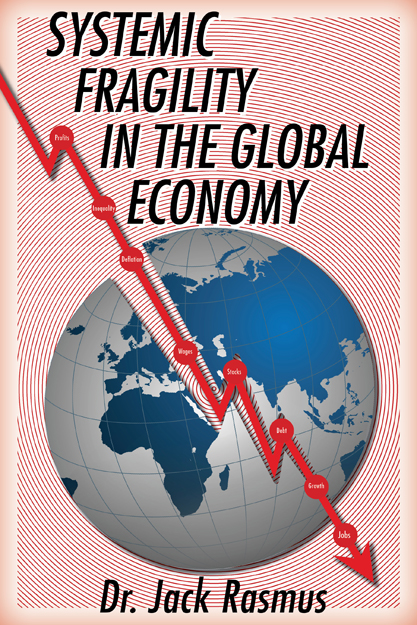
Jack Rasmus is author of ‘Systemic Fragility’ in the Global Economy’, Clarity Press, January 2016, and the forthcoming, ‘Looting Greece: An Emerging New Financial Imperialism’, Clarity Press, July 2016. He hosts the New York radio show, Alternative Visions, on the Progressive Radio Network, and blogs at jackrasmus.com

To listen to my analysis of the upcoming June 23 UK ‘Brexit’ vote, go to my hour long Alternative Visions Radio Show of June 17, at either of the following links:

http://prn.fm/category/archives/alternative-visions/

or:

http://www.alternativevisions.podbean.com

SHOW ANNOUNCEMENT:

Jack reviews in detail the upcoming UK vote to leave the European Union. Cameron’s ‘faustian’ bargain is coming. What will the ‘devil’ demand? The origins of the vote and likely consequences of a Brexit are considered, for the UK, for the EU and for the US and rest of the global economy. The likely effects on the real economy, as well as more volatility for global currencies, more central bank money injections, more negative interest rates, slowing real investment and declining productivity. Brexit as a proxy for discontent over the conditions in the UK economy, immigration effects, cultural and sovereignty issues. Brexit as a reflection of discontent with supra-national free trade agreements and cross-nation capitalist integration efforts by global financial and economic elites. Jack compares Greece efforts to reform the EU to current UK efforts to do the same and predicts UK will also fail. An alternative scenario post-Brexit: nothing happens for another two years under Article 50 of the EU treaty

This past January 2016, upon the publication of my book, ‘Systemic Fragility in the Global Economy’, I gave a 7.5 minute interview to Russia Radio summarizing the condition of the global economy at that time. It’s almost six months later. How have the ‘predictions’ turned out?

China continues to slow. Japan’s currency rises as its economy goes nowhere. Europe stagnates as it waits for Brexit to push it into recession again. Globally real investment, trade, and industrial production are already in recession. Productivity everywhere is declining. Labor market conditions in the US are flashing red, as recession in 2017 approaches. $10 trillion in government bonds are negative, with central banks well along creating a similar problem buying corporate bonds. There are $10 trillion in non-performing corporate loans worldwide and rising. Oil prices are again heading south. China faces another bubble in housing prices and local government investment as it struggles to stem capital flight and approaches another devaluation.

Listen to the interview of five months ago at the link below.

https://soundcloud.com/radiosputnik/global-economy-will-become-more-fragile-jack-rasmus

Does Bernie Sanders have a ‘Plan B’? We’ll soon know after the California Democratic Party primary election on Tuesday, June 7.

Even if Sanders wins California, the Democratic Party nomination was wrapped up in favor of Hillary Clinton some time ago. 712 of the 2,383 nominating delegates—composed of party operatives, members of Congress, state and local party officials, local party hacks, and assorted ‘wannabes’ wanting someday to get the party endorsement to run for some local office—constitute the ‘super delegates’ appointed by senior party leadership. Democratic party rules allow super delegates to vote as they please, regardless of how other party members in their states vote in their official primary elections. Thus far 520 of the Democrats’ 712 super delegates have already declared their support for Hillary and did so months ago. The vast majority of those left will no doubt do so soon after June 7.

The Democrats introduced the super delegate system back in 1982, in order to prevent another populist upsurge in the early 1970s with the grass roots George McGovern campaign; and as a response to another outsider, Jimmy Carter, who turned out to be a disaster for the party in the 1980 election.

Democratic Party leadership has never been comfortable with primaries. The primaries process is really a product of the early 1970s when various grass roots movements were emerging in the USA—antiwar, women, black and latino, environmental. Primaries are tolerated so long as they don’t challenge party leadership control. Sometimes a candidate from below slips under the fence—like McGovern in 1972 or Trump today in 2016. The leaders then revise their rules to patch up the hole in the fence.

There have been many undemocratic trends emerging in the US in recent years, state and local voting restrictions, illegal purging of citizens from the voter rolls, court cases giving big money donors advantages, limits on third party candidates running for office. Following this election cycle the Republican party elite will no doubt do its fence mending to prevent another Trump. And almost for certain, Democrats party leaders will never allow another ‘independent’, like Sanders, to ever content for their party’s nomination. Sanders has given them a political scare. The Democratic party fence will undergo some major rewiring.

So why did Bernie run in the first place? Did he naively think he could overturn the super-delegate system at the party convention? Or was it always about injecting ideas into the campaign that were once part of the Democratic Party but which the party has steadily abandoned since the 1980s? Did he think he could actually reform an un-reformable party firmly in the hands of its corporate donors—at the convention or even after? Was it about starting a movement that would continue beyond the 2016 elections?

So what’s Sanders going to do after California? What’s his Plan B? Some of possible Plan B options might include:

First, run as an independent candidate—either announcing in June or waiting until after the Democratic convention in late July. If Sanders waits, however, running as an independent would be a ‘quixotic’ effort. Many US states make it extremely difficult for independents to run in general and even more so on short notice. So if Sanders does not announce as an independent candidate soon after June 7, it is extremely unlikely he will ever do so. In recent weeks, a movement has emerged in his camp to get him to run as an independent. Or even join with the Green party’s presidential hopeful, Jill Stein, on some kind of joint ticket.

Second, he could indicate the fight is not over, and Plan B is to court the super delegates at the convention. Perhaps he still believes he can convince a sufficient number of independent delegates to shift from Hillary to himself at the convention. Or that his supporters can dilute or the super delegates effect by taking over the convention’s rules or credentials committees. But if that’s Plan B, it’s extremely naïve. Careerists and party hacks, who hope to rise in the party structure, or who enjoy being local notables in the party in their districts, are not going to challenge the party’s leadership. Especially after they’ve already publicly declared for Hillary. Plan B may be ‘in consideration’, but it’s a plan that’s DOA—dead on arrival as they say.

Third, even if Hillary has a conclusive majority of delegates after Tuesday, Sanders could say the fight continues to the convention to ensure that the party ‘platform’ of political positions reflects the views of his supporters and others who have become disenchanted with the Democratic party’s policies since Bill Clinton and the ‘Democratic Leadership Conference’ (DLC) corporate-leaning faction consolidated its control over the party in the early 1990s. But if that’s Plan B it’s a political farce. Party position platforms mean absolutely nothing. They are ‘feel good’ statements designed to create an appealing public image. Party platforms have, however, nothing to do with proposals, programs, or actual legislative or executive actions taken by party politicians once in office. Check out the Democrats’ 2008 and 2012 party convention platforms and compare that to the reality of Obama and other party proposals and initiatives that followed.

Should Sanders indicate his ‘Plan B’ is to lead the fight to ensure democratic and populist language in the party platform, it will mean Sanders has ‘thrown in the towel’ and it’s game over for all his supporters who want to make a basic change in US politics and take back the party from corporate-type leaders. Platform fights are designed to give newcomer delegate ranks something to do at the convention, to make them think they are making a difference. Platform fights are a political sandbox.

A fourth possible ‘Plan B’ could find Sanders’ calling, in radical language, for a democratic revolution to fundamentally change the Democratic Party—the fight which starts at the convention but which will continue intensely thereafter, win or lose to Trump, to prepare for the subsequent, really important 2020 national elections. There will be hot rhetoric, and Sanders will ride off into the sunset, at age 74, after the election going on college campus tours, liberal talk radio shows, writing a book, and settling into a dean of the new liberal left squatting at the doorstep of the Democratic party for the next four years. Or maybe Hillary will offer him a minor cabinet position.

There’s also a ‘wildcard’ fifth Plan B. Sanders and supporters may be trying to position him for the Democratic Party’s vice-presidential nominee. Smarter sources in the Democratic Party might well pay heed to that, since it is becoming increasingly clear that Hillary may lose the election to Trump. She desperately needs Sanders’ supporters. Sanders has the vast majority of the youth vote, 18-34, behind him, as well as some intellectuals, and a slice of the Unions. Hillary cannot win without them. In the key northeast and west coast states, Sanders beats Hillary by margins. Hillary wins in the south, Midwest, and conservative areas. But these are regions she will never carry against Trump in the general election. If young voters stay home, if a significant part of the unskilled working class goes with Trump, which it will, and if the Obama economy slides over the summer, which it may appear about to do, then Hillary is ‘toast’, as they say. She needs Sanders’ but don’t count on the party establishment to give that alternative serious consideration.

Of the five possible ‘Plan B’ options, most likely are options 2, 3 and 4 or some combination of the same. They are all dead-ends for popular reform politics in the US. Option 1, to run as a true independent third candidate will not happen. Sanders himself declared early in the campaign he would support whomever the party nominee was and he will keep that commitment. Option 5, as a vice president nominee is barely less likely than option 1.

Plan B is therefore most likely one the middle options. And we shall see which soon after the California primary. All of those will greatly disappoint Sanders’ supporters wanting fundamental change in the political party system in the US. That party system now is really a single ‘Corporate Party of America’ system with two wings—Republican and Democrat.

Plan B will prove to be a harsh learning lesson for many determined young reformers. What they are now experiencing is a learning process with the hardest lessons yet to come—i.e. to discover that there is no way out of the US current political crisis through either wings of the Corporate Party of America. Maybe then a grass roots movement of the growing legions of the discontented in the US will be able to emerge into a truly independent political party in the US.

Jack Rasmus is author of ‘Systemic Fragility’ in the Global Economy’, Clarity Press, January 2016, and the forthcoming, ‘Looting Greece: An Emerging New Financial Imperialism’, Clarity Press, July 2016. He hosts the New York radio show, Alternative Visions, on the Progressive Radio Network, and blogs at jackrasmus.com

The global economy is in deep trouble. And there are growing signs that the US economy is slowing as well. The paltry 0.5% GDP US growth in the first quarter 2016 (itself overestimated by at least 0.3%) will not ‘snap back’ in the second quarter, and will continue to slow over this summer. The US will slip into a moderate recession after the November elections (my predictions).

Globally, Japan is in deep trouble, with prime minister, Shinzo Abe, at the recent G7 meeting, declaring another ‘Lehman Brothers Moment’ (the bank that collapsed in September 2008) is approaching. His warnings were ignored by the other G7 ministers. Japan’s massive QE and negative interest rates experiment has failed. The Eurozone central bank, like the Japan central bank, has embarked upon a policy of negative interest rates now that QEs effects have significantly diminished. More than $10 trillion in government bonds globally are in negative rate territory. And unknown additional amount in private corporate bonds, the collapse just beginning. Globally, there are more than $10 trillion in non-performing corporate bank loans, concentrated especially in Europe and China. Should a UK ‘Brexit’ event occur on June 23 (I predict a 55-45 chance it will), it may precipitate a major global stock market correction.

Global trade is dramatically slowing, real job creating investment is reaching a stagnation level, productivity in the advanced economies is already nearly zero, with predictions it will turn negative soon–the first time in the US in more than a half century. To the extent job creation has occurred in the US and advanced economies, it has been overwhelmingly ‘contingent’–i.e. part time, temp, contract…and growing ‘gig’ jobs. Median and below household income has fallen in 220 of US geographic regions.

In the USA, candidates of the two wings of the Corporate Party of America–Hillary Clinton and Donald Trump–have no idea of the depth of the discontent seething below the surface, as 18-34 youth are faced with crap jobs or no jobs, middle age workers deal with nearly a decade of little or no wage growth, and those over 65 abandon retirement and work part time service jobs to try to make ends meet. Meanwhile, everyone is gouged by escalating rents, health insurance premiums and costs, escalating education expenses, while corporations distribute $5 trillion in stock buybacks and dividend payouts to their 1% wealth investors. 50,000 at a time attend Sanders’ rallies in California, as more hear him tell them what they already know from experience.

In Europe the ruling elites’ solution to the growing problems of the economic system is ‘labor market reform’. That is, reduce wages, eliminate union bargaining power (what’s left), cut benefits, slash pensions (deferred wages), make it easier for employers to fire and layoff workers, and transfer all the savings from all the above to their companies….in the false expectation it will enable them to reduce costs and prices and thereby steal exports from their global competitors, in a rapidly slowing global trade economy. Capitalists fight over a shrinking pie, and take it out on their workers to enable them to do so. A race to the bottom.

How this has come about in Europe, read my 12,000 word chapter on Europe from my recently published book, ‘Systemic Fragility in the Global Economy’.

TO READ THE COMPLIMENTARY CHAPTER 6, ‘EUROPE’S CHRONIC STAGNATION’, go to my website at the following url:

http://www.kyklosproductions.com/articles.html

(FOR A COMPLIMENTARY CHAPTER 5, ‘CHINA: BUBBLES, BUBBLES, DEBT AND TROUBLES’, scroll down the articles at the url to read my assessment of economic fragility today in China).

For more on the book, ‘Systemic Fragility in the Global Economy’, go to the ‘Books’ tab on the website’s toolbar, for Synopsis, Table of Contents, and complimentary INTRODUCTION CHAPTER.

published by telesurtv/media May 25, 2016

This past week the Greek Parliament voted by a narrow margin of 153 to 145 to impose even more austerity on its people — thus implementing the latest austerity demands by the Eurozone Troika required for the Troika’s release of loans earmarked for Greece last August 2015.

Earlier this year the Troika signaled to Greece, if it wanted to receive its next tranche of loans needed to make a scheduled payment of 3.5 billion euros to the ECB this July, Greece would have to toughen its austerity program still further. The Syriza government complied, and cut pensions and raised income taxes beyond what it had even originally agreed to last August.

Greek Government’s Latest Austerity Measures

In its May 22, 2016 decision last week, the Greek government then added still more austerity. That vote raised the sales (VAT) tax to 24 percent, imposed higher taxes on coffee, alcohol and gas, revised the privatization program to accelerate the sale of publicly owned transport, electricity, water and port systems, added finances to cover Greek banks’ growing backlog of non-performing business loans, and added contingency measures to cut government spending even further over the next three years should Greece miss the austerity targets imposed by the Troika last August 2015.

Prime Minister, Alexis Tsipras’ public response in the wake of still further austerity was “Greece is keeping its promises, now it’s their (Troika) turn to do the same”. But what promises? And to whom?

The past six years of Troika debt deals and austerity demands shows clearly that whenever the Troika has agreed to terms of lending to Greece in exchange for more austerity from it, the deal is never really closed. The Troika keeps demanding even more austerity, with nearly every quarterly review of Greece’s austerity compliance, before releasing just enough of the loans for Greece to repay the Troika for prior loans. The Troika dribbles out the loans and then squeezes Greece for still more austerity. That has been the Troika’s practice ever since the three major Troika Greek debt restructuring deals of May 2010, March 2012, and August 2015.

Greece’s Unsustainable Debt Load

By latest estimates total Greek debt is 384 billion euros, or US$440 billion. That’s approaching nearly twice the size of Greece’s annual GDP. A decade ago, in 2007-08 before the global crash, Greek debt was roughly half of what it is today, in terms of both total debt and as a percent of GDP. Greek debt was actually less than a number of Eurozone economies. So Greece’s debt has been primarily caused by the 2008-09 crash, Greece’s six year long economic depression followed, the extreme austerity measures imposed on it by the Troika during this period which has been the primary cause of its long depression, and the Troika’s piling of debt on Greece to repay previously owed debt.

Contrary to European media spin, it’s not been rising Greek wages or excessive government spending that has caused the US$440 billion in Greek debt. Since 2009 Greek annual wages have fallen from 23,580 to less than 18,000 euros. Government spending has fallen from 118 billion euros to 82 billion.

Bankers and Investors Get 95 percent of all Debt Payments

Who then has benefited from the escalation of Greek debt? To whom are the payments on the debt ultimately going? To Euro bankers and to the Troika, which then passes it on to the bankers and investors, the ultimate beneficiaries.

As a recent in depth study by the European School of Management and Technology, ‘Where Did the Greek Bailout Money Go?, revealed in impeccably researched detail, Greek debt payments ultimately go to Euro bankers. For example, of the 216 billion euros, or US$248 billion, in loans provided to Greece by the Troika in just the first two debt deals of May 2010 and March 2012, 64 percent (139 billion euros) was interest paid to banks on existing debt; 17 percent (37 billion euros) to Greek banks (to replace money being taken out by wealthy Greeks and businesses and sent to northern Europe banks), and 14 percent (29 billion euros) to pay off hedge funds and private bankers in the 2012 deal. Per the study, less than 5 percent of the 216 billion euros went to Greece to spend on its own economy. As the study’s authors concluded, “ the vast majority (more than 95 percent) went to existing creditors in the form of debt repayments and interest payments”. And that’s just the 2010 and 2012 Troika deals. Last August’s third deal is no doubt adding more to the totals.

The IMF: Pro-Greece or Pro-IMF?

Recognizing the impossibility of Greece ever being able to repay the debt, the IMF — a member of the Troika — has recently broken ranks with its Troika partners and has recommended the Troika provide debt relief to Greece. The Syriza government is no doubt betting on the IMF being able to convince the rest of the Troika to agree to debt relief. But in so doing, it is making the same error it made in last year’s 2015 debt negotiations: it is depending on the assistance of one wing of the Troika to convince the others to give Greece a break. Last year it was Syriza’s strategy to leverage certain liberal members of the EC and the Eurozone’s finance ministers group on its behalf. That failed. German ministers and bankers demanding more austerity prevailed last August 2015 over the “soft” or liberal elements in the EC and among the Eurozone’s finance ministers group. Syriza is now betting on the IMF, and proving its willingness to continue with austerity in the interim, to show it is “keeping its promises” to enforce austerity. But that similar strategy will fail as well.

The IMF’s proposal for debt relief for Greece, in its just released “Country Report 16/130,” proposes to extend the current Greek loans by 14-30 years more beyond current 2040 expiration dates; to introduce “grace periods” during which payments may be suspended; and reduce interest rates on the loans to a fixed 1.5 percent instead of variable rates much higher. However, data show that results in no debt relief in real terms at all.

Instead of forcing Greece to generate a budget surplus of 3.5 percent a year, out of which to repay the loans and achieved by means of severe austerity, the IMF also proposes to reduce the annual budget surplus to 1.5 percent. That would reduce Greece’s debt from 200 percent of GDP to “only” 127 percent… by 2040. Even that nominal debt reduction would fail, per the IMF, if Greece’s GDP grew at only 1 percent. It’s been declining at -5 percent and more for the past six years, so even 1 percent is highly unlikely. If Greece’s growth is 1 percent or less, then the IMF admits the other European states will have to add still more debt piled on Greece in order for it to repay the old debt. In short, the IMF version of ‘debt relief’ for Greece has little chance of economic relief for Greece. Nor does it mean any reasonable change in austerity for Greece. Things will get worse, just perhaps worse not as fast as in recent years.

What’s behind the IMF’s Shift?

The IMF is no friend of Greece. What are its possible motives for breaking ranks with the ultra-conservative elements in the Troika — led by Germany and its northern Europe banker allies in the Netherlands and elsewhere?

First, the IMF sees rising demands for its bailout funding on the horizon, not only in the Ukraine but in emerging market economies in the near future. Second, the IMF is feeling the heat from other IMF members in those economies demanding no more special debt considerations for Greece. Looming large on the horizon is also the possibility of the UK exiting the European Union, and elections in June as well in Spain. As secret discussions within the IMF in March exposed by “WikiLeaks” revealed, the IMF is concerned a re-emergence of Greek resistance to the Troika, concurrent with a possible Brexit vote and Spain elections, might converge into an economic ‘perfect storm’ this summer. The IMF wants the Troika to get in front of the curve with Greece before it escalates. Dampen the resistance before it begins by making concessions to Greece now, that won’t take effect for years to come, could be behind the IMF’s move.

Most likely, however, is that the IMF is maneuvering with the rest of the Troika to work a compromise whereby the Troika will buy the IMF out of the Greek debt negotiations. That would mean restructure the Greek debt, to pay off the IMF’s 14.6 billion euros share of the 384 billion euro Greek debt.

That has some appeal to the hardliners in the Troika. However, Germany is demanding that there be no debt relief for Greece before 2018. It is looking at German elections in 2017. So what is most likely is a compromise, resulting in a phasing out of IMF commitment and a phasing in of Greek debt relief that starts only in 2018 after German elections. It appears that’s exactly what the Troika may have decided in its May 24 most recent meeting in Brussels.

What all that means for Greece, however, is not only likely more of the same austerity, but perhaps even an intensification of austerity between now and 2018 —as the German-led conservatives within the Troika demand even more austerity now in exchange for the possibility of debt relief after 2018.

Jack Rasmus is author of the forthcoming book, ‘Looting Greece: An Emerging New Financial Imperialism’, Clarity Press, July 2016, and the just published ‘Systemic Fragility in the Global Economy’, Clarity Press, January 2016. He blogs at jackrasmus.com

Jack interviews eyewitness account, as of last week, of the rising protests by workers and students in France against its government’s edict imposing labor market ‘reforms’ on French workers. Talk of general strike to prevent the reforms is growing.

To listen to this interview go to:

http://prn.fm/category/archives/alternative-visions/

or to:

http://www.alternativevisions.podbean.com

SHOW ANNOUNCEMENT

Jack Rasmus interviews Alan Benjamin, eyewitness to developing events in France, where workers and students are protesting and striking against government attempts to impose by edict changes in France’s labor code that will allow corporations to fire and lay off workers more easily, undermine unions and collective bargaining, and privatize broad sectors of the French economy. Traveling to France on numerous occasions in recent months, and just returning from a week ago, Benjamin describes the growing opposition in France to the so-called ‘labor market reforms’ imposed by Presidential edict by the Hollande government there. Growing one day, rolling strikes, and spreading student-worker protests across the country are resulting in growing government violence against the protestors. Discussions are intensifying within France’s labor union federations to consider a general strike to get the government to back off of its proposed labor ‘reforms’. A recent country-wide poll in France shows 78% opposed to the reforms, as the government declares it will not back down. Jack explains how ‘labor market reform’ in France and Europe today is a reflection of similar changes in jobs occurring globally—including shift to part time, temp, contract work, offshoring and relocation of full time employment to emerging markets, shift to low pay/no benefits service work, and emerging trends like ‘gig’ economy, no pay internships, and privatization of social benefits.

Alan Benjamin is a delegate of the San Francisco Labor Council and member of the OPEIU, who works in Europe and the US. He is also a member of the US ‘Labor Fightback Network’ of unionists in the US. More information on events in France is available at http://www.laborfightbacknetwork.org and at http://www.socialistorganizer.org.

To listen to the podcast of this Alternative Visions May 13, 2016 radio show, host Dr. Jack Rasmus, go to:

http://prn.fm/category/archives/alternative-visions/

or go to:

http://www.alternativevisions.podbean.com

SHOW ANNOUNCEMENT
Jack Rasmus welcomes CWA Local 1400 president and union bargaining committee member, Don Trementozzi, to report the facts about the current Verizon strike, now in its fifth week, by 40,000 CWA union members, from New England to Virginia. Don explains the main issue, and union demand ,to save 20,000 union call center workers’ jobs that Verizon wants to offshore from the US to the Philippines and elsewhere, where the company pays workers only $1.78/hr., despite having made $18.6 billion in profits last year. Violence by replacement-scab workers hired by the company in the US and in the Philippines are described by Trementozzi. Jack notes the recent Pew Study showing incomes of middle class US workers now falling in 203 of 226 regions in the US, and how the ‘triple onslaught’ by companies—job offshoring, creating tens of millions of part time-temp-contract low pay jobs, and now the ‘gig’ economy—has been devastating US jobs and middle class incomes, that have been declining the past six years as companies like Verizon have been distributing $5 trillion in dividends and stock buybacks to their wealthy investors since 2010. Trementozzi describes the growing support for the strikers throughout the northeast and internationally, in this historic strike to save jobs and call a halt to the ‘triple onslaught’ destroying US middle class incomes.
Guest: Don Trementozzi is president of CWA local 1400 in New England and a member of the union’s regional bargaining committee. For more information about the strike and negotiations go to http://www.cwa.org or to http://www.cwalocal1400.org websites.