Feeds:
Posts
Comments

The first reports emerging from the G20 meeting in Buenos Aires, December 2, 2018, were that Trump and Xi have agreed to put their trade war on hold, a kind of ‘trade war armistice’, at least for the next 90 days.

Trump entered into his meeting this past weekend with China’s president, Xi, having imposed $50 billion in tariffs at 25% on China goods imports last July, to which another $200 billion was added thereafter. Tariffs on the $200 billion were set at 10%, but were scheduled to rise to 25% on January 1, 2019. Before the US November elections, Trump further threatened to add a further $267 billion if China continued to refuse to meet with the US. But China didn’t take the bait. Trump’s strategy was transparent. His plan was to lure China into negotiations before the US elections so he could act tough for his political base before the US elections.

China refused to be sucked in and refused to come to Washington to be played by Trump. Instead, it agreed to meet at the G20 gathering this weekend, at a more neutral setting and after the US elections.

In the lead up to this weekend’s G20 US-China meeting, Trump sent conflicting signals to the Chinese. On the one hand, Trump praised China’s president Xi personally, while announcing the existing 10% tariff hikes on the $200 billion would rise to 25% next January 2019 and that another $267 billion would follow if China did not meet with him. Meanwhile, China’s counter tariffs on US imports were levied at 25% for its first $50 billion tariffs and set at only 10% on the additional $60 billion on US goods.

However, to date the US-China trade dispute is more like a trade skirmish than a trade war. The initial first $50 billion in tariffs levied by both US and China this past July have been selective. Most have not yet had a significant impact on their respective economies thus far after only four months in 2018. But in 2019 that $50 billion would start to have an impact. Moreover, the $200 billion additional US tariffs, levied at only 10%, have been largely offset by a roughly equivalent 10% decline in the value of China’s currency, the Yuan.

A rise in $200 billion US tariffs, from 10% to 25%, in 2019 would have an impact, however, in 2019. The likely response by China would be to raise its second $60 billion tariffs on US imports by an equal amount, from current 10% to 25%. That could very well mark the start of a true US-China trade war.

China could also add more non-tariff barriers, or slow its purchase of US Treasury bonds, or block approval of mergers of US companies globally with operations in China, or encourage boycotts of US goods in China, or allow its currency to devalue well below the current 10% decline. These are measures that are typical of true trade wars, but which have not been employed as yet by China or the US. Sparring with tariffs are just initial moves, especially when tariff rates are relatively low, selectively applied, and not fully implemented yet.

While the US and China were clearly on the brink of a bona fide trade war, but until the G20 meeting they had not quite taken that last step. Nor is it likely now that they will. The Trump-Xi meeting at the G20 represents a kind of a trade policy ‘rubicon’ which neither has crossed as yet. If the initial reports coming out of the G20 meeting are accurate, then Trump and Xi have so far continued to decide not to cross the river of no return with regard to a war over trade.

The question is why now the apparent ‘armistice’ in the trade war? Why, after months of threats and warnings aimed at China, has Trump decided to back down? For that’s exactly what the agreements with China at the G20 represent: Trump has backed off, making concessions, while the Chinese have only reiterated proposals they publicly offered over the course of the last six months.

The reasons for the Trump retreat lay in the significant changes in economic conditions since last spring. At the time Trump launched his ‘trade war’ last March 2018 the US economy was accelerating due to multi-trillion dollar tax cuts for investors and corporations; the global economy still appeared to be growing nicely; US profits were rising 20%-25% and stock markets booming; and the Fed, the central bank, was still relatively early in its scheduled interest rate hikes. But that’s all changed as of year end 2018.

With growing indications that the global economy is slowing—with another recession in Japan and German and Europe economies contracting and weakening facing the UK Brexit and Italian bank problems—the US and global stock markets in recent months had begun to retreat noticeably. Early signs since October of US economic slowdown in 2019 have begun to emerge, especially in construction and autos. Japan is in recession. Germany’s economy is contracting, with Europe not far behind facing imminent crises as well in the UK’s Brexit next March and growing debt refinancing problems in Italian, Greek and other Euro banks. And more emerging market economies continue to slip into recession.

Faced with these looming economic realities, as well as growing political pressure at home, Trump eagerly sought the meeting with Xi at the G20 gathering despite continued and intensifying in-fighting between the factions on his US trade negotiating team.

Those factions and divisions among the US elite concerning trade center around three issues: first, access by US bankers and multinational corporations to China markets, especially getting China to allow a 51% or more ownership of US corporate operations in China; second, China increasing its purchases of US exports, especially agricultural and energy products; and third, most important, China agreeing to slow its development of nextgen technologies like cybersecurity, artificial intelligence, and 5G wireless—which has assumed the codename in the US of ‘intellectual property’.

Anti-China hardliners—Robert LIghthizer, US office of trade director, Peter Navarro, special advisor on trade, and John Bolton, long time anti-China hawk and national security adviser to Trump—all of whom are closely allied with the Pentagon, military industrial US corporations, and intelligence agencies—have all preferred a trade war with China to achieve US technology objectives. They have been engaged in an internal US faction fight since last April with the two other US factions—i.e. the bankers and multinational corporations whose priority objectives have been to get open markets and majority ownership rights for US businesses, especially banks, in China; and US heartland agricultural and manufacturing exporters, who represent Trump’s red state political base, who want a return and an expansion of China purchases of US exports.

Since this past summer, the Lighthizer-Navarro-Bolton faction have clearly had Trump’s ear and have prevailed ensuring technology transfer is at the top of the list of US trade negotiations priorities. However, with the recent weakening of the US stock markets, indications of economic slowdown coming, and growing US business concerns of a bona fide US-China trade war deepening in 2019, Trump has shifted his position toward a softer line in trade negotiations with China, apparently retreating closer to positions of the other two factions in US-China trade negotiations. That softer line is evident in the G20 meeting tentative agreements announced by Trump and Xi.

Put another way, facing the shift to a bona fide trade war in 2019—in the midst of a slowing global and US economy and a likely steeper correction in US stocks and financial markets—Trump met Xi at the G20 and ‘blinked’, as they say.

That Trump clearly retreated is undeniable in the content of the G20 announcement following his meeting with Xi. Of course a Trump retreat is not the likely ‘spin’ it will be given in the US corporate media this coming week. The agreements will be characterized as a mutual ‘pause’ of some sort in what appeared as an inevitable trade war commencing January 2019.

But a consideration of the substance of the verbal agreement between Trump and Xi released this past weekend shows that Trump clearly backed off while Xi simply reiterated what the China team has already offered Trump and had already put on the table the last several months.

Here’s what was agreed in broad principle, at least according to early reports:

• Trump agreed not to allow the scheduled January 1, 2019 increase in US tariffs on $200 billion of imports from China to rise, from the current 10% tariff rate to the 25%.

• Trump agreed not to move forward with his threat of another $267 billion tariffs on.
These represent two clear concessions by Trump and amount to reversals of prior US positions. What about China’s response? Unlike Trump, there was no clear retreat from previous positions, i.e. concessions.

• China agreed to increase US purchases of agriculture goods (actually a restoration of prior levels) “immediately”, in order to ease the US trade deficit with China and boost US farmers and agribusiness. But China had already publicly offered to buy a further $100 billion in previous months. The joint communique coming out of the meeting only indicates to increase US purchases ‘in accordance with the needs of its domestic market’. The $100 billion is thus more a restoration of previous levels of China purchases of US agricultural and manufacturing exports.

• China agreed to open its markets to US banks and businesses further. But it had already also announced earlier this year it would allow 51% foreign ownership, and suggested it could even go to 100% in coming years. So this too was an ‘offer’ it had already made to the US this past summer.

What about the key tech transfer issue that has split the US elite and the US trade team? That primary demand of the US hard liners, which seemed paramount in preceding months, has been tabled for future discussion. Both US and China have only agreed to discussions for the next 90 days “with respect to forced technology transfers” and related issues. (Reuters report by Roberta Rampton and Michael Martina, 12/2/18, 1:23pm ET). So no agreement on technology. Just a mutual face-saver to meet again and agree “to further exchanges at appropriate times”.

Meanwhile, Trump retreats from raising tariff rates from 10% to 25% and agrees to drop threatening another $267 billion, while Xi simply restates prior offers about more purchases agricultural goods and more US banker access to China markets.

If China’s objective of the Buenos Aires meeting was to get Trump to halt imposing higher and more tariffs—while conceding nothing except further talks on the technology issue—in that objective China has clearly succeeded. Trump will no doubt spin the additional agricultural purchases and more market access as China ‘concessions’. But these were already conceded before the parties met in Buenos Aires.

In contrast, if Trump’s primary objective, driven by his anti-China hard line US faction, was to get China to slow nextgen technology development and tech transfer, and concede on intellectual property issues, then Trump has clearly retreated at the G20.

Nor is it likely, at the end of the 90 day hiatus early next March 2019, that Trump and the hard-liners faction bargaining position will be any stronger. The 90 day ‘armistice’ in the emerging US-China trade war might even result in Trump back-peddling further should economic and political conditions worsen appreciably in the interim.

If the global and US economies continue to weaken and slow, which is highly likely, pressure by the other two US trade factions—the one demanding an agreement with China based on more access to China markets and the other demanding settlement so long as China agrees to more purchase of US goods—will only be stronger.

Political developments related to Trump’s business relations in the US and with Russian Oligarchs eventually forthcoming by the Mueller investigation will also likely weaken Trump’s position with regard to resuming a hard line on further tariffs on China. Japan’s recession may also have deepened further by then. Germany’s current economic contraction may have spread to the rest of Europe, which is also facing a confluence of additional problems involving the UK Brexit and the Italian bank problems next spring 2019.

Since 2008 US economic GDP growth has typically slowed dramatically in the winter quarter, and the first quarter 2019 US GDP is likely to again slow significantly from 2018 GDP growth rates. That will be especially the case if the US central bank, the Fed, continues its interest rate hikes into 2019, which appears likely to do at least through next spring. Trump may also have to focus more on saving his recent US-Mexico-Canada trade deal in Congress. All the above will almost certainly provoke a further decline in US stock and other financial markets as investors grow even more uneasy with Trump policies and increase pressure on Trump to postpone further tariffs on China trade.

More US banker-multinational corporate access to China and more China purchase of US farm goods could supersede US hardline anti-China faction demands for China concessions on tech transfer and nextgen military technology development.

More market access and more China purchases would be easy to ‘spin’ as huge gains by the Trump administration. They’ll just keep talking about technology, while cutting off China companies’ access to mergers, acquisitions and joint ventures in the US and in other US allies’ economies.

Should that occur, the US-China so-called ‘trade war’ will prove as phony as have prior Trump threats to tear up NAFTA, or to fundamentally remake the South Korean-US free trade treaty, or to impose 25% tariffs on German autos and European imports, or Trump’s steel tariffs which are riddled with more than 3000 tariff exemptions. While Trump talked tough, all have turned out to be ‘softball’ trade deals granted by the US.

In the days immediately following the G20 Trump and his lieutenants have been trying their best to cover up the reality that Trump retreated and got nothing from the Xi meeting: Larry Kudlow proclaimed the gains were significant but offered no details. Treasury Secretary Mnuchin told the press the verbal agreements by China amount to $1.2 trillion. And Trump himself claimed China agreed to reduce tariffs on US auto imports to China to zero—when in fact they only agreed at some point to reduce them from 40% to the original 15% in effect before Trump imposed his $200 billion further tariffs and China followed suit.

Having ‘blinked’ after meeting with Xi at the G20 strongly suggests Trump’s potential trade war with China has peaked and will now deflate over time. And should the more serious economic and political developments noted above also materialize in 2019, the deflation and slow retreat may look more like an implosion and a rout.

Trump’s incessant bragging about his great skills and acumen in negotiating ‘deals’ will be revealed as so much egoistic bombast and exaggeration. And forthcoming economic developments and political events in 2019 may unravel more than just Trump’s phony trade offensive launched last spring.

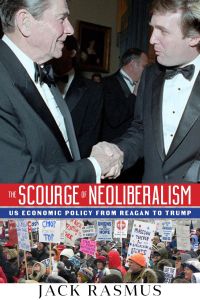
Dr. Jack Rasmus is author of the forthcoming book, ‘The Scourge of Neoliberalism: US Policy from Reagan to Trump’, by Clarity Press, 2019, and ‘Central Bankers at the End of Their Ropes: Monetary Policy and the Coming Depression, Clarity Press, August 2017. He hosts the Alternative Visions radio show on the Progressive Radio Network and blogs at jackrasmus.com. His twitter handle is @drjackrasmus

.

Trump and China president, Xi, meet tomorrow at G20 to seek compromise on ‘trade war’. If Trump’s past behavior re. phony trade war with Europe, So.Korea, and Mexico-Canada are a pattern, Trump will back off his escalating tariffs and tough talk on China trade. No final deal likely, but likely token retreat by both sides from existing tariffs, or agreement to hold more meetings between now and January 1, when real tariff war set to begin,or both. China likely to restate concessions on US banks and multinational corporations greater access to China markets (including 51% ownership) and China shift to buy more US agricultural goods. Trump likely to delay January 1 $200 billion tariff hikes. 60-40 chance both sides back off from drift to trade war. Words and vague promises by US and China on China tech transfer and nextgen military technology development by China as cover. Another token USMCA-like Nafta 2.0 likely to emerge. Why? Trump under pressure from stock markets keying on trade war (and Fed rate hikes), growing opposition in Congress to Trump trade policy, serious events emerging with Cohen-Mueller investigation of Trump-Russian Oligarch connections.

Listen to my Nov. 30 Alternative Visions radio show discussing scenarios and likely outcomes of latest version of Trump phony trade war. Also, what’s really behind GM’s announced 14,000 layoffs, and how Fed chair, Powell, is backing down from more 2019 rate hikes as the US markets weaken and global and US economies show signs of slowing in 2019.

TO LISTEN: GO TO

https://prn.fm/alternative-visions-china-trade-gm-layoffs-trump-v-fed-11-30-18/

OR GO TO:

http://alternativevisions.podbean.com

SHOW ANNOUNCEMENT

Dr. Rasmus speculates on possible outcomes of the Trump-Xi meeting at G20 in Buenos Aires this coming weekend and provides a background history of US-China ‘trade war’ since May 2018; the latest moves of factions within US trade negotiations delegation; and Trump’s failure to get China to the negotiating table. Also, China’s past concession signals and US responses. And the Pence speech at the recent Asia-Pacific conference & US trade representative, Robert Lighthizer’s latest anti-China report released before the G20. Possible tactical outcomes and responses by China & US after the G20 meeting, and ‘wildcards’ that may impact post G20 events (including recent Cohen-Mueller developments). Rasmus next discusses GM’s announcement of 14,000 layoffs and what’s really behind it as GM pressures Trump for more car tariffs and tax credits. The show concludes with discussion of Federal Reserve chair, Powell’s, ‘about face’ this past week on slower further Fed rate hikes, only weeks after signaling in October many more hikes were coming. The Fed’s fiction of ‘neutral’ interest rate and myths about central bank (Fed) independence. (Check out the Rasmus blog, jackrasmus.com, for an excerpt from Rasmus’s forthcoming book, ‘Alexander Hamilton and the Origins of the Fed’, debunking the myth of central bank independence). Next week: Report back on the G20 Meeting and its fallout.

Listen to my interview with the Critical Hour radio show for my critique of the Democratic Party’s 2018 ‘suburban’ strategy that will fail as a general strategy for the 2020 elections. Listen to the first 18:54 minutes of the show.

Go to: https://sputniknews.com/radio_the_critical_hour/201811161069855171-as-democrats-rule-the-house/

The US and China now approach the cliff of a real trade war. Tariffs in the hundreds of billions of dollars have been announced, but not yet implemented except for $50 billion on carefully selected mutual imports designed to have minimal impact on the economies. That is about to change come January 1, 2019. As the date approaches the China-US pending trade war is taking on elements and appearances of a potential new cold war as well; Technology issues–in particular those impacting new generation military technologies–have come to the fore in the US-China trade negotiations (under the cover phrase of ‘intellectual property’). US hardliners in the negotiations (Lighthizer, Navarro, Bolton) are closely allied with the Pentagon, military contractors, and US companies being challenged by China’s rising competence in AI, cybersecurity, and 5G wireless–i.e. the key military technologies of the future.

The upcoming G20 summit in Buenos Aires will include a meeting one on one between Trump and China’s president, Xi. Will they come to an agreement in principal and turn from the pending trade war and another cold war? Or will the meeting result in a general ‘look good’ announcement for the media as they fail to agree, and as the anti-China neocon-Pentagon-military industrial complex in the US prevail and drive the US in 2019 toward a bona fide trade war and Cold War 2.0 between the US and China.

Listen to my last week’s Alternative Visions radio show of November 26, 2018 during which I dedicate the show to discussing the issues. And listen to my upcoming next show where the Buenos Aires G 20 meeting will be the subject.

TO LISTEN GO TO;

http://prn.fm/alternative-visions-us-v-china-eve-g20-buenos-aires-meeting/

OR GO TO:

http://alternativevisions.podbean.com

SHOW ANNOUNCEMENT:

The NY Times just published the first of a series of articles on China’s economic rise, timed for Trump’s G20 meeting with China president, Xi, next week. Rasmus comments on the Times article and its focus on an ‘Epochal Contest’ emerging between US and China. While the Times article analysis is mostly anecdotal, Rasmus provides a deeper, historical explanation behind China’s rise since 1983 to a virtual co-equal challenger to the US’s dominant role in the global economy. The US-China current trade ‘war’ is just the ‘tip of the spear’ of the US pushback. Rasmus explains how China’s economic growth has been driven by an infusion of money capital since the 1980s mostly from the US, its integration into the global trading system permitted by the US), and the US willingness to run a massive trade deficit with China to create the US ‘twin deficits’ system using to finance budget deficits (and in turn permit massive US tax cutting and war spending in the 21st century). How China’s rapid growth strategy has been managed, in contrast to the US, with significant government participation (public banks, local government construction projects, domestic and now international infrastructure, a 40% of GDP government investment policy, massive public education and internal immigration, tech transfer from multinational corporations, state owned enterprises, and a focus on fiscal policy as government spending instead of US focus primarily on monetary policy. How China spent 16% of GDP on fiscal spending to recover from 2008, while the US spent 5% (mostly tax cuts and handouts to state governments). China’s latest initiatives in AIIB, One Belt One Road, Yuan approval by IMF, etc. (Next week: The G20 Trump-Xi Meeting and the Real Trade War)

One of the key characteristics of the 2008-09 crash and its aftermath (i.e. chronic slow recovery in US and double and triple dip recessions in Europe and Japan) was a significant deflation in prices of global oil. After attaining well over $100 a barrel in 2007-08, crude oil prices plummeted, hitting a low of only $27 a barrel in January 2016. They slowly but steadily rose again in 2016-17 and peaked at about $80 a barrel this past summer 2018. Now the retreat has started once again, falling to a low of $55 in October and remain around $56 today, likely to fall further in 2019 now that Japan and Europe appear entering yet another recession and US growth almost certainly slowing significantly in 2019. With the potential for a US recession rising in late 2019 oil price deflation may continue into the near future. What will this mean for the global and US economies?

The critical question is what is the relationship between global oil price deflation, financial instability and crises, and recession–something mainstream economists don’t understand very well? Is the current rapid retreat of oil prices since August 2018 an indicator of more fundamental forces underway in the global and US economy? Will oil price deflation exacerbate, or even accelerate, the drift toward recession globally now underway? What about financial asset markets stability in general? What can be learned from the 2008 through 2015 experience?

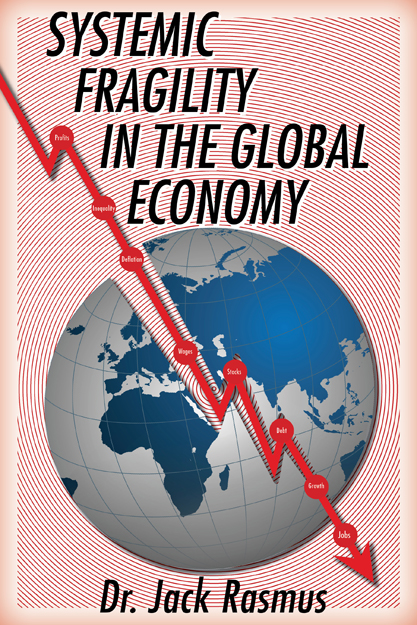
In my 2016 book, ‘Systemic Fragility in the Global Economy’ and its chapter on deflation’s role in crises, I explained that oil is not just a commodity but, since the 1990s, has functioned as an important financial asset whose price affects other forms of financial assets (stocks, bonds, derivatives, currencies, etc.). Financial asset price volatility in general (bubbles and deflation) have a greater impact on the real economy than mainstream economists, who generally don’t understand financial markets and cycles, think. Hence they don’t understand how financial cycles interact with real business cycles. This applies as well to their understanding of oil prices as financial asset prices, not just commodity prices.

For my comments on global oil deflation in 2014-15, go to my website for the excerpt from the chapter from the ‘Systemic Fragility’ book that explain the role of global crude oil prices as financial asset prices. This article is reproduced, with the excerpts from 2016, from the book. Go to: http://kyklosproductions.com/articles.html)

Oil Price Deflation Revisited 2018

Oil is a commodity whose price is determined by the interaction of supply and demand; but it is also a financial asset the price of which is determined by global finance capitalists’ speculation in oil futures markets and the competition between various forms of financial assets globally. For the new global finance capital elite (also addressed in the book) look at the returns on investment (e.g. profits) from financial asset investing globally—choosing between oil futures, stocks, bonds, derivatives, currencies, real estate on a worldwide basis.

The price of crude oil futures drives the price of crude oil in the short and medium term, as a commodity as speculators bet on oil supply and demand; and the relative price of other types of financial assets in part also determine the demand of oil speculators for oil futures.

What this means is that simply applying supply and demand analysis to determine the direction of crude oil prices globally is not sufficient. Neither supply nor demand has changed since August 2018 by 30% to explain the 30% drop in crude oil to its current mid-$50s range; nor will it explain where oil prices will go in 2019. Nevertheless, that’s what we hear from economists today trying to explain the recent drop or predict the trajectory of global oil price deflation in 2019.

What Mainstream Economists Don’t Understand

Mainstream economists are indoctrinated in the idea that only supply and demand determine prices. It harkens back to the influence of classical economics of the 18th century and Adam Smith. Supply and demand are the appearance of price determination. What matters are the forces behind, beneath and below that cause the changes in supply and demand. Those forces are the real determinants. But mainstream economists typically deal at the surface of appearances, which is why their forecasts of economic directions in the medium and longer term are so poor.

Looking at recent explanations and analyses by mainstream economists, and their echo in the business media, we get the following view:

First, it is clear that there are three major sources of oil supply globally today: US production driven by technology and the shale fracking revolution. Second, Russian production. Third, OPEC, within which Saudi Arabia and its allies, UAE, Kuwait, etc. Each produce about 10-11 million barrels per day, or bpd.

Since this summer, US fracking has resulted in roughly an additional 670,000 barrels a day by October compared to last July 2018. Both Saudi and Russian production has added roughly 700,000 more, each respectively. Offsetting the supply increase, in part, has been a reduction in output by Venezuela and Iran—both driven by US sanctions and, in the case of Venezuela, US longer term efforts to prevent the upgrading and maintenance of Venezuelan production.

The more than 2 million bpd increase in global crude oil supply by the global oil troika of US- Russia-Saudi has, on the surface, appeared as a collapse in global oil prices from $80 to $55, or about 30% in just a few months. Projections are supply increases will drive global oil prices still lower in 2019: US forecasts for 2019 are for an average of 12.06 million bpd; for Russia an average of 11.4 million bpd; and for Saudi an average of 10.6 million bpd. (Sources: EIA and OPEC secretariat).

Demand & Supply as Mere Appearance

So the appearance is that supply will drive global oil prices still lower in 2019. But what about demand? Will the forces behind it drive oil price deflation even further? And what about other financial asset markets’ price deflation? Will declines in stock, bond, derivatives, and currencies prices result in financial capitalist investors increasing their demand for oil futures as they shift investing from the collapse of values in those financial markets to oil? Or will it reduce their investing in oil futures as other financial asset markets prices deflate, as a psychological contagion effect spreads across financial asset markets in general, oil futures included?

While mainstreamers focus on and argue that pure supply considerations will predict the price of oil, my analysis insists that a deeper consideration of forces are necessary. What’s driving, and will continue to drive, oil prices are Politics, other financial markets’ price deflation, and Demand that will be driven by renewed recessions in the major advanced economies (Europe, Japan, then US, and continued GDP slowdown in China).

As global economic growth slows, now clearly underway, more than half of the world’s oil producers will increase oil production. Russia, Venezuela, Iraq, smaller African and Asia producers, are dependent on oil sales to finance much of their government budgets. As real growth slows, and recessions appear or worsen, deficits will rise further requiring more government revenues from oil sales. What these countries can’t generate in revenues from prices they will attempt to generate from more sales volume. Even Saudi Arabia has entered this group, as it seeks to generate more revenue to finance the development of its non-energy based economy plans.

So Russia and much of OPEC for political reasons will increase supply because of slowing economies—i.e. because of Demand originally and Supply only secondarily. As the global economy continues to slow Demand forces trump those of Supply. But the two are clearly mutually determined. It’s just that Demand has now become more determining and will remain so into 2019.

Debt as a Driver of Global Oil Deflation

But what’s ultimately behind the Demand forces at work? In the US it’s technology, the fracking revolution, driving down the cost of oil production and thus its price. It’s also corporate debt, often of the junk quality, that has financed the investment behind the oil production output rise. Drillers are loaded with junk bond debt, often short term, that they must pay for, or soon roll over now at a higher interest rate in 2019 and beyond. They must produce and sell more oil to pay for the new technology driven investment of recent years. And as the price falls they must produce and sell still more to generate the revenue to pay the interest and principal on that debt.

So is it really Supply, or is it more fundamentally the debt and technology that’s driving US shale output, that in turn is adding to downward global price pressures? Is it Supply or is it the way that Supply has been financed by capitalist markets?

Similarly, in the case of Russia and much of OPEC, is it Supply or is it the need of those countries to finance their government growing debt loads (and budgets in general) by generating more sales revenue from more oil output, even as the price of oil falls and thereby threatens that oil revenue stream?

Whether at the corporate or government level, the acceleration of debt in recent years is behind the forces driving excess oil production and Supply that appears the cause of the emerging oil price deflation.

Politics as a Driver of Global Oil Deflation

Domestic and global politics is another related force in some cases. Clearly, Russia is engaged in an increase in its military research and other military-related government expenditures. Its governing elite is convinced the US is preparing to challenge its political independence: NATO penetration of the Baltics and Poland, the US-encouraged coup in the Ukraine, past US ventures in Georgia, etc. has led to Russian acceleration of its military expenditures. To continue its investment as the US attempts to impose further sanctions (designed to cut Russia connections with Europe in particular), and as Russia’s economy slows as it raises its domestic interest rates in order to protect its currency, Russia must produce and sell more oil globally. It thus generates more demand for its oil competitively by lowering its price. Demand for Russian oil increases—but not due to natural economic causes as the world economy slows. It increases because it shifts oil demand from other producers to itself.

Saudi politics are also in part behind its planned production increase. It has stepped up its military expenditures as well, both for its war in Yemen and its plans for a future conflict with Iran. The Saudi government investment in domestic infrastructure also requires it to generate more oil revenue in the short term.

The recent Russian-Saudi(OPEC) agreement to reduce or hold oil production steady has been a phony agreement, as actual and planned oil production numbers clearly reveal.

Not least, there’s the question of global financial asset markets’ in decline with falling asset prices and how that impacts the oil commodity futures financial asset market. Once again, changes in oil supply and demand simply do not fluctuate by 30% in just a couple months. The driver of oil prices since July 2018 must be financial speculation in oil futures.

Here it may be argued that investors are factoring in the slowing global economy, especially in Europe and Japan, in coming months. They may be shifting investment out of oil futures as a speculative price play, and into US currency and even stocks and bonds. Or into financial asset markets in China. Or speculating on returns in select emerging market currencies and stocks that have stabilized in the short term and may rise in value, producing a nice speculative gain in the short run. The new global finance capital elite looks at competitive returns globally, in all financial asset markets. It moves its money around quickly, from one asset play to another, enabled by technology, past removal of controls on global money capital flows, easy borrowing, and ability to move quickly in and out of what is a complex network of highly liquid financial asset markets worldwide. As it sees global demand and politics playing important short term roles in global oil price declines, it shifts investment out of oil futures and into other forms of financial assets elsewhere in the global economy. Less supply of money capital for investing in oil futures reduces the demand for oil futures, which in turn reduces demand for oil and crude oil prices in general.

Conclusion

What this foregoing discussion and analysis suggests is the following:

• Looking at oil supply solely or even primarily is to look at appearances only
• But Supply & Demand analyses of oil prices are also superficial analyses of appearances. They are intermediate causal factors at best.
• What matters are real forces that more fundamentally determine supply and demand
• Politics, technology, and debt financing are more fundamental forces driving supply and demand in the intermediate and longer run.
• Oil is not just a commodity, since the 1990s especially; it has become a financial asset whose price is determined in the short run increasingly by speculative investing shifts by global finance capital elites.
• As financial assets, oil prices are determined in the short run globally by the relative price of other competing financial assets and their prices
• The structure of the global economy in the 21st century is such that a new global finance capital elite has arisen, betting on a wide choice of financial assets available in highly liquid financial asset markets, across which the elite moves investments quickly and easily due to new enabling technologies and past deregulation of cross-country money capital flows

To summarize, as it appears increasingly that politics (domestic budgets and revenue needs, US sanctions, rising military expenditures, trade wars, etc.) and a slowing global economy are causing downward pressure on oil demand and thus oil prices; this price pressure is exacerbated by a corresponding increase in production and supply as a result of rising corporate and government debt and debt-servicing needs. However, in the very short run of weekly and monthly price change, it is global oil speculators betting on further oil price deflation and shifting asset investment returns elsewhere that is the primary driver of global oil deflation.

Global oil prices are in determined by other financial asset market price deflation underway in the short term, and in turn determine in part price deflation in other financial asset markets. Global oil prices cannot be understood apart from understanding what’s happening with other financial asset markets and prices.
Understanding and predicting oil prices is thus not simply an exercise in superficial supply and demand analysis, and even less so an exercise primarily in forecasting announcements of production output plans by the big three troika of US-Russia-Saudi.

Jack Rasmus is author of the forthcoming 2019 book, ‘The Scourge of Neoliberalism: US Policy from Reagan to Trump’, Clarity Press, and the recently published ‘Central Bankers at the End of Their Ropes: Monetary Policy and the Coming Depression’, Clarity 2017. He hosts the Alternative Visions radio show on the Progressive Radio Network. His twitter handle is @drjackrasmus and his website, http://kyklosproductions.com

For my latest commentary on the global economy slowdown and financial asset markets and prices falling, listen to my Alternative Visions radio show of last friday, November 16, 2018.

To Listen GO TO:

http://prn.fm/alternative-visions-glowing-economy-slowing-financial-prices-deflating/

Or GO TO:

http://alternativevisions.podbean.com

SHOW ANNOUNCEMENT

Dr. Rasmus provides a review of economies worldwide that are appearing to slow: Germany GDP contracts -.02%, Eurozone slows to 0.7% overall. Brexit and Italy may worsen, further slowing the UK and EU economies, likely driving the region into recession. Japan’s GDP retreats -1.2%, its fourth recession since 2013. China’s officially at 6.5% (actually closer to 5%), with housing and consumers spending slowing requiring yet another stimulus package. How the Fed and other major central central banks and monetary systems now subsidize the capitalist economies in the 21st century. And what’s driving the most recent decline in global oil prices–is is it supply or declining demand? Rasmus expands upon his view of ‘what’s financial imperialism?’, laid out first in his ‘Looting Greece’ 2016 book, previewing his forthcoming article on the topic for a publication in Turkey. Also, comments on the continuing faction fight within the US trade negotiations team on the China-US trade war–the Navarro-Lighthizer faction vs. the Mnuchin (bankers) and now Kudlow (US heartland ag). The show concludes with a review of falling financial asset prices globally—oil futures, stock and bond markets, commodity and foreign exchange markets, leading to what Rasmus calls the ‘debt-deflation-default’ nexus associated with financial crises. Emerging defaults at Sears, GE, Deutschebank and others in Europe, and in India. US government and nonfinancial corporate debt escalation as trouble spots, as well as trouble spots in junk bonds, BBB corporate bonds, and leveraged loans that are now intensifying.

Amazon is scheduled to announce its new HQs today. My past predictions were Northern Virginia and Long Island New York. The locations confirm Amazon’s evolving business model. It’s not a warehouse company and not even a retail company. Amazon is a tech company and becoming a financial ‘shadow’ bank company. The Virginia location is to recruit tech workers and locate close to the Pentagon and Washington as it continues to develop into a major leader in Artificial Intelligence and apply its nextgen AI technology for government military plans. The New York location is to locate near the financial center of the US and world, as it also evolves into a financial ‘shadow’ bank institution.

Listen to my interview of a week ago with ‘Loud & Clear’ radio in Washington on where would Amazon locate at why.

GO TO:

https://www.spreaker.com/user/radiosputnik/not-one-but-two-new-amazon-headquarters-

Also, read my blog piece posted below on this blog on September 6, 2018 on why ‘Amazon is a Job Killer’ and not a job creator that’s being hyped by the company and the media.

(What follows is the first part of my analysis of the 2018 US Midterm Elections).

For months, the leadership of the Democratic Party hyped the message that a ‘blue wave’ was on its way that would politically engulf Trump and reverse his policies. Well, the wave washed up on shore on November 6, 2018, but Trump barely got his feet wet.

The failure of Democratic Party leaders’ 2018 strategy to deliver as promised last night should also raise some serious questions about its strategy going forward for 2020. That strategy focused on running women and a few veterans in suburban districts and targeting the independent voter—a Suburbia Strategy—i.e. an approach apparently abandoning the 2008 successful Democratic strategy of targeting millennials, blacks and latinos, and union workers who since 2012 have been steadily reducing their support for Democrats. But the Dems believe their new Suburbia Strategy works. As former House Speaker, Nancy Pelosi, declared to the media on November 6 after polls closed, the Dems had just won “a great victory”. But was it ‘great’? Or even a ‘victory’?

And is the Suburbia Strategy targeting women and independents in the ‘burbs a formula for winning anything but a couple dozen or so toss up, suburban House districts in off year elections? If not, what is—given the Democrat Party’s abandonment of strategies that once were successful?

If one listens to the talking heads of pro-Democratic media like MSNBC or anti-Trump CNN, they echoed Pelosi in believing the answer is ‘yes’. The message was the Dems won big time. Center-left periodicals like The Nation magazine declared “We Won!”. Even Democracy Now reported it was an “Historic Midterm”. More mainstream liberal media, like the Washington Post, editorialized the election gave the Dems in 2020 “a path to victory”. Ditto similar spin from the New York Times.

A closer analysis, however, shows if the Dems repeat and run their suburbia-women-independents strategy again two years from now it will be a path to defeat in 2020. And if they then lose again and do not stop Trump again two years from now– for they certainly did not stop Trump this stop around as they promised—it will likely be their end as a major party contender in national politics in the 2020s.

None Dare Call It Victory

True, the Dems won the US House of Representatives, but not by any historic margin. Not like they lost it in 2010. The average historical turnover of House seats in midterms for decades has been about 30. That’s probably the upper limit of what Dems will win in 2018, give or take a few more yet to be decided seats by late vote tallies. And it may be less than 30. A net swing of 30 in the House is just an average recovery of seats for the out party in midterms. That’s not an historic sweep or blue wave by any means. Trump won’t lose sleep over that.

But he will stay up late now tweeting a clear victory for his team in the Senate, where results for 2018 will soon prove strategically devastating for the Dems. Historically in midterm elections the out party is able to swing its way a net gain on average of 4 seats in the Senate. But the Democrats lost four seats, not gained them. That’s an historic defeat. In the Senate, the blue wave predicted to roll in was replaced by the red tide that continued to roll out.

Sad to say, the Dems’ Suburbia Strategy has failed to put any dent into the Trump machine, which deepened its hold on red states America, even if the Dems chipped away at its ragged edge here and there. And that failure has consequences. Here’s just some:

• With the Senate now even more firmly behind Trump, with a majority of 54 Republicans, any possibility of impeachment of Trump by the House is out of the question. Moreover, Trump will now likely get to select a third conservative, pro-business Supreme Court judge. And with a 54 majority, he could nominate Genghis Khan and the ‘in his pocket’ Senate would vote him up.

• A locked in Senate majority also means that Mitch McConnell will now go even more aggressive attacking social security, Medicare, education spending than he’s already signaled. And watch for an even larger flood of highly conservative, mid-level federal court appointments than those that have already been pushed through Congress.

• The Democrats’ Senate debacle will not only solidify the big handouts to businesses and investors in tax cuts and deregulation under Trump’s first two years, but will mean a Senate now firmly in the hands of Republicans and Trump willing to undertake renewed attacks on abortion rights, on immigrants, and workers’ rights for another two years.

• Another immediate consequence is that Trump’s 2018 $4t trillion tax cuts for investors, businesses, and the wealthiest 1% and his sweeping deregulation of business are now firmly entrenched for at least another six years. It’s not surprising that the US stock market surged 545 pts. on November 7, the day after the elections. Investors and the wealthy now know the Trump windfall tax that boosted their profits and capital gains by 20%-25%, and his deregulation policies that lowered costs even more, are now baked in long term.

While Trump’s Republicans expanded their control of the Senate throughout nearly all the rest of ‘red America’, by unseating Democrat Senators in Indiana, Missouri, Florida, and North Dakota, they retained control of strategic governorships in Georgia, Florida, Ohio, and elsewhere. The Republican red state governorships are strategic for several reasons: first, because Florida and Ohio are key swing states in presidential elections. They are also states that have been notorious in the past for manipulating election outcomes (Florida 2000), Ohio (2004) and suppressing voters’ right. Like Florida and Ohio before, in 2018 Georgia appears to be leading the way in voter suppression, as is North Dakota where potentially 30,000 Native Americans’ voting rights were restricted. Both states have been identified for weeks as having undertaken voter suppression measures.

Moreover, Republicans will likely win the governorship in Georgia, where votes are still being contested in a narrow result. And should they win, it will be only because Georgia’s Republican governor candidate, Brian Kemp, as the standing Secretary of State in charge of elections, personally engineered the voter suppression on his own behalf.

Another swing state, North Carolina, also notorious for voter suppression initiatives, has now just passed a ballot measure to allow its legislature to restrict voters rights still further. The Trump voter suppression offensive remains thus well intact and continues to expand its footprint in anticipation of 2020 elections.
What should worry Democrats for 2020 is that all these swing states with long standing voter suppression and gerrymandering histories—i.e. Florida, Ohio, Georgia, North Carolina (add Texas as well)—will remain in the hands of Trump Republican governors come the 2020 elections.

• The Senate and strategic Governorship wins for Trump will now embolden red state right wing radicals to become even more aggressive and organized. Bannon and his billionaire buddies—the Mercers, Adelsons, et. al.—will see to that.

• Not the least significant consequence of the questionable Democratic victory is that Trump is now, in a way, in a stronger position to deal with the Mueller investigation.

He fired his Justice Dept. Secretary, Jeff Sessions, the day after the elections, replacing him with yet another ‘yes man’, Whitaker. Rod Rosenstein, the second in charge at the Department and liaison with Mueller, may likely be next pushed out. That leaves Mueller out on a limb—unless he moves the investigation to the House under the Democrats before getting fired himself. But that shift would make the Mueller investigation look like a partisan Democratic investigation.

• And no one should expect the House Democrats now to seriously pursue Trump impeachment.

The House has authority to raise impeachment but the Senate must conduct the impeachment trial, and that’s just not going to happen now with 54 solid Republican Senators and Trump knows it. So the Dems in the House won’t even try to raise impeachment on the House floor. They’ll do a PR campaign for the media from the perch of House Committee hearings. No matter what Trump does from here on out, no matter what House committee hearings turn up in his tax returns (which will not be shared with the public), and no matter what Mueller reports out, it will all be a ‘smoke and mirrors’ offensive to stop Trump by Pelosi and her Dems in the US House of Representatives.

The Pelosi-Trump Bipartisan ‘Lovefest’

Further mitigating against any Democratic moves against Trump in the House is what appears to be an emerging ‘love fest’ between Trump and Nancy Pelosi. Pelosi repeatedly emphasized in her statement to the press on November 6,, the Democrat party leadership is going to go big on bipartisanship (again!). She signaled to Trump a desire for bipartisanship several times. Trump quickly responded to the overture by calling Pelosi, praising her publicly, and then tweeting that she should be the Speaker of the House now that the Dems have taken it back.

So Obama era Democrat Party bipartisanship is back, and we know what that produced: Obama continually held out the bipartisan offer, the Republican dog continually bit his hand. Mitch McConnell refused and turned down offers to compromise again and again. The result was a failure of an economic recovery for all but bankers and investors. Obama’s 2008 coalition and base thereafter dribbled away and then disappeared altogether in 2016. The Obama 2008 coalition of youth, latinos, blacks and union labor dissolved as fast as it was formed. The result of that was not only the debacle of 2016, but the subsequent conservative conquest of the Supreme Court and virtually the entire federal judiciary under Trump, an across the board wipeout of decades of business regulations, a $4 trillion tax windfall for business, investors and wealthy households, a total retreat on climate change, and a descent into a nasty political culture of emerging ‘white nationalism’ and increasing social violence and polarization. It all began with Obama’s naïve bipartisanship that we now see Democrat Party leaders like Pelosi (and no doubt the corporate moneybags on the DNC) attempting to resurrect once again.

Bipartisanship is a political indicator of a party no longer convinced of its own ability to lead and forge a new direction. Contrast the results of Democratic Party bipartisanship from Obama to Pelosi with Republican party rejection of anything bipartisan. Who prevailed proposing bipartisanship? Who won rejecting it? Yet, here we go again with Obama-like bipartisanship being offered by Pelosi. It will be a set-up for Democratic failure in 2020, just as it was after 2008.

Here’s my prediction why:

A bipartisan approach by the Democrat House will result in Dems getting the short end of the legislative stick once again. Policy areas where Pelosi-Trump may agree include

• infrastructure spending,
• limits on prescription drug price gouging by big Pharma companies,
• token 5% tax cuts for median income family households,
• paid family leave

But Pelosi legislative proposals will then run into a wall of opposition in Mitch McConnell’s Senate that will demand significant cuts to Medicare, Medicaid, Food Stamps, Housing, Education and other programs as a condition of Senate support for passage of their proposals. In addition, to get something passed, the Pelosi Dems will have to agree to watered down versions of their proposals as well. They’ll then get outmaneuvered in House-Senate conference committee, agreeing to the watered down proposals and the least publicly obvious and onerous of McConnell’s cuts to social programs—i.e. just to get something passed. If they don’t agree to McConnell’s compromises, they will appear to be voting against their own proposals. Either way, the Dems again will look ineffective again to their base, as they had throughout 2008-16. They will have walked into the bipartisan trap, and Trump-McConnell will slam the door behind them in 2020.

But we’ve seen that story before—under Jimmy Carter after 1978, in Bill Clinton’s second term, and during Obama’s first.

Jack Rasmus
November 8, 2018

Dr. Jack Rasmus is author of the forthcoming book, ‘The Scourge of Neoliberalism: US Policy from Reagan to Trump’, by Clarity Press, 2019, and ‘Central Bankers at the End of Their Ropes: Monetary Policy and the Coming Depression, Clarity Press, August 2017. He hosts the Alternative Visions radio show on the Progressive Radio Network and blogs at jackrasmus.com. His twitter handle is @drjackrasmus. His video, radio and interviews are available for download at his website, http://kyklosproductions.com

(Here’s my latest on the condition of America on the eve of the 2018 midterm elections. An analysis of the election to be posted later this week).

As Americans go to the polls today, November 6, 2018, no doubt some will be thinking of the hordes of immigrants we’re told are invading the US southern border. Or they may be remembering the pipe bombs, the killings in Pittsburg, or the racist murders occurring almost daily elsewhere that barely get press coverage anymore.

If they’re Millennials, they may be considering whether even to vote or not, since neither wing of the corporate Party of America—aka Republicans or Democrats—have done much for them over the past ten years. Burdened mostly with low paying service jobs and $ trillion dollar student debt payments that consume roughly 37% of their paychecks, with real incomes well below what their parents were earning at their age, and with prospects for the future even more bleak, many Millennials no doubt wonder what’s in it for them by voting for either party’s candidates. Will Millennial youth even bother to turn out to vote? As an editorial in the Financial Times business newspaper recently noted, “Only 28% of Americans aged 18 to 29 say they are certain to vote this November”. Political cynicism has become the dominant characteristic of much of their generation—deepening since the politicians’ promises made in 2008 have failed to materialize under Obama and now Trump.

If they’re Latinos and Hispanics, as they go to the polls they are aware their choice is either Trump Republicans who consider them enemies, criminals and drug pushers; or Democrats who, in the past under Obama, deported their relatives in record numbers and repeatedly abandon programs like DACA (‘Dreamers) as a tactical political necessity, as they say. Who will they trust least? One shouldn’t be surprised if they too largely sit it out, harboring a deep sense of betrayal by Democrats and concern they may soon become the next ‘enemy within’ target of Trump and his White Nationalist shock troops who are being organized and mobilized behind the scenes by Trump’s radical right wing buddy, Steve Bannon, and his billionaire and media friends.

If they’re African Americans, they know from decades of experience that nothing changes with police harassment and murders, regardless which party is in power.

If they’re union workers in the Midwest, they know the Democrats are the party of free trade and job offshoring, while Republicans are the party favoring low minimum wages, elimination of overtime pay, privatization of pensions, and cuts to social security.

All these key swing groups of Millennials, Hispanics, African-Americans, and union workers in the midwest—i.e. those who gave Obama an overwhelming victory in 2008, gave him one more chance in office in 2012 despite failure to deliver, and then gave up on the unfulfilled promises in 2016—will likely not be thinking about the real ‘issues’ as they go to the polls. For the ‘Great Distraction’ is underway like never before.

The Great Distraction

It’s the ‘enemy within’ that’s the problem, we’re told by Trump. And the ‘enemy without’. Or, in the case of the immigrant—it’s both: the enemy without that’s coming in! So put up the barbed wire. Grab their kids when they arrive, as hostage bait. Send the troops to the border right now, to stop the hordes that just crossed into southern Mexico yesterday. Hurry, they’re almost here, rapidly proceeding to the US on foot. (They run fast, you see). They’re in Oaxaca southern Mexico. They’ll be here tomorrow, led by Muslim terrorists, carrying the bubonic plague, and bringing their knapsacks full of cocaine and heroin.

And if the enemy immigrant is not enemy enough, the ‘enemy within’ is increasingly also us, as Trump adds to his enemies list the ‘mob’ of Americans exercising their 1st amendment rights to assembly and protest against him. And don’t forget all those dangerous Californians who won’t go along with his climate, border incarceration, trade or other policies. Or their 80 year old Senator Diane Feinstein, their ring-leader in insurrection. They’re all the ‘enemy within’ too. The chant ‘lock ‘em up’ no longer means just Hillary. So Trump encourages and turns loose his White Nationalist supporters to confront the horde, the mob, and their liberal financiers like George Soros. If all this is not an unraveling, what is?

Not to be outdone in the competition for the Great Distraction, there’s the Democrats resurrecting their age-old standby ‘enemy without’: the Russians. They’re into our voting machines. Watch out. They’re advancing on Eastern Europe, all the way to the Russian-Latvian border. Quick, send NATO to the Baltics! Arrange a coup partnering with fascists in Ukraine! Install nuclear missiles in Poland! And start deploying barbed wire on the coast of Maine and Massachusetts, just in case.

However, behind all the manufactured fear of immigrants, US demonstrators, and concern about violence- oriented white nationalists whipped up and encouraged by Trump and his political followers—lies a deeper anxiety permeating the American social consciousness today. Much deeper. Whether on the right or left, the unwritten, the unsaid, is a sense that American society is somehow unraveling. And it’s a sense and feeling shared by the left, right, and center alike.

Both sides—Trump, Republicans, Democrats, as well as their respective media machines—sidestep and ignore the deep malaise shared by Americans today. Older Americans shake their heads and mumble ‘this isn’t the country I grew up in’ while the younger ask themselves ‘is this the country I’ll have to raise my kids in’?

There’s a sense that something has gone terribly wrong, and has all the appearance will continue to do so. It’s a crisis, if by that definition means a turning point. And a crisis of multiple dimensions. A crisis that has been brewing and growing now for at least a quarter century since 1994 and Newt Gingrich’s launching of the new right wing offensive that set out purposely to make US political institutions gridlocked and unworkable until his movement could take over—and succeeded. It’s a crisis that everyone feels in their bones, if not in their heads. The dimensions of the unraveling of America today are many. Here’s just some of the more important:

Growing Sense of Personal Physical Danger

Mass and multiple killings and murders are rampant in America today, and rising. So much so that the media and press consciously avoid reporting much of it unless it involves at minimum dozens or scores of dead. There are more than 33,000 gun killings a year in the US now. 90 people a day are killed by guns. While we hear of the occasional school shooting, the fact is there are 273 school shootings so far just in 2018. That’s one per school day.

The suicide rate in America is also at record levels, with more than 45,000 a year now and escalating. Teen age suicides have risen by 70% in just the last decade. The fastest rate of increase is among 35-64 year olds. People are literally being driven crazy by the culture, the insecurities, the isolation, the lack of meaningful work, the absence of community, and the hopelessness about a bleak future that they’re killing themselves in record numbers.

And let’s not forget the current opioid crisis. The opioid death rate now exceeds more than 50,000 a year. These aren’t folks over-dosing in back alleys and crack houses. These are our relatives, neighbors and friends. And the ‘pushers’ are the big pharmaceutical companies and their salespersons who pushed the Fetanyl and Oxycontin on doctors telling them it was safe—just like the Tobacco companies maintained for decades that cigarettes were ‘safe’ when their tests for decades showed their product produced cancer. Big Pharma knew too. They are the criminals, and their politicians are the paid-for crooked cops looking the other way. All that’s not surprising, however, since Big Pharma is also the biggest lobbyist and campaign contributor industry in the US.

So it’s 33,000 gun killings, 45,000 suicides, and 50,000 opioid deaths a year. Every year. That compares to US deaths during the entire 8 years of Vietnam War of 56,000! That’s a death rate over three years roughly equal to all Americans who died during the three and a half years of World War II! We all got rightly upset over 2500 killed on 9-11 by terrorists. But the NRA and the Pharmaceutical companies are the real terrorists here, and politicians are giving them a complete pass.

Instead of Big Pharma CEOs and leaders of the National Rifle Association (NRA), we’re told the real enemies are the desperate men, women and children willing to walk more than a thousand miles just to get a job or to escape gang violence. Or we’re told it’s the Russians meddling in the 2016 election and threatening our democracy—when the real threat to American democracy is home grown: In recent court-sanctioned gerrymandering; in mass voter suppression underway in Georgia, North Dakota, and elsewhere; in the billions of dollars being spent by billionaires, corporations, and their political action committees this election cycle to ensure their pro-business, pro-wealthy candidates win.

News of these real killing machines goes on every day, creating a sense of personal insecurity that Americans have not felt or sensed perhaps since the frontier settlement period in the 19th century. It’s not the immigrants or the Russians who are responsible for the guns, suicides, and drug overdoses. But they certainly provide a useful distraction from those who are. People feel the danger has penetrated their communities, their neighborhoods, their homes. But politicians have simply and cleverly substituted the real enemies with the immigrant, the mob, and that old standby, the Russians.

Income & Wealth Inequality Accelerating

Another dimension of the sense of unraveling is the economic insecurity that hangs like a ‘death smog’ over public consciousness since the 2008-09 crash. As more and more average American households take on more debt, work more part time jobs or hours, and adjust to a declining standard of living, they are simultaneously aware that the wealthiest 1% or 10% are enjoying income and wealth gains not seen since the ‘gilded age’ of the late 19th century. The share of national pre-tax income garnered by the top 10% has risen from 35% in 1980 to roughly 50% today. That’s 15% more to the top, equivalent to roughly than $3 trillion more in income gains by the top 10% that used to be distributed among the bottom 90%.

How could an America that once shared income gains from economic growth among its classes and across geography from World War II through the 1970s have now allowed this to happen, many ask? And why is it being allowed to get worse?

There are many ways to measure and show this economic unraveling. Whether national income shares for workers and wages falling from 64% to 56% of total national income; or the distribution to the rich of more than a $1 trillion a year every year since 2009 in stock buybacks and dividend payments; or the $15 trillion in tax cuts for investors, businesses, and corporations since 2001; or Trump’s recent $4 trillion tax windfall for the same; or stock market values tripling and quadrupling since 2009; or stagnant real wage gains for the middle class and declining real wages for those below the median.

Whatever dimension or study or statistic, the story is the same. Economic gaps are widening everywhere. And everyone knows it. And except for that noble, modern Don Quixote of American Politics, Bernie Sanders, it appears no one in either party is proposing to reverse it. So the awareness festers below the surface, adding to the realization that something is no longer right in America.

The sense of economic unraveling may have slowed somewhat after 2010, but it continues none the less, as millions of Americans are forced to assume low paying service jobs. Working two or more jobs to make ends meet. Taking Uber and gig work on the side. Going on Medicaid or foregoing health insurance coverage altogether. Moving to lower quality housing and taking on more room-mates. Treading economic water in good times, and sinking and gasping for air during recessions and in the bad times. Just making due. While the wealthy grow unimaginably wealthier by the day.

Never-Ending Wars

The sense of anxiety is exacerbated by the never ending wars of the 21st century. How is it they never end, given the most powerful military and funding of more than $1 trillion a year every year, it is asked?

Newspaper headlines haven’t changed much for 17 years. The war in Afghanistan and elsewhere continues. Change the dates and you can insert the same news copy. With more than 1000 US bases in more than 100 countries, America since 2001 has been, and remains, on a perpetual war footing. All that’s changed since 2000 is that the USA no longer pays for its wars by raising taxes, as it had throughout its history. Today the US Treasury and Federal Reserve simply ‘borrow’ the money from partners in empire elsewhere in the world—while they cut taxes on the rich at the same time.

And the annual war bill is going up, fast. Trump has increased annual spending on defense by another $85 billion a year for the past two years. Approaching $150 billion if the notorious US ‘black budget’ spending on new military technology development—not indicated anywhere in print—is added to the amount. And more is still coming in the next few years, to pay for new cybersecurity war preparation, for next generation nuclear weapons, and for Trump’s space force. Total costs for defense and war—not just the Pentagon—is now well over $1 trillion annually in the US. And with tax cutting for those who might pay for it now accelerating, the only sources to pay for the trillion dollar plus annual US budget deficits coming for the next decade is either to borrow more or cut Social Security, Medicare, education and other social programs. And those cuts are coming too—soon if one believes the public declarations of Senate Republican Majority leader, Mitch McConnell.

Technology Angst

As our streets and neighborhoods become more dangerous, as inequality deepens, as wars, tax cuts for the rich and social program cuts for the rest become the disturbing chronic norm—-awareness is growing that technology itself is beginning to tear apart the social fabric as well. Admitted even by visionaries and advocates of technology, the negatives of technology may now be outweighing its benefits.

Studies now show problems of brain development in children over-using hand-held screen devices. Excessive screen viewing, studies show, activates the same areas of the brain associated with other forms of addiction. Social media is encouraging abusive behavior by enabling offenders to hide. What someone would not dare to say or do face to face, they now freely do protected by space and time. Social media is transforming human communications and relations rapidly, and not always positively. It is also enabling the acceleration of the surveillance state. Massive databases of personal information are now accessible to any business, to virtually any governments, and to unscrupulous individuals around the globe intent on blackmail, threats, and worse. Privacy is increasingly a fiction for those participating in it.

And employment is about to become more precarious because of it. Technology is creating and diffusing new business models, destroying the old, and doing so far too rapidly to enable adjustment for tens of millions of people. Amazon. Uber. Gig economy. Wiping out millions of jobs, increasing hours worked, uncertainty of employment, lowering of wages. And next Artificial Intelligence. Projected by McKinsey and other business consultants to eliminate 30% of current jobs by the end of the next decade. Where will my job be in ten years, many now ask themselves? Will I be able to make it to retirement? Will there be anything like retirement any more after 2035?

Unchecked and unregulated accelerating technological change is adding to the sense of social unraveling of key institutions that once provided a sense of personal security, of social stability, of a vision of a future that seemed more related to the present, rather than to an even more anxiety ridden, uncertain, unstable future.

A Culture Increasingly Coarse & Decadent

When the President of the US brags he could shoot someone on the street corner and (his) people would still love him, such statements raise the ghostly spectre of prior decades when the vast majority of German people thought the same of Hitler. And when one of his closest advisers, Rudy Guliani, declares publicly that ‘Truth is not the Truth’, it amounts to an endorsement for an era of lies and gross misrepresentation by public figures. With chronic lying the political norm, what can anyone believe from their elected officials, many now ask? It’s no longer engaging in political spin for one’s particular policy or program. It’s politics itself spinning out of control. Public political discourse consists increasingly of targeting, insulting, vilifying, and threatening one’s political opponents. Trump’s railing against politicians and government itself smacks of Adolph’s constant insulting indictment of democratically elected Weimar German governments and leaders in the 1920s. It leaves the American public with a nervous sense of how much further can and will this targeting, personalizing, and threatening go?

But the political culture is not the only cultural element in decline. A broader cultural decline has become evident as well. Americans flock to view films of dystopia visions of America, of zombies, and ever-intense CGI violence where fictitious super heroes save the world. More of popular music has become overtly misogynous, angry, mean, and violent in both sound and lyrics. And has anyone recently watched how high schoolers now dance, in effect having sex with their pants on?

Collapse of Democratic Institutions

Not least is the sense of unraveling of political institutions and the practice of democracy itself. As a recent study estimated, Democracy is in decline in the US, having dropped from an aggregate score of 94 in 2010 to a low of 86 today—when measured in terms of free and fair elections, citizen participation in politics, protection of civil rights and liberties, and the rule of law. The study by the non-profit, Freedom House, concluded “Democracy is in crisis’, under assault, and in retreat.

In America, the restrictions on civil rights and liberties have been growing and deepening since 2001 and the Patriot Acts, institutionalized in annual NDAA legislation by Congress thereafter. Legislatures have been gerrymandered to protect the incumbents of both wings of the Corporate party of America. The US Supreme Court has expanded its authority to select presidents (Gore v. Bush in 2001), defined corporations as people with the right to spend unlimited money which it defines as free speech (Citizens United), and will likely next decide that President Trump can pardon himself if indicted (thus ending the fiction that no one is above the law and endorsing Tyranny itself).

The two wings of the Corporate Party of America meanwhile engage in what is an internecine class war between factions of the American ruling class. More billionaires openly contest for office as it becomes clear millions and billions of dollars are now necessary to get elected.

Voter suppression spreads from state to state to disenfranchise millions, from Georgia to the Dakotas, to Texas and beyond. If one lacks a street number address, or an ID card, or has ever committed a felony, or hasn’t voted recently, or doesn’t sign a ballot according to their birth certificate name, or any other number of technical errors—they are denied their rights as citizens. What was formerly ‘Jim Crow’ for blacks in the South is becoming a de facto ‘Jim Crow Writ Large’ encompassing even more groups across a growing number of states in America.

A sense of growing political disenfranchisement adds to the feeling that the country is politically unraveling as well—-adding to the concurrent fears about growing physical insecurity, worsening economic inequality and declining economic opportunities, and an America mired in never ending wars. An America in which it is evident that political elites are increasingly committed to policies of redistribution of national wealth to the wealthiest. An America where more fear that technology may be taking us too far too fast. An America where the culture grows meaner, nastier and more decadent, where lies are central to the political discourse, and where political institutions no longer serve the general welfare but rather a narrow social and economic elite who have bought and captured those institutions.

And, not least, an America where politicians seem intent on drifting toward a nationalism on behalf of a soon to be minority White America—i.e. politicians who are willing to endorse violence and oppression of the rest in order to opportunistically assume and exercise power by playing upon the fears, anxieties, and insecurities as the unraveling occurs.

Dr. Jack Rasmus
November 6, 2018
Dr. Rasmus is author of the forthcoming book, ‘The Scourge of Neoliberalism: US Policy from Reagan to Trump’, forthcoming 2019 by Clarity Press. He hosts the weekly radio show, Alternative Visions, on the Progressive Radio Network and blogs at jackrasmus.com. His twitter handle is @drjackrasmus.

Listen to my 30min. interview of November 2 with the Global Research News Hour in Canada dissecting the NAFTA 2.0 (USMCA) free trade of October and commenting on the upcoming November 6 midterm elections in the US.

How it’s a softball deal, with few changes, and not even concluded yet, but touted by Trump as a major change to NAFTA 1.0 he promised to ‘tear up’. How the dairy provisions and intellectual property provisions are really about enabling US chemical companies to sell powdered milk into Canada. How the token changes in the USMCA dispute mechanism is about preventing governments suing US companies. How the steel and aluminum tariffs are not to be resolved until November. The agreement’s phony quotas on autos. Phony $16/hr. wage hikes in Mexico. How the USMCA is designed to prevent Canada-Mexico negotiating trade deals with China. How China is the trade target, and an update on the status of US-China negotiations. The real issues in the US-China trade war.

Plus my take on the polls about a ‘blue wave’ in coming US midterm elections and how, even if Democrats win, impeachment will not occur. My prediction of a ‘public consciousness bombshell’ coming out of the midterms regardless who wins. My critique of the Democratic Party and the failure of identity politics.

Listen to the last 30 minutes of the hour long show

GO TO:

https://player.fm/series/series-podcast-global-research-news-hour/global-research-news-hour-breaking-the-blue-wave-rigged-us-elections-and-the-new-nafta-segment-1