Feeds:
Posts
Comments

Top of FormURPE Newsletter Vol. 50 No. 4 December 2024

January 6, 2025

URPE Newsletter

Vol. 50 No. 4

December 2024 

Labor Exploitation in the Era of the Neoliberal Policy Regime

Essay by Jack Rasmus

Capitalism is a dynamic and constantly evolving global system. Its economic and political relations were restructured coming out of World War II (1944-48) as US Capital assumed dominance among its capitalist peers and consolidated its hegemony—both domestically and globally.

Those post-World War II restructured relations prevailed with minimal change for several decades, until beginning to break down in the 1970s. The answer of US Capital to the breakdown and challenges—domestic and global— to its hegemony in the 1970s was once again to begin to restructure capitalist economic and social relations in the final years of the 1970s and early 1980s and continuing the process thereafter. That most recent restructuring has been called ‘Neoliberalism’ by economists and social critics.

The direct consequence of Neoliberal restructuring was the further expansion of US capital geographically—sometimes referred to as ‘Globalization’—as well as the deepening of the role of finance capital within the system—sometimes called ‘Financialization’.

While much has been written of these two consequences, less has been paid to another even more fundamental consequence of Neoliberal restructuring: the intensification of labor exploitation in both Absolute and Relative value terms that has occurred from the 1980s to the present.

Concurrent with the beginning of neoliberal restructuring the early 1980s, traditional methods of primary exploitation in production relations intensified throughout many key US industries. Much of the impetus behind the further intensification of exploitation in production relations—i.e. primary exploitation–has been the US capitalist state undertaking a more direct role during the neoliberal period assisting Capital’s exploitation of the work force. This more direct State assistance has occurred as a result of new legislation promoting capital investment and mobility, new government administrative rulings disadvantaging unions and workers, trade treaties favoring Capital at the expense of Labor, assisting the rise and spread of new technologies displacing labor, promoting new business models that intensify exploitation, and enabling a host of labor market changes that have resulted in a further rise in exploitation.

This neoliberal period trend toward a deeper cooperation between State and Capital resulting in a further rise in exploitation has not been limited to primary forms of exploitation in direct production relations between Capital and Labor. It has taken the form of an increase in forms of what might be called secondary exploitation as well—where the term secondary exploitation has been defined as exploitation in exchange relations as defined by Marx defined in Vol. 3 of Capital.1

At first the idea of secondary exploitation involving exchange relations may seem a contradiction in terms, given Marx’s traditional model of exploitation of labor in production. But it isn’t. Whereas Marx in Vol. 1 of Capital described how exploitation occurred in the production process associated with Absolute and Relative Surplus Value, in Vol. 3 later he explained how the share of value paid to the worker in the form of wages (or what he called labor power) was being clawed back by Capitalists after the wages were paid. Both primary and secondary exploitation thus together accounted for a rise in total exploitation.  In practice in the neoliberal era both forms of exploitation—primary and secondary—have been intensifying and expanding as the Capitalist state has assumed a greater role in assisting both.

Value-Price Relationships—Short vs Long Run

While Marx’s categories of Absolute and Relative Surplus measure labor exploitation in terms of value produced by labor in production instead of market price, it is possible nonetheless to estimate exploitation in market price terms (i.e. exchange relations) with certain assumptions.

Marx assumed, like classical economists Adam Smith and others before him, that value constitutes a core proportion of market price, around which further market forces determine the observed price in the market. Market price thus contains a core of value equal to a percentage of the market price. The percentage may be either positive or negative. That is, the market price typically exceeds the value within it. It may be less on occasion but not for long. The more typical case is market price selling for more than the value-price segment within it.

In the short run observed market prices fluctuate around their value core. In the long run, however, value will equal market price as Marx himself assumed. This idea of a core of value within the observed selling price is an idea that was held by other classical economists during and before Marx’s time. While Marx in some ways radically transformed classical economics by introduce exploitation as the driving force of Capitalism, he still largely developed his ideas within the classical economics conceptual framework.

Like many of his classical economics predecessors, much of Marx’s conceptual framework and analysis of exploitation depends upon assumptions that occur only in the long run. Thus, in the long run the core of value within market price will average out such that value and price were one and the same. In the short run the two diverged. Exploitation of labor of course occurred in the short run of everyday production relations, where Capitalists acted to extend the work day and kept the extra value produced by the worker while keep the value and wage paid the worker constant. Or where Capitalists, given a fixed work day, intensified the output of the worker by introducing machinery, technology, etc. but also paying the work no more in wages.

The question hen follows whether nearly a half century of neoliberal policy in the USA is sufficient to define the ‘long run’? This article will assume so. That means concepts that include elements of both value and price—i.e. like wages, profits, and interest—will assume that value equals price.

Thus, if profits rise while wages do not then it is assumed exploitation has increased. Or if profits and interest remain stable but wages fall, it is similar assumed exploitation increases. Exploitation may even increase if wages rise but profits and interest rise at an even greater rate. Put another way, if one is to discuss exploitation of labor based on wages paid in production—or clawed back in exchange—then the assumption that value is equivalent to price applies and one can analyze exploitation by employing Marx’s exploitation concepts of Absolute or Relative surplus value and by adding to that his later discussion of exploitation using his idea of secondary exploitation—i.e. capitalists taking back wages previously paid to workers.

Non-Marxist Estimates of Capital-Labor Shares as Proxies for Exploitation

If one assumes the equivalency of value to price in the aggregate across all industries it is possible to estimate the change in the rate of exploitation over time that has occurred during the Neoliberal era by comparing the relative trends between wages and profits.

Several sets of capitalist government statistics approximate the relative trends in profits vs. wages over time.  One set is called Relative Income Shares. While Capital incomes are composed of more than just reported profits, the latter are the largest component of capital income.2 Similarly, Labor incomes are composed of more than wages but wages are by far the greatest element of Labor’s relative share of income.

A second set of statistics that one may assume estimates the aggregate trends and relations between profits and wages at the level of market price is the data and statistical analyses of economist Emmanuel Saez who since 1998 has been estimating the relative shift in incomes to the highest 1% (and 0.1” and 0.01%) households vs. the ‘bottom’ 99%-90% households. While not perfectly congruent, the wealthiest 1% households may be assumed to represent the income of owners of Capital while the bottom 90% mostly the income of Labor. The class lines obviously blur when one estimates higher than the 90%, or 95% or more, or even in cases below the 90%. However, 90% is probably a workable compromise.

Yet a third statistical source that one may assume reflects the relative shift from wage incomes to profit incomes is the gains from productivity accruing unequally to Capital over the past half century. Productivity generates incomes and thus can be assumed also to represent a proxy variable for shift in income shares.

In all three aggregate examples, whether in nominal or inflation adjusted terms capital incomes have been rising the past half century at a faster rate than have wage incomes. Moreover, that rate appears to have been accelerating in most recent decades as well.

In short, relative income trends between Capital and Labor may serve as high aggregate level reflection of relative shifts between Profits and Wages over time. Concepts of profits and wage contain both value and market price elements. However, if one assumes the long run and that value and price are congruent then it is possible to assume value has been shifting to Capital from Labor and exploitation therefore rising.

However, none of these proxy measures for the aggregate shift tell us anything about the mechanisms or legislative means by which the shift—and exploitation of labor by capital—has occurred.  An early look at the mechanisms was one of Marx’s great contributions in Vol. 1 of Capital. This was his conceptual innovation to classical economics analysis, in the form of the concepts of Absolute and Relative Surplus Value. More specifically: Absolute Surplus Value in the form of the lengthening of the work day; Relative Surplus Value in the form intensification of worker output given a fixed work time per day, due largely by means of either business organization of production, motivation to produce more, and introduction of machinery and technology that raises productivity. Productivity meaning simply producing more output per worker.

The point is during the neoliberal policy regime era that began in the late 1970s and early 1980s, both the work day and productivity has risen steadily. Real wages and take-home disposable income of workers have not.  That has been one of the defining characteristics of Neoliberalism’s transformation of capitalist labor markets. It has meant both Primary Exploitation in Production—via lengthening of the work day (Absolute) and intensifying work (Relative)—as well as Secondary Exploitation in Exchange relations have been rising throughout the neoliberal period.

In addition, restructuring of labor markets be creating new business models like ‘gig work’ has also increased exploitation. It has lowered capitalist cost of goods by shifting that cost to the worker who now provides, for example, the use of his auto instead of the capitalist leasing taxis; or the hotel or office building service company having cleaning workers provide their own cleaning materials; or the apartment construction company having homeowners rent out their own homes. The gig models are many but, in all cases, the constant capital (to use Marx’s term) is not provided by the capitalist.  The introduction of the gig business model has also raised exploitation, albeit not in traditional forms of primary exploitation (lengthening work day or intensifying production). It might be considered a form of secondary exploitation.

What follows is a discussion of how during the neoliberal era both Absolute and Relative methods of primary exploitation have expanded. And so have the ways in which Secondary Exploitation has raised what might be called ‘Total Exploitation’ (primary & secondary).

Neoliberalism thus represents a period of capital-labor relations characterized by super-exploitation. And that super exploitation has been growing at an increasing rate in most recent decades after 2000.

Moreover, it is about to accelerate even faster with the dissemination of Artificial Intelligence technology solutions this decade and beyond. How AI will intensify exploitation of labor will be left, however, for a subsequent essay.

How Neoliberalism Raised Absolute & Relative Exploitation Since 1979

Capitalism’s Neoliberal era has witnessed a significant intensification and expansion of total exploitation compared to the pre-Neoliberal era.3 Under Neoliberal Capitalism both the workday (Absolute Surplus Value extraction) has been extended while, at the same time, the productivity of labor has greatly increased (Relative Surplus Value extraction) in terms of both the intensity and the mass of relative surplus value extracted.

Additionally, the capitalist state has enabled the growth of Secondary Exploitation in the following forms: a growing magnitude of Wage Theft (i.e. capitalist reclaiming of wages due or after paid); proliferation of forms of Household Debt Interest imposed on working class households (i.e. interest as a claim on future wages to be earned); a reclaiming of Deferred Wages to be paid upon retirement but reduced (State legislation replacing defined benefit pension plans with 401k individual pension plans); and the Capitalist State enabling of a rising share of total Inflation due to monopolistic Corporate Price Gouging (a rentier reclamation of wages paid in exchange). These forms of secondary exploitation are a short list of the most typical in terms of the volume of wage incomes clawed back after payment.

Neoliberal Era Absolute Value Exploitation

It is an important element of capitalist ideology to argue both the workday has been reduced during 20th century capitalism. (Ideology here is used in the Marxist sense of “a conscious and intended misrepresentation of reality and truth by various class apparatuses in the interest of that class). The reduction of the work day may have been true during the early and mid-20th century as Capital made concessions to Labor during the Great Depression of the 1930s and during the Second World War when it needed Labor’s cooperation. Fair Labor Standards legislation was passed in 1938 that required overtime time pay and minimum wages paid, both of which levied penalties on capitalists’ efforts to extend the work day.

Legislation allowing unionization after 1936 had the same effect, as even greater penalties were imposed by union contracts on overtime work and shift work and as disincentives to capitalist efforts to extend the work day.

During World War II capitalists seeking extra hours from their workforce were able to expand production not by extending the work day but by hiring millions of women workers—especially in war goods production— in lieu of imposing a longer mandatory work day. During the initial years of the war workers did voluntarily choose to work more hours to restore lost income from the depression years. But it was their choice. And as the war years continued, voluntary overtime slowed and then mostly phased out as the war ended.

In the immediate post-war period, the work day was further reduced by unions by negotiating contracts that required annual time off for vacations, holidays, paid sick leave, and other paid leave. By the end of the 1960s a typical vacation leave for an average union worker was three weeks paid vacation after five years of work. Holidays paid were typically 10 a year. Paid sick leave typically 6-12 days per year.  For perhaps a third of the work force at the peak of unionization at the end of the 1950s, the work day was thus reduced still further by negotiated paid time off in union contracts—along with strict prohibition of mandatory overtime work (and money disincentives to Capitalists in overtime and shift work when voluntary).

In short, it is true the work day was reduced during the first two thirds of the 20th century—by strong unions, union contract terms, and to some extent from government disincentives to extend the work day as a result of the passage of wages and hours legislation. But that trend and scenario toward a shorter work day was halted and rolled back starting in the late 1970s and the neoliberal era. The length of the Work Day has risen—not continued to decline—for full time workers under the Neoliberal Economic Regime.

Mandatory overtime—under threat of being fired—became a constant problem for workers in manufacturing. Unions began a long period of decline and decimation as a result of government and capitalist policies beginning in the 1970s, accelerating in the 1980s, and continuing thereafter. Union membership declined from a peak of 30%-35% of the workforce steadily every year to less than 10% by 2024. Major manufacturing industry unions—like auto, steel, meatpacking, trucking, communications, construction, mining in the early 1970s had 70% to 80% of their industry’s total workforce organized in unions.

But as Neoliberalism deepened under Reagan, offshoring of jobs, deindustrialization, deregulation of entire industries (transport, communications, etc.), and direct offensive by company hired anti-union law firms steadily decimated unions throughout the decade and after. As unions weakened, prohibitions in union contracts against mandatory overtime and shift work were weakened or removed. Union contracts providing penalties (i.e. time and half, double time, triple time pay) against employers extending the work day began to decline or disappear. Unions as the great bulwark against a longer work day weakened considerably from 1980 on during the Neoliberal era.

Simultaneously, after the 1980s legislative disincentives to businesses under the Fair Labor Standards Act (FLSA) extending overtime work weakened as well. Federal court decisions consistently ruled it was management’s right to order whatever mandatory overtime it wanted, subject now only to a more narrowly defined FLSA. The failure of both government and union contracts to discourage or prevent the extension of the work day worsened after the 1980s.

Eventually, millions of workers formerly eligible for overtime pay were further exempted from overtime pay penalties. By 2005 Capital had a virtual free hand to extend the workday—which it often did since it was less costly to have workers work many hours of mandatory overtime instead of hiring more workers.

But this was only the beginning of the Neoliberal trend toward expanding the work day and thereby extracting more value from Labor via Absolute exploitation.

In the 1980s involuntary part time employment also began to expand, as did temporary employment in the 1990s. Like mandatory overtime, now weakened unions were unable to withstand the Capitalist-Court offensive to expand part time and temp work.  The growth of part time and temp work coincided with the beginning in the 1980s of a massive offshoring of production work from the US and the corresponding rise of low paid service work jobs.  As formerly full-time jobs in manufacturing disappeared offshore, the gap was filled by the growth of low-paid, few benefits, service industry jobs providing fewer hours work per week. Caught in the de-industrialization of America’s economy that accelerated from the early 1980s on, workers had to seek two and sometimes three low paid service jobs in order to maintain living standards. That shift to what has been termed part time/temp ‘contingent labor jobs’ in effect meant an expansion of the work day once again for tens of millions of US workers in the US labor force.4 More part time work has meant actually longer work day for millions as they had to add second and third jobs to make ends meet.

By the early 21st century as many as 50 million workers in the US worked part time, temp, and similar forms of work that required working at two or more jobs—i.e. an extension of their work day and work week.

This contingent labor trend would subsequently accelerate further after 2000 with the arrival of ‘gig’ work in the millions as well, which further extended the work day for full time Uber, Lyft and other gig transport workers. For the vast majority of Uber and Lyft drivers, their gig work is in addition to their noon-gig primary jobs. A similar development was the shift from employer provided traditional jobs to self-employed, unincorporated, independent contractor jobs that millions of workers have had to turn to. Unincorporated, self-employed, contract workers typically work a 7-day workweek and there are more than 10 million of them now in the US labor force.

If one includes commuting time as part of the work day, during the Neoliberal regime era it too has expanded the work day during the recent Neoliberal decades. For example, it is typical for workers today to commute 1 to 2 hours each way, each day, just to get to their workplace.5

Reduction of paid leave hours—that in former times reduced the work day on an annual basis—has been reversed since 1980 for tens of millions: paid vacation, holidays, sick leave have all been cut for millions of US workers since 1980.  This has been partly due to the decline of paid leave time in union contracts as union concession bargaining became widespread after 1980. But the trend toward less paid time off has also been exacerbated by the growth of part time, temp, and contingent service sector jobs. Part time workers don’t get paid vacations, perhaps get only 4 of 5 paid main national holidays, if any, and of course rarely receive any paid sick leave. Paid leave reduces the work day, as it did from the 1930s to 1970s. But the rollback of paid leave has reversed its former contribution to a reduction of the work day and week to a fraction of what it was.

Changing culture in America has also contributed to a rise in the work day. As the number of business professional industry workers has risen as a percent of the labor force, hours workers by professionals have risen as well.  In the tech industry, software and other engineers are expected to work long hours past 5pm, especially when a project is in full swing.

It’s not by accident that Silicon Valley, California companies like Apple provide in-house subsidized cafeteria facilities for their employees. Don’t leave the workplace to go home to eat. Stay and continue on the project with your work team into the evening. Some even have facilities where employees can take a quick nap. And free company on-site athletic or entertainment facilities. And all manner of fast food to keep awake.

It is generally understood that many creative workers, and not just those at Apple or in tech, are expected to work evenings and weekends on projects. Legal paraprofessionals for example.

And of course they are classified by their companies as ‘salaried’, so the long hours do not make them eligible for overtime pay. Since 2000 the capitalist state has allowed businesses to re-classify millions of formerly wage workers (eligible for overtime per the FLSA law), pay them salary instead and make them work longer hours.

And there is more. There are around 15 million K-12 teachers in the USA and virtually none work a normal workday. They are required to assume the tasks of counselors to students, after school tutors, assume former administrators’ duties, and spend hours after school day ends mediating with students’ parents, or learning numerous new required software programs required by administrators, and study without pay to take and pass credential programs as a condition of employment; and, of course, there’s the never-ending evening grading. Like tech professional workers, their workday has steadily expanded in recent decades as well.

Another work day expansion example is the growing practice in companies to hire college students and recent grads on unpaid internships. In such cases students work hours for no pay whatsoever.  In a growing list of industries, the practice is becoming a norm.

Not so widespread as the 100% exploitation rate of interns who work all day often with little or no pay, but nonetheless significant with regard to unpaid hours nonetheless, is the practice in the tech sector of requiring new job applicants to produce sample work identified by the company as a condition of being considered for eventual hire.

There’s also the major new cultural development in the ‘work from home’ trend that has been accelerated by the Covid19 health crisis. Millions have begun working remotely. Their hours of work are often not a typical 9 to 5 shift. Working remotely from home has meant longer hours and increasingly undefined work shifts for millions. Team members may be dispersed across time zones and even continents. Meetings therefore occur all hours of the day. Tens of millions were assigned to work remotely under Covid. Many of them will continue doing so. Their longer work days add to the total of expanded work hours for the working-class labor force in general.

The work day should not be understood as just a ‘day’ and its hours for an individual worker. If the normal and average was 8 hours for a given individual worker, and now he/she is working 9 hours, that extra hour should be multiplied by all such workers working a similar expanded work day. And their total expanded hours multiplied by the roughly 275 (23/mo x 12) actual work days in a year. In other words, a measure of a rising work day should be aggregated on an annual basis for the entire employed labor force. When that is done—aggregating hours by worker, by day, by year and adjusted for declining days off with pay—a picture of a rising average work day appears.

When considering the work day in this aggregate manner, yet another key trend adds to the extended work day. That trend is the growing number of previously retired workers re-entering the labor force and employment. The fastest growing segments of the US labor force are workers having to return to work after having retired. The 66–70-year-old segment is returning at a faster rate than all age groups younger; and the 71–75-year-old segment faster than the 66-70. Their total hours of work add to the 16- to 65-year-old major age groups of the labor force. When averaged out for both 65 and under and 66 and older, the work day is expanded yet further.

Capitalist government statistics do not include the estimation of the average work day on a social aggregate level. There is no aggregate social average estimation of the work day. The statistics on remote work hours are currently grossly underestimated. The average weekly hours data by the US Labor Department is a statistic for full time workers only, thus missing the 50+ million or so part time, temp and gig work hours.  Studies estimating the fast-growing category of gig work are limited to those working gig as their first job only, thus leaving out the many who do gig work as a second and third job. Overtime hours for contingent workers is not calculated in government stats either; only for full time. Nor is the extended hours worked by the tens of millions on salary pay estimated. In short, official statistical estimates on the length of the work day or work week are simply not reflective of the entire labor force at large.

Nevertheless, governments and media continue to report the fiction that the work day reduced in the earlier 20th century has not changed in recent decades under the Neoliberal regime era when, in fact, on an social aggregate class basis the work day has been rising at least since the late 1970s and with it the rate of exploitation in an Absolute Surplus Value sense.

Neoliberal Era Relative Value Exploitation

Rising productivity is a key marker for growing exploitation of Labor. If real wages have not risen since the late 1970s but productivity has—and has risen at an even faster rate in recent decades—then the value reflected in business revenues and profits of the increased output from that productivity has accrued almost totally to Capital.

Simply defined, productivity occurs when the output of goods or services rises when the total hours worked remains constant; or when the output remains unchanged after a reduction of hours worked. Or when both conditions combined exist—i.e. number of workers and hours worked are reduced but total output nevertheless rises.

In the early centuries of Capitalist production, productivity rose mostly by means of reorganizing work more efficiently—usually by adding specialization and more division of labor to the production process.  For example, in an 18th century wagon shop with six workers employed, each could do all the tasks required for making one wagon per week, for a total of six wagons output by the work force of six workers.  But by specializing tasks—i.e. one worker making wheels which he does best, another making the wagon body fastest, another the yoke for the horses, etc.—the wagon shop produces 7 wagons in the week instead of 6. The one extra wagon represents a rise in productivity of 1/6th or roughly 16% just by reorganizing the work flow. If the workers aren’t paid any more for their now specialized, even more skilled labor, then the capitalist has increased his surplus value. Productivity means more output. But if workers’ wages do not proportionately rise that means more Surplus Value for the capitalist to use Marx’s value terms.  But since we are assuming value is equivalent to price in the long run, it means Surplus Value in the form of Profit rises while wages do not.

Marx recognized by the mid-19th century machinery had become the most powerful means driving productivity. But Productivity is a double-edged sword.  Machinery intensifies labor and increases its input of value into the product. Imposing the ‘strictest discipline’on the worker, the worker now works more at the pace of the machine, rather than vice-versa as in the case of hand tools used by the worker in earlier centuries.

Machinery increases the volume of output of goods while it simultaneously reduces the number of workers (and thus total hours of work) needed to produce that greater volume of output of goods. Machinery thus raises productivity and raises value. But if workers do not get a share of that greater total value from productivity in the form of higher wages, then the capitalist in effect accrues for himself virtually all the relative surplus value (i.e. profits in market terms) from the increase in productivity from machinery.

In other words, the key ‘marker’ for rising productivity enabled by machinery is the associated decline of jobs and especially hours of work.  Changes other than the introduction of machinery may add to the rise in productivity—i.e. changes in the form of business organization, more intense capitalist ‘motivation’ programs targeting workers, more training of the workforce to raise skills that add to productivity, economies of scale, etc.  But it is the introduction of machinery that is primary and the biggest contributor to productivity.

Productivity data for the US economy in the Neoliberal era’s last four decades shows that is precisely what happened: Where productivity surged, jobs and hours worked were reduced while workers’ compensation (wages and benefits) stagnated or declined. This pattern was especially apparent in manufacturing sector in the last two decades, from 2000 to 2019—a development that not surprising followed the big surge in New Technology and the ‘Dot.com’ boom of 1995-2000.6

Technology in the neoliberal period is what has accelerated the productivity of machinery. One should think of ‘machinery’ as not just a physical device like a lathe or drill press or even robotic welding machines that are common now on auto assembly lines. Today is it technology in the form of software code that is central to the definition of ‘machine’.

Productivity in the US economy during the Neoliberal regime from 1979 to 2016 rose roughly 75%, about the same rate as during the previous 30 years starting in 1948 when records were first kept.7 However, over the same period from 1979 to 2016 workers’ compensation (wages and benefits) for all production and non-supervisory workers—who have comprised on average over the Neoliberal period roughly 80% of the US labor force—rose a mere 17.5%, according to the Economic Policy Institute’s (EPI) analysis of government data.8 Since benefits’ share of total compensation is typically around one-fourth, the estimated strictly wage part of that 17.5% was around 13%.9

So, wages have risen only about one-sixth of the productivity increase.  But perhaps only half of that total 13% real hourly wage increase went to the top 5% of the production & nonsupervisory worker group, according to EPI10 (Economic Policy Institute, February 2020). That means for the median wage production worker, the share of productivity gain was likely 10% or less. The median wage and below production worker consequently received a very small share in wages from productivity over the forty years since 1979. It virtually all accrued to Capital.

In Marx’s analysis, the rise in productivity—i.e. producing more with fewer hours worked by labor in production—is represented in his innovative concept he called the ‘Organic Composition of Capital’ (OCC). It is the ratio of constant capital (physical machinery, technology expanded today) to variable capital (labor input, resources consumed in production, etc.). Productivity rises when constant capital displaces the number and hours worked by labor. Productivity is thus the representative proxy for the increase in Relative Value exploitation.

According to the US Labor Department, there were 106 million production & nonsupervisory workers at year end 2019—out of the approximately 150 million total nonfarm labor force at that time. Had they entered the labor force around 1982-84, they would have experienced no real wage increase over the four decades.11

In the goods producing sector of the US economy—manufacturing in particular—the reduction in employment and total hours of work has been particularly severe.  In just the two decades from 2000 to 2019 the US share of global goods production has remained stable at around 25%, but employment in manufacturing of goods has fallen from approximately 18.3 million to around 12.7 million or about 33% or one third.

If manufacturing employment since 2000 had grown apace with the growth of the general labor force, from 110 to 150 million, over the two decades, the total employment since 2000 in US manufacturing should have risen to 24 million (18.3m in 2000 + another 5.7m).  In other words, the actual manufacturing jobs at 12.7m by 2019 it might be argued declined by almost half, or 12 million, from what it should have been over that twenty-year period.

Of the 6 million jobs lost in manufacturing, at least half was due to manufacturing sector production workers displaced by machinery, most of which was enabled by technological enhancement of ‘machinery’ in the 1990s and after.12 If output of goods did not fall in US manufacturing during the period 2000-2019, which is the case, then all the gains of productivity over the period can be assumed to have accrued to Capital.

The US share of total world manufacturing output around 2000 was approximately 25%. Twenty years later it was still 25%, but that’s 25% of an even greater total world manufacturing output. And that greater absolute output of the 25% share in the US was produced by 6 million (i.e. 1/3 fewer) US workers in manufacturing.

The reduction of approximately 6 million manufacturing jobs amounts to 12.4 billion fewer hours worked per year in the US during those decades. One third fewer workers are left to produce the same 25% output.13 Multiply that 12.4 billion fewer hours worked per year by 20 years, and multiply that total in turn by an estimated average hourly wage of $20/hour and one gets a massive cost saving for Capitalists in US manufacturing brought about by displacing 6 million workers with new technology enhanced machinery and other related methods of organization of work, upgraded worker skills changes, etc.

Costs are reduced in production (more workers laid off) while more units of output are also produced and sold with the smaller work force—i.e. productivity rises. Both the wage cost cutting and the additional output increase profits. And that occurs with no real wage increases and the total ‘wage bill’ reduced by as much as one-third due to the layoffs.

In addition to the market value of the output and the cost savings to Capital from producing it with 6 million fewer workers, Capitalists were able to recoup even more wage and benefit costs from the 12.7m workers that still remained employed in manufacturing between 2000 and 2019.

Introduced on a wide scale starting in the early 1980s and continuing throughout the neoliberal period, union concession bargaining intensified. Workers who still had jobs in manufacturing, (especially auto, steel, and throughout basic manufacturing) agreed in contract renewals to cut wages and benefits previously negotiated. They ‘conceded’ in other words to management demands in bargaining to give back wages in order to maintain their jobs. Job security became more important than wages during the neoliberal era (until just recently) as capitalists offshored jobs in the millions and/or laid off millions due to displacing workers with new technology. And concessions were not just agreeing to wage cuts. In the course of concession bargaining, companies also shifted costs of health insurance premiums to workers and reduced pension benefit costs, sometime even dumping their pension plans altogether. In other words, wage and benefit cutting has been deep and rampant throughout manufacturing during the post-2000 period, perhaps even more intensely than during the initial two decades of the neoliberal period, 1980-2000.

Under the Neoliberal policy regime since 1979 the dual trend of rising productivity and its virtual total capture by Capital, accompanied by falling real wages, by nominal wage cuts in bargaining, and by benefit costs cut for the 12 million workers still with jobs. And total wage and benefit reduction to zero for the 6 million workers who lost their jobs. Fewer jobs, reduced wages and benefits, greater volume of output in the US 25% share—translated into rising productivity that wasn’t shared with the labor force.

The profits that that productivity and cost reductions produced—with no corresponding increase in wage income for workers as a group–translates into an increase in labor exploitation to an unprecedented degree.

Expanding Capitals Share of Value Via Secondary Exploitation

Absolute and Relative forms of raising exploitation occurs in the act of production. Lengthening the work day and work week without raising hourly or weekly real wages means Capital accrues to itself the value of the increased output of goods and services created by workers working longer.  The rise in productivity, the gains of which are not shared with Labor, also translates into more value produced, sold, and realized by Capital while the real wage is kept constant or falls.

But what if Capital’s total share of value has been growing over the first four decades of the neoliberal era not only by lengthening the work day and/or by productivity gains not shared with the same? What if Capital may also increase its share of total value by reclaiming (clawing back) part of part of the value created in production that was initially paid out in wages?

The forms by which Capital has done this increasingly over the course of the Neoliberal period is what Marx called Secondary Exploitation (SE). Value may be created in production, according to Marx. But a share of that total value created is paid out in wages to workers. SE represents Capital taking back by manipulating exchange relations, with the help of the Capitalist state, some of that value paid in the form of wages.

Secondary Exploitation (SE) is not a question of value being created in exchange relations. It’s about capitalists reclaiming part of what they paid initially in wages. It’s about how capitalists maximize Total Exploitation by manipulating exchange relations as well as production relations.

The lack of attention to the analysis of exchange relations in general may in part also be due to Marx’s own relatively light treatment of analysis of exchange relations in Vol. 1 of Capital.  Marx had planned several volumes of Capital but only published one, where the focus was on Capital and value in an abstract and general sense. Marx had planned in subsequent volumes to proceed from the general to the particular, i.e. from value to price and exchange. Capitalist prices—i.e. exchange relations— were left unfinished and unpublished in the form of his notes and commentaries in Vols. 2 and 3 of Capital. (Marx vol 2, 339-50; vol 3, 609-10).

Marx had thus not worked out all the details to his satisfaction on how to explain the relationships between Value and Price; that is, explain empirically beyond general theoretical statements.  Classical economists before Marx believed that market prices fluctuated according to market supply and demand and other forces, but also around a core of value determined by labor content. This core they called ‘natural price’.  Marx’s view was similar. Marx’s value is similar to classicalists’ concept of ‘core natural price’. In the sphere of exchange other forces determined market price as well, but those market forces (supply and demand) represented price that fluctuated around a value price core.14 In the long run the core and market converged.

Marx discuses Secondary Exploitation (SE) in Vol 3 of Capital as rooted in exchange when he discusses the exploitation of workers as consumers in home mortgage lending by interest bearing capitalists (aka bank capital). Credit in home lending leads to a “great swindle”, as he put it. The capitalist credit system is a means by which wages are reclaimed by bank capitalists in excess of any normal valuation of housing. As Marx said: “This is secondary exploitation which runs parallel to the primary exploitation taking place in the production process itself.”15

The key operative term here is ‘parallel’ in the course of discussing Interest, which is just a price as well—i.e. the market price for money.  Reclaiming wages by means of charging usury level interest is a form of exploitation in exchange relations.  Regardless where it first originated, value exists both in the sphere of exchange, in the money form, even if “unassisted by the process of production (…) It is the capacity of money, or of a commodity, to expand its own value independently of reproduction.”16

Thus, the potential exists, per Marx, for capitalists to create ways to reclaim value via manipulating exchange relations not just production relations. That is, by reclaiming part of value embedded in market prices (in this case wage which is the price of labor) after having previously paid workers wages in production.

Secondary Exploitation is therefore about ways capitalists ‘claw back’ wages previously paid and in doing so add further to the capitalists’ share of surplus value produced by workers in production. There are at least five major forms by which SE has been growing during the Neoliberal Era and expanding Capital’s share of total exploitation.

Forms of Secondary Exploitation in Exchange

The first is what is called Wage Theft. A second way capitalists reclaim wages is by issuing working class households Credit with which to purchase goods for which interest is paid out of future wages. A third is via generating Monopolistic Price Gouging. A fourth way is when workers pay into retirement benefit systems out of their wage incomes but never get to receive the full retirement benefits equivalent to what they paid into the systems. Monthly retirement benefits might be considered as Deferred or Social wages. Here the capitalist state via legislation and administrative rules has played a key role in enabling the reduction in and even suspension of retirement benefit Deferred wage payments. The fifth also involves the capitalist State, which raises Taxes on gross wages paid by workers to the government and then redistributes it back to capitalists in the form of direct subsidies to corporations and/or via tax cut legislation on corporations, businesses, and capitalist investors.

Marx raised the idea of SE by noting how the capitalist Credit System, through charging excess interest, clawed back a big part of wages originally paid.  Interest payments on working class debt were a claim in the present by capitalists on wages to be paid for labor power in the future.  The amount ‘reclaimed’ is not insignificant. Household debt in the USA today—which is mostly working-class debt in the form of mortgages, medical debt, student debt, credit card debt, and installment debt—as of mid-year 2021 totaled $15.4 trillion. That’s up by 50%, from $10.1 trillion as recently as 2013.17

As of 2024 that’s now more than $17 trillion. According to the business research source, Trading Economics, US working class households are among the most indebted in the world. A median family income household, for example, has a ratio of debt to income of 54% in 2024.

In his reference to interest bearing capital reclaiming future wages through interest, Marx also noted a similar swindle goes on in retail.  This suggests SE works via market prices and inflation in general, not just via the market price of money—i.e. interest rates.

Decades ago, the American Marxist, Paul Sweezy, raised the argument that monopoly pricing amounted to ‘profits by deduction’—i.e. another way of saying surplus value and profits were expanded by means of monopoly pricing by capitalists. In other words, monopoly pricing enabled capitalists to reclaim some portion of wages paid by raising prices higher than a normal market would have.  Capitalists reclaiming some part of wages paid thereby added further to their original level of surplus value/profits extracted from workers in the production process.18

But both Marx and Sweezy only saw the tip of the iceberg that would become the scope and the eventual magnitude of Secondary Exploitation during the Neoliberal period, especially by the third decade of the 21st century.

Not only by manipulating prices do capitalists reclaim wages via the capitalist credit system or by monopoly pricing. To credit and monopoly inflation are added additional methods of Secondary Exploitation such as Wage theft and, with the aid of the Capitalist state, legislating a massive Tax Shift from capitalists to the working class.

The primary methods of wage theft employed by capitalists have been well documented by others. The methods have included capitalists not paying the required minimum wage; not paying overtime wage rates as provided in Federal and state laws; not paying workers for the actual hours they work; paying them by the day or job instead of by the hour; making workers pay their managers for a job; supervisors stealing workers’ cash tips; making illegal deductions from workers’ paychecks; deducting their pay for breaks they didn’t take or for damages to company goods; supervisors arranging pay ‘kickbacks’ for themselves from workers’ pay; firing workers and not paying them for their last day worked; failing to give proper 60 day notice of a plant closing and then not paying workers as required by law; denying workers access to guaranteed benefits like workers compensation when injured; refusing to make contributions to pension and health plans on behalf of workers and then pocketing the savings; and, not least, general payroll fraud.19

Many of these examples of Wage Theft were estimated quantitatively in this writer’s 2005 book, The War at Home: US Corporate Offensive from Reagan to George W. Bush. The totals for the failure to pay overtime wages alone amounted to $38.2 billion in 2004 plus another $22.8 billion for failing to pay legally required minimum wages.20 And that’s just for one year. The total has risen thereafter every year.

Payroll fraud is another widespread form of wage theft in America. It occurs when companies fail to make required by law payments to government programs like Medicare and social security, to unemployment benefits funds, to workers compensation insurance, or to government payroll or income taxes.

A favorite method of fraud in wage theft occurs when capitalists try to avoid making such payments to provide benefits (unemployment, disability, etc.). They arbitrarily declare their workers are ‘independent contractors; that is, they’re businesses not workers. So, they don’t have to pay into government funds for unemployment, disability, and the like. These funds pay ‘wages’ when workers are laid off or disabled. There are now 10 million workers in America classified as independent unincorporated contractors, most improperly so classified. Falsely classifying workers this way has other benefits for companies besides avoiding paying wages in various forms: independent contract workers can’t form unions by law, they aren’t covered by various job safety, no discrimination, and other protective legislation, and they can be worked hours without limit at no overtime pay rate. No fewer than 82% of the 100,000 truck drivers delivering goods to and from US ports, for example, have been legally re-classified as independent contractors. In other words, government administrative rules make it easier for businesses to ‘game’ the system and avoid making wage contributions to safety net funds.

The occupations most heavily affected by the many forms of wage theft Secondary Exploitation are often the lowest paid:  non-union truck drivers, construction workers (especially undocumented immigrant day laborers) paid by the day job instead of by hour or paid in cash ‘off the books’ (or not paid at all). Restaurant workers often have their tips income paid into a company ‘pot’ after which they often fail to receive their actual tips earned. Even legal minimum wage laws administered by the state allow businesses to pay restaurant workers a sub-minimum wage of only $2.13 dollars an hour.21

Janitorial workers, installer independent contractors of various occupations, agricultural workers, poultry workers without unions doing ‘sweatshop’ slaughterhouse work, entry level retail sales workers, landscape and home repair workers, freelance workers of all kinds, and, in general, immigrant workers in all occupations—of which there are approximately 10 million in the USA—are the frequent targets of employer wage theft.

Another surprising and growing category of young workers whose wages are not even paid anything are young interns at tech companies, who work over summers for no pay at all. Or else are ‘hired’ by employers to work a probation period of 3-6 months, then let go, and replaced with another batch of young, often college graduates, desperately trying to find a place to start a work career and work for nothing. A variant of this is the widespread practice in the tech industry when hiring skilled workers. The company requires them, as part of the interview process, to produce work assigned by the company. The company keeps the work and doesn’t hire the worker. This has become a kind of ‘in-house’ subcontracting. Workers spend hours preparing the assignment and aren’t paid for their labor at all.

In addition to forms of wage theft, credit exploitation, and monopoly pricing as methods of wage reclamation, Secondary Exploitation also occurs with regard to what might be called deferred wage theft.

In the case of deferred wages, the capitalist State colludes with capitalists to enable them to claw back in part, or sometimes in whole, their prior contributions to workers’ pension and retirement funds. Benefit contributions are a form of deferred wages. Companies make payments into the funds, in lieu of providing an equivalent additional wage payment. Wage increases are typically reduced by the increase cost and contributions to pensions and healthcare funds by workers, especially if they’re non-union employers. So, benefit payments are just wages by another name. Pension plan contributions are wages deferred until retirement, in other words.

Capitalists ‘reclaim’ deferred wages by dumping their pension plans on the US government agency, the Pension Benefit Guarantee Corporations (PBGC). The PBGC then takes over the pension fund. The company no longer has to make contributions to it. The PBGC then pays out pension benefits to workers at only 55 cents on the dollar on average. Big abusers since 2000 include airline, steel, and other large companies. Capitalists often feign bankruptcy as the excuse to offload their funds on the PBGC. Their stock prices then rise sharply and their management gets nice bonuses.  Capitalists give the PBGC the equivalent of 55 cents which the PBGC pays out in pension benefits; capitalists in effect ‘take back’ 45 cents on the dollar.

Another more brazen way in which workers’ deferred wages in the form of pension benefits is stolen 100% is via corporate raiders—usually Private Equity firms—taking over a company just to get at the cash in its pension fund. This practice was rampant in the 1980s. They even made movies about it (Wall Street) during the decade.

It works like this: the corporate raiders (i.e. finance capitalists) borrow from banks or rich speculator-partners and buy up the company in question’s stock, take over its Board of Directors and management. They then distribute the pension fund cash reserves back to partners and shareholders from whom they originally borrowed money in order to buy up the company. Once they’ve raided the pension fund and the company’s best assets, they sell off or abandon what’s left.

Workers’ deferred wages embedded in the pension fund, to be paid out upon retirement, are lost completely in this example. Workers don’t even get the 55 cents portion of their contributions back. Their deferred wage is in effect re-distributed among the finance capitalist raiders.

Yet another form of Secondary Exploitation is associated with what might be called ‘Social Wages’ theft. Similar in ways to private pensions, capitalist retirement payments to workers also take the form of legally required payroll tax contributions into the US social security system. Those contributions might be considered ‘social wages’, another form of deferred wages. Workers pay into the social security retirement system throughout their work lives via a payroll tax of 6.2% of their gross wages on earnings up to $174,000 a year of their annual income. Companies also pay 6.2% into the social security retirement trust fund. Managers, highly skilled workers, and others who earn more than $174,000 a year stop having to pay once their wage income level hits $174000. Capitalists who earn income from stocks or sources other than salary or wage, don’t pay anything at all into the social security fund.

Secondary Exploitation occurs with regard to the social wage/retirement benefit in several ways: first, in recent years, eligibility to receive social security benefits has tightened so that many disabled workers don’t receive it at all; second, the age limit for eligibility for benefits has risen, which means workers pay into it longer and, retire later, so receive benefits over a shorter period.  All this is made possible by capitalist politicians in Congress who legislate the reductions in benefits.22 By reducing the benefits (deferred wages due) for workers upon retirement, politicians avoid having to make the higher income groups pay more—i.e. raise the $174,000 ‘cap’; or make wealthy owners of capital also pay the 6.2% on all their non-wage capital earnings.  During the Trump administration companies were also allowed to suspend their 6.2% payroll tax contribution for months even though workers had to continue paying their 6.2%.

Perhaps the most massive form of capitalist State assistance to Secondary Exploitation is the increasingly ‘inverted’ federal tax system itself.  Since the advent of Neoliberalism, the total tax burden has shifted from capitalists, their corporations, businesses, and investors to working class families.

In the post-World War II era the payroll tax has more than doubled as a share of total federal tax revenues, to around 45% by 2020. During the same period, the share of taxes paid by corporations has fallen from more than 20% to less than 10%. The federal individual income tax as a percent of total federal government revenues has remained around 40-45%. However, within that 40-45%, another shift in the burden has been occurring—from capital incomes to earned wage incomes.

If one thinks of tax revenues as the ‘price of government’ services, then the shift in taxation represents a massive social level wage reclamation by Capital—through the medium of the capitalist State-of that share of taxes deducted from their wages. The capitalist State serves as the conduit through which taxes are raised on the working class in general, and then redistributed to Capital in the form of tax cuts.

A recent most egregious example has been the Trump administration’s 2018 tax cut, almost all of which accrued to wealthy households, non-corporate businesses, and corporations in the amount of $4.5 trillion over ten years, 2018-28. The lion’s share of that tax redistribution to Capital went to US multinational corporations, whose corporate tax rate was cut from 35% to 10.5% among other measures. Corporate and non-corporate US domestic businesses’ tax rate was reduced from 35% to 21%.23

In 2025 many of the Trump tax provisions are up for renewal and those who have been the primary beneficiaries are proposing to make them permanent. It’s been estimated by the Congressional Budget Office this will cost the US Treasury another $5 trillion over the next decade.

Not just Trump, but every president since 2001 the US capitalist State has been engaged in a massive tax cutting program mostly benefiting capital incomes. The total tax cuts have amounted to at least $17 trillion since 2001: Starting with George W. Bush’s 2001-03 tax cuts which cut taxes $3.8 trillion (80% of which accrued to Capital incomes), through Obama’s 2009 tax cuts and his extension of Bush’s cuts in 2008 for another two years and again for another 10 years in 2013 (all of which cost another $6 trillion), through Trump’s massive 2017 tax cuts that cost $4.5 trillion, and Biden’s 2021-22 tax legislation that added another $2 trillion at minimum—the US Capitalist state has reduced taxes by at least $17 trillion!

In other words, the capitalist State has functioned increasing as a ‘tax clearing house’ redistributing the price of government (taxes) by reducing the burden on corporations and investors while raising the relative share of taxation onto the US working class via the payroll tax and other individual income tax changes.

This is a de facto redistribution of wages earned—from which taxes are paid—from Labor to Capital. It’s a de facto form of Secondary Exploitation mediated through the capitalist state during the Neoliberal era by which wages are increasing reduced by raising taxation and then given back to Capital by reducing its relative tax burden.

The tax shift has been possibly the greatest factor in growing income and wealth inequality in the USA which has reached chronic and historic levels. The capitalist corporation has served as the main conduit for a massive redistribution of income between classes in the US under the Neoliberal period, now accelerating even faster.

Reduction in corporate tax rates (and expanding loopholes as well) have allowed US corporations to distribute since 2010 more than $15 trillion to their shareholders in just stock buybacks and dividend payouts. Under Trump the distributions exceeded $1.2 trillion every year, 2017-19.24 In 2021 under Biden the combined distributions hit a record $1.5 trillion, with more than $900 billion in stock buybacks and another $500-$600 billion in corporate dividend payouts to shareholders. And has continued to well exceed $1-1.5 trillion every year after.

The trend toward the increasing of Secondary Exploitation has been occurring in parallel with the simultaneous rise in Primary Exploitation as well. Both the work day has lengthened as has relative exploitation as technology has driven productivity gains, accelerating profits that haven’t been shared with Labor since at least the advent of the neoliberal era in the late 1970s. The combined result of primary and secondary exploitation has been that Total Exploitation has continually risen throughout the Neoliberal era. In addition, the rise in the hours of work has reduced the number of hours available for household production and services, further squeezing workers.25

These three forms of exploitation derived from Marx’s model—i.e. Absolute, Relative and Secondary are not the final story. While signs are that all three are continuing to intensify, more forces promising to drive exploitation of labor are emerging.  Capitalist business will continue to evolve new business models that shift the cost of elements of constant capital onto to workers—as evident with the gig business model. The ‘social media’ business model is another example of something similar. Social Media companies like Facebook, Google and others have in effect shifted the cost of goods in production onto the consumer. They effectively steal the data from consumer-users which they then resell in their products back to consumers. Their ‘cost of production’ is thus greatly reduced and revenues and profits thereby increased. No doubt more innovative capitalist business models will appear.

But Artificial Intelligence revolution may accelerate the rate of exploitation of Labor to an even greater degree. Forecasts by Goldman Sachs research two years ago was AI will eliminate 300 million jobs within the next decade. That means even faster acceleration of productivity and therefore capitalist profits as massive layoffs occur as AI is implemented in processes of production. AI will prove a double-edged exploitation sword as well. It will result in Secondary Exploitation of workers as consumers in exchange relations. But AI as a driver of even greater exploitation is another story for another analysis.

________________________

1 Marx, Capital vol. 3, p. 609. Many contemporary American-Anglo Marxists argue that exploitation of Labor only takes place only in production and during the use of ‘productive labor’ by capitalists.  But as early as the Grundrisse, Marx emphasized the dialectical relationship between production and exchange and between both forms of their respective relations. Therefore, value can be reclaimed, or ‘clawed back’, secondarily from exchange relations as well, “which runs parallel to the primary exploitation taking place in the production process itself.”

2 The others being rent and interest incomes, as well as what’s called business income in the US NIPA which are really profits for non-corporate businesses.

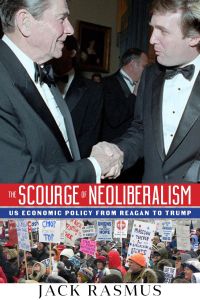
3 For this writer’s analysis of Neoliberal economic policy, the restructuring of late Capitalism under Neoliberalism, and its function restoring American hegemony over its domestic working class, as well as over US capitalist competitors, see Jack Rasmus, The Scourge of Neoliberalism: US Economic Policy from Reagan to Trump, Clarity Press, 2020.

4 US multinational corporations that offshored US union manufacturing jobs directly added to the work day in yet another way: workers they employed in their offshored operations typically worked ten- and twelve-hour work days and 6 days a week. Capitalists thus raised the average work day in the US indirectly as well as directly offshore.

5 This trend abated somewhat in the Covid-post Covid period in certain industries like Tech and professional business jobs. However, data is still unclear whether these professionals end up working more evenings and weekends.

6 The Tech surge associated with Internet & networking led to over-investment and the ‘Dot.com’ bust and recession of 2001 that began in the tech sector but soon spilled over to manufacturing and then, lastly, the services sector.

7 https://voxeu.org/article/link-between-us-pay-and-productivity

8 https://www.epi.org/productivity-pay-gap/, Economic Policy Institute, August 2021.

9 Wages are adjusted for inflation and seasonality in the Economic Policy Institute analysis.

10 https://www.epi.org/publication/swa-wages-2019/, Figure C, Change in Real Hourly Wages by Percentiles, State of Working America Wages, Economic Policy Institute, February 2020.

11 US Dept. of Labor, Bureau of Labor Statistics, Employment Situation Report, Table B-1, January 2020,

12 It is probably accurate to assume, as Economic Policy Institute economists do, that a good part of the manufacturing jobs lost since 2000 were also lost as a consequence of free trade agreements negotiated by the US. Most trade-related job losses were due to the NAFTA (US-Mexico-Canada) trade deal, plus another group of lost jobs due to US corporations’ offshoring of jobs to China and Asia in the first decade of the 21st century.

13 Assuming all jobs were full time, which means on average 2080 hours worked per year. Of course, not all hours were immediately reduced by 12.4B in the first year, 2000, but undoubtedly ramped up over time.

14 In Vol. 1 Marx assumes, for reasons of exposition, that value (core price) and (market) price are equal in the long run. In the long run, therefore, wage equaled Socially Necessary Labor Time equaled Labor Power equaled Wage. All in the long run of course which is what Vol. 1 is all about.

15 Marx, Capital, Vol. 3, International Publishers, 1967p. 609.

16 Marx, Capital, Vol. 3, p. 392.

17 New York Federal Reserve Bank, ‘Household Debt & Credit Report’, Q32021, November 2021. The deb ranges from $10.67 for mortgages at an interest rate ranging from 3% to 10% at one end to nearly $1T in credit card debt averaging 16%. 54% of all US households have credit card debt averaging $5,500 per person, for which they’ll pay more than $6000 in interest. That more than 100% interest charge is Marx’s ‘great swindle’ reference. That $6,000 amounts to a claim on future wages in the form of interest payments.

18 Paul Sweezy, ‘Some Problems in the Theory of Capital Accumulation’, Monthly Review, May 1974, pp 38-55. As Sweezy recognized, industry characteristics influence the degree of exploitation; in the case of monopoly the greater the industry concentration, the capital-labor ratio the quality and productivity of the fixed capital stock, etc., the greater the magnitude and intensity of exploitation on average.

19 Kim Bobo, Wage Theft in America, The New Press, 2011.

20 Jack Rasmus, The War at Home: The Corporate Offensive from Ronald Reagan to George W. Bush, Kyklos Productions, 2006, pp. 169 & 164.

21 17% of minimum wage workers in the USA are currently ‘sub-minimum’ restaurant workers, especially waitpersons and women as single head of household. In America, sub-minimum (less than $7.25) wages can be paid not only to tipped restaurant workers, but to disabled workers, and teenagers. Employers simply mis-classify many workers as such in order to pay them below the federal minimum.

22 In the latest development in 2020, their proposals were to raise the minimum wage to start receiving benefits from current 67 to as high as 70 or 72.

23 This writer has estimated that the capitalist State since 2000 has cut taxes by at least $15 trillion, at least 80% of which has accrued to corporations, investors, and wealthiest households. For the calculations see Dr. Jack Rasmus, “The Trump $4.6 Trillion Tax Cut—Who Pays?”, Counterpunch, November 13, 2017, which includes the estimated $4.6 trillion pending in Trump tax cuts starting 2018.

24 For the cumulative more than $12 trillion in buybacks and dividends since 2009, see S&P Dow Jones Indices, Quarterly S&P 500 totals ($bn) chart, published in Financial Times, July 16, 2019, p. 11 and online, August 1, 2020

25 Yet another way in which to envision secondary exploitation – albeit difficult to quantify given the absence of a direct market price – is unpaid household production and services labor.  In many cases, unpaid household labor may be assumed to enable the realization (sale) of value for goods produced by other direct labor in production for the market.  Child care services are but one prime example. The prevailing average price for market provided child care services might be assumed to represent the price for unpaid family provided household child care services. A methodology would then be necessary to estimate how much of that average price is ‘clawed back’ to capitalists who do not pay for child care benefits for their directly employed labor.

Dr. Jack Rasmus is the author of The Scourge of Neoliberalism: US Economic Policy from Reagan to Trump, Clarity Press, 2020; The Viral Economy & Its Aftermath, Lexington Books, 2023; and other books. He has also written several stage plays. He hosts the weekly radio show, Alternative Visions, out of New York on the Progressive Radio Network and teaches economics at St. Marys College in Moraga, CA. He was formerly a corporate economist/market analyst and, before that, was a local union president and organizer.  He may be contacted at: rasmus@kyklos.com. Copyright 2024, Jack Rasmus.

Trump’s proposals to radically transform much of US economic and social policy are being rapidly rolled out during the first week of his administration. How much he succeeds or fails in that transformation will depend on a number of factors. High on the list of such factors is the residue of conditions and policies leftover by the Biden administration—i.e. the legacies of the Biden years. Those legacies will play an important role influencing, and perhaps even determining, how Trump may fare in implementing his plans.  So what are the legacy policies and conditions?

The most obvious economic legacy Biden leaves behind is the overhang of the worst inflation since 1980-81. Both a chronic high rate of inflation as well as a general price level that has risen at least 30%-40% over the four years of Biden’s term, when accurately estimated. Inflation has not been tamed and is now rising further—on a base level and rate already too high.

A second economic legacy—a consequence of the above—is that most US households’ real weekly earnings actually declined the past four years. Like the legacy of chronic inflation, that too promises to worsen in the very near future.

Biden’s third economic legacy is that despite a massive fiscal stimulus of $3.6 trillion during his first two years in office, in the second two years the US GDP economic growth rate has been a tepid average annual rise of 2%-2.5%. Thus a mountain of fiscal stimulus has produced a molehill of real economy recovery. More business-investor tax cuts by Trump will not change the tepid US economic growth of the Biden years—just as similar cuts in 2018 by Trump failed to do.

There was no molehill recovery, however, for financial asset wealth accumulation by wealthy investors and billionaires under Biden. In contrast to the anemic real economic growth legacy during his term, Biden’s $3.6 trillion fiscal stimulus of 2021-22 produced a record surge in 2023-24 in financial asset wealth accumulation and the creation of a record number of US billionaires. Income and wealth inequality in America accelerated. It will further under Trump, now on a base of an already record level.

A fifth economic legacy results from all the preceding four: during his four year term, no less than $7.65 trillion in cumulative US budget deficits also defines Biden’s economic legacy. As a consequence of the $7.65 trillion in budget deficits, the US national debt under Biden surged from $26.9 trillion in January 2021 to $36.2 trillion at year end 2024. That in turn resulted in annual interest payments to bondholders of $.95 trillion in 2024 alone.

A sixth economic legacy Biden leaves the US economy is a chronic and rising trade deficit of approximately $1 trillion annually.

These are all ‘legacies’, not just failed policies, since their effects will continue to be felt for years to come—by the US economy in general and especially by its middle and working class households.

But these economic legacies are not the entire story. There are more political legacies Biden leaves his successors. Here are another six political legacies worth noting as well:

In the realm of domestic politics there are at least three: first, during the Biden years, American democracy continued to atrophy and do so in a number of new ways; second, a national crisis in health care services affordability deepened; third, Biden leaves a strategically weakened Democrat Party an ineffective elections contender that will fail to recover for perhaps another decade.

It is in the sphere of geo-political action and US foreign policy, however, that Biden’s most enduring political legacies will leave an indelible imprint on the USA for years to come. These include the costly, lost US proxy war in Ukraine that has irreparably damaged US European allies’ economies; his unconditional support for genocide in Israel and GAZA that has undermined US influence throughout the middle east; and his policies of economic sanctions targeting Russia and China that have accelerated the expansion of the BRICS countries and their challenge to a US global economic hegemony that has prevailed for nearly a half century.

Let’s examine each critical legacy in more detail.

1. Chronic Inflation Rate & High Price Level 

As Biden leaves office it is clear that inflation has not been tamed and in fact has recently begun to rise again, leaving a base level and rate rise upon which inflation will almost certainly rise further in 2025 and beyond.

The inflation beast that arose in 2020-21 was tamed only in part and temporarily on his watch and has begun spreading its claws once more.

Inflation surged in 2021-22 to a 9% high as estimated by the US government’s official consumer price index (see BLS monthly CPI Reports, September 2021 thru December 2024). That rate of increase abated in 2023-24 as global energy costs and commodity prices slowed their rate of increase. However, in closing months of 2024 energy and goods prices in general have begun drifting upward once again. The inflation beast that arose in 2020-21 was tamed only in part and temporarily on his watch and has begun spreading its claws once more.

The official US estimate of the rise in the price level for consumers since 2020 is around 24% But that number obfuscates the far more severe impact on median and other working class households’ take home pay and disposable income. Prices for many basic food staples like bread, milk, eggs, chicken, etc. have risen 30%-40% since 2020. In 2024 a Wall St. Journal survey estimated the most often purchased grocery prices had risen 35% since 2020.

The true cost of shelter (home prices, rents) has risen even more. The prices for homes nation-wide are up 39% according to the Shiller home price index. But households’ mortgage costs—i.e. what households actually pay out of their monthly budgets— are up 113%! US official price indexes like the CPI do not include mortgage interest rates. Nor any interest rate hikes paid by households for that matter.  Mortgage inflation due to rising interest costs have thus risen far faster and higher at 113% than the 39% for the price of buying a house.

The inflation for shelter (houses and rents & related costs) is even higher if home insurance costs, home repairs, and other fees that define ‘shelter’ in government statistics are included. Rents for roughly 50 million renting households typically follow home prices up and in 2023-24 rents have often made up half of the monthly rise in services price inflation in the CPI. Other services prices have also risen 30% and more—i.e. for auto, home and medical insurance; for auto repairs; and for other key and often purchased services like travel or entertainment.

Interest rates in the Biden years accelerated after March 2022 and have remained chronically high ever since, severely impacting households’ budgets: for example, interest rates on credit cards rose from 16% to 24%, bank auto loans roughly doubled to 9% on average for car purchases, while student loans surged to 6.8% and more.

When interest inflation is properly accounted for—along with increases in local government property and other taxes, fees, and other charges not considered by the government’s Consumer Price Index—the true inflation experienced by US households since January 2021 is easily 35%-40% and therefore much higher than the official CPI number of 24%.

This 35%-40% is the price level legacy left by the Biden administration—the level from which the rate of inflation for goods and services and interest rates across the board promise to rise further in 2025 under Trump as he implements tariffs and implements other policy changes that will raise prices further.

The consequence of this inflation legacy is another Biden legacy: still further declining real take home pay for tens of millions of middle class and below households.

2. US Households’ Declining Real Earnings

While the mainstream media and politicians like to cherry pick wage data to try to show wages have risen under Biden they typically cite ‘wages’ that include salaries, bonuses, and other pay to CEOs, managers and the self employed; report for only full time employed workers; ignore seasonality adjustments; or cite wages unadjusted for inflation.

According to the Federal Reserve bank’s ‘FRED’ database, Median Usual Weekly Earnings adjusted for inflation actually declined during the Biden years. After rising slightly under Obama and then from $351 per week to $378 per week during Trump’s first term, during the Biden years real median weekly earnings actually declined from $378 to $373 per week.

This combination of rising prices, chronically high interest rates, and declining real earnings during Biden’s term is further reflected in the balance sheets of US households the last four years: Household balance sheets (difference between assets and debt) serve as a kind of aggregate indicator on how well those working for wages and salaries have been doing. And per the Federal Reserve’s Financial Accounts of the US, at the close of 2020 US households’ assets totaled $859 billion, and rose to only $883 billion by the second quarter of 2024. In contrast, US households’ total liabilities (i.e. debt from excess use of credit) rose from $17.1 trillion to $20.7 trillion. The latter number reflects the surging load of debt households took on during the Biden years.

3. Weak GDP Growth Despite $3.6 Trillion Stimulus

Gross Domestic Product (GDP)—the measure of how much the real economy grew—was not all that impressive, given the huge fiscal stimulus Biden introduced into the economy during his four year term. For example, his March 2021 ‘American Relief Plan’ designed to provide support to the general economy as it tried to reopen in 2021-22 from the 2020 shutdown amounted to $1.9 trillion in government spending and tax cuts.

However, that $1.9 trillion 2021 stimulus failed to quickly boost the US economy and GDP once the economy had fully reopened in 2022. The reopening in summer and late 2021 was followed by what’s called a technical recession in the first six months of 2022 when the US economy actually contracted for two consecutive quarters—or what some might legitimately call a double dip recession, despite the virtual blackout of the term at the time by the mainstream media and politicians.

As the recession unfolded in the first half of 2022, Biden’s response was to shift what remained of spending on households left over from the $1.9 trillion American Relief Plan of March 2021 (which by the way was intended to last only six months in 2021) and to transfer those funds to subsidize business investment instead of continuing households’ Covid relief.

To that unspent Covid funding was added additional funds by Congress as it passed Biden’s three business investment subsidy bills of 2022: the Infrastructure Act, the Chip & Modernization Act and the misnamed Inflation Reduction Act that subsidized energy companies, alternative and fossil fuels. Those bills amounted to another $1.7 trillion in fiscal spending and tax cuts.

Biden’s $1.9 trillion American Relief Act plus the subsequent three business investment subsidy Acts amounted to a combined $3.6 trillion fiscal stimulus in 2021-22.

Biden thus leaves the legacy of a failure to correct this apparent crisis of US traditional fiscal-monetary policies’ failure to stimulate real economic growth—or conversely, one might add, to significantly curb inflation long term as well.

The $3.6 trillion mountain of fiscal stimulus produced a molehill of real GDP growth! GDP recovered in the second half of 2022 after its first half recession, but recorded a meager 1.9% growth rate for 2022. That was followed in 2023 and 2024 with still tepid GDP growth of 2.5% and 2.3% (the latter estimated by the CBO), respectively. The $3.6 trillion total stimulus, in other words, did not result in GDP growth in 2022-24 beyond the typical long run average GDP gain for the US economy or around 2-2.5%. Where did the stimulus go if it didn’t move the dial on the growth of the economy beyond its historical average?

The stimulus picture is even more unimpressive when one adds the 2020 additional fiscal stimulus of $3.1 trillion provided by the 2020 Cares Act in March 2020 and the Consolidated Act passed in December of 2020. That’s $6.7 trillion of combined fiscal stimulus… producing only annual GDP growth 2022-24 averaging barely 2.3% a year!

The historic low GDP growth of the economy under Biden was even weaker if one adds to the $3.6 trillion fiscal stimulus the Federal Reserve bank’s additional monetary stimulus of $4 trillion more in 2020-2022.

In short, a more than $10 trillion fiscal-monetary stimulus in 2020-2022 produced nothing more than the historically average GDP growth rate during the last three years of Biden’s administration during which the US economy had fully reopened!

This fact strongly suggests that US fiscal-monetary policies are barely working any more as instruments of economic stabilization. Biden thus leaves the legacy of a failure to correct this apparent crisis of US traditional fiscal-monetary policies’ failure to stimulate real economic growth—or conversely, one might add, to significantly curb inflation long term as well. It’s a legacy Trump inherits in turn.

4. Record Asset Wealth Accumulation & Billionaire Creation

The failure to stimulate the real US economy under Biden contrasts sharply, however, with the success of those same policies in stimulating financial asset markets in the US. After a contraction in 2020 due to the Covid shutdown and a weak recovery in 2021-22, US financial markets surged to record levels in 2023-24. US Dow, S&P 500 and Nasdaq markets recorded gains of 25-29% and more in each of the last two years.  It’s not by accident the US economy created a record number of new billionaires under Biden, whose wealth is largely associated with rising financial asset prices from stocks, bonds, derivatives, and other. Record asset wealth surge is thus also a legacy of Biden’s regime.

The combination of record asset wealth amidst tepid real GDP growth, chronic inflation, and declining real earnings for a majority of Americans suggests the failure of the massive $10.7 trillion fiscal-monetary stimulus of 2020-22 might be due to the mis-allocation of that stimulus to financial markets at the expense of real growth. That’s for another analysis; however, at minimum, it’s a ‘smoking gun’.

5. US Budget Deficits & National Debt

The record $10+ trillion Biden era stimulus was diverted to asset markets nonetheless contributed in part to the record surge in the US budget deficits under Biden, and in turn to the accelerating US National Debt (which represents cumulative annual budget deficits).

Budget deficits are a function of both insufficient tax revenue collection, on the one hand, and accelerating government spending on the other.  Insufficient tax revenues are due in turn to weak economic growth and/or tax cuts (or fraud); while spending excesses are associated mostly with discretionary spending on Defense, Wars, social programs, and rising interest payments on the national debt. For a quarter century at least, the US has been exacerbating all the above.

The US Congress and presidents have together cut taxes by at least $17 trillion since 2001. Slow economic growth in the wake of the 2008-09 crash and the Covid 2020-21 shutdown also negatively impact tax revenues, which historically account for 60% of budget shortfalls. The other 40% is due to excess spending which, in turn, is comprised of defense and supplemental war spending, interest payments on the debt, and social programs including the bailouts of the economy in 2008-10 and 2020-22. Defense & War spending since 2001 for US middle east and terrorist wars has amounted to, at minimum, another $8 trillion. Bailouts account for another roughly $5 trillion.  That’s $30 trillion. Rising interest payments on the national debt, especially since March 2022, account for most of the rest of the current national debt.

Under Biden record annual budget deficits ranged from $2.7 trillion in 2021 to $1.8 trillion in 2024 for a total $7.65 trillion cumulative deficits over the past four years. From a level of $5.5 trillion in 2000, the National Debt in turn is now $36.2 trillion—having risen from$26.9 trillion at the end of 2020 just before Biden took office to the more than $36 trillion by today.

The interest payment in 2024 to bondholders who purchased US Treasuries to fund Biden’s budget deficits is now, per latest estimates, at $.95 trillion. Interest payments to bondholders thus now costs more than funding the Pentagon each year, approximately $885 billion per latest estimates. Moreover, the CBO (Congressional Budget Office) estimates that by 2034 the National Debt will rise, if continues at its current pace, to $56 trillion with annual interest payments of $1.7 trillion to bondholders by 2034. 

With accumulated annual budget deficits over his four year term of $7.65 trillion during his term, Biden has had the highest budget deficits and has contributed more to the national debt than any prior president.

This legacy of deficits and debt means in 2025 the US Congress will almost certainly initiate a major austerity spending policy cutting social and public spending programs, foreign aid, offshore supplemental spending, layoff 100,000 federal workers, and lesser categories of spending cuts by $200 billion or more per year.

While the problem of rising budget deficits and national debt reaches back to at least 2000, the Biden legacy is its policies have severely exacerbated the longer term trend. It provided useful political ammunition for Trump and his corporate backers to slash public spending and social programs as never before.

6. Trade Deficit & Economic-Tech War with China 

One of the economic hallmarks of the Biden administration has been to continue the trade and tech war with China that the prior Trump administration initiated in early 2018. Biden embraced and continued Trump’s tariffs as instrument of economic coercion. He then went several steps further beyond just a tariff strategy. Targeting primarily China, he launched legal actions against China companies, sought to drive them from US capital markets and prohibit their joint ventures in the US economy, pressured allies to raise tariffs and to embargo Chinese imports to their economies as well, and blocked the export of certain tech & business goods to China. Under Biden, Trump’s former tariff war with China morphed into a virtual US economic war against China.

This policy forced China to pursue access to other markets abroad and to accelerate its own internal tech development. Most notably China began penetrating markets and resource access in Africa and South America.

The record of US trade relations with most of the rest of the world was no less ineffective. The US trade deficit accelerated with rising imports into the US and slowing US exports to the rest of the world. According to the Trading Economics research site, the US trade deficit in goods alone is now running at -$1.2 trillion a year in 2024 and the overall deficit in goods and services nearly $1 trillion.

Biden leaves a legacy for the Trump administration that will make Trump’s return to raise tariffs even higher more difficult to succeed. The record trade deficit is likely an important motivator behind Trump’s policy to ‘drill baby drill’ to increase US oil and gas production in order to export to Europe to offset some of the trade deficit due to rising goods imports to the US. In other words, the Biden trade deficit legacy will be used by Trump to justify more oil and gas drilling and the further environmental issues in the US that will result.

7. Decline of Democracy in America

The Biden regime added new dimensions to the decline of American Democracy—a decline that has been occurring since at least the 1990s. These dimensions have now become embedded in the US electoral and political system. Among the changes on Biden’s watch:

The Democrat party’s adoption of a policy of systematic ballot denialism. This has included marginalizing of challengers to the Democrat party’s DNC leadership’s practice of pre-selecting its presidential candidates in lieu of an open, competitive primary system. The practice began in earnest in 2016, became even more evident with the South Carolina primary in 2020, and then deepened in the 2024 party primary cycle, as challengers such as RFkjr, Tulsi Gabbard, Maryann Williamson and others were systematically excluded from an already pre-determined primary outcome. Ballot denialism was also adopted as a policy by the DNC targeting outside third party challengers like the Greens and other 3rd parties.

Another contribution to the decline of intra-party and electoral democracy under Biden was a deepening of the influence of wealthy big donors within the party—reflected in part by those donors’ $2.9B contributions in just a few months in summer 2024; and likely more than $5B in the 2024 election cycle. The deepening of wealthy donors influence within the Democrat party extended to foreign entities as well. The Israeli political action committee, AIPAC, was allowed and encouraged by the DNC to interfere in the party’s primaries, as well as the general elections, by contributing hundreds of millions of dollars to select pro-Israel party candidates.

Further indicators of democracy decline on Biden’s watch was the cynical manipulation of the US legal system (i.e. lawfare) against challengers; a policy of enabling non-citizen immigrants to vote in elections; continuing support for the gerrymandering of seats in the US House of Representatives; and an extreme abuse of the powers of the presidential pardon system as was evident in Biden’s last actions as president—including the pre-emptive pardoning of family members and himself—that has punctured the popular myth that in America no one is above the law. All these changes are now embedded in the party system in general.

The decline of democracy in America has occurred not only within the electoral system and intra-political party practices and norms. The last quarter century has witnessed the decline of the US electoral democracy along multiple legal fronts, enabled by the US Supreme Court. From the Court’s Bush v. Gore decision in 2000 when it in effect selected the president, to its 2010 Citizens United decision which ruled spending money in elections was an act of ‘free speech’ for corporations and rich donors (including foreign), to decisions legitimizing the extreme gerrymandering that has resulted in no more than 40 seats in the US House of Representatives ever being competitive, to approving the spying, surveillance and denial of 1st amendment rights as result of the Patriot and subsequent National Defense Acts.

Among the Biden administration’s political legacies is how it presided over the atrophy of democracy within the Democrat party’s primary system, how it allowed rich donors deeper influence and control of its DNC, and how it introduced questionable anti-democracy practices like ballot denialism and non-citizen voting among its election practices.

8. Increasingly Unaffordable US Health Care

The failure to stem and reverse the increasingly unaffordable healthcare system in the USA is another political legacy of the Biden years. Much is made by the party elite and its associated mainstream media how the Obama Affordable Care Act has succeeded in providing affordable health insurance. But facts reveal it has not.

The average cost of private health insurance for a typical family of four is now more than $25,000 per year, according to Kaiser Family research. And that’s just monthly premiums. It doesn’t count additional copays or deductibles now averaging $1 to $5k per year. Nor do those costs include dental, hearing or vision services. Hearing aids cost $4-$5k and the cost of a single tooth implant is $10,000 or more. Then there’s the ever-accelerating cost of prescription drugs, often hundreds of dollars per pill (costing less than $10 if purchased from the same company in Canada or abroad).  A consequence has been millions of Americans are forced to forego use of health care services even if they are formally covered by bare bones insurance with unaffordable deductibles and copays.

The Biden legacy is to have allowed the crisis in affordability to continue and worsen, citing the Affordable Care Act which is financed in large party by $900 billion a year in government subsidies to Health Insurance companies. Biden introduced a few band-aid solutions, such as limiting the cost of insulin drug costs to $35/month (but just for Medicare enrollees). The vast majority of the population of millions of diabetes patients must still contend with health insurance insulin coverage denial. Another Biden token solution to escalating prescription drug prices was to limit the cost of just six of the most often purchased drugs—which will not to take effect until 2026, however.

Also left virtually unaddressed during the Biden years has been the triple Social-Healthcare crises: the escalating national suicide rate (now >48,000/yr), chronic gun deaths (averaging 45,000/yr since 2021), and accelerating drug-related deaths from opioids. At 70,000 in 2019 US drug related deaths surged to more than 100,000 in every year of the Biden administration.

The Biden legacy to allow the continuation of the Health Care affordability crisis in America. Like Medieval physician practices of centuries ago, the unaffordable health system is ‘bleeding’ American dry. And little to nothing has also been done to reduce the epidemic of deaths from suicides and addiction. The Biden legacy is to have looked away while the patient slowly succumbs leaving the health of the nation much worse off as he leaves office.

9. Crisis Within the Democratic Party

Biden leaves his own Democrat Party in political shambles, from which it is uncertain it may recover; or if it does, not soon. Insisting on running for re-election in 2024, Biden reversed a pledge made in 2020 he would not do so. His declining mental capacities revealed in the first presidential debate in the summer of 2024 for all to see, set in motion a disastrous chain of events where party elites—led by Obama and Pelosi—removed him as presidential candidate after just months earlier maneuvering to nominate him as such. The oligarchic nature of the party was thus revealed to all.  That political oligarchy then selected an alternative weak candidate in VP Harris who publicly vowed to continue the policies of the Biden administration, thus ensuring her defeat in the general election. At the core of those policies was a strategy of Identity Politics which had increasingly defined the party since 2016. Fundamental economic issues for voters were largely ignored in the 2024 election. The Democrat party now drifts, essentially leadership and without a strategy and proposals that appeal to the voters. That drift promises to continue for years to come, during which its Republican opponent may well deepen its coalition and control of government for several election cycles to come. Biden thus leaves a Democrat party deeply and perhaps mortally wounded—thereby leaving Trump and the Republicans to run roughshod over the political system with their own anti-democracy plans in turn.

10. Costly Lost Proxy War in Ukraine 

When Biden quickly ‘cleared the deck’ with a chaotic withdrawal from Afghanistan in August 2021 it was to focus on provoking a proxy war in Ukraine. That decision has proved the most disastrous US foreign policy decision since president Lyndon Johnson’s decision in 1965 to send 500,000 US troops to Vietnam.

Nearly all military analysts now admit the proxy war in Ukraine is lost. All that remains is how the US extricates itself. The political and economic fallout from Biden’s failed military adventure in Ukraine will be felt for years yet to come: Europe has been destabilized economically and politically as result; Russia has been permanently driven into long term military alliances with China, No. Korea and Iran; US weapons inventories have been seriously depleted; Russia has war mobilized its economy and accelerated its advanced weapons development faster than the US; global trade has been restructured to the disadvantage of the USA; US ability to compete with China has been set back for years or perhaps longer; US budget deficits have been raised by at least $250 billion in US aid to Ukraine the past three years. And that’s just a short list. It’s also a Biden failed foreign policy legacy.

11. Sanctions, Rise of the BRICS & Decline of US Hegemony 

History will likely show that Biden has done more to undermine US global economic hegemony and political influence than Russian and China presidents Putin and Xi together.

The Biden sanctions on both countries, especially Russia, have been counterproductive, impacting European allies negatively more than Russia or China. More important, Biden sanctions have likely accelerated the shift of the economies of the Global South toward the BRICS, the members of which have expanded significantly since 2022.

With the BRICS’ expansion has begun an inevitable shift in the global economy: from the central, dominant role of the US dollar as a global transaction and reserve currency to alternative currencies; a move by many economies away from the US bank-managed SWIFT International Payments system; and plans by the BRICS to create an institutional alternative to the IMF.

Biden thus leaves a most difficult legacy to Trump and presidents thereafter to address how to counter and compete with the BRICS and the emergence of an alternative global financial structure. History will therefore show Biden accelerated the decline of the US global empire by weaponizing the US dollar and escalating sanctions policies.

12. Support for Genocide in GAZA

Biden’s regime will likely mark a clear turning point in the history of US global dominance and the end to the US unipolar world that existed since the collapse of the Soviet Union in December 1991.

A close second to Biden foreign policy debacles in the proxy war in Ukraine and mishandling of sanctions and the US dollar is the Biden policies supporting genocide by Israel in GAZA. The US has become inextricably associated in world opinion with allowing the genocide with its unlimited military funding support to Israel—currently amounting to around $50 billion since October 2023—and US unlimited shipments of US bombs and advanced weaponry to Israel. The result has been perhaps 500,000 Palestinians killed, maimed and homeless and the virtual loss of US political influence and soft power throughout most of the Arab and Muslim world.

The legacy of Biden policy in support of genocide will mean the continued diminishment of US political influence in the region, as well as US moral influence throughout the world.

Biden foreign policy legacies will haunt US attempts to re-establish US influence and authority in the world. Biden’s regime will likely mark a clear turning point in the history of US global dominance and the end to the US unipolar world that existed since the collapse of the Soviet Union in December 1991.

Biden’s departure on January 20, 2025 also closes the book in the latest period in the history of Neoliberalism in the USA that has defined US policy and its evolution from the late 1970s to the present. Launched initially in the closing years of the Jimmy Carter presidency around 1978, Neoliberal economic and political policies expanded and deepened throughout the 1980s and 1990s, reaching a kind of apogee of effectiveness around 2005-07. Neoliberal policy then hit a wall with the financial crash and great recession of 2008-09. Thereafter such policies recovered only partially under Obama and Trump 2017-20 before hitting another wall with the Covid shutdown and recession of 2020-21.

Throughout Neoliberalism’s ‘weak restoration period’ of 2010-20, the internal contradictions within the Neoliberal policy mix have intensified. Those internal contradictions have deepened with the failed policies of the Biden regime.

Thus the beginning of the end of the Neoliberal restructuring of America that began in the late 1970s-early 1980s—and that has continued ever since—may well be recognized in years to come as the most notable historic legacy of the Biden years.

About the Author

Jack Rasmus is author of the recently published book, ‘The Scourge of Neoliberalism: US Economic Policy from Reagan to Trump’, Clarity Press, 2020. He publishes at Predicting the Global Economic Crisis

Listen to my January 10, 2025 Alternative Visions radio show and my predictions for 2025 political events, both US and global. Go to:

Watch my Jan. 5, 2025 Youtube interview with Garland Nixon discussing the key geopolitical and economic events as US and global economies enter 2025. Topics include: how USA is making Europe its economic dependency, why EU will implode next decade, what’s behind Zelensky’s cutoff of Russian pipeline gas to Europe, why is Trump talking about taking over Greenland and Panama canal, the future of BRICS, US dollar, US ‘twin deficits’, coming massive US austerity cuts to social programs in 2025, why USA is now ‘circling the wagons’ of its core empire. Also discussed are the real political & economic legacies of Jimmy Carter and his presidency as the anteroom between the crises of the 1970s decade and the Neoliberal capitalist restructuring in the 1980s to the present.

For my predictions for the US and global economy for the year 2025 ahead, listen to my January 3 Alternative Visions radio show at:

https://alternativevisions.podbean.com/e/alternative-visions-predictions-2025-us-global-economy/

(Listen to the January 10 Alternative Visions show for predictions for US & Global politics)

2024 Year in Review

Listen to my December 27, 2024 Alternative Visions radio show’s annual review of the critical events–economic & political, USA and global–for the past year. (Check out this coming Friday, January 3, 2025 show for my predictions for 2025). GO TO:

https://alternativevisions.podbean.com/e/alternative-visions-2024-year-in-review-show/

SHOW ANNOUNCEMENT

Today’s show is the annual year end summary of the more important events and developments for 2024 for the economy and politic: A review of the US economy inflation trends, Fed rate policies, US goods sector recession, USA’s runaway budget deficit and national debt, Longshore union negotiations, Artificial Intelligence & Tech trends, pending 2025 Austerity social program cuts & Musk’s DOGE, Biden sanctions on Russia and China, BRICS expansion, the state of Europe & China economies, and the emerging global currency instability as prices and US $ rise. Political review includes the US election of 2024, Trump’s victory, Biden’s coup & Democrat party confusion, and globally the War on the ground in Ukraine, Israel wars in Lebanon-Iran-Yemen, and the collapse of Syria and its consequences. (NEXT WEEK: Annual economic and political predictions for 2025 and review of last year’s predictions for 2024)

Catch up on year end events in my latest December Alternative Vision radio shows on the US and global economy and global changes in the Ukraine and Syria.

Key Economics Events of 2024: December 20, 2024 Show

https://alternativevisions.podbean.com/e/alternative-visions-key-economic-developments-year-end-2024/

Today’s show discusses the key economic events of recent weeks and their relevance to economic policy in 2025. Why did the debt-ceiling deal collapse and then pass last week. What does it mean. Trump’s fiscal strategy taking shape: tariffs, tax cuts, and austerity social spending cuts coming. Musk-Swarmy’s DOGE. Why it won’t resolve the chronic $1 trillion plus annual budget deficits, rising national debt, and $ trillion annual payments to rich bondholders. Neoliberalism fiscal contradictions and crisis will continue. What’s Musk’s DOGE plans? Why the Fed cut interest rates but admitted inflation is rising into 2025. Why inflation will continue to rise. As rates rise will a rising dollar in turn precipitate a global currency war? (Next week show: review of key events of 2024 and my predictions for 2024 made December 2023 last year)

The Empire Strikes Back: December 13, 2024 Show

https://alternativevisions.podbean.com/e/alternative-visions-the-empire-strikes-back/

As follow up to last week’s show Ukraine war is center topic. But in past week pro-NATO forces opened up new ‘fronts’ well beyond the conflict. Not by accident rebel forces, coordinating with Turkish, Israeli and US forces accelerating an attack in Syria opening a new front Russia must commit forces to. Another front is Georgia as CIA-US NGO forces continue street demonstrations to try to overthrow that country’s elected government, in a ‘color revolution’ effort much like Ukraine 2014. Yet a third front is the events in So. Korea where the pro-US president attempted to declare martial law, reversed by the Parliament, but supported by the Korean and US occupation military. The show explains how all three events are best understood as events related to US empire counters to Russia-China. Trump’s latest tariff moves against China and BRICS also part of the counter strategy. Show concludes with analysis of Trump’s several anti-war initial nominees being rejected as US neocons & Biden admin. buy time to restore aid & weapons to Ukraine

For my discussion of ’14 Reasons Why Prices Are Higher Than the CPI Reports’, listen to my Friday, November 14, hour long Alternative Visions radio show on how the CPI under-reports inflation (with additional comments on Trump’s cabinet appointments and Russia’s two new offensives in Ukraine).

To Listen Go To:

https://alternativevisions.podbean.com/e/alternative-visions-14-reasons-why-prices-are-higher-than-the-cpi-reports/

For those who prefer to hear instead of read, listen to my Alternative Visions radio show last friday, November 8, for my analysis ‘Why Trump Won-And Some Consequences’. Supplements the print article (more ad-libbing as well for what it’s worth).

GO TO: https://alternativevisions.podbean.com/e/alternative-visions-why-trump-won%e2%80%94and-some-consequences/

Here’s my latest, and first post-election, analysis of the recent Trump and Republican victory this past week. And some of what may be soon coming. Jack Rasmus, copyright 2024

“It’s now more than 48 hours after the election, the dust has settled, and the results are in except for a late counting in the state of Arizona–the outcome of which won’t affect the results of the election. Trump has won an undeniable victory, both in the electoral college and in the popular vote.

Political pundits, pollsters, and over-paid political strategists who seem to get it wrong repeatedly every election cycle are now concocting all manner of explanations and mightily spinning their excuses. Some say Harris lost because the Democrats’ ‘ground game’—i.e. get out the vote efforts—failed; or that the $1 billion in campaign contributions she received during the summer was ill spent; or her TV ads were poorly focused; or her ‘politics of joy’ theme grated on the mood of voters who were anything but happy. But all these tactical explanations of the Democrats’ devastating defeat—which was across the board and not just for Harris—are obviously irrelevant.

The pundits and political strategists who forecast the election wrong are now failing to understand its results as well. Here are the more important takeaways from the election:

A Popular Vote Anomaly?

The electoral college result thus far, with Arizona’s 11 votes pending, is 301 for Trump and 226 for Harris (270 needed to win). Trump also won the popular vote with 73.4 million vs. 69.1 million for Harris—as of the popular vote count late November 8.

Perhaps the most glaring indicator of what went wrong for Harris, however, is the big shift in the popular vote away from Democrats in 2024. In 2020 the Democrats polled 81 million votes in the presidential race. In 2024 so far only 69.1 million. That’s 12 million fewer votes for Democrats! How to explain that fact?

Did all the 12 million cross over to Trump? Apparently not. Trump’s 2024 popular vote was not that much different from 2020. He received 74 million in 2020 and in 2024 so far about 73.4 million.

These contrasting numbers raise two interesting questions:

Where did Harris’s missing 12 million popular votes go, if not to Trump? The corollary question also arises: did Biden and the Democrats really receive 81 million votes in 2020?
Whichever the explanation, the mainstream legacy media (CNN, MSNBC, NY Times, WAPO, etc) are conspicuously avoiding any analysis of this missing 12 million or the apparent vote count anomaly.

But one thing is irrefutable in the official vote tally: roughly 13 million fewer turned out to vote for either candidate in 2024 and 12 million were Democrat voters. The only logical conclusion therefore is that 12 million Democrrat voters apparently stayed home and did not vote. So why?

Whatever the popular vote, it is irrelevant for US presidential elections. Only the archaic electoral college vote matters. Why the USA keeps that institution when it allows ‘one person one vote’ for all other voting for members of Congress is interesting. Two-thirds of voters have indicated in multiple surveys recently that they want a direct vote for the president and an end to the Electoral College. Why both parties continue with the system says much. Nevertheless it’s a question—like a Florida 2000 election ballot ‘chad’—that will be left hanging for now.

Electoral College Vote Repeat

Trump’s 301 (eventual 312) electoral college votes confirms this writer’s prediction this past summer that the swing states would flip back to 2016 numbers and Trump. 2024 would be a 2016 swing states déjà vu election.

In the 2020 election, Biden’s electoral college vote was 306 to Trump’s 232. In 2016 Trump won 304 electoral college votes to Hillary Clinton’s 227. The winning margins of 304 (2016), then 306 (2020), now 301 (312) in 2024 is not merely coincidental.

The largely similar electoral college counts in 2016, 2020, and 2024 suggests strongly that deeper forces in the US political system created a shift beginning 2016 and have continued ever since.
Trump’s election in 2016 was therefore not the aberration as many Democrats and mainstream media argued in 2020; Biden’s in 2020 was.

Events of the past decade suggests the fallout from the economic crash and crisis of 2008-10 is still having its longer term political impact. Voters’ overwhelming concern with economic issues in 2024 reveal it is still reverberating. In 2024 it was manifested in inflation. In 2020 it was massive Covid job loss. Since 2008 it’s been the steady decline in real income and living standards for tens of millions of American households—amidst the accelerating income and wealth for the 1% or 5% households largely attributable to accelerating financial asset markets and values. As one famous pundit said more than three decades ago: “It’s the economy, stupid!”

One might clarify that: “it’s the lopsided economy, stupid!” Economic conditions have deteriorated much further since the 1990s when that statement was made, especially after the 2008-10 crash and crisis followed by the Covid induced crash. Some political elites apparently never learned the economic lesson.

Throughout this past summer this writer has been predicting Trump would win the electoral college vote by slightly more than 300—by 302 to 236 to be exact. This forecast was based on the assumption he would win all the seven swing states, except for Michigan. In retrospect he has won the latter state as well. (see my piece “November 2024: A Swing States Déjà vu Election?” at the LA Progressive website last week).

Inflation and other economic conditions during the Biden years were firmly established by opinion polls since the start of 2024 as the primary concerns of voters, thereafter strongly confirmed again in the September Gallup poll.

Put in a long term perspective, Trump’s victory over Hillary Clinton in 2016 and her loss of the ‘blue wall’ states in the north can be largely attributed to the weak GDP economic recovery after 2010 and the even weaker related job recovery during the Obama years. GDP grew around only 60% of normal after 2010 when compared to the prior nine US recessions since 1948. More importantly, jobs lost after 2007 due to the 2008-09 crash did not recover to 2007 levels until 2015. It took six years just to get back to pre-recession job levels. Add to this Hillary Clinton’s well known approval of free trade treaties and its offshoring of jobs effect—as well as her strategic error of not even bothering to campaign in the blue wall states—and the result was a predictable 2016 Trump sweep of Wisconsin, Michigan and Pennsylvania and victory. It was still ‘the economy, stupid’.

In 2020 Biden also largely won for economic reasons—specifically the severe recession and job losses of 2020 due to the Covid pandemic economy partial shutdown. Biden swept back the blue wall states and won handily—almost exactly with the same electoral college votes that Trump had won with four years earlier! That stupid old economy had not gone away.

In 2024, the Covid induced mass layoffs in 2020 no longer prevailed but were replaced by another Covid induced economic consequence: inflation which erupted in fall of 2021. Prices for goods started abating by 2023 but inflation in the much more ubiquitous services sector of the US economy remained chronically high throughout 2023 and into early 2024.

Official government statistics estimate the price level rose 24% over the four Biden years but real inflation adjusted take home pay for tens of millions of households was impacted more severely than the statistics or politicians and media suggested during the recent election.

Actual inflation impact on family budgets was more like 30%-35%, especially after considering the sharp rise in interest rates starting March-June 2023 and rise in taxes, neither of which are included in calculations of the government’s price statistics. Households also pay for interest out of their take home pay and family disposable income. Mortgage rates rose 114% under Biden. Credit card average rates rose from 16% to 23% and households carried over record level of that debt monthly. New student loan rates rose from 4% to around 7%. And new auto loans from4% to 9%. And that’s not considering local taxes and fee hikes. Or problems with the methodologies and assumptions in government price calculations that tend to under-estimate actual inflation.
Households and voters knew what the real picture of affordability was the past four years—even if politicians, media, and mainstream economists did not!

This background of the voting outcomes since 2016 and longer term economic causes raises the more immediate question ‘why Harris’ lost in 2024. It certainly wasn’t due to irrelevant tactical explanations as the media and pundits now argue. And while jobs and inflation were the critical, even key, longer term causes determining election outcomes, in themselves they still don’t explain it all.

There were strategic failures for Harris’s defeat’; nor indeed defeat for the Democrat party in general since its losses in November were across the board in both houses of Congress, governorships, and other local elections. In addition, Trump’s strategy targeting disaffected you males, mostly working class and across racial lines, proved effective in turn.

Why Harris & Democrats Lost

Failure to Differentiate from Biden…

High on the list of why Harris lost must be her failure to differentiate her proposals from those of Biden, especially on economic issues. When directly asked in an interview during the campaign what she would change from Biden’s policies she replied: “nothing”. That was perhaps the turning point of sorts in the campaign. Voters weren’t looking for ‘nothing new’. They wanted economic change that directly affected their declining real take home pay that had been slashed by 30%-35% inflation since 2020.

Harris this past week experienced what might be called the ‘Hubert Humphrey’ effect. In 1968, Democrat Lyndon Johnson decided not to run for re-election. His policy for escalating the war in Vietnam, combined with the inflation of the late 1960s, meant it likely would not win. His VP was Humphrey who became the Democrat party presidential candidate that year. But Humphrey would not break with Johnson’s war policy nor did he offer any answer to the rising inflation of the mid 1960s. War and inflation doomed his campaign in 1968, which he lost convincingly to Richard Nixon. Similarly, Harris’s refusal to break from Biden war policies in 2024 or to offer any answer how she’d lower prices for households played a big role in her defeat. Both she and Humphrey were convincingly defeated.

The Hubert Humphrey Effect should consequently be renamed the Humphrey-Harris Effect.

US voters wanted to hear specifics on how the candidates proposed to reverse the decline in their living standards. Harris gave them mostly platitudes. The Democrat party leaders may have removed Biden as their candidate over the summer, replacing him with Harris, but they left his policies intact. Voters understood they were still voting for Biden. Especially Democrat voters as 12 million of them stayed home.

Some traditional Democrat constituencies jumped ship. Election data already show that many more black male voters voted Trump than in prior elections. So too did Hispanic voters in key swing states like Pennsylvania. Even Puerto Rican voters—who the mainstream media hyped would turn on Trump because of some comic at one of his rallies made disparaging remarks about Puerto Ricans—voted Trump in key constituencies. And there were the white suburban women who the Democrats bet would vote Democrat based on the reproductive and women’s rights issues. In key swing states like Pennsylvania it appears they too voted by narrow margins for Trump.

Identity Politics Themes No Longer Resonate….

What all this may mean is economic issues and questions of class trumped identity issues of gender, sexual orientation, and race on which Democrats had based their campaigns in recent years had become of secondary at best importance to voters. Legitimate polls like Gallup were shouting this message all year and especially in latter months of the campaign. Democrat leaders were deaf, however. They apparently believed just changing the face of their candidate and throwing billions of dollars into the race this past summer would ensure re-election. It was another big strategic error.

If Harris failed to differentiate herself from Biden, then the Democrat party leadership kept her largely campaigning on issues of identity—gender, race, and sexual orientation.

January 2021 Is Not the Issue…

A third related strategy failure was the Democrat elevation of the January 6, 2021 events and Trump’s often out of context rally statements as a key issue. It wasn’t. It ranked well down the list in almost all voter opinion polls. Just as in 2016 allegations that the Russians were interfering in the election and had Trump in their pocket had little influence on voters choices. In 2024 did voters didn’t believe the charge that Trump was the destroyer of American democracy incarnate, a felon, or closet fascist—or just didn’t care even if true—any more than they believed in 2015 Trump was the puppet of Putin.

Both the Democrats pushing of identity issues and the personality attacks on Trump as either foreign agent or a felonious fascist gained much traction. The economy was paramount in both 2016 and 2024, as it was in 2020. But Harris and the Democrats just couldn’t let go of the old saws and themes that no longer worked, and get focused on the economy.

Emerging Electorate & Party Realignment…

Another strategic reason why Harris and Democrats lost has to do with the shift in constituencies in the past decade. It’s now clear that Trump has been able to start building a base in the working class, especially among young male voters. This is now being called the ‘Bros Vote’. But it’s mostly young, non-college, males who have been among the most disaffected segments of the voting population in recent decades. They are young millennials and GenZers who have experienced the most negative effects of low wages, housing unaffordability, low paying jobs at which they must work two and sometimes three to get by, and other related issues. Democrats appear to have abandoned them, as the party has drifted steadily away from the traditional working class since the 1990s and toward suburban women, LGBTQ voter constituencies, professionals, and college graduates. This is a cultural thing that sometimes gets expressed in elites’ slips of the tongue—like Hillary’s calling them ‘deplorables’ in 2016 and Biden recently referring to them as Trump’s ‘garbage’.

Not all of Harris’s lost is attributable to her failures or Democrat party leaders failures. Some of the loss is explainable by Trump’s own personal appeal, his policy initiatives during the campaign, and his political strategy in general.

Trump Talks & Appears Like They Do…

Part of Trump’s appeal is evident when he speaks. He’s crude, sometimes incoherent, makes off the wall statements, insults people he doesn’t like, embarrasses himself. In other words, he often sounds like them in their own every day conversations. It makes him appear authentic to them. Democrats and their intellectual, educated supporters are often shocked by this behavior. They find it abhorrent. They are turned off by the crude working class ‘banter’ that is part of normal communication for this constituency. But they live in a different cultural world than the Bros constituency as well as the working class black and Hispanics.

The difference could be viewed in Harris rally speeches and even her final concession. It was all too perfect. Not a missed phrase. Straight from the teleprompter. As if she’s reading her comments, which of course she was. Too many platitudes, canned metaphors, and planned anecdotes. In other words, not natural or authentic.

Trump’s Working Class Policy Proposals…

Overlaid on this class cultural divide is the fact that Trump appealed to working class voters with policy measures that should have been Democrat, and often were in decades past but no more. Trump proposed no taxes on tip income, which Harris quickly copied; he proposed no tax on overtime pay and to remove taxing of social security benefits—which Harris conspicuously did not copy. Trump’s proposal for child care credits were more generous than Harris’s. And his proposals on tariffs as way to force corporations to relocate jobs back to the US seemed more convincing than Harris’s which was ‘no different’ than Biden’s which was to shower grants of tens of billions on companies to bribe them to ‘onshore’ back to the US. Even Trump’s immigration proposals were often stated as job creating, even if somewhat questionable in that effect.

In short, Trump at least verbally turned toward working class voters in the election, while Harris and Democrats seemed to further champion suburban women, identity issues, and push the worn out hackneyed line ‘Trump is a Russian pawn and closet fascist who’ll destroy democracy, the country and civilization itself’.

Widening Generational Divide…

But for the tens of millions of new younger voters who came of voting age a decade ago, the Democrats’ leading election themes tying Trump to Russians and autocratic behavior are dead. Perhaps not dead but dying as well are the various themes associated with identity politics. Identity issues will not go away but they will no longer be predominant. The focus on identity does not resonate with the Bros swing vote and has even become antagonistic. Nor do they elicit the same tacit approval within the Hispanic and Black voting constituencies in a period when the economic stress for tens of millions of working class households is approaching a breaking point after decades. A quarter century later it’s still ‘the economy, stupid!’. In fact, more so than ever before.

Some Likely Consequences

It’s somewhat early to define what Trump will now do as president in a second term. But there are outlines from the campaign and his own issues focus in his statement.
Most likely the initial actions will be associated with what he can do without Congressional legislation by means of his own Executive Orders.

At the top of his initial list will be EOs related to illegal immigrants’ deportations and rebuilding his border wall. EOs related to alternative energy matters and the environment will also take an early hit. Oil drilling permits are included in the latter action list.

Deregulation in general will also appear early. Elon Musk will make recommendations cutting government regulations to save spending and Trump will act more or less perfunctorily on Musk’s recommendations. Much of that can be done via EOs as well.

A third area is tariffs. Trump’s promise to raise tariffs 10%-60% (latter on China imports) will come quickly. It’s not coincidental among his first appointments already is Robert Lighthizer as Trade commission.

Trump believes that an increase in government revenue from raising tariffs and a big cut to social programs spending and deregulation will result in a major offset to US budget deficits, which rose last year to $1.8 trillion and is currently running at a $2 trillion estimate for 2025. Tariff revenues, deregulation and even general Austerity social spending program cuts (coming in the spring by Congress) will not even come close to cutting the deficit by a $1 trillion!

Trump believes the fiction that cutting business taxes further in 2025 will result in stimulating economic growth and thus tax revenues. He believed that when he cut taxes in 2018 by $4.5 trillion. It didn’t have the effect on economic growth then. Continuing his 2018 tax cuts (estimated by the Congressional Budget Office to cost the government $5 trillion over the next decade) and even adding to more cuts in 2025 will not even come close to resolving the fiscal crisis and economic train wreck that’s around the corner in 2025 and after. But tax cutting will again be his and his Republican Congress’s priority in 2025 nevertheless. That too will come this spring.

Voters who put their hopes in a fundamental change in direction for the country voting for Trump and Republicans may be therefore disappointed. Not that that’s anything new. The economy will therefore continue as the number one issue of voters come the 2028 election.

Jack Rasmus
November 8, 2024