Feeds:
Posts
Comments

Listen to my Alternative Visions radio show of Friday, July 15, 2022, where the topic of discussion is what’s the impact of the rising US dollar on surging global inflation and recession? How is it the US ‘exports’ both inflation and recession to the rest of the world? What’s the future of a weakening US global economic empire as a US dollar driven global currency crisis emerges?

To Listen GO TO:

https://alternativevisions.podbean.com/e/alternative-visions-1658248367/

SHOW ANNOUNCEMENT

Dr. Rasmus takes up the theme of US global economic empire is in decline and examines that in relation to the role of the US dollar and other US dominated economic institutions like the IMF, SWIFT international payments system, and other institutions of empire. Both short run and long run trends for the dollar and empire are discussed, and likely moves toward more independence from the US empire by economies like the BRICS (and others now joining it) and what that means for the $ and the empire. The show then reviews recent US CPI and PPI inflation numbers of the past week and Fed rate hikes accelerating. US GDP and its components are considered, as well as GDP, inflation, Currency instability, and interest rate developments underway in China, Europe, Japan, and emerging markets. Show concludes with brief discussion of potential financial liquidity crises erupting as inflation and recessions deepen globally, and what markets this might appear

Listen to my Friday, July 8 Alternative Visions radio show where I discuss in depth Biden’s various inflation control proposals and reveal them as just PR. Only real inflation strategy planned by Dems is to let Fed hike rates until it precipitates recession, to destroy consumer Demand, as a solution to what is almost all Supply-Side inflation due to international supply chain problems and corporate price gouging. Also friday’s show discusses Friday’s latest US jobs report for June and explains why the numbers are not what they seem and will soon worsen further as jobs–a lagging indicator–catch up with the slowdown and recession in the US economy by year end.

TO LISTEN GO TO:

https://alternativevisions.podbean.com/e/alternative-visions-biden-s-phony-inflation-initiatives-june-jobs-report/

Interview of Friday, July 2
https://drive.google.com/file/d/1HAvkiDfdxrVLmfKpJCNbKGML9uF5OnLZ/view

Interview of Tuesday, June 28

https://drive.google.com/file/d/19J_-6lT3iF104yMQzi_ZOfsyjgH3t_gz/view

Periodically, my readers ask where my views ‘fit’ in the spectrum of left–and even Marxist–economists and economics. The following is my reply to a reader inquiring to that point. Specifically, the inquiry asked how my views differ from those of Michael Hudson, Michael Roberts, and Richard Wolff–as well as where my views fit in relation to Marx’s economics and what’s called Heterodox economics.

Dr. RASMUS REPLY:

Thanks for sharing your thoughts. I have a somewhat different take on Hudson, Roberts, and Wolff, while recognizing they all make important contributions on the left to the critique of contemporary US capitalism.

That said, to elaborate on my prior comments on the three:

Hudson is very good on critiquing finance capital but should reformulate his useful critique of global finance capital into a more coherent critique of contemporary US imperialism. For that, however, he’d have to move closer to a Marxist economic analysis, restating his contributions to the role of finance capital to imperialism in the 21st century. Hudson’s a version of ‘Left Minskyanism’ (like Steve Keen and others). Hudson also has little to say about the working class and how capitalism is intensifying worker exploitation at the level of labor markets. That’s probably because he has few experiences or roots in the working class itself. Should he restate and integrate his views on finance capital more in relation to working class experience and US imperialism it would improve his critique of Capital, which is still too one dimensional. However, should he do that I think he’d cut off some of his consulting contacts which he enjoys doing. As for his ‘debt jubilee’ idea, as he now formulates it, it is politically a non starter and makes him appear as hopelessly utopian (not unlike Utopian Socialists that Marx critiqued). That said, I agree the debt question needs to be better addressed by Marxists. Debt is one of late, contemporary capitalism’s devices to keep itself going, as well as a means to expand exploitation of labor more efficiently. Debt is also a contradiction for capital, a weakness of capitalism driving it toward more frequent financial crises. And one must distinguish debt in relation to worker households, business debt, and govt debt. They’re different but interrelated, especially when crises occur. Finally, debt magnitude alone is not the problem; it’s the ability to finance (pay for) it when crises depress cash flow (by households, business or govts) and thus prevent the servicing of that debt. That’s when debt crises erupt. Finally, that means Hudson’s debt jubilee is class neutral, which is a mistake. Do we really want to wipe out all capitalist investors’ speculative debt? Is it the same as working class household debt or even local government debt? In short, Hudson’s ‘debt jubilee’ needs a more class analysis and recommendation.

As for Roberts, he does good work too. His blog is worth reading if you can get by his almost fetish preoccupation with Marx’s unpublished proposition of the tendency of the rate of profit to fall as the primary, almost sole, cause of short term capitalist business cycle crises. Roberts is an example of the limits of much of anglo-american marxist economic analysis, which doesn’t understand finance capital in the current era and how it is destabilizing their own system.  The reason for his failure to understand this is that rigid interpretation of the tendency of the rate of profit to fall proposition found in Marx’s unpublished volumes of Capital. Roberts thinks that’s the prime driver of capitalist crises, including depressions. I don’t. Nor do I agree we’re in a ‘long depression’ era. We’re in a very volatile era of capitalist minimal growth periods and frequent economic downturns. That’s not a depression. But he distorts the idea of depression to fit his data that shows a clear slowing of real asset investment since 2000 (i.e. capital accumulation slowdown), which I agree is occurring. However we differ as to why. His explanation again is the falling rate of profit tendency which I don’t think is the answer. That answer is more complex. But he tends toward that falling rate single causal explanation. The falling rate tendency was never accepted by Marx as the primary driver of capitalist business cycles (which Roberts suggests). In fact, it had nothing to do with short term business cycle fluctuations, whether recessions, great recessions, or depressions. It was more a long run supply side explanation for capitalism’s inevitable trajectory toward breakdown.

Roberts, Kliman and other anglo-american ‘marxists’ are inferior in their analysis of current capitalism compared to some of the Europeans and Chinese who are more willing to acknowledge global 21st century capital has changed from Marx’s mid-19th century, especially in the area of finance capital and technological change.

In reply to where I stand in relation to these three (who all do make useful, though partial, contributions to analysis) you might want to read my forthcoming lengthy article in the Beijing, World Review of Political Economy later this year entitled: ‘The Changing Character of Late Capitalist Exploitation in Production and Exchange’, where I look at the implications of Artificial Intelligence and other next generation technologies on exploitation of the working class and capitalist evolution, as well as in the piece on what Marx called ‘secondary exploitation’ (exploitation via exchange relations)

I do not have the same optimistic view of producers coops, workers self-management, etc. that Richard Wolff has.  While it’s good to educate workers they are more important to capitalists than capitalists are to them, and that they could run their businesses in a socialist economy, to employ producers coops as a means of defeating capitalism and getting to socialism is misleading at best.  Coops are tolerated by capitalism (in Europe but not in US). They’ll let workers dabble in it, in insignificant sectors but never allow it to expand. Where coops work (e.g. Spain) it’s because the capitalists tolerate it. We should be proposing political strategies to contend for the institutions of capitalist state power. That’s the only road to change. To use Marx’s terminology: political relations must first change before economic relations in production can do so. There’s no short cuts. Capitalists can and will prevent coops from evolving into a threat–especially US capitalists. It will take an independent new party for real change, not producer coops. That ‘organizational question’ is the only real question before the left today. Nothing will really change without it being resolved first. But Wolff doesn’t sufficiently address that question (nor Roberts or Hudson at all). That’s because he’s a lifelong academic and has no experience or background in the working class to draw upon, I believe. That’s true also for Hudson. I’m not sure of Roberts, who appears to have come out of some corporate financial background.

As for my own work, I started out as a labor economist–after spending 15 years in the union movement at the grass roots level (not some staff job as an organizer, rep, local elected officer, negotiator, strike coordinator, etc.  I then spent 19 years in tech companies analyzing markets & technology evolution. Only then, at age 60 did I enter academia and, like yourself, as an adjunct (by choice to enable time to write), for the past 15 yrs.(during which I helped organize St. Marys college and negotiate its first contract + did a 3 yr. stint as national VP for national Writers Union, UAW 1989)  I keep contacts with union former acquaintances in various unions. I evolved into a macro economist along the way, and then a macro analyst increasingly focused on finance capital and its role in American imperialism.

I respect the work of the late Keynesian, Hyman Minsky (as does Hudson, who I’d call a ‘left Minskyan’). There’s much in Keynes’ original works still of value and relevance. As for Marx, he’s still very much fundamental. The system still runs on labor exploitation at its core. But Marx’s economics needs to be brought into the 21st century. Mid-19th century European (and esp. English) capitalism was undeveloped in terms of money, banking, and finance compared to today. Anglo-American Marxists like Roberts, Kliman and other are content to just repeat mid-19th century Marx as stated, as if capitalism stopped evolving ever since. They prefer to select quotes and passages from Marx and then fit them into today’s capitalist world. Like fitting square pegs in round holes. They’re more marxist philologists than economists.

If you want to follow the evolution of my own economic views, I suggest first my 2010 book, ‘Epic Recession: Prelude to Depression’ (Pluto press or available my blog). The first half of that book is a theoretical critique of Keynes, Minsky, and others; the second half is an economic history analysis of the 2008-10 crash, including the mutual role of financial and real asset cycles behind the crash.

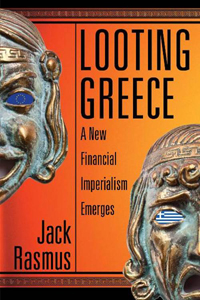
A further view of my take on European contemporary imperialism is my 2015 book, ‘Looting Greece: A New Financial Imperialism Emerges’, Clarity Press (emphasis on the imperialism and specifically how financial imperialism works in Europe as an extension of Hobson-Hilferding-Lenin’s views on ‘Imperialism’ at early 20th century.

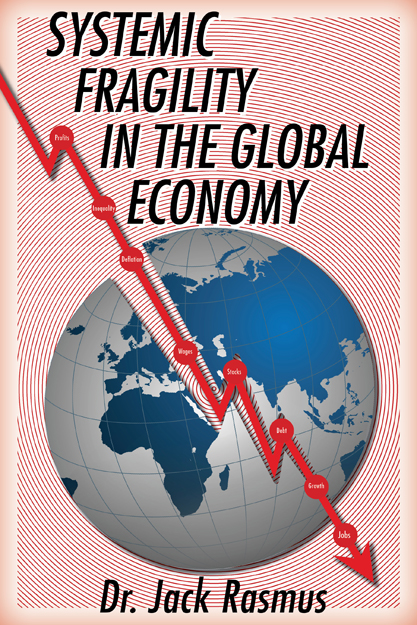
My 2016 book, ‘Systemic Fragility in the Global Economy‘ (Clarity 2017) entire second half is a review and critique of Economic theory from Smith and the classicalists to Marx, to the post-Marx neoclassical attack on Marx, to Keynes (in the original not the bastardized versions of Keynes), contemporary ‘mechanical’ marxists (as I call them) to Minsky. That book’s last chapter concludes with my own theoretical views at the time (5 yrs ago) integrating financial cycles and real cycles analyses.  It’s an extension and innovation on views of Keynes, Minsky, and Marx, concluding with a first pass at an equation representing ‘fragility’ in the global capitalist system in the 21st century-where fragility is a term that represents likelihood of a financial instability event.

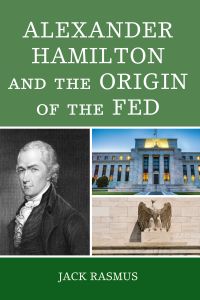
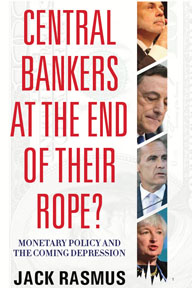
My 2018 book, ‘Central Bankers at the End of Their Ropes‘ is a critique of both theory and practices of capitalist central banks–i.e. of monetary theory and ‘monetarism’ in theory. It traces the history of central banks and monetary theory from the formation of the Federal Reserve in 1913 to present and includes other major central banks in Europe, China, etc. A prequel describing the evolution of central banks from 1780 to 1913, and US depressions along the way, is my 2020 book, ‘Alexander Hamilton and the Origins of the Fed‘, Lexington books.

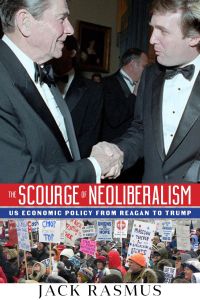
My forthcoming World review of Political Economy article noted above is a foray into explaining (and expanding) Marxist exploitation theory in light of the last 4 decades of capitalist evolution in general, and specifically where that’s going in the wake of widespread implementation of Artificial Intelligence, 5G, cybersecurity, cloud computing, etc. technologies. Finally, I’ll address some of the themes further in my forthcoming book, ‘The Viral Economy and Its Consequences‘. It’s both a further economic theory analysis as well as an analysis of US economic policy evolution in the most recent stage of Neoliberalism, and thus a continuation of that historical policy evolution of Neoliberalism since 1980 and Reaganomics, as described in my 2020 book, ‘The Scourge of Neoliberalism: US Economic Policy from Reagan to Trump‘, Clarity, 2020.

Well, there you have my own perspectives and how they differ theoretically from the works of Hudson, Roberts, and Wolff. I’m probably more a ‘political’ economist than they, who is deeply critical of bourgeois economics (which is mostly ideology) but which deserves attention where it’s not ideology. I’m more focused on capitalist economic policy and its evolution, not just theory. In theory I believe Keynes, Minsky and others–not just Marx–have made worthwhile contributions to understanding capitalism. I’m also more focused on the American Empire and imperialism than the three (Hudson, Roberts, even Wolff) and why it’s the greatest danger as the US empire weakens and its current neocon-capitalist-political elites strike out more aggressively to try to restore their hegemony.  I’m also more concerned with the changes of capitalist technologies today and their impact on the working class and unions (what Marx would call ‘forces of production’).

Most marxist economists today would probably not call me a marxist economist since I’m not reluctant to critique Marx where his views need further development after 150 years; nor critiquing Lenin since his views on Imperialism require upgrading as well. Today’s Marxist economists would probably call me a revisionist (when in fact all I intend is to not become a marxist philologist–or ‘mechanical’ marxist–like them). Marx’s Capital can’t be treated as a bible, where every passage or proposition is considered fixed and eternally true exactly as stated. That’s to turn Marx’s economics into a form of ideology.

Economically, I’m somewhere well left of Minsky and his epigones like Keen and Hudson on the one hand, and closer to European marxists like Heinrich and some Chinese, than to Anglo-American traditional immutable Marxism. I’m not really a heterodox economist either, whose analyses is ‘all over the block’ as they say, tend toward single issue analyses, and much of which is at the service of Identity politics, the latter of which I personally reject as a scourge on the American left.

Hope that helps clarify your query as to where I stand in terms of economic theory and differ re. the three others (Hudson, Roberts, Wolff), who all do good work in their own limited way and are worth reading but who are but precursors to a more accurate and complete analysis of 21st century capitalism and imperialism.

Jack Rasmus7-2-22

1. On G7 Meeting & New Sanctions

https://drive.google.com/file/d/19J_-6lT3iF104yMQzi_ZOfsyjgH3t_gz/view

2. On Fed Rates & Coming Recession

https://drive.google.com/file/d/1U4nI4q79z3FPzBiENCqr8ZWrX-j_aIz9/view

3. On Current US Inflation

https://drive.google.com/file/d/15zmb7gQgcYmTrReizujgg-MEvUOzMgiz/view

Biden and the other G7 leaders are meeting in the Bavarian Alps this week. Apart from proclaiming they’ll never give up supporting Zelensky and Ukraine, G7 leaders announced they were planning two new sanctions on Russia.

Like most of the previous six phases of sanctions the purpose of the latest is to deprive Russia of revenues from exports. So far sanctions haven’t been all that successful in that regard, at least in the shorter term. While the USA has banned Russian oil and gas imports to the USA, those amounts and their respective revenue impact on total Russian export revenue is insignificant. Moreover, the ban on Russian oil exports to Europe do not begin until December 2022, while there’s no ban on Russian natural gas imports whatsoever. So little net impact on Russian energy export revenues from Europe either.

The sanctions on oil & gas Russian exports to Europe have been quite minimal to date. Meanwhile, Russia’s exports to China, India and rest of the world have been rising. As have global energy prices in general.  With accelerating global prices for oil and gas, and an increase in Russian energy exports to India, China and elsewhere, Russia’s revenues have been actually rising.

This rising revenue despite sanctions has presented something of a conundrum for Biden and the G7. The whole idea of sanctions is to dramatically reduce Russian revenues, not simply volume of exports! Sanctions thus far have had the opposite effect of what was intended—Russian energy revenues have risen not fallen.

So the G7 in Bavaria have come up with two more schemes to try to reduce Russian export revenues. But the thin mountain air must be affecting their thinking. The two new schemes are among the most desperate and economically absurd sanction ideas spawned thus far.

1. Ban Russian Gold Exports to Europe

The first absurd proposal being bandied about in Bavaria is to get Europe to agree to ban Russian gold exports to Europe.

The thinking is Russian revenues from gold constitute Russia’s second largest export revenue source, but at $20 billion a year gold sales revenue is still well below Russia’s oil export revenue of around $90 billion (before sanctions). Most of the Russian gold exports goes to the gold exchange in London where it’s ‘sold’ by Russia in exchange for other currencies. The G7 thinks denying Russia access to the London gold exchange will result in a big dent in its total export revenues and ability to obtain other currencies with which to purchase other needed imports for its economy. But there are problems with the G7’s proposed ban on Russia gold exports.

First, Russia could just as well sell its gold elsewhere in the world. It doesn’t have to sell it to the Europeans at the London exchange. Other major global buyers of Russian gold are Turkey, Qatar, India and other middle eastern markets. Gold prices have been rising globally, as inflation has driven up oil, gas, and other industrial and agricultural commodities. Gold is an asset that tends to rise in price with rising general price levels, which are now accelerating worldwide. With inflation, other countries will more than gladly buy up the Europeans’ share of Russian gold. Some may even then sell the gold back to the Europeans—at a marked up higher price of course.

The Demand for Russian gold will simply shift, from Europe to elsewhere. Russian gold export revenues will thus not fall on net; in fact, may possibly even rise as gold prices continue to rise with inflation–ironically in large part due to other sanctions in general.

Second, gold is an asset that provides a hedge against inflation. It may be that Biden can get the G7 leaders and their governments (and central banks) to boycott buying Russian gold. But what’s to stop individual investors in Europe from buying Russian gold in offshore markets, when it’s presently such an attractive asset? Will Biden extend sanctions on all the individual Europeans who simply shift their purchases of Russian gold from the London Gold Exchange to the gold exchanges in Turkey, Qatar and elsewhere?

2. Price Cap Russian Oil Exports to Europe

This is an even sillier proposal. Here’s the logic of how the price cap is supposed to work. Theoretically, Europe would all agree to buy Russian oil exports over the next six months but only at a deeply discounted price that all of Europe would agree on. In other words, set a ‘price cap’ at a level well below world market prices that are currently determined by supply in global oil spot markets. The lower price is supposed to cut Russian revenues from the oil exports to Europe—i.e. reduce revenues, the prime goal of all sanctions. The idea was first suggested by Janet Yellen, the US Secretary of the Treasury. That’s the Janet Yellen who told the world in February 2022 that inflation was temporary, remember!

Getting all of the G7 to agree to a price cap still requires getting the rest of Europe as well as Japan, So. Korea and others to agree to that price capt as well.   But isn’t Europe supposed to stop buying all Russian oil imports by end of 2022 per previous sanctions they’ve agreed to? Who believes the Europeans can agree to a price cap on Russian oil and implement that cap in three months (July-September)–and then for just three months more (October-December)? Europe can’t do anything in three months, or even six. Maybe the US and EU aren’t all that confident they can implement a full ban on Russian oil exports by December?

But even this isn’t the most absurd aspect of the ‘price cap’ proposal.

Assuming Biden could get all the G7 to convince all of Europe’s 27 nations on a super discounted price, there’s still the ‘small problem’ of what Russia’s response might be to all that. The G7’s faulty logic is the deep discounted price Europe is only willing to pay for the oil would be at a price much lower than even the 30% discount that Russia is now selling oil to India, China and elsewhere. The G7 presumably would offer to buy Russian oil only at a 50% discount off current world prices maybe? That would put pressure, as the G7 argument goes, on Russian oil sales to India etc. The Indians would then demand Russia oil prices at the G7 lower 50% discount price. Russia would realize further reduced revenues from oil lower prices to India, China, the rest of the world as well as to G7 and Europe.

This is a proposal so ridiculous it’s almost embarrassing. The problem with the G7 ‘price cap’ idea is there’s no reason why Russia would want to sell any oil whatsoever to Europe at the G7’s deeply discounted price cap level.

First, why should it when Europe says it plans to phase out all Russian oil by December anyway? Second, Russia has shown it is not concerned with reducing natural gas export revenues to Europe. It’s already cut cubic gas exports to Europe by one-third as part of its own economic response to Europe’s agreement with US sanctions on Russia and it’s warned Europe of another third soon.  Economic warfare cuts both ways. So what’s to stop Russia from just cutting off all oil exports to Europe—and well before December? Third, Russia would have to be pretty dumb to agree to sell oil to Europe at the latter’s ‘price cap’ level which would be well below Russia’s already 30% discount oil price sales to India? It knows the likely knock on effect that would follow. India as a long term oil customer is far more important to Russia than Europe which says it’s ending as a customer in just six months.  Finally, Russia knows if it cuts off all oil exports to Europe, it would just change the market flow of global oil, not reduce it. Russia would sell more to other countries, which might then just re-export it back to Europe in turn.

In short, the error with the G7 price cap idea is it assumes that buyers (Europe) can set the price for oil in what is a global sellers market! G7 may think they can stand market fundamentals on their head and make it work, but they are wrong.  No amount of G7 wishful thinking can make Demand determine Supply in today’s global energy markets, where broken and restructuring supply chains, sanctions, and war are the main determinants of price.

Both the proposal to ban Russian gold exports to Europe and the proposal to manipulate oil demand to reduce its global market price—and thereby deprive Russia of revenues—are ideas that reflect more the desperation of the US and G7 to find some way to make sanctions on Russia work in the short run when thus far they aren’t working very well, if at all.

The short run objective of sanctions–i.e. to reduce Russian export revenues–has not been working but the two latest desperate ideas won’t work any better.

Historians will wonder years from now why the US and its most dependent allies in tow—the G7 countries—embarked upon a scope of sanctions on Russia so soon after Covid’s deep negative impacts on global supply chains and domestic product and labor markets. Global markets, trade and financial flows were seriously disrupted by the Covid experience of 2020-21. And they had not recovered by January 2022 when US sanctions on Russia were escalated. Before global supply chains could heal, the US and its G7 allies embarked on sanctions that further disrupted and restructured those same supply chains while simultaneously setting off chronic global inflation that ravaged their domestic economies as well. History will show, it was all not well thought out.

Even less thought out, however, are the more recent G7 proposals to ban Russian gold and engineer a price cap on global oil—the latter in effect a fantasy that by somehow manipulating a region’s (Europe) oil Demand it could set global oil prices in general and thus over-ride Supply as the driver of oil price and revenues.

It makes one wonder about the qualifications of the current generation of world leaders (led by Biden and the US) playing with the geopolitical world order. And wonder even more about their even less understanding of the consequences of their economic actions on the world economy.

Dr. Jack Rasmus

copyright June 28, 2022

Watch my free-wheeling, hour long YouTube interview with hosts, Jason Myles and Pascal Roberts, of ‘This Is Revolution’ folks in Oakland, CA, on Thursday, June 23, 2022 on topic of ‘Inflation and the Cost of Living Crisis’.

Go to YouTube at: https://twitter.com/i/broadcasts/1YqJDqpLDDaxV

(Note: first 10 minutes of show is a fund raising interview with another guest)

by Dr. Jack Rasmus
Copyright 2022

The focus of the US media and economists for the past several months has been increasingly on inflation. In recent weeks, however, US policymakers awoke as well to the realization that inflation is chronic, firmly embedded, and growing threat to the immediate future of the US economy.

A qualitative ‘threshold of awareness’ was reached this past week when the US central bank, the Federal Reserve, accelerated its pace of rate hikes by 75 basis points—purportedly to bring the rate of price hikes under control. Whether the Fed can succeed in taming inflation and do so without precipitating a recession remains to be seen but is highly unlikely. Taming inflation without provoking a recession is thus the central economic question for the remainder of 2022.

Clearly some think this is possible—i.e. that further rate hikes will moderate the pace of inflation without driving the real economy into recession and result in what is called a ‘soft landing’. Clearly the Fed and the Biden administration believe that will happen. But a growing chorus of even mainstream economists and bank research departments don’t think so. Almost daily new forecasts by global banks and analysts appear indicating recession is more than 50-50 likely—and arriving sooner in late 2022 than in 2023.

This article concludes unequivocally that today’s Fed monetary policy of escalating interest rates is not capable of reducing inflation while avoiding recession—any more than similar Fed rate hikes in 1980-81 did. And this time rate hikes will not need to rise as high as in 1980-81 before they trip the economy into another bona fide recession.

As of June 2022 the Fed raised its benchmark federal funds interest rate to a high end range of 1.75%. It plans to double that at least by the end of 2022, to a 3.5% to 4% range. But the US economy is already nearly stagnant and signs are growing it is becoming even weaker. As this writer has argued since the fall of 2021, a Fed rate to 4% or more will almost certainly mean a ‘hard landing’, i.e. recession. Moreover, it will not reduce inflation that much either. Prices will not slow appreciably until the US is actually well into a recession. That means a condition called stagflation, a contracting real economy amidst rising prices and an economic scenario not seen in the US since the late 1970s. Stagflation has already arrived if one considers the almost flat US economy in the first half of 2022; and it will deepen once recession begins in the second half.

To understand why inflation won’t abate much in 2022, and why recession will occur sometime before the current year’s end, it is necessary first to understand the Anatomy of inflation (i.e. structure and evolution) that has emerged over the past year. That anatomy, or structure, of inflation shows its current causes are not responsive to Fed rate hikes in either the short or even intermediate term of the next twelve months.

It is necessary to understand why monetary policy in the form of Fed rate hikes will not dampen inflation much before recession occurs—as well as why those same rate hikes will have a greater effect on precipitating a recession long before the Fed can bring the inflation rate down to its long run historic target of only 2%.

The Anatomy of US Inflation: 2021-22

After rising moderately around 4% annual rate when the US economy first opened in the spring of 2021, it is important to note the pace of consumer prices remained virtually steady for the following four months throughout the summer of 2020, at around 5.5%. (Bureau of Labor Statistics New Release, May 11, 2022, Chart 2). That pace began to rise steadily every month only after late August 2021.

Beginning last September 2021 US Inflation not only began accelerating but has since become embedded and chronic. Even US policy elites can no longer deny it. Earlier in 2022 Treasury Secretary Janet Yellen opined publicly that US inflation would be ‘short lived and temporary’. In June she then recanted and apologized for the inaccurate prediction. And this past week admitted that inflation is now ‘locked in’ for the remainder of 2022.

What then are the reasons and evidence inflation has become permanent and chronic—at least until recession sets in?

There’s no doubt that Demand, due to the reopening of the US economy after the worst of Covid in March-April 2021 contributed to the emergence of inflation last spring-summer 2021. But excess Demand is not the primary explanation for it. Demand for goods and services rose during April-May 2021 as workers returned to their jobs and wage incomes grew. However, the record shows after rising modestly in April-May 2021, consumer prices leveled off throughout the summer of 2021, June to August 2021, at just over 5%. It remained steady thereafter at that level for those months as the economy continued to re-open.

The surge in prices at a faster pace only began in the late summer, around August-September. That price escalation coincided with rising problems in Supply chains—both in the form of global imports to the US as well as domestic US supply issues associated with goods transport, warehousing, and skilled labor access. In short, as the US economy attempted to reopen global supply chains were still broken and, domestically, US Product and Labor markets were severely wounded by the impact of Covid events of March 2020 through March 2021.

Conservative politicians, business interests, and their wing of the mainstream media nonetheless claimed at the time—and mostly still maintain today—that it was the too generous, excess income support from the American Relief Plan (ARP) social safety net programs passed by Congress in March 2021, and their predecessor programs a year before, that was responsible for excess Demand in mid-2021 and thus the escalating inflation that followed after September of that year.

But even US government data don’t support that view. The ARP authorized only $800 billion spending in the entire next twelve months. The 3rd quarter—the first full quarter when ARP program spending hit the economy and when prices began their accelerations around August–saw probably no more than $200 billion from ARP programs entering the economy. The supplemental income checks had already been distributed and mostly spent in the 2nd quarter. What remained in the 3rd of any magnitude were supplemental unemployment benefits, modest rental assistance, and the child care subsidies for median and low income families introduced that July. $200 billion injection was probably high as well. Certainly not all the $200 billion income injected was actually spent that quarter. (As economists admit, consumers’ marginal propensity to spend added income is always less than ‘one’—i.e. they don’t immediately spend it all). $150 billion or so was probably actually spent. That $150 billion compares to a 3rd quarter overall GDP of more than $5 trillion! There’s no way an economy that size could result in the price acceleration that began at that time from an injection of $150 billion on more than $5 trillion.

Moreover, $150 billion may be too high an estimate as well. Much of the ARP stimulus was cut off significantly by early September, the last month of the 3rd quarter: for example, supplemental unemployment benefits provided previously for 10 million workers was ended, along with rental assistance, the Payroll Protection Plan grants for small businesses, and other lesser injections.
In short, to the extent Demand contributed to the rise in prices in both the 2nd and 3rd quarters, that Demand effect is explainable far more by the continued reopening of the economy rather than attributable to the income support programs of the American Rescue Plan that amounted to no more than $100-$150 billion throughout the entire 3rd quarter when prices began to accelerate. So much for arguments that workers were too flush with income from jobs they were returning to and the government over-generous ARP income programs! The data just don’t support the view it was Demand and government spending Demand in particular that was responsible for the onset of escalating prices last September 2021.

The more likely explanation behind escalating prices in late summer 2021 was global supply chain bottlenecks, especially involving goods imports from Asia and China in particular. In August-September it was mostly goods prices driving inflation. Consumer spending on services again was just emerging. A problem with Supply chains was corporations around the world had shuttered their operations during the worst of Covid, allowing workers and suppliers to drift away. When the economy began to reopen in the summer of 2021, many of these workers and suppliers were not available. That was especially true with global container and other shipping companies. There just weren’t enough ships available to deliver goods from Asia to North America. What shipping was available was initially dedicated to transport between Asia countries first. In addition, USA west coast ports had a similar problem: the ports were short of traditional workers and transport. Not only port workers but independent truckers that carried the freight from the Los Angeles port, for example, to inland central warehouses. And from those mega-warehouses to regional warehouses from which goods are then distributed to companies’ storage and stores. Like the trucker shortage, there was an insufficient return of workers to warehouses as well. A similar, somewhat lesser labor shortage problem existed with railway workers. In other words, domestic US supply chains were still broken—along with global supply.

The 2020 and 2021 US government fiscal stimulus programs were supposed to avoid the domestic supply chain (labor and transport) problems by providing US businesses with $625 billion in loans and grants with which to keep their workers employed during the Covid shutdowns of the economy. It was called the Payroll Protection Program, PPP. More than three fourths of the PPP handouts to businesses—virtually all the loans were converted to outright grants—were earmarked to be spent on subsidizing wages of employees. The rest on direct expenses of business, like utility costs, interest on loans, etc. However, the record now shows this didn’t happen. There was no inspection to ensure how the $625 billion of grants was spent. Most of the businesses receiving PPP grants laid off their workers anyway. Thereafter, as the US economy tried to reopen the same businesses couldn’t find their laid off workers fast enough. Domestic supply chain problems were the consequence.

It is obvious that the escalation of US inflation that commenced around late August-September 2021 was associated with Supply chain issues—both global and domestic. It was not Demand. Probably three-fourths of the escalating prices at the time were Supply related; the remainder Demand—and that Demand more due to faster reopening of the economy than to ARP income programs which were actually being faded out by September 2021.

Overlaid on this scenario of mostly Supply driven inflation, combined with some Demand caused price escalation, was yet another important development that emerged as a major factor as the 3rd quarter 2021 ended: i.e. widespread price gouging by monopolistic US corporations with concentrated market power that enabled them to raise prices beyond normal Demand and Supply.
As inflation rose and the public was increasingly aware of it, corporations with monopolistic power (i.e. where four or five or fewer companies produced 80% or more of the product or service in the economy) manipulated and took advantage of that public awareness of rising inflation in order to raise their prices—even when their respective industry was not experiencing supply chain issues.

A good example is the US oil corporations that didn’t have a supply problem at all at the time and still don’t. US oil corps were capable then, as now, of raising their output of oil in the US (i.e. supply) by at least 2 million more barrels/day. They chose instead to leave that oil in the ground, not to expand production at US refineries, and refused to reopen many of the drilling wells they had capped during the worst of the preceding 2020-21.

In the months preceding the onset of Covid shutdowns in March 2021 US oil corps were producing more than 13 million barrels per day; by fall 2021 they were producing barely 11 million per day (and still are). Nevertheless, US oil corporations raised their prices faster than perhaps any other industry. By the fourth quarter 2021 energy prices were rising at 34.2% annual rate, according to the US GDP accounts (US Bureau of National Economics, NIPA Table 2.3.7).

With prices now surging after September 2021 the important new factor also driving prices was thus neither supply nor demand related. It was price manipulation by US corporations with market power to do so. And it was not just oil corporations, although they were responsible for more than half of the price index surge at the time—and still are. Other food processing corporations, airlines, utilities, and so forth with monopolistic power did so as well. This political (market power) cause, combined with Demand and Supply forces, after August resulted in yet a further surge of prices through the remainder of 2021.

Beginning in 2022 further forces also began to determine the US Anatomy of Inflation:

Commencing March 2022, added and overlaid onto 2021 inflation drivers was US and EU sanctions on Russia commodities, which were especially critical as the global economy was still in the process of trying to reopen and restore and heal Covid shattered global supply chains.

Russia supplies 20% to 30% of many key global commodities—including oil, gas and nuclear fuel processing in the energy sector. But also industrial metals commodities like nickel, palladium, aluminum and other resources required for auto, steel and other goods manufacturing in the US and EU. Also agricultural commodities like 30% of the world’s wheat; 20% of global corn production used in production of animal feed; 75% of critical vegetable oils like sunflowers; and 75% potash fertilizer—to name the more important.

Even before US/EU sanctions on these key Russian commodities began affecting actual supply, global financial commodities futures market speculators began driving up commodity inflation in anticipation of the sanctions eventually taking effect. Speculators were quickly followed by global shipping companies that jacked up their prices before actual sanctions. They were joined in turn by shipping insurance companies. All along the commodities supply chain, capitalists in sectors capable of exploiting the coming sanctions-driven shortages began manipulating prices in anticipation. Physical shortages from sanctions thereafter began to have a further impact late in 2nd quarter 2022 as war in Ukraine intensified and sanctions were implemented. The speculators, shippers and insurers thereafter added further price increases to the general sanctions effect.

When US Treasury Secretary, Yellen, voiced her prediction earlier in 2022 that inflation would be temporary she no doubt did so based on the erroneous assumptions that somehow the global and domestic supply chain problems of late summer 2021 would be resolved in 2022, and corporate price gouging that overlaid supply chain issues would also somehow abate. She clearly did not factor in to her inflation prediction the very significant effect of war and sanctions.

President Biden called the now further escalation of prices in spring 2022 as ‘Putin’s Inflation’. That claim might be laid on shortages of some agricultural products directly disrupted in Ukraine war zones, but can’t be laid on global energy prices which were virtually all from within Russia’s economy not Ukraine’s. Thus to the extent inflation is due to rising energy prices—which accounts for more than half the total price rise at the consumer level—it is more attributable to Biden’s sanctions and thus is ‘Biden’s Inflation’ rather than Putin’s.

By the 2nd quarter 2022 all the above combined forces driving inflation (i.e. moderate Demand, global & domestic broken Supply chains, widespread corporate price gouging, oil, energy & commodities prices) converged to produce an embedded, chronic, and continued rise of inflation.

For the period for which latest prices are available, March-May, consumer prices (CPI Index) have been rising at a steady 8.5% rate while producer prices that eventually feed into consumer prices have been rising at an even faster rate of 10-11% for the three months. Furthermore, pressure on producer prices (that feed into consumer prices) may accelerate even that 10-11% current producer price hike average. For example, the most recent Producer Price Index released for May shows the category of ‘Intermediate’ goods and services prices are rising even faster. Intermediate processed goods (e.g. steel) have been rising at a 21.6% annual rate over the past year, while intermediate unprocessed goods (e.g. natural gas) have risen at a 39.7% annual rate.
Supply chain and Demand forces of the past year, May 2021 through May 2022, will likely continue driving prices at similar rates through this summer 2022 and likely the rest of the year as well. There appears no end in sight, for example, for the Ukraine war and the Sanctions on Russia which continue to tighten. Price gouging in these commodities impacted by war and sanctions will certainly continue as will the general phenomenon of monopolistic corporations price gouging. Commodity futures financial speculators will continue to speculate; shipping companies continue to manipulate price to their advantage; and insurers continue to hike their rates on bulk commodity shipping worldwide.

In addition, new forces are also emerging this summer 2022 that will contribute still further to chronic inflation throughout the rest of 2022 and possibly even further beyond.

One such new factor is rising Unit Labor Costs for businesses, which many will try to pass through to consumers this summer and beyond. Unit labor costs (ULCs) are determined by productivity change for businesses and/or wages. If wages rise, ULCs rise; similarly if productivity falls, ULCs rise. While wages appear to be moderately rising in nominal terms, productivity is falling precipitously. The most recent data on productivity trends in the US indicate productivity collapsing at the fastest rate since data was first gathered in 1947. That’s because business investment is stalling in the face of growing economic uncertainty about inflation as well as likely recession. Wage rise contribution to rising ULCs is on average modest, as Fed chair Jerome Powell has admitted. Wage pressures are mostly skewed to the high end of the labor force where highly skilled professionals are ‘job hopping’ to realize wage income gains of 18% on average; meanwhile, low paid service workers’ wages are also rising some as many have refused to return to work at the US minimum wage of only $7.25/hr which hasn’t changed since 2009. Service businesses have had to offer more. But the great middle of the US labor force is not experiencing wage gains to any significant extent. Thus the ‘average’ wage hikes, as moderate as they are, do not account for the rising ULCs which businesses will soon, if not already, begin to ‘pass on’ to consumers in higher prices for the remainder of 2022. Treasury Secretary Yellen herself now admits inflation will continue high throughout 2022—no doubt in part reflecting the new forces adding to inflation pressure.

Another emerging factor of growing importance to the continuation of inflation trends throughout 2022 is the now emerging ‘inflationary expectations’ effect. Cited by Fed chair, Jerome Powell, in his most recent press conference following the Fed’s latest interest rate announcement, Powell referred to the recent University of Michigan consumer survey showing inflationary expectations now definitely emerging as well.

As inflation continues to rise, inflationary expectations mean consumers will purchase early, or even items they had not planned to buy, in order to avoid future price hikes. That means another Demand force that adds to the general anatomy of inflation, just as falling productivity and higher ULCs represent an additional Supply force contributing to future price hikes.
In short, now entering the mix of causes in 2022 are inflationary expectations, falling productivity driving up ULCs and cost pass-through to consumers, and the growing pressures on commodity inflation due to the Ukraine war and sanctions on Russia.

When all these emerging 2022 factors are added to the 2021 economy reopening and Supply chain causes of inflation—as well as the continuing corporate price gouging—the broader picture that appears reveals multiple causes of inflation—many of which mutually feed back on the other; some political, some unrelated to market supply or demand, and none of which appear to be moderating significantly. In fact, corporate price gouging, manipulation of commodities markets by speculators, Ukraine war, and sanctions on Russia all represent contributions to inflation that may well accelerate over the next six months.

Stagflation May Have Already Arrived

Stagflation is generally defined as inflation amidst stagnate growth of the real economy. That is already upon us in its first phase: US GDP for the 1st quarter of 2022 recorded a decline of -1.5% while the Atlanta Federal Reserve bank’s ‘shadow’ GDP estimates zero GDP (0.0%) growth for the current April-June 2nd quarter! Should the Atlanta Fed’s forecast prove accurate, that’s stagnation at best. And if the 2nd quarter actually contracts, then it represents a yet deeper phase of Stagflation.

Just as mainstream economists and media debated for months whether current inflation was chronic or temporary, the same pundits now debate whether stagflation will soon occur when in fact it’s actually already arrived. (see Larry Summers’ latest pontification to the business media where he warns of stagflation around the corner when it’s already turned it).

The next phase of stagflation coming late 2022 and early 2023 will reflect the contraction of the real economy—i.e. a recession. GDP won’t simply stagnate with no growth, but decline. Indeed, recession is already damn close if we are to believe the Atlanta Fed’s 2nd quarter GDP forecast and the various early economic indicators now appearing. Stagflation may already be here, as the 1st quarter US GDP -1.5% contraction is followed by another contraction—not just zero growth—in the current 2nd quarter. Two consecutive quarters of contraction define what’s called a ‘technical recession’. Actual definition of a recession is left to the National Bureau of Economic Analysis, NBER, economists to call. They always wait months after the fact to make their call. But ‘technical recessions’ almost always result in NBER declarations subsequently of actual recession. And the US economy is clearly on the cusp of a technical recession at minimum.

Biden’s Empty Inflation Solutions

Biden’s various solutions to date are more public relations events designed to make it appear something is being done instead of actions that directly address the problem of embedded and chronic US inflation.

Biden’s proposed solutions include getting US oil corporations and other global producers of oil to raise their output; somehow convincing countries who agree with US sanctions in Russia to enforce a ‘cap’ on the price of oil worldwide; reducing tariffs on imports from China to the US; offsetting the price of energy productions for US consumers by lowering the price of other consumer goods; increasing competition among US monopolistic corporations by subsidizing new competitors to enter their industries; introducing a federal gas tax suspension.

Despite Biden’s railing against the oil companies, shipping companies, and other obvious price gougers, it’s been all talk and no action. All his proposals have not been implemented to date. They’ve been either just ideas raised with no actual executive or legislative proposals. Or they’ve already been rejected by Congress. Or, even if implemented, will be ‘gamed’ and absorbed by corporations with little net impact on consumer prices. Or will produce insufficient additional global output of oil, gas, and energy products to dampen energy price escalation much.

Biden’s strategy has been to ‘talk the talk’ without the walk, as the saying goes.

The only actual solution the administration has quietly agreed upon, but dares not admit publicly, is to have the Fed precipitate a recession by means of its record level of rapid interest rate hikes over this summer 2022 now in progress. And as they say, ‘that train has left the station’. It’s a done deal. Biden’s ‘solution’ is to have the Fed precipitate a recession.

Enter the Federal Reserve

The Fed itself has already decided on recession! Moreover, it’s a policy template that’s been employed before.

The origins of the coming recession appear very much like the 1981-82 recession. At that time the Fed also precipitated a recession by aggressively hiking interest rates with the objective of ‘Demand destruction’ as it is called. In other words, then as now, the strategy was to make households’ and workers’ pay by destroying wage incomes by means of layoffs, for what was essentially at the time a Supply caused inflation associated with rising global oil access destruction by OPEC and middle east oil producers.

At 75 basis points Fed rates are already rising at a pace not seen since 1994. !981-82 rate hikes were even more aggressive. However, as this writer has argued, the global economy is more fragile and interconnected today than it was in 1980-81 when the Fed raised rates to 15% and more. Today’s global capitalist economy won’t sustain rate hikes even a third of that 15% before contracting sharply.

It is more likely than not that the Fed will continue raising interest rates at the 75 basis points when it next meets in July, and possibly the same in the subsequent meeting. At 4% for its benchmark federal funds rate (not at 1.75%) the economic damn will crack. It won’t even get to the one-third of 1982 level, the 5%.

Why the economy will slide into recession well before the 5% rate level was discussed by this writer in 2017 in the book, ‘Central Bankers at the End of Their Ropes: Monetary Policy and the Coming Depression’, Clarity Press.

In the sequel to this essay, why the US real economy is quite fragile today is addressed including most recent evidence of a weakening US real economy. Also addressed is why Fed federal funds rate increases to 4% or more will precipitate a serious US recession sooner rather than later, and, not least, why Fed rate hikes of that magnitude will likely have severe negative impacts on financial asset markets as well, provoking serious liquidity and even insolvency crises in the global capitalist financial system.

Should financial asset contraction occur along with a contraction of the real economy, then the 2022 recession will almost certainly deepen in 2023. And in that case the economic crisis will appear more like 2008-10 as well as 1981-82. Or perhaps a merging of the two recession dynamics into one.

Dr. Jack Rasmus
June 20, 2022

The US Central Bank, the Federal Reserve, today raised its benchmark interest rate 75 ‘basis pts’ (3/4 %). And promises more of the same in July and thereafter in rest of 2022. Will it halt inflation? Or precipitate recession sooner? What are the contradictions in Fed decision?

Fed chair Jerome Powell’s announcement today targets, as Powell himself indicated in press conference following the announcement, consumer Demand and spending to bring down inflation.

But Powell himself admitted several times in his press conference Q&A session that raising rates will have no effect on Supply problems and global political instability driving US inflation–specifically global commodity prices, supply constraints caused by the Ukraine War (and by implication US sanctions on Russia), China’s slowing economy due to its recent Covid shutdowns and its impacts on global supply chains, and on continued supply chain problems world wide in general.

So how will targeting Demand and consumer spending contain an inflation that is driven primarily by global supply, global political instability and, I might add, monopolistic US corporations manipulating supply issues to raise their prices? Short answer: it won’t. Targeting US Demand (aka US consumer) to resolve a global Supply problem will have little to no effect in short run, although will should rapid rate hikes precipitate a US recession by year end 2022.

US elites and capitalists have decided to ‘wash their fiscal policy hands’ and to let the Fed address the inflation crisis more or less on its own. Consumer prices are both chronic and embedded in the economy, averaging 8.5% (CPI) last 3 months and equally chronic in producer prices (PPI) rising even faster around 11%. Fiscal policy solutions to address inflation are DOA: there’ll be no tax hikes and reducing fiscal spending given plans to escalate Pentagon $54B new war spending for Ukraine recently and the projected further $85B called for in the next US budget.

Powell’s decision to accelerate and increase rate hikes means US elites have decided that Monetary policy–i.e. the Fed–now has the task alone to try to control inflation. It’s the only inflation game in town. Politicians facing elections will have the Fed ‘take the heat’ for failing to control it. That means the ‘pain’ will be on the backs of the American consumer as Fed rate hikes come faster and larger now, depressing the real economy, jobs, wage incomes and consumption as a solution parading for what is really a global Supply side (war, sanctions, commodity speculation, supply chains, China, etc.) caused inflation.

The Fed’s Powell believes by raising rates 75 basis points every six weeks between now and December, h can achieve a ‘soft landing’ of the US economy. The Fed’s prediction is prices will come down to 2% in 18 months without a recession and without the unemployment rate rising from current 3.7% to no more than 4.1%.  GDP this year will still achieve around 2% (despite its -1.4% contraction 1st quarter 2022 and the Atlanta Fed recent forecast of 0% growth this 2nd quarter, which means a GDP growth rate in second half of 2022 of around 5%. How that 5% second half growth occurs with a planned Fed doubling of its interest rate levels between now and year’s end will be an interesting economic trick.

For more of my commentary in the following radio interview (and subsequent interviews to be posted)

GO TO:

https://drive.google.com/file/d/1wkRYqhvUwuxg-nkUNNO6Ua7vEAtQmySN/view

Watch my YouTube video presentation of Sunday, June 12, 2022 on ‘US Sanctions and the Future of the American Empire’, to the Institute of Critical Study of Society. The presentation is an hour long, followed by another hour of Q&A on the topic.

Go To YouTube at: https://www.youtube.com/watch?v=FCoFQSG3ZdQ