Feeds:
Posts
Comments

Watch my 90 minute April 3, 2023 YouTube Interview on the current state of the Banking Crisis presentation to the audience of the Niebyl Proctor Marxist Library in California.

To watch go to https://www.youtube.com/watch?v=ObHVDkkZ-84

AN ADDENDUM

In the Q&A session following my above presentation, a discussion among the attendees after I had to leave addressed the topic of the ‘falling rate of profit tendency’ by Marx. During my presentation I too briefly commented on this important topic. Basically, while I do not support the falling rate of profit idea as the cause of capitalist business cycle instability (or the idea that financial instability derives from real economic conditions created by the falling rate of profit, I do agree strongly with Marx’s assessment of how labor exploitation occurs by means of absolute and relative surplus value extraction.

I followed up my presentation a day later with the following letter to the audience that attended my presentation, which explains why I don’t adhere to the falling rate of profit tendency. That letter and explanation is as follows:

Hello Gene,

Thanks for the invitation to address your group on the banking crisis this past Sunday, April 2. My apologies for having to leave early and not stay for all the Q&A. I just watched the discussion after I left and have a few clarifications for Mehmet, Raj and others on what I said about AI, exploitation, and the falling rate of profit hypothesis that I’d like to offer by way of clarification to what I said on those topics. Please share these comments with others who may be interested.

  1. On the falling rate of profit: what I’m saying is that Marx makes its clear (in Vol 1) that profit is created by the exploitation of ‘productive labor only’. That is, from workers who create commodities and from those workers in services whose work is necessary to realize the creation of money values from the distribution and sale of those commodities. That leaves a great many workers who do not produce any value. They are ‘unproductive’. If they do not create value for the capitalist, then there are no profits realizable from their labor. But profits derive only from productive labor in Marx. And therefore the tendency of the rate of prfit to fall is only where productive labor is involved.
  2. A problem in those who advocate the falling rate of profit (hereafter FRP for short) is that they use capitalist state data and statistics to show the rate of profit declines before a crisis (or is doing so secularly long term regardless of business cycles). But capitalist profit data is not limited to profits from production employing productive labor. Capitalist stats on profits include portfolio profits, that is profits from financial asset investing.  One cannot therefore ‘prove’ the FRP by using capitalist data. It includes profits from creating financial securities (or what Marx would call fetish capital, and what Marx represented by the equation M-M’, as opposed to M-C-M’ that describes capitalist commodity production. My first point is therefore that the FRP is unmeasurable using capitalist state data
  3. The problem of measuring the FRP is complicated further because what the US state data calls corporate profits excludes other capitalists production from non-corporate businesses. That is called ‘Business Income’ in the US data. Advocates of FRP ignore this other source of capitalist surplus value/profits.
  4. The problem is still further complicated because capitalism is a global system. Therefore profits estimation must be global as well. That requires mixing capitalist profits in Europe, in China, and elsewhere. Problem is different countries define profits differently. No where has ‘profits’ been aggregated globally that I know of. A still further problem: ‘profits’ in China state companies virtually don’t exist. State companies sell their products at a low fixed price and the state does not tax state company profits. That is, China government does not earn profits from its state enterprises.
  5. Finally, there’s the problem of price. The price of the sale of commodities contributes to the profit total as well. But prices cannot be compared across economies very well for reasons I won’t go into. The use of the concept of Purchasing Parity by capitalist economists to average out prices across economies is very inexact. It is more ‘art’ than science.

For all the above reasons one cannot quantify capitalist profits in order to determine if its ‘rate’ is falling or not.

Which raises another technical issue. What does one mean by ‘rate’? A rate is the change in percent terms in a period compared to its base period. (example: inflation is the rate of price change over time, current compared to a base year). So when Marxist advocates of FRP say the ‘rate’ of profits is falling, what is the base year to which they are referring? They mostly never indicate one, which is another FRP computational issue.

One might add: why is the rate of profit important? Why is the level or magnitude of profit a better variable?

Marxists who support the FRP thesis (who, by the way, tend to be mostly anglo-american Marxists), argue that the financialization of the capitalist mode of production in the 21st century is all derived from the real, or productive, sector of the economy. Somehow the decline of profits in the real, productive labor economy is what is causing the financialization. But if so, what is the causal mechanism by which this is occurring. Describe it. They don’t.

Those who advocate the causal relationship between the real economy and the financial economy is one way, from the former to the latter, ignore the more likely relationship that is dialectical not mechanical causation that is one way.

FRP Marxists also don’t understand very well that profits of any kind are price variables as well as value variables. Price fluctuates around the core of value. Labor time is the concept marx ‘invented’ in order to quantify value so it could be measured. Labor time is thus the functional proxy concept for the labor theory of value.  But there is no ‘time’ variable in the creation of financial asset securities. For example, tell me how much labor time went into creating the various financial derivatives? For example, in creating credit default swaps? Can’t be done. But, CDS are a financial market that produces immense financial profits for capitalists. Profits that get mixed into quantitative estimates of profits from production in most multinational corporations. That’s just one example.

Capitalists have been turning to creating financial asset profits increasingly in recent decades, especially since 2000.  I’m saying this creation is destabilizing the capitalist system with bubbles and financial crises that in turn often cause a deep contraction of the real economy (which reduces the creation of commodities and profits from productive labor). Capitalists are turning toward this ‘fetish’ capital creation (to use Marx’s term) because the profits are realized faster, safer (it’s easier to exit a market than to sell a failing manufacturing company for instance), and greater. Put another way, fetish capital can create profits faster than capital can create commodities and realize profit from the sale of those commodities. So financialization expands exponentially almost, while traditional commodity creation and sales expand more slowly. The greater potential profitability from financial asset creation also ‘crowds’ out money capital flowing into real investment and production of commodities. Thus we get the trends toward greater wealth accumulation by capitalists from financial investment than we get from capitalists investing in real assets (that make things, require natural resources, human labor, etc.)

But the financialization of the capitalist mode in the 21st century is not adequately accounted for in Marx, who observed a world of mostly industrial capitalism.  The idea that financial capital derives from industrial capital is mostly Lenin’s notion, although he correctly understood finance capital comes to dominant industrial capital. But what does ‘dominate’ mean?

If profits are a price variable, not just a value variable then we are mixing productive labor and exploitation with labor that is not productive and therefore no exploitation occurs. This raises questions of the labor theory of value as Marx created it.  If we adhere to Marx’s concept of profits only created by productive labor and further assume financial wealth is in the end only the result of productive labor—then that means the 20 million of US workers employed in productive labor (manufacturing and construction and maybe some transport and communications) create all the wealth acceleration going on since 2000 and before that has been accumulating in the hands of the 1%. That seems illogical to me.

My comments on Artificial Intelligence suggested that traditional forms of labor exploitation in production, based on marx’s ideas of Absolute and Relative surplus value, are intensifying. Marx’s chapters on Relative and absolute value creation in Vol. 1 are his best chapters in my opinion. Every worker knows both are true.  But AI, I argue elsewhere, raises important questions in the 21st century as to the argument by Marx that machinery simply represent labor time and labor value embodied in the machine; and that that embodied or ‘dead’ labor in the machine is ‘used up’ as the machine depreciates as it makes its contribution to transferring value into the commodity.  My point re. AI, however, is does that ‘embodiment’ of labor time and its depreciation in the course of production apply the AI which is essentially software machinery?  If AI is able to rewrite its own software code without human labor intervention, in order to make itself more efficient and productive, and even self-maintain itself (which it can), then there is no ‘using up’ of labor time involved.  ChatGPT is what’s called ‘generative AI’. It can make itself more efficient and productive over time by upgrading its own software coding.  And when the evolution of AI gets to what’s called ‘general AI’, then AI software machines will be able to rewrite its own coding in order to decide on attempting to solve new problems that were never programed into the machine initially by human labor.

In short, AI raised issues for the labor theory of value via Marx’s concept of the Organic Composition of Capital (OCC), which is the key concept for estimating the falling rate of profit tendency.

What I’m saying in summary is this: Marx’s traditional explanation of labor exploitation via the creation of Absolute and Relative surplus value is correct.  New forms of both can be described and measured in the 21st century. Labor exploitation from productive labor is growing. (So is what Marx called ‘secondary exploitation’, whereby wages paid for labor time is clawed back by capitalists for productive and non-productive labor. So too is socially necessary labor time being manipulated by capitalists to expand surplus value.  So you see I support Marx’s analysis in this fundamental way.

Marx is correct. But only half way so. Exploitation today must account for financialization and the rapid evolving of that key Force of Production called technology, the leading edge of which is now Artificial Intelligence.

Marxists should be focusing on understanding these developments of late capitalism and not keep trying to ‘prove’ the FRP based on capitalist state profits data that is corrupted and defined differently than Marx. They should stop trying to claim financialization and fetish capital is just a derivative of profits from productive labor, whether falling or rising. That’s ‘mechanical Marxism’ in my view.

Nor should Marxists insist that what Marx wrote in his unpublished notes is his own final view on the FRP or any other theory. Marx was just beginning in Vols 2 and 3 to explore how the capitalist banking and financial system worked (in the 19th century). He had not worked out all his views. And how could he see what finance capital would become 150 years later? (To answer Raj on this point: Marx did not publish Vols 2,3. Engels did and he selected from Marx’s total work to produce 2,3.  There are many more volumes of Marx’s work that Engels never ‘selected’ that exist unpublished and untranslated in the Marx library in Amsterdam.

I am not very impressed with analyses that treat Marx’s Capital and other works as if they were inviolable canon. It seems a lot like how Christians treat the bible. Or Jews the Torah. Or Muslims the Koran. You can’t find answers to everything that is capitalism today in the ‘book’. Besides, Marx planned 8 volumes of Capital. He only published one plus 3 of notes. Like the approach to analysis by German thinkers of his day, he planned to proceed from the general to the particular, from the abstract to the more concrete. His work is largely unfinished. After Vol 1 he was too busy actually trying to create a party and a revolution to sit for more years once again in the British Museum doing research. We can’t fault him for that. But let’s not believe everything that could be said about capitalism he already said. And let’s not advocate theories like the FRP that can’t be tested or quantified even if we like the idea within it. (Btw, the FRP was never intended to explain capitalist cycles and crashes, as many Marxists try to assume it does. Marx’s ideas of crises were long run analyses not short run).

Let me finalize by saying to Raj that I don’t make up these views. They are the result of teaching a class every year for six years at St. Marys college in which the students and I read every page of Marx’s vol 1, along with every page of Keynes General Theory and Smith’s Wealth of Nations (abridged). However, I did not come to read Marx in the abstract, but only after having worked a dozen years in the union movement at the grass roots level as organizer, contract negotiator, strike coordinator and local union president. After that I read Marx and it therefore made much more sense to me, especially the chapters on how exploitation works.

I hope this foregoing explanation clarifies some of the all too brief passing comments I made during the Q&A on the implications of financialization and AI in late 21st century capitalism for the FRP hypothesis that Raj raised.

I would refer your audience if they want more of my views and analyses on these issues to listen to my last Friday, April 1, 2023 Alternative Visions radio show, the topic of which was “Artificial Intelligence vs. the Working Class” (accessible from my blog at http://jackrasmus.com) I also have a forthcoming print article by the same title which I’ll share if you like once it is published.

Yours,

Jack Rasmus

April 4, 2023

Goldman Sachs bank research this past week published a report that 300,000,000 jobs worldwide will be impacted by the now accelerating introduction of Artificial Intelligence software (machines) that will either eliminate or sharply reduce the hours of work for workers involved in simple decision making tasks like customer service reps, paralegals, receptionists, retail services, human resources reps, copywriters, basic software coders, and countless other occupations. Its report updates that of five years ago by McKinsey Consultants that estimated 5 million jobs impacted.

Academics hail the news that it will mean a sharp increase in productivity (and therefore profits which they don’t say). But this comes at the expense of destroying jobs and lowering wages. Jobs that might be created by AI will be mostly highly skilled software jobs, many of which the multinational tech and other corporations will import from their foreign subsidiaries via H1-B and L-1 visas from the US government.

Few jobs and greater productivity also mean more intensive exploitation from those workers who will still have work. AI is the latest restructuring of capitalist labor markets in the past five decades that witnessed greater exploitation of labor as a result of expansion of ‘precarious’ work (involuntary part time and temp jobs) and gig work. AI represents the ‘third wave’ of intensification of exploitation of labor.

For my discussion of these trends, and explanation of exactly what is AI, how it works, and its consequences, listen to my Friday, April 1, Alternative Visions radio show (note: initial minutes of show discusses three other reports of importance recently issued, followed by discussion of the Goldman Sachs report predicting loss of 300 million jobs to AI

GO TO:

https://alternativevisions.podbean.com/e/alternative-visions-artificial-intelligence-vs-the-working-class/

SHOW ANNOUNCEMENT

Today’s show begins with discussion of several reports issued this past week: first, evidence by the Wall St. Journal that the 11m open jobs reported by the US Labor Dept’s ‘JOLT’ statistic may be wrong; second, why widespread media reports that the banking crisis is now stabilized are wrong; and, third, why weekly unemployment benefit claims per a Bloomberg News report represent only 25% of workers actually newly unemployed each week. Dr Rasmus then discusses a fourth report this past week by Goldman Sachs bank research indicating that up to 300 million jobs will be negatively impacted (lost jobs or hours of work reduced) as a result of the accelerating implementation of Artificial Intelligence by businesses. Rasmus explains fundamentally what AI is, its enabling technologies, and how AI will destroy millions of simple decision making jobs by eliminating many occupations or sharply reducing hours of work in those occupations. Rasmus reports 1300 tech experts this past week (including Musk) issued a written warning calling for a moratorium on AI and ChaptGPT. But AI is too profitable and the AI tech train has left the station. The show concludes with discussing how AI is critical for advanced military weaponry and is much of the basis of US attack on China’s tech industry today

Listen to my latest Alternative Visions radio show of last friday, March 24, 2023 and my discussion how the Fed and its decades-long free money policies are the fundamental cause of the repeated financial crises, including this latest; how the Fed also then precipitates the crisis by raising interest rates; and then throws more money at it, which becomes the basis for more financial market speculation, bubbles, and the next crisis.

TO LISTEN GO TO:

https://alternativevisions.podbean.com/e/alternataive-visions-the-fed-s-role-in-the-emerging-us-banking-crisis/

SHOW ANNOUNCEMENT

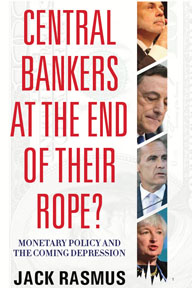
Dr. Rasmus explains how the Fed is ultimately behind the current banking crisis. Distinguishing between causes of the crisis that are ‘fundamental’, ‘enabling’, and ‘precipitating’, Dr. Rasmus explains how the Fed’s pumping $9T of free money (lowering rates to zero in the process) since 2008 created the recent bubbles in Tech and Cryptos that burst and is now bringing down regional banks exposed and over-invested in those sectors. Fed is the ultimate ‘fundamental’ cause. Rasmus explains the ‘enabling’ and further contributing causes of banks’ mismanagement and government deregulation of the sector. And the Fed once again as the ‘precipitating’ cause as result of its unprecedented rapid rise in interest rates over the past year. How the US banking crisis has contributed in part to the simultaneous collapse of Credit Suisse bank in Europe and what’s happening their in its wake. How the current crisis in US and Europe is both similar and different from the crisis of 2008-10 (and 2010-14 in southern Europe’s banks). Rasmus notes how all this was predicted in his 2017 book, ‘Central Bankers at the End of Their Ropes’ and why it represents a general contradiction and crisis of capitalist monetary policy in the 21st century. (for print version analyses of the banking crisis and the Fed’s role, check out Dr. Rasmus’s blog, http://jackrasmus.com for posting of recent articles on the crisis and the Fed)

By Dr. Jack Rasmus
Copyright 2023

It’s been a week since the collapse of the Silicon Valley Bank, the 16th largest bank in the US at the time of its collapse and reportedly a source of funding for half of all the tech start ups in the US.

It’s now become clear the more general banking crisis that has emerged is not due simply to a rogue, mismanaged bank that over-extended itself during the recent tech boom and then somehow mysteriously imploded in just 72 hours, March 7-9, until seized by the FDIC on the morning of March 10, 2023.

Deeper, more systemic forces are at play—in the case of both the SVB collapse and the now spreading contagion to US regional banks as well as to European banks. The SVB is just the tip of the current financial instability iceberg. In Europe the focus is the now collapsed big Credit Suisse bank announced today, March 19, by Switzerland’s central bank. The problem is thus now not just US regional bank centric, but is rapidly becoming global systemic.

What then are the systemic forces responsible for the SVB collapse and now spreading instability to US regional banks and European banks?

Causation: Precipitating, Enabling, and Fundamental

When discussing causation of a financial institution collapse it is necessary to distinguish between precipitating causes, enabling causes, and fundamental causes.

Clearly the Fed’s historically rapid rise in interest rates since March 2022 has played a key role in precipitating the crisis. And SVB’s management in recent years clearly engaged in classic mismanagement of its assets, so that mismanagement has enabled its eventual collapse.

But at a more fundamental, deeper level the SVB collapse—and the now spreading contagion—is a reflection of the speculative investing boom that occurred in the tech industry over the last decade, especially after 2019. That tech boom was fueled in large part by the Federal Reserve’s massive liquidity injections into the US banking system since 2009—which accelerated further from September 2019 to February 2022. Massive, excess liquidity injections by the Fed since the fall of 2019 drove corporate borrowing rates to zero (and below zero in real terms), thus fueling much of the tech over-investment bubble.

Overlaid on that longer term fundamental cause of excess liquidity driving borrowing rates to zero, the Fed then precipitated the crisis by abruptly reversing its decade-long free money policy by raising interest rates in 2022 at the fastest pace in its history and shutting off that free money spigot.

Before examining the Fed’s contributions and role in the current crisis in more detail, a review of what actually happened at SVB (and now is happening at other regional banks and in European banks) is perhaps instructive, revealing the dynamics of bank instability today at the bank level itself.

We might therefore ask: what then were the processes behind SVB’s collapse? What actually happened at SVB? And is that same Fed-induced processes now at work in other banks behind the scenes—eventually to be revealed in coming weeks with further subsequent depositors’ bank withdrawals, collapsing bank stock prices, rising credit default swap costs insuring against possible bank failure, and more US announcements to try to stem the contagion? To what extent is the collapse this weekend of the giant European bank, Credit Suisse, also influenced by events of the week prior in the US banking system?
Most important, what are the possible scenarios for continuing US and European banking instability in the coming weeks.

The SVB Collapse ‘Template’

In general terms, here’s how banks typically fail:
The basic mechanics of financial institution instability typically occurs as follows: a bank becomes more ‘fragile’ (i.e. is prone to a financial instability) when it either takes on excessive debt, or structures that debt poorly, and then experiences either a sharp decline in its cash flow required to service that debt (i.e. to pay principal and interest due) or experiences a loss of prior cash (or near cash) on hand with which to service that debt. SVB fell into that chasm, into which many other regional US banks have now been sliding into as well. The Fed created the chasm. SVB management simply decided to dance along the edge of that financial cliff, until it slipped and fell into the hole.

In the specific case of SVB, it took on too much asset liability, poorly structured its long term debt, then suffered a severe decline in cash on hand as depositors and investors withdrew their money from the bank.

Here’s a statistic worth noting: SVB’s total asset base by 2019 was approximately $50 billion. That accelerated to more than $200 billion by year end 2022. How did that happen? For one thing, the tech boom produced massive financial gains for investors and managers (and even employees) in the tech sector. SVB in California was the ‘place to be’ to deposit those gains. It was a favorite locale for the highly concentrated Venture Capitalist industry located in California in which to deposit funds earmarked for the tech start ups the VCs were funding. Capital gains by rich tech managers and ‘founding employees’ who just cashed in their IPO stock awards also found their way to SVB. And then there was Covid!

The Federal Reserve in March 2020 pumped $4 trillion into the banking system in the US. It was theoretically to prevent another bank crisis, as in 2008-09. Except there was no bank crisis. It was a pre-bank bailout that never happened. It was a preventive bank bailout that was never needed. But the $4T went out into the banking system anyway.

That Fed $4T followed a prior Fed liquidity injection of $1 to $1.5T that occurred in September 2019 to bail out the ‘repo’ bond market. So more than $5T flowed into the economy in 2019-2020.

The tech sector was booming already, fueled in part by the Trump administration’s 2017 $4.5T tax cut for investors and businesses. That tax cut had fueled the Fortune 500 corporations distributing $3.5T in stock buybacks and dividend payouts to their shareholders during the three years, 2017-19 alone. One can only imagine how much more was distributed to shareholders by the 5000 largest US corporations as well.

Massive amounts of money capital thus flowed into financial asset markets, especially into the then booming tech and tech start up sector.

Tech companies went even further. As result of the Fed’s $4T liquidity injection during the Covid crisis, the zero interest rates created by that liquidity made it possible for tech companies to issue their own corporate bonds at a record pace. For example, Apple Corp., had a cash hoard on hand of $252 billion. But it issued its own corporate bonds anyway to take advantage of the near zero interest rates made possible by the Fed’s $4T injection during Covid, from March 2020 through February 2022.

Countless millionaires were made and the ranks of billionaire tech investors billowed as well. The tech bubble—fueled both directly and indirectly by the Fed’s zero rate policy—expanded. Many of those investors riding the wave—whether VCs, tech start ups, tech CEOs, and even founding tech employees—funneled their money capital into SVB the celebrity tech bank of choice in silicon valley.

The bank’s deposit base surged from the $50 billion to more than $200 billion by end of 2022. And not all of that was depositors’ or investors’ inflow. SVB also borrowed heavily from the Fed taking up the latter’s long term Treasury bonds that were virtually cost free given the zero rates of interest. About $150B of SVB’s asset base was depositors money. And more than 90% of that $150B was individual deposits in excess of the $250,000 limit guaranteed by the FDIC in the event of a bank failure.

So lots of deposits on hand at SVB but most of the $200 billion asset base locked into long term treasuries and other bonds. In other words, a poorly structured financial portfolio. Should a crisis emerge, and depositors and investors started leaving, the bank could not give them their deposits since they were locked up in long term bonds. A classic long term asset vs short term cash structure. That was a serious financial mismanagement problem ‘enabled’ by SVB management.

Then the Fed started raising rates in March 2022. Because rate hikes result in corresponding bond price deflation, SVB’s balance sheet quickly fell into the red. The corporate rating agency, Moody’s warned of a rating cut for SVB. The bank’s stock price began to fall. Investors and the bank’s savvy depositor base made note.

SVB management tried to rectify its bond deflation and now higher borrowing costs by selling off some of its own bonds in order to raise money capital to offset its deflating assets. But with bond prices continuing to fall (as Fed continued to accelerate its rate hikes), it was like ‘catching a knife’, as the saying goes. SVB lost nearly $2B on its attempted bond sale. Moody’s and investors took further note.

Now desperate, in the days immediately leading up to its collapse SVB management arranged with Goldman Sachs bank to sell more of its stock. But that act really grabbed the attention of its VCs, investors and depositors. During the week before its collapse, the VCs reportedly started telling their start ups with money deposited at SVB to get their money out and move it elsewhere. As VCs and tech companies started withdrawals, the word quickly got out in the silicon valley tech community and general depositors began withdrawing their cash as well. Given how fast the events were occurring, SVB didn’t have time to obtain a bridge loan. Or to sell some of its better assets to raise cash. Or find a partner to buy in or even acquire it. The rapidity of events is a characteristic of today’s bank runs that wasn’t a factor as much even back in 2008.

All this happened at near financial ‘lightspeed’, made possible by (ironically) technology. In bank runs in the past, depositors typically ran down to the bank before its doors opened the next day once rumors spread. But today they don’t. They simply get on their smart phone and enact a wire transfer to another bank—at least until the bank shuts down its servers.

To sum up: the SVB ‘template’ is a classic bank run event. The bank had over-invested and poorly structured its assets into mostly long term securities. As the broader tech bubble in general began to implode in late 2022, investors and depositors got nervous about the bank’s exposure to long term securities and the likely slow down of cash flow into the bank by VCs and wealthy tech sector individuals. Like the tech sector in general, the bank’s stock price also began to fall which further exacerbated the loss of potential cash on hand. Bad and failed moves by SVB management to raise capital, more warnings by Moody’s, and the VCs communicating to their start ups with deposits in SVB to exit quickly consequently resulted in an accelerating outflow of deposits needed for the bank to continue servicing its debts. The FDIC stepped in to save what was left of depositors funds.

But, as previously noted, the FDIC guaranteed only $250k per investor and depositor. And of the roughly $174B in deposits at the bank, more than $151B involved more than $250K.

Regional US Banks Contagion

The processes that led to SVB’s crash a week ago continue to exist throughout US tech and the US banking system—especially in the smaller regional banks and in particular in those regionals serving the tech industry.

Caught between the Fed’s fundamental, long term and shorter term contributions to the current crisis, SVB’s CEO and senior team mismanaged their bank’s assets—i.e. enabled its collapse. But the Fed’s policies made that mismanagement possible, and indeed likely. And not just at SVB but throughout the regional banking sector.

Another institution, Signature Bank in NY, failed just days before the SVB’s collapse. Other banks approached failure last week and remain on the brink in this week two of the emerging crisis.

Most notable perhaps is the First Republic Bank of San Francisco, also exposed to the tech sector. It’s stock price plummeted 80% during the last two weeks as it was the next target for withdrawals. To try to stem the collapse of First Republic, a consortium of the six big US commercial banks (JPMorgan, Wells, Citi, BofA, Goldman Sachs and Morgan Stanley), arranged by the Fed and US Treasury, pledged by phone to put $30 billion into first Republic. The following day after the announcement of the $30 billion, however, another $89B in withdrawals from First Republic occurred. Clearly, $30B was not near enough. It is unlike the big six will up their ante. The Fed will have to throw more into the pot to save First Republic from SVB’s fate.

Following SVBs collapse, the Fed and the US Treasury also announced a new Bank Bailout Facility, the first such since 2008, funded by $25B by the government. Reportedly the facility planned to make available to banks a new kind of loan from the government, issued ‘at par’ as they say (which means the value of the money would not deflate).

The Fed also simultaneously announced it would open it’s ‘discount window’, where banks can borrow cheaply short term in an emergency. During the first week no less than $165 billion was borrowed by the regional banks from the discount window and the $25B new facility.

The question remains, however, whether the Fed next week will continue to raise interest rates which can only exacerbate depositors and investors’ fears about their regional banks’ stability and likely accelerate withdrawals.

But the Fed is between ‘a rock and hard place’ of its own making. If it doesn’t continue to raise rates it undermines its legitimacy and claims it will raise them until inflation is under control, which means moving decisively lower toward the Fed’s official 2% inflation target. But if it does raise rates, the move could exacerbate withdrawals and regional banks’ stability. Which then will it choose: inflation or banking stability. This writer is willing to bet bank stability comes first, inflation second (and employment and recession a distant third if at all).

The most likely event is the Fed will raise rates just a 0.25% one more time in March next week, and give ‘forward guidance’ it won’t raise rates further should the bank situation not stabilize. Also highly likely is the Fed will announce a hold on its ‘Quantitative Tightening’ so-called policy by which it recalls some of the $8T plus liquidity it formerly injected into the economy. QT has the effect of raising long term rates, which the Fed cannot afford until stability returns to the banking sector. Even longer term, this writer predicts the Fed will try to reconcile its contradiction of ‘reducing inflation by rate hikes with halting rate hikes to stabilize the banks’ by raising its current 2% inflation target to 3% or more later this year.
It was already clear that even the rapid hike in rates of nearly 5% by the Fed in 2022-23 hasn’t had much impact on slowing prices. From a peak of 8.5% or so in the consumer price index, prices have abated only to around 6%. Most of the current inflation is supply side driven and not demand driven and even the Fed has admitted it can’t do anything about supply forces driving up prices.

This writer has also been predicting for more than a year—and since 2017 in the book, ‘Central Bankers at the End of Their Ropes’—that in this the third decade of the 21st century the Fed can’t raise interest rates much above 5% (and certainly not 6%) without precipitating significant financial market instability.

The Fed and US Treasury will almost certainly have to up their bailout measures in the coming week should more regional US banks weaken. That weakening may be revealed in further bank stock price declines, in rising withdrawals from the banks, or in a sharp further increase in the cost of insuring investors in the event of a bank failure by means of credit default swaps securities.

And in its latest announcement this past Sunday, March 19, 2023, the Fed has said it will immediately provide currency swaps with other central banks in Europe and Japan to enable dollar liquidity injections into offshore banks. Central banks are now fearful the bank runs and instability may well spread from regional US banks to weak banks abroad.

Credit Suisse Bank Implodes: Which EU Banks Are Next?

As regional banks shudder and weaken in the US, in Europe the giant Credit Suisse bank (CS) crashed this weekend. Over the weekend banks, central banks and their government regulators have been gathering to try to figure out how to stem the crisis in confidence in their banking systems. In Europe the focus has been Credit Suisse, which was forced to merger with the second large Swiss bank, UBS. The arrangement of that merger may just precipitate further financial market instability in Europe. Already two other unmentioned EU banks are reportedly in trouble.

The ‘deal’ arranged by the Swiss national bank forcing CS to merge with UBS involved an unprecedented action: instead of shareholders losing all their equity and bondholders getting to recover some of their losses by the bank’s sale of remaining assets, as typically occur when a bank or a corporation collapses, the opposite has happened in the CS-UBS deal. The holders of CS junk (AT1) bonds worth $17B will now be wiped out and receive nothing—while shareholders of CS will receive a partial bailout of $3.3B.

The fallout of restoring some shareholders while bond holders are wiped out may result in subsequent serious financial consequences. That ‘inverted’ capital bailout—i.e. shareholders first and nada for bondholders—has never happened before. Bondholders in Europe will now worry and take action, perhaps provoking financial instability in bond markets. Contagion at the big banks may be contained by the CS-UBS deal (emphasize ‘may’), while contagion in the Europe bond markets may now escalated and exacerbate.

The Swiss National Bank is also providing UBS with a $100B loan and Swiss government another $9B guarantee to UBS. In exchange for the $109B UBS pays only $3.3B for CS. Why then is another $100B loan being given to UBS if it’s paying only $3.3B? Does the Swiss Central bank know something about UBS’s liquidity and potential instability it’s not saying?

Another curious element of the CS-UBS ‘deal’ is the $3.3B UBS is paying for CS is almost exactly the same amount that CS stockholders are getting reimbursed in the deal. Could it be that the $3.3B for shareholders will go to the main stockholders and senior managers of CS, a kind of legal ‘bribe’ to get them to go along with the forced merger? Or is $3.3B for $3.3B just a coincidence?

Bottom line, in Europe the stability of the $275B bank junk bond market is now a question. So too are the stability of the rumored two other major EU banks. To backstop both these potential instabilities is why the Fed and other EU central banks now agreeing to a dollar currency swap.

Watch for Europe bank stock prices to fall noticeably in coming weeks. They’ve already fallen 15% in the past week. (US regional banks stock prices have fallen 22%). More bank stock price decline will now occur. Withdrawals will move from weaker to stronger banks. CDS insurance contracts will rise in cost. As unstable as this picture may be, certain segments of the Europe bond market may fare even worse in the week ahead.

A Few Conclusions and Predictions

The collapse of SVB and other regional banks in the US represents a classic run on commercial banks not seen since the 1930s. Some argue it’s not a bank run but of course it is. When depositors withdraw half or more of a bank’s available cash assets and the bank cannot raise immediate additional cash to cover withdrawal demands—that’s a bank run!

The process is also classic in its dynamics: the bank over-extends making risky lending and loads up on long-term assets that can’t be quickly converted to cash. General economic conditions result in a reduction of cash inflow. It can’t raise cash to cover debt servicing. Its financial securities on hand deflate, exacerbating further its ability to service debt and satisfy withdrawals. It can’t obtain roll over loans or financing from other banks or lenders. Its lenders won’t restructure its current debt. And it can’t get another partner to invest in it or buy it. The only option at that point is bankruptcy or government takeover and the distribution of its remaining assets to bondholders and stockholders get wiped out. (Except as noted in the case of CS-UBS where the bailout is reversed).

It’s almost inevitable now that further contagion will result from both the US regional banks’ crisis and the Credit Suisse affair in Europe. Bank regulators, central banks, and governments will scurry around to provide liquidity and bail out funding to try to convince investors and shareholders and depositors that the banks are ‘safe’. This means raising the funding of the special ‘bank facilities’ created by the Fed and other banks. Making the ‘discount window’ borrowing terms even below market costs. Providing currency swaps among banks. And for depositors, quickly raising the FDIC $250,000 guarantee to at least $400K or even $500K.

The central banks and regulators have moved at a record pace to construct their bailouts. But depositors and investors still can move more quickly given current communication technology. And fear moves even faster across capitalist financial markets in the 21st century.

But ultimately the problem of the instability lies with the Fed and other central banks that have fueled the tech and other industry bubbles in recent decades—and especially since March 2020—with their massive liquidity injections.

Not much has changed since 2008-10. The Fed never ‘recalled’ the $4T in excess liquidity it injected into the banking system to bail out the banks (and shadow banks, insurance companies, auto companies, etc.) in 2008-10. Nor did the ECB from 2010-14. That money injection flowed mostly into financial asset markets, or abroad, fueling financial price bubbles and making big tech and financial speculators incredibly rich in the process—a process that resulted in a weak, below historic averages, real GDP recovery after 2010. Following that weak real economic recovery, the dynamics of financial crisis resumed. The Fed attempted briefly to retrieve some of the liquidity in 2016-17 but was slapped down by Trump and returned to a free money regime. Fiscal policy then joined the process after 2017 with the Trump $4.5T in tax cuts for investors and businesses. Both the tax cuts and Fed largesse resulted in more than $3.5T in stock buybacks and dividend payouts to investors in the F500 US corporations alone! More liquidity. More tax cuts. More flowing into financing the tech bubble and financial asset inflation in stocks, bonds, derivatives, forex and other asset markets.

Then the Fed and other central banks tried pulled out the free money rug and raised rates to try to check accelerating inflation. Its results in that regard were poor. Inflation continued but the rate hikes began to fracture the banking system just as the tech boom itself began contracting. Tech centric regional banks began to implode.

The Fed, FDIC and US Treasury may yet ‘contain’ the contagion and stabilize the creaking US and global banking system in the short run by throwing more record amounts of liquidity and free money into the black hole of financial asset deflation and collapsing banks.

But that ‘short term’ solution is the ultimate source of the longer term problem and crisis: excess liquidity in 21st century capitalist now for decades has largely flowed into financial asset markets making financial speculation even more profitable—all the while the real economy struggles and stumbles along.

The Fed and central banks’ solution to periodic banking instability in the short run is the problem creating that same instability in the longer run.

But some capitalists get incredibly rich and richer in the process. So the excess liquidity shell game is allowed to continue. The political elites make sure the central banks’ goose keeps laying the free money golden eggs.

The latest scene in that play has is now being acted out. Subsequent commentary and analysis by yours truly will thus continue.

Dr. Jack Rasmus
March 20, 2023

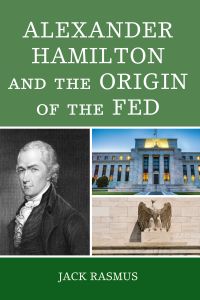
Dr. Rasmus is author of the books, ‘Central Bankers at the End of Their Ropes’, Clarity Press, 2017 and ‘Alexander Hamilton and the Origins of the Fed’, Lexington Books, 2020. Follow his commentary on the emerging banking crisis on his blog, https://jackrasmus.com; on twitter daily @drjackrasmus; and his weekly radio show, Alternative Visions on the Progressive Radio Network every Friday at 2pm eastern and at https://alternativevisions.podbean.com.

The US banking crisis erupted last week, March 10, 2023 with the collapse of the Silicon Valley Bank. Today’s Alternative Visions show is dedicated to a discussion of the events of the past week since the SVB crash. What’s the fall out from the SVB implosion? What other banks are in trouble? What’s the Fed and regulators done this past week to staunch the bank bloodletting and will their actions prove successful? What does it mean for the Fed’s rate hike policy and is the banking instability going global with the events surrounding the big European bank, Suisse Credit? TO LISTEN to the my ALTERNATIVE VISIONS RADIO SHOW of March 17 discussion.  GO TO:

https://alternativevisions.podbean.com/e/alternative-visions-from-silicon-valley-bank-to-larger-banking-crisis/

TWO OTHER SHORT RADIO INTERVIEWS (15 min.) ON THE TOPIC

(Critical Hour Radio Show: 3-17-23)

https://drive.google.com/file/d/15IF8bty0U3KPMEl2nfDhRwQEa7frappt/view

(Political Misfits Radio Show: 3-15-23)

https://sputniknews.com/20230316/us-drone-in-black-sea-credit-suisse-stock-drops-meta-layoffs-1108435142.html

Alternative Visions RADIO SHOW ANNOUNCEMENT:

Dr. Rasmus gives an update on US and global banking instability in the wake of the collapse of Silicon Valley Bank a week ago this friday. What exactly happened at Silicon Valley Bank and is that process occurring elsewhere? What is the role of the Federal Reserve in causing and precipitating the crisis? Have the efforts of the Fed and big banks to staunch the crisis in the US regional banks in recent days working? Is the Fed solution in the short run the cause of future banking instability in the longer run? What happened to bank regulation after Dodd-Frank Act? The three indicators of continuing bank instability. What’s happening at Credit Suisse bank in Europe? Similarities and differences with 2008 crisis. What does it all mean for future Fed rate hikes (next week) and Fed strategy to slow inflation? Consequences of the current banking crisis for US real economy and global economy. (Check out Dr. Rasmus’s print article on these topics this weekend at his blog, http://jackrasmus.com)

Check out my radio interview of Monday, March 13, 2023 which was dedicated to a discussion of the Silicon Valley Bank collapse, the role of the Fed, and the coming Fed 180 degree ‘about face’ on rate hikes (and what that means for inflation)

GO TO: https://drive.google.com/file/d/18nJ5RSJWcUksFDD90o5rs6uoAZ96QO17/view

This past friday, March 10, the Silicon Valley Bank, the 16th largest bank in the US, collapsed and was seized by the US govt’s FDIC. In my morning Alternative Visions show, as this was happening, I discussed some of the implications of the crash. Since friday, March 10, two more small banks associated with the tech industry also failed and were seized, and the US Treasury and Fed came out on Sunday with emergency bail out measures for depositors in the banks (but not bank stockholdlers or bondholders). The govt continues to struggle to contain the contagion, now spreading to other small banks, Bank and Junk bond ETF stocks, the crypto market, and elsewhere. What actually happened at SVB, and why its collapse, when the Fed’s annual bank stress tests said all US banks were solid? What will be some possible consequences of the collapse in coming days and weeks? Is this a 2008 financial crash all over again? Is SVB the ‘analog’ to the March 2008 crash of the Bear Stearns hedge fund that set subsequent crashes in motion later in 2008 (Fannie Mae, WaMu, Lehman, AIG, etc.? And what will SVB now mean for further Fed rate hikes that were planned this month and after? In turn, is the Fed’s fight against inflation over? Is that now on hold and the Fed will abandon it in order to save the banking system?  If so, then the deepening recession coming will be accompanied by continuing high inflation–i.e. a stagflation condition with dimensions the worse ever seen.

In 2017, in my book “Central Bankers at the End of Their Ropes: Monetary Policy and the Coming Depression” (see sidebar), I predicted the Fed next crisis would not be able to raise interest rates very much without precipitating a financial instability event. The financialized and globalized US economy of the 21st century won’t allow it. Repeatedly over this past year I have also been predicting the Fed could not raise rates much above 5% without provoking the same (see my various blog articles and radio interviews). Is the SVB collapse evidence for these predictions? Is US Fed and monetary policy now ‘neutralized’ and, if so, what can US capitalists and political elite do to deal with simultaneous recession, inflation, and financial system instability?

In the following Alternative Visions radio show I discuss the SVB crash in its early emerging phase. A more comprehensive details article will soon follow to assess subsequent events to the crash of SVB (and other banks now). Stay tuned.

To Listen to the Alternative Visions radio show of Friday, March 10, 2023 and the initial assessment of the SVB events, GO TO:

https://alternativevisions.podbean.com/e/alternative-visions-silicon-valley-bank-collapses%e2%80%94canary-in-the-financial-coal-mine/

RADIO SHOW ANNOUNCEMENT:
Dr.Rasmus discusses the collapse of the Silicon Valley Bank in California in last 24 hrs and what it means for the Tech sector and potential financial instability. Stocks & bond mkts plummet in response. Fear of uncertain contagion effects over the weekend. 250 companies with potential asset losses + SVBs largest investor: US Home Loan Bank (yes, believe it or not). What SVB and financial instability means for the Fed’s rate hike policy, as rates get pushed to 6% now. Why Fed won’t continue to hike rates to 6% if financial instability happens. And if so, why Fed rate hikes won’t be sufficient to reduce even Demand inflation. Today’s jobs report shows another 311,000 jobs, making rate hikes more likely. Rasmus shows, however, most jobs are part time service while layoffs in tech, transport, warehouse already rising. Why contradictions in economic policy are intensifying and hard landing recession more likely.

Here are 2 latest radio interviews on the US economy, jobs reports, Biden budget, etc. (Watch here soon for future interviews on the collapse of the Silicon Valley Bank on friday, March 10, and its consequences for US banking stability and Fed rate hike policy)

1. CRITICAL HOUR RADIO Show interview

https://drive.google.com/file/d/1eKth6Y88yl5PSiunH8uArtIdvHmfVsl6/view

2. BY ANY MEANS NECESSARY RADIO Show interview

https://drive.google.com/file/d/19PQiX9lEaZ50gw_wqdnQmgEj0ZJfAqeh/view

1. (Critical Hour Radio Show: 3-3-23)

https://drive.google.com/file/d/1fLl-UyPHcNOlXTQguZT4C_idTDfT9srd/view

2. (Political Misfits Radio Show: 3-1-23)

https://rumble.com/v2bhdj2-march-2-2023.html

https://rumble.com/v2bhdj2-march-2-2023.html

by Dr. Jack Rasmus
Copyright 2023

It has been roughly a year since Russia invaded Ukraine on February 24, 2022. A month before that invasion, in January 2022, this writer published an article ’10 Reasons Why the US May Want Russia to Invade Ukraine’ (see https://jackrasmus.com and other sources, LA Progressive, Counterpunch, et. al).

In that prior article it was argued the US had much to gain economically and geopolitically by provoking Russia to invade. That January 2022 article went on to describe in detail at least 10 reasons why and how the US would benefit economically and politically from a Russian invasion and a subsequent protracted War in Ukraine.

The article then traced US policy toward Ukraine from the US financed coup d’etat of winter 2013-2014, through the US-EU tactical and temporary ‘Minsk’ truce of 2015-2016 during which the US and its NATO allies ‘bought time’ (as later revealed publicly by German Chancellor, Angela Merkel, and French president, Holland). It then described the events of 2021 as the US Biden regime quickly left Afghanistan that August and escalated its joint efforts with the Zelensky Ukrainian government to taunt, lure and provoke Russia to invade on February 24, 2022.

In this follow on article, the ‘10 Reasons’ are revisited and assessed to what extent the US and its allies have in fact benefited—economically and strategically—from the invasion and war one year later today at end of February 2023.

1. Reunite NATO and Strengthen US Hegemony Over It Once Again

At the top of the US objectives list from a Russian invasion was the restoration of US hegemony over NATO once again, and the re-unification of Europe/NATO behind the US geopolitical goal of launching a counter-offensive against Russia to drive it out of the European economic region. This objective involving NATO was largely attained by the US in 2022 as a result of the Russian invasion.

Prior to the Biden regime re-assuming control of US geopolitical foreign policy in January 2021, US influence within NATO was weakening noticeably: France and to a less extent Germany were becoming increasingly discontent with US policy toward NATO. There was talk of the two countries charting a more independent course. The US Trump regime, 2016-2020, had criticized and even denigrated NATO’s performance and role while demanding European members sharply increase their financial contributions to fund NATO.

More recent NATO members in east Europe—especially the Baltics and Poland—were raising demands for more US military arms and troop presence in their countries that went largely unheeded by the Trump regime. Joint press conferences between Trump and Russian president, Putin, in Helsinki raised their further fears about US commitments to the region.

US Democrat regime plans in 2016, formulated and distributed internally within the US government, explicitly recommended first weakening and then destabilizing the Russian regime prior to any subsequent US direct confrontation with the ‘greater opponent’ and challenger to US global hegemony, China. These plans were shelved, however, when Trump assumed office in January 2017. The plans were subsequently ‘dusted off’ and resurrected quickly in spring of 2021 by the restored Democrat party regime under Biden. (The subsequent events in 2021 leading up to the Russian invasion of February 24, 2022 were addressed in the prequel to this article, to which the reader is referred).

What transpired in 2022 after the February 24 Russian invasion can only be understood as a set of major geopolitical gains by US interests—especially when viewed by US neocons whose policies since 1999 to expand NATO east were adopted by the US—often despite the warnings of the older US foreign policy establishment that would lead to a dangerous and potential nuclear confrontation with Russia.

A new neocon-leaning faction largely assumed control of US NATO policy in 1998-99. By 2020 NATO had expanded throughout eastern Europe. The additions to NATO provided an opportunity for the US to forge a new majority on which to restore its hegemony. Both France and Germany, former dominant voices within NATO in Europe, in the expanded NATO by 2021 were relegated to ‘tail ending’ the US-Poland-Baltics more radical policy initiatives toward Ukraine—with Czech, Slovakia and Romania almost always in agreement as well. By 2021 the only NATO members insisting on a degree of independence from US dictated initiatives were Hungary and Turkey.

The Russian invasion has enabled the US to push NATO even further toward encirclement of Russia, this time in Europe’s ‘North’ periphery not just toward the ‘East’. In 2022 US diplomatic efforts intensified to convince both Sweden and Finland to join NATO and abandon their prior ‘neutrality’ positions. Both countries thereafter quickly announced their intent to join NATO and their merger into is underway. Current opposition of Turkey to their NATO membership is likely tactical and temporary.

Less likely, but underway behind the scenes, is the US-East Europe joint effort to bring Moldova into NATO as well. Moldova’s proximity to Ukraine makes it more difficult to do so. But diplomatic efforts in 2022 there are underway nonetheless. The Moldovan ruling regime has publicly expressed interest joining NATO. That has resulted in an eruption of public protests and demonstrations as most Moldovans see little advantage in taking sides in the intensifying NATO-Russia war so close to their borders. (It is not coincidental perhaps that the US has deployed one of its elite military divisions, the 82nd airborne, on the Romanian-Moldovan border. Should military events intensify sharply in 2023 and approach the Ukraine-Moldovan border it is likely the 82nd will intervene in Moldova to drive Russian forces still in the Transnistra region out of that country then fast-tracking Moldova’s merger into NATO. A popular uprising now underway in that country aimed at replacing the current pro-NATO Moldovan government may also serve as pretext to precipitate such a development as well.

In short, the US has firmly restored its hegemony over NATO and has unified NATO behind its objective to militarily support Ukraine with arms and advisors in a protracted proxy war. In ways unforeseen a year ago, the invasion has also furthered US geopolitical objectives by adding two more NATO members soon (Sweden and Finland); and, perhaps in the distant future, also adding Moldova to NATO ranks.

2. Get Germany to Cancel the Nordstream2 Russian Gas Pipeline; Get Europe to buy US gas instead: increase US natural gas exports to Europe and thereby create supply shortage in US to justify US domestic gas price hikes as well.

Early in 2022 it appeared Germany was a reluctant partner in the US Ukraine proxy war. It stalled providing military equipment and financial assistance. As the prince of investigative reporters, Seymour Hersh, recently revealed, the Biden administration had plans on its desk in 2021 even before the invasion to destroy the two Nordstream gas pipelines from Russia to Germany should Germany balk and continue to allow the flow of Russian natural gas. The Biden plans to destroy the Norstream pipelines were implemented in September, with the assistance of Norway’s military, according to Hersh. To this day Hersh’s expose has not even been addressed or discussed in the US elite’s leading news outlets, the NY Times and Washington Post.

Early in 2022 the US pushed Germany to build new LNG natural gas ports to accept US LNG shipped natural gas. The ports were built in record time with US financial assistance and US LNG began to flow in large quantities to Germany by year end 2022. It appears the US planned the sabotage once the LNG port terminals in Germany started to come on line.

The USA has a glut of natural gas and oil. US oil corporations have thus benefited greatly by shipping the excess gas to Europe in 2022, which they then sold to Europe at prices 2X and even 3X higher than the prior Russian natural gas. Similarly the US shipped more oil and processed oil (distillate, diesel, etc.) products to Europe in 2022 as well.

The higher priced US oil and gas has resulted in super profits for the US corporations involved in providing gas and oil to Europe, as Russia has been driven out of the European market in northern Europe by US sanctions. US oil corporate profits in turn have been increased to record levels by creating relative shortages in the US market as more US gas and oil has been shipped to Europe.

Big US oil corporations like Exxon and Chevron each reaped record profits in 2022 from the higher prices in 2022 sold both in US and Europe. Each recorded record profits of more than $50 billion in 2022. Record stock buybacks of $30-$70B by the companies have been announced in turn, enriching oil corporations’ shareholders at record levels as well. Other major oil corporations in Europe have followed their US cousins, recording record profits in the range of $25-$35 billion as enjoyed by European oil companies like France’s Total Energy and Netherlands’ Shell.

The US has been judicious in imposing the pace of sanctions on Russian oil and gas so as not to expose Europe to too great a shock until US gas and oil could backfill the vacuum created by the exit of Russian oil and gas. It wasn’t until February 5, 2023, for example, that sanctions on importing of Russian distilled oil were implemented. Ship based Russian oil continued to export to Europe until late in 2022. And some Russian natural gas still flows for now via its LNG shipments and Russian pipelines in southern Europe that send natural gas via Turkey and even Ukraine to Hungary, Italy and other EU countries. But the remaining flow is being steadily cut off by US sanctions. In 2023 all Russian energy exports to Europe will no doubt disappear.

But the sanctions on Russian energy products exported to the West have not reduced Russian energy exports globally, nor its revenues from global energy sales. If the idea of sanctions is to deny Russia oil and gas export revenue (with which to finance the war) then the US sanctions have clearly failed.

The volume of Russian crude oil exports in 2022 were roughly the same as in 2021 at around 10.2 billion barrels, according to the western source tradingeconomics.com).

Nor has the value of Russian fossil fuel exports been reduced by the sanctions. The reduction of the dollar value of Russian fossil fuel exports to Europe, according to the source, Statista, as of February 2023 was roughly -$84.1 billion. But Russian export revenue rose by +$110.3 billion for just the three countries: China, India and Turkey. Russia in other words more than offset the decline in shipments and revenues to Europe by selling more to these three and boosting revenue from sales even as it discounted its sales reportedly by 20-33%.

No doubt similar shipments and revenues were realized for other ‘rest of world’ economies as well. And there’s evidence that countries like Turkey, which bought much greater volume of Russian oil in 2022, have been reselling it to Europe—at a higher price of course. Turkey is also in negotiations to buy a much larger volume of Russian natural gas from the pipeline that already flows through its country from Russia to Europe. India is likely playing the same ‘re-selling and exporting’ Russian oil at higher prices than it purchased from Russia at heavily discounted prices.

While the reduction of oil and gas exports from Russia to Europe has not impacted the Russian economy much, it has severely impacted Europe’s economy and to some extent the US as well. The war and sanctions have reduced the supply to Europe (and thus raised the price in that market). Global oil markets broker-speculators have also played a role in rising global energy prices. In expectation of possible supply chain issues due to the sanctions and war, speculators have raised the price of oil futures market prices. These higher prices get passed on to businesses and consumers, whether or not actual supply issues even materialize. Oil companies use the price hikes as excuse to mark up and pass on and raise their prices even further.

The rising value of the US dollar over 2022 has also played a role in oil and gas inflation, especially in Europe and Japan. As the US central bank, the Federal Reserve, has raised interest rates rapidly in 2022, that rise has caused a corresponding rise in the value of the US dollar. Since virtually all trading in global oil markets is in dollars (a consequence of the US dollar as the imperial trading and reserve currency), the rising dollar results in a decline in other countries’ currencies. That especially occurred with the European Euro and British Pound, both of which at one point in 2022 fell by 20%. A declining currency in turn means rising import inflation for imported oil and gas for Europe and Japan—and that is over and above price pressures due to supply chains, shortages, or oil futures markets speculators.

The US, Russia and Saudi Arabia are the ‘big 3’ global oil producers, each pumping 10-12 billion barrels of oil a year. The US is the largest producer at more than 12 billion. It has a glut. So getting to ship its excess to Europe—at a price 2X-3X higher than Russia’s oil—results in big profits for US oil corporations and shareholders’ income, as previously noted.

To sum up: The US didn’t have to get Germany to cancel Nordstream2 as predicted in my January 2022 ’10 Reasons’ article. The US ‘canceled’ it for good by blowing Nordstream up. The US objective of driving Russia out of Europe energy markets has now been largely achieved. As result of the US Ukraine proxy war, Germany has therefore become dependent on US oil and natural gas as never before. There’s no longer any debate in Germany on whether to activate Nordstream2 or continue Nordstream1. The ‘matter’ has been decided for it by the Biden administration by its September 2022 sabotage of the pipelines. (It’s not surprising that German resistance to go ‘all in’ providing military hardware to Ukraine collapsed as well soon after the Nordstreams destruction.)

3. Create Excuse to Send Still More Troops & Advanced Weaponry to East Europe

The 3 Baltic countries and Poland have been demanding for years that the US to provide them with latest generation US military arms and station more US military forces in their countries permanently. Poland has also been demanding the US station tactical nuclear weapons on its border with Russia’s Kaliningrad region and Belarus. So too has Lithuania. Both Poland and Lithuania at one point in 2022 called for the blockade of Russian access to its Kaliningrad region. Fortunately cooler heads in NATO prevailed to prevent what would have been a de factor act of war by Poland-Lithuania against Russia.

The US has been somewhat cautious in providing its advanced weaponry to Poland and the Baltics before the Russian invasion. But apparently no longer. The Ukraine war has meant an increase in both arms and US troops. US units are poised on the border under the guise of ‘trainers and advisers’. Some are even active in western Ukraine.

The US had a constraint in providing latest weaponry to its east European NATO allies before the war. But the war has resulted in East Europe dumping its old Soviet Union weapons and ammunition on Ukraine. That supply is now virtually spent. That leaves Poland and others in stronger position to backfill with latest US arms and the US is in the process of doing so. It is even in discussions with Poland to place US tactical nuclear missiles in Poland.

Thus, this original US objective has been enabled by the Ukraine war, without which it would not have been possible to the extent it has been, and will continue to be. Much of US media attention is on US weapons flowing to Ukraine. Almost silent, however, are the deals, assurances and credits being extended to Poland, Baltics, and other East Europe NATO allies for the US to provide it with latest generation US arms.

4. Obtain More Economic Concessions from Ukraine for US Business in Exchange for US Financial and Military Aid

The US has been providing at minimum $4B/mo. in economic aid to Ukraine. (Total US aid, military and economic in 2022: $111B). The IMF, asked by the US, has been providing additional financial aid to its central bank to support Ukraine’s collapsing currency. It is naïve to think that this magnitude of US aid to Ukraine is given as a ‘blank check’ with no strings attached. Those strings no doubt require Ukraine give special consideration to US companies involved in trade (export and import) and financial relations.

Much of that aid provided almost certainly came with the understanding that Ukraine would spend it on imports from the US. There are more than a hundred US companies (likely much more) that have set up offices in Kyiv, Lviv, Kharkhiv, Odessa and even other smaller regional cities. Major US companies like Google, Lyft, SNAP, Oracle, Nvidia and others have offices. They are involved in export-import, direct and joint investment projects, R&D subcontracting, mineral and ore extraction and agriculture.

In early February 2023 Biden personally visited Ukraine. US Treasury Secretary Janet Yellen quietly followed before the month’s end. She did not go just to sign checks for Ukraine and a photo op. Details of Ukraine-US economic relations were no doubt discussed.

Ukraine is big business for US capitalists. Cheap labor, often skilled. Low cost agriculture, machine parts, metal ores, banking, and heavy industry. US deputy Secretary of State, Victoria Nuland, set up the penetration of Ukraine’s economy by US businesses when she was appointed ‘economic czar’ back in 2015. The floodgates have been open to US capital investment for 8 years now and US business has descended upon Ukraine, cherry picking the most profitable opportunities. The acceleration of US economic aid has no doubt resulted in even more economic concessions by Ukraine in exchange for its desperate military support by US and NATO. US and European capitalism is now deeply embedded in Ukraine

In summary: Further evidence of how much the invasion has accelerated and deepened this economic penetration of Ukraine’s economy by US and western economic interests requires a deeper inspection of details of US business relations over the past year. That has yet to be determined. However, it is highly likely the war has in fact accelerated US economic penetration of Ukraine’s economy as the US has provided at least $4B a month in 2022 in just economic aid to Ukraine. Uncle Sam doesn’t write checks for nothing!

5. Growing US Support for Moldova to Drive Russia Out of Its Transnistria Region and Install A Pro-NATO Membership Regime

Determining the influence of the war on this fifth objective is more long term, although developments have been proceeding behind the scene. Since the outbreak of the war the official Moldovan government has become publicly more pro-NATO. In response, popular demonstrations and protests have arisen as the populace becomes more concerned the country may soon abandon its neutrality in the war. Moldova’s prime minister has begun blaming the protests on Russia and has been leaning in statements further toward US/NATO alignment. Support for the regime by US/NATO is likely occurring behind the scenes.

Should the military conflict in Ukraine spill over to Ukraine’s Odessa region, which is proximate to Moldova, it is likely US/NATO will move to enter Moldova in support of the government. It’s not accidental or coincidence that in 2022 the US sent its premier Army 82nd Airborne division to the Romanian-Moldova border located just miles from Odessa.

In short: this US objective—bring Moldova into NATO—does not appear yet to have been achieved despite the invasion and War. However, developments on the ground suggest it may have begun in early phases.

6. Justify More US Efforts To Destabilize Belarus and Kazakhstan

US efforts to destabilize Belarus prior to the Ukraine invasion have largely failed by 2022. Belarus domestic internal security forces have largely neutralized internal opposition to the regime. The war has driven Belarus even further toward alliance with Russia as Poland and the Lithuanian have been threatening Belarus and stationing more military forces on the Poland-Belarus border.
The de-stabilization of Kazakhstan, which was also underway prior to the war, shows no further development as well. To the contrary, the US is courting Kazakhstan to send some of its vast oil and gas reserves to Europe and negotiations to that effect are underway between US and Kazakhstan. A further indication of a change of US policy—toward a more diplomatic strategy in the central Asian region of former Soviet republics—is reflected in US Secretary of State Anthony Blinken’s visit at end of February to Uzbekistan, Kazakhstan’s neighbor. No doubt unreported meetings will be held by Blinken with representatives of nearby Kazakhstan while Blinken is in Tashkent (capital of Uzbekistan).

Summary: There’s little evidence the war has furthered the US objective of destabilizing either of these two countries, Belarus and Kazakhstan as raised as a possible objective among the ’10 Reasons’ US wanted Russia to invade. US tactics have shifted from funding and fomenting internal anti-government protests and demonstrations via NGOs and opposition parties in those countries toward diplomatic strategies, at least in the case of Kazakhstan, in order to convince Kazakhstan and its central Asian neighbors to cut off trade with Russia and redirect economic relations to Europe & US.

7. Provide A Major Foreign Policy Distraction for the Democrat Party before November 2022 Midterm Election

Ever since president Truman and the Democrat Party in 1950 was charged with having ‘lost China’, Democrat party candidates have repeatedly gone out of their way provoking military conflicts in order to look tough in foreign policy. Biden in 2022 put on that hat, as did many Democrat party Congressional candidates running for office in the crucial 2022 Congressional midterm election.

The outcome of the midterms, however, left a Congress virtually unchanged in the Senate and with a miniscule narrow margin in favor of Republicans in the US House. In other words, not much changed in 2022 from the 2020 Congressional election because the message of both parties in 2022—i.e. what they were offering the electorate—was essentially no different than they offered in 2020! Given that scenario, it is therefore difficult to determine if the Russian invasion influenced the US midterm election outcomes.

The Ukraine war should have been a negative factor for the Democrats in the election. More than $100 billion in un-accounted aid has been provided by the Biden administration (and likely more). But Biden administration has cleverly doled out its estimated $111 billion in Ukraine military and economic aid during 2022 in ‘dribs and drabs’—i.e. a billion or two here and there, a half billion now for this, and so on. It thus avoided public awareness and debate before the election over how much treasure the US was giving to a war half way around the world—i.e. just as it was shutting down and cutting Covid era aid and social program spending to its own US citizens. The administration’s strategy to stonewall discussing details where the aid was going cleverly avoided the issue of how much of the $111 billion was being diverted once it reached Ukraine, a country noted for its magnitude of corruption which the US media before the War frequently noted but turned totally silent on in 2022.

There was essentially no oversight in the months preceding the US 2022 midterm election. Nor has there been to this day. Only now in 2023 are questions being raised where has the money gone. Anecdotal information like Ukraine government officials allotting themselves $50K US SUVs or skimming off the top to send to their bank accounts abroad has thus far been swept under the rug by US media.

In conclusion, it is unlikely the US proxy war in Ukraine played a role in the US 2022 midterm elections in any way contributing to the Democrats’ election outcomes. How US aid to Ukraine has been cleverly handled by the Biden administration shielded it from negative political fallout in 2022. This may not prove the case in 2023 and consequences for 2024 US elections is yet to be determined.

8. Get Congress to Approve Further Increase in the US Defense Budget Beyond $778B

Like the objectives of restoring US hegemony over NATO and driving Russia out of access to Europe energy markets (and European markets and economy in general), it must be concluded that the escalation of US defense spending in 2022-23 has been one of the Biden administration’s successful consequences of its provoking Russia to invade Ukraine.

The US Pentagon 2023 proposed budget 2023 prior to the invasion was estimated at $773 billion. That has been boosted by another $85 billion recently. Proposed Pentagon 2023 spending is now $858 billion, one of the largest annual increases in US defense spending ever. And that’s just the beginning. There are two further caveats that total US defense spending will come in very much higher in 2023.

First, the $858 billion is only the start. More war aid will surely follow in 2023 in subsequent administration proposals for aid to Ukraine.

Second, the Pentagon budget is only part of the Defense Budget. The latter includes war-related expenditures squirreled away in other government departments apart from the Pentagon. There’s the Veterans Dept., Energy department spending on fuel for the military (which is the biggest single entity consumer of oil worldwide), nuclear arms development by the Atomic Energy Commission, private armies and mercenaries funding by the CIA and State Dept., the NSA’s budget, war propaganda development costs incurred by various US government funded NGOs, Homeland Security, the US defense department’s share of interest on the national debt (rising to $600 billion in 2023 from $350 billion in 2019), etc. The actual total US Defense Budget is thus well over $1.1 trillion a year and rising.

All the above doesn’t include other funds that may be redirected from other agencies, as occurred in 2022 involving funds earmarked but not spent for Covid relief; or special expenses for direct US military operations called OCO (Overseas Contingency Operations) that may arise in 2023 (as they did throughout the Iraq & Afghan wars; or for US top secret advanced weapons development which never gets stated in public budget reports and which typically runs at least $50 billion a year.

To summarize: the Russian invasion has resulted in a significant surge in Pentagon and defense spending overall. This objective has therefore been a major achievement of US proxy war policy that aimed at provoking Russia to invade.

9. Provoke Russia to Invade as Excuse to Go After Pro-Russian Supporters: Venezuela, Nicaragua and Cuba

It appears the US has not used the Ukraine War as a cover to escalate attacks on Latin American progressive regimes, as was argued might happen in the initial ’10 Reasons’ article in January 2022. Several explanations may underlie this.

First, Venezuela has actually been courted by the US to provide Europe some of its much needed oil and is now selling some of it to Europe. Continuing to de-stabilize Venezuela would undermine this more strategic US objective of backfilling Russian oil to Europe. In addition, with the collapse of the puppet Guido opposition in Venezuela, and many of the opposition’s key leaders immigrating to Florida recently, there’s little internal support in Venezuela or within Washington DC pro-imperial elites and neocons for a new US destabilization effort in that country.
Second, with the US embroiled in Ukraine; more concerned with the role of Iran supporting Russia; and with US efforts to test China in Taiwan—there’s little political support among US economic or political elites to provoke yet another conflict with any of these Latin American countries.

This potential objective for the US provoking Russia to Invade was also not realized in 2022. Nor will it likely in the foreseeable future, as political winds blow increasingly ‘left’ over the South American continent and the US is preoccupied with confronting Russia and China. The US needs to court emerging market economies and prevent them from falling into the Russian-China-BRICs camp. Launching new attacks in central and south America, even on supporters of Russia-China, would undermine US efforts to ensure ‘on the fence’ emerging market economy countries remain in the US camp—or least remain neutral in the great geopolitical struggle between US//NATO/G7 bloc vs. the China/Russia/BRICs bloc now intensifying.

10. Test the Effectiveness of Latest US Weaponry Against Russian Forces & Russian Offensive Weapons’ Effectiveness via a Proxy War

The Ukraine war represents a technological revolution in the character of warfare in the 21st century. The mental image of World War II with massed armies with hundreds of tanks rushing across open fields with infantry behind and squadrons of aircraft overhead no longer exists. Technology has rendered all that obsolete. So too is obsolete the more recent image of massive US aircraft carrier task forces with support ships arrayed around it and a perimeter of submarines secretly deployed in outer ring protection. That too is now rendered obsolete by technology.

Ground based tanks, motorized artillery vehicles and personnel carriers are sitting ducks, as they say. Heavily armored in front, side, back and even underneath, their thin topside armor is easily penetrated by radar guided laser and satellite guided missiles as well as hovering armed suicide drones. Sea going surface ships are no less vulnerable. Surveillance systems from low level satellites can detect the insignia on shoulders of individual officers. Radio guided smart bombs can decide after launch to change targets and which to prioritize given enemy radar jamming. There are no anti-missile defenses that can respond to hypersonic missiles in time. Thermobaric bombs can wipe out an entire battalion if it foolishly amasses and tries to concentrate its force before an attack. The list of new weaponry is long that renders classic ground and sea tactics vulnerable.

And that’s only the beginning. Artificial Intelligence directed weapons now coming on line can decide tactical responses on their own without human battlefield communication, either local or from afar. There’s virtually no secure communication on the modern battlefield any longer. Both sides know what the other is about to do. AI will enable combatants soon to know what the other side is about to do (and counter-attack) before the other side decides to even do it.

The two primary principles of warfare long ago set forth by the German military theorist Clausewitz (and later developed further by Napoleon’s Bertrand De Jomini, Britain’s Liddell Hart, Vietnam’s Giap, and others) may no longer be relevant. Or they at least require a fundamental re-statement given the technology-driven changes in modern war tactics that have been revealed on the ground in Ukraine today.

Clausewitz’s two first principles of War were: 1. Concentration of Forces and 2) Surprise and Mobility. But with modern complete surveillance (visual, audial, electronic) how can military forces be safely mobilized and concentrated without a massive shower of artillery and missiles descending on them almost instantaneously once revealed by 24/7 surveillance? And where’s the element of Surprise possible today given the same? When the Soviets amassed armies on the flank of the Germans Sixth Army at Stalingrad in late 1942, German forces had little idea what was about to happen and were caught completely by surprise. US Marines in northern Korea in 1950-51 experienced the same. That could not happen today.

One of the objectives of the USA in provoking a Russian invasion in 2022 was to see what Russia’s military technology was capable of—and in turn how to evolve US/NATO defenses and responses to that capability. US/NATO has learned much—about both Russian equipment strengths and its weaknesses. So too has Russia learned much of Ukrainian-US/NATO equipment strengths and weaknesses. Both sides have been reluctant to fully expose their very latest weaponry and its capability during the first year of the Ukraine war. Both NATO and Russia have held back deploying their latest advanced aircraft and long range artillery, for example. Even deployment of already well-known weaponry has been selective and limited for both.

That applies not only military equipment. Both sides are on a steep learning curve to determine each other’s tactics; learn the limits of their respective logistical capabilities; and the characteristics of what constitutes the practices of the best field commanders.

Another consequence of the first year of the war is the ever greater effectiveness of propaganda and media control in keeping their respective populations supporting their elites’ war efforts. The complete blackout of alternative views and even facts on the ground by US media in general—TV, print, social media, etc.—during the current Ukraine war thus far has been astounding. The US media control of facts, video images, and messaging over the past year makes even the US propaganda barrage during the 2003 Iraq war look amateur. Nazi Germany’s propaganda minister, Joseph Goebbles, wouldn’t even make the US propaganda team today!

To sum up: Provoking Russia to resulted in the US obtaining deep knowledge of the performance of Russian military equipment and technology, as well as of Russian tactics, organization, and logistics. And the discovery has still far to go since both sides, US/NATO and Russia, have been holding back committing their most advanced systems so far.

Some Long Run Strategic Conclusions

In July 1979 then Carter administration national security advisor, Zbigniew Brezinski, privately convinced then president Jimmy Carter to destabilize Afghanistan. This began well before any Soviet incursion into Afghanistan.

A secular political revolution in 1978 in Afghanistan brought a new president, Najibullah, to power. As Afghanistan attempted to chart an independent course of development, Brezinski-Carter, decided to have the CIA implement a domestic destabilization of the country, in order to get Najibullah to request assistance from the Soviet Union. After six months of CIA domestic destabilization in 1979, Najibullah did so. Per the Brezezski plan the CIA-USA then armed the religious peasantry, the Mujahadeen, and the first Afghan war was on.

The US policy was long term: to bleed the Soviet Union militarily, arming the Mujahadeen with stinger anti-aircraft and anti-tank weapons. It was the USA’s original proxy war in Afghanistan. After eight years the war contributed to the eventual withdrawal of Soviet forces and collapse of the Najibullah regime by the late 1980s—setting in motion decades more internal civil wars and the eventual US invasion of Afghanistan in 2001 that lasted twenty years until the US’s eventual defeat and withdrawal from that country in August 2021.

The current US/NATO war in Ukraine shares many elements with the USA’s original 1979 proxy war in Afghanistan. That earlier event was what might be called the original ‘Brezinski 1.0 Doctrine’ and strategy of US promoting proxy wars. US strategy in Ukraine, another proxy war, might be called ‘Brezenski 2.0’.

Like provoking the Soviet Union to invade Afghanistan in 1979, the US strategy in 2021 was to provoke Russia to invade Ukraine, subsequently to arm Ukraine to the hilt, and to bleed Russia economically and militarily for a protracted period in the hope of ultimately precipitating a regime change in Russia. It worked in Afghanistan in the 1980s; US neocons running US foreign policy adventures in the 21st century expect it to work in Ukraine in 2022-2X as well.

Beginning as a civil war pitting the US-imposed Kiev government in 2014 against its eastern provinces in the Donbass, the Ukraine war has been revealed increasingly as a US/NATO vs. Russia war.

The war is being waged, moreover, not just as a military confrontation but as a comprehensive economic war by US/G7 countries against Russia. The ultimate US economic objective is to drive Russia out of Europe’s economy—in energy, finance, and virtually all economic markets—and have US economic interests enter the ensuing economic vacuum.

But the US economic strategy goes even farther than that. It’s about ‘economically ring fencing’ off Russia from the entire west’s (G7+)economic resources and markets. An economic and electronic ‘Iron Curtain’ is being created as the US bifurcates the global capitalist economy into ‘us vs. them’. Less obvious and longer term, the US plan is to sanction and cut off China as well—at least at first technologically—although this will be more difficult than ‘ring fencing’ Russia.

Already the US/NATO economic war against Russia is proving questionable in its ultimate strategic objectives. Europe and G7 economies might well become more integrated with the US global economic empire as a result, but the rest of world’s emerging market economies may not.

Key elements of the US global economic empire have come under pressure in 2022 and are weakening as a result of US economic war against Russia (and China behind it).

The US dollar as global trading currency is being challenged in global energy and commodity markets. Trading in oil and other critical commodities have begun replacing it. The US controlled SWIFT international payments system (which US uses to identify violations of its sanctions policy) is creating alternative payments systems as well. The BRICS (Brazil-Russia-India-China-So. Africa) independent trading bloc is expanding: key emerging market economies like Turkey, Algeria, Indonesia, Egypt, Argentina, Saudi Arabia and even Mexico have all petitioned to join it. And early development of alternatives to the US-controlled IMF and World Bank and World Trade organization (WTO) are emerging. US sanctions policies against Russia (and against China Tech increasingly) may well backfire in the long run to the disadvantage of the US economic empire.

In other words, the USA’s ‘Brezenski 2.0’ proxy war and global sanctions strategy may yield political results in the short run but lead to a further fragmenting of the US global economic empire in the longer run—yielding short run political gains for the US in Europe at the expense of longer run economic costs in much of the rest of the world.

The US current economic strategy appears to be to protect and shore up its most valuable economic and political alliances and markets first—i.e. NATO and the G7 economic base; to bifurcate the global economy where possible ring-fencing Russia and China; and thereafter as a western bloc to compete aggressively with that Russia-China for the allegiance of the rest of the emerging economies of the world—especially critical countries like India, Saudi-UAE, Indonesia, and key players like Brazil-Mexico and others in Latin America.

In the interim to that long run economic shift, the strategy behind the shorter term US proxy war in Ukraine—its ‘Brezinski 2.0’ strategy—is to continue the war for as many years as possible in order to bleed Russia militarily and economically as it did in Afghanistan in the 1980s. The US neocons’ dream is that Brezinski 2.0 will lead to an encirclement of Russia by NATO allowing the US/NATO to dictate economic and political changes in Russia and ultimately regime change—i.e. a repeat of what happened to the Soviet Union in 1990-91.

If US/NATO proves successful with this military and global economic strategy, neocon and imperial interests within the US will thereafter step up their offensive against China that is still at its very earliest stages militarily and economically. The US is currently in the process of creating a NATO-East equivalent with the US-Japan-So. Korea-Australia at its core. Current China sanctions, now mostly limited to China’s technology sector, will be expanded to encompass China’s global economic footprint and trading relations in general. The US accompanying military strategy will be to create another ‘Brezenski 3.0’ proxy war targeting Taiwan—the early foundations of which are already being laid and the US is already testing China’s responses and seeking to determine what it will take to provoke China to invade Taiwan.

Dr. Jack Rasmus
March 1, 2023