Feeds:
Posts
Comments

Recent advancements with ‘Generative AI (e,g, ChatGPT) signify a qualitative leap in AI software machines that is about to radically change capitalist product and labor markets. Investors are now planning hundreds of billions of dollars in new investment in AI product applications.  Goldman Sachs bank just predicted AI to impact 300 million jobs (wiping out some, changing others, reducing hours of work for many others and lowering wages).  If interested in AI & its future impact on the working class, join my video presentation tomorrow to the Niebyl-Proctor Oakland, CA, library Sunday, May 14, 10:30am-11:30am (pst). Q&A follows at 11:30.

Link: https://us02web.zoom.us/j/81133350622?pwd=dUUyUWppbWt6djVTaElISUhocXpSUT09

Major Themes: How Neoliberalism has resulted in a constant intensification of exploitation of workers the past 4 decades. How AI tech change is about to accelerate labor exploitation further. (+ Implications of ubiquitous AI software machine technologies for Marx’s theory of exploitation, his key derivative concepts of ‘organic composition of capital and falling rate of profit tendency, and the 19th century labor theory of value).

The dollar is one of the key lynchpins of the US economic empire. Since the advent of Covid, sanctions on Russia & China, the Ukraine war, and the growing bifurcation of the global economy, developments have intensified toward a shift from the US dollar as global reserve and trading currency. How much is hype, wishful thinking, and actual fact? Listen to my April 29, 2023 Alternative Visions radio show where I discuss this important topic. (Also latest developments in the crash of First Republic Bank as of April 29 and predictions)

TO LISTEN GO TO:
https://alternativevisions.podbean.com/e/alternative-visions-de-dollarization-continued-banking-crisis-updates/

Watch my April 18, 2023 hour long YouTube interview on ‘What’s Next for the Economy’, with the ‘This is Revolution’ group, addressing topics of global ‘de-dollarization’, Fed interest rate monetary policy, inflation, growing US deficits & debt, sanctions and Ukraine war, US banking crisis, recession, US geopolitical strategy in Ukraine & Taiwan, and related topics.

TO WATCH: Go to https://www.youtube.com/watch?v=eokafbspLEI

Watch my 90 minute April 3, 2023 YouTube Interview on the current state of the Banking Crisis presentation to the audience of the Niebyl Proctor Marxist Library in California.

To watch go to https://www.youtube.com/watch?v=ObHVDkkZ-84

AN ADDENDUM

In the Q&A session following my above presentation, a discussion among the attendees after I had to leave addressed the topic of the ‘falling rate of profit tendency’ by Marx. During my presentation I too briefly commented on this important topic. Basically, while I do not support the falling rate of profit idea as the cause of capitalist business cycle instability (or the idea that financial instability derives from real economic conditions created by the falling rate of profit, I do agree strongly with Marx’s assessment of how labor exploitation occurs by means of absolute and relative surplus value extraction.

I followed up my presentation a day later with the following letter to the audience that attended my presentation, which explains why I don’t adhere to the falling rate of profit tendency. That letter and explanation is as follows:

Hello Gene,

Thanks for the invitation to address your group on the banking crisis this past Sunday, April 2. My apologies for having to leave early and not stay for all the Q&A. I just watched the discussion after I left and have a few clarifications for Mehmet, Raj and others on what I said about AI, exploitation, and the falling rate of profit hypothesis that I’d like to offer by way of clarification to what I said on those topics. Please share these comments with others who may be interested.

  1. On the falling rate of profit: what I’m saying is that Marx makes its clear (in Vol 1) that profit is created by the exploitation of ‘productive labor only’. That is, from workers who create commodities and from those workers in services whose work is necessary to realize the creation of money values from the distribution and sale of those commodities. That leaves a great many workers who do not produce any value. They are ‘unproductive’. If they do not create value for the capitalist, then there are no profits realizable from their labor. But profits derive only from productive labor in Marx. And therefore the tendency of the rate of prfit to fall is only where productive labor is involved.
  2. A problem in those who advocate the falling rate of profit (hereafter FRP for short) is that they use capitalist state data and statistics to show the rate of profit declines before a crisis (or is doing so secularly long term regardless of business cycles). But capitalist profit data is not limited to profits from production employing productive labor. Capitalist stats on profits include portfolio profits, that is profits from financial asset investing.  One cannot therefore ‘prove’ the FRP by using capitalist data. It includes profits from creating financial securities (or what Marx would call fetish capital, and what Marx represented by the equation M-M’, as opposed to M-C-M’ that describes capitalist commodity production. My first point is therefore that the FRP is unmeasurable using capitalist state data
  3. The problem of measuring the FRP is complicated further because what the US state data calls corporate profits excludes other capitalists production from non-corporate businesses. That is called ‘Business Income’ in the US data. Advocates of FRP ignore this other source of capitalist surplus value/profits.
  4. The problem is still further complicated because capitalism is a global system. Therefore profits estimation must be global as well. That requires mixing capitalist profits in Europe, in China, and elsewhere. Problem is different countries define profits differently. No where has ‘profits’ been aggregated globally that I know of. A still further problem: ‘profits’ in China state companies virtually don’t exist. State companies sell their products at a low fixed price and the state does not tax state company profits. That is, China government does not earn profits from its state enterprises.
  5. Finally, there’s the problem of price. The price of the sale of commodities contributes to the profit total as well. But prices cannot be compared across economies very well for reasons I won’t go into. The use of the concept of Purchasing Parity by capitalist economists to average out prices across economies is very inexact. It is more ‘art’ than science.

For all the above reasons one cannot quantify capitalist profits in order to determine if its ‘rate’ is falling or not.

Which raises another technical issue. What does one mean by ‘rate’? A rate is the change in percent terms in a period compared to its base period. (example: inflation is the rate of price change over time, current compared to a base year). So when Marxist advocates of FRP say the ‘rate’ of profits is falling, what is the base year to which they are referring? They mostly never indicate one, which is another FRP computational issue.

One might add: why is the rate of profit important? Why is the level or magnitude of profit a better variable?

Marxists who support the FRP thesis (who, by the way, tend to be mostly anglo-american Marxists), argue that the financialization of the capitalist mode of production in the 21st century is all derived from the real, or productive, sector of the economy. Somehow the decline of profits in the real, productive labor economy is what is causing the financialization. But if so, what is the causal mechanism by which this is occurring. Describe it. They don’t.

Those who advocate the causal relationship between the real economy and the financial economy is one way, from the former to the latter, ignore the more likely relationship that is dialectical not mechanical causation that is one way.

FRP Marxists also don’t understand very well that profits of any kind are price variables as well as value variables. Price fluctuates around the core of value. Labor time is the concept marx ‘invented’ in order to quantify value so it could be measured. Labor time is thus the functional proxy concept for the labor theory of value.  But there is no ‘time’ variable in the creation of financial asset securities. For example, tell me how much labor time went into creating the various financial derivatives? For example, in creating credit default swaps? Can’t be done. But, CDS are a financial market that produces immense financial profits for capitalists. Profits that get mixed into quantitative estimates of profits from production in most multinational corporations. That’s just one example.

Capitalists have been turning to creating financial asset profits increasingly in recent decades, especially since 2000.  I’m saying this creation is destabilizing the capitalist system with bubbles and financial crises that in turn often cause a deep contraction of the real economy (which reduces the creation of commodities and profits from productive labor). Capitalists are turning toward this ‘fetish’ capital creation (to use Marx’s term) because the profits are realized faster, safer (it’s easier to exit a market than to sell a failing manufacturing company for instance), and greater. Put another way, fetish capital can create profits faster than capital can create commodities and realize profit from the sale of those commodities. So financialization expands exponentially almost, while traditional commodity creation and sales expand more slowly. The greater potential profitability from financial asset creation also ‘crowds’ out money capital flowing into real investment and production of commodities. Thus we get the trends toward greater wealth accumulation by capitalists from financial investment than we get from capitalists investing in real assets (that make things, require natural resources, human labor, etc.)

But the financialization of the capitalist mode in the 21st century is not adequately accounted for in Marx, who observed a world of mostly industrial capitalism.  The idea that financial capital derives from industrial capital is mostly Lenin’s notion, although he correctly understood finance capital comes to dominant industrial capital. But what does ‘dominate’ mean?

If profits are a price variable, not just a value variable then we are mixing productive labor and exploitation with labor that is not productive and therefore no exploitation occurs. This raises questions of the labor theory of value as Marx created it.  If we adhere to Marx’s concept of profits only created by productive labor and further assume financial wealth is in the end only the result of productive labor—then that means the 20 million of US workers employed in productive labor (manufacturing and construction and maybe some transport and communications) create all the wealth acceleration going on since 2000 and before that has been accumulating in the hands of the 1%. That seems illogical to me.

My comments on Artificial Intelligence suggested that traditional forms of labor exploitation in production, based on marx’s ideas of Absolute and Relative surplus value, are intensifying. Marx’s chapters on Relative and absolute value creation in Vol. 1 are his best chapters in my opinion. Every worker knows both are true.  But AI, I argue elsewhere, raises important questions in the 21st century as to the argument by Marx that machinery simply represent labor time and labor value embodied in the machine; and that that embodied or ‘dead’ labor in the machine is ‘used up’ as the machine depreciates as it makes its contribution to transferring value into the commodity.  My point re. AI, however, is does that ‘embodiment’ of labor time and its depreciation in the course of production apply the AI which is essentially software machinery?  If AI is able to rewrite its own software code without human labor intervention, in order to make itself more efficient and productive, and even self-maintain itself (which it can), then there is no ‘using up’ of labor time involved.  ChatGPT is what’s called ‘generative AI’. It can make itself more efficient and productive over time by upgrading its own software coding.  And when the evolution of AI gets to what’s called ‘general AI’, then AI software machines will be able to rewrite its own coding in order to decide on attempting to solve new problems that were never programed into the machine initially by human labor.

In short, AI raised issues for the labor theory of value via Marx’s concept of the Organic Composition of Capital (OCC), which is the key concept for estimating the falling rate of profit tendency.

What I’m saying in summary is this: Marx’s traditional explanation of labor exploitation via the creation of Absolute and Relative surplus value is correct.  New forms of both can be described and measured in the 21st century. Labor exploitation from productive labor is growing. (So is what Marx called ‘secondary exploitation’, whereby wages paid for labor time is clawed back by capitalists for productive and non-productive labor. So too is socially necessary labor time being manipulated by capitalists to expand surplus value.  So you see I support Marx’s analysis in this fundamental way.

Marx is correct. But only half way so. Exploitation today must account for financialization and the rapid evolving of that key Force of Production called technology, the leading edge of which is now Artificial Intelligence.

Marxists should be focusing on understanding these developments of late capitalism and not keep trying to ‘prove’ the FRP based on capitalist state profits data that is corrupted and defined differently than Marx. They should stop trying to claim financialization and fetish capital is just a derivative of profits from productive labor, whether falling or rising. That’s ‘mechanical Marxism’ in my view.

Nor should Marxists insist that what Marx wrote in his unpublished notes is his own final view on the FRP or any other theory. Marx was just beginning in Vols 2 and 3 to explore how the capitalist banking and financial system worked (in the 19th century). He had not worked out all his views. And how could he see what finance capital would become 150 years later? (To answer Raj on this point: Marx did not publish Vols 2,3. Engels did and he selected from Marx’s total work to produce 2,3.  There are many more volumes of Marx’s work that Engels never ‘selected’ that exist unpublished and untranslated in the Marx library in Amsterdam.

I am not very impressed with analyses that treat Marx’s Capital and other works as if they were inviolable canon. It seems a lot like how Christians treat the bible. Or Jews the Torah. Or Muslims the Koran. You can’t find answers to everything that is capitalism today in the ‘book’. Besides, Marx planned 8 volumes of Capital. He only published one plus 3 of notes. Like the approach to analysis by German thinkers of his day, he planned to proceed from the general to the particular, from the abstract to the more concrete. His work is largely unfinished. After Vol 1 he was too busy actually trying to create a party and a revolution to sit for more years once again in the British Museum doing research. We can’t fault him for that. But let’s not believe everything that could be said about capitalism he already said. And let’s not advocate theories like the FRP that can’t be tested or quantified even if we like the idea within it. (Btw, the FRP was never intended to explain capitalist cycles and crashes, as many Marxists try to assume it does. Marx’s ideas of crises were long run analyses not short run).

Let me finalize by saying to Raj that I don’t make up these views. They are the result of teaching a class every year for six years at St. Marys college in which the students and I read every page of Marx’s vol 1, along with every page of Keynes General Theory and Smith’s Wealth of Nations (abridged). However, I did not come to read Marx in the abstract, but only after having worked a dozen years in the union movement at the grass roots level as organizer, contract negotiator, strike coordinator and local union president. After that I read Marx and it therefore made much more sense to me, especially the chapters on how exploitation works.

I hope this foregoing explanation clarifies some of the all too brief passing comments I made during the Q&A on the implications of financialization and AI in late 21st century capitalism for the FRP hypothesis that Raj raised.

I would refer your audience if they want more of my views and analyses on these issues to listen to my last Friday, April 1, 2023 Alternative Visions radio show, the topic of which was “Artificial Intelligence vs. the Working Class” (accessible from my blog at http://jackrasmus.com) I also have a forthcoming print article by the same title which I’ll share if you like once it is published.

Yours,

Jack Rasmus

April 4, 2023

Goldman Sachs bank research this past week published a report that 300,000,000 jobs worldwide will be impacted by the now accelerating introduction of Artificial Intelligence software (machines) that will either eliminate or sharply reduce the hours of work for workers involved in simple decision making tasks like customer service reps, paralegals, receptionists, retail services, human resources reps, copywriters, basic software coders, and countless other occupations. Its report updates that of five years ago by McKinsey Consultants that estimated 5 million jobs impacted.

Academics hail the news that it will mean a sharp increase in productivity (and therefore profits which they don’t say). But this comes at the expense of destroying jobs and lowering wages. Jobs that might be created by AI will be mostly highly skilled software jobs, many of which the multinational tech and other corporations will import from their foreign subsidiaries via H1-B and L-1 visas from the US government.

Few jobs and greater productivity also mean more intensive exploitation from those workers who will still have work. AI is the latest restructuring of capitalist labor markets in the past five decades that witnessed greater exploitation of labor as a result of expansion of ‘precarious’ work (involuntary part time and temp jobs) and gig work. AI represents the ‘third wave’ of intensification of exploitation of labor.

For my discussion of these trends, and explanation of exactly what is AI, how it works, and its consequences, listen to my Friday, April 1, Alternative Visions radio show (note: initial minutes of show discusses three other reports of importance recently issued, followed by discussion of the Goldman Sachs report predicting loss of 300 million jobs to AI

GO TO:

https://alternativevisions.podbean.com/e/alternative-visions-artificial-intelligence-vs-the-working-class/

SHOW ANNOUNCEMENT

Today’s show begins with discussion of several reports issued this past week: first, evidence by the Wall St. Journal that the 11m open jobs reported by the US Labor Dept’s ‘JOLT’ statistic may be wrong; second, why widespread media reports that the banking crisis is now stabilized are wrong; and, third, why weekly unemployment benefit claims per a Bloomberg News report represent only 25% of workers actually newly unemployed each week. Dr Rasmus then discusses a fourth report this past week by Goldman Sachs bank research indicating that up to 300 million jobs will be negatively impacted (lost jobs or hours of work reduced) as a result of the accelerating implementation of Artificial Intelligence by businesses. Rasmus explains fundamentally what AI is, its enabling technologies, and how AI will destroy millions of simple decision making jobs by eliminating many occupations or sharply reducing hours of work in those occupations. Rasmus reports 1300 tech experts this past week (including Musk) issued a written warning calling for a moratorium on AI and ChaptGPT. But AI is too profitable and the AI tech train has left the station. The show concludes with discussing how AI is critical for advanced military weaponry and is much of the basis of US attack on China’s tech industry today

Listen to my latest Alternative Visions radio show of last friday, March 24, 2023 and my discussion how the Fed and its decades-long free money policies are the fundamental cause of the repeated financial crises, including this latest; how the Fed also then precipitates the crisis by raising interest rates; and then throws more money at it, which becomes the basis for more financial market speculation, bubbles, and the next crisis.

TO LISTEN GO TO:

https://alternativevisions.podbean.com/e/alternataive-visions-the-fed-s-role-in-the-emerging-us-banking-crisis/

SHOW ANNOUNCEMENT

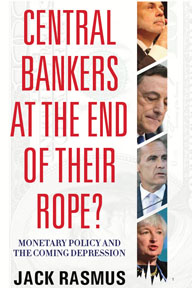
Dr. Rasmus explains how the Fed is ultimately behind the current banking crisis. Distinguishing between causes of the crisis that are ‘fundamental’, ‘enabling’, and ‘precipitating’, Dr. Rasmus explains how the Fed’s pumping $9T of free money (lowering rates to zero in the process) since 2008 created the recent bubbles in Tech and Cryptos that burst and is now bringing down regional banks exposed and over-invested in those sectors. Fed is the ultimate ‘fundamental’ cause. Rasmus explains the ‘enabling’ and further contributing causes of banks’ mismanagement and government deregulation of the sector. And the Fed once again as the ‘precipitating’ cause as result of its unprecedented rapid rise in interest rates over the past year. How the US banking crisis has contributed in part to the simultaneous collapse of Credit Suisse bank in Europe and what’s happening their in its wake. How the current crisis in US and Europe is both similar and different from the crisis of 2008-10 (and 2010-14 in southern Europe’s banks). Rasmus notes how all this was predicted in his 2017 book, ‘Central Bankers at the End of Their Ropes’ and why it represents a general contradiction and crisis of capitalist monetary policy in the 21st century. (for print version analyses of the banking crisis and the Fed’s role, check out Dr. Rasmus’s blog, http://jackrasmus.com for posting of recent articles on the crisis and the Fed)

By Dr. Jack Rasmus
Copyright 2023

It’s been a week since the collapse of the Silicon Valley Bank, the 16th largest bank in the US at the time of its collapse and reportedly a source of funding for half of all the tech start ups in the US.

It’s now become clear the more general banking crisis that has emerged is not due simply to a rogue, mismanaged bank that over-extended itself during the recent tech boom and then somehow mysteriously imploded in just 72 hours, March 7-9, until seized by the FDIC on the morning of March 10, 2023.

Deeper, more systemic forces are at play—in the case of both the SVB collapse and the now spreading contagion to US regional banks as well as to European banks. The SVB is just the tip of the current financial instability iceberg. In Europe the focus is the now collapsed big Credit Suisse bank announced today, March 19, by Switzerland’s central bank. The problem is thus now not just US regional bank centric, but is rapidly becoming global systemic.

What then are the systemic forces responsible for the SVB collapse and now spreading instability to US regional banks and European banks?

Causation: Precipitating, Enabling, and Fundamental

When discussing causation of a financial institution collapse it is necessary to distinguish between precipitating causes, enabling causes, and fundamental causes.

Clearly the Fed’s historically rapid rise in interest rates since March 2022 has played a key role in precipitating the crisis. And SVB’s management in recent years clearly engaged in classic mismanagement of its assets, so that mismanagement has enabled its eventual collapse.

But at a more fundamental, deeper level the SVB collapse—and the now spreading contagion—is a reflection of the speculative investing boom that occurred in the tech industry over the last decade, especially after 2019. That tech boom was fueled in large part by the Federal Reserve’s massive liquidity injections into the US banking system since 2009—which accelerated further from September 2019 to February 2022. Massive, excess liquidity injections by the Fed since the fall of 2019 drove corporate borrowing rates to zero (and below zero in real terms), thus fueling much of the tech over-investment bubble.

Overlaid on that longer term fundamental cause of excess liquidity driving borrowing rates to zero, the Fed then precipitated the crisis by abruptly reversing its decade-long free money policy by raising interest rates in 2022 at the fastest pace in its history and shutting off that free money spigot.

Before examining the Fed’s contributions and role in the current crisis in more detail, a review of what actually happened at SVB (and now is happening at other regional banks and in European banks) is perhaps instructive, revealing the dynamics of bank instability today at the bank level itself.

We might therefore ask: what then were the processes behind SVB’s collapse? What actually happened at SVB? And is that same Fed-induced processes now at work in other banks behind the scenes—eventually to be revealed in coming weeks with further subsequent depositors’ bank withdrawals, collapsing bank stock prices, rising credit default swap costs insuring against possible bank failure, and more US announcements to try to stem the contagion? To what extent is the collapse this weekend of the giant European bank, Credit Suisse, also influenced by events of the week prior in the US banking system?
Most important, what are the possible scenarios for continuing US and European banking instability in the coming weeks.

The SVB Collapse ‘Template’

In general terms, here’s how banks typically fail:
The basic mechanics of financial institution instability typically occurs as follows: a bank becomes more ‘fragile’ (i.e. is prone to a financial instability) when it either takes on excessive debt, or structures that debt poorly, and then experiences either a sharp decline in its cash flow required to service that debt (i.e. to pay principal and interest due) or experiences a loss of prior cash (or near cash) on hand with which to service that debt. SVB fell into that chasm, into which many other regional US banks have now been sliding into as well. The Fed created the chasm. SVB management simply decided to dance along the edge of that financial cliff, until it slipped and fell into the hole.

In the specific case of SVB, it took on too much asset liability, poorly structured its long term debt, then suffered a severe decline in cash on hand as depositors and investors withdrew their money from the bank.

Here’s a statistic worth noting: SVB’s total asset base by 2019 was approximately $50 billion. That accelerated to more than $200 billion by year end 2022. How did that happen? For one thing, the tech boom produced massive financial gains for investors and managers (and even employees) in the tech sector. SVB in California was the ‘place to be’ to deposit those gains. It was a favorite locale for the highly concentrated Venture Capitalist industry located in California in which to deposit funds earmarked for the tech start ups the VCs were funding. Capital gains by rich tech managers and ‘founding employees’ who just cashed in their IPO stock awards also found their way to SVB. And then there was Covid!

The Federal Reserve in March 2020 pumped $4 trillion into the banking system in the US. It was theoretically to prevent another bank crisis, as in 2008-09. Except there was no bank crisis. It was a pre-bank bailout that never happened. It was a preventive bank bailout that was never needed. But the $4T went out into the banking system anyway.

That Fed $4T followed a prior Fed liquidity injection of $1 to $1.5T that occurred in September 2019 to bail out the ‘repo’ bond market. So more than $5T flowed into the economy in 2019-2020.

The tech sector was booming already, fueled in part by the Trump administration’s 2017 $4.5T tax cut for investors and businesses. That tax cut had fueled the Fortune 500 corporations distributing $3.5T in stock buybacks and dividend payouts to their shareholders during the three years, 2017-19 alone. One can only imagine how much more was distributed to shareholders by the 5000 largest US corporations as well.

Massive amounts of money capital thus flowed into financial asset markets, especially into the then booming tech and tech start up sector.

Tech companies went even further. As result of the Fed’s $4T liquidity injection during the Covid crisis, the zero interest rates created by that liquidity made it possible for tech companies to issue their own corporate bonds at a record pace. For example, Apple Corp., had a cash hoard on hand of $252 billion. But it issued its own corporate bonds anyway to take advantage of the near zero interest rates made possible by the Fed’s $4T injection during Covid, from March 2020 through February 2022.

Countless millionaires were made and the ranks of billionaire tech investors billowed as well. The tech bubble—fueled both directly and indirectly by the Fed’s zero rate policy—expanded. Many of those investors riding the wave—whether VCs, tech start ups, tech CEOs, and even founding tech employees—funneled their money capital into SVB the celebrity tech bank of choice in silicon valley.

The bank’s deposit base surged from the $50 billion to more than $200 billion by end of 2022. And not all of that was depositors’ or investors’ inflow. SVB also borrowed heavily from the Fed taking up the latter’s long term Treasury bonds that were virtually cost free given the zero rates of interest. About $150B of SVB’s asset base was depositors money. And more than 90% of that $150B was individual deposits in excess of the $250,000 limit guaranteed by the FDIC in the event of a bank failure.

So lots of deposits on hand at SVB but most of the $200 billion asset base locked into long term treasuries and other bonds. In other words, a poorly structured financial portfolio. Should a crisis emerge, and depositors and investors started leaving, the bank could not give them their deposits since they were locked up in long term bonds. A classic long term asset vs short term cash structure. That was a serious financial mismanagement problem ‘enabled’ by SVB management.

Then the Fed started raising rates in March 2022. Because rate hikes result in corresponding bond price deflation, SVB’s balance sheet quickly fell into the red. The corporate rating agency, Moody’s warned of a rating cut for SVB. The bank’s stock price began to fall. Investors and the bank’s savvy depositor base made note.

SVB management tried to rectify its bond deflation and now higher borrowing costs by selling off some of its own bonds in order to raise money capital to offset its deflating assets. But with bond prices continuing to fall (as Fed continued to accelerate its rate hikes), it was like ‘catching a knife’, as the saying goes. SVB lost nearly $2B on its attempted bond sale. Moody’s and investors took further note.

Now desperate, in the days immediately leading up to its collapse SVB management arranged with Goldman Sachs bank to sell more of its stock. But that act really grabbed the attention of its VCs, investors and depositors. During the week before its collapse, the VCs reportedly started telling their start ups with money deposited at SVB to get their money out and move it elsewhere. As VCs and tech companies started withdrawals, the word quickly got out in the silicon valley tech community and general depositors began withdrawing their cash as well. Given how fast the events were occurring, SVB didn’t have time to obtain a bridge loan. Or to sell some of its better assets to raise cash. Or find a partner to buy in or even acquire it. The rapidity of events is a characteristic of today’s bank runs that wasn’t a factor as much even back in 2008.

All this happened at near financial ‘lightspeed’, made possible by (ironically) technology. In bank runs in the past, depositors typically ran down to the bank before its doors opened the next day once rumors spread. But today they don’t. They simply get on their smart phone and enact a wire transfer to another bank—at least until the bank shuts down its servers.

To sum up: the SVB ‘template’ is a classic bank run event. The bank had over-invested and poorly structured its assets into mostly long term securities. As the broader tech bubble in general began to implode in late 2022, investors and depositors got nervous about the bank’s exposure to long term securities and the likely slow down of cash flow into the bank by VCs and wealthy tech sector individuals. Like the tech sector in general, the bank’s stock price also began to fall which further exacerbated the loss of potential cash on hand. Bad and failed moves by SVB management to raise capital, more warnings by Moody’s, and the VCs communicating to their start ups with deposits in SVB to exit quickly consequently resulted in an accelerating outflow of deposits needed for the bank to continue servicing its debts. The FDIC stepped in to save what was left of depositors funds.

But, as previously noted, the FDIC guaranteed only $250k per investor and depositor. And of the roughly $174B in deposits at the bank, more than $151B involved more than $250K.

Regional US Banks Contagion

The processes that led to SVB’s crash a week ago continue to exist throughout US tech and the US banking system—especially in the smaller regional banks and in particular in those regionals serving the tech industry.

Caught between the Fed’s fundamental, long term and shorter term contributions to the current crisis, SVB’s CEO and senior team mismanaged their bank’s assets—i.e. enabled its collapse. But the Fed’s policies made that mismanagement possible, and indeed likely. And not just at SVB but throughout the regional banking sector.

Another institution, Signature Bank in NY, failed just days before the SVB’s collapse. Other banks approached failure last week and remain on the brink in this week two of the emerging crisis.

Most notable perhaps is the First Republic Bank of San Francisco, also exposed to the tech sector. It’s stock price plummeted 80% during the last two weeks as it was the next target for withdrawals. To try to stem the collapse of First Republic, a consortium of the six big US commercial banks (JPMorgan, Wells, Citi, BofA, Goldman Sachs and Morgan Stanley), arranged by the Fed and US Treasury, pledged by phone to put $30 billion into first Republic. The following day after the announcement of the $30 billion, however, another $89B in withdrawals from First Republic occurred. Clearly, $30B was not near enough. It is unlike the big six will up their ante. The Fed will have to throw more into the pot to save First Republic from SVB’s fate.

Following SVBs collapse, the Fed and the US Treasury also announced a new Bank Bailout Facility, the first such since 2008, funded by $25B by the government. Reportedly the facility planned to make available to banks a new kind of loan from the government, issued ‘at par’ as they say (which means the value of the money would not deflate).

The Fed also simultaneously announced it would open it’s ‘discount window’, where banks can borrow cheaply short term in an emergency. During the first week no less than $165 billion was borrowed by the regional banks from the discount window and the $25B new facility.

The question remains, however, whether the Fed next week will continue to raise interest rates which can only exacerbate depositors and investors’ fears about their regional banks’ stability and likely accelerate withdrawals.

But the Fed is between ‘a rock and hard place’ of its own making. If it doesn’t continue to raise rates it undermines its legitimacy and claims it will raise them until inflation is under control, which means moving decisively lower toward the Fed’s official 2% inflation target. But if it does raise rates, the move could exacerbate withdrawals and regional banks’ stability. Which then will it choose: inflation or banking stability. This writer is willing to bet bank stability comes first, inflation second (and employment and recession a distant third if at all).

The most likely event is the Fed will raise rates just a 0.25% one more time in March next week, and give ‘forward guidance’ it won’t raise rates further should the bank situation not stabilize. Also highly likely is the Fed will announce a hold on its ‘Quantitative Tightening’ so-called policy by which it recalls some of the $8T plus liquidity it formerly injected into the economy. QT has the effect of raising long term rates, which the Fed cannot afford until stability returns to the banking sector. Even longer term, this writer predicts the Fed will try to reconcile its contradiction of ‘reducing inflation by rate hikes with halting rate hikes to stabilize the banks’ by raising its current 2% inflation target to 3% or more later this year.
It was already clear that even the rapid hike in rates of nearly 5% by the Fed in 2022-23 hasn’t had much impact on slowing prices. From a peak of 8.5% or so in the consumer price index, prices have abated only to around 6%. Most of the current inflation is supply side driven and not demand driven and even the Fed has admitted it can’t do anything about supply forces driving up prices.

This writer has also been predicting for more than a year—and since 2017 in the book, ‘Central Bankers at the End of Their Ropes’—that in this the third decade of the 21st century the Fed can’t raise interest rates much above 5% (and certainly not 6%) without precipitating significant financial market instability.

The Fed and US Treasury will almost certainly have to up their bailout measures in the coming week should more regional US banks weaken. That weakening may be revealed in further bank stock price declines, in rising withdrawals from the banks, or in a sharp further increase in the cost of insuring investors in the event of a bank failure by means of credit default swaps securities.

And in its latest announcement this past Sunday, March 19, 2023, the Fed has said it will immediately provide currency swaps with other central banks in Europe and Japan to enable dollar liquidity injections into offshore banks. Central banks are now fearful the bank runs and instability may well spread from regional US banks to weak banks abroad.

Credit Suisse Bank Implodes: Which EU Banks Are Next?

As regional banks shudder and weaken in the US, in Europe the giant Credit Suisse bank (CS) crashed this weekend. Over the weekend banks, central banks and their government regulators have been gathering to try to figure out how to stem the crisis in confidence in their banking systems. In Europe the focus has been Credit Suisse, which was forced to merger with the second large Swiss bank, UBS. The arrangement of that merger may just precipitate further financial market instability in Europe. Already two other unmentioned EU banks are reportedly in trouble.

The ‘deal’ arranged by the Swiss national bank forcing CS to merge with UBS involved an unprecedented action: instead of shareholders losing all their equity and bondholders getting to recover some of their losses by the bank’s sale of remaining assets, as typically occur when a bank or a corporation collapses, the opposite has happened in the CS-UBS deal. The holders of CS junk (AT1) bonds worth $17B will now be wiped out and receive nothing—while shareholders of CS will receive a partial bailout of $3.3B.

The fallout of restoring some shareholders while bond holders are wiped out may result in subsequent serious financial consequences. That ‘inverted’ capital bailout—i.e. shareholders first and nada for bondholders—has never happened before. Bondholders in Europe will now worry and take action, perhaps provoking financial instability in bond markets. Contagion at the big banks may be contained by the CS-UBS deal (emphasize ‘may’), while contagion in the Europe bond markets may now escalated and exacerbate.

The Swiss National Bank is also providing UBS with a $100B loan and Swiss government another $9B guarantee to UBS. In exchange for the $109B UBS pays only $3.3B for CS. Why then is another $100B loan being given to UBS if it’s paying only $3.3B? Does the Swiss Central bank know something about UBS’s liquidity and potential instability it’s not saying?

Another curious element of the CS-UBS ‘deal’ is the $3.3B UBS is paying for CS is almost exactly the same amount that CS stockholders are getting reimbursed in the deal. Could it be that the $3.3B for shareholders will go to the main stockholders and senior managers of CS, a kind of legal ‘bribe’ to get them to go along with the forced merger? Or is $3.3B for $3.3B just a coincidence?

Bottom line, in Europe the stability of the $275B bank junk bond market is now a question. So too are the stability of the rumored two other major EU banks. To backstop both these potential instabilities is why the Fed and other EU central banks now agreeing to a dollar currency swap.

Watch for Europe bank stock prices to fall noticeably in coming weeks. They’ve already fallen 15% in the past week. (US regional banks stock prices have fallen 22%). More bank stock price decline will now occur. Withdrawals will move from weaker to stronger banks. CDS insurance contracts will rise in cost. As unstable as this picture may be, certain segments of the Europe bond market may fare even worse in the week ahead.

A Few Conclusions and Predictions

The collapse of SVB and other regional banks in the US represents a classic run on commercial banks not seen since the 1930s. Some argue it’s not a bank run but of course it is. When depositors withdraw half or more of a bank’s available cash assets and the bank cannot raise immediate additional cash to cover withdrawal demands—that’s a bank run!

The process is also classic in its dynamics: the bank over-extends making risky lending and loads up on long-term assets that can’t be quickly converted to cash. General economic conditions result in a reduction of cash inflow. It can’t raise cash to cover debt servicing. Its financial securities on hand deflate, exacerbating further its ability to service debt and satisfy withdrawals. It can’t obtain roll over loans or financing from other banks or lenders. Its lenders won’t restructure its current debt. And it can’t get another partner to invest in it or buy it. The only option at that point is bankruptcy or government takeover and the distribution of its remaining assets to bondholders and stockholders get wiped out. (Except as noted in the case of CS-UBS where the bailout is reversed).

It’s almost inevitable now that further contagion will result from both the US regional banks’ crisis and the Credit Suisse affair in Europe. Bank regulators, central banks, and governments will scurry around to provide liquidity and bail out funding to try to convince investors and shareholders and depositors that the banks are ‘safe’. This means raising the funding of the special ‘bank facilities’ created by the Fed and other banks. Making the ‘discount window’ borrowing terms even below market costs. Providing currency swaps among banks. And for depositors, quickly raising the FDIC $250,000 guarantee to at least $400K or even $500K.

The central banks and regulators have moved at a record pace to construct their bailouts. But depositors and investors still can move more quickly given current communication technology. And fear moves even faster across capitalist financial markets in the 21st century.

But ultimately the problem of the instability lies with the Fed and other central banks that have fueled the tech and other industry bubbles in recent decades—and especially since March 2020—with their massive liquidity injections.

Not much has changed since 2008-10. The Fed never ‘recalled’ the $4T in excess liquidity it injected into the banking system to bail out the banks (and shadow banks, insurance companies, auto companies, etc.) in 2008-10. Nor did the ECB from 2010-14. That money injection flowed mostly into financial asset markets, or abroad, fueling financial price bubbles and making big tech and financial speculators incredibly rich in the process—a process that resulted in a weak, below historic averages, real GDP recovery after 2010. Following that weak real economic recovery, the dynamics of financial crisis resumed. The Fed attempted briefly to retrieve some of the liquidity in 2016-17 but was slapped down by Trump and returned to a free money regime. Fiscal policy then joined the process after 2017 with the Trump $4.5T in tax cuts for investors and businesses. Both the tax cuts and Fed largesse resulted in more than $3.5T in stock buybacks and dividend payouts to investors in the F500 US corporations alone! More liquidity. More tax cuts. More flowing into financing the tech bubble and financial asset inflation in stocks, bonds, derivatives, forex and other asset markets.

Then the Fed and other central banks tried pulled out the free money rug and raised rates to try to check accelerating inflation. Its results in that regard were poor. Inflation continued but the rate hikes began to fracture the banking system just as the tech boom itself began contracting. Tech centric regional banks began to implode.

The Fed, FDIC and US Treasury may yet ‘contain’ the contagion and stabilize the creaking US and global banking system in the short run by throwing more record amounts of liquidity and free money into the black hole of financial asset deflation and collapsing banks.

But that ‘short term’ solution is the ultimate source of the longer term problem and crisis: excess liquidity in 21st century capitalist now for decades has largely flowed into financial asset markets making financial speculation even more profitable—all the while the real economy struggles and stumbles along.

The Fed and central banks’ solution to periodic banking instability in the short run is the problem creating that same instability in the longer run.

But some capitalists get incredibly rich and richer in the process. So the excess liquidity shell game is allowed to continue. The political elites make sure the central banks’ goose keeps laying the free money golden eggs.

The latest scene in that play has is now being acted out. Subsequent commentary and analysis by yours truly will thus continue.

Dr. Jack Rasmus
March 20, 2023

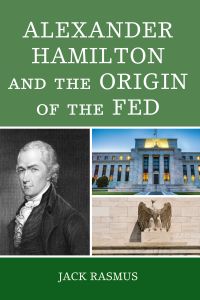
Dr. Rasmus is author of the books, ‘Central Bankers at the End of Their Ropes’, Clarity Press, 2017 and ‘Alexander Hamilton and the Origins of the Fed’, Lexington Books, 2020. Follow his commentary on the emerging banking crisis on his blog, https://jackrasmus.com; on twitter daily @drjackrasmus; and his weekly radio show, Alternative Visions on the Progressive Radio Network every Friday at 2pm eastern and at https://alternativevisions.podbean.com.

The US banking crisis erupted last week, March 10, 2023 with the collapse of the Silicon Valley Bank. Today’s Alternative Visions show is dedicated to a discussion of the events of the past week since the SVB crash. What’s the fall out from the SVB implosion? What other banks are in trouble? What’s the Fed and regulators done this past week to staunch the bank bloodletting and will their actions prove successful? What does it mean for the Fed’s rate hike policy and is the banking instability going global with the events surrounding the big European bank, Suisse Credit? TO LISTEN to the my ALTERNATIVE VISIONS RADIO SHOW of March 17 discussion.  GO TO:

https://alternativevisions.podbean.com/e/alternative-visions-from-silicon-valley-bank-to-larger-banking-crisis/

TWO OTHER SHORT RADIO INTERVIEWS (15 min.) ON THE TOPIC

(Critical Hour Radio Show: 3-17-23)

https://drive.google.com/file/d/15IF8bty0U3KPMEl2nfDhRwQEa7frappt/view

(Political Misfits Radio Show: 3-15-23)

https://sputniknews.com/20230316/us-drone-in-black-sea-credit-suisse-stock-drops-meta-layoffs-1108435142.html

Alternative Visions RADIO SHOW ANNOUNCEMENT:

Dr. Rasmus gives an update on US and global banking instability in the wake of the collapse of Silicon Valley Bank a week ago this friday. What exactly happened at Silicon Valley Bank and is that process occurring elsewhere? What is the role of the Federal Reserve in causing and precipitating the crisis? Have the efforts of the Fed and big banks to staunch the crisis in the US regional banks in recent days working? Is the Fed solution in the short run the cause of future banking instability in the longer run? What happened to bank regulation after Dodd-Frank Act? The three indicators of continuing bank instability. What’s happening at Credit Suisse bank in Europe? Similarities and differences with 2008 crisis. What does it all mean for future Fed rate hikes (next week) and Fed strategy to slow inflation? Consequences of the current banking crisis for US real economy and global economy. (Check out Dr. Rasmus’s print article on these topics this weekend at his blog, http://jackrasmus.com)

Check out my radio interview of Monday, March 13, 2023 which was dedicated to a discussion of the Silicon Valley Bank collapse, the role of the Fed, and the coming Fed 180 degree ‘about face’ on rate hikes (and what that means for inflation)

GO TO: https://drive.google.com/file/d/18nJ5RSJWcUksFDD90o5rs6uoAZ96QO17/view

This past friday, March 10, the Silicon Valley Bank, the 16th largest bank in the US, collapsed and was seized by the US govt’s FDIC. In my morning Alternative Visions show, as this was happening, I discussed some of the implications of the crash. Since friday, March 10, two more small banks associated with the tech industry also failed and were seized, and the US Treasury and Fed came out on Sunday with emergency bail out measures for depositors in the banks (but not bank stockholdlers or bondholders). The govt continues to struggle to contain the contagion, now spreading to other small banks, Bank and Junk bond ETF stocks, the crypto market, and elsewhere. What actually happened at SVB, and why its collapse, when the Fed’s annual bank stress tests said all US banks were solid? What will be some possible consequences of the collapse in coming days and weeks? Is this a 2008 financial crash all over again? Is SVB the ‘analog’ to the March 2008 crash of the Bear Stearns hedge fund that set subsequent crashes in motion later in 2008 (Fannie Mae, WaMu, Lehman, AIG, etc.? And what will SVB now mean for further Fed rate hikes that were planned this month and after? In turn, is the Fed’s fight against inflation over? Is that now on hold and the Fed will abandon it in order to save the banking system?  If so, then the deepening recession coming will be accompanied by continuing high inflation–i.e. a stagflation condition with dimensions the worse ever seen.

In 2017, in my book “Central Bankers at the End of Their Ropes: Monetary Policy and the Coming Depression” (see sidebar), I predicted the Fed next crisis would not be able to raise interest rates very much without precipitating a financial instability event. The financialized and globalized US economy of the 21st century won’t allow it. Repeatedly over this past year I have also been predicting the Fed could not raise rates much above 5% without provoking the same (see my various blog articles and radio interviews). Is the SVB collapse evidence for these predictions? Is US Fed and monetary policy now ‘neutralized’ and, if so, what can US capitalists and political elite do to deal with simultaneous recession, inflation, and financial system instability?

In the following Alternative Visions radio show I discuss the SVB crash in its early emerging phase. A more comprehensive details article will soon follow to assess subsequent events to the crash of SVB (and other banks now). Stay tuned.

To Listen to the Alternative Visions radio show of Friday, March 10, 2023 and the initial assessment of the SVB events, GO TO:

https://alternativevisions.podbean.com/e/alternative-visions-silicon-valley-bank-collapses%e2%80%94canary-in-the-financial-coal-mine/

RADIO SHOW ANNOUNCEMENT:
Dr.Rasmus discusses the collapse of the Silicon Valley Bank in California in last 24 hrs and what it means for the Tech sector and potential financial instability. Stocks & bond mkts plummet in response. Fear of uncertain contagion effects over the weekend. 250 companies with potential asset losses + SVBs largest investor: US Home Loan Bank (yes, believe it or not). What SVB and financial instability means for the Fed’s rate hike policy, as rates get pushed to 6% now. Why Fed won’t continue to hike rates to 6% if financial instability happens. And if so, why Fed rate hikes won’t be sufficient to reduce even Demand inflation. Today’s jobs report shows another 311,000 jobs, making rate hikes more likely. Rasmus shows, however, most jobs are part time service while layoffs in tech, transport, warehouse already rising. Why contradictions in economic policy are intensifying and hard landing recession more likely.