Watch my recent Youtube presentation on the topics of the causes of ever-growing Income Inequality in America, chronic Inflation, and its never-ending wars of empire.
To watch GO TO: https://www.youtube.com/watch?v=b8D_DStmKa0
Watch my recent Youtube presentation on the topics of the causes of ever-growing Income Inequality in America, chronic Inflation, and its never-ending wars of empire.
To watch GO TO: https://www.youtube.com/watch?v=b8D_DStmKa0
Posted in Uncategorized | Leave a Comment »
Listen to my October 27, 2023 Alternative Visions Radio Show and my analysis why preliminary US GDP for 3rd Quarter is not really the reported 4.9% and why GDP this winter is projected to slow to 1%.
The show then provides updates on the Ukraine and Israel-Hamas wars. Why the Ukraine war is strategically decided now that Zelensky has called off the failed offensive. A new phase in what’s left of the war has begun and Zelensky won’t make it past another six months, as internal feuding between him and his generals intensifies.
The show discusses the massive US military buildup to the Israel-Hamas war and argues that buildup is not about just US support to Israels invasion of Gaza. The 4 US aircraft carriers, subs, and dozens of surface ships being positioned is overkill for just Israel Gaza invasion support. It is about provoking Iran as US neocons & Biden having decided on war with Iran. And if Iran doesn’t ‘take the bait’ then watch for another classic ‘false flag’ event the US will use to justify a massive air assault on Iranian bases and its nuclear facilities in particular
To listen GO TO:
https://alternativevisions.podbean.com/e/alternative-visions-war-and-us-gdp/
Posted in Uncategorized | Leave a Comment »
Listen to my October 18, 2023 lengthy presentation and discussion on Bidenomics as Neoliberalism in decline, critique of mainstream economics and measures of employment and inflation, growing contradictions of US fiscal and monetary policies, US trade & dollar policies, sanctions, wars and decline of US global economic empire, and political consequences of neoliberalism and US empire in decline.
To watch the YouTube presentation go to:
Posted in Uncategorized | Leave a Comment »
As an addition to my previous posted transcript of my Interview with France’s Perspectives Libres magazine (which is IN FRENCH and posted on this blog below)–on the subject of What is Neoliberalism and related US policies,
the following link is to the VIDEO of the interview IN ENGLISH:
https://drive.google.com/file/d/1qeF1dsda6k7yZ054aASLtu1dYHwk91Ac/view
Posted in Uncategorized | Leave a Comment »
Watch my recent hour long interview with host, Paul Prescod, on the ‘What Is Revolution’ internet channel show, on this year’s (2023) historic juncture in fate of union labor in America. Topics discussed include tactics and strategy in the UAW and other strikes and union negotiations (Teamsters, Writers, Railroad workers in 2022), actors, etc. Will union labor reverse 44 years of concession bargaining? How will the unions address the decades-long wage and benefits stagnation and loss? How to address the existential threats to jobs from Artificial Intelligence? Why current forms of union organization may have to change. To Watch GO TO:
Posted in Uncategorized | 3 Comments »
For those interested in an answer to the question ‘What is Neoliberalism’ and don’t have the time to read my latest book, ‘The Scourge of Neoliberalism: US Economic Policy from Reagan to Trump, Clarity Press, 2020’–and can read French–the following is the transcript of my lengthy (25p) interview and discussion this past August 2023 with Gauthier Graslin, an editor of the Paris publication, Perspectives
Libres.
THE INTERVIEW TEXT:
Entretien avec M. Rasmus
– Gauthier :
Monsieur Rasmus, merci beaucoup de nous avoir accordé cette interview pour le trimestriel l’Echapée Libre. Nous avons eu une interview en 2015 pour parler de la façon dont le néolibéralisme créait en fait une fragilité systémique. C’était le titre d’un de vos livres que vous avez écritavant le Covid et que vous avez publié en 2020 : “Le fléau dunéolibéralisme” qui était une histoire sur le fonctionnement dunéolibéralisme mais aussi un bilan de l’année. Nous avons pensé que c’était lebon moment de nous entretenir avec vous à propos de ce livre et des dernierdéveloppements. Fiona, si vous voulez commencer la première partie del’interview où nous nous concentrerons sur ce qu’est le néolibéralisme et lequel ?? jusqu’en 2020.
– M. Rasmus :
J’aimerais ajouter qu’avant mon livre de 2020 “le fléau dunéolibéralisme” auquel vous faites référence, il y avait un livre publié en2017 qui était lié à ces sujets intitulé “Les banquiers centraux et la fin deleurs espoirs” qui fait partie du néolibéralisme et de la politique monétaire, etj’ai un prochain livre “L’économie virale et ses conséquences” qui serabientôt publié. L’analyse continue, je dirais.
– Gauthier :
C’est un travail en cours.
– M. Rasmus :
C’est un travail en cours. D’ici la fin de l’année, je ferai une miseà jour à propos de la manière dont les politiques de Biden s’intègrent danscette restructuration néolibérale, et sur la manière dont ses politiques, et cequi se passe depuis 2020, représentent une nouvelle détérioration de la restructuration néolibérale. S’agit-il d’une restauration ou d’unerestructuration ? Tout cela est un travail en cours en ce moment. Nous
pouvons parler de la façon dont les politiques de Biden s’inscrivent dans cette restructuration, même si le livre s’est terminé avec 2019 en analysant seulement les trois premières années de la présidence de Trump. Lapandémie et le COVID représentent une sorte de rupture et un défi à la restructuration néolibérale à certains égards. Cette restructuration est en panne, et bien sûr, les sanctions dues à la guerre en Ukraine ont accéléré les contradictions. La pandémie a accéléré les contradictions du néolibéralisme, en particulier dans les changements forcés sur les marchés du travail, sur les marchés des produits, puis sur les marchés financiers. De plus, il y a eu lessanctions économiques à cause de la guerre en Ukraine et des changements géopolitiques, qui sont en fait des bouleversements de politiquescommerciales néolibérales et des politiques extérieures sur le dollar. La pandémie, bien sûr, est liée aux sanctions liées à la guerre, mais ensemble,elles lancent un défi plus sérieux à la restructuration néolibérale. Cela dit, nous pouvons revenir à votre premier point ici, sur le néolibéralisme, en tant qu’idée. Je pense que vous parlez de comment le néolibéralisme est une idée et comment il s’agit d’un ensemble de politiques, et d’une certaine manière une restructuration de l’économie américaine et mondiale. Si vous regardez
l’économie américaine et l’impérialisme américain, ils ont subi périodiquement ces restructurations majeures. Au début du XXe siècle, les États-Unis ont utilisé la Première Guerre mondiale pour tenter de renforcer leur position dans l’économie mondiale et dans l’économie capitaliste mondiale. Les États-Unis entrèrent, par la suite, comme une sorte d’égal à égal avec l’impérialisme britannique et le capitalisme britannique. Vous pouvez le voir par l’intermédiaire de leurs monnaies dans les années 1920. Ensuite, nous avons une autre restructuration majeure, qui se produit après la Seconde Guerre mondiale, lorsque le capitalisme et l’impérialisme britanniques s’estompent, tout comme l’autre capitalisme et l’impérialisme français, un plus faibles celui-ci. Le dollar et les États-Unis deviennent dominants et jouent désormais un rôle hégémonique dans l’économie mondiale. Dans le même temps, une autre série de changements de politique s’est produite aux États-Unis pour s’adapter au nouveau rôle impérial des États-Unis par la création du FMI, de la Banque mondiale, etc. On parlait à l’époque de créer un équivalent de l’Organisation mondiale du commerce, mais les États-Unis ont mis un frein à cela. Encore une fois, les États-Unis ont pensé que nous sommes dans une économie mondialisée qui a survécu à la Seconde Guerre mondiale encore plus fort, et que les Etats-Unis n’avaient pas besoin de négocier la moindre chose que ce soit avec les Européens ou qui que ce soit d’autre. Ainsi, l’institution qu’est l’Organisation mondiale du commerce a été conçue pour accompagner la banque mondiale et le FMI (qui n’ont jamais vraiment été créés aux États-Unis avec le nouvel ensemble de politiques qui s’est vraiment restructuré de lui-même) pour maintenir désormais un rôle hégémonique total des États-Unis dans l’économie mondialisée, à l’exception des pays qui faisaient encore partie du bloc soviétique, qui étaient en quelque sorte autarciques car ils étaient en quelque sorte isolés du reste de l’économie mondiale à l’époque. Mais que signifient ces changements dans l’équilibre des politiques pour permettre le capitalisme? Le capitalisme américain n’a cessé de montée en puissance dans le monde juste après la Première Guerre mondiale jusqu’à une domination après la Seconde Guerre mondiale. Si vous regardez un ensemble de 4 politiques : la politique industrielle, la politique monétaire, la politique budgétaire et ce que vous pourriez appeler la politique extérieure, qui est le commerce, les biens et les services, les flux de capitaux et les éléments liés aux déficits commerciaux, la valeur de la monnaie, le dollar (qui devient la monnaie mondiale après la Seconde Guerre mondiale). Avant la Première Guerre mondiale, il partageait ce rôle mondial avec l’or et la livre sterling, mais elle était devenue dominante après la Seconde Guerre mondiale. Si vous regardez ces 4 politiques pendant la Seconde Guerre mondiale, elles ont été restructurées par les États-Unis pour permettre d’augmenter leur rôle dans l’économie capitaliste mondialisée. Ces politiques ont été conçues pourréprimer toute opposition nationale qui se formait. Il y avait beaucoup de mouvements progressistes avant la Première Guerre mondiale, les syndicats se renforçaient, mais juste après la Première Guerre mondiale, le gouvernement a vraiment éliminé toute opposition nationale tout en assumant le rôle de gendarme dans le monde capitaliste. Ainsi, vous devez penser à ces 4 domaines politiques et à la façon dont ils sont mélangés et comment ils sont liés les uns aux autres comme une sorte de moyen d’établir une hégémonie à la fois au niveau national et mondial. C’est la clé. Cette restructuration est vraiment de l’impérialisme à l’étranger et un contrôle de classe à l’intérieur. Maintenant, comment en est-on venu à l’appeler néolibéral ? C’est une chose intéressante. Il faut comprendre que le terme néolibéral est vraiment apparu juste après la Seconde Guerre mondiale parmi les universitaires et les intellectuels, en particulier ce que nous appellerons les libertaires et l’école autrichienne, parce que tout l’accent est mis sur l’idée d’être néolibéral signifiait : déréglementation, libres marchés, capitalisme compétitif. Ainsi, le libéralisme dans un sens intellectuel historique signifie des marchés libres, une intervention gouvernementale minimale. Bien sûr, ces intellectuels qui sont plus à droite voulaient vraiment que cela se
produise dans l’économie d’après-guerre parce que pendant la dépression et la Seconde Guerre mondiale, il y a eu beaucoup de réglementations établies. Ainsi, toute cette idée néolibérale a été initialement conçue par des intellectuels pour déréglementer l’économie après la seconde guerre mondiale. Cette idée de néolibéralisme n’a jamais eu beaucoup de succès jusqu’aux années 1970, lorsque nous avons vu l’effondrement de cet ensemble de politiques issues de la Seconde Guerre mondiale à cause de la crise économique et qui ont très bien servi les États-Unis. Le monde change, l’économie change, le capitalisme évolue, il change, et ces 4 politiques après la Seconde Guerre mondiale ne fonctionnaient plus très bien, et dans les années 1970, l’économie mondiale est en difficulté dans de nombreux endroits, en particulier dans les économies occidentales. De cela, découle une série de nouvelles politiques à la fin des années 1970 et au début des années 1980. Au Royaume-Uni, cela s’appelait Thatchérisme et aux États- Unis, Reaganomics. C’était vraiment cette restructuration néolibérale, la troisième restructuration. Nous avons continué à appeler cette restructuration néolibéralisme, qui est, en fait, un terme impropre en soit car il n’y a pas grand-chose de libéral là-dedans, et certains intellectuels de gauche ont relevé cette contradiction. Pourquoi l’appellent-ils néolibéral ? Probablement
parce qu’une partie de la restructuration néolibérale a à voir avec la déréglementation, de sorte que le sens initial du terme a été repris, mais la restructuration est bien plus que la déréglementation. Ce n’est qu’une petite partie de ce que j’appelle la politique industrielle. Rappelez-vous que nous avons discuté des 4 domaines politiques, la politique industrielle, la politique budgétaire, la politique monétaire et la politique commerciale du dollar extérieur, n’est-ce pas ? Vous obtenez la déréglementation dans le cadre du national et mondial, les intellectuels ne voient que cette déréglementation, qui n’est vraiment pas la partie la plus importante. La clé est que toutes ces politiques de dérèglementations sont liées et il est essentiel d’observer comment elles sont liées les uns aux autres dans le but d’atténuer et de vaincre l’opposition nationale, en particulier les syndicats, et comment vaincre par la suite vos autres concurrents capitalistes. À la fin des années 1970 et au début des années 1980, l’Europe se renforçait mais surtout, le Japon était une menace. Ainsi, la restructuration néolibérale du point de vue du commerce était liée avec la façon dont le capitaliste américain battait, apprivoisait et mettait à sa place le capitalisme japonais et le capitalisme européen. Ils l’ont fait dans les années 1980, nous l’avons vu dans la première phase de la restructuration néolibérale que nous appelons Reaganomics. Nous l’avons vu en 1985 avec l’Accord du Plaza où les États-Unis ont forcé les Japonais à cesser de rivaliser, avec véhémence, dans le domaine industriel, manufacturier entre autres, parce que les Etats-Unis ont été battus dans de nombreux domaines, et les ont forcés à investir davantage dans les marchés des actifs financiers. Ce qui est arrivé à l’accord du Plaza en 1985 a été immédiatement suivi par l’accord du Louvre en France pour les économies européennes, qui n’était pas aussi strict que l’accord du Plaza, car le Japon était une plus grande menace. C’était l’intervention néolibérale en matière de politique commerciale. Du côté industriel, quelle était la restructuration néolibérale sous Reagan ? Il s’agissait de briser, d’apprivoiser les syndicats de bien des façons et d’assurer la compression des salaires ; il y a eu plusieurs politiques qui ont menées à la compression des salaires. Il y a eu la déréglementation de certaines industries : l’industrie du transport aérien, l’industrie des communications, l’industrie du camionnage. Les entreprises étant désormais déréglementées, elles ne pouvaient plus augmenter leurs prix comme elles avaient l’habitude et de répercuter les augmentations de salaires pendant une crise. Ainsi, les politiques ont utilisé les entreprises pour attaquer les syndicats et faire baisser les salaires, et ils ont permis à davantage d’entreprises de se faire concurrence. L’industrie du transport aérien en est un bon exemple. Il y avait certains contrôles de prix sur les compagnies aériennes et sur ce qu’elles pouvaient facturer. Une fois qu’elles seraient déréglementées, il y aurait eu une sorte de guerre de concurrence entre les compagnies aériennes et beaucoup d’entre elles n’étaient pas rentables, alors elles ont fait baisser les salaires parce que leurs bénéfices étaient plus faibles. C’était la déréglementation. Nous sommes également
arrivés à la déréglementation de la finance : nous avons eu les déréglementations de l’épargne et des prêts qui ont conduit à une crise de l’épargne et de la gestion. Nous avons eu des déréglementations dans d’autres domaines de la finance, ce qui a permis aux entreprises de commencer à s’agripper les unes les autres en se faisant des scissions, et en volant les pensions des retraités. Il y a eu des changements dans les pensions elles- mêmes, des régimes de retraite à prestations définies classiques, où les travailleurs étaient garantis, une pension était de plus en plus remplacée par ce qu’on appelle des plans 401k, qui imposaient une responsabilité limitée aux entreprises et la mettait sur le dos des travailleurs et ils recevaient moins pour leur retraite. Nous avons eu, aussi, le début de la main-d’œuvre précaire; beaucoup plus de travailleurs à temps partiel volontaires ont commencé àapparaître dans les années 1980. Il y a eu une déréglementation des fluxmondiaux de capitaux monétaires, et la conséquence est la délocalisation qui fait partie aussi de la politique fiscale. Les taxes ont été éliminées ou modifiées pour que les entreprises déménagent à l’étranger. Ils ont bénéficié d’allégements fiscaux pour déménager à l’étranger. Le crédit d’impôt à l’investissement et d’autres modifications de l’amortissement, les réductions
d’impôt massives pour les entreprises en sont un exemple : une réduction d’impôt de 752 milliards de dollars sous Reagan a été adoptée en grande partie en 1981 et 1982. Sous Reagan, la politique monétaire du néolibéralisme a également changé. L’idée même des néolibéraux est demaintenir les taux d’intérêt chroniquement bas, mais ils l’ont augmenté sous la présidence de la banque centrale de Paul Adolph Volcker. Il relevé lestaux d’intérêt à 18% pour éponger sur le dos des consommateurs et de la classe ouvrière l’inflation qui était en réalité un problème de l’offre. C’est une caractéristique d’une politique néolibérale d’augmenter les taux d’intérêt. Cela a pour effet d’étouffer la demande, même si la demande n’est peut-être pas le problème, et de provoquer une récession.
– Gauthier :
Oui, c’est quelque chose qui me frappe vraiment dans votre livre. Il s’agit de le dire un peu crûment. Le néolibéralisme est une question de pouvoir dans cet impérialisme américain. Il s’agit d’écraser les gens comme vous le dites, et j’ai l’impression qu’ils utilisent le terme de libéralisme, parce que le libéralisme est un terme qui a une histoire positive. Quand vous voyez maintenant, ils parlent de réforme, ils parlent de progrès, comment pouvez-vous être contre les réformes ou le progrès. C’est très dur d’être contre. En
lisant votre livre, au début des années 80, les néolibéraux étaient encore préoccupés par le fait de garder un bon visage. Par exemple, ils ont dit qu’ils ont fait grève pour lutter contre les déficits, pour avoir un budget équilibré parce que c’est l’un des principaux états de la politique libérale et avec le temps, cela s’estompe. Ils s’en fichaient, et ils montraient simplement de la violence de la politique. C’est parce qu’ils se sentent plus à l’aise. Comment expliquez-vous cela ? Du fait qu’ils ne sont pas gênés par ce qu’ils font. Ils ne parlent même plus de la philosophie libérale.
– M. Rasmus :
C’est parce qu’ils n’ont plus d’opposition nationale. Ils peuvent vraiment dire ce qu’ils veulent dire, et le pouvoir de cette idéologie est encore plus fort avec les médias. Ils sont capables de dissimuler ce qu’ils veulent dire. Je ne pense pas que les libéraux ne se soient jamais vraiment souciés des déficits. Ils en parlent au moment des votes pour une élection, n’est-ce pas ? Cependant, ils ne se soucient pas vraiment de créer des déficits dans une certaine limite. Par exemple, Reagan a augmenté les dépenses de défense et a fait énormément plus de dépenses. Le déficit a doublé ou triplé pendant son règne, ce qui aggrave les déficits. En plus de cela, il a réduit des impôts massivement, des centaines de milliards de dollars, ce qui aggrave encore le déficit. Cela crée donc un énorme déficit budgétaire. Et chaque année, vous créez des déficits budgétaires que vous ajoutez à votre dette nationale, n’est-ce pas ? Il faut bien comprendre, côté commerce, le néolibéralisme fonctionne. C’était, ce que j’appelais, le système à double déficit aux États-Unis : les États-Unis ont délibérément des déficits commerciaux ; intentionnellement, cela ne signifie pas par accident. Lorsqu’il y a un déficit commercial, les dollars sortent du pays. Une partie de la nature de l’impérialisme américain, qui à certains égards diffère des impérialismes précédents, est cette sortie de dollars due au déficit commercial, et qui est, par la suite, recyclée aux États-Unis. Dans un système de libre-échange, les marchandises reviennent sans droits de douane. Lorsque les dollars reviennent, les pays, les investisseurs et les capitalistes, y compris les sociétés américaines offshore, que font-ils ? Ils achètent des bons du Trésor et d’autres actifs. Cela permet aux États-Unis de couvrir son déficit budgétaire car des centaines de milliards de dollars reviennent. C’est dans ce recyclage des dollars s’inscrit le double déficit. Ainsi, le déficit commercial finance le déficit budgétaire aux États-Unis, donc les capitalistes américains peuvent dépenser plus pour les guerres tout en accordant des réductions d’impôts aux entreprises et aux investisseurs. Maintenant, c’est un peu devenu incontrôlable. Depuis 2001, les États-Unis ont dépensé 7 000 milliards de dollars pour des guerres au Moyen-Orient et c’est sans compter de qui se passe en Ukraine maintenant. Qu’en est-il des réductions d’impôts ? Les États-Unis ont accordé, depuis 2001, 15 000 milliards de dollars en réductions d’impôts, principalement aux entreprises et aux investisseurs. S’ils prévoyaient 15 000 milliards de dollars de réductions d’impôts et 7 000 milliards de dollars de dépenses de guerre, le déficit va exploser. Cependant, vous n’avez pas assez d’argent pour financer ces énormes déficits en permanence. Actuellement, qu’essayent-ils de faire ? Ils font ce qu’ils ont toujours essayé de faire sous le néolibéralisme de Reagan, donc couper dans les programmes de dépenses sociales pour payer une partie du déficit. Aucun des partis de l’Amérique corporatiste, que j’appelle le système de parti unique, ne changent de politique. Vous avez d’un côté une aile, les démocrates, et l’autre côté une aile, les républicains, et ils jouent à ce jeu, et ils semblent avoir une bataille acharnée sauf sur les grands problèmes économiques pour lesquels ils s’accordent. La grande question est de savoir comment continuer à financer l’Amérique capitaliste et l’Amérique des entreprises alors que le néolibéralisme devient moins efficace : soyez encore plus généreux que les gouvernements précédents. Ainsi, les dépenses sociales autant que l’augmentation des dépenses de guerre font partie du
néolibéralisme. Accepter les déficits fait aussi partie du néolibéralisme. Alors, quand ils disent, le budget doit être équilibré, c’est juste de l’idéologie. C’est juste de la politique. Cette année, les seuls intérêts de la dette aux États-Unis s’élèveront à 600 milliards de dollars. Qui reçoit les 600 millions de dollars ? Investisseurs, capitalistes, corporation. Ils ne veulent pas tuer cette poule aux œufs d’or. C’est beaucoup d’argent et beaucoup de profits.
– Gauthier :
J’ai été vraiment surpris lorsque j’ai lu votre livre à propos de ce chiffre. Par exemple, combien le néolibéralisme a dépensé en guerre et combien il a coupé dans le budget social parce qu’il y a des débats dans les médias à ce sujet. Lorsque vous avez la bonne lecture du problème, et c’est l’un des pieds les plus impressionnants de votre livre, vous comprenez comment le système est truqué. D’une manière ou d’une autre, les gens débattent de quelque chose qui n’est pas si important parce que les dés sont jetés. Je me posais la question, car dans l’introduction de votre livre, vous parlez de la façon dont David Harvey et Naomi Klein essaient de comprendre ce système. Vous avez dit qu’il manquait quelque chose. L’Occident s’est perdu à cause du mécanisme de la politique, et plus loin dans votre livre, vous avez dit que cette nouvelle politique libérale est un moyen de subventionner les revenus du capital, sur les bénéfices de multiples façons. Mais c’est la dure réalité, c’est ce mécanisme, comment il fonctionne ? Tout comme les empires coloniaux européens, il s’agissait de prendre des ressources de l’Afrique et de les donner à certaines personnes en Europe. Pour finir, pourriez-vous par exemple expliquer comment
fonctionnent les réductions d’impôts pour gagner de l’argent empilé à l’étranger par une grande société américaine, prenez le cas des Etats-Unis parce que pour moi, c’était l’un des systèmes qui était le plus probant.
– M. Rasmus :
Cela doit remonter à la dure période où la restructuration du néolibéralisme permet et subventionne les entreprises américaines pour se déplacer à l’étranger, et bien sûr, la conséquence de cela au niveau national est tous les licenciements dus à la délocalisation. C’est ce qu’on appelle la délocalisation, n’est-ce pas ? D’abord, les entreprises sont délocalisées, puis le secteur financier est déréglementé. Les contrôles qui existaient habituellement sur les flux de capitaux financiers mondiaux ont été éliminés ; cela faisait partie de la déréglementation des années 1980. Les réductions d’impôts incitaient les entreprises américaines à s’expatrier. Les banques se déplaçaient à l’étranger avec eux pour aider les finances à se
développer à l’étranger, et la présence américaine se construisit dans d’autres pays et d’autres endroits. S’il s’agissait d’entreprises américaines, elles voudraient rapatrier aux États-Unis une partie de ces profits qui sont très importants pour elles. Une partie de ces bénéfices, elles les utilisent pour étendre où ils sont. Quel est le mécanisme pour ramener les bénéfices à la maison ? La première étape consiste à maintenir les taux d’intérêt très bas, ce qui maintient le dollar très bas. Ces deux mouvements vont dans le même sens. Par exemple, le dollar est très bas et il y a une entreprise américaine en Argentine, et elle fait des profits en Argentine. Si le dollar est bas, cette société échangera les pesos argentins contre le dollar, très gentiment et de manière rentable. Si le dollar monte, l’entreprise aura moins de dollars à rapatrier. Donc, l’idée est d’avoir un faible dollar pour que ces sociétés offshores retournent autant d’argent que possible aux États-Unis. La deuxième étape consiste à renvoyer leurs marchandises aux États-Unis, pas seulement l’argent. Que faut-il créer pour aider les entreprises américaines à se déplacer à l’étranger et à déplacer ces biens pour les vendre à un prix plus élevé aux États-Unis ? Des accords de libre-échange. Les accords de libre-échange comme l’ALENA concernent vraiment les flux de marchandises sans retour de droits de douane. De plus, dans un accord de libre-échange, il s’agit aussi de flux de capitaux monétaires : comment faire venir de l’argent dans ces pays pour investir, s’étendre et racheter les entreprises du pays ? Comment pouvons-nous rapatrier cet argent aux États-Unis aussi rapidement que possible ? Ensuite, vous obtenez l’imposition des sociétés offshore, des sociétés américaines, mais ces taux d’imposition ont été abaissés, et le grand changement a eu lieu sous Trump en 2018. Il y a eu une réduction d’environ 2 000 milliards de dollars d’impôts pour les sociétés américaines à l’étranger. 2 000 milliards de dollars, ce n’est pas une petite somme, ils doivent seulement payer un taux de 10 % maintenant, au lieu du taux d’imposition de 30 % auparavant. S’ils le laissaient à l’étranger, ils ne le feraient pas tous ces investissements sur des titres financier sans avoir à payer d’impôt du tout. C’est ainsi qu’ils manipulent le système fiscal pour subventionner les entreprises. Une autre façon de le manipuler, c’est simplement de réduire les impôts, de réduire le taux d’imposition comme Trump et d’autres l’ont fait depuis Bush. Voici un chiffre qui n’est pas dans le livre parce que j’ai fait quelques estimations récemment. Depuis l’année 2015, le total des réductions d’impôts pour les sociétés américaines, et les investisseurs représentant 1 %
de l’ensemble des investisseurs du pays est de 15 000 milliards de dollars. C’est une grande partie du déficit : sous George Bush, 3,8 trillions ; sous Obama, 5 500 milliards de dollars. Sous Obama, il a prolongé les réductions d’impôts de Bush et en a ajouté quelques-unes. Le grand libéral, Obama. Il a accordé plus de réductions d’impôts aux sociétés que George Bush.
– Gauthier :
Et il a dit qu’il voulait arrêter. Il les a prorogés pendant 2 ans et après 2 ans, il a continué. J’ai trouvé ça tellement drôle.
– M. Rasmus :
Oui, il l’a prolongé de 2 ans, puis il l’a prolongé de 10 ans. Trump a fait des baisses d’impôt de 4 500 milliards de dollars. Puis la crise du COVID est arrivée et encore plus de réductions d’impôts pour les riches et les entreprises ont été décidées et qu’ils n’ont même pas utilisées. Ils s’y sont assis dessus ou les ont investis dans les marchés boursiers. Puis, la Réserve Fédérale a jeté 5 000 milliards de dollars sur les banques et les investisseurs en 2021. 5 000 milliards de dollars censés renflouer les banques comme elles avaient dû les renflouer en 2008-2009, qui a coûté environ 4 000 milliards. La dette de la Banque centrale de la Réserve fédérale était inférieure à 1 000 milliards de dollars, mais fin 2010, elle était déjà de 5 000 milliards de dollars. Un argent gratuit qui s’ajoute à la rentabilité des entreprises. Les banques n’étaient même pas en difficulté, elles n’avaient pas besoin d’être renflouées. Nous leur avons quand même jeté de l’argent. La politique budgétaire par le biais des réductions d’impôts, la politique monétaire par le biais de l’assouplissement quantitatif et des taux d’intérêt bas sont désormais une sorte de conduit, un flux, un robinet ouvert. Le financement fiscal et monétaire est une aide allant aux grandes entreprises et aux investisseurs. Il n’y a même pas beaucoup de semblant quand ces politiques disent stabiliser l’économie. Si vous regardez ce qui s’est passé avec la politique monétaire, avec des réductions d’impôts de 4 ou 5 trillions de dollars sous Obama, l’économie a rattrapé environ 60 % du précèdent sommet pour sortir de la récession. Il n’a jamais vraiment récupéré. De plus, Obama a donné 5 000 milliards de dollars. Cela n’a pas agi comme stimulus. Les taux d’intérêt bas ne stimulent plus autant l’économie réelle. Pourquoi ? Parce que la majeure partie de l’argent va soit à l’étranger, soit sur les marchés des actifs financiers. Il ne s’agit plus d’investissements réels. Ainsi, la FED n’est que le conduit d’un flux d’argent gratuit. Bien sûr, en ce moment ils essayent d’augmenter les taux d’intérêt, parce que la dette est si importante, mais cela n’a pas beaucoup d’effet sur l’inflation. Donc, il est inefficace pour stimuler l’économie et il est inefficace d’essayer de ralentir l’économie. Ça ne marche plus très bien.
– Gauthier :
C’est très impressionnant que ce conduit, ce flux, semble s’accélérer pour aller toujours plus loin et vous ne savez pas si c’est juste parce que les néolibéraux voient la fin et qu’ils paniquent ou ils essaient de trouver une autre solution. Fiona avait une question sur Trump parce que beaucoup de choses ont été dites sur Trump au début. Fiona, s’il vous plaît.
– Fiona :
Certaines personnes ont décrit le programme Make America Great Again de Trump comme une rupture avec le néolibéralisme. Que pensez-vous de cela ? Pensez-vous que c’est vrai ?
– M. Rasmus :
Quel était le premier ? Trump est ce qui est.
– Fiona :
Parce qu’il y avait des tarifs douaniers, il y avait des guerres commerciales, on parlait de beaucoup de gens qui ont voté pour lui pensant qu’il voulait faire une pause avec le libéralisme.
– M. Rasmus :
Alors, regardons la présidence de Trump pour répondre à votre question en termes de ces 4 domaines qui traitent de la politique libérale, n’est-ce pas ? Lorsque Trump est entré en fonction, la banque centrale a commencé à augmenter les taux d’intérêt, mais il a forcé la Réserve Fédérale à les baisser à nouveau. C’est très néolibéral, n’est-ce pas ? Et il a réussi. Il comptait les intimider en 2018 pour les forcer à baisser les taux d’intérêt. C’était très néolibéral. La politique budgétaire et les dépenses de guerre ont continué d’augmenter sous Trump. Cela faisait partie intégrante du néolibéralisme. Qu’en est-il des dépenses de programmes sociaux ? Trump a conclu un accord avec les démocrates : permettez-moi d’augmenter les dépenses de guerre et je ne réduirai pas les dépenses sociales. Il a augmenté lentement les dépenses sociales tout en accélérant sur les dépenses dans le domaine militaire, donc c’était en quelque sorte très néolibéral. Ordinairement, le néolibéralisme signifie des coupes dans les dépenses intérieures. Cependant, cette fois, Trump et son administration ont convenu de le maintenir stable car il s’agissait d’un Congrès divisé. Les déficits ont augmenté sous Trump de 17 000 milliards à 22 000 milliards. Soit dit en passant, sous Bush, le déficit de la dette nationale en 2000 était d’environ 4 000 milliards de dollars. Lorsque Bush a quitté ses fonctions, c’était 8 000 milliards. Quand Obama a quitté ses fonctions, c’était 17 000 milliards. Lorsque Trump a quitté ses fonctions, c’était 22 000 milliards, et maintenant, bien sûr, c’est 31 000 milliards.
– Fiona :
Pensez-vous qu’il a juste sécurisé les politiques néolibérales, ou a-t-il simplement renforcé les contradictions internes ?
– M. Rasmus :
Il a fait les deux. Je dirais qu’il a renforcé et en même temps il a maintenu les politiques néolibérales. Il a maintenu la politique volontariste, et la politique fiscale mais Trump s’est effondré en termes de néolibéralisme, dans le domaine de la politique commerciale. Ce fut un échec total. Si vous vous souvenez, en mars 2018, Trump a lancé la guerre commerciale avec la Chine, puis il a pris certaines mesures contre l’Europe et d’autres pays plus faibles, juste quelques mesures sur l’acier et l’aluminium et des choses comme ça. Cependant, la vraie guerre était avec la Chine. La guerre commerciale n’était que la couverture de la guerre technologique. Avant mars 2018, l’administration américaine du commerce a publié un rapport indiquant que la Chine est une menace technologique à l’avenir pour les États-Unis, en particulier dans le domaine de l’intelligence artificielle, de la cybersécurité et d’autres domaines technologiques clés liés au militaire. Puis en mars 2018, Trump s’en prend à la Chine ; c’était le début de la guerre commerciale. Maintenant, si vous regardez, en détail, cette guerre commerciale, il y avait d’autres problèmes qui y étaient liés, par exemple, aux banques américaines qui voulaient une présence à hauteur de 51 % en Chine. De l’autre côté, la Chine voulait exporter plus de produits agricoles :es 3 choses étaient liées. Mais il s’est avéré que la Chine n’hésiterait pas à ralentir son développement technologique si elle refuser cet échange avec les Etats-Unis. Mais la guerre commerciale a été un échec total : c’est une défaite du néolibéralisme. Nous en voyons les conséquences maintenant,avec la politique commerciale de Biden contre la Chine. Les Etats-Unis n’essaient même plus de jouer avec les terroristes comme en Afghanistan par exemple. Un embargo pur et simple sur la technologie chinoise, c’est ce qu’ils essaient de faire, n’est-ce pas ? Donc, avec ces domaines que j’ai présentés tout à l’heure, les contradictions s’aggravent, et toujours dans cette politique néolibérale, cela s’est aussi aggravé en termes de politique extérieure en ce qui concerne le rôle du dollar dans le monde. Nous assistons au début d’une tendance à la dédollarisation, qui naturellement a été exacerbée par la politique de sanctions envers la Russie. L’Histoire montrera que l’administration Biden s’est lancée dans la guerre en Ukraine et les sanctions avant même de savoir si l’économie s’était remise du COVID. En fait, l’économie américaine n’avait même pas encore guéri, et l’administration Biden saute dans ces sanctions qui perturbent le système de commerce mondial. Il oppose maintenant le système commercial entre le G7 et certains alliés contre les Bricks, la Russie et ses alliés. C’est très négatif pour l’hégémonie des États-Unis dans l’économie mondiale, car cela signifie que ces autres pays vont maintenant proposer leur version du FMI, leur version de la monnaie qu’ils vont utiliser pour échanger pour leur version du système de paiement international, etc. Nous assistons à une bifurcation. Donc, c’est l’effondrement de la politique monétaire néolibérale et cela a commencé avec Trump. L’année dernière, durant la présidence de Trump en 2020, il a dû accepter de faire certaines dépenses de programmes sociaux à cause du COVID, cela a représenté le début de l’effondrement d’une politique budgétaire. Donc, il y a à peu près une continuation dans certains éléments du néolibéralisme sous Trump, mais nous voyons ces 2 domaines qui commencent à s’affaiblir. Je pourrais ajouter le rôle du dollar qui a commencé à s’affaiblir et ce système de double déficit a commencé à s’affaiblir sous Trump en raison des réponses de la Chine à la guerre tarifaire de Trump en ralentissant leurs achats de bons du Trésor américain. La Chine avait l’habitude d’avoir environ 1,1 billion de bons du Trésor américain, maintenant c’est entre 900 et 800 milliards. Cela ralentit. Pourquoi acheter des bons du Trésor américain alors que les États-Unis peuvent peut-être leur faire ce qu’ils font, en ce moment, à la Russie.
– Gauthier :
Peut-être, y a-t-il une autre raison parce que vous voyez que les autres pays n’ont pas vraiment bronché face à la guerre tarifaire de Trump. Dans votre livre, vous évoquez la Corée du Sud, car tout comme les États- Unis sont affaiblis. Les autres pays savent qu’ils peuvent s’en tirer avec un meurtre par exemple, comme ils le faisaient avant dans les années 80. Et, quand vous commencez à faiblir, il y a la tentation de la guerre, et je sais que Fiona a une question à ce sujet.
– M. Rasmus :
L’impérialisme américain est différent des impérialismes antérieurs. Avant, les impérialismes comme l’impérialisme britannique, ils envahissaient un pays, ils laissaient une armée dans le pays, ils prenaient le contrôle de la bureaucratie, de l’administration et des gens là-bas. Vous aviez à peu près qui étaient les dirigeants : la Grande-Bretagne et dans une moindre mesure la France, en Afrique du Nord et en Asie du Sud-Est. L’impérialisme américain est différent. L’impérialisme américain ne s’empare pas du gouvernement local. Cela permet à des capitalistes locaux très sympathiques de prendre le pouvoir et de leur donner une grosse part du gâteau comme récompense de leur loyauté et les États-Unis gardent ces petites bases militaires dans certains cas. Il forme les populations locales militairement. Les États-Unis forment et établissent ces connexions aveceux, n’est-ce pas ? Il règne de loin et il règne économiquement et seulement si le pays se soulève ou a des rebelles, les États-Unis s’impliquent de quelque manière que ce soit direct ou indirectement, comme ils l’ont fait au Chili et dans des endroits comme ça. Ils n’envoient les troupes que si c’est absolument nécessaire. Ils gouvernent depuis l’étranger. Et la nature du capitalisme américain est de s’associer avec les capitalistes locaux. Les Etats- Unis prennent la grosse part du gâteau, mais ils leur en laissent une part conséquente et ils rapatrient tout aux États-Unis et ils ont ce parapluie de 900 bases dans le monde au cas où ils ont besoin d’intervenir de différentes manières ; ils mettent en scène leur intervention. C’est la nature des capitaux américains et ils gouvernent vraiment avec le dollar, avec le système de paiement international, avec le FMI et la Banque mondiale. Ce sont les institutions que je souhaite qu’elles dirigent. Dans le passé, les États-Unis n’avaient qu’à réprimander durement un pays lorsqu’il commençait à sortir du rang, et ils se remettaient rapidement dans le rang. Maintenant, ça ne marche plus, et c’est pourquoi ils reviennent maintenant à des moyens militaires plus
directs. L’URSS s’est effondrée en 1990 et lorsque la Chine ressemblait à un endroit idéal pour investir pour les États-Unis, il n’y avait personne pour les arrêter. Ils ont à peu près tout réussi dans les années 1990, tout ce qu’il voulait faire, quand il voulait le faire. Cependant, au 21eme siècle, la situation de la Chine s’est améliorée, la Russie s’est rétablie et les Bricks sont maintenant une organisation puissante. Donc, ça devient plus difficile. Les États-Unis ne peuvent tout simplement plus regarder durement un pays qui tentait de s’émanciper, le Venezuela par exemple, pour intimider et faire peur. Cela va empirer pour les États-Unis, car de nombreux pays émergents vont maintenant se tourner vers les Bricks et d’autres alternatives ou au moins jouer les deux côtés et être au milieu : les États-Unis contre la Chine et ses alliés et voir quelle est la meilleure affaire qu’ils peuvent obtenir. Ce n’est plus l’hégémonie totale. Le côté commercial du néolibéral s’effondre tout comme le côté guerre devient qui devient si cher alors qu’ils réduisent massivement les impôts. Ils obtiennent ces énormes déficits qu’ils ne peuvent plus financer avec l’argent qui revient et l’achat de bons du Trésor. Ce sont donc des domaines qui sont des indications de contradictions avec le néolibéralisme. Durant la présidence de Trump, plus de contradictions sont
observées, mais il y a une continuation. Il y a les deux.
– Gauthier :
Il en était de même du nouveau conservatisme visant à mener une guerre technologique à partir de la guerre commerciale contre la Chine, qui devait prévaloir compte tenu des politiques de guerre néolibérales.
– M. Rasmus :
Qu’entend-on par cela prévaut ? Que la Chine capitulera devant les États-Unis ? Que les États-Unis tentent d’isoler la Chine technologiquement ? Je ne pense pas. Si vous regardez tous les brevets technologiques rédigés dans le monde au cours de la dernière décennie. Environ 90% d’entre eux viennent des États-Unis et de la Chine à parts égales. Le reste du monde représente les 10 % restants. La guerre technologique est une guerre entre 2 pays. Je pense que la Chine est suffisamment avancée dans le développement technologique pour pouvoir survivre à l’embargo des États-Unis. L’embargo des États-Unis est plus une tentative de s’assurer que ses alliés aussi proches qu’ils le soient continuent de faire partie de son. C’est un sous-ensemble de l’empire mondial. Je veux dire, c’est pourquoi ça tire en Corée et au Japon et à d’autres endroits, vous savez, dans le G7 et ainsi de suite. Il s’agit en quelque sorte de faire le tour des wagons alors qu’il se prépare ce grand conflit, qu’il soit militaire ou non, avec la Chine. C’est la grande menace. S’en prendre à la Russie pour défendre l’Ukraine n’est qu’une tentative de neutraliser la Russie dans tout ce processus. En fait, la RAND Corporation en 2016 et en 2020 a publié un rapport indiquant que la Chine est la principale menace. Cependant, si vous visez la Chine, la Russie doit être neutralisée en premier. Et on le voit, bien sûr. Immédiatement lorsque Biden entre en fonction, dans les 6 mois, il retire l’armée d’Afghanistan. Maintenant, il est en Ukraine, et c’est la prochaine guerre, n’est-ce pas ? Il s’agit d’une guerre par proxy.
– Gauthier :
Oui, mais il y a quelque chose qui est très énervant et inconfortable parce qu’en fait, lorsque vous dépouillez le néolibéralisme de son noyau, il y a la guerre. Biden est enclin à faire la guerre, à se battre. La guerre ukrainienne ne fonctionne pas vraiment bien pour les Occidentaux, elle pourrait donner l’impulsion d’aller plus loin plutôt que de reculer, car la Russie a juste réussi à tenir bon. Cela montre, comme vous l’avez dit, à tous les alliés, qu’il existe une autre voie. Pensez-vous que la tendance à faire la guerre sera renforcée par les événements en Ukraine ?
– M. Rasmus :
Au 21eme siècle, les États-Unis sont devenus militairement plus agressifs, et c’est un signe qu’ils ne sont plus en mesure de se débrouiller avec l’ancienne méthode utilisée en particulier dans les années 1990. La génération d’hommes politiques que les Etats-Unis ont, beaucoup d’entre eux viennent des années 90 et 80 lorsque les États-Unis faisaient ce qu’ils voulaient quand et où ils voulaient. Maintenant, ils sont mis au défi et ils réagissent avec force à ce défi parce que l’ancienne méthode ne fonctionnait tout simplement pas. Cela ne fonctionne plus parce que les États-Unis ne sont plus le seul gorille dans la tribu. C’est ce débat entre les règles du monde que les États-Unis mettent en place et la multipolarité dont parlent la Russie et la Chine. C’est juste une façon d’exprimer ce nouveau conflit. Oui, il est très risqué que s’il ne passe pas par les moyens militaires et, il continue de s’intensifier militairement en Ukraine. L’escalade se poursuit pas à pas et ressemble presque à l’Europe de 1914 à certains égards. Ils pourraient commettre une erreur de calcul très facilement et cela pourrait déboucher sur un conflit terrible, encore pire que ce qu’il est. En ce qui concerne l’Ukraine, au 21e siècle, les néoconservateurs dirigent la politique étrangère américaine. Depuis la fin de la présidence de Clinton, les néoconservateurs sont entrés dans le gouvernement, et ils ont pratiquement formulé la politique étrangère sous George Bush, Obama et Trump. Trump a essayé de contenir cela, mais il n’a rien pu faire. Maintenant, Biden revient à l’approche de Bush et d’Obama pour tout cela. En Ukraine, les néoconservateurs américains voient une opportunité de faire ce que les États-Unis ont fait en 1979-1980 en Afghanistan contre l’Union soviétique. Ils ont attiré l’Union soviétique en Afghanistan, et cela est très clair dans les mémoires et dans les écrits du conseiller à la sécurité nationale Zbigniew Brezinski. Toute l’idée de piéger l’Union soviétique en Afghanistan était son idée, et cela commence dès juillet 1979. Donc, l’URSS est entrée en Afghanistan 6 mois plus tard et
l’idée était d’armer les moudjahidines et de déstabiliser le gouvernement de Najiboua et d’amener l’Union soviétique pour les saigner. Je pense qu’ilsdisent avoir vu une opportunité de faire la même chose en Ukraine, c’est pourquoi les États-Unis ont réussi ce coup d’État en 2014, ce que les États Unis ont admis avoir fait par Victoria Neuland qui était la secrétaire d’État d’Europe de l’Est pour les États-Unis et une capitale financière de Chicago, soit dit en passant. Elle a admis publiquement que les États-Unis avaient dépensé 5 millions de dollars pour annuler les élections et établir un contrôle américain en Ukraine, car en un an, Victoria Neuland est nommée tsar de l’économie d’Ukraine par le parlement ukrainien. L’Ukraine a même suspendu ses propres règles interdisant aux étrangers d’occuper ce poste, et à partir de ce moment-là, toutes ces entreprises et tous ces investisseurs américains affluent en Ukraine depuis 2014 et ce seront les conseillers militaires et politiques, et puis, bien sûr, nous connaissons les événements qui se sont déroulés après cela, la guerre commence dans le Donbass, nous obtenons les accords de Minsk que même l’ancienne chancelière allemande Merkel et François Hollande, l’ancien président français, ont admis que ce n’étaient que pour gagner du temps .
– Gauthier :
Oui, ils l’ont publiquement admis à cause de cet humoriste russe et ils lui ont dit lors d’une interview que c’était juste pour gagner du temps. Je pense que, peut-être, je suis trop confiant et je veux avoir ce sentiment que les gens qui contrôlent sont sous contrôle. Cependant, j’ai toujours tendance à
penser que la guerre est une sorte de choix. Il y a un choix qui est fait pour la guerre et si nous revenons à Lénine, il a dit que c’était lorsque les contradictions capitalistes étaient élevées, que l’envie de guerre était élevée. Dans votre livre, vous avez dit quelque chose à ce sujet, et à partir de maintenant, nous passons à la deuxième partie de l’interview. Ce qui menace vraiment, c’est la question de la productivité. Et la productivité est un très bon exemple pour faire remonter les contradictions capitalistes. Ensuite, si ce
n’est pas réservé, cela peut mener à la guerre, mais d’un autre côté, il y a l’intelligence artificielle. Vous avez dit lors d’une autre conférence que cela annulerait d’énormes gains de productivité. Alors, pensez-vous que cela pourrait être une autre façon de sauver le néolibéralisme ?
– M. Rasmus :
Qu’est-ce que la productivité ? Il s’agit simplement de produire
la même quantité de biens avec moins de travail, ou avec la même quantité
de travail produisant plus de biens. C’est de la productivité, n’est-ce pas ? Le
néolibéralisme est la déréglementation des marchés financiers et rend
l’investissement dans les actifs financiers plus rentable que l’investissement
dans des biens et des choses réelles qui embauchent de vraies personnes. Les
marchés d’actifs financiers ont explosé depuis 1980. Il y a beaucoup plus de
marchés d’actifs financiers maintenant et ils sont tous liés technologiquement
à l’échelle mondiale. Il existe une classe de spéculateurs financiers peut-être
2 300 000 dans le monde dans tous les secteurs capitalistes qui ne font rien
d’autre que d’investir dans les marchés des actifs financiers. Ils se sont créés
de nouveaux produits financiers, des produits dérivés de toutes sortes pour
investir dans de nouveaux marchés, et pour tout ce qu’ils ont créé, l’argent
afflue vers ces actifs financiers parce que c’est plus rentable. Des profits plus
rapides, des profits plus importants, c’est pourquoi j’ai dit par politique
monétaire, tout cet argent gratuit n’ira pas dans l’économie réelle pour
investir, pour se développer, bien que cet argent gratuit soit vu sur le marché
financier. Je ne dis pas qu’il n’y a plus d’investissement réel, mais le côté
financier croît plus vite, et plus d’argent coule, plus le côté financier croît
plus vite, et plus d’argent coule dans les marchés d’actifs financiers, qui, avec
la déréglementation et les marchés d’actifs financiers provoquent ces
instabilités financières périodiques en cas de crise. À long terme, la crise
monétaire asiatique s’est produite en Europe en 2013 et maintenant le
système bancaire américain est un système très instable maintenant parce
qu’il y a tellement d’argent, tellement de spéculation et personne ne contrôle
très bien ce secteur du capitalisme. Donc, cela crée comme l’une des
conséquences beaucoup d’instabilité. Lors d’un krach financier, il se
répercute sur l’économie réelle en provoquant une crise de l’économie réelle.
À son tour, la financiarisation va de pair avec la mondialisation qui ne sont
que des termes qui font partie de l’impérialisme. C’est vraiment de
l’impérialisme, mais ils le cachent en utilisant ces termes idéologiques :
mondialisation, financiarisation, etc.
– Gauthier : On ne peut pas être contre.
– M. Rasmus :
L’un des problèmes que nous avons actuellement est la
poursuite de cette guerre en Ukraine. Ils ont décidé d’entrer en guerre mais
pas directement, pas en frontal avec la Russie. Les États-Unis aiment les
guerres par procuration, par proxy. Ils ne sont pas très bon pour gagner des
guerres directes en regardant son histoire, mais ils sont assez bons pour
mener des guerres par procuration. En d’autres termes : que les autochtones
se tuent. C’est la doctrine Brezinski 2.0 comme je l’appelle maintenant en
Ukraine et il s’agit de saigner à nouveau la Russie. Je pense que l’OTAN et
l’Occident pensaient vraiment que l’économie russe s’effondrerait, qu’une
opposition surgirait et se débarrasserait de Poutine, puis ils l’ouvriraient au
bon vieux temps des années 1990 lorsque les États-Unis avaient leur mot à
dire en Russie. Ils veulent affaiblir l’économie russe. Ils veulent le réduire en
les forçant à s’engager dans une activité militaire à long terme et à détourner
des ressources vers des sources militaires. Les États-Unis sont prêts à rester à
ce niveau de combat tant qu’il y aura suffisamment de soldats ukrainiens. Je
pense que c’est le plan, et dans le pire des cas, les États-Unis pensent qu’ils
obtiendront la moitié de l’Ukraine et qu’ils feront partie de l’OTAN.
– Gauthier :
Que voulez-vous dire ?
– M. Rasmus :
Bien. Ils obtiennent des bases de l’OTAN dans différents
endroits autour de cette Russie.
– Gauthier :
Le plan est défini et en fait, n’est pas, n’est pas à sauver même s’il
devient cette danse de la productivité. Grâce à l’intelligence artificielle. Ce.
Oui, ce quelque chose qui n’a plus vraiment d’importance à votre avis ?
– M. Rasmus
Il est clair que la rentabilité des entreprises américaines est en
difficulté même avec toutes les subventions par le capital de l’État, ici il
s’agit de la politique monétaire et fiscale. L’année dernière, la moitié de la
productivité aux États-Unis a diminué chaque trimestre. C’est la première
fois que cela se produit aux États-Unis depuis 1948, date à laquelle ils ont
commencé à tenir des registres. Ceci est important car lorsque la productivité
s’effondre, que font les entreprises ? Leurs coûts unitaires de main-d’œuvre
augmentent, puis ils le répercutent sur les prix : c’est l’inflation. Les
entreprises gonflent les prix, ils rabattent ces coûts de production sur les prix,
non pas parce que les salaires augmentent, parce que la productivité
s’effondre parce que la productivité est fonction des coûts unitaires de main-
d’œuvre, qui sont fonction des augmentations de salaire. La productivité
s’effondre et je suis convaincu que l’intelligence artificielle est la réponse à
cela. Qu’est-ce que l’IA vraiment ? Il s’agit de logiciels, de machines qui
prennent des décisions. Si la prise de décision simple, l’être humain est
remplacé par des machines logicielles, et j’insiste en ce moment sur la prise
de décision simple, car cela peut éliminer des millions, des centaines de
millions d’emplois peuvent être éliminés. Goldman et Sachs ont publié il y a
quelques semaines un rapport qui disait que l’IA éliminerait 300 millions
d’emplois non seulement aux États-Unis mais dans le monde. C’est une
énorme réduction des coûts. Si les coûts sont réduits, la productivité est
augmentée donc la marge bénéficiaire augmente. Ainsi, cela aura un impact
majeur sur la rentabilité capitaliste en réduisant massivement les coûts, et les
dépenses de la classe ouvrière. Dans un premier temps, ils ont réduit les
coûts de main-d’œuvre en créant des délocalisations des emplois à salaires
les plus élevés et deuxièmement, en créant des emplois précaires, qui sont
pour la plupart des emplois de services, en 1990. C’est le précariat. Comment
cela fonctionne ? Dans l’entreprise, le travailleur précaire doit fournir des
coûts en capital fixe. Il doit fournir sa propre voiture, sa propre maison et ses
propres fournitures. Donc, c’est une avancée sur l’exploitation : le précariat.
Il y a eu une augmentation de l’exploitation dans le marché du travail.
L’intelligence artificielle est une augmentation encore plus massive de
l’exploitation. Ainsi, le capitalisme augmente l’exploitation au fil des années
en modifiant le marché du travail de certaines manières. La technologie de
l’intelligence artificielle joue vraiment le rôle clé maintenant, et cela se
produit rapidement. De plus, l’intelligence artificielle augmente sa
complexité, elle pourra se substituer à des formes de prise de décision de
plus en plus complexes. Il s’agit d’éliminer la prise de décision, et il a un
grand potentiel militaire. Comment ? Permettez-moi de vous donner un
exemple : le F35 US, un avion à la pointe de la technologie, possède ces
capteurs à longue portée qui rassemblent toutes ces données sur les missiles
ou d’autres avions venant en sens inverse. Il rassemble toutes ces données et
l’ordinateur traite toutes ces données et prend la meilleure décision possible.
L’IA a d’énormes implications militaires et c’est pourquoi les États-Unis s’en
prennent à la Chine. Vous savez, les Etats-Unis ne voulaient pas que la
Chine, sous contrainte de la peur, prenne de l’avance et maintenant c’est
l’embargo contre la Chine. Il y a une guerre technologique capitaliste contre
la Chine dans proportions importantes et le cœur de celui-ci, comme il l’a
toujours été depuis 5 ans maintenant, est l’IA. L’IA est donc une grande
menace. Cela augmentera la productivité et la rentabilité, mais cela se fera au
prix d’un chômage massif, d’une réduction des salaires, et les emplois qui
resisteront seront des emplois plus simples et donc rémunérés à un taux de
rémunération inférieur. Oui, cela créera de nouveaux emplois, mais cela
créera des emplois hautement qualifiés : même si cela créera peut-être
10 000 à 20 000 data scientists aux États-Unis, cela éliminera toutes sortes de
représentants du service client et de vendeurs aux États-Unis. Ce sera de plus
en plus le cas au cours des 6 à 7 prochaines années.
– Gauthier :
Donc, si je vous comprends bien, l’IA va vraiment changer la
donne. Cela restructurera le capitalisme et nous irons au-delà du
néolibéralisme, vers quelque chose de différent mais quelque chose qui
pourrait être bien pire pour la classe ouvrière.
– M. Rasmus :
Ce sera pire pour la classe ouvrière, que ce soit en changeant les
marchés du travail ou en changeant les marchés de produits en créant de
nouveaux produits. Il suffit d’arriver à une restructuration totale de ces 4
domaines politiques, mais cela reste à voir. Je ne suis pas sûr de cela, mais
AI va créer la quatrième restructuration depuis 1920. La restructuration
néolibérale s’affaiblit dans certains domaines, en particulier le commerce, les
dépenses sociales et le déficit, sous Biden. On voit une véritable crise qui ne
s’est pas vraiment produite sous Trump. Cela a commencé à se produire pour
la partie commerce sous Trump et Obama. Cela se produisait du côté
budgétaire dans une certaine mesure, aussi, mais maintenant c’est encore plus
flagrant. Je pense que le COVID, la guerre et les sanctions mondiales – qui
sont une sorte de guerre froide, c’est une guerre économique à coup sûr –
aggravent les contradictions au sein du néolibéralisme qui existaient déjà. Ce
n’est pas au point où il s’est totalement effondré, mais ce qui s’en vient n’est
pas encore tout à fait clair. Il y aura même plus de réglementation ou plus de
type de capitalisme d’entreprise en roue libre.
– Gauthier :
Est-il possible que nous ayons une idée de certaines de ces
politiques dont vous voyez des changements, et je sais, Fiona, vous avez une
question à ce sujet.
– Fiona :
Les taux d’intérêt ont augmenté pour lutter contre l’inflation. Dans le
passé, avoir des taux d’intérêt bas a été un courant dominant dans la politique
néolibérale. Cela montre-t-il que le système est désormais inefficace pour
garantir le résultat ?
– M. Rasmus :
La contradiction est qu’ils ont eu une inflation résultant du
COVID, des sanctions et de l’effondrement des chaînes d’approvisionnement
mondiales, causant ainsi la hausse des prix des matières premières. Donc,
vous avez cette contradiction avec cette hausse de l’inflation. C’est chronique
maintenant. Ils ne peuvent pas le faire descendre en dessous de 5% malgré
une augmentation très rapide des taux d’intérêt, une augmentation record des
taux au cours de la dernière année. Ils ne peuvent pas descendre en dessous
de 5 % ou 5,5 %. Donc, ils vont devoir augmenter davantage les taux
d’intérêt s’ils veulent supprimer le reste de l’inflation. Cependant, s’ils
augmentent davantage les taux d’intérêt, ils déstabilisent le système bancaire
qu’ils connaissent déjà. Il s’agit donc d’une contradiction dans la
contradiction, mais en ce qui concerne la politique monétaire, augmenter les
taux d’intérêt pour faire face à cette inflation fait monter la valeur du dollar.
Le dollar est la monnaie hégémonique mondiale et une monnaie de réserve et
l’augmentation des taux d’intérêt provoque la dévaluation des devises des
autres pays, ce qui provoque des crises. Maintenant, ils essaient de ne pas
augmenter les taux d’intérêt, et vous voyez que le dollar commence à baisser
un peu. Ainsi, ils doivent augmenter les taux d’intérêt du dollar pour faire
face à l’inflation, mais cela précipite un ensemble de problèmes lié au marché
et à un excès de dollar. Dans quelle direction vont-ils aller ? C’est la
question. Vont-ils renoncer à remonter les taux d’intérêt, maintenir un
système bancaire stable et empêcher le reste du monde de tomber dans une
récession mondiale dans laquelle on se glisse de toute façon. Il s’agit de la
contradiction majeure parce que les politiques monétaires et fiscales
néolibérales ne fonctionnent plus aussi bien. Avant, ils pouvaient faire les
deux, mais ils ne peuvent plus faire les deux. C’est en quelque sorte le signe
avant-coureur que le néolibéralisme atteint une sorte de stade final ici : la
politique monétaire inefficace, les politiques budgétaires de plus en plus
inefficaces. S’ils essayaient de résoudre un problème, ils en exacerbent un
autre.
– Gauthier :
Ces derniers temps, nous avons vu que les Français se battaient
pour sauver leur système de retraite sans succès jusqu’à présent. Pensez-vous
qu’un seul pays peut résister à un programme néolibéral, ou devrait-il y avoir
un effondrement général qui créera un nouvel ordre des choses ?
– M. Rasmus :
C’est une bonne question. Un pays, individuellement, peut-il
faire face à l’intensification du néolibéralisme ? C’est uniquement en France
ou pas ? Partout, les capitalistes essaient de réduire le coût des retraites, car
cela exacerbe le déficit et de la dette. Il y a une intensification et une prise de
risque élevée par les capitalistes pour faire quelque chose au sujet des
retraites, et c’est aussi le signe d’un stress dans l’ordre néolibéral. Un pays
individuel peut-il s’en occuper ? Il ne me semble pas que ce soit le cas, car
les capitalistes ne font que bloquer ces manifestations, n’est-ce pas ? Ils
veulent juste se dissiper puis ils vont faire quelques manœuvres avec les
responsables pour arrêter les manifestations : parlons-en et retardons-le.
Alors, les manifestations s’effondrent et se dissipent. Les gilets jaunes en
France en est un bon exemple, les manifestants à Hong Kong, Black Lives
Matter aussi. Aux États-Unis, ces soulèvements de masse spontanés ne
peuvent se maintenir à long terme sans organisation efficace, sans parti
politique, l’intention de résoudre la crise des retraites n’est pas suffisant. La
crise politique doit être résolue d’abord parce que les gens ne sont plus très
bien représentés. Les capitalistes ont été arrogants et ils font ce qu’ils
veulent. Je ne vois ça nulle part. C’est ce que j’appelle la question des
syndicats, qui est la question principale. Les syndicats pourraient jouer ce
rôle en France, au contraire des États-Unis, il n’y a rien de ce côté. Les
syndicats ont été encore plus cooptés qu’en France. Les ouvriers et la classe
moyenne sont totalement fragmentés, il n’y a pas de parti d’opposition. La
démocratie est de plus en plus tronquée et atrophiée par les deux partis. Les
républicains font leur logorrhée sur la question de la démocratie, les
démocrates font le leur, les médias sont sous le contrôle des entreprises et ils
ne font que cracher de la propagande des deux côtés, la gauche et la droite.
Le côté démocrate a le wokisme et la politique identitaire, et du côté
républicain il y a des théories du complot, QAnon, etc. Toutes falsifient la
réalité. L’appareil idéologique est si fort aux États-Unis et les gens n’ont
personne vers qui se tourner même s’ils comprennent ce qu’ils doivent faire.
Il y a une perception négative lorsqu’une personne essaie de changer quelque
chose aux États-Unis. Or, l’Europe a des traditions différentes : ce sont des
régimes parlementaires. Un parti pourrait surgir de rien, mais aux États-Unis,
nous ne le faisons pas, c’est plus difficile. Il y a un contrôle plus strict aux
États-Unis.
– Gauthier :
Le contrôle est plus intense depuis les soulèvements populistes
comme vous l’avez mentionné au début de l’interview. Au début du 20e
siècle, le peuple américain a riposté, mais il n’y a aucune opportunité, et tout
est comme une impasse maintenant. Il y a quelque chose qui est très gênant
quand j’ai lu votre livre. C’est ainsi que les mêmes tactiques ont fonctionné à
plusieurs reprises : réductions d’impôts, rachats, récessions pour les retraites.
C’est ce que nous avons eu avec la réforme des retraites en France. Comment
cela a-t-il pu durer si longtemps sans que le peuple ne soit conscient de ce
qui se passe. Parce que la même astuce est utilisée à chaque fois.
– M. Rasmus :
Eh bien, c’est en grande partie la force de l’appareil idéologique
qui trompe les gens, et je vais mettre encore plus de confusion. Il sera encore
plus facile de manipuler les gens par de fausses présentations. Les médias
sont contrôlés comme jamais auparavant, les partis d’opposition n’existent
pas vraiment. Je veux dire que la social-démocratie en Europe s’est effondrée
; les États-Unis n’ont jamais eu cela. Une forme faible du type RFA comme
une démocratie, un parti démocrate. Les syndicats ont été affaiblis, en
particulier aux États-Unis. Ils ne sont que la coquille de ce qu’ils étaient, et
ils sont liés au parti démocrate, une des tentacules des capitalistes dont ils ne
se sépareront jamais. La démocratie elle-même s’est atrophiée, ce qui signifie
que les moyens d’exprimer l’opposition tels que les médias sociaux n’ont été
qu’une grande distraction pour le peuple. Généralement, ils font tout ce qu’ils
peuvent pour ne pas faire connaître la vérité et discuter des vrais problèmes.
Ce sont toutes ces questions secondaires qui ne sont pas liées à la lutte des
classes qui sont soulevées tout le temps. Les gens se battent pour leurs
propres problèmes aux États-Unis : petit mouvement pour ce petit problème,
mouvement pour cela, mais ils ne se rassemblent jamais pour une cause
commune. La politique identitaire est bonne à cela. Cela maintient les gens
isolés sur leur petit problème personnel, et les gens se regroupent et forment
une organisation politique en conséquence. Ce sont toutes quelques-unes des
raisons pour lesquelles il semble que rien ne change vraiment. Cependant, la
technologie évolue de plus en plus rapidement, mais les capitalistes en ont le
contrôle, et ils utilisent la technologie à leur avantage pour garder le contrôle
sur les gens et accélérer leur accroissement de profit. Cela semble plutôt
négatif, mais je dois l’appeler comme je le vois, et si je me trompe, je suis
certainement prêt à écouter les gens pour me convaincre, en particulier aux
États-Unis. C’est peut-être pour ça que je suis si négatif concernant les Etats-
Unis. Je ne sais pas vraiment ce qui se passe politiquement dans les autres
pays, mais ici aux États-Unis, je ne vois aucune opposition réelle et efficace.
Je vois un déclin de la démocratie en cours dans les partis corporatistes
américains et cela va rendre la situation encore plus difficile à gérer.
– Gauthier :
C’est quelque chose qui me frappe. La démocratie s’est construite
sur les classes moyennes. Ils échangent l’arrangement d’après-guerre.
Résumons ce que nous venons de dire, les classes moyennes sont entre un
marteau et l’enclume : il y a le marteau de la politique et l’enclume de
l’intelligence artificielle. Donc, le cours de l’histoire, si rien ne se passe, c’est
que les classes moyennes seront détruites. La démocratie risque d’en pâtir, et
peut-être est-il temps que les classes moyennes se lèvent et se battent. C’est
peut-être quelque chose qu’on voit en France depuis qu’on a voté la réforme
des retraites. En fait, les gens ne veulent tout simplement pas lâcher prise, il
y a des manifestations tous les jours. Alors peut-être, maintenant, les classes
moyennes sont de retour dans la lutte des classes.
– M. Rasmus :
Si je pouvais deviner pour la France, je pense que les gens
sauraient probablement que ce n’est pas seulement la réforme des retraites
qui sont en jeu ici. Quelle est l’autre mesure qui fera régresser socialement le
peuple ? Je ne sais pas si c’est vrai ou non, mais je soupçonne que les gens ne
sont pas si contrariés à propos des retraites. Je ne sais pas, peut-être, peut-
être pas, mais je ne dis pas qu’il n’est pas possible de changer la situation
actuelle, mais je pense que la situation va empirer.
Certes, s’il y a une guerre ouverte, je ne pense pas que les Américains
soutiendront vraiment une guerre ouverte en Ukraine ; la population
n’accepte plus les pertes humaines militaire. Malgré tout, les politiques
américains prennent discrètement et directement l’argent des impôts et le
dépensent dans cette guerre. En Amérique, la culture et l’économie se sont
tellement détériorées que les gens luttent juste pour essayer de survivre et de
s’entendre et cela inclut la classe moyenne. C’est une très petite couche de la
société, peut-être 10 % de la main-d’œuvre qui s’en sorte bien, et elle est
principalement liée au secteur de la technologie et à d’autres secteurs de
croissance. Cependant, le reste d’entre eux souffrent ; Il y a 50 millions de
personnes qui travaillent à temps partiel, des emplois temporaires. Il y a cette
économie de petits boulots et maintenant il y a toutes ces choses concernant
d’IA qui sortent et que nous ne maitrisons pas. Le salaire minimum n’a pas
augmenté depuis 10 à 15 ans. La main-d’œuvre est composée de personnes
âgées de plus de 65 ans qui reviennent au travail parce que ces personnes ne
peuvent pas survivre avec les pensions de la sécurité sociale. Ce n’est tout
simplement pas possible. Le système éducatif est un gâchis. Il y a 1 000
personnes qui meurent de surdoses de drogue par an, 50 000 morts dans des
fusillades. Les gens commencent à craindre de descendre dans un centre
commercial ou d’envoyer leurs enfants à l’école. Il s’agit d’un désespoir
psychologique silencieux et maintenant une récession s’annonce si seulement
nous n’en sommes pas dans une. Qu’obtenons-nous ? Un remake à venir de
Trump contre Biden. Il n’y a pas de choix.
– Gauthier :
Il n’y en a pas eu depuis longtemps.
– M. Rasmus :
Non, mais celui-ci est encore plus ridicule. Je veux dire, c’est 2
des pires cas parmi lesquels choisir. Ce ne sont même pas des personnes qui
peuvent être bons dans au moins un des domaines de la politique. Je veux
dire, c’est juste une répétition de ce qui s’est passé il y a 4 ans. C’est le reflet
d’un nouveau néolibéralisme dans ces 4 domaines politiques ; la politique
économique ne peut pas continuer si vous n’avez pas de démocratie.
L’atrophie de la démocratie est une chose consciente pour permettre aux
élites de continuer et d’approfondir des politiques néolibérales encore pires
qu’elles ne le sont. Je pense vraiment que le déclin de la démocratie aux
États-Unis et le déclin du néolibéralisme aux États-Unis ne peuvent être
séparés.
– Gauthier :
J’aurais une dernière question sur le COVID et sur cet enjeu de
démocratie. COVID a enfermé des millions de personnes à la maison, une
vie en attente, une suspension de nombreux droits démocratiques. Vous nous
avez montré que le Covid faisait partie de la crise néolibérale. Pensez-vous
que cela a été une révélation pour les gens ? Cela a-t-il simplement accéléré
le déclin de la démocratie simplement en brisant le peuple ou pensez-vous
qu’ils ont juste réveillé l’appel pour la lutte pour tant de gens, tant de
militants et d’activistes ?
– M. Rasmus :
Je pense que les gens réalisent deux choses à propos de COVID.
Premièrement, le gouvernement a réagi très lentement, et deuxièmement, le
gouvernement a ensuite injecté trop d’argent, pour le retirer rapidement. Ils
ont jeté de l’argent et il s’agit de la même chose que Obama a fait. Lors de la
crise de 2008-2009, Obama a lancé un programme de relance de 187
milliards de dollars, mais en août 2011, il s’est mis d’accord avec les
républicains pour allonger le chèque et faire coupe dans les dépenses pour un
milliard et demi. Alors, qu’est-ce qu’il lui a donné d’un côté, il l’a repris des 2
ou de l’autre, non ?
– Gauthier :
C’est un tour de magie.
– M. Rasmus :
C’est généralement ce qu’ils font, et la même chose se produit
maintenant. Ils nous ont jeté de l’argent : 3 à 4 milliards de dollars de
dépenses pour différentes aides. Cependant, tout n’a pas été dépensé, et ils les
ont coupées rapidement dès qu’ils ont rouvert l’économie réelle. En fait, ils
ont arrêté l’économie deux fois. La première fois lors de la première vague
du COVID, et la reprise n’a pas fonctionné puis, l’économie a été arrêté de
nouveau en 2021-22, puis ils l’ont rouvert. Ils ont commencé à tout réduire,
et ce que Biden a coupé dans les programmes de dépenses sociales, cet
argent et il les a donnés pour subventionner les investissements dans les
entreprises sur 3 projets de loi : le projet de loi sur les infrastructures, le
projet de loi sur la fabrication et les semi-conducteurs et le soi-disant projet
de loi sur la réduction de l’inflation. Au total, il s’agit d’un total de 1,65
milliard de subventions à l’investissement des entreprises. Suivis par 3 000
milliards de dollars de dépenses sociales sous COVID, au moins
4 000 milliards de dollars ont été injectés par les États-Unis dans l’économie
à partir de 2020. 5 000 milliards supplémentaires, comme je l’ai déjà dit, par
la Fed ont été lâchés pour les investisseurs et les entreprises des banquiers :
c’est 9 000 milliards de dollars au total jetés pour creuser la dette pour un
plan de relance massif. Maintenant, si la politique monétaire budgétaire
néolibérale fonctionnait, un grand boom économique aurait dû se
produire. Ce que nous avons obtenu en termes de croissance du PIB pour la
première année complète 2020 après le COVID est une croissance du PIB
d’à peine 1 %, de décembre 2021 à décembre 2022. Ne me dites pas que
quelque chose ne s’est pas cassé, parce que quelque chose ne fonctionne pas
et ce qui est cassé c’est la politique monétaire budgétaire néolibérale qui a été
pervertie comme un moyen d’enrichir les riches au lieu de faire ce qu’elle est
censée faire. Cela ne peut pas durer très longtemps avec ce genre de
problème et avec ce système fiscal. Alors que le système commercial
mondial est détruit par les sanctions et les guerres, la classe ouvrière et la
classe moyenne voient les salaires réels reculer. Je ne vois pas comment cela
peut continuer.
– Gauthier :
Vous pourriez me traiter d’optimiste, mais c’est quelque chose qui
me soulage car j’ai 40 ans et j’ai vécu toute ma vie sous le néolibéralisme.
C’est quelque chose que nous connaissons. On le sait depuis 20 ans ça ne
marche pas, ça fait grandir les inégalités. Cependant, nous y sommes
coincés. Je me disais aussi que Fiona est plus jeune que moi, mes enfants et
mes petits-enfants et vivront sous ce système. Maintenant, je vois qu’au cours
de ma vie je verrai quelque chose de différent, et il y a un certain
soulagement même si je sais que ce serait douloureux.
– M. Rasmus :
Le changement vient quand il y a une crise, et ça vient très vite.
En revanche ce que nous observons, ne ressemble pas vraiment à un
changement, mais quand cela arrivera, ce sera très rapide. Et vous savez, cela
pourrait arriver. Je reviens à ce que je viens de dire, si le système ne peut pas
répondre aux besoins de beaucoup de gens, et que cela commencera à
devenir clair, alors les gens commenceront à s’en rendre compte. Je pense
que Mark l’a dit, que les choses peuvent changer rapidement. Cependant, les
capitalistes se sont dotés de cette défense tactique très forte : en termes
d’idéologie, de technologie et d’absence d’opposition politique. Cela ne peut
être sous-estimé. Je l’ai déjà dit, le capitalisme n’atteindra pas la fin du XXIe
siècle. Au milieu du siècle, il y aura de profonds problèmes pour 3 raisons.
Premièrement, je ne pense pas que cela résoudra assez rapidement le
problème de la crise climatique. Nous allons accuser un retard et nous ne
pourrons pas y faire face assez rapidement. Deuxièmement, je pense que l’IA
va créer un chômage massif, et maintenant, les capitalistes ne peuvent pas
gérer le sous-emploi et le chômage qu’ils ont sans redistribuer certains
revenus avec ce genre de système. Troisièmement, il y a une menace de
l’impérialisme américain alors que l’empire décline, les États-Unis feront
sûrement une erreur tactique. Les Etats-Unis n’ont peut-être pas décidé de
faire la guerre, mais les guerres commencent souvent précipitamment à cause
d’accidents, et cela ne sera pas planifié. Ces 3 points sont les grandes
contradictions auxquelles le capitalisme sera confronté dans les années 2030
à venir.
– Gauthier :
D’accord, cela signifie donc que la prochaine génération aura
beaucoup d’opportunités.
– M. Rasmus :
Bien, vous oui toujours, pas tellement moi, mais toujours vous.
– Gauthier :
Tu vois Fiona, c’est peut-être toi que nous devons supporter pour
amener ce changement.
– M. Rasmus :
J’ai 77 ans. Il n’est pas question que cela se produise, mais je
crois vraiment que c’est une question de timing. Je crois avec vous que le
changement viendra. Beaucoup de gens ne peuvent plus supporter ce
système, et ils feront ce qu’il faut pour se protéger, protéger leur famille, etc.
Je ne le vois pas seulement ici aux États-Unis mais dans le monde entier.
Cependant, la direction dont les faits prennent avec l’effondrement du
néolibéralisme, l’affaiblissement de l’empire américain et la technologie
évoluant trop rapidement, je pense que c’est inévitable. Ces choses ne vont
pas s’arrêter. Ces tendances vont se poursuivre, et chacune d’entre elles est
dévastatrice. Cependant, de ces 3 points, je pense qu’il est très, très probable
de voir un souhait se réaliser et que vous allez l’observer durant votre vie.
Mais, on revient à la question de l’organisation, tout dépend de la question de
l’organisation. Ces choses ne se produisent pas spontanément. C’est l’un des
problèmes avec ces manifestations spontanées que les gens ne peuvent pas
maintenir aussi longtemps à moins d’avoir une organisation qui demande non
seulement un changement de politique immédiate, mais aussi un changement
de gouvernement. Il est nécessaire de soutenir quelque chose de façon
permanente et à plus long terme concernant le changement, sinon, la
possibilité que vous obteniez un changement est très minime, je pense.
– Gauthier :
D’accord. Et cela compris, merci beaucoup pour vos éclairages et
pour ces derniers mots plutôt optimistes et visionnaire. Donc, cela signifie
que même si la situation semble sombre, nous essaierons de nous battre et de
faire ce monde un meilleur endroit pour tous parce que c’est tout ce dont il
s’agit.
– M. Rasmus :
Plusieurs fois par le passée ces changements sont survenus
donc…- M. Rasmus : Chaque génération doit y faire face, n’est-ce pas.
– Gauthier :
Oui, chaque génération a dû faire face. Merci. Merci beaucoup
pour cette conversation.
Posted in Uncategorized | 1 Comment »
As supplement to my print Article on the UAW strike posted below, 3 shorter (15-20 min.)radio interviews on the strike, week 1, are available as follows:
Sept. 22:
https://drive.google.com/file/d/1sQgvXvcX7bgS6O6IcORgt4cFxksCIWiq/view?pli=1
Sept. 21:
https://drive.google.com/file/d/1fbfbJOp1ZyAIDgkx6_AAqa6-UhoGW05A/view
Sept. 15
https://drive.google.com/file/d/1GyQwwtT8Eg_7ZxKiGm7Qud0QvbZXb-cd/view
Sept. 15:
https://drive.google.com/file/d/1i0AvEKtqvt4kZ9xoYL_jykOjZIGnjwx0/view
Posted in Uncategorized | Leave a Comment »
This past weekend, Sept. 23, the UAW strike entered its second week. Little movement on demands by the big 3 auto companies has prompted the union, UAW, to now broaden the strike to 38 plants. For the entire first week, Sept. 15-22, the union leadership struck only 3 plants to start off the strike. One each for the 3 companies: GM, Ford, Stellantis.
The mainstream media hyped striking all 3 companies at the same time as a big deal. It wasn’t. Historically the UAW always targeted one of the companies, but striking all its locations. A settlement at the one was then agreed to by the other two companies. The strategy of striking just one plant is each of the three companies, the UAW has called a ‘stand up’ strike–a play on words of the UAW’s historic 1937 ‘sit down’ strike that marked the birth of the union. After the UAW’s historic victory by ‘sitting down’ US courts quickly ruled ‘sit down’ striking was illegal. ‘Stand up’ is not in any sense historic or comparable to the great sit down strike.
The UAW has often been the leader in innovative strike and contract strategy. But it is doubtful if ‘stand up’ qualifies in that regard. As this writer predicted a week ago, targeting just one plant in each of the three most likely will lengthen the strike; it hardly impacts the companies’ bottom lines. That fact is now confirmed by the UAW leaders at the start of week two of the strike, who appear to be abandoning the 3 plant tactic and are expanding the walkout to 38 plants, as UAW president, Fain, has announced.
So why did the UAW introduce ‘stand up’ and striking only a minimum number of plants to start? A number of possible explanations exist, any one of which explains it. First, the Union’s strike fund amounts to only $850m or so. That exhausts quickly when 146,000 union workers in all the three companies are involved in a walkout; an almost as quickly if one of the three is targeted. GM and Ford have about 60,000 workers each under contract. The third company, Stellantis (formerly Chrysler) hardly matters and is economically the weakest.
Another explanation–more likely–is that the UAW union leadership doesn’t want to hit the companies hard to begin with. They are probably looking toward their ‘friends’ in the Biden administration to intervene and help out. But when push comes to shove the Democrat party will not intervene on behalf of the workers. Just ask the Railroad workers whose contract was forced on them in 2022 by the threat of the Biden administration, and Democrats in Congress, threatening the unions and workers with anti-strike legislation if they walked out. Biden likes to talk the talk that he’s the most pro-union president but his actions speak louder than his words.
Nevertheless, union leadership in general–and UAW today in particular–still believe Dem party intervention can help them. It could. Biden is sitting on tens of billions of dollars of grants and tax subsidies to the big 3 auto corporations to help pay for the companies’ building EV plants in the US. Biden could threaten to withhold the disbursement of those funds if the companies didn’t settle on at least some terms demanded by the UAW.
And what are the union’s terms (proposals): Auto workers made huge concessions back in 2019 contract negotiations. Their real wages have declined by -19% in just four years since. The union initially asked for a 40% pay hike in a 4 year contract. That 40% was just what the auto companies paid their CEOs since 2019. The companies are at 20% over a 4.5 year term. The UAW at walkout lowered its wage package to 36%. (Mainstream media keeps saying, however, it’s 40%). Other union demands include ending the 2-tier wage system that has divided workers now for decades. New workers get lower pay, take longer to reach top wage progressions, and get fewer benefits and rights to job security. The union also wants its Cost of Living Adjustment (COLA) clause returned to the contract. The UAW pioneered COLA in years past but lost it in concessions over the years since 1979.
1979 is the year that concession bargaining began in earnest throughout the union movement in general. UAW’s infamous 1979 strike against Chrysler that year inaugurated what has become four decades of concession bargaining. If the current UAW strike is historic, it’s because it’s a test case for ending concession bargaining–not because of some hyped media ‘stand up’ label.
Auto workers have four decades of concession bargaining to begin to reverse. Their current wages begin at $18/hour! Flipping burgers in California now pays $20 to start. Top wages in auto top out at $32/hour. That’s about $60,000 a year top pay. Try living on that with a family of four in California or most big cities anywhere.
The UAW is also demanding pension benefit improvements for retirees who, on fixed incomes, have been devastated by inflation. The UAW has demanded an end to the 2-tier system and a 4 day workweek. The media’s making a big deal about that, although it’s not a primary demand of the union as the union has publicly declared.
Can the auto companies afford 36%? Judge yourself: auto company profits have totaled $250 billion in the last 10 years. As noted, CEOs have been given a 40% pay hike in four years. Auto shareholders have been given $80 billion in stock buybacks and dividends payouts. During the 2008-09 great recession, the Obama administration bailed out the auto companies with a $80 billion freebe. Trump gave them tens of billions of dollars in tax cuts in 2018 as part of his $4.5 trillion 10 year tax cut, almost all of which went to corporations, investors and the wealthiest 1% households. During the recent Covid recession the government then gave them more tax cuts and wage subsidies. And now Biden’s allocated tens of billions of dollars more to pay for the companies’ construction of EV plants in the US.
If the auto companies paid 36% today, it would turn out to be much less after four years. Why? Because building EV plants means EV cars have fewer parts and many auto workers won’t be needed. The companies will thus ‘take back’ the wage costs they agree to in any forthcoming settlement. In addition, if the 2 tier wage system is retained, the companies will continue to hire new workers in the lower paid tier to replace older workers in the 1st tier as they retire.
Is 36% an outrageous demand? Not when compared to other unions’ recent settlements. For example, airline pilots got a 40% pay package this summer. West coast longshore dockworkers in the ILWU got 32%–on a base pay of $80-$100,000–compared to the auto worker’s average pay of well less than $50,000.
At the end of this past first week of the strike, Ford settled with its Canadian auto workers in a pay package it refuses to report publicly. That undoubtedly means well above 20%. How much above is yet to be determined.
Auto companies are complaining they need all the super profits they have in order to invest in EV plants in the USA. But, as noted, the US government is subsidizing much of that already. The government also subsidies EV sales with a minimum $7,000 tax credit that auto companies tack onto their prices for new cars. As a result auto prices are surging, thus ensuring profits.
Another interesting development of recent days is Donald Trump has indicated he intends to go to Detroit on Wednesday to address auto workers. Concerned he may be upstaged, Biden quickly said he’s going on Tuesday. It’s doubtful that without the Trump political move, Biden would even have bothered.
So now the politicians are in a ‘war of words’ to see which one can sound more pro-worker. But it’s all ‘talk the talk’ since neither will walk the walk on behalf of the UAW and its workers. It’s all political posturing in an election year.
The Teamsters recently had it right. Its new president, O’Brien, publicly toward Biden to stay away in the recent UPS negotiations. The Teamsters union consequently extracted a decent pay package from the UPS. More importantly, it made major progress in ending the big pay gap between 1st and 2nd tier workers. It didn’t end the Two-Tier but it took a big bite out of it. Teamsters-UPS was certainly no ‘concession bargaining’.
The question is whether the UAW can also begin the end of the 2 tier system and pay gap and get a decent settlement that brings auto workers paltry $18-$32/hr. pay into the 21st century? It remains to be seen. We may be witnessing the ‘beginning of the end’ of concession bargaining that has, for 40+ years, devastated American workers’ wages and contributed greatly to the growing income inequality afflicting American workers.
The UAW strike is in this sense historic at least. As is that other historic strike now approaching its third month: the strike of actors and writers to protect their very jobs from the destruction that’s coming from technology and Artifical Intelligence in general. The Goldman Sachs bank research arm has predicted 130 million jobs worldwide will be destroyed by Artificial Intelligence. The writers-actors union SAG-AFTRA deserves support from workers and unions everywhere, just as the UAW strike.
Can American workers stop concession bargaining that has devastated their incomes for more than four decades now? Can union labor come up with a strategy and effective response to protect their jobs from technology/AI in the decades to come? Those are the two most important challenges facing the American labor movement. And one thing is certain: relying on Democrat party politicians, or their no less anti-worker Republican political cousins, is a dead end. Either wing of the Corporate Party of America (Dems or Republicans) won’t lift a finger to help workers. But they’ll make promises and promises in this election year. And then give workers the ‘finger’ afterward, as they have for more than 40 years now.
Jack Rasmus
Sept. 24, 2023
NOTE: over the past week since the UAW strike began, I’ve posted on ‘X’ (formerly Twitter) daily commentary on the strike. What follows are some of the comments. Follow me at @drjackrasmus for continuing daily commentary as developments occur in the UAW, SAG-AFTRA, and other forthcoming important labor negotiations.
#UAWstrike My bet is auto corps will agree to more, providing UAW agrees to 5 yr deal, with COLA delayed until yr 3 or 4, with low pay for 2nd tier raised in stages over time (much like recent Teamsters-UPS contract).
#UAWstrike Reportedly Biden met by phone with UAW pres Fain and each of the big 3 auto corp CEOs. This is going to be a 3-way dance, key moves of which will take place ‘off stage’. Watch Biden offer more corp subsidies to corps, on condition Fain agrees to <36%. Final deal 30%?
#UAWstrike Management always ‘counts costs’ during a strike-i.e. how much they’re losing/day vs how much they’ll have to pay to meet union demands. When gap closes they negotiate again. But striking only 3 plants won’t impact profits much or close any gap=No new corp offers soon
#UAWstrike Mainstream media hyping the walkout as ‘historic’ since first time UAW struck all 3 auto corps at same time. But only 1 plant for each of the 3 corps walked out! And in each a low profit plant. Are union leaders just letting the ranks ‘let off steam’? Or something else
#UAWstrike UAW strike began 12am. But only 13,000 of UAW’s 143,000 members out so far. Only 1 plant for each of 3 auto companies. And not any of the big profit plants making trucks or SUVs. A ‘new strategy’? Or only a symbolic walkout that won’t economically hurt the corps at all. Union dropped its 40% wage demand to 36% before walking out. Auto corps did not counter from their 17%-20%.
#UAWstrike CEOs at GM, Ford, Stellantis (formerly Chrysler) gave themselves 40% pay increase since 2019. Auto workers demanding the same 40% pay raise. Full time auto workers now earn between $18/hr (start pay) and top out at no more than $32/hr. Don’t believe me? Then check out: Wall St. Journal, 9-14-23, p. B2)
#UAWstrike Autoworkers will get $500/wk strike benefits from their union UAW. That will just about cover the cost of picking up family health care benefits while on strike. They’ll have to pay for food and other bills out of pocket (providing they could save on $18/hr start pay)
#UAWstrike Can auto corps afford to pay workers more-after they got $80B in bailouts in 2008-9; $250B profits last 10 yrs (+ $34B more this year); $10B+ in Trump 2017 tax cuts; >$10B+ more in Biden EV subsidies. CEOs got 40% pay raise since 2019; workers real earnings fell -19%. ‘Real earnings’ is defined as hourly wage times total hours worked per week, adjusted for inflation.
#UAWstrike Why do auto corps like ‘2-tier’ wage system? Answer: when full time workers retire or leave, it allows them to hire new workers (often temps) at lower 2-tier rate, currently $18/hr. Thus, corps ‘take back’ some of the wage cost they initially negotiated for full timers
2-tier system also allows auto corps to substitute phony 401k private pensions for new hires, instead of allowing them eligibility to more generous ‘defined benefit pensions’ that autoworkers with more seniority get. Hence UAW wants all in the defined benefit system
#UAWStrike UAW pres Fain says union will strike selective plants first, not a general walk out. But that will only prolong the strike since shortages in strategic plants (engines, etc) take time to have effect on basic auto assembly. Fain wants more time to work deal with Biden
#UAWstrike union demands to end 2-tier temp workforce, restore COLA (cost of living raises), and defined benefit pensions for all are the key demands. Let’s see which & how much UAW wins back, which will determine if concession bargaining has ended finally after 43 yrs.
#UAWStrike Will UAW leaders end concession bargaining, which began in 1979 when Pres Carter and Union Pres Fraser colluded to end the Chrysler strike and impose major concessions on auto workers. More concessions followed, including onerous 2-tier wages & current $18/hr start pay
#UAWstrike Message to Fain: “believe in and rely on your own members. If they want to walk, let them. Not a guarantee of success but in the end the best policy. Maneuvering with Democrat politicians is a dead end. They want no strike at whatever cost to the union and its members”
#UAW asking 46% pay hike (+ restoring COLA & pensions)-i.e. what auto workers’ real wages & benefits fell in past contract concessions. Corps offer only 9-10%. With railroad workers bargaining busted by Biden & Teamsters/UPS a draw, UAW=latest test to end concession bargaining
#UAW auto corps think the era of concession bargaining with their union workers is still here. But new UAW leaders & workers’ anger suggest-as in recent Teamster-UPS negotiations-labor says its over. (Like Teamsters, demanding end to concession bargaining. Ditto writers/actors)
#UAW strike is increasingly likely this week. Like UPS, auto corps made $billions in recent years + Biden giving them $13B more in subsidies. But auto corps don’t want to share with workers but invest instead in EV tech & plants expansion. They offer a paltry 10% raise over 5yrs
#UAW also needs to prioritize restoring the COLA (cost of living wage adjustment) clause, in current era of continuing chronic inflation. UAW pioneered the idea and let it atrophy and be removed in decades-long era of concession bargaining, 1979-2023.
#UAW GM, Ford & other auto corps still negotiating as before in era of concession bargaining: no end to 2-tier wage system, pay raises in lump sum and ratification bonuses instead of wages, long term contracts where wages below inflation & mgmt takes back first year pay raises
Posted in Uncategorized | 2 Comments »
In a recent commentary to a blogpost by Michael Roberts where he argues inflation has been, and remains, largely a supply side driven phenomenon–with which I’ve also argued for months–I provided the following comment to Roberts’ blog and point. I note, however, that Roberts misses discussing an important ‘supply’ factor–corporate price gouging.
I also agreed with him expressing doubts about a ‘soft landing’ for the US economy that’s become a mantra of sorts by mainstream economists and especially Biden administration politicians. In my comment below I describe why US growth–and a soft landing–is unlikely to be driven by household consumption starting 4th quarter 2023. And other elements of US GDP–business investment, net exports–show important elements of weakness. Only US government spending on war and defense appears a strong growth area and thus contributor to a ‘soft landing.
My Commentary to Michael Roberts’ blogpost:
I agree with your main point that inflation has been driven largely by supply forces. However, your analysis of Supply is missing a couple important elements. First, monopolistic corporate price gouging (a supply factor) has played an important role in recent inflation. Industries guilty of such pricing include not only the obvious energy corps (gasoline, fuel oil, diesel), but food processors (like baked goods, meat packing, etc), big pharma (generic drugs) gouging, regulated utilities (actually monopolies in their markets), insurance companies (esp. auto), food distributor companies with school meal contracts, and others. Another ‘Supply’ factor has been the collapse of productivity. While you mentioned this, more might have been said about the role of productivity decline in escalating unit labor costs (the other joint factor being nominal wages). Productivity collapse pushes up unit labor costs which, to the extent a given company can, it passes it on into higher prices. There’s no analysis or data on this in the US stats but it plays a role in recent price inflation.
The major takeaway that describes inflation in the US, is that services prices are chronically stuck at around 6% despite the fasted Fed rate hike runup ever. Fed chair Powell a year ago targeted services prices as the key remaining area that needed to come down, since goods prices, including energy, was declining in 2022. Services inflation was and remains the inflation bogeyman, which the Fed’s plan to create services unemployment and therefore a decline in households’ disposable income, and therefore Demand has almost completely failed. In short, rate hikes can’t and aren’t resulting in services demand contraction of any meaningful dimension.
As for the latest mainstream pundit mantra of ‘soft landing’: It’s very doubtful. Why? nominal wage income is slowing. Student debt payments of hundreds of dollars on average are set to begin again in October. Credit card debt for households is at a record $1.27 trillion and delinquencies rising. So called excess savings from Covid era social stimulus are now only .2T and down from $2.1T, according to Chase bank CEO Jamie Dimon. A government shutdown in 4th quarter looks more likely than ever before in recent years as the capitalist politicians struggle with how to deal with another $1.7T budget deficit this year, a $33T national debt, and interest payments annually on that debt at $644B (compared to <$300B in 2019) due to chronic high Fed rates. More austerity in social program spending in 2024 is almost guaranteed. That too will negatively impact GDP. Then there’s the current auto strike that looks likely to continue well into 4th quarter that even mainstream economists predict will take 0.4% off of 4th quarter GDP. In short, consumer spending is nearly 70% of the US GDP and it’s difficult to see how that spending this winter, due to the factors noted, can keep the US economy from avoiding a recession (a hard landing).
Adding to the pressure on GDP, with a chronic high dollar (due to chronic high Fed rates) will mean less US exports (also due to a slowing global economy) and in turn a further negative ‘net exports’ impact on US GDP. Finally, there’s the rapidly slowing bank lending in Commercial & Industrial loans which suggests a slowing in net real business investment for small and medium businesses.
The only factor clearly raising the possibility of a ‘soft landing’ is federal government defense spending as US neocon run foreign policy continues to spend on the Ukraine proxy war and simultaneous preparations longer term for war with China.
Dr. Jack Rasmus,
September 23, 2023
Posted in Uncategorized | 2 Comments »
1. ‘CRITICAL HOUR’ Radio (19 min.)
Topics: UAW Strike Begins: First Take, Latest Inflation CPI Report
https://drive.google.com/file/d/1GyQwwtT8Eg_7ZxKiGm7Qud0QvbZXb-cd/view
2. ‘BY ANY MEANS NECESSARY’ Radio (20 min.)
Topics: Latest Poverty Rate Rise, Causes of Inflation, Low Paying Jobs
https://drive.google.com/file/d/1i0AvEKtqvt4kZ9xoYL_jykOjZIGnjwx0/view
3. ‘POLITICAL MISFITS’ Radio (24 min.)
Topics: Bidenomics, UAW Strike, Pentagon Spending & US Runaway National Debt
https://drive.google.com/file/d/1kZA4I7VIJWnyVeaaZoajRzqdZNrlIRjf/view
Posted in Uncategorized | Leave a Comment »
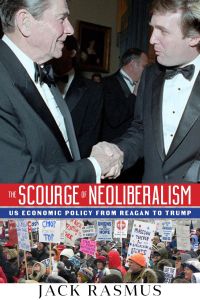
While the capitalist system has undergone numerous restructurings throughout its history, capitalist elites purpose in restructuring has remained the same: to restore and/or extend their hegemony. The current restructuring, operative since 1978, is called Neoliberalism. The book examines Neoliberalism as both an Idea and an historical practice composed of a particular mix of fiscal-monetary-trade-industrial policies that began with the latest US capitalist restructuring in the late 1970s, continuing to evolve to this day. The book further explains the deeper material forces giving rise to - as well as now undermining - the Neoliberal policy regime, with special focus given to the crisis of Neoliberalism in the wake of the 2008-09 global crash, Obama's failure to resurrect it, and Trump's current doomed effort to restore it in a new, more aggressive form. Evidence why Neoliberalism is destroying US Democracy concludes the book's analysis.
Describes how US federal governments, often in cooperation with the largest US private banks, introduced and expanded central banking functions from 1781 through the creation of the Federal Reserve Act of 1913. Based on an analysis of the evolution of the US banking system - from pre-1781, through the 1787 US Constitutional Convention, Congressional debates on Hamilton's reports to Congress, the rise and fall of the 1st and 2nd Banks of the United States, and through the long period of the National Banking System form 1862-1913, the book shows how central banking in the US evolved out of the private banking system, and how following the financial crash of 1907 big New York banks pushed through Congress the Federal Reserve Act of 1913, creating a central bank which they then managed for their interests.
(Click on image) CENTRAL BANKERS is a comprehensive critique of central banks’ policies in the 21st century, explaining why the massive injections of free money to the banking system since the 1970s enabled the creation of excess corporate debt that has led to financial bubbles and repeated crises. The book addresses the growing contradictions of central banking, why they are failing in their functions, targets and tools, and proposes a radical democratization and restructuring to transform them to serve the public interest and not the private banks.
(Click on image) LOOTING GREECE, A New Financial Imperialism Emerges. This book - Reveals clearly who calls the shots in the Eurozone—the hardliners, not the remnants and political residue of what was once European social democracy, - Follows the negotiations in their excruciating detail as the Troika tightens the screws from 2009 to the present, - Shows how Europe’s financial elite enriches itself on Greek debt, privatizations and financial manipulations, turning Greece into an Economic Protectorate.
(Click on image): This book offers a new approach to explaining why mainstream economic analyses have repeatedly failed and why fiscal and monetary policies have been incapable of producing a sustained recovery. It explains why the global economy is slowing long term and becoming more unstable, why policies to date have largely failed the trend, and why the next crisis may therefore prove even worse than that of 2008-09.
(Click on image) Obama's Economy: Recovery for the Few, explains how the weakest and most lopsided economic recovery since 1947 has been the direct outcome of failed economic policies of the Obama administration and US Federal Reserve bank since February 2009. Includes a detailed 'alternative program' in the final chapter. Includes the book, a video DVD presentation, and 66-slide PPT slideshow.

(Click on image) Obama's Economy: Recovery for the Few, explains how the weakest and most lopsided economic recovery since 1947 has been the direct outcome of failed economic policies of the Obama administration and US Federal Reserve bank since February 2009. Includes a detailed 'alternative program' in the final chapter.

(Click on image) A theoretical analysis, with historical case examples, of origins, causes and future evolution of the recent--and continuing--economic crisis in the U.S. and global economy. Includes predictions in 2009 of the inevitable failure of Obama policies and more serious crisis to come, 2013-15.

(Click on image) Seven specific reasons why economic recovery under Obama since 2009 has failed for all but the wealthiest few and largest corporations. The book spells out eight specific areas as an Alternative Economic Recovery Program.

(Click on image) The War At Home: The Corporate Offensive From Ronald Reagan to George W. Bush, is a 534 page, extensively researched, nonfiction book that describes the evolution of corporate-government policies from 1980 to 2005 that have shifted more than a $1 trillion dollars a year, every year, from 90 million American middle and working class households to the wealthiest 10% and corporations.
 Dr. Jack Rasmus @drjackrasmus
 Jack Rasmus