Feeds:
Posts
Comments

Archive for the ‘Uncategorized’ Category

How Democrat Party leaders are preparing to do a trip on Sanders once again in 2020. Why the Sanders’ ‘Inside-Outside’ strategy to reform the Democrats is doomed. Listen to my Alternative Visions Radio Show of March 7 and my discussion with Nick Brana of the LCCIP, an emerging independent progressive alternative.

    To Listen GO TO:

http://prn.fm/alternative-visions-bernie-sanders-runs-whats-lccip-alternative/

    Or GO TO:

http://alternativevisions.podbean.com

SHOW ANNOUNCEMENT

Dr. Rasmus welcomes guest, Nick Brana, to discuss Sanders’ announcement to run again for president and the legacy of Democratic Party’s leadership to prevent independent progressive candidates like Sanders. Former National Political Outreach Coordinator for Sanders’ 2016 campaign, and 1stElectoral Manager for the ‘Our Revolution’ post-2016 spinoff movement of Sanders’ staffers and supporters, Brana discusses the August 2018 ‘reforms’ by the Democratic Party leadership that are designed to ensure Party leaders’ control over candidates. Rasmus and Brana then discuss what’s behind all the Democrat candidacies for president announced in recent weeks as well. In the second half of the show, Brana reports further on last month’s gathering in Washington DC of the new Organizing Committee for form a Labor-Community based independent 3rd party, the LCCIP: i.e. the new party’s program, its initial supporters (including celebrities like Cornel West, Oliver Stone, Chris Hedges, Abby Martin), its composition of AFLCIO union leaders and members constituting its organizing committee, and its plans to form local assemblies of community-union members as a dues paying member base. (For more information on the LCCIP go to: LaborCommunityCampaign@gmail.com )

Read Full Post »

My postings to twitter provide short, to the point, and often data oriented comments on important daily economic trends in the US and global economy. Important data points often associated. Here’s the entries for January-February 2019.

    Feb 27

#Tradewar US trade rep hardliners are now complaining China subsidizes its companies & must stop to get a US deal. But so does the US–thru the US tax system. Example: Amazon in 2018 doubled profits from $5.6 to $11.2 billion but paid no taxes. Then got check for $129m from IRS

    Feb 23

#US deficit US stats underestimate inflation, unemployment, and now US deficits. CBO forecasts$900b deficit 2019. But first 3 mos. deficit already $319B. CBO also ignores $70b ‘black budget’ military projects. + if another stock correction or early recession, deficit still higher.

    Feb 23

#TrumpTaxScam Some have asked how 17% decline in tax refund? IRS says 8.7%, i.e. an average for all returns including capital incomes where the bigger refunds are happening. For wage earners only (those affected by withholding) much higher decline + higher state taxes now as well

    Feb 23

#TrumpTaxScam Trump front-loaded tax cuts for investors & businesses in 2018 + changed payroll deductions to appear wage earners also got tax cut. That’s over. Now tax hikes on wage earners hitting in 2019. Tax refunds down by 17% so far. Even bigger tax hikes coming after 2022.

    Feb 20

#MuellerReport Rumors in DC that Mueller will soon release his report to Trump’s new attorney general, Barr. But you and I will never see it. Barr says he’ll provide only a summary to Congress. So they won’t either. So much for transparency and democracy in USA today

    Feb 14

#TrumpWall Breaking news this afternoon is Senator McConnell (Trump’s echo) says Trump will declare national emergency today as he signs compromise bill to fund his wall. Big surprise? To mainstream media maybe. But I predicted it back on January 7. See my tweet below that date

    Feb 13

#Fed former vice-chairman, Stanley Fischer, joins Blackrock shadow bank–i.e. the latest in a ‘revolving door’ relationship between Fed chairs and Fed governors (the latter who typically leave the Fed to work for banks long before their 14 yr. term on the Fed expires).

    Feb 8

#USdebt Update to my prior post on foreign owners of US govt debt (T-bonds): Financial Times today, Feb. 8, reports US needs to sell $12T more T-bonds next decade to cover US debt rise. Foreigners now own 36% US debt v 45% decade ago. China sold off $60b in May-Nov. 2018 alone .

    Feb 6

#Fed Fed’s recent 180 degree rate hike reversal sets the stage for 3rd DOW crash later in 2019 (after Feb18 and Nov-Dec 18). DOW may fall to 21,000. Also, renewed junk bond surge now underway=more deadwood zombie corps. Plus more BBB bonds (now half of $9T I-grade US bond market)

    Jan 30

#centralbanks Globally ‘throw in the towel’. Fed stops rate hike and sell-offs. ECB retreats on rates & selloff. Bank of Japan to continue QE. BoEngland no hikes. PBOC pumping more liquidity. Entering next recession, balance sheets to remain bloated at more than $15 trillion.

    Jan 30

#Fed Signals no rate hike in March (as I predicted) + slower balance sheet selloff. The meaning? Help shore up shaky stocks? (which Fed denies ever its goal) OR US economy slowing in 2019-20? (Read my 2017 & 2018 articles in European Financial Review at http://jackrasmus.com )

    Jan 20


#Tradewar
For my latest up to date analysis of US-China trade ‘war’, check out my blog, http://jackrasmus.com and the ‘Trump’s Deja Vu China Trade War’, parts 1 & 2

    Jan 18

#China US-China trade negotiations getting serious. China to buy $1 trillion more US goods next 6 yrs, allow 51% US ownership in China, and pass tech transfer-IP legislation by Jan. 29. Mnuchin offers to remove all US tariffs. Mtgs in Wash. 1-30. Will US hawks scuttle the deal?

    Jan 14


#USstocks
Major Oct-Dec contraction (worst since 2008, 1931). Jan2019 bounce fading, driven by stock buybacks and speculators. Keys ahead: 1.China-EU-US GDP slowdowns, 2.Brexit, 3. US Fed rates, 4.China trade war. 1. continue; Brexit & Fed to postpone; Trade war resolved by June

    Jan 9

#USbudgetdeficit Deficit first quarter 2019 at $317 billion, 41% higher than prior yr.; On track for $1.2-$1.3 trillion add to US $21 trillion federal debt. Deficit = 1st full year of Trump tax cuts. Interest on the debt costs up by 47%. US goods trade deficit now also $800 bil.

    Jan 7

#Shutdown Can (and will) Trump declare national emergency to fund his wall? Yes and Yes. Dem Congress in 1976 law gave him wide powers. 100s laws since say which. He’ll move $ from Defense budget to wall. Dems to be outmaneuvered again. US slouching further toward dictatorship

    Jan 7

#Fed Atlanta Fed president, Bostic, today says only one more Fed rate hike in 2019, agreeing with my prediction a year ago. Why halting now? Growing stocks & financial asset deflation. So much for Fed’s long term declaration it only responds to the real economy, not the markets.

    Jan 3

#yieldcurve Second yield curve about to invert. Latest 3mo. T-Bill at 2.4%; 7year T-Bond at 2.43%. (2 & 5-year bonds already inverted). Fed Board governors beginning to show signs of capitulation, to stop raising rates. But if Fed halts rate hikes it has nothing to do with Trump.

    Jan 3

#Apple Apple’s stock plunge: due to trade war? No. Causes: China consumers’ demand falling+Android-China sellers competition+Over-priced Apple latest model plus Yuan devaluation 10% price hike effect (due to US Fed rate hikes & Dollar rise). Watch for big Apple stock buyback.

    Jan 2

#globaleconomy global manufacturing retreating. China PMI negative. Europe (Germany). US Fed regional PMIs slowing fast (Phil.,NY, Texas). Both housing & Mfg. sectors now flashing red. Next contagion? Global Tech. Watch for major tech sector stock fall this week led by Apple.

Read Full Post »

By Dr. Jack Rasmus
Copyright 2019

Invasion of Venezuela by US and its proxies is just around the corner! This past week vice-president Pence flew to Colombia once again—for the fifth time in recent weeks—to provide final instructions to US local forces and proxy allies there for the next step in the US regime change plan.

Evidence that the ‘green light’ for regime change and invasion is now flashing are supportive public statement by former president, Barack Obama, and several high level US Democratic party politicians and candidates, directly attacking the Maduro regime. They are signaling Democrat Party support for invasion and regime change. Events will now accelerate—just in time perhaps to coincide with the release of Mueller Report on Trump.

Behind the scenes it is clear, as it has been for months, that US Neocons are once again back in charge of US foreign policy, driving the US toward yet another war and attempt at regime change of a foreign government.

US Strategy in Brief

The US Neocon-led strategy is increasingly clear: establish a ‘beach-head’ on the Colombian-Venezuelan (and Venezuelan-Brazilian) border under the guise of providing humanitarian aid. Use the aid to get Venezuelans on the border to welcome the US proxy forces to cross over. Set up political and military structures thereafter just inside the Venezuelan borders with Colombia and Brazil, from which to launch further similar efforts deeper into Venezuela. Repeat this province by province, step by step, penetrating Venezuela space until enough local units of the Venezuelan military change sides and convince one or more of the Venezuelan military hierarchy to join them. Establish a dual state and government within and along the border of the Venezuelan state this way. A breakaway State and dual power within the country. Make it appear, by manipulating the media, that the Venezuelan people are rising up against the Maduro government, when in fact it is US proxy forces invading and using opportunist local politicians, military, and others in the ‘conquered’ zones, as the media covers for their invasion.

The main ideological justification being used for the invasion and regime change is that the Maduro government has grossly mismanaged the Venezuelan economy and driven its people into poverty. With Democrats now joining Trump and Republicans in support of invasion, the liberal mainstream US media, as well as the rightwing alternative media, are both pushing the same line, to blunt US opposition to invasion and yet another war before the final military assault is launched. Somehow the democratic elections less than a year ago, which returned the Maduro government to power, did not represent the ‘will of the people’. Explanations how they did not are thin and unconvincing, moreover. Nor is any explanation given how US policies and actions have played the central role in destroying Venezuela’s currency and economy. And the financial measures used to destabilize the economy are especially opaque.

Financial Imperialism: The Case of Venezuela

Venezuela today is a classic case how US imperialism in the 21st century employs financial measures to crush a state and country that dares to break away from the US global economic empire and pursue an independent course outside the US empire’s web of entangling economic and financial relations.

Here’s how US ‘financial imperialism’ has worked, and continues to work, with the intent of assisting regime change in the case of Venezuela.

In a world where US Capitalism is the dominant hegemon the US currency—the dollar—is the centerpiece of the US global economic empire. The dollar serves as the global trading currency as well as the global banking reserves currency. More than 85% of all global trade (export and import) is done in dollars. Certain commodities, like global oil and oil futures contracts, are traded virtually only in dollars. Recently more countries have begun to peg their own currency to the dollar, allowing it to move in tandem with the dollar. Some have even eliminated their currency altogether and now use only the US dollar as their domestic currency. Increasingly as well, more countries are issuing their domestic bonds in dollars (i.e. dollar denominated bonds). And their central banks follow the US central bank, the Federal Reserve’s, policy as it raises or lowers US interest rates that in turn cause the US dollar to rise and fall. They do so even if rising US interest rates mean rising rates in their own economies that precipitate recessions and mass unemployment. These are all examples of the growing financial integration with the US Imperial State and economy.

But even those economies that maintain their own currency are at the mercy of the US dollar. Since the dollar is the global trading and reserves currency, whenever the dollar rises in value due to US monetary policy changes, or US inflationary pressures, or just changes in supply or demand for the dollar, the currencies of other countries fall in value. As the dollar rises in value, other currencies fall. That’s how global exchange rates work in the 21st century global US empire where the dollar is the trading-reserves currency. Other currencies—the British pound, Euro, and even less so the Japanese Yen or China Yuan—are still largely insignificant as reserves or trading currencies. And it appears very unlikely they will soon replace the dollar—one of the key pillars of the US empire.

The US has the power to engineer a collapse in a country’s currency. A collapse in its currency means the price of imported goods rises rapidly, especially those goods it can only be obtained by imports—i.e. medicines, critical food commodities, intermediate business goods necessary for domestic manufacturing, etc. Accelerating import inflation in turn leads to domestic businesses cutting back production due to lack of affordable resources, commodities, or parts. Mass layoffs follow production cutbacks. Rising inflation brought on by currency collapse is thus accompanied by rising unemployment. Wage income and consumption in turn collapse and thereafter the economy in general.

Widespread shortages of key imports, inflation, and domestic production decline and unemployment brought on by the shortages and inflation simultaneously lead to social discontent and loss of support for the government. Opposition groups and parties proclaim these problems are due to the mismanagement of the economy by the government, or corruption by its leaders, or just socialist policies in general. But in fact the economic crisis—i.e. shortages, inflation, production, unemployment—is traceable directly to the root cause of the collapse of the currency engineered by US imperialist policies intent on crashing the economy as a prelude to regime change and economic reintegration to the US global economic empire.

There are many ways the US can, and does, cause a collapse of a country’s currency. One set of measures are designed to cause a severe shortage of dollars in the target country’s economy.

A shortage of dollars drives up the value of the US dollar in the target economy which, in turn, drives down the value of the country’s own currency. The US has been engineering a collapse of Venezuela’s currency, the Bolivar, now for years—first by causing dollars in Venezuela to flow out of the country and, secondly, by measures preventing Venezuela from obtaining dollars from abroad.

US policy over the last several years at least has been to force US companies doing business in Venezuela to repatriate their dollars back to the US or else divert them elsewhere globally among subsidiaries. Or just to leave Venezuela and take their dollars with them. US policy has also been to publicize and promote wealthier Venezuelans with dollars to take them out of the country and invest them in Colombia, where the US has arranged an online investment firm with the assistance of its Colombian government ally. Rich Venezuelans have been encouraged as well to send their money to Miami banks. And to move there in large numbers, which they have, taking their dollars with them or dumping their Bolivars in exchange for dollars. The outflow of dollars from Venezuela has raised the value of dollars that remain in Venezuela on the black market there, thereby helping to depress the value of the Bolivar in Venezuela even further.

These measures pale, however, to US imperial efforts to prevent Venezuela from obtaining dollars in global markets in an effort to try to offset the outflow of dollars from the economy.

For example, the US has taken action to prevent US and global banks from lending dollars to Venezuela, or from participating in underwriting and insuring Venezuelan bond issues which would also raise dollars for Venezuela if allowed. Bank loans and bond funding thus dry up, depriving the government of alternative sources of dollars. More dollar shortage; more Bolivar domestic currency collapse—i.e. more expensive imports, more inflation, more shortages, declining production, rising unemployment….more discontent.

The main effort by which the US is attempting to deprive Venezuela of dollars is to impose sanctions on other countries that try to buy Venezuelan oil. Oil sales are the number one source of the country’s dollar acquisitions, since all oil trade is done in dollars and Venezuela depends on 95% of all its government revenues from selling its oil. The US imposes sanctions on would be buyers and thus cuts off access to dollars, as it simultaneously through other policies works to encourage dollar flight out of Venezuela and cut off bank loans and bond issuance by the country. And if the prior bonds and loans were ‘dollar denominated’, then the lack of dollars to pay the interest and principal coming due leads directly to defaults and in turn to business collapse and even more unemployment.

Venezuela has turned to selling its oil to China and Russia and a few other countries. It has been forced to resort to paying its interest and principal on past loans from these governments with shipments of oil instead of payments in dollars. As the US turns to sanctions as an economic ‘weapon’ to enforce its will on other countries, which it has been doing in recent years, more countries are become aware of the tactic and are taking countermeasures. They are dumping dollars (or reducing their purchases of dollars in world markets) and buying gold. China and Russia are leading this way, while experimenting with non-currency dependent trade.

Another recent move by the US to deny Venezuela dollars and collapse its currency has been to seize the Venezuelan oil distribution company, CITGO in the US. Its remittances back to Venezuela have been in dollars. By seizing CITGO, the US deprives the country of yet another source of dollars, with which Venezuela might otherwise have been able to purchase imports of food, medicines, and other economically critical goods. So Venezuelans in this case are clearly forced to forego these critical imports due to US policy—not due to economic mismanagement by its government. Moreover, adding insult to injury, the dollar funds from CITGO seized by the US are being delivered to the Venezuelan government’s opponents and its hand-picked ally of the US, Guido. The opposition now gets to finance its counter-revolution with the money formerly remitted to Venezuela. The counter-revolution is financed at the expense of critical goods and services that otherwise might have been made available to the Venezuelan people.

Seizure of the CITGO asset is not the only such example of dollar deprivation. Other assets in the form of inventories, investments, cash in US banks, etc. are also being impounded. And not just from the Venezuelan government. Individual Venezuelan companies and individual citizens have been having their assets in the US impounded as well. And the US is increasing its pressure on foreign governments to impound and seize assets as well—of the government, businesses, and citizens.

The impoundment and seizure has recently been extended as well to Venezuelan gold stocks held offshore in other countries, in direct violation of international law. Recently the US company and mega bank, Citigroup, has been forced to withhold Venezuelan gold in violation of its contracts with the country. The Bank of England has also been asked, and is complying, with the US demand to freeze Venezuelan gold deposited in the UK. And countries like Abu Dhabi, where gold is traded globally, have been asked to stop trading in Venezuelan gold. Gold is a substitute money for the US dollar. So preventing gold access to Venezuela is like preventing dollar access as well. With its gold, Venezuela could more easily buy dollars, or trade for goods directly, than with using Bolivars that are falling in value and sellers are less likely to take as payment.

Countries with economies whose currency is seriously declining in value are able to get a loan to stabilize its currency from the International Monetary Fund, the IMF. Recent examples are Argentina, Turkey, South Africa, and even Pakistan. But the IMF is an institution set up by the US in 1944. The US maintains with its close European allies a majority vote on IMF decisions. The IMF does nothing the US does not approve. Its mission is to lend to countries in need of stabilizing their currencies. The IMF, however, as an appendage of the US global empire, has refused to lend Venezuela anything to help stabilize its currency.

This is in contrast, for example, to the record loan of more than $50 billion recently provided to Argentina once that country put in its current business and US-friendly Macri government. (The record IMF loan, by the way, was so that Argentina could pay off debts owed to US and other speculators in the early 2000s. So Argentina saw little of that $50b. What the payoff did enable, however, was for Macri and other Argentinian bankers to go to New York to get new loans from US banks once it repaid the speculators, from which Macri and friends no doubt personally benefitted immensely).

As the Venezuelan currency collapses due to US arranged dollar shortages, Venezuela must print even more Bolivars to enable it to purchase what goods from abroad it might still be able to buy. A collapsed currency means the price of imported goods rises proportionately. So more Bolivars are needed to buy the goods that are continually rising in price. Printing more Bolivars adds to the supply of Bolivars in the economy which raises domestic price inflation even further. But the excess printing is in response to the currency collapse which is engineered by the dollar shortage and the falling exchange rate in the first place. The over supply of Bolivars is not due to mismanagement; it is due to the shortage of dollars and the desperate effort by the Venezuelan government to somehow pay for inflating import goods.

The falling price of crude oil in 2017-18 added further pressure on the Bolivar. The collapse of oil prices globally appears unrelated to US policy. But it wasn’t. The oil Venezuela has been able to continue to sell, mostly to China or Russia, declined by 40% in price in 2018. The global oil deflation of 2018 thus generated less oil revenue for the country and thus fewer dollars.

But that too was due indirectly to US policy and economic conditions. The collapsing price of oil in 2018 is directly attributed to US shale oil producers raising their output by more than a million barrels a day, which increased the world oil supply and depressed world oil prices. The US then attempted to manipulate world oil output with Saudi Arabia but that exacerbated the over-production and deflation problem still further. Here’s how: The US attempted to impose sanctions on Iranian oil in 2018. Saudi Arabia believed it would capture the customers that Iran would lose, and therefore it, Saudi Arabia, also raised its output of crude as US shale producers raised theirs. But Iran was able to continue to sell its oil, as US sanctions broke down. The result of the US shale overproduction plus Saudi overproduction was a 40% collapse in world oil prices in 2018 that further deprived Venezuela of much needed government revenue—apart from US sanctions on Venezuela oil sales.

US monetary policy in 2018 further exacerbated the currency crisis in Venezuela—as it did elsewhere in Latin America and emerging markets in general. In 2017-18 the US central bank launched a policy of raising interest rates. Since other world central banks respond to the US central bank, world rates began to rise as well. Rising US interest rates caused a rise in the US dollar, and as the dollar rose in 2017-18 emerging market currencies fell. They fell for Venezuela in part due to this effect, as well as due to other causes mentioned.
Falling currencies precipitate what is called ‘capital flight’ out of the country. Less money capital means less available for investment and thus lower production output and more unemployment. So currency collapse precipitates not only inflation but recession as well. To prevent the capital fight, emerging market economies raise their own domestic interest rates. This led to recession, for example, throughout Latin America in 2017-18. Capital flight out of Venezuela has been significant since 2016, as wealthy Venezuelans sent more of their dollars out of the country to Miami, thus exacerbating dollar shortages in Venezuela and further driving down the value of the Bolivar left behind.

US sanctions on other countries, banks, and companies offshore are designed not only to prevent Venezuela access to dollars and money capital offshore. Sanctions also target real goods trade, like oil and other key commodities. But there’s another means by which the US shuts down the flow of real goods into and from a country, causing shortages of critical goods. It’s the US controlled international payments exchange system, called SWIFT. This is where US banks arrange the exchange and transfer of payments for goods and services by converting from one currency to the other and transferring the funds from one bank to another across countries. The US has been preventing Venezuela from normally using the SWIFT system. So even if another country is willing to buy Venezuela goods, including oil, and exchange Bolivars for its own currency, it is prevented from doing so by the US bank-controlled SWIFT system.

Summing Up

Financial imperialism has been waged against Venezuela for decades, but the attack on Venezuela employing financial measures has recently intensified as the US neocons and imperialists have accelerated their plans to launch a more direct attack by political means, including military, to force regime change in Venezuela. At the center of the on-going, and now intensifying, financial warfare against the country by the US are measures designed to destroy Venezuela’s currency.

Imperialism is often thought of as military conquest and colonialism. That’s 19th century British and European imperialism. But the American Empire in the 21st century does not need colonialism. It has a more efficient system for forcing the integration of other economies and for extracting value and wealth from the rest of the world. The US empire is increasingly knitted together in the 21st century by a deep web of financial relationships that afford it multiple levers of economic power it can pull if and when it desires. And when those economic and financial levers prove insufficient to overthrow domestic forces and governments that remain intent on pursuing a more independent path outside the Empire’s economic and political relations, then the breakaway State is attacked more directly once the economy is sufficiently wrecked. Such is the case of Venezuela today. Financial imperialism has paved the way for more direct political and military action.

Dr. Jack Rasmus
February 27, 2019

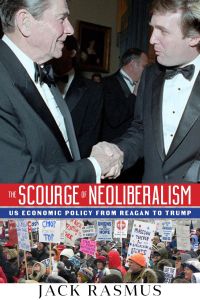
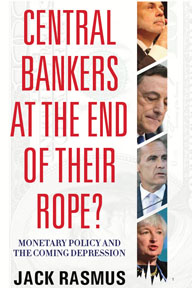
Dr. Rasmus is author of the recently published book, ‘Central Bankers at the End of Their Ropes: Monetary Policy and the Coming Depression’, Clarity Press, August 2017, and the forthcoming ‘The Scourge of Neoliberalism: US Policy from Reagan to Trump’, Clarity Press, 2019. He hosts the weekly radio show, Alternative Visions, on the Progressive Radio Network in New York, blogs at jackrasmus.com, and tweets at @drjackrasmus. His website is http://www.kyklosproductions.com.

Read Full Post »

Recently I have had several journalists, academics and progressive activists ask me my opinion on some of the key economic questions of the day. Here are some of my replies: on Trump tax cuts and US growth, current immigration debates, wages, expanding income inequality in the US, on what is the real rate of inflation today, and whether proposals for universal guaranteed income, debt jubilee, Modern Money Theory, green new deal are solutions to today’s economic problems.

Question 1: Is US economic growth under Trump due to his tax cut policy and what is the future of average or low wage Americans today?

Dr. Rasmus: The nominally higher US GDP growth in 2017-18 has little to do with the Trump tax cuts. The Trump tax cuts passed in early 2018 amounted to more than $4.5 trillion over the decade, targeting to wealthy households, businesses, investors and corporations, which have been ‘front-loaded’ in 2018. Offsetting this are $1.5 trillion in tax hikes for wage earners, that begins to hit this year and accelerates after 2022. Assumptions about 3% GDP growth for another decade, with no recession, produces a further offsetting of $1.5 trillion. The net result supposedly is the $1.5 trillion reported by the press. But the $4.5 trillion cuts for business and investors have not gone into real investment and generated the Trump 2017-18 GDP growth rates.

Real investment in structures and equipment declined steadily over 2018 as the Trump tax cuts took effect: measured in percent terms compared to the preceding quarter, residential construction was negative every quarter in 2018. Commercial construction, with a lag, turned negative in the second half of 2018. And equipment spending fell from 8.5% in the first quarter to 3.4% by October 2018.

So if the Trump tax cuts did not go into real investment, creating real employment and real GDP where did it go? It went into stock buybacks, dividend payouts, and M&A activity. Several US banks’ research departments estimate buybacks plus dividends for just the Fortune 500 largest companies in the US will reach a record $1.3 trillion in 2018. Add the largest 2000 or 5000 companies and its close to $2 trillion. Hundreds of billions more for M&A. This diversion of the Trump tax cuts to financial markets is the main determinant driving stock markets (even after corrections) and other financial asset markets.

The government grossly over-reports wage gains for the average and low paid workers in the US. Independent source reports show that more than half of US workers received no wage gain at all in 2018. The official reported wage gains of 3% are skewed to the top 10% of the labor force, dragging up the ‘average’ wage. Moreover, the data is for full time employed only, leaving out tens of millions of part time-temp workers’ wages. And it doesn’t adequately account for local taxes and interest on debt that reduces the take home wage further. Then inflation is under-estimated, making the real wage appear higher. So average workers at best stagnated, with most experiencing a decline in real wages. The rate of inflation in the US is especially under-estimated for median worker family households, while inflation is rising for rents, medical, education, and other major items in household budgets. So the immediate future will mean even less real wage gains for the majority of US workers. If workers were doing so well today, as Trump and the business and mainstream press report, why is it that 7 million of them have defaulted on their auto loans? Probably a like amount for education loans, the defaults of which are grossly under-reported. And why is credit card, auto loans, and education loan debt now all over $1 trillion each? And total household debt load approaching $14 trillion?

Question 2: With undocumented immigrants at 10-12 million, do you believe Trump’s claim that immigrants are invading the US economy?

Dr. Rasmus: Immigrants are certainly not invading the US. The 10-12 million number has been stable for several years. And for immigrants for some countries, like Mexico, the numbers are in sharp decline. It is true that more immigrants are coming from central American countries like Honduras, Salvador and Guatemala. But that is due to the economic crises and violent breakdown of the social order in those countries, which is due largely to US support for the corrupt elites of those countries who encourage the gang violence in their countries and do nothing about the economic crises. If there is a problem with immigration in the US, it is a problem of highly educated tech workers being brought in on H1-B and L-1 visas, and rich Asians who can buy themselves a ‘green card’ residency by promising to spend $50,000 when they come. These groups are taking the best jobs, the high paying tech and other professional jobs, and have been since the 1990s. But Trump is agreeing with the US tech companies to keep bringing them in, taking jobs US workers should and could get. Trump’s immigration policy and draconian action against immigrants from Latin America and elsewhere is about his re-election plans in 2020. By creating ‘enemies’ within and outside the US, he diverts his political base from the real problems of America. Blame the foreigner in our midst has always been a useful fascist argument. And Trump is marching down that road, as witnessed in his latest Constitutional power grab by declaring national emergencies to build his Wall and invoking phony national security to justify his trade wars.

Question 3: Do you believe the widening gap between rich and poor in the era of Trump can boost Americans interest in socialism?

Dr. Rasmus: The income and wealth gaps in the US are not only widening but doing so at an accelerating pace. US neoliberal policy under Obama was to subsidize capital incomes through Federal Reserve cheap money and by extending and expanding his predecessor, George W. Bush, tax cuts for business and investors. He gave more than $5 trillion in tax cuts to business and investors, more than even Bush. Trump policy has accelerated the tax cuts even further and he’s now stopped the Fed from raising interest rates. So we have subsidization on steroids now by both fiscal and monetary policy. The direct consequence is booming stock and corporate bond markets, fed by $1 trillion annual stock buybacks and dividend payouts every year since 2011 (now at record $1.3 trillion in 2018). As wage incomes for the 90% of Americans remain stagnant, barely rise, or decline, the direct consequence is accelerating income inequality and wealth gaps. But it’s mainly due to the shift toward financial profits by American (and increasingly global) capitalists that’s been building since the 1980s.

Will this boost interest in socialism? It already has. A clear majority, well over 60%, of people aged 34 and younger in the work force, have indicated in various recent polls that they prefer socialism over capitalism. It’s not by accident, therefore, that Trump and the US business press has been launching an offensive to attack the idea of socialism once again. This shift in public opinion will continue as the Trump policies continue to create a growing gap in income, wealth and opportunity in America.

Question 4: Some critics of US economic statistics on inflation say that inflation may be as high as 9.6% or at least more than 5%. What’s your view on this?

Dr. Rasmus: I agree the CPI rate is actually higher. I don’t think it’s 9.6%, but certainly not 2.1% (core) or 2.4% (headline). The Shadow Stats source has long critiqued US stats, including inflation. Also, employment and wage data, both of which I’ve been criticizing this past year. The CPI is higher than reported for several reasons. First, as Shadow Stats notes, they make arbitrary assumptions about product quality improvements that lower the actual rate. Second, they use what’s called ‘chain price indexing’ that smooths out, and lowers, the rate over time. Third, the weights for the basket of goods in the CPI is outdated. This is especially true for median income and below families. There should be different weights and definition of the basket for different levels of income, but there isn’t. Middle income and below families are experiencing greater inflation due to rising drug and health prices, rising local taxes and utilities, rising interest rates on mortgages, and rising rents. Rent prices are under-reported in particular since they are smoothed out by including what’s called ‘imputed rents’; that is, assumptions about home owners paying themselves a rent (yes, that’s illogical but true in the methodology), which hasn’t changed much for years but, when added to direct rents, results in a lower average. There’s also issues with how the data is collected on prices.

Of course, we’re talking here about prices for goods and services. Not prices for financial assets which have accelerated several fold since 2009, as bubbles have grown. I suspect that real CPI is about 3.5% to 4%, not the 2.1%. That of course means that real US GDP is not 3% in 2018 but actually less than 1% in real terms. (The price index for GDP real adjustment is the GDP deflator index, which is notoriously even lower than the CPI (or the PCE, which the Fed uses).

Watch the first quarter 2019 GDP come in closer to 1% in official reporting later this spring. That means the Trump tax cuts of more than $4 trillion over the coming decade, front loaded in 2018, have had very little effect on real GDP. Most of it has gone to stock buybacks, dividend payouts and M&A financing. Buybacks pus dividends for the just the Fortune 500 will equal around $1.3 trillion for 2018, a record. Real investment has been sliding throughout 2018, when the tax cuts took effect. Residential construction contracted every quarter. Commercial construction lagged, but turned negative as well in the second half of the year. And equipment investment declined from 8.5% at the beginning of 2018 to 3%-4% by the end. It’s a real fiction that Trump tax cuts are responsible for the 3% plus growth in 2018. It’s mostly been due to government spending, especially defense, and to consumption driven by household debt for the bottom 80%, although nicely rising compensation for the top 10% has driven consumption as well. Trump cut paycheck withholding in 2018 so that average households would think the tax cut was putting more money in their wallets. But it wasn’t. And now, in 2019, most households will start feeling the bite of more taxes. The $4 to $4.5 trillion actual Trump tax cuts are going to the wealthiest individuals, businesses, and corporations, especially the US multinationals. That will be offset by $1.5 trillion in tax hikes for wage earners, which really starts to hit about 2022. Plus phony assumptions about 3% plus GDP growth rates for the next decade, with no recession. That’s how Trump gets his $1.5 trillion total deficit from the tax cuts. It’s a big fiction that the press also fails to report. Reporters are either stupid or the policy is to report the $1.5 trillion.

In other words, it’s not just price stats that are inaccurate, but GDP, wages and jobs data as well. The only thing holding up the house of cards is debt. For households now approaching $14 trillion. For the national government now $22 trillion (and going to $34 trillion by 2028). For state and local governments, trillions more. And for private business well over $20 trillion more. A big problem with leveraged loan debt, junk rate corporate debt, half of investment grade (i.e. BBB) which is also ‘junk’, and who knows what in derivatives and margin borrowing by investors.

Question 5: Progressive proponents of public banking, and what’s called modern monetary theory, both believe that the Federal Reserve could simply create money for all citizens’ economic benefit, not just for the banks. What’s your view on this? And specifically on the idea of a guaranteed basic income, what’s called a debt jubilee of legal forgiveness of debts of households, and a green new deal?

Dr. Rasmus: The Fed isn’t feeding the banks to avoid a recession; the Fed is feeding the financial markets to prevent a third major contraction since Feb. 2018 that is coming. Cheap money in excess keeps rates low (or in this case prevents them from rising further). But the money doesn’t go into real investment. It goes into asset markets (or flows offshore to emerging markets), or into M&A activity, or into stock buybacks and dividend payouts in the trillions annually (this year $1.3 trillion, after 6 years of an average of a trillion a year).

Yes, the Fed could provide credit to households and non-banks, but that’s not why it was created. It was created, like all central banks, to subsidize the banks with cheap credit and to bail them out when they binge too much and create a crisis. In the postscript to my 2017 book, ‘Central Bankers at the End of Their Ropes’, I provide language for legislation (and a constitutional amendment) that would radically change the mission of the Fed to serve all society not just bankers and investors. But the Fed was set up in 1913 to only lend to the banks, and since 2018 the shadow banks which now control more assets than the commercial banks like Chase, Wells, Citi, etc.

As for proposing a Debt Jubilee that’s just nonsense. So long as there’s a capitalist system the capitalists will never allow a debt forgiveness on a major scale. You’d have to change the system before to allow it.

What about guaranteed basic income? Something like that is inevitable. McKinsey Consultants recently estimated that Artificial Intelligence technology, or AI, will destroy 30% of all the job occupations in the US by 2030. Already more than 50 million of the US labor force are part time, temp, gig or what’s called ‘contingent’ or precariat labor force. They’re working two and three part time jobs to make ends meet and still can’t. AI will drive that total to well over half of the labor force. The system just can’t manage that many low and underpaid workers. Consumption will collapse, despite providing ever more household debt to fund consumption. However, as most are proposing guaranteed basic income now, it smacks of welfare and that makes it an easy ideological target for capitalists. It’s all about raising wages and creating real jobs that families can survive on. We need to be more creative than just UBI. But it does bring attention to the crisis of insufficient wage income for tens of millions of Americans, mostly young workers and the older that are forced to work into their seventies and until they drop.

Funding medicare for all? It’s possible to envision how the Fed, as the epicenter of a public banking system (part of my proposal) could provide funding for the infrastructure for medicare for all, in a new layer of clinics and public doctor offices locally. But the real funding for Medicare for all should come from taxing financial markets. That would be more acceptable to voters. Ditto for Green New Deal initiatives.

Progressives enamored with public banking or other monetary solutions (i.e. Modern Monetary Theory advocates) tend to over estimate the potential for monetary solutions to the economic crisis now maturing long run, as real investment continues to slow, productivity falls, prices tend toward stagnation and deflation (wages, interest rates, goods & services), global growth slows, and capitalists turn increasingly to financial asset markets to make their profits instead of past approaches of making things and new services that are useful and provide income for consumption. That is the ‘slow grinding crisis’ of capitalism today.

I support a public bank, but only as a small part of a larger solution that must include fiscal policy, industrial policy, and external (trade, exchange rate, money flows) policies. Money and banking are only part of the new program needed. But the program means nothing without political organization. The lack of that is the key characteristic of the time we live in. It all comes down to the organization question. Where can people turn to participate in realizing the new ideas? Not the Democratic Party. Certain not the Trumpublicans (there’s no Republican Party left, it’s now Trump’s). And the unions, as they grow weaker, turn to the Dems to save their ass. So forget a labor party based on the unions. That’s nostalgia of the 1930s. Won’t come again.

MMT theory is just another equilibrium theory that concludes that money can be created without limit, just use it for progressive programs. I don’t believe that. The Fed’s free money for the bankers and investors since 1980, and especially since 2000, and accelerating after 2009, is leading to unsustainable deficits and debt. The $22 trillion will be $34 trillion in less than ten years. And the interest on it will be $900 billion a year, per the CBO. That means capitalists will either have to give up their tax cuts, reduce their war spending budget, or….massively attack social security, medicare, education, etc. Guess which one is coming? The Trumpublicans make no apologies for it; and the Dems lie about how they won’t either.

Meanwhile, Sanders keeps acting the political Don Quixote tilting at the Dem party, trying to reform it, which keeps shitting on him and will do so perpetually. The Warrens, Bookers, and other ersatz progressives will ‘talk the talk’, the Dem party moneybags and leaders will encourage them to do so in order to outflank and dissipate Sanders’ progressive message, but in the end whomever of the progressives gets the next Dem presidential 2020 nomination, the Party leaders will ditch their proposals and programs and bring them in line. Don’t forget Obama in 2008, sounding like a progressive, but once in office put the bankers back in charge of his administration. But Biden’s the front runner anyway. So it’s not likely the party will even choose Warren, Booker, or any of the other ersatz progressive wannabes and Sanders clones.

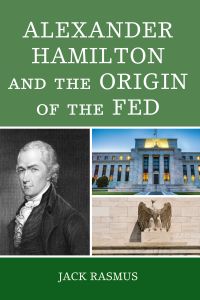
In short, while I’ve probably written more about central bankers and financial markets than most ‘on the left’ (latest book coming in March is ‘Alexander Hamilton and the Origins of the Fed’), I’m not a proponent of primary reliance on monetary policy and banking system restructuring as a solution. And nothing matters without having first resolved the ‘organization question’.

Read Full Post »

Alternative Visions Radio Show, February 15, 2019, on Trump’s National Emergency Declaration, Amazon v. New Yorkers, the latest on US economy indicators (retail sales, inflation, jobs), the global economy, & predictions re. Brexit, China trade, and Venezuela.

GO TO:

http://prn.fm/alternative-visions-predictions-forecasts-us-global-economies/

Or GO TO:

http://alternativevisions.podbean.com

SHOW ANNOUNCEMENT

Dr. Rasmus reviews his prior prediction that Trump will declare a ‘National Emergency’ to get funds to build his wall. What it means for the US Constitution and the continuing drift toward the decline of US democracy. (How the Dems were complicit for decades enabling the declaration and what they won’t now do). Rasmus applauds New Yorkers for driving out Amazon. What big tech has done to San Francisco and the bay area in California. The danger of ‘OpenAI’ (Elon Musk’s company) and its machine learning-deep learning ‘fake news’ creation potential. Rasmus addresses the US retail sales recent numbers, a fall of -1.2%, the biggest since 2009 and what it means for the US economy in 2019. Also, the Fed now clearly has ‘thrown in the towel’ (as have other central banks) leaving monetary policy dead in the water for the next recession. Krugman now agrees with Rasmus re. recession. As recession looms, US Treasury faced with an additional $12 trillion in bonds it must sell (as China, Russia and others reduce purchases and buy gold). Recession now imminent in Eurozone, Germany, Italy, UK, and Japan. The latest Brexit vote, China trade negotiations, and US strategy in Venezuela.

Read Full Post »

Just leaked today that Senator McConnell, Trump’s echo, has indicated that Trump will declare a national emergency today, even as he signs a compromise bill with Pelosi and the Dems to fully fund his Wall. Mainstream media thinks this is big time news. Comes as a surprise. But I predicted it back on January 7, 2019 in a tweet @drjackrasmus.com.

To quote myself in response to talk whether Trump will declare a national emergency to get his way on the Wall:

“Can (and will) Trump declare national emergency to fund his wall? Yes and Yes. Dem Congress in 1976 law gave him wide powers. 100s laws since say which. He’ll move $ from Defense budget to wall. Dems to be outmaneuvered again. US slouching further toward dictatorship”

Pelosi and Dems will act indignant. But as the historical record is clear, the Dems gave him this authority decades ago. Congress has been steadily giving up its authority to an Imperial Presidency for decades. Now we’re about to move into an era of legislation by Executive-Presidential action. So much for checks and balances and the basic structure of the US Constitution.

Under the US Constitution only the House of Representatives can initiate spending authorization and define how much will be spent on what. That era is over. Now the President can declare emergency and spend on whatever he wants. That’s another drift in US democracy toward dictatorship. That is, where the executive accretes legislative function to itself and ‘dictates’ what will be spent on what and when.

Trump has deep proclivities toward tyranny (ie. sees himself above the law, the definition of a Tyrant) and toward rule by dictate (where he declares law and spends as he wants, not the elected legislature).

So what will the Dems do now? Essentially nothing, I predict. They will huff and puff and file legal suits and use it all as ammunition for their re-election plans in 2020. But will they impeach Trump? Not a chance. They’ll just hold hearings now until November 2020.

What about the Mueller Report and forthcoming indictment? Will they use that to go after Trump now that he’s taking over some of their legislative function by declaring national emergency? Don’t expect much there either. There already are signs that the Mueller ‘Report’ the public gets to see will be an abridged, edited, and carefully whitewashed version. The real report will be shown to only a select few Congresspersons, in secret behind closed doors. And they will have to agree not to discuss it publicly as a condition of reading it. But without public pressure, nothing will happen. There can be no Democracy without public access to what the government is doing.

Meanwhile the Neocons are back in the drivers’ seat in the Trump administration. Bolton, Pompeio, Navarro, Lighthizer,–with mouthpieces like Coulter, Hannity, and others shouting in the background–are running policy. On the foreign policy front, preparations for deploying tactical nuclear war are moving forward, early stages of a proxy invasion of Venezuela are underway, the US is pulling out of treaties with Russia and moving forces closer to its border, phony negotiations pervade the mainstream media, for public consumption, about negotiations with North Korea, the US is adopting a hard line to thwart and stop China technology development, US allies in Europe and elsewhere being ‘brought into line’ to accept US policies or pay the price of sanctions or worse. In short, the US empire is gathering up its loose ends and preparing for a new phase, to restore its global hegemony in a more aggressive foreign policy form.

On the domestic US front, as neoliberal economic policies are being intensified under Trump (i.e. tax cuts for the rich and their corporations, more war spending, more free money from the Fed to subsidize the markets, coming attacks on social security, medicare, educations, etc.) in what is becoming increasing clear is an more aggressive, Neoliberal 2.0 form, the domestic political and Democracy landscape is being whittled away and reconstructed in order to make way and ensure the more aggressive neoliberal economic policies become embedded and institutionalized for another decade.

In other words, what we see happening in the US today in a more aggressive and confrontational US foreign policy, and an intensifying subsidization of capital incomes, amidst an atrophying of Democratic Rights and civil liberties at home. The new, nasty, more aggressive foreign policy and further destruction of US democratic rights are just the consequence of Trump’s new, aggressive neoliberal economic policies. The US elite know the next recession, coming soon, will significantly exacerbate the economic problems at home, while intensifying the political instability abroad. And they are preparing–at home and abroad.

Trump’s imminent declaration of national emergency to get his wall–a big leap toward circumventing the US House and Congress and the US Constitution–is just the latest event in this historical economic and political drift.

Read Full Post »

US Treasury was warned by its advisory committee this past week that it will have to sell an extra $12 trillion of US government T-bonds over the coming decade as the US federal government debt increases from current $21 trillion to $33 trillion. On same day, US Senators, Sanders and Shumer, introduced a bill to require corporations to pay more wages and benefits if they want to keep buying back their stock and paying dividends. The total combined buybacks-dividends in 2018 was $1.4 trillion, up from $1.1 trillion in 2017 and from $500 billion in 2009. And all that just for the Fortune 500 largest US corporations. Since the 2008 crisis nearly $9 trillion has been distributed by US corporations to their shareholders.

Listen to my Alternative Visions radio show of February 8, 2018 for the discussion on these and related topics of the past week.

GO TO:

http://prn.fm/alternative-visions-12-trillion-crisis/

Or GO TO:

http://alternativevisions.podbean.com

SHOW ANNOUNCEMENT

As the main topic of the show, Dr. Rasmus discusses the letter to the US Treasury by the Treasury Bond Advisory Committee (TBAC) this past week, warning that $12 trillion more in US Treasury bond sales will be needed over the next decade in order to finance rising US government debt. The $12T more per the TBAC is about equal to the net increase in federal debt (from current $21T to $33T) that Rasmus has been predicting will occur by 2028 due to Trump tax cuts, rising defense spending, and the next recession around the corner—with Interest payments on that debt alone equaling $900 billion a year, per the CBO. In a related topic, Rasmus discusses the latest data that show that Fortune 500 corporations’ stock buybacks plus dividend payouts will reach $1.4 trillion for 2018—up from $1.1 trillion in 2017 and from $500 billion in 2009. How the two trends of escalating government debt and accelerating $trillion a year plus buybacks-dividends are connected. The latest on Trump-Powell confrontation over rate hikes and coming breakdown of Russia-Saudi agreement on oil production are also addressed.

Read Full Post »

How the US manipulates its dollar, the global reserve and trading currency, to crash the economy of targeted countries for regime change and prepare domestic discontent to enable legal coup d’etats; How US sanctions intensify the pressure b y denying the target country essential consumer and business goods, and closing off access to export markets; How ideological offensives charging ‘corruption’ provide the political cover; And how US allies are lined up in the final phase. Venezuela today as a classic case example of 21st century US imperialism strategy and tactics.

To Listen to the discussion on my Feb. 1, 2019 Alternative Visions radio show,

GO TO:

http://prn.fm/alternative-visions-dollar-imperialism-trumps-proxy-war-venezuela/

Or GO TO:

http://alternativevisions.podbean.com

SHOW ANNOUNCEMENT:

Dr. Rasmus and guest, Alan Benjamin, discuss the latest efforts of Trump administration to engineer a regime change in Venezuela. Rasmus explains how the US employs financial imperialism to destabilize regimes, using the US dollar, sanctions, freezing of assets, cutting off access to trade and markets, denial of loans by US and world banks, and other measures as a prelude to creating an economic crisis in the target country to foster domestic political unrest and opposition forces to topple existing governments. Rasmus explains how this has been developing in Venezuela, and why it has recently intensified over the past six months. Guest Alan Benjamin describes recent political developments in Venezuela and the growing potential for military intervention there using US proxy governments, Brazil and Colombia. Efforts by Europe and Mexico to mediate. Possible responses by Russia and China. And solidarity movements emerging in the US to avoid a US proxy war against Venezuela. (go to jackrasmus.com blog for 2016 article: “How the US Destabilizes Argentina, Brazil, & Venezuela). For emerging US solidarity movements, check outwww.USlaboragainstwar.org)

Read Full Post »

Senior negotiators of the US (Lighthizer) and China (Liu He) have been meeting in Washington this past week (Jan. 30-31) as the US-China trade war approaches a climax. China continues publicly to offer concessions to the US on market access to China, US corporate and bank majority ownership of China companies, and China resumption of purchases of US farm and other goods. Meanwhile, the US continues to assume a hard line on China technology development, going after China companies and arranging US allies to do the same. The US also began proceedings to extradite from Canada the co-chairperson of the giant China tech company, Huawei. But news of what’s been agreed to or not thus far in negotiations has been tightly controlled, apart from Trump tweets and typical hyperbole that discussions have been ‘great’. No meeting has been scheduled yet between Trump and China president, Xi–which would be the true indicator that a tentative agreement has been reached. Reportedly, negotiators will continue at a high level mid-February in Beijing, and US trade ambassador, Lighthizer, has announced he will travel to China to continue discussions.

On the eve of last week’s negotiators, I was asked to give an hour interview on TV by the Peninsula Peace and Justice center in Palo Alto, California. Topics focused on China-US trade, NAFTA 2.0, and Trump policies in general. That hour interview can be viewed on Youtube at the following link:

https://youtu.be/xoR2eMIBgPk

Dr. Jack Rasmus

Read Full Post »

Watch my latest TV interview on ‘Other Voices TV’ on January 16, 2019 discussing latest developments on US trade-budget deficits, Trump’s ‘dual track’ trade policy, and upcoming US-China Trade negotiations scheduled for January 30.

TO LISTEN, go to Youtube at:

Read Full Post »

« Newer Posts - Older Posts »