Feeds:
Posts
Comments

Archive for the ‘Uncategorized’ Category

SOME READERS HAVE ASKED THIS WRITER TO CLARIFY WHY MY PREDICTIONS ABOUT THE DIRECTION OF THE US AND GLOBAL ECONOMY HAVE LARGELY BEEN REALIZED. THE FOLLOWING IS A 1000 WORD SUMMARY OF THE APPROACH, WHICH WAS RECENTLY WRITTEN FOR AN OWS STUDY GROUP.

Both major wings of contemporary mainstream economists—‘Retro Classicalists’ and ‘Hybrid Keynesians’—fail in fundamental ways to understand the qualitative characteristics of the economic crisis that continues to impact the U.S. and global economy. Neither wing has been successful predicting the deep and rapid contraction that began in 2007; explaining why massive, multi-trillion dollar liquidity injections into the banking system since 2007 have failed to generate a sustained economic recovery; or understanding why the current US and global economies are today, in 2012, steadily slipping toward another global banking crisis and consequent general economic contraction.

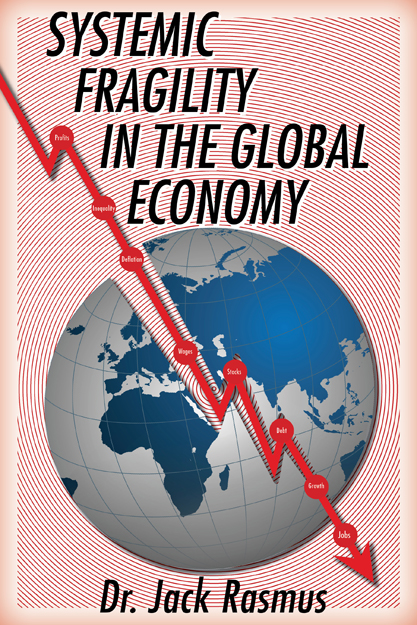
There are various reasons for this mainstream failure. But a short list would include the inability to understand the nature of investment in the 21st century, in particular the relationship between speculative forms of investment vs. real asset investment; the changing relationship between central bank money supply and internal bank forms of credit creation; and the critical causal interdependencies between forms of debt and income, which this writer has summarized elsewhere by creating a new conceptual analysis based on terms such as ‘systemic fragility’.

Fragility as a concept of analysis is derived from the Minskyan notion of financial fragility, where fragility is a function of levels of debt, terms of debt repayment, and cash flow. This notion is developed further, expanded, and extended to include household consumption fragility and public balance sheet fragility. A quantitative relationship exists between the three forms of fragility that together constitute ‘systemic fragility’. Causal interdependencies between the three forms of fragility shift over the course of the business cycle. At the cycle peak, at which a financial bust occurs in one or more asset price markets, systemic fragility also peaks. As the asset price bubble(s) crack, systemic fragility in turn undergoes a further rapid deterioration and corresponding ‘fracturing’. The further rapid deterioration of fragility results in a significantly worse contraction of business spending and household consumption that otherwise would have occurred in a ‘normal’ recession precipitated by external shocks. However, financial crash precipitated contractions are not normal and are not due to external shocks. They are ‘epic recessions, characterized by deteriorating systemic fragility, asset price bubbles and crashes, and more severe real economic contractions than occur in ‘normal’ recessions. Epic recessions are endogenous contractions, precipitated by financial instability events. Epic recessions are also differentiated from so-called ‘Great Recessions’, a popular term employed by mainstream economists which has no analysis but simply suggests the recession is ‘worse than’ a typical (normal) recession but ‘not as bad as’ a bona fide depression. This kind of analysis by adverb is rejected.

In epic recession analysis, ‘systemic fragility’ is the condition that explains how and why financial instability (asset price bubbles) events result in contractions of the real economy that are deeper, more rapid, more intractable and consequently more resistant to traditional central bank monetary policy actions and government fiscal policy responses. System fragility explains why these traditional responses are increasingly inelastic in terms of generating a sustained economic recovery from the ‘epic’ contraction, and simultaneously increasingly elastic in terms of provoking a relapse and even double dip re-recession when contractionary policies are reintroduced in the recovery phase.

Monetary policy responses, if of sufficient magnitude, may result in a temporary stabilization of the banking system but cannot generate a sustained economic recovery of the rest of the economy. They also have the negative consequence of generating a further deterioration of systemic fragility over the longer term if continued. Similarly, traditional fiscal policy responses fail to address the fundamental problems of household consumption fragility. Both traditional (i.e. mainstream economics) monetary and fiscal policy result in a worsening of public balance sheet fragility, which ultimately feeds back on financial and consumption fragility over time.

The mechanisms by which system fragility transmits to the rest of the economy are located in the relationship between debt, deflation, and default in various forms. Debt is defined as debt levels, rate of change of debt, plus terms of debt repayment. Deflation is considered within a three-dimension price system: asset prices, product prices, and factor prices. Asset price deflation in the post-bubble contraction phase drives product price deflation, which in turn drives wage deflation. The three forms of deflation feed back upon each other in turn, and also upon real debt as a consequence. Deflation results in default, which in turn also feeds back on both debt and deflation. Together this debt-deflation-default mechanism transmits ‘systemic fragility’ conditions to the various economic indicators, by which NBER economists define recession conditions.

Contrary to mainstream economics, therefore, there is no such thing as a single price system responding predictably to supply and demand to enable a return to equilibrium conditions. There are three separate price systems—asset, product, and wage—with asset prices serving as an originating destabilizing force and not an element that restores instability to equilibrium.

Among the fundamental driving forces in the global economy is the explosion of global liquidity, driven not only by the decades long uninterrupted creation of money by central banks’ international reserve currencies, but by the growing separation of credit creation by the banking (and shadow banking) system from the central banks in order to feed the increasing ‘speculative investing shift’ underway since the 1960s. New global financial institutions are created to accommodate the liquidity, new liquid markets are created to permit its reproduction, and new financial instruments are introduced to enable its circuit. Together they constitute the ‘global money parade’. Money and credit capital consequently shift into the more profitable financial forms of investing, causing an increasing divergence and imbalance between speculative financial investing and real asset investing over the course of the business cycle. Debt expansion based increasingly on non-money credit is a key characteristic of the speculative shift, which results in a growing adverse relationship between debt and income (fragility) within the system in all forms, as described above.

Dr. Jack Rasmus

NOTE: For a further detail of the major elements of this analysis see this writer’s recent books, “Epic Recession: Prelude to Global Depression”, May 2010, and “Obama’s Economy: Recovery for the Few”, April 2012, and the forthcoming third sequel, “Transitions to Global Depression”.

Read Full Post »

THE FOLLOWING IS THE SIXTH IN THE SERIES, ‘AMERICA’S TEN CRISES’. IT CONSIDERS THE CAUSES OF THE CONTINUING DECLINE IN COLLEGE AND K-12 PUBLIC EDUCATION, AND THE VISION BY CORPORATE INTERESTS HOW TO MANIPULATE THE CRISIS AND TURN PUBLIC EDUCATION INTO A PRIVATIZED, FOR-PROFIT CENTER


Both K-12 and college education systems in America were once the envy of the world. But those systems are now in a state of continuing decline, with a halt to the decline nowhere in sight.

At the college level, the central problem is runaway costs.  College administrators have become intent on acting as corporate CEOs, spending more and more money on providing CEO level pay and benefit packages for themselves and their growing management bureaucracies; expanding physical assets (buildings, facilities, programs); recruiting more and more wealthy foreign ‘customers’ (students) to cover rising costs; and raising the price of higher education services for US students at an annual rate of more than 12% despite four years of economic crisis and absent economic recovery.

The short term solution to accelerating higher education costs by policymakers thus far has been to burden college students with ever-escalating student loans; and for K-12 education, it has been to raise property taxes and to require more out of pocket payments by families of students for what was once fully publicly provided services.

The higher education financing formula based on student loans has served banks and financial institutions well.  Student loan debt as a result now exceeds $900 billion and represents two-thirds of all consumer credit. Student loan debt is growing faster than both credit card and auto debt combined. Moreover, the partial takeover of student loan administration by the Obama government has not resolved the problem.  Government is once again shifting the cost of loans to students in the form of higher interest rates while reducing grants and cutting funding for the future.

The consequence for higher education is that there exist today no programs or policies by government to bring escalating college costs, and student debt, under some semblance of control. Fewer Americans will therefore seek and obtain higher education, while more wealthy foreign students will be recruited to pay the excessive costs, as the quality of education in public colleges and universities correspondingly continues to decline.

The scenario for K-12 education is similarly dismal, both short and long term. In August 2011, the $1 trillion dollar deficit cutting deal attacked public education in particular. And post-November 2012 election deals by politicians will do so further. K-12 public education funding has failed to grow commensurate with the growth of population now for decades. With the recent economic crisis and the continuing slow and faltering economic recovery, even inadequate past levels of funding are now repeatedly reduced. Desperate school districts are forced in turn to cut programs and attack teachers’ jobs, wages, and benefits to make up the shortfall.

Corporate interests meanwhile lead the effort to prevent any tax increases at the state and local level to adequately fund education. Their solution, and objective, is to ‘privatize’ the public education system.

Charter schools was an initial early attempt to break up the public education system, as a first step toward its eventual privatization. But Charter Schools as a form of privatized education operated at the margins of the public education system and never became generalized.  Nor did Charter Schools offer the potential for significant new opportunities for corporate profit. That’s why it was supplemented by Bush’s ‘No Child Left Behind’ (NCLB) program.

Simply destroying public K-12 education via Charter Schools is not enough.  Charter schools represent privatization without profit, and were therefore of little interest to corporate interests. To truly privatize public education, and turn it into a major corporate profit center, it is first necessary to ‘standardize’ public education as a product. Only then can privatization result in a profit center. ‘Standardization’ means turning education everywhere into the same product in terms of content and delivery system.

Before the education system can therefore be fully molded in a corporate image, its product must be standardized.  NCLB failed to achieve that goal of creating a ‘standardized’ education product because it attempted to do so for all of education, all at once, and without funding. Obama’s ‘Race to the Top’ also attempts to create the necessary ‘standardization’ of education as a product, but in a smarter way.  It doesn’t attempt to do so for all of K-12 all at once. Moreover, RTT provides some initial funding. RTT thus represents the realization that the drive to standardize K-12 education is best achieved in stages, establishing a foothold first and providing a degree of financial incentives to encourage participation in the drive toward ‘standardization’ of product—i.e. the key requirement before public education, once a free public good, can be fully transformed into a ‘for profit’, privatized commodity. Both NCLB and RTT are therefore similarly corporate in spirit and plan, both designed to further standardize and centralize K-12 education.

The corporate vision for public education is, once fully standardized, to introduce new hardware and software content and delivery technologies on a massive scale into the classroom. Not just laptops or iPads in the classroom, but a fundamental transformation of how education content is developed and delivered. Privatization need not mean directly run by businesses; it means in essence that what was once a public good is transformed into a profit center for private corporate interests.

The future corporate image for public education is to have technology displace labor (teachers) on a massive scale. Standardization of product means cost cutting opportunities and the biggest cost center for education, since education is a service, is labor costs. With technology-enabled standardization of product, teachers will no longer be allowed to develop the content of education and will be forced to adopt a single delivery system defined by technology. Both education content and education delivery will become standardized. What is taught and how it is taught will no longer be determined by the teacher but by the centralized, standardized formula determined by the corporate developers of the content and delivery systems. Once skilled professionals, teachers in this corporate-preferred system of the future will become, in effect, a form of ‘machine operators’ who will teach to the same standardized product everywhere, delivered by the same hardware and software technology everywhere. Teachers will operate the hardware and software delivery system, the content of which will be predetermined and come imbedded with the technology. They will no longer be skilled professionals, but semi-skilled operators. The technology will do the teaching, with teachers operating and monitoring the process.

In this future scenario, teachers and teaching as we know it today therefore disappears, and with it their unions and current wage and benefits. Contingent employment (part time and temporary) becomes the rule in the K-12 classroom, thus mimicking the current situation in higher education where more than half of instructors are already now ‘contingent’. Contingent labor significantly reduces labor costs, as labor is paid one-half to two-thirds current rates and provided without benefits. Savings on labor costs are used to finance the purchase of the technology, as school districts buy more hardware and software.

Standardization of product via NCLB, and now RTT and, in the future, successor programs to RTT, is the prerequisite toward a vision of a privatized public education system where the content and delivery is determined by corporate America. The drive toward standardization initiated by NCLB is now moving to a new phase with RTT. Once achieved, technology assumes the central role in the classroom, displacing the teacher. And once it does the providers of technology gain further control over the content and delivery of public education, while creating a de facto privatization and new profit center for corporate America.

This is the scenario, and form, of the emerging corporatization of American education on the horizon. It is the vision now being planned by the Bill Gates of the world for public education in America in the decades ahead.  It will mean cost savings for school district managers, big profits for corporate America, and lower wages and benefits for teachers. It will also mean the de-skilling and de-professionalization of the teaching function as we know it today.

Jack Rasmus

Read Full Post »

FOR THREE CONSECUTIVE MONTHS NOW, APRIL TO JUNE, MAINSTREAM ECONOMISTS HAVE BEEN PARROTING THE POLITICOS’ SPIN MESSAGE, THAT GOOD WEATHER LAST WINTER IS THE CAUSE OF THE COLLAPSING JOBS GROWTH SINCE APRIL. THIS ANALYSIS BY METAPHOR IN LIEU OF REAL CONDITIONS IS CRITIQUED IN THE FOLLOWING, WHICH LOOKS AT THE REAL CAUSES OF LAST WEEK’S DISMAL JOB REPORT BY THE LABOR DEPARTMENT, THE THIRD IN AS MANY MONTHS (AND PREDICTED LAST WINTER BY THIS WRITER).

The US Labor Department released its monthly jobs numbers for June 2012 this past week. Once more the numbers showed a dramatic slowdown in job creation for the third consecutive month. Job creation averaged around only 80,000 a month for April to June, about a third of that in the 1st quarter, January-March period earlier this year.
The reason most often offered for the jobs relapse in June and for the past three months—the third such mid-year jobs relapse in as many years—is that the weather last winter quarter was the cause of the last three months’ dramatic drop off in job creation. As the argument goes, the ‘good weather’ of this past winter somehow drew forward the economic activity and therefore job creation that would have been otherwise created the past three months. That explanation, however, is nothing more than an excuse designed to avoid an otherwise more fundamental analysis why job creation has been collapsing once again in recent months.
Never mind that the last three months’ job creation collapse represents the third consecutive mid-year slowdown in job creation. If good winter weather were the explanation for the latest, 2012, such slowdown, then good winter weather should have been the explanation for 2010 and 2011. But those previous winters were quite ordinary. Second, if winter weather were the primary cause in 2012, then an inspection of those sectors of the economy—construction, agriculture, transport, retail—over the past six months should show significant jobs gain in the winter months followed by the exceptional collapse in jobs in those sectors this past April-June. But there is no such evidence, if one bothers to take a look at these potentially seasonal sectors.
The industries that might conceivably benefited seasonally from extraordinary better weather last winter—in effect pulling jobs into the winter quarter from this spring and thereby lowering net job creation this past three months—in fact produced very few additional jobs this past winter. We’re talking about around 20,000 jobs at most for all the preceding sectors noted—out of a reported total of 700,000 new jobs created in the winter quarter.
So if it wasn’t weather and seasonality that produced the 700,000 extra jobs over this past winter quarter, what then was responsible for that growth? Equally important, what then was responsible for the collapse in jobs the past three months, April-June, if it wasn’t winter weather effects? And will those real (non-weather) factors continue to have a similar impact on job creation going forward?
The ‘Good Weather’ Metaphor Explanation of Job Creation
When economists explain by resort to metaphor it is usually a good indication they have little idea as to what the actual causes may be.
The inordinate ‘good winter weather’ was no more responsible for job creation this past winter, and the consequence decline in job growth the past three months, than arguments that ‘sunspots activity’ can explain economic growth and job creation—i.e. an argument that in fact was once offered in the distant past by economists to explain economic growth despite its obvious ridiculousness. ‘The weather last winter’ thus represents a retreat by economists to past absurd modes of ‘analysis by natural metaphor’—in effect an excuse substituted for a real explanation and analysis of the sad state of the jobs market in the US today. Such explanations should be left to political and press pundits who are more inclined to avoid the facts than reveal them.
Actual Explanations of the Jobs Reports
So what might otherwise explain the 240,000 average job creation record of this past winter, followed by the dismal record of only 80,000 jobs a month on average created this past April-June?
The reasons are threefold and none has to do with weather hypotheses: (1) growing evidence of a problem with statistical methodologies used by the US labor department to estimate jobs; (2) the timing of policies, both fiscal and monetary, by the Obama administration and the Federal Reserve bank over the past three years; and (3) the convergence of global economic developments.
1. A Problem with Statistical Estimation?
As this writer has been arguing in publications the past six months, the 240,000 average jobs creation this past winter did not represent actual job creation. It was the outcome of statistical estimation methods by the US labor department that have consistently over-estimated job creation over the winter quarter for three consecutive years now. Without repeating the arcane details here (see the blog, jackrasmus.com), suffice to simply say those methodologies are based on an economy pre-2007, and are now, in today’s relative economic stagnation in the US (and increasingly globally), no longer as accurate and should therefore be fundamentally overhauled.
2. Ineffective Policy Responses to the Labor Market
The recent collapse in job creation is more obviously due, in part, to policies both fiscal and monetary of the past three years: specifically, with the timing of government policies in 2009, 2010 and 2011 that provided an insufficient dose of tax-spending stimulus earlier in the year that quickly dissipated by the following mid-year. The Obama administration has introduced three ‘fiscal stimulus programs’ (tax cuts and spending) to date that provided in each case a limited boost to the economy around year end that subsequently ran out of steam by the following mid-year. The reasons for the rapid dissipation of the stimulus are only in part due to the inadequate magnitude of each of the three programs. The rapid fading of the stimulus has been due even more so to the problems of composition and timing at the heart of the recovery programs.
Concerning monetary policy, the past three years have also been characterized by three Federal Reserve ‘quantitative easing’ policy programs that have also been ‘seasonal’ in their timing and impact, and subsequently therefore dissipated in their effects by mid-year as well.
Considering just the current year, 2012, an analysis that doesn’t rely on the excuse of ‘good winter weather’ must ask what happened in the winter quarter of this year that resulted in the definite slowing thereafter of the US economy, and job creation, the past three months? Among the possible real explanations, there was the spike in gasoline prices in the first half of this year, together with other inflation factors, that hit median households hard in the winter, with after-effects on consumer spending just felt in recent months. Food prices, utility cost increases, health insurance premium hikes, rental costs escalation—to name but the most obvious—are now having a major influence on real disposable income growth for the majority of US households. This is now showing up in recent months’ retail sales weakness and service sector spending slowdown, the latter of which represents 80% of the economy.

 
Service sector jobs rose by about 250,000 in both the first and second quarters. But the composition of those jobs created in this sector differed significantly in the 2nd quarter compared to the 1st. Service sector jobs this past quarter have tended to be heavily weighted toward part time and contingent work. Since March more than 500,000 involuntary part time (i.e. non-agricultural) jobs have been created, along with more than 100,000 temps and who knows how many middle management & professionals laid off who immediately designate themselves as ‘self employed’ and thus avoid the unemployment rolls.


Given weak to non-existent real disposable income growth, businesses have begun to add only part time jobs in the 2nd quarter in anticipation of a potential slowdown in services spending. Simultaneously, they are also eliminating full time jobs, as more than 700,000 full time jobs were eliminated the past three months. In other words, a kind of ‘churning’, from full time to part time employment has been occurring in recent months. And when that occurs, few net jobs are added.
Another ‘non-weather’ factor explaining the real slowing of job creation the past quarter is attributable to the global slowdown in manufacturing that inevitably began to penetrate the US manufacturing sector by the late spring 2012. Much has been hyped since late 2010 by large corporations and the Obama administration about how manufacturing is ‘going to lead the way’ to recovery and job creation in the US. But according to the Labor Department’s Table B-1 for June, manufacturing jobs grew by only 68,000 over the winter quarter, and since March by half that, at 34,000. Moreover, virtually all that roughly 102,000 manufacturing job creation in the first half of 2012 represents jobs for managers, supervisors and other professionals in the industry. Net job creation involving production and non-supervisory workers in manufacturing have actually declined by 170,000 from March through June 2012. This represents clear evidence that employers are now, effective the 2nd quarter, cutting back on production employment as the global manufacturing slowdown begins to impact the US in recent months. That job cutting will accelerate in coming months, given that new orders for factory goods in June fell at the worst rate since 2009.
A third real, non-weather, explanation involves job hiring trends involving government workers. Their numbers have been steadily declining over the past three years. Especially hard hit has been local government, and therefore teachers. Layoffs and decline in jobs reported for this group does not occur in the winter quarter, but does in the spring quarter. That also therefore, in part, explains the 2nd quarter fall off in job creation. But the ultimate causes here are government policies since 2009. Obama policies provided subsidies to the public sector to prevent (not create) job layoffs for one year. After mid-year 2010, those subsidies were gone and state and local governments began deep spending cuts that continue to the present.
Finally there is the Construction industry. Good weather also does not explain what’s happened with jobs in the industry. Employment in Construction declined by 13,000 in the industry over the 1st quarter, as typically occurs in winter months. But it has continued to decline, on a seasonally adjusted basis, from April to June, by another 42,000. That’s because there is no job recovery in Construction. The press has been contorting itself to try to pry some evidence that somehow housing is recovering. Because home prices did not fall last month, and home sales are bouncing along a bottom, according to the press that somehow constitutes recovery. However, the only evidence of growth in the industry is apartment construction—predictable since tens of millions have lost their homes since 2007 and must live somewhere. But construction employment has been unaffected by this ‘faux recovery’ in construction. Construction jobs declined by 13,000 in the first quarter of 2012, and then another 42,000 in the second.
When economists who should know better simply repeat the ‘weather’ as responsible for the April-June collapse in the monthly rate of job creation they in effect parrot the prevailing ‘spin’ of politicians and their media friends who prefer the public does not point fingers at their policy failures ultimately responsible for the jobs collapse. There has not been a bona fide job creation program since the current recession began. There have been massive tax cuts for business that never got invested to create jobs; there have been bail outs of banks who were supposed to lend to smaller businesses to invest and create jobs but didn’t; and there has been a turning over of jobs programs to manufacturing corporate CEOs, like GE’s Jeff Immelt, whose idea of a jobs program is more free trade and more deregulation, in exchange for hiring a couple thousand jobs temporary status workers in the US at half pay.
3, Converging Global Economic Slowdown
Combining with the preceding real explanations is an accelerating slowing of the global economy, led by a contraction in manufacturing across all major economies. This slowing began well back, in late summer 2011, recovered slightly and now is trending down once again more strongly. This time it also includes China, Brazil, India and other economies—in addition to the Eurozone wide recession now well underway and the clear slowing of the US economy in recent months as well.

Manufacturing was touted as the solution to job creation in late summer 2010, and the Obama administration made a concerted shift toward it as the solution to a then faltering recovery. That shift has produced little to nothing in terms of job creation, however. The third jobs relapse in as many years is therefore on the horizon this summer.
But one doesn’t need a weatherman to know which way the jobs winds are blowing in America.

Jack Rasmus, July 8, 2012

Jack is the author of the April 2012 book, ‘Obama’s Economy: Recovery for the Few’, available at discount at this blog. Click on the book icon on the right sidebar.

Read Full Post »

THE FOLLOWING IS THE FIFTH ENTRY IN THE SEQUENCE OF ‘AMERICA’S TEN CRISES’ POSTINGS, ADDRESSING THE TOPIC OF THE BROKEN POST-1945 RETIREMENT SYSTEM IN THE U.S.

The retirement system established in the U.S. in the late 1940s is today in a state of severe collapse—and with it the incomes of most of the more than 45 million Americans presently retired and the 77 million ‘babyboomers’ that will soon do so over the next decade. That system was built upon three elements: Social Security retirement benefits, defined benefit pensions, and personal savings. Each was supposed to provide one-third of the necessary income for the retired after age 65. Each of the three elements have been consciously weakened and undermined since the 1980s.

The first attack was leveled against defined benefit pensions that guaranteed a given income stream for retirees. 401k personal pension plans were introduced in the early 1980s to replace DBPs, and progressively have done so for the past three decades. 401ks remove all liability from companies to provide guaranteed retirement benefits but retain all the tax advantages to corporations. They also allow financial institutions and stock traders to siphon off the retirement funds and speculate with the funds. In the past decade alone more than $4 trillion in value in 401k and pension funding has been ‘lost’ to financial speculation. After three decades of policies aimed at undermining DBPs and promoting 401ks, the average balance in a 401k pension in America today is roughly $18,000; and for those over 55 only $50,000. Once numbering in the hundreds of thousands, defined benefit plans are now barely 20,000 and the majority of those in a condition of growing financial stress.

Meanwhile, as 401ks were being favored and promoted by government policies and spread throughout industry from the 1980s onward, DBPs were either dropped by companies by the tens of thousands or were raided by management for their surplus funds. From the 1990s on, they were undermined further by management manipulating actuarial assumptions in order to avoid paying required pensions fund contributions by law. After 2000, the corporate drive to eliminate DBPs intensified, adding tactics such as corporations declaring bankruptcy and dumping their pensions on public agencies, converting DBPs to hybrid ‘cash balance plans’, and shifting money from the pension funds to cover employers’ rising health care costs.

A most recent corporate attack on DBPs—public and private—is now underway, designed to eliminate the last vestiges of such plans. The latest corporate tactic is to get government to redefine pension rules, such that pension funds appear to have even greater accounting losses than previously. The outcome is the dismantling of more plans, or the combined slashing of pension benefits and/or raising of employee contributions.

The second ‘leg of the retirement stool’ is social security. After having produced a surplus for a quarter century in the trillions of dollars, government has borrowed every dollar from the social security trust fund in order to offset general US budget deficits over the same period—the latter caused primarily by rising defense spending and the Bush tax cuts since 2001. Chronic and deep recessions of the last decade have further undermined the contributions to social security retirement benefits. Having failed to privatize social security in 2005 under G.W. Bush, the focus today is to attack it at its weakest point: the social security disability benefits program which provides early retirement benefits to the disabled. The Obama administration in 2011 has also joined in recently in the effort to undermine social security, pledging in the summer of 2011 to reduce social security benefits by $600 billion as part of a ‘grand bargain’ to cut the federal budget deficit, while simultaneously taking what’s left of the annual social security surplus and distributing it back in the form of payroll tax cuts amounting to more than $224 billion in just the past two years.

The third ‘leg of the retirement system’ in the post-1945 period was envisioned to be personal savings. But like defined benefit pensions and social security, it too has been crumbling. After three decades of stagnation in real weekly earnings for the bottom 80% households, the personal savings rate and levels have fallen progressively from the 15%-20% levels in the 1970s to the 3%-4% range today.

In short, all three ‘legs’ of the retirement stool envisioned in the post-1945 period are now virtually broken or shattered. Defined benefit pensions have been eviscerated by 401ks that provide virtually no retirement, and have been undermined by various measures for decades, and are now under the most intensive further attack across the board. Social Security Trust Fund’s surplus meanwhile is being whittled away, as politicians of both parties compete for who can cut benefits the most after the 2012 upcoming national elections. And personal savings simultaneously continue to decline, as job growth lags, wages stagnate, and real income declines.

The collapse of the retirement system in America means not only severe hardship continuing, and coming, for tens of millions, but also the elimination of a critical income growth base necessary to sustain consumption and therefore economic growth. It has meant the bottom 80% households having to turn toward more debt to maintain standards of living, to working longer hours and more part time jobs, to a greater reliance on credit cards, and ever more dis-saving and spending down of past savings to maintain an increasing precarious standard of living.

A basic overhaul of the entire retirement system in America is a precondition for future economic stability and growth. That means not cutting benefits and thus disposable income further. But instead an increase in social security retirement benefits, a return of the trillions of dollars ‘borrowed’ by the federal government from the Social Security Trust Fund, an increase in the payroll tax for social security paid by those not contributing their fair share to the program, a halt to cuts in payroll taxes, a nationalization of all 401k plans under social security, a business value added tax to fund future contributions to a national 401k pool, and policies to restore defined benefit pensions once again.

Read Full Post »

COMMENTARY: Earlier this month, I wrote and predicted that central banks appeared to be moving toward a coordination of monetary policies in anticipation of an accelerating of the decline of the global economy. Today that appears to be the case.

On July 4, central banks in China, Europe and the UK simultaneously undertook action to stimulate monetary variables in an attempt to get ahead of the curve of the declining global economy. But they will find that monetary policy has very little impact on this current global condition.

The European Central Bank, ECB, cut rates to a record low of 075%, as it is now clear virtually the entire Euro economy, including the UK, are in recession or rapidly approaching it–as this writer predicted 8 months ago would happen.

The Bank of England, with rates already at near zero (0.5%), opted for even more ‘quantitative easing’, that is printing another $78 billion, an addition to its already nearly $500 billion such QE injection to date.

China simultaneously announced another surprise cut in interest rates, the second in as many months. China economic data forthcoming probably shows a weaker economy than even currently assumed. As this writer also predicted, China’s GDP is likely to fall well below 7% (which it needs to absorb new labor force entrants), and that notwithstanding the likely forthcoming fiscal stimulus China will have to undertake before year end.

That leaves only the US and Japan among major central banks not having yet taken action. Japan will likely wait on the US to do so first. The US federal reserve does not meet until July 31, but another round of QE can be expected if the June and July job figures remain in the dismal level that they have, below 100,000 jobs created a month (and thus also below new entrants to the labor force in the US), and if US manufacturing and services remain in decline or stagnant.

But monetary action by all these central banks, coordinated or not, will have little impact on stemming the global decline. Monetary policy, that is liquidity injections into the banking system, in the current ‘epic recession’ do not result in significant increases in bank lending and,in turn, business investment that creates jobs, income growth, and therefore economic recovery. The monetary injections largely are hoarded, or else committed to short term speculation in financial markets to realize quick profits. The QE and easy money results in a temporary stock and commodity markets surge, that eventually dissipates in less than a year.

As this writer has also written on this blog earlier this year, this cycle of QE and zero rates has led to the banking system and financial markets becoming increasing addicted to the free money.

Now the banking system itself also is showing signs of growing fragility. On the surface the Euro banks are apparently the main trouble spot, especially in Spain and the Euro periphery. But the core Euro banks are also increasingly in distress. The Eurozone’s last week summit was primarily focused on a pre-emptive bailing out of the Euro banks–or at least future plans to do so. But fiscal stimulus announcements were token and not of any consequence, at best indicating plans merely to ‘move the money around’ sometime in the future. Thus the Eurozone continues to focus on monetary solutions as well, which will prove disastrous to the effort to slow the decline toward a hard landing recession. (More on the Euro Summit and its solution in a couple days, now that the ‘dust is starting to settle’ on the initial overly ‘euphoric’ response to its pronouncements regarding use of its ESM fund to directly bail out the banks and create a more bona fide central bank out of the ECB at some distant point in the future.

Today’s coordinated central bank response to the growing global slowdown will no doubt result in more coordination to come. Despite the clear effort to coordinate, ECB president, Mario Draghi, denied ay such coordination–the last time such occurred was circa the Lehman Bros. collapse in 2008. Draghi also replied to the direct question of whether the global banking system was more fragile today than in 2008 by saying it was more stable today. That too is another misunderstanding of the global situation.

The weak point in the global banking system may not prove to be Spain and its banks, but what is going on in London today, the major financial center, and has been apparently since the 2008-09 collapse. London has become the ‘Cowboy Finance Capital’ center of the global economy. High risk taking and continuing speculative excesses have been the rule and now it’s becoming apparent. UK financial regulation has been a bigger joke than even the US Dodd-Frank bill. JP Morgan’s recent losses, centered on speculation in derivatives, is one indicator of London out of control. Another is the now emerging massive scandal involving Barclays and other banks’ manipulation of Libor rates–again to maximize derivatives revenues it appears. JP Morgan’s losses have risen to $9 billion from the original $2 billion estimate. And that doesn’t count its $25 billion plus, and rising, losses in stock values. The JP Morgan speculation involves its $350 billion portfolio. The losses may be much much greater, but we won’t know for months. Meanwhile, the Barclays-Libor scandal promises unknown financial losses. This is potentially of great significance. Hundreds of trillions of dollars of derivative trades were based on Libor, not to mention 90% of US mortgage contracts. How this scandal will result in liability suits and claims, and how that uncertainty will impact financial markets, remains to be seen. The unknowns are potentially significant.

In other words, the global banking system is growing more fragile, not less, and potentially even greater in terms of its negative impact on real economies already slowing rapidly. This is unlike 2008, when real economies were booming when the financial instability hit. 2008 also was a situation when central banks’ balance sheets were not overburdened with trillions of liabilities yet, as they are now. When the global consumer had not suffered five years of unemployment, negative income growth, trillions in asset wealth destruction, and real debt accumulation. Finally, 2008 was a period when government balance sheets were not in as terrible a shape as well, or the inclination as strong toward austerity and spending contraction.

No, Mr. Draghi, the global economy–especially in the Euro and UK, and increasingly in China and the BRICS, and soon again in the US as its economy now clearly slows, is not in a ‘better shape today’.

More on the Eurozone Summit and why the US economy will continue to slow, in a subsequent post.

Jack Rasmus
July 5, 2012
Jack is the author of the April 2012 book, ‘Obama’s Economy: Recovery for the Few’, which predicted 9 months ago the current US and global economic slowdown. The book may be purchased from this blog site at discount. (see icon).

Read Full Post »

COMMENTARY: As fourth in the series of America’s longer run ten crises, the following adds the continuing long term depression in Housing that will remain a fact throughout the rest of the present decade.

The U.S. economy today remains mired in what can only be accurately called a housing depression. Once producing residential housing at 1.5 million units a year and commercial property construction in the trillions of dollars annually, the economy has since 2008 been producing housing units less than 500,000 a year on average. Once consistently more than 1 million a year, new home sales remain in a range of low 300,000—two thirds below pre-2008 levels. Meanwhile, home prices have fallen by a third, experiencing not two, but three, ‘double dips’, and homeowners have lost more than $4 trillion in wealth.

Except for a small sign of growth in apartment construction, residential housing remains virtually flat today after nearly five years. To date there have been more than 12 million foreclosures since 2007 and more than 10 million of the 52 million mortgages in the US are in ‘negative equity’, with home market values less than the mortgage.

It is important to note that in every one of the 11 previous recessions in the US since 1947, housing has led the way in terms of recovery. After three and a half years from the start of recessions in 1970s and 1980s, housing was growing 32%-35%. Today in even the best months, housing sector growth remains stagnant at depressed levels at best.

Little to nothing has been done to effectively revive the housing sector since 2008. Obama administration policies toward housing since 2009 are an example of, at best, token neglect. For the first three years of his administration, Obama policies have targeted subsidizing mortgage lenders and mortgage servicers (e.g. big banks) rather than homeowners. Programs were barely funded, mostly providing incentive payments to banks to lower interest rates (which they resisted) and aimed at getting homeowners out of foreclosed homes and getting new buyers into the properties. Obama’s initial program in 2009-11, called HAMP, allocated $75 billion to housing recovery, but $50 billion of which were incentives to banks and the remainder earmarked for homeowners mortgage relief. But the latter were voluntary, administered by the banks, and bank refinancing of homeowners in foreclosure were limited to temporary interest reductions only, with no principal reductions. And no relief was provided for the 10 million plus homeowners in negative equity.

In 2012, the Obama administration introduced a program called HARP 2.0., as part of a deal to indemnify banks from liability actions by States’ attorneys general and homeowners. In return, the banks paid the States’ $25 billion, a pittance compared to the liability potential. Homeowners who were illegally foreclosed by the banks were to receive on average no more than $1500. The banks, in turn, were required to provide refinancing for homeowners in negative equity for the first time. But what is generally not known about HARP 2.0, is that the federal government’s agencies, Fannie Mae and Freddie Mac, will pay the banks that renegotiate negative equity mortgages a refund of ‘5 points’ on the loans. Congress will then have to reimburse Fannie Mae and Freddie the 5%. In other words, the government will pay the banks tens of thousands of dollars on average to refinance homes in negative equity, a major cash windfall for the banks at eventual taxpayer expense

Apart from the continuing depression level conditions that remain in housing, and the continuing subsidizing of mortgage lenders, mortgage servicers and the banks by the Obama administration and Congress, the longer term crisis in housing is its role as a prime sector for financial speculation. Since the 1980s, to the 2007 housing bust, financial speculators were allowed by Republicans and Democrats alike to exploit the housing sector to realize massive profit gains from speculation. It has resulted in repeated housing ‘busts’ in the US. First, in the early 1980s, followed by an even larger savings & loan sector housing bust in the late 1980s. These housing crash dress rehearsals were followed by the ‘main event’ of the subprime mortgage debacle of 2003-07. The US economic system’s financial elites periodically gorge themselves on property-based speculation. The housing busts are followed by ‘socialism for speculators’, whereby the public and taxpayer are forced to pay the cost of the cleanup. Taxpayers are still paying the bill, as Obama programs from HAMP to HARP 2.0 today continue to illustrate.

The cycle of housing speculative boom-bust will continue long term so long as banks and other financial speculators are allowed to continue preying upon the housing sector. What is needed is a utility banking system based on non-profit, direct lending at the cost of capital by new government agencies to homeowners and prospective homebuyers.

The longer term human consequences of the continuing housing crisis is that fewer Americans will purchase homes and those fewer will do so later in life. Expect incentives for the housing sector, such as mortgage interest deductions, to be significantly scaled back by Congress after the November 2012 elections as part of a major remake of the US tax code. Within a decade they will likely disappear. More younger Americans will have no alternative but to rent, while rent costs—already rising faster than home prices—continue to escalate. Rent costs will become the new focal point for inflation, just as once housing values were. More young Americans, in the 20-34 year range, will live with parents and and for longer periods. The economic consequences of this demographic shift in the longer run are significant. The role of housing in the US economy as a leading sector for growth and for dampening recessions will decline.

The solution to the housing crisis is simply to take from the banks and private financial institutions their key role as intermediaries of credit provision for housing. To prevent the chronic long run speculation in housing, and consequent housing booms and busts—and to return housing to its historic role of recession recovery sector—the government needs to stop subsidizing banks and mortgage companies. The most efficient way to this end is to remove the profit motive and the banker ‘middle men’ from residential housing by creating a utility banking system that will provide loans to homeowners at the cost of long term money based on the 30 year bond rate, today roughly 2.5%.

Read Full Post »

COMMENTARY: THE FOLLOWING IS THE THIRD IN A SERIES OF TEN ‘CRISES’ CONFRONTING THE U.S. ECONOMY OVER THE LONGER TERM.

The U.S. spends today more than 17%% of its GDP on health care—more than $2.7 trillion and rapidly rising. That is nearly double that paid by other advanced economies that typically pay 10% of their GDP for health care—health care services that are also generally superior in quality than that received by the average American. That $2.7 trillion means the U.S. wastes more than $1 trillion every year on ‘middle men’ in its privately insured system—i.e. an excess $1 trillion that accrues mostly to insurance companies and other ‘paper pushers’ that don’t deliver one iota of patient health care services.

The fundamental causes of runaway health care costs in the U.S.—costs that are undermining economic growth long-term in the U.S.—are not overuse of healthcare services by the vast majority of Americans. The health care cost run-up for two decades now is a direct result of government tax subsidized corporate mergers and acquisitions among health insurance companies, government price-subsidization of drug companies, and tax-encouraged for-profit hospital industry concentration—all three of which today drive health care costs all along the health care services supply chain.

Government policies for decades now have encouraged monopolization in the industry that is the fundamental force driving health care costs. Health insurance companies once earned 5% returns, distributing 95% of every dollar to pay for health services. They now earn 22% returns, distributing only 78%, with much of the difference paid to obtain Wall St. for loans for health insurers and for-profit hospital chains with which to buy up their competitors. Government has aided and abetted health industry concentration, and thus monopolization and runaway prices, since the Clinton administration with its policy of exemption of health insurance companies from anti-trust laws and tax incentives that encourage industry concentration.

As health costs have escalated for more than two decades now, the solution of politicians to the growing cost crisis has been to ‘socialize’ more of the costs of health care while privatizing more of the benefits. Working and middle class Americans have been required to pay more and more of the total cost of private employer health insurance and/or receive less coverage, or have been forced simply to go without coverage. Health care costs for retired Americans with Medicare have been increasingly ‘socialized’ as well: Part B Medicare doctor costs are paid increasingly out of government general budgets and Part D prescription drugs totally out of such budgets. Medicaid costs similarly come out of government budgets. However, this system of perverse ‘socialization of costs’ has reached its limits as health care cost escalation has become unsustainable. Other ways are therefore now being considered to continue the health care cost inflation benefiting companies’ and investors’ profits, while introducing new ways to ‘socialize the costs’. Obamacare is just the latest experiment in such new methods to continue ‘socialization of costs’ on behalf of health care services corporations.

Politicians have cleverly pitted the general taxpayer against the bottom 80% households who are the victims of the system of rising health care costs for declining coverage and quality of care. The Obama administration’s 2010 health care law, the Affordable Care Act, continues this problem by failing to provide any long run solution to runaway health insurance and health care costs, by instead subsidizes health insurers and drug companies at public expense, by encouraging employers to dump their health insurance coverage for their workers, by promoting self-rationing of health care services, and, most importantly, by requiring middle and working class America to subsidize 30 plus million of the currently 50 million without any health insurance coverage. The main beneficiaries of the Obama health care act are the health insurance and drug companies that will get the 30 million plus new paying customers.

Admittedly, the insurance companies will have to cover the cost of coverage for dependents to age 26, won’t be able to refuse coverage to customers with pre-existing conditions, will have to provide coverage with no lifetime limits, and all the other positive provisions of the Affordable Care Act that were necessary to buy votes on the cheap from liberal Congress members to ensure its passage. But in exchange for these benefit improvements, the health insurance companies will get 30 million new customers. The companies will enjoy a revenue windfall yearly of about $300 billion (assuming monthly premiums of about $850 on average and $10,000 a year for 30 million). Given that windfall for insurance corporations, it is not surprising that U.S. Supreme Court Chief Justice Roberts recently voted to uphold the constitutionality of the act. It wasn’t because he suffered from a temporary affliction of liberal angst. Roberts has consistently voted in favor of corporate interests on virtually every Supreme Court decision while on the court bench. His vote should be viewed simply as a pro-corporate interest vote, in this case worth $300 billion a year for health insurance companies.

But massive subsidies to health insurance companies is not the only—or event greatest–legacy of the Obama health care act. Continued escalation of health insurance monthly premiums—now rising at around 13% a year once again—is another. So too will be the forthcoming attacks on Medicaid and Medicare that will immediately follow the November 2012 elections. The retired (Medicare) and the working poor and disabled (Medicaid) will be asked to use less and/or pay much more directly for even lower quality health services.

The greatest negative legacy will be a historic collapse of employer provided health insurance coverage that will commence in 2014. Beginning that year, with the activation of mandated individual health insurance required by the 30 million now uninsured, companies will begin to dismantle their employer-provided health insurance plans—leaving their workers either to be driven into the privately obtained health insurance system created by the recent health care act for the 30 million uninsured, or else forced into the even lower quality/reduced coverage Medicaid system. The Obama health care act will thus set in motion, circa 2014, the rapid unraveling of the employer-provided health insurance system that has been in effect since the late 1940s.

What has been underway since the 1990s, in various forms, has been a drive toward privatization of health care by another name: from Clinton’s ‘managed health care’ system to George Bush’s ‘health savings accounts’ to Obama’s individual health insurance exchanges now coming in 2014.

This new, more individualized and privatized system will not result in health care services absorbing a lesser share of GDP, but a greater share. US households and consumers will thus eventually pay even more than 18% of GDP for health care services, resulting in a still further decline in disposable income with which to purchase other goods and services and support economic growth.

The only solution long term to the broken health services system in the U.S. is a true ‘socialization’ of the crisis—not a socialization on behalf of insurance, drug, and other for-profit companies. A socialization of benefits as well as costs in which everyone pays a fair share, not where wealthy investors and corporations are subsidized at pubic expense for what is a right to health care. A solution based on a system of ‘Medicare for All’ funded by a reasonable tax on all incomes—both earned (wages) as well as all capital incomes alike. An elimination of health insurance companies and other middle men from the US health care system saves a minimum $1 trillion a year. Add a reasonable tax of 3%-5% on all forms of income in addition to the $1 million a year savings, and funding a

Read Full Post »

COMMENTARY: THE FOLLOWING IS THE SECOND OF TEN INSTALLMENTS ON ‘AMERICA’S TEN CRISES’, ADDRESSING THE U.S. ‘INVERTED’ TAX SYSTEM, WHICH HAS BEEN TURNED UPSIDE DOWN OVER THE PAST THREE DECADES, SHIFTING TAXES FROM THE RICH AND CORPORATIONS TO MIDDLE AND WORKING CLASS AMERICA.

The U.S. tax system has been ‘turned on its head’ over the course of the past three decades. It begins with Reagan in 1981 and his $752 billion tax cuts (on a base GDP or only $4 trillion), the vast majority of which accrued to the wealthy and their corporations. A massive shift in income, led by (but not limited to) tax cutting effects has been the outcome. The top tax rates in 1980 were 50% and 70%, they are now nominally 35% (income and corporate) and 15% (capital gains and dividends). However, the effective federal tax rates are 16% for the rich on average, after their tax lawyers get to squeeze the IRS. And State and local taxes on the rich and corporate America have declined even more, as local governments ‘race to the bottom’ in recent decades to desperately try to attract businesses to move to their states. And let’s not forget the $1.4 trillion multinational corporations have stuffed in their offshore subsidiaries in order to avoid paying even the nominal 35%, or their periodic blackmailing of Congress to lower the 35% to 5% to bring back those profits—which they did in 2004 and are proposing once again in Congress. Not to be outdone, don’t forget the $4-$6 trillion that hedge funds, very high net worth individual US investors, and other financial institutions have squirreled away in their 27 offshore ‘tax havens’ to avoid paying the same.

Conversely, taxes on the bottom 80% of US households have risen on net, when one considers the historic hikes in payroll taxes since 1985 and other increases in state and local taxes and fees. The payroll tax alone the past quarter century has raised nearly $3 trillion in federal revenue—money that did not go into the social security trust funds for long but was ‘borrowed’ by Congress every year to help pay for—you guessed it, more tax cuts for the rich and wars. The Bush tax cuts of 2001-04 alone, more than 80% of which has accrued to the top 20% and corporations, has cost nearly $3.5 trillion over the past decade. Should those tax cuts continue for another decade (which is the No. 1 goal of Republicans and corporate America after the election) it will cost the US deficit another $4.6 trillion, according to the Congressional Budget Office’s 2012 projections. The Bush tax cuts represent Reagan tax cuts ‘on steroids’.

Immediately following the US November 2012 elections, in a matter of weeks, watch for even more generous tax cuts for the rich and their corporations—agreed to by both parties. At the heart of the deal will be an extension of most of the Bush tax cuts, and now a reduction as well of the top tax rate for corporations and the wealthy, from the current 35% to around 25%. Middle class tax deductions will be reduced to pay for the deal in part, but most of the cost will be absorbed by massive cuts in spending on health care, education, and other services including Medicare, Medicaid, and Social Security disability benefits. Token, difficult-to-enforce tax loophole closings will help sell the deal, as well as continuing of payroll tax cuts that gut Social Security’s Trust Fund by more than a hundred billion dollars a year—thus serving to ‘starve the beast’ further, as conservatives like to say, and bringing the entire social security system closer to crisis down the road.

The inverted tax system today cannot continue without even greater negative consequences for the US economy long term. It not only has resulted in a massive shift of income upward, and a stagnation in consumption for the bottom 80% households, but has served as a primary excuse for directly attacking the deficits it has produced by cutting spending on programs that are essential for continued economic growth as well.

What the inversion of the U.S. tax system over the past three decades shows is that the U.S. is ‘not broke’. There is at least $5 trillion in cash being hoarded by the rich and their corporations today as a result of the inverted tax system in America. The so-called deficit and debt problem could be cut in half immediately by simply discontinuing the Bush tax cuts as a whole; and eliminated completely by simply rolling back the tax cuts for the rich back to 1980 levels. The inverted tax system is also the no. 1 contributor to the massive income inequality that now characterizes American society. It is also a major reason why sustained economic recovery has not occurred since 2009.

What is needed is a new tax structure that takes the current inverted system and puts it back on its feet, taxing the rich and corporations at appropriate rates once again while reducing taxation for the working and middle classes in order to ‘re-redistribute’ income and to free up income to produce real consumption growth once again.

Read Full Post »

COMMENTARY: IN A BLOG ENTRY A FEW DAYS AGO, THE MOST SERIOUS SHORT RUN ECONOMIC PROBLEM WAS HIGHLIGHTED–I.E. THE EMERGING 3RD ECONOMIC RELAPSE OF THE US ECONOMY. THIS IMMEDIATE ECONOMIC PROBLEM SHOULD BE CONSIDERED, HOWEVER, WITHIN THE CONTEXT OF A NUMBER OF LONGER RUN ECONOMIC CRISES CONFRONTING THE US ECONOMY AND POLITY. WHAT FOLLOWS IS THE 1ST OF 10 LONG RUN CRISES, ANY ONE OF WHICH WOULD BE SIGNIFICANT, IN ITSELF. THE FIRST, THAT FOLLOWS, IS THE CHRONIC LONG RUN PROBLEM OF INSUFFICIENT JOB CREATION IN THE US.–APART FROM AND IN ADDITION TO THE POOR JOB PERFORMANCE OF THE ECONOMY SINCE THE ECONOMIC CRISIS ERUPTED IN 2007. PARTS 2 TO 10 TO FOLLOW WILL INCLUDE TOPICS SUCH AS THE ‘INVERTED TAX SYSTEM’, THE COLLAPSING RETIREMENT AND HEALTH CARE SYSTEMS, THE DECLINE OF US GLOBAL ECONOMIC DOMINANCE AND OTHER TOPICS.

1. Chronic Failure to Create Jobs

The U.S. economy is having increasing difficulty creating jobs. Not just in the short term. Not just jobs lost due the recession that began in 2007 and the jobless recession that has followed. But jobs longer term even in non-recession periods, and especially in the last decade. This longer term problem is sometimes referred to as ‘structural unemployment’, meaning job loss or failure to create jobs apart from recession (cyclical) causes. Full time permanent jobs are being lost, churned, and replaced in the tens of millions by involuntary part time and various forms of temporary employment, sometimes referred to as ‘contingent’ employment. There are easily more than 40 million such ‘contingent’ jobs in the US today, out of a labor force of about 155 million. These are jobs that pay typically 50-70% of normal pay, with virtually no benefits. Another structural problem is the loss of jobs due to offshoring by multinational corporations. A closely related development is the loss of jobs due to free trade agreements. In the last decade alone, recent reports indicate multinationals cut 2.7 million jobs in the U.S. while hiring 2.4 million offshore. Free trade agreements since 1989 have resulted in more than 10 million jobs lost, mostly in high paying manufacturing and business professional services. Simultaneously, multinational tech companies have brought millions of non-citizens to the U.S. on H-1B and L-1 and 2 visas since the late-1990s. These are not unskilled, manual labor, agricultural jobs that Americans don’t want, but high paying technical jobs they do. New technologies are additionally displacing workers in the U.S. where jobs are not yet out- or in-sourced at rates of job loss about equal to that of free trade-offshoring effects. In general, structural forces have wiped out 20 million jobs in less than two decades.

Cyclical trends have impacted jobs no less. Following every recession the last thirty years, it has taken longer and longer to recover jobs lost. In the 1980s and 1990s, it took 25-35 months. After the 2001 recession it took 48 months. After the most recent it will take more than twice that, 96 or more months at best estimate. In recovery from every recession since 1947, hiring by state and local government has led the way, in effect offsetting and dampening private sector job loss and thereby shortening the recession. Not today. State and local governments are the ‘layoff leaders’. Nearly 700,000 such public sector jobs have been lost in just the past 3 years. Millions more workers have simply left the labor force this past decade. While the US population has risen since 2000 by more than 21 million, total private employment has not risen at all. There were 111.3 private sector jobs in May 2000; there are 111.3 million private sector jobs today.

This is not a picture of an economy able to create employment for its citizens. And stagnant job growth—short and long term—means stagnant income growth. Stagnant income means, in turn, increasing problems of maintaining consumption and economic growth in general. What is needed is a broad set of programs and policies to revitalize job markets in the U.S. by reversing the above negative long run job creation trends. In the short run, what is needed is a massive government jobs program funded by a fundamental restructuring of the tax system.

Read Full Post »

In a few more months, it will be the fourth year since the banking crash of September 2008, the election of Barack Obama, and the deep recession and weakest recovery on record that followed. After nearly four years—and more than $3 trillion in tax cuts and spending by Obama and Congress and $9 trillion in free money given to the banks by the Federal Reserve—the U.S. economy has still not been able to generate a sustained economic recovery. Since April 2012 key sectors of the US economy are once again weakening. And with $2.2 trillion in sequestered government spending reduction scheduled to hit the economy beginning January 2013—plus the likelihood of trillions more in additional spending cuts to occur immediately after the November elections, the Eurozone’s deepening crisis, and China-India-Brazil all headed for a hard landing—the prospect of a double dip recession in the U.S. is increasing.

The prediction of double dip was first raised by this writer a year ago, in Z magazine’s June 2011 issue. It was reaffirmed in this writer’s latest book, ‘Obama’s Economy: Recovery for the Few’, completed November 2011 at a time when pundits and mainstream economists were all forecasting a robust rebound of the US economy over the winter, and repeated once again in the writer’s article, “Economic Predictions 2012-13” in the January 2012 issue of Z magazine. The double dip would most likely come in early 2013, it was argued, but possibly even earlier if the Eurozone and global economy experienced a second major banking crisis beforehand.

To quote from the January 2012 publication, “The first quarter of 2012 will record a significant slowing of GDP growth once again. Should the Eurozone debt crisis escalate in the second quarter of 2012, the U.S. economy will weaken further. It may even slip into recession if the Euro crisis is severe. More likely, however, is the scenario of an emerging double dip recession in early 2013, when deficit cutting by Congress and the Administration intensifies.”

The forecast of a double dip was, and remains, predicated on three factors: first, the continuing inability of Obama and Congressional policies to generate a sustained recovery. Second, a growing financial crisis and deep recession in Europe spilling over to the U.S. And third, a consensus decision and action by both political parties, Republicans and Democrats, immediately after the November 2012 elections to cut spending by several additional trillions of dollars, over and above the $2.2 trillion already scheduled to begin taking effect January 2013.

The ‘grand bargain’ revived immediately after the November elections will most likely include some token initial spending for a year, more stimulus in the form of even more tax cuts for business plus more subsidies for the states, a continuation of the Bush tax cuts for another decade in most part that will cost over $4 trillion more in deficits, further cuts in the top tax rate from 35% to 25% for corporations and the rich, and, to pay for it all, massive cutting of Medicare, Medicaid, Social Security disability, education, and just about all other areas of discretionary spending, except for defense where cuts will be reduced from the $600 billion already projected in the sequestration package of 2011.

So far as the short term of the past three years is concerned, none of the Obama administration’s three economic recovery programs introduced 2009-11 have been able to result in a sustained economic recovery. Each has led, in succession, to three economic ‘relapses’—where the latter is defined as a dramatic loss of economic momentum across key economic sectors of the economy following short, modest and temporary rebounds. At mid-year 2012 the U.S. economy consequently now finds itself in the midst of the third such relapse, following a third (shortest and weakest) rebound that occurred November 2011-March 2012.

With the U.S. third rebound now clearly showing signs of dissipating at mid-year 2012, and the economic crisis progressively growing in scope and intensity across Europe, two of the three strategic preconditions for double dip are thus being realized. The third precondition—the aforementioned immanent turn by U.S. political elites of both parties to still more spending cuts in addition to the $2.2 trillion already scheduled this November-December—appears increasingly likely. And should that occur, along with the first two preconditions already well evolved, a double dip is assuredly on the agenda for 2013.

This writer’s 2011 forecast of a double dip in 2013 is not unique, but is shared by others, including economist, Nouriel Roubini, financial George Soros, and the Economic Cycle Research Institute (ECRI), the latter of which has had the distinction of predicting the beginning and end of the last two recessions in 2001 and 2007-09 and has been calling a recession even earlier in 2012.

This past spring, 2012, another even more conservative source has added its voice to the prediction: the Congressional Budget Office. The CBO predicts recession in 2013 should just the $2.2 trillion in sequestered spending cuts agreed by Congress last August 2011 start taking effect in 2013. The $2.2 trillion cuts alone would be sufficient, according to the CBO, to drive the economy into recession again in 2013. Add to this the already weakening US economy and the Eurozone crisis, the scenario of double dip is therefore even more likely.

Politicians of both political parties have failed miserably over the past four years to deal with the fundamental causes and the resulting consequences of the economic crisis that erupted in 2007, morphed into the worst economic downturn in seven decades in 2008-09, followed by the weakest, most lopsided recovery on record for the past three years since 2009 that continues to date. But underlying this short term failure are a number of just as serious, if not more so, fundamental longer term crises.

Jack Rasmus
Copyright June 2012
Jack is the author of the recently published book, Obama’s Economy: Recovery for the Few, April 2012, published by Pluto books and Palgrave-Macmillan. His blog is jackrasmus.com and website, http://www.kyklosproductions.com, where his articles and radio and tv interviews are available.

Read Full Post »

« Newer Posts - Older Posts »