Listen to my Friday March 27, 2026 Alternative Visions radio show presentation on the current state of the US & Global economies and what happens when Trump launches his ground war attack on Iran.
Today’s show reviews the condition of the US financial and real economies as Trump and Zionists prepare for a ground war in Iran. The fragility of the private credit sector in the US is reviewed, as contagion spreads from AI to software companies to their private credit lenders. How multiple forces are driving up inflation in the US economy now, not just from oil prices. The impact of the Fed not cutting and about to raise interest rates. Why US rates and monetary policy are negated by financialization and globalization. How a ground war may lead to a US dollar decline and its repercussions on US inflation and the US economy. Trump’s 15 point program to lure Iran into negotiations to buy time. Iran’s 5 pt reply. Show concludes with latest developments in Ukraine drone war.
This past weekend, Trump threatened to escalate the War with Iran by destroying that country’s energy infrastructure starting, as he said, “with the big one”. The ‘big one’ was no doubt a veiled reference to Iran’s civilian nuclear plants.
Iran’s Natanz nuclear plant had been hit with a US missile a few days earlier as a warning. As he announced his plan to destroy all of Iran’s civilian nuclear infrastructure, Trump further declared Iran had 48 hours to capitulate before the US attack. The price of oil jumped and stock market futures began to fall within 24 hours of Trump’s threat.
Before the 48 hours were up, on Monday morning, March 23, an hour before the US stock markets opened, Trump announced Iran had approached him and asked for negotiations. Therefore he, Trump, was now suspending the attack on Iran for five more days, i.e. to the end of the current week.
The five day extension had nothing to do with negotiations, which Iran announced had never taken place. Trump made it up. The five day extension was yet another move by Trump administration officials to stabilize the US stock markets and the price of oil, both of which were set to spike. Within hours of announcing his five day suspension on Monday, US oil prices (WTI) fell $10 a barrel to $90 and stock markets opened higher after a string of declines last week.
Since the war began on February 28, Trump and various administration officials have repeatedly said publicly that negotiations were occurring, were showing progress, or even that the war was about to ‘end soon’, as Trump himself declared.
The pattern shows such false statements were, and remain, mostly about keeping financial markets from falling too fast and to prevent oil prices from rising too fast.
But there’s another explanation for Trump’s about face and his five day suspension of the US attack on Iran’s nuclear energy infrastructure.
That’s Trump’s buying time to get US military forces into the region in order to launch a ground assault into Iran, to coincide with his plan to bomb Iran’s nuclear and civilian energy infrastructure.
Here’s some facts why the five day suspension is really about buying time for much larger US military preparation.
The mainstream US media keeps reporting that a contingent of about 2,000 US marines are en route by sea on the US landing ship, US Tripoli, coming from Asia to the Persian Gulf. If we are to believe the media, the US intends to invade Iran with just a couple battalions of Marines.
The Marines plan to land in the Strait of Hormuz area. The US will somehow seize the strait and allow oil tankers to sail through it again. The media’s is also promoting the view that a second possible landing target is Iran’s Kharg Island, where 90% of Iran’s crude oil is refined and shipped. Kharg is close to the coast of Iran, well into the Persian Gulf’s upper end and closer to Kuwait than to the Hormuz strait. The media refers to Trump’s own social media posts where he mentions Kharg Island as a good target for the Marines. Israel’s number one mouthpiece in the US Senate, Lindsey Graham, gives daily press conferences during which he refers to taking Kharg Island as well.
But it’s all a deception.
In fact, the entire 2000 Marines on the US Tripoli may be a deception.
That raises the question: Is the US actually planning an invasion of Iran; and if so where if not Kharg Island or Hormuz?
Sending 2000 Marines to seize territory around Hormuz or Kharg Island is militarily a stupendous strategic blunder in waiting should it be undertaken. It’s hard to imagine any senior US military advisor recommending that.
First, how would 2000 Marines get through the Hormuz strait and sail up the Persian Gulf to assault Kharg Island? They would be sitting ducks all the way, presuming they could even get through the strait. Furthermore, could a mere 2000 hold Kharg if they were even able to land and seize it? Marine battalions don’t carry radars and anti-missile batteries in their inventories. They would be massively attacked by missiles and extremely difficult to re-supply.
The same applies to the other islands in the Hormuz strait, like Bander Abbas. It takes only one Iranian missile to end the Tripoli and all its 2000 on board.
The fact that US officials, according to Trump and the media, publicly mention Kharg Island and the Hormuz strait as landing targets should be an indicator there’s no intention of occupying Kharg or other Islands in the strait. The US does not discuss in public its military objectives. Therefore they are almost certainly not the targets!
There’s growing evidence, however, that when the US invasion comes—and it is coming—the landing is likely to occur elsewhere the media or Trump is not mentioning. There’s currently a massive US military build up underway, blacked out by the media, involving more than just a Marine battalion. There’s a traditional US military forces mobilization being sent to the region, more like the build up that occurred in early 2003 before the Iraq war.
Two US Airborne divisions, the 82nd and the 101st, have been activated and are reportedly en route to the region. So too are two US Army Ranger battalions. Another US Marine brigade has left the US for the region but will take weeks to arrive. It will likely relieve the first Marine force arriving on Friday. That’s a combined military force of 20,000.
And it’s been reported by some former US military officers that they’ve been informed two traditional US Army divisions are being prepared to go as well. That’s another 50,000. Saudi Arabia and UAE have indicated they will join the coalition for an assault. That’s now a total force of more than 75,000 ground troops! No way they are going to land on Kharg or some other island in the strait.
The US media briefly indicated last week that US forces are leaving the big US base in Baghdad, Iraq and redeploying to northern Iraq’s Kurd region, which borders on northwest Iran. The US air force is redeploying air assets to Turkey’s big Incirlik NATO air base, a mere 40 minute flight from northwest Iran.
When the Iran war first began in late February, there was much talk about the Kurdish forces in northeast Iraq entering Iran. Azerbaijan was also indicated. It is well known Azerbaijan is closely allied with Israel’s Mossad. It was a flight back after visiting Azerbaijan some months ago that the former president of Iran was mysteriously killed as both his helicopters were blown up in the air.
In Iran’s northwest there are large populations of Kurds and Azeris. But after a short reporting by the media on the possibility of getting the Kurds to invade early in the war, all the talk about an invasion by these US-Israel ‘allies’ from the northwest went silent in the media.
The northeast Kurdish region is also where US based military formations formerly in Baghdad until last week are relocating. Is this perhaps where the two US airborne divisions and two Ranger battalions might be sent—i.e. instead of Kharg Island or Hormuz? Is a general ground invasion into Iran from planned from the northwest?
Possibly. Perhaps even likely. Why? Because it is geographically not very far from Teheran, the capital of Iran.
From Kurdish Mosul in northeast Iraq, and from Astara in Azerbaijan’s southernmost tip next to Iran, it is less than 200 miles to Teheran in both cases. The Kurds and Azeris might seize and hold much of the northwest region of Iran where sizable ethnic populations of Kurds and Azeris live. The combined forces of Kurds, Azeris, US Rangers, US airborne could together invade. The two full US Army divisions then might land in Incirlik or Mosul in Kurdish Iraq and cross into Iran to provide heavy armor follow up support for the invasion.
Israel will not likely take part in the coalition invasion. It is too busy invading its near neighbors: Lebanon, Syria, Palestine (west bank), and GAZA.
This is not to say for certain that Northwest region of Iran and Teheran is the actual target for a US invasion. But it makes more sense militarily than sending insufficient US Marine battalions on ships into the Hormuz strait or deep into the Persian Gulf to Kharg Island. Or using US Ranger and Airborne divisions to land either in Hormuz or Kharg. And certainly not to mobilize two full armored Army divisions.
Trump’s war objective is to destroy the current government in Iran. The US objective has always been regime change. He does not want a negotiated compromise. His talk about negotiations is therefore a deception and a lie believed by only the most naïve or who get their information from the mainstream US media. For Trump and the US empire, negotiations are just a tactic and prelude to military action. The Iranians learned that twice, once last June 2025 and on February 27, 2025. So did the Venezuelans. So have the Russians in 2015, 2022, and, I would argue, since last August at Anchorage, Alaska.
So far the Trump goal of regime change in Iran has failed: The CIA engineered popular uprising this past January-February was ill-timed, launched too early, and put down by Iran completely. Nor has limited military action by the US and Israel thus far—i.e. naval blockade, bombings, decapitation strikes, etc. Trump has therefore decided on more massive, direct military invasion.
All indications are Trump has decided to roll the military invasion dice to try to bring the war to a conclusion sooner rather than later. He can’t afford to wait until summer. The deteriorating US and global economy won’t allow it. Nor voters in the coming November elections.
The longer Iran can continue its missile war, the greater the threat to the US and western economies. It doesn’t need to ‘win’. Just not to lose for another three months. The economic impact will take its toll by then. Trump can try to talk down the markets and spot oil prices in order to obfuscate the economic impact of the war for a relatively short time further. But he knows he must escalate, beyond traditional regime change CIA methods and/or limited military action, to a direct military ground war. Or as they say, “boots on the ground.” And it looks increasingly like that’s his plan sometime next weekend, or soon after.
Perhaps he should remember how ‘boots on the ground’ turned out the last time the US resorted to invasion and direct military action in 2001-03 in Afghanistan and Iraq! Someone should remind him the estimated $9 trillion dollars that it cost the US taxpayer, its effect on the US economy and the paltry results produced.
Perhaps he should keep in mind US defense expenditures in 2001 were only $396 billion, US GDP that year 4.1%, and the national debt $5.6 trillion costing $350 billion a year in interest payments?
And that a US land invasion war is happening on a US defense spending of $1.1 trillion (plus another $200 billion requested by Defense Secretary Hegseth and a further $400 billion by Trump himself), a US GDP of only 0.7% last quarter, and a national debt exceeding $39 trillion and costing $1.2 trillion in interest payments! The US Empire can no longer afford costly direct military conflicts and invasions. Those days are over.
Wars are always very expensive affairs. And land invasion wars are especially expensive. The US empire could not afford its last land invasions in 2001-03 that cost $9 trillion. Today it is in a far worse condition economically to afford yet another direct military land invasion in Iran.
The US economy has already entered early stages of recession in 2026. The only forces holding it up from a deeper contraction are Net Exports (mostly falling imports due to tariffs) and an AI investment bubble that cannot continue. Employment is now contracting and Inflation is beginning to surge along multiple fronts. Stagflation is now rearing its ugly head.
But Trump thinks it will all be over quick, as his neocon advisors and Zionist campaign contributors and lobbyist have no doubt assured him. And if it isn’t quick? Well, there’s always his plan to try to overturn the upcoming November elections to save himself.
So Buckle up! It’s 2003 déjà vu. But this time the economic—and political—consequences will prove far more disruptive and difficult to manage.
Two days ago I wrote an extended article, ‘Some Economic Consequences of the Iran War’ now posted on my blog, http://jackrasmus.com. It addressed ten areas of economic impact on the US and global economies. Now that Israel has just expanded the war by attacking Iran’s gas fields–and Iran has responded by counter-attacking UAE, Qatar and Saudi Arabia fields–the economic crisis from now further escalating crude and gas oil prices is now accelerating faster. Its impact on global stock markets, central bank interest rate hikes, currencies (including the $US) and global food supply is intensifying. Here are some of the indicators now beginning to worsen as the Iran war concludes its fourth week today, March 21:
Brent benchmark crude oil hit $112 at the start of the day, March 21, the highest since 2022. Natgas prices in Europe surged 35% in one day.
The oil shock is now hitting US and global stock markets harder. The S&P 500 is down for the 4th week in a row, as are Europe and other markets. Only the S&P energy index is up. Without that, the S&P would be collapsing.
After rising due to investors seeking a safety haven, the US dollar is now falling once again, down 0.9% this past week (after having fallen 10.2% in 2025. The declining dollar will contribute separately from oil prices to rising grain and commodity prices in general. A falling dollar will accelerate the global shift away from the US dollar as global reserve currency.
The US central bank, the Federal Reserve, stopped cutting rates this week and will now move to raising its policy (short term) rate if the war continues. Long term interest rates have begun to rise in the interim. The 10 yr. US Treasury bond rate is up for the third week in a row to 4.4%. The 2 yr note up to 3.9%. And US mortgage rates are rising sharply once again toward the 7% range. Other central banks–Bank of England, European Central Bank, etc.–are raising rates as well. The Bank of England’s bond rate is now 5%. Europe economies, now stagnating or experiencing mild recession, will enter general recession as result of record energy prices and rising interest rates.
The IAEA announces the current global energy crisis is now worse than that of 1973, impacting today now only oil and gas, but chemicals, pharmaceuticals, plastics and urea fertilizer prices world wide. Fuel rationing has already begun in several Asian countries. China has stopped exporting any energy products. Jet fuel cost is rising and airline prices are doubling and airlines cutting out more scheduled flights. Gasoline prices in the US are up $1 a gallon on average. Fertilizer prices have risen 40% and Asian fertilizer factories are shutting down. The UN says two more weeks of war and global food supplies become critical for grains, meat, dairy products and spring plantings.
Meanwhile, it appears US plans for an invasion of Iran (boots on the ground) are growing more likely, as US ships with 5 to 7,000 Marines approach the Iranian gulf coast. And Israel simultaneously releases indirect threats it my use a tactical nuclear weapon on Iran should Iran’s missiles continue to damage Israel airfields, Haifa oil refinery, and critical Israeli infrastructure as that country’s ‘Iron Dome’ missile defense system continues to fail.
These intensifying and escalating likely actions will accelerate the oil price shock and its economic impacts in the next several weeks. Business sources predict global crude oil prices will exceed $180 a barrel. At that price, global and US recession is inevitable.
For my recent March 20, 2026 TV interview on these and related political topics, watch at:
As the US-Israel war on Iran enters its third week, the outlines of the economic consequences and fallout of the war have begun to emerge. As the war continues—and by most indicators it appears it will for months longer—the War’s negative impact on the US and world economies will deepen further.
What are some of the economic dimensions for the War’s negative consequences?
First and most obvious is the current oil price shock’s effect on inflation. Not for just US prices but other countries as well. And not just for goods and services but for asset prices (i.e. stocks, bonds, forex, derivatives, gold, silver, etc.).
Another is the long term disruption of global supply chains and the volume of global trade.
As inflation rises, central banks, led by the US Federal Reserve, will continue to raise interest rates with a corresponding negative impact on the US and other economies, many of which are already nearly stagnant or are beginning to enter recession. Most heavily impacted will be Europe, the Gulf States, and middle east energy dependent countries in east Asia like Japan and South Korea.
Another negative impact will be on global money capital flows—both real investment and financial portfolio asset markets (stocks, bonds, forex, derivatives, etc.).
Then there’s the US budget deficit and national debt. The deficit will now approach $2 trillion a year, for the third straight year. That deficit will drive the national debt to exceed $39 trillion by later this spring and possibly $40 trillion by year end.
The Iran war and its costs converge with a host of other forces driving the deficit and the debt into ever greater crisis: Trump’s escalating war spending (including his plan for $400 billion more for just the Pentagon), the current sharply slowing US real economy (that grew at a mere 0.7% rate in fourth quarter 2025), the present collapse of employment and job creation now underway in the US and Trump’s massive 2025 $5 trillion tax cuts benefiting mostly investors and corporations at the expense of US Treasury tax revenues which is estimated to reduce corporate income tax revenues by $77 billion in 2026.
Not least, the war will accelerate the current fiscal crisis of the American Empire. The costs of Empire now exceed $2.2 trillion a year when all categories of ‘defense’ in the US budget are considered, not just the Pentagon and the US Department of Defense—the latter alone which now exceeds $1.1 trillion a year.
Trump’s war in Iran will exacerbate all these negative economic trends, US and global; and the longer the war continues—which by all indicators it will—the worse the negative economic consequences.
Putting some numbers and facts around the above trends, the picture now beginning to appear in terms of economic consequences of the Iran war is as follows:
Oil Price Shock
Throughout 2025 the price of global crude oil remained at around $60 a barrel. It began to rise in late January 2026 and hit $71 just before the war began Saturday, February 28. Prices initially spiked to $118 the following Monday, March 2, but then settled down below $100 the rest of the first week. On March 9 they were still $98. At the start of the second week Trump tried to talk down the price by saying the war was “over soon”.
His Energy Secretary then posted on the department’s website that US warships had begun escorting tankers through the Hormuz strait. Oil prices quickly fell to $87. But when the facts revealed the war was not about to end in a week, and that there were no escorts, the Energy Secretary quickly took down the fake claim from the department’s website and oil prices rose again.
By Thursday, March 12 they were $101. On March 15, $104. On Monday, March 16 the price of benchmark Brent crude oil hit $106. The price of crude oil will fluctuate day to day with events in the war in the short run but steadily rise over time.
At the retail gasoline level in the US, the Trump administration has continued to under report the price of gasoline at the pump, after two weeks of war claiming it has risen only 15 cents a gallon. In fact, the average was closer to 70 cents, according to other official estimates, and in regions like California more than $1.50/gallon.
Strategic Petroleum Reserve Failure
Trump’s major policy response to address the crude oil supply shock during has been to announce the release of 172 million barrels from the US Strategic Petroleum Reserve (SPR). After Biden’s SPR release in 2022, the reserve was never restored. Before Trump’s recent announcement, the SPR held only 412 million barrels or about 60% of its total capacity.
That’s to be reduced now by another 172 million barrels. Europe, Japan and other countries have also announced inventory releases, for a global total of around 400 million barrels of extra crude supply for the global market. But neither the 172 or 400 million barrels will have much effect on global and US prices. Here’s why:
The shutdown of the Hormuz strait results in a 20.3 million barrels a day reduction in total global oil supply, which is about 30% of all seaborn crude oil.
At 20.3 million barrels a day, 400 million additional barrels from the US SPR and global reserves provides for roughly 20 days additional supply to offset the closure of the straits. But 20 days assumes that 20 million barrels from the SPR and other inventories are released to the market immediately on day one. That cannot occur. There’s a ‘flow rate’ limit of release from the SPR which is no more than 2 million barrels a day. That means it will take 200 days—not 20—for the SPR and other sources to reach global oil markets.
So global supply is still reduced by 18 million barrels a day due to the Hormuz closure. The SPR release will hardly dent the supply effect of the Hormuz closure and so little to dampen rising global crude prices in coming weeks. Nor will it effect much the price of US gasoline at the pump which will also keep rising—as Biden discovered when he released SPR oil back in 2022.
And there’s countervailing forces why gasoline at the US retail level will continue to rise. Whenever there’s a jump in crude oil supply—due to SPR release or other causes—US oil companies simply reduce their output accordingly and/or US drilling companies take a number of their drilling rigs temporarily offline. The result is not a net increase in supply of gasoline even if there’s an excess of crude oil supply from the SPR.
Moreover, US oil companies control the retail price of gasoline at the pump by manipulating refinery output—not by changes in crude supply. They have purposely not built a new refinery in the US in 50 years! As a result, they can turn off the supply spigot at the pump whenever they want by simply reducing refinery output regardless of crude supply changes. That typically occurs after announcing refinery shutdowns for maintenance, repairs, fires or other such excuses. So forget the politicians’ and media talk about the global price of crude. Oil companies control gasoline prices by controlling the bottleneck of oil refinery operations.
As the war drags on—likely now for weeks if not months—the global price of crude may spike much higher than the current $100 a barrel. The Goldman Sachs bank has forecast the price can potentially rise to $200 a barrel, or more. Not coincidentally, the Iran government has indicated its target is to push the price to $200.
Global Supply Chain Disruption
The closing of the straits is not only disrupting global crude oil supply but other commodities supply as well. 20% of the world’s natural gas supply also ships through the Hormuz strait. A significant supply of fertilizer, petrochemicals, plastic packaging, and some metals also pass through the strait. Their supply will be disrupted as well, with various price impacts. The supply of fertilizer may especially have an impact on crop production and food prices in emerging markets in Asia and Africa.
There’s also the matter of the disruption of the supply of shipping containers. A significant supply of containers are locked up now in the Persian Gulf. That will have repercussions on the availability of shipping containers world wide, creating shortages in places and raising container prices.
US Dollar and Gold
The Iran war and rising oil prices will have a significant impact on the value of the US dollar and in turn on the price of Gold. The war and its effects comes on the wake of the bubble in Gold prices in 2025 which rose from $1900 an ounce to more than $5000 throughout the year. Conversely, 2025 witnessed a 10% devaluation (price decline) of the US dollar. Both assets, the dollar and gold, have surged as the War erupted, as investors seek safety havens. The Gold price surge will now continue. The US dollar recovery will not.
The dollar will resume its decline eventually as Demand for dollars to buy oil declines as 20% of the global supply of oil is taken offline. Investors will shift asset investing more to Gold, continuing to drive up its price. In turn rising gold price will further depress the value of the US dollar. Thus, longer term, the dollar will devalue further by year end while gold will rise further.
To try to accelerate the dollar’s decline, Iran has announced policies to hasten decline in its Demand and thus the value of the dollar. It has announced it will allow tankers to pass through the strait of Hormuz so long as they carry oil that is bought and sold with the Chinese Yuan.
US Inflation
Economists’ estimates are that the US consumer price level will rise by 1.3% points should the price of crude oil remain around $100/ barrel. The US CPI has hovered in the 2.5%-2.9% range. That means the CPI rises to more than 4.0%. But that’s not the full impact of inflation on the consumer.
The CPI (or its cousin US price index the PCE) does not include interest rates which have already begun to spike, impacting auto loans, mortgages, and credit cards. Nor does it fully reflect prices in other categories of purchases that impact consumer budgets. The 1.3% estimate is for the direct cost on energy expenditures, primarily regular gasoline (note most US car owners buy premium but the media likes to quote regular).
The CPI won’t fully reflect the coming rise in utilities (gas and electric), transport (airlines, trucking, railroad), and food prices as fertilizer and plastic packaging costs rise with global crude prices. Nor does the estimated 1.3% account for consumers’ inflationary expectations almost certainly to rise as well in coming months.
Financial Asset Price Volatility
Effects on the US dollar and gold have already been noted. But what about other financial assets like stocks, bonds, derivatives, forex, etc.? The disruption of trade, energy, and money capital flows will likely mean a shift by investors out of certain stocks and bonds and a rise in the cost of derivatives insurance.
More instability in US stock and bond markets is already appearing, and it comes on the wake of a significant correction in February in US financial markets. The S&P 500 and Nasdaq markets have contracted 5-7% since February. The economic uncertainty unleashed by the War will dampen financial asset investment further.
And what about that sector that had driven almost all of stock price appreciation in 2025—i.e. the tech and AI boom? What will be the impact of $100 or more oil prices on energy costs on the huge investments now underway in Artificial Intelligence, most of which is targeted for the energy hungry AI data centers being built out at present? The AI bubble was already showing signs of contraction before the war. Will sustained surging energy prices lead to further AI stock related instability?
While some asset prices will accelerate further due to the War, others may deflate due to the same. That includes certain stocks and bonds as interest rates rise, emerging market currencies, and of course the dollar.
Interest Rates
Another direct consequence of the War is the rise of interest rates in the US. Already 10 and 30 year Treasury bonds have begun to rise since the start of the war two weeks ago. They will rise further.
The US Federal Reserve will now be even more reluctant to reduce US short term rates at its next and subsequent meetings, out of concern for rising inflation on the horizon. The Fed cut rates three times last year. Trump opened a war on the Fed to force it to reduce rates again further and faster. He needs big cuts in order to have an effect on a US real economy that is weakening fast.
He needs lower rates at least six months before the US November 2026 elections. He’s running out of time. Trump just lost a major court case in which he tried to legally force Fed chair, Powell, out of office. Given the inflationary pressures generated by the War, the Fed is now less likely to bow to Trump’s pressure and reduce rates. And the longer the war, the less likely the Fed will reduce rates.
US Real Economy
The US real economy enters the War on particularly shaky ground. As previously noted, real US GDP for fourth quarter 2025 was a mere 0.7% and for all of 2025 barely 2%. US job growth for all of 2025 was only 181,000 when 1.2m are needed just to absorb new entrants to the labor force. February’s latest job numbers showed, moreover, a contraction of 92,000 jobs. The US employment sector is already in recession.
Consumer spending has recently also slowed down. That’s 2/3s of US GDP. And the Net exports category of GDP will again now worsen due to global trade disruptions. That leaves business investment even more dependent on the AI bubble, as US government spending continues to cut social program spending to make way for more war spending.
In short, the war may well push the US economy into a condition of Stagflation—i.e. rising prices amidst declining jobs and slowing GDP.
One should not forget the role that oil price spikes can play in economic recessions. Economists generally overlook the role spiking oil prices played in the 2008-09 great recession. It was in the spring-summer 2008 that global crude oil prices shot up to $147 a barrel—a record level which helped precipitate the great recession that year. The financial crash of 2008 played a major role in causing the recession but the oil price explosion that occurred in parallel with the financial crash contributed as well. One should therefore not overlook the potential of price shocks in precipitating recessions—whether 2026 or 2008.
Europe, Russia, Asia and Emerging Economies
Europe economies are in an even worse condition than the US. Already battered by energy costs of US LNG gas and oil six times higher than former Russian natural gas, Europe’s economies have been hovering around stagnation or mild recession, according to official statistics. Europe political elites have exacerbated the conditions by continuing to divert critical money capital for investment in their own economies to Ukraine instead. Now the Iranian war effects will exacerbate energy cost inflation and slow growth in Europe even further.
Europe gets much of its oil and most of its natural gas from the Gulf states. With that blocked, it will have to buy more from the US—at likely even higher prices. The rising cost of energy may well push the major economies of Europe—Germany, France, UK—over the recession cliff.
The Gulf states economies are in even worse state than Europe’s. Their main money engine of oil and gas is virtually shut down or damaged. It will take months, perhaps years, to restart production and repair damages. Their economies are clearly already contracting sharply.
Asian countries like South Korea and Japan are heavily dependent on middle east oil and gas. Japan had created a significant stored reserve. But South Korea had not. That country will almost certainly have to start rationing energy use soon.
Then there are those emerging economies that are heavily dependent on the dollar, having ‘dollarized’ their economies. As interest rates rise, the price of the bonds they have issued or hold will decline sharply. Their currencies will decline and their reserves for purchasing critical imports will dry up. Some will have to borrow more again from the IMF. Others, cut social spending. They will import less food due to rising prices and their falling currencies. Serious food shortages may occur in these dollarized emerging market economies.
In contrast, Russia is a big winner economically from the Iran war. The surge in the price of crude from $60 to more than $100 a barrel is estimated to result in $150 million a day in additional revenue for Russia.
China benefits as well. While China imports a significant amount of its total oil imports from Iran, it is thus far not significantly impacted. Iran has reported it continues to export a significant volume of its oil to China. China has developed alternative global sources for its oil imports and has amassed a reserve of oil that reportedly can last five months. In addition, it can always import more from Russia. Its net assets will rise appreciably with the rising price of gold, which it has been acquiring and storing for years.
Finally, as the war in Iran drags on, there will be a further drift from the use of the dollar to purchase oil and toward alternative currency arrangements now being prepared by the BRICS. The war and its economic dislocations will benefit the BRICS at the expense of the US dollar.
Exodus from the Gulf States
Reports abound of the growing exodus of investors and wealthy local populations from the Gulf states as the war intensifies and Iran continues to bomb their infrastructure and US military bases, from the UAE in the south of the Gulf to Kuwait in the north. As the wealthier population leaves, they take their wealth with them.
That means investment projects throughout the region are on hold or even being cancelled. In addition, Western money capital is not entering the region now, and Gulf investors are moving their capital from the region and investing it mostly in Gold and other metals elsewhere. The entire economies of the region are being severely disrupted, in other words, not just the flow of crude oil and natural gas.
US Costs of Empire
A generally overlooked consequence of the Iran war is the effect it will have on an already out of control US defense spending and related costs required to maintain the US empire today in general.
The US mainstream media and politicians like the public to think that Pentagon spending represents the total costs of defense in the US budget. That Pentagon will exceed $1 trillion in 2026. But that’s not all the US defense department spends. Its total expenditure is now $1.2 trillion.
And that doesn’t include other obvious ‘defense’ or ‘war’ expenditures like funding the CIA and intelligence agencies, costs of past wars in veterans benefits, development of nuclear weapons in the Energy Department budget, military aid and assistance to allies, Homeland Security escalating costs, costs for secret new weapons development not indicated in the US budget, and interest payments on the national debt due to defense/war spending’s share of deficits and national debt interest payments.
Nor does the US budget$1.1 trillion authorization for the Pentagon and Defense Dept. include Trump’s 2026 current spending on what’s called ‘Overseas Contingency Operations’ for direct war actions in Venezuela and now Iran. It is estimated the US has been spending $2 billion a day on the war in Iran.
And that probably doesn’t include weapons replacement costs. Deploying three aircraft carrier tasks forces is not cheap. Committing one third of US aircraft to the region isn’t either. Nor repairing eventually the damage to the US dozen plus bases in the Gulf and aid for the Gulf states to replace their destroyed air defense systems, the radars of which alone cost $1 billion each.
In short the tab for the Iran war after 20 days is at least $50 billion in OCO. And if Trump sends in the Marines and tries to have the US navy escort ships through the Hormuz straits that tab will rise by tens of billions $US more. Given the anticipated direct costs of the Iran war, the Pentagon on March 19 requested Congress authorize $200 billion in OCO additional spending.
In addition to all that, Trump is calling for an increase of another $400 billion for the Pentagon in the next budget as he obviously plans for more wars.
Conclusions
The longer the war the greater the costs to the US across multiple dimensions. Moreover, the longer the war the more likely Iran will ‘win’.
Iran is approaching the war strategically, while the US is doing so tactically. Trump thinks bombing Iran’s infrastructure will force Iranian capitulation. Iran believes if it an keep the Hormuz straight shut long enough it can create enough damage to the US and western economies that Trump will have to ‘declare victory’ regardless of the facts and discontinue the conflict.
Trump started the war in expectation he could repeat the outcome of Venezuela. His US deep state neocons, US oligarch Zionist campaign contributors, and his friend Netanyahu no doubt convinced him that was possible—even as senior US military advisors forewarned him it wasn’t.
So now he has a wildcat in a bag and he can’t decide whether to let the cat out or drop the bag and run.
Meanwhile, the US and world economies steadily deteriorate and the November 2026 US elections grow closer and with it potential political disaster for his war plans—unless of course his plan to somehow overturn or negate the elections prove successful.
Jack Rasmus is author of the recently published book, ‘The Scourge of Neoliberalism: US Economic Policy from Reagan to Trump’, Clarity Press, 2020 and the forthcoming 2026 book, ‘Twilight of American Imperialism’ also by Clarity Press. He publishes at Predicting the Global Economic Crisis at http://jackrasmus.com and hosts the weekly radio show, Alternative Visions, on the Progressive Radio Network every Friday at 2pm eastern time.
Listen to my March 13 Alternative Visions show on Iran War and Oil Price shock:
As the IAEA predicts a global oil price shock worse than the 1970s, as the Iran war enters its second week the economic effects and implications now begin to deepen. Crude oil prices return to more than $100 barrel, with predictions by Golden Sachs could hit $200. What are the Trump responses so far? Why are they insufficient. What’s the impact on US inflation from the Oil shock by sector? Jobs and GDP? Stock markets? Interest rates? US dollar devaluation? Why focusing on just Supply as cause of oil prices is insufficient. What are the total causes of oil inflation? Finally, what are the respective war strategies of Trump, Israel, Iran?
“Trump’s 2026 State of the Union speech was historic—but only in the sense of the longest ever at 1 hour and 47 minutes. Apart from that, the speech was one third misrepresentations about the state of the American economy followed by more than an hour of pure political theater which has come to increasingly characterize presidential SOTU addresses in recent years.
The misrepresentations of the state of the economy covered topics like inflation and cost of living, record stock market prices and asset wealth creation, his $5 trillion tax cuts almost all of which have accrued to corporations, businesses and investors, and his tariffs which have little to do with trade or economics and everything to do with raising revenue for defense spending and political intimidation of other countries.
Jobs
Treated very briefly in passing was the topic of jobs. Trump’s avoidance of the topic is understandable—given that this past year the US economy has created a total of only 181,000 jobs; i.e. barely 15,000 jobs month, a level which isn’t even sufficient to provide employment for new entrants to the labor force which ordinarily averages at least 100,000 every month.
On the topic of jobs, Trump also made no mention whatsoever of the current unemployment level. When including involuntary part time, temp, and discouraged workers, as well as full time employed, per the government’s own estimates unemployment has been averaging around 8%. That’s more than 11 million US workers jobless! Moreover, even that 8% number excludes the 10 million workers who are self-employed independent contractors which government statistics conveniently ignore by classifying them as business owners, not workers. So the actual unemployment number of unemployed is thus at least 10% when properly estimated.
Trump made passing reference to the fact that the 181,000 jobs created were 100% in the private sector—without indicating the number of course. Nor did he bother to mention that he managed to fire 27,000 federal government workers. It’s true, as he said, the US economy is at the highest employment levels ever in 2025—by 181,000 jobs of course.
Economic Growth
Another economic topic, this time completely unmentioned, was the overall real growth of the economy in 2025. Measured in Gross Domestic Product terms, GDP, the most generally accepted indicator, the US economy grew only 2.2% in all of last year! That’s down from 2.4% in 2024 before he was elected. More ominous, in the last three months of 2025 the economy slowed rapidly even more to only 1.4%. And it was actually even much slower, since the inflation adjustment used by the government, called the Personal Consumption Expenditure (PCE) price index notoriously underestimates inflation which, in turn, boosts the reported GDP numbers. If properly inflation adjusted, actual GDP in 2025 was closer to 1% than even the reported 2.2%.
Nevertheless, Trump on several occasions bragged “we’re the hottest country in the world!”
As for future economic growth Trump continually says other countries have promised to invest $18 trillion in the US economy! But virtually all of that are just verbal pledges, mostly designed no doubt to placate Trump during negotiations over tariffs. It’s difficult to see how the Europeans, Japanese and others—all of whose economies are either in recession or stagnant—are going to invest that amount in America’s economy instead of their own.
Inflation
Trump did spend some time repeatedly claiming that inflation was reduced dramatically during his first year in office. More than once he proclaimed “inflation is plummeting”. He referenced what is called ‘core’ inflation in the PCE price index, which conveniently excludes food prices, housing costs, mortgage rates, and all other kinds of interest rates on autos, credit cards, and other loans—all of which rose last year.
And there was a big problem with the PCE price-inflation index, whether ‘core’ or what’s called ‘headline’, which includes food and energy prices.
Readers might think the PCE is constructed by the government going out and surveying a large sample of the millions of goods and services in the economy. It doesn’t. It takes a conglomeration of other surveys and estimations performed by the US Labor and Commerce Departments, puts their results together somehow, adds assumptions of its down, employs questionable methodologies, and comes up with a number that grossly underestimates actual prices in general. And here’s a bigger problem with the PCE in 2025. In the fourth quarter of 2025 the government shut down for six of the twelve weeks in the October-December period. During that period there were no surveys done by either the Labor or Commerce departments on which the PCE could be based. So half of the quarter had no data available at all. That didn’t stop the government from making up number for the six weeks that it just plugged in the missing six weeks. It said it ‘imputed’ the data. In translation it means it just made up the numbers to smooth out the twelve weeks’ results.
The PCE is also notorious for deriving prices from non-price data. For example, it doesn’t actually ask insurance companies how much they raised their prices last year. It takes their profits (which they conveniently underestimate in order to pay lower taxes) and it ‘derives’ the industry prices from their profits! There’s scores of such questionable methods employed. And remember, no housing prices, no mortgage rate hikes, and no higher interest charges of any kind.
Trump said nothing in his speech about the huge price hikes now penetrating the economy as a result of the cuts to Medicaid and ACA subsidies. Consumers now have to absorb the huge cost increases if they want to continue prior levels of medical insurance coverage. Many won’t. But none of the loss of subsidies will be counted as price increases or be reflected in the PCE.
Stock Markets
Trump always likes to brag that the stock market is doing so great. And it is true that the three main US stock markets—the DOW, S&P 500, and Nasdaq—all hit record levels in 2025. And then they began crashing in 2026 and have all continued to trend down. Why? Because in 2025 they were almost all pumped up by speculative investing in the Artificial Intelligence bubble. In recent weeks, investors have begun getting cold feet about AI, however. The big & tech companies have been pouring hundreds of billions into developing AI but it is becoming increasingly clear to investors they may not be able to recoup the profits on the over-investing. AI is also threatening to undermine the profits of other tech, banks, transport and other companies. So their stock prices are falling as well.
The cryptocurrency markets are now in even greater freefall. The only game that is ‘hot’ is gold and silver. And their escalating rise is the result of Trump/US sanctions, tariff policy, and the devaluation of the US dollar which is now exceeding 10% so far since Trump took office. The US dollar is not doing so good but Trump said nothing about that. If it’s hot, it’s a ‘hot potato’ that other countries are dumping.
Taxation
Trump has been touting his $5 trillion 2025 tax act which his Republican run Congress quickly passed as the first measure out of the box last spring 2025. Half of the $5 trillion wasn’t even new, however. It represented Trump’s 2018 $4.5 trillion package of tax cuts, more than half of which were for large corporations. In 2018 those tax cuts were made permanent forever and didn’t even come up for renewal in Trump’s 2025 tax package. So no net new tax stimulus from that.
What was up for renewal in 2025 were proposals for small business and individuals. The small business provisions were sweetened even more compared to 2018. So were the individual income tax cuts that benefit mostly those with incomes over $250,000 a year.
When touting his 2025 tax bill Trump likes to remind us, and he did again in his speech, that he cut taxes on tips, overtime pay, and social security. But even a brief summary of those provisions in the 2025 tax act reveal something far less. It doesn’t mean no tax on all tips. For example, a worker making $50K/yr and earning $5k on tips will get a tax deduction of only $600. The no tax on overtime pay is capped at only $12k/yr. And the so-called no tax on social security income is a big misrepresentation. It was reduced by Trump’s Congress to a tepid $6k additional tax deduction not an elimination of any tax on social security income. Moreover, all these so-called working class tax cuts phase out completely by 2028—in contrast to the corporate, business, and wealthy individual tax cuts were are now permanent forever!
Trump may be right when he calls his 2025 cuts “the largest tax cuts in history”, but it’s the largest for investors, corporations and businesses with a small token crumb thrown at American workers and all packaged in a heap of misrepresentations and outright lies.
Since 2001, by the way, presidents and Congresses of both parties have passed tax cuts totally more than $20 trillion, eighty percent of which have accrued to businesses and the wealthy.
That $20 trillion contributed significantly to the US economy’s 2025 $1.77 trillion US budget deficit and the US national debt rising from around $36.5 trillion when Trump took office to its current level just shy of $39 trillion. The other major contributions to those deficits and debt are the $9 trillion spent on wars, the Pentagon’s now $1 trillion/yr war budget, and the $1.2 trillion now paid annually to investors in US Treasury securities to pay interest on that debt. No mention of that either, of course. Or that his budget deficit in 2025 was virtually the same as Biden’s $1.8 trillion in 2024! Not a word in his speech about the out of controls annual deficits and debt. Yes, the US economy is ‘hot’, as in the barn is about to burn down hot.
Tariffs
Trump spent some time hyping his tariff policies. He bragged how his tariffs have brought in hundreds of billions of dollars of new revenues—the exact number he avoided citing since it appears, per the recent Supreme Court decision, he’ll have to give some of that back.
One would have thought he’d say something about how tariffs have reduced imports and thus reduced the USA’s annual almost $1 trillion trade deficit. But he didn’t. Why? Because the tariffs haven’t reduced that trade deficit all that much. They’re not about trade or trade deficits. The tariffs are about raising revenues for a government running $1.8 trillion budget deficits and in desperate need of new revenue sources since it’s simultaneously cutting tax revenues—and it needs to raise more funds to pay for its accelerating defense-war costs. Total US war-defense costs, not just Pentagon spending, are now running $2.1 trillion a year. And Trump says he wants to give the Pentagon, now at $1 trillion, another $400 billion for weapons in his 2027 budget. Tariffs are thus about ‘shaking down’ US allies and the rest of the world economy to generate more US government revenue to pay for tax cuts and more war spending.
Tariffs are also a tool for intimidating foreign governments to ‘toe the line’ on US foreign policy. In that sense, they are an addition to US sanctions policies which haven’t worked all that well in that regard in recent years.
Trump’s tariff policies are all over the map. They are causing real economic strain for many US small businesses and farmers who are losing markets and revenues, as well as to some extent to consumers whose prices for goods imports are rising.
It is true that Trump has raised the average rate of tariffs on imports to the US from a previous 2.4% to around 13%. And those who think legislation or the Supreme Court will prevent him from raising them further are naively mistaken. His vision is tariffs are the economic panacea for all that ails the US economy. As he put it at one point, obviously departing from his prepared speech, he wants tariffs to someday even replace the individual income tax!
That will mean a regressive de facto sales tax on goods imports of at least 30%. At that level, domestic US producers will have sufficient cover to raise prices on US produced goods by at least 10% on average. Double digit chronic inflation anyone?
These were the main economic measures Trump addressed. When considered in more detail, Trump’s touting of the US economy’s performance in 2025 amounts to misrepresentation at best, and outright lies in most cases.
The US economy is not robustly growing but slowing. Jobs are barely being created. Inflation is nearly twice that reported by the PCE index, which is over-inflating US GDP in turn. The stock market bubbles of 2025 have begun unwinding, the AI hype has peaked, and the US dollar devaluation is accelerating and the worse since the 1970s. The US budget deficits and national debt continue surging out of control and interest payments to rich holders of US Treasury securities are escalating past $1.2 trillion a year! The tax cuts of 2025, like those of 2018, will provide little if any real stimulus to the economy and the working class cuts are a sham of what’s claimed. Pledges by other countries to invest in the US aren’t worth the verbal assurances given or the paper they’re written on, if in fact they were written. Tariffs are about raising revenue and political intimidation of allies and the rest of the world alike. They are a reflection of the fact the US empire is running short of funds and is searching for radical funding alternatives in lieu of economic growth or debt financing now approaching its limits. Tariffs in turn are upending global supply chains and global trade and will lead to other countries’ turning further away from the US dollar, thus ensuring its further devaluation.
In short, the Trump economy and the USA is ‘hot’ only in the sense it is becoming domestically, and globally, an internal combustion engine heating up as result of insufficient coolant. And when engines become so ‘hot’, their mechanical working parts eventually just freeze up.
Jack Rasmus is author of the recently published book, ‘The Scourge of Neoliberalism: US Economic Policy from Reagan to Trump’, Clarity Press, 2020. He publishes at Predicting the Global Economic Crisis.
During the past fourteen months since Trump took office, financial asset market bubbles accelerated to record levels in 2025—i.e. S&P 500 and Nasdaq stock markets, bitcoin cryptocurrency market, and gold and silver markets. In early February 2026 these markets abruptly contracted, briefly recovered some, but then resumed decline once again.
The key question debated today in corner offices, board rooms and hallways of finance capitalist institutions is whether the financial bubbles can continue growing much longer. If not, what’s next?
After the abrupt and steep corrections will financial asset prices recover or are the February 2026 contractions a harbinger of more, and perhaps even larger, financial asset price declines to come?
In other words, is another financial crash on the horizon in 2026? Or perhaps early 2027 at the latest?
An important, related question is: how is the current multiple bubbles scenario different from those that preceded it—i.e. the residential housing + derivatives crash of 2007-09? The dotcom bust of 2000? The Asian currency crisis of 1998? The Savings & Loan collapse of 1990? The junk bond and stock market crash of 1987? Not to mention the more recent Repo Treasury market crisis of 2019 that required $1 trillion bailout by the Federal Reserve. Or the US regional banking crisis of 2023 that cost another $1 trillion!
In answer to that query, one key difference between the current situation and its historical predecessors is prior financial busts involved single financial market implosions. Today the three financial asset market bubbles—stock markets, crypto markets, and metals markets—are becoming volatile and unstable at the same time. That’s never happened before. The consequences of a triple bubble bust today are therefore potentially greater than ever before.
Price bubbles typically take two to three years to peak. As the data table below indicates, the US is now in the third year for all three and the February 2026 recent contractions should be a red flag. Asset price fragility is peaking—i.e. where ‘fragility’ is an indicator of the tendency for a major financial crash—a concept this writer defined quantitatively and measured in a previous publication, System Fragility in the Global Economy, Clarity Press, 2015.
All three financial markets are now increasingly fragile, as indicated by their growing volatility and ‘churn’ as they reached peak expansion in late 2025—with the sole exception of gold which will likely drive still higher due to separate geopolitical forces.
Asset price bubbles typically bust and deflate much faster than they accelerate. Often in just weeks and sometimes just days once they turn down. Asset markets are also what economists call ‘substitutable’—i.e. the same investors invest across all three. And when they deflate, the same investors end up dumping them in tandem—either for psychological reasons, the need to cover prior margin buying, or demands by their lenders. That’s called contagion, signs of which are also now also beginning to appear in the stock and crypto markets.
Moreover, should such a general asset deflation occur across all three financial markets in 2026, or early 2027, the price deflation across the three bubbles will be exacerbated by a fourth asset price deflation already well underway—i.e. the price of the US dollar which has already devalued (‘deflated) nearly 10% in 2025. Should the other bubbles bust continue to deflate, the dollar will almost certainly devalue even further in turn—raising the further question how might a further 10% devaluation of the US dollar in 2026 feed back upon the other asset markets? Or, for that matter, on the US real economy?
No one knows the consequences for the US and global economies should such a historically unique multiple financial asset price contraction occur in the midst of a 20% decline of the value of the US dollar by year end 2026! It’s never happened before.
Nor does anyone know the consequences in turn for US Treasuries sales now facing growing headwinds—and thus the US ability to continue funding its chronic $1.8 trillion annual budget deficits.
The history of past finance asset bubble deflations show the crash of even one financial market—whether housing & derivatives in 2007-08, global currencies (1998), junk bonds & stocks (1987), savings & loans (1990), etc.— is often enough to precipitate recessions in the real economy of varying degrees and duration.
What happens to the US real (non-financial markets) economy, now already barely growing at around 1.5% in real GDP terms when properly estimated and more accurately adjusted for actual inflation? A financial crash involving multiple finance markets, may make the 2007-09 so-called ‘great recession’ appear a relatively mild event.
What’s also different today is that the US real economy is far weaker than it was during previous financial instability events: Back in 2007-09 the US economy was not experiencing a US dollar devaluation of 10% or more; the US federal national debt was $10 trillion not approaching $39 trillion today; interest payments on the US national debt were $379 billion in 2008 not $1.2 trillion in 2025; foreign holders of US debt held $2.9 trillion of US Treasuries not $9.1 trillion; the annual US budget deficit in 2008 was $455 billion instead of $1.78 trillion today; total US defense and war spending (not just Pentagon) was roughly half that of 2025’s $2.1 trillion a year—the latter poised to rise by another $400 billion next fiscal year, according to Trump.
US household debt was $12.6 trillion in 2008; today it’s at record levels of $18.8 trillion with delinquencies and defaults now rising sharply for credit cards, auto and student loans, while Corporate debt is also now at a record $10.5 trillion. Real wages for US households in 2025 remain stagnant or declining now after four decades for the bottom 80% of the US work force, while net new job growth in 2025 averaged a record low of only 15,000 a month (181,000 for all of 2025). Nominal weekly earnings for the more than 100 million US production and non-supervisory workers have risen only 9.1% since 2020, while inflation per the US CPI index has risen more than 24%. Official government data shows 67% of US households now live paycheck to paycheck.
If the financial market bubbles and the chronic devaluing dollar represent the kindling beneath the US real economy, then US households’ precarious economic condition today represents the dry tinder waiting to set off an economic conflagration the next 18 months should the financial bubbles implode driving the US economy into recession once again.
Financial Asset Market Fragility 2023-25
Here’s how much the three concurrent financial bubbles have accelerated in recent years:
% Change/Yr
2023
2024
2025
S&P500
26.3%
25.0%
17.8%
Nasdaq
43.4%
29.5%
20.3%
Dow
16.8%
12.8%
13.0%
Bitcoin
155%
121%
5.0%
Gold
13.1%
27.3%
64.7%
Silver
-1.2%
22.3%
170%
$US Dollar
-2.7%
6.8%
-9.2%
What’s Happening February 2026
In early 2025 the asset bubbles hit a wall. Some recovered relatively quickly, like gold prices. But US Stock markets and prices have struggled to regain their lost momentum. Bitcoin and crypto currency prices have fared even worse.
2025
Feb. 15, 2026
Loss/Gain 2026 (6 wks)
S&P500
$6,845
$6,881
+$36
Nasdaq
$23,241
$20,367
-$2,874
Dow
$48,063
$49,500
+$1,437
Bitcoin (per coin)
$88,430
$68,867
-$19,563
Gold (per ounce)
$4,322
$5,044
+$712
Silver (per ounce)
$77.92
$78.91
+$0.99
$US Dollar (index)
-9.2%
-1.2%
-10.4%
What the data show thus far for 2026 is that, except for gold, after accelerating for three years asset markets hit a wall in 2026 starting the last week in January and into the first weeks of February 2026. Tech stocks in particular underwent a significant contraction reflected in both the S&P 500 and Nasdaq stock markets. Bitcoin fared worse: On one day alone it crashed 14% after having declined from a high of $126,000 per coin in October 2025 to $68,867 in mid-February 2026, almost by 50%. After a torrid 170% surge in 2025, silver prices have now flattened out. Gold prices took a major dip at the end of January along with the rest, falling 15% on January 30 alone, the largest one day loss in its history but clawed back some of that loss by mid-February.
During the first week of February the contagion mostly occurred across and between financial asset markets. The sell offs abated some by the end of the first week as ‘dip buying’ set in. Big finance investors were not yet moving to the sidelines for an extended period. Some are still buying on the dip. However, that may not last. The dip buying is proving tepid—especially in the case of the S&P500, Nasdaq, and Bitcoin markets. Therefore the multi-market price deflation is so far a harbinger of things to come and not yet the ‘big event’.
Some investors have not stepped back in to re-buy Tech stocks—which is itself significant and telling—but moved over to invest in the non-Tech Dow Industrials which has experienced a temporary surge in the wake of the tech stock-crypto collapse. Other investors have rotated their profits into the gold market where fundamentals due to geopolitical and geo-economic causes promise to continue an escalation of metals prices.
So why have gold prices recovered, while other stock markets thus far have not? The simple explanation is the gold bubble is being driven by global causes as well while the US stock markets’ bubbles are driven by the hype and price speculation in the artificial intelligence AI investment boom; and Bitcoin and cryptos by regulatory changes, crypto ETFs, and by support from Trump and the Trump family crypto grift.
Gold prices continue to rise due to escalation in buying by foreign country central banks, private banks, and offshore investors. China, India, the BRICS and other global south economies have led the way. Their gold buying represents a shift from using the US dollar as their primary reserve currency, and from using dollars for transactions in oil and other commodities. Deeper still, the shift from dollars is driven by US policies employing sanctions, tariffs, and embargoes as tools of US imperial policy. The decline in the demand for dollars is occurring as well for separate set of reasons by the other historically big purchasers of dollars, Japan and Europe. They too are shifting to gold and away from dollars to purchase US Treasury securities.
As former global buyers of dollars shift to gold, the decline in the demand for dollars has resulted in the devaluing the US dollar. That in turn pushes up the demand for gold and thus its price. Thus, multiple international forces, economic and political, are driving the price of gold—unlike the price bubbles in US stock markets that are being driven largely by AI investment hype and speculation and political factors driving bitcoin and cryptos.
How much and how fast the multiple financial market bubbles contract in coming months will determine whether a ‘financial crash’ takes place the next 12-18 months. But February 2026 market events suggest that is the new trajectory in 2026, a basic departure from the sustained bubble trajectory of 2023-25. Geopolitical events will continue to drive gold prices. Domestic political events crypto prices. And investor herd psychology and hype associated with the investment boom in Artificial Intelligence in the US will largely determine what further happens in the S&P 500 and Nasdaq stock markets. However, recent developments in AI do not portend well for the US stocks markets’ recovery. Here’s why:
Artificial Intelligence Investment: Boom or Bust?
One must understand what’s going on in the Artificial Intelligence investment boom to understand whether S&P 500 and Nasdaq stock markets will continue to weaken and deflate. Some of the AI investment boom is real, but much of it is hype that will never be realized for most businesses beyond the Big 7 tech companies driving it.
As is often the case, financial bubbles are built upon developments in the real economy. When those real developments do not pan out, market asset prices bubbles based upon them implode in turn. Almost all the accelerating rise in SP500 and Nasdaq stock markets price appreciation in 2025 has been driven by the stocks of the big & Tech corporations and their stock price appreciation has been driven by their hype, announcements and plans with regard to AI.
As others have also pointed out, AI investment is also propping up the US real economy not just the financial markets. In the first half of 2025 AI investment accounted for 85% of all the gain in the US real GDP! Should the AI investment boom not deliver on the hype it has promised for the real economy, the AI driven tech stocks underpinning the stock markets will deflate further and faster.
Almost all of the US GDP growth in 2025 has been due to 1) the AI investment boom up to now focused in chips, data centers and software apps investment by the big 7 Tech corps, along with 2) technical changes in the reduction of US imports as result of Trump tariff policies. Take away these two factors and, as the saying goes, “there’s no there there” in US GDP growth last year. The US real economy would be close to stagnant in 2025. And US GDP would be contracting—i.e. in recession—if it were properly adjusted for inflation, which it isn’t by using the PCE index that low balls inflation and thus puffs up real GDP.
In short, take away the AI boom, the tariffs driven decline in US imports, and properly adjust prices, and US GDP would be negative.
We’re told by the big Tech corporations and politicians alike that the investment boom in Artificial Intelligence will ensure the stock markets continue to rise and the real US economy will experience a new era of solid real economic growth. Big Tech and US business in general are ‘rolling the economic dice’ on massive investments in AI as the magic solution that will soon turn everything around before the next financial crash. The big 7 Tech companies—Google, Amazon, Meta, Microsoft, Nvidia, Apple and Broadcom (8 if one counts Tesla)—this past winter 2025-26 together announced $700 billion new spending in AI for 2026 alone, after having invested $450 billion in 2025.
But is AI the solution to the growing financial fragility—or a major cause of it? Will AI generate real economic benefits for all—or just produce more concentration of wealth for the Big Tech capitalists and billionaires?
Here’s the problem why AI will mostly produce profits for Big Tech and not for general business, will not generate sustained economic growth in general, and will result in more fragility and stock market price instability:
Surveys show that 70% of non-big 7 tech companies don’t see how they can make money from introducing AI. The costs of implementing AI in their companies are significant. It’s not just about using a Chat-GPT app. That’s AI peanuts. To introduce AI in order to significantly reduce costs, boost productivity, and realize significant profit gains, non-tech companies will have to re-engineer their companies’ basic data architecture. That’s expensive. They’ll have to employ professional consulting services to do so. And guess who’ll offer those businesses services? The big 7 tech corps. The non-tech businesses will also have to integrate their IT with cloud computing services. Guess who offers that? Again, the big Techs, especially Alphabet-Google, Amazon, Microsoft and soon even Meta. The big chip companies like Nvidia, Broadcom and others will feed them all the expensive chips they want. In other words, the AI investment boom will largely benefit the big 7 financially. They’ll make the profits. The rest of general business caught up in the AI hype will pay for it all and realize few if any profit gains. When that becomes apparent, general business demand for AI products will decline—and with it the price of the offerings by the Big 7 tech giants. And then the AI stock bubble will begin unwinding in turn. It’s all not unlike what happened with artificially stimulated US residential housing markets in 2003-2007. When the real investment in housing collapsed in 2007, the stock values followed. And the companies that borrowed to play couldn’t pay off their lenders, who in turn recorded losses, and we know the rest of the trajectory.
The current AI boom is therefore something like the dotcom internet bubble’s over-investment 1998-2000, overlaid with elements of the residential housing boom and bubble that followed 2003-07.
AI hype is already beginning to impact other sectors and companies, now showing up in their stock valuations as well. The AI investment boom risks not only millions of US job losses and wage compression for millions more workers, but also risks destroying thousands of other companies’ business models and bottom lines. AI will prove a destructive economic force like no other to date.
The US business media is beginning to acknowledge the AI investment boom is destroying the valuations and future returns for other industries and companies: the traditional software companies are especially vulnerable. Other industries like finance, insurance, legal services and even trucking are now recognized as existentially threatened by AI. Their stock prices are already taking a hit.
As a recent Wall St. Journal article (February 14, 2026, p. B10) entitled ‘AI Jitters Fuel Worst Week for Stocks Since November’, forewarned of “the long term disruptive potential of AI” on a wide array of business sectors and “that entire industries are going to be worth much less money than they are today”.
After a brief recovery earlier in last week, all the stock markets retreated even further on Thursday and Friday, February 12-13. The Nasdaq declined for a fifth consecutive week, it’s worst slide since May 2022. The S&P 500 experienced its worst weekly loss last week since November 2025 while the Dow Industrial average rose only 49 points or 0.01%. In other words, there’s no sign of a major stock market bounce back yet.
AI contagion fears may now be spreading in the S&P 500 and Nasdaq stock markets, i.e. from the Big 7 tech companies stocks to other sectors. The decline in the financial asset bubbles may therefore have only just begun. Even given some recovery, more churn and contractions in 2026 are almost certain to occur.
The era of unrelenting asset price surges and bubbles that defined 2023-25 is likely over. A period of financial asset volatility and decline has likely now begun.
Will one or more of the recent asset bubbles break in 2026? Drag down the other bubbles in turn? Cause a further decline in the value of the US dollar? Will the weakness in the US real economy now become more increasingly apparent as well? Government shutdowns allowed politicians since October to plug in arbitrary data for the weeks of missed government surveys on inflation, jobs and GDP. They call this ‘imputed’ data. It’s actually just ‘made up’ data. A real view of the US economy will not be available until end of March 2026.
In the meantime, pending political events in the form of more Trump wars abroad, and Trump threats and actions to undermine US elections in November, will negatively impact investor-consumer confidence in 2026 and feedback on the already increasingly fragile stocks-crypto-US dollar and metals financial markets.
Should any one of the referenced financial asset markets break out of the pack and deflate rapidly, then contagion and a more general asset price collapse becomes imminent—with consequences for the real economy even greater than that which occurred in 2007-09.
My presentation to the Niebyl-Proctor Library in Oakland, California on the state of the Ukraine/NATO war with Russia after four years. A brief history of the conflict since 1994 and the US empire decision to move NATO east, events under George Bush, the 2014 coup under Obama, Biden’s escalation in 2021 and the course of the war since February 2022. Topics covered include why Europe NATO elites want the war to continue, EU plans for war with Russia by 2030, Zelensky-EU alliance. Trump’s ‘Kellogg plan’ in 2025, breakdown of the Anchorage meeting and tentative agreement between Trump and Putin, and why no negotiated settlement will occur. US use of negotiations as a deception tactic in Ukraine, Iran, Venezuela and elsewhere. Why the US empire has become unaffordable and is being restructured by Trump. And why Russia’s current SMO military forces are sufficient to take the 4 oblasts (Lughansk, Donetsk, Zaparozhie, Kherson) but not the rest of Ukraine up to the Dniper river and Kiev. The changing nature of war technology today.
Continuing the theme of recent weeks observing the slow motion crisis in AI and financial asset markets (SP500, Nasdaq, Cryptos, Gold-Silver), today’s show discusses how it appears contagion across financial asset markets has begun. Where’s the likely ‘black swan’? What’s happening to stocks in software, financial, and transport as AI destruction becomes more evident. What’s driving the imminent crisis in AI, cryptos and metals? Why 2026 or 27 result in a financial markets implosion, likely at end of year. Previous market crashes are compared: 1987, 1998, 2007, 2019, 2023. How’s this different. The show will conclude with further discussion of Trump’s ‘fake news’ US economy, as recent US jobs numbers show stagnant job market continues.
Today’s show discusses the contractions in asset markets this past week and the causes underlying and potential contagion across them: AI driven S&P500 and Nasdaq stock markets, Bitcoin & Cryptos markets, and Gold and Silver markets–all contracted sharply. A harbinger of more to come this year? The current contractions vs. past 3 years performances in each are described. What’s behind the February crashes. Will they now stabilize? Why more churn is coming. The real causes and risks behind the massive $700B big 7 Tech corps AI gamble underway. What’s driving the gold and silver bubbles, long term and short. Second half of the show debunks claims made by Trump in his January 31 Wall St. Journal article about the state of the real US economy. Why the real data don’t support his exaggerations and lies.
While the capitalist system has undergone numerous restructurings throughout its history, capitalist elites purpose in restructuring has remained the same: to restore and/or extend their hegemony. The current restructuring, operative since 1978, is called Neoliberalism. The book examines Neoliberalism as both an Idea and an historical practice composed of a particular mix of fiscal-monetary-trade-industrial policies that began with the latest US capitalist restructuring in the late 1970s, continuing to evolve to this day. The book further explains the deeper material forces giving rise to - as well as now undermining - the Neoliberal policy regime, with special focus given to the crisis of Neoliberalism in the wake of the 2008-09 global crash, Obama's failure to resurrect it, and Trump's current doomed effort to restore it in a new, more aggressive form. Evidence why Neoliberalism is destroying US Democracy concludes the book's analysis.
NEW BOOK
Describes how US federal governments, often in cooperation with the largest US private banks, introduced and expanded central banking functions from 1781 through the creation of the Federal Reserve Act of 1913. Based on an analysis of the evolution of the US banking system - from pre-1781, through the 1787 US Constitutional Convention, Congressional debates on Hamilton's reports to Congress, the rise and fall of the 1st and 2nd Banks of the United States, and through the long period of the National Banking System form 1862-1913, the book shows how central banking in the US evolved out of the private banking system, and how following the financial crash of 1907 big New York banks pushed through Congress the Federal Reserve Act of 1913, creating a central bank which they then managed for their interests.
BOOK
(Click on image) CENTRAL BANKERS is a comprehensive critique of central banks’ policies in the 21st century, explaining why the massive injections of free money to the banking system since the 1970s enabled the creation of excess corporate debt that has led to financial bubbles and repeated crises. The book addresses the growing contradictions of central banking, why they are failing in their functions, targets and tools, and proposes a radical democratization and restructuring to transform them to serve the public interest and not the private banks.
Book:
(Click on image) LOOTING GREECE, A New Financial Imperialism Emerges. This book - Reveals clearly who calls the shots in the Eurozone—the hardliners, not the remnants and political residue of what was once European social democracy, - Follows the negotiations in their excruciating detail as the Troika tightens the screws from 2009 to the present, - Shows how Europe’s financial elite enriches itself on Greek debt, privatizations and financial manipulations, turning Greece into an Economic Protectorate.
Book:
(Click on image): This book offers a new approach to explaining why mainstream economic analyses have repeatedly failed and why fiscal and monetary policies have been incapable of producing a sustained recovery. It explains why the global economy is slowing long term and becoming more unstable, why policies to date have largely failed the trend, and why the next crisis may therefore prove even worse than that of 2008-09.
Book plus DVD and Powerpoint slideshow
(Click on image) Obama's Economy: Recovery for the Few, explains how the weakest and most lopsided economic recovery since 1947 has been the direct outcome of failed economic policies of the Obama administration and US Federal Reserve bank since February 2009. Includes a detailed 'alternative program' in the final chapter. Includes the book, a video DVD presentation, and 66-slide PPT slideshow.
Book
(Click on image) Obama's Economy: Recovery for the Few, explains how the weakest and most lopsided economic recovery since 1947 has been the direct outcome of failed economic policies of the Obama administration and US Federal Reserve bank since February 2009. Includes a detailed 'alternative program' in the final chapter.
Book
(Click on image) A theoretical analysis, with historical case examples, of origins, causes and future evolution of the recent--and continuing--economic crisis in the U.S. and global economy. Includes predictions in 2009 of the inevitable failure of Obama policies and more serious crisis to come, 2013-15.
Book
(Click on image) Seven specific reasons why economic recovery under Obama since 2009 has failed for all but the wealthiest few and largest corporations. The book spells out eight specific areas as an Alternative Economic Recovery Program.
Book
(Click on image) The War At Home: The Corporate Offensive From Ronald Reagan to George W. Bush, is a 534 page, extensively researched, nonfiction book that describes the evolution of corporate-government policies from 1980 to 2005 that have shifted more than a $1 trillion dollars a year, every year, from 90 million American middle and working class households to the wealthiest 10% and corporations.
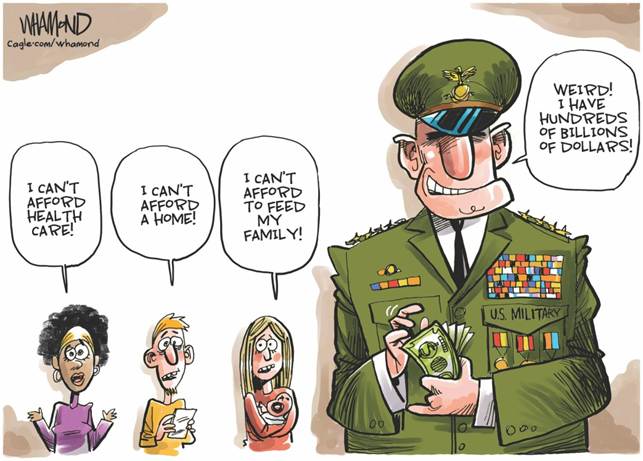
 Dr. Jack Rasmus @drjackrasmus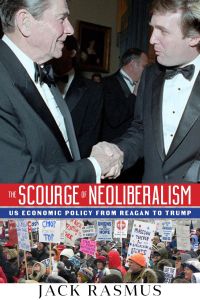
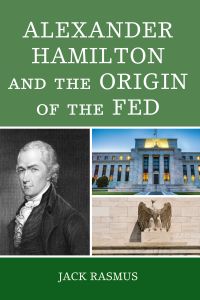



 Jack Rasmus